I Want to Compete and Be Recognized in Ginza
ーーーHow long has it been since you opened your restaurant in Ginza?
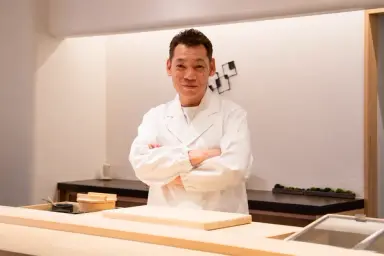
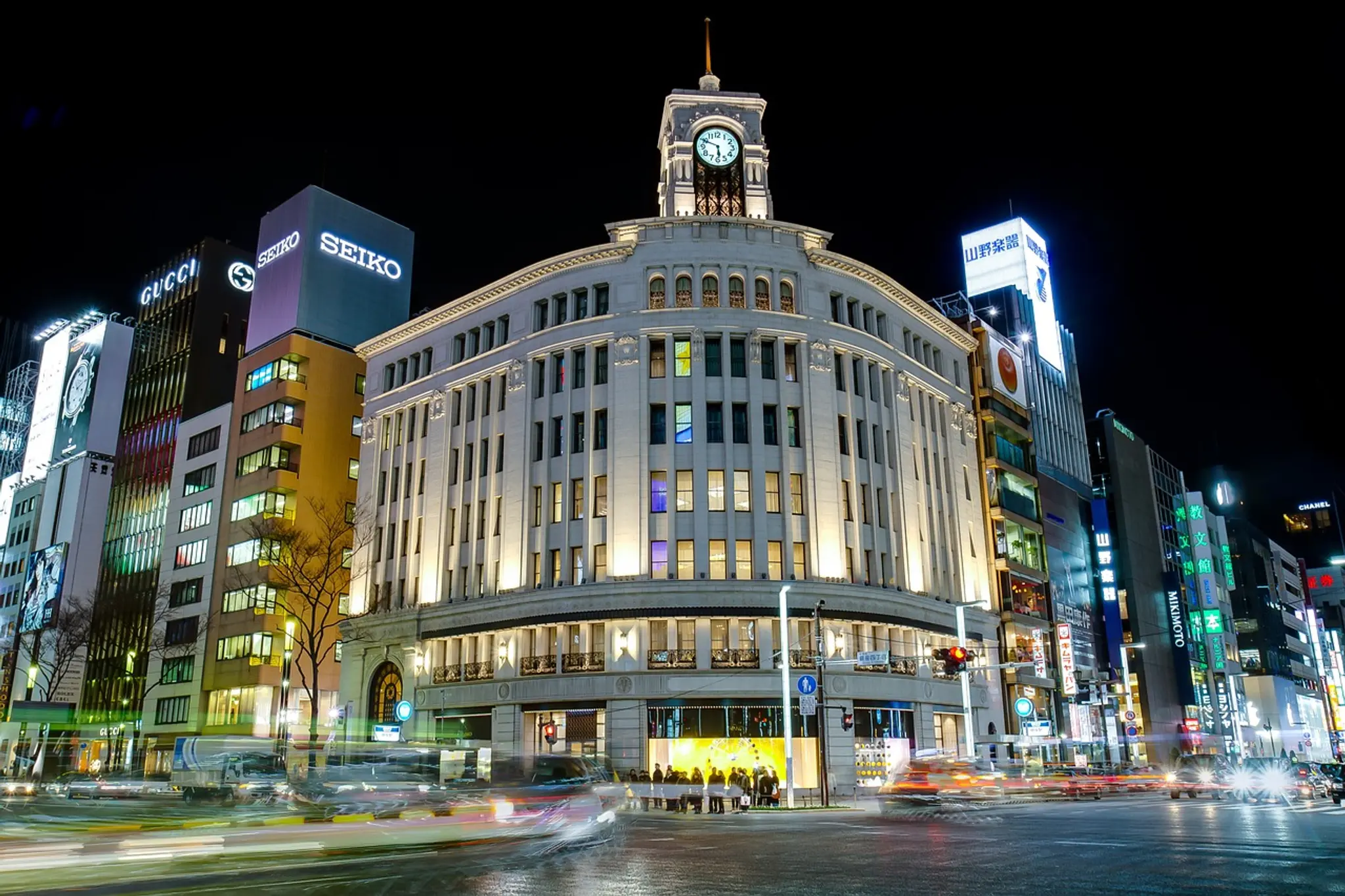
I became independent and opened my own restaurant in 2015, so this year marks the 10th anniversary. Even during my training days, I had a strong desire that if I were to open my own restaurant, it had to be in Ginza. I believe Ginza is the center of Japan—no, the center of the world. It's a city rich in history and culture. I don’t know if this is the best way to put it, but both people and ingredients of the highest caliber, what you'd call "first-class," gather here. That’s why I’ve always had this passion: “I want to compete here and be recognized.”
We are open only in the evenings, and reservations are required. Before the COVID-19 pandemic, we operated with a two-seating system, but now we accept reservations at the time most convenient for our guests, serving an omakase course.
We have regular customers who’ve been coming since my days at my previous restaurant, but due to the nature of the area, we also have many first-time customers who enjoy sushi, often for business entertainment purposes or those around my age and slightly older. In recent years, inbound tourists have significantly increased, now accounting for about 30–40% of our clientele. Although we have only seven counter seats, there are days when all the guests are from overseas.
Uncompromising Ingredients and the Philosophy of “Serious Play”
ーーー Could you tell us about the omakase course at 【Sushi Ryusuke】?
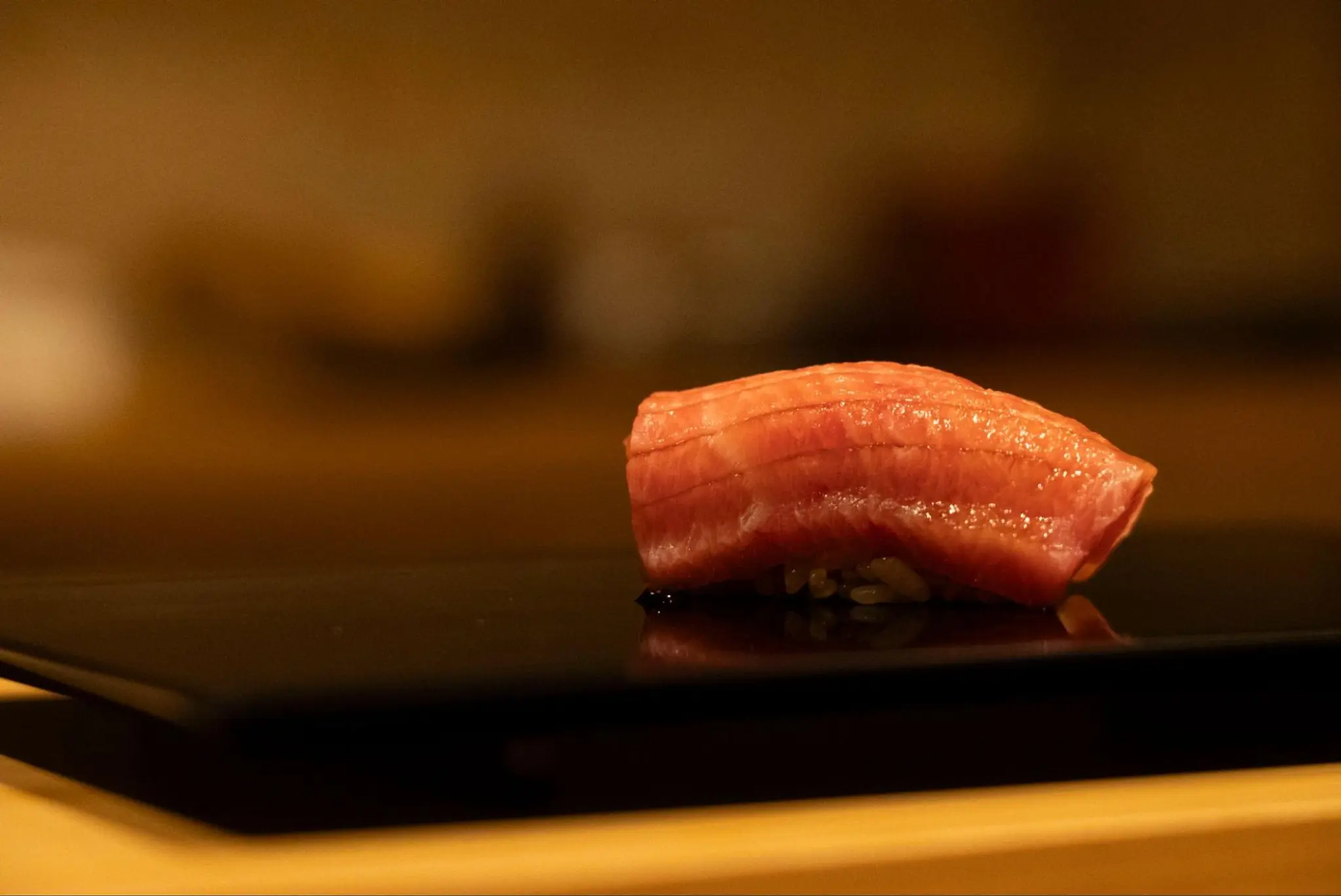
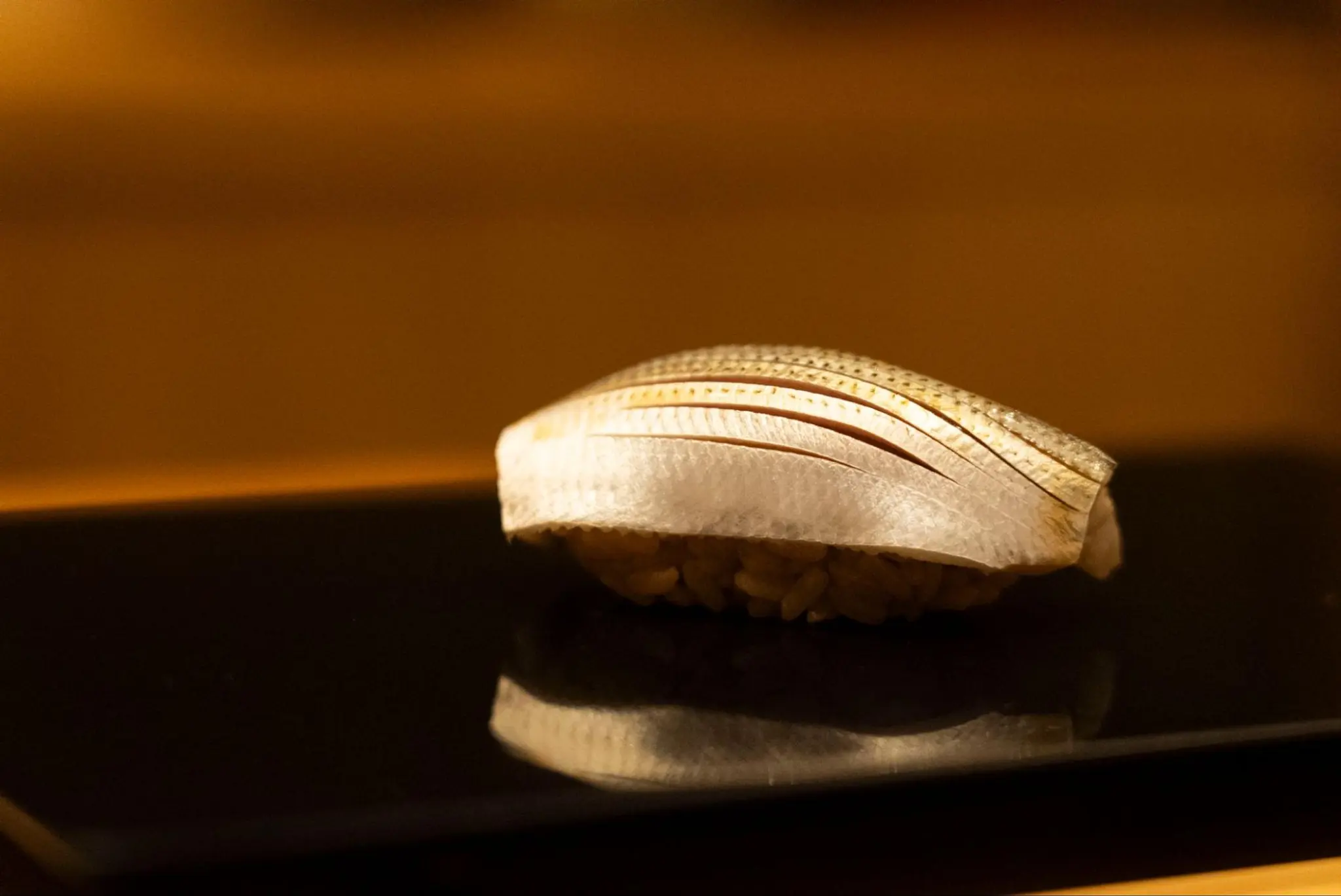
The course may vary depending on the availability of ingredients, but it typically includes 10 pieces of nigiri, 6 small side dishes, 2 types of norimaki (seaweed rolls), and tamagoyaki (Japanese omelet). When it comes to tuna, I prioritize umami flavor over size or fat content. Among them, tuna caught using fixed-net fishing methods stands out for its exceptionally tender flesh, rich aroma, and outstanding depth of flavor.
Tuna from Sado, caught with fixed-net fishing around May and June, is exceptionally delicious. As winter approaches, it becomes the season for tuna near the Tsugaru Strait. While the fishing methods shift to pole-and-line or longline fishing, there are still areas where fixed-net fishing is practiced, and if I find high-quality tuna from there, I make sure to use it.
When it comes to preparing food, I value using ingredients that I genuinely believe are of the highest quality—ones that I am completely satisfied with. And beyond that, it’s about engaging in what I call “serious play.” Since I’m committed to Edomae sushi, I prefer not to alter the nigiri too much. However, for the small side dishes, I like to add creative twists with seasonal ingredients that might not seem typical for a sushi restaurant at first glance—such as cream croquettes made with crab or scallops or white fish topped with truffles. Rather than having guests say, “Everything was delicious,” I’d be even happier if just one dish left a lasting impression. That’s the kind of sushi experience I want people to enjoy.
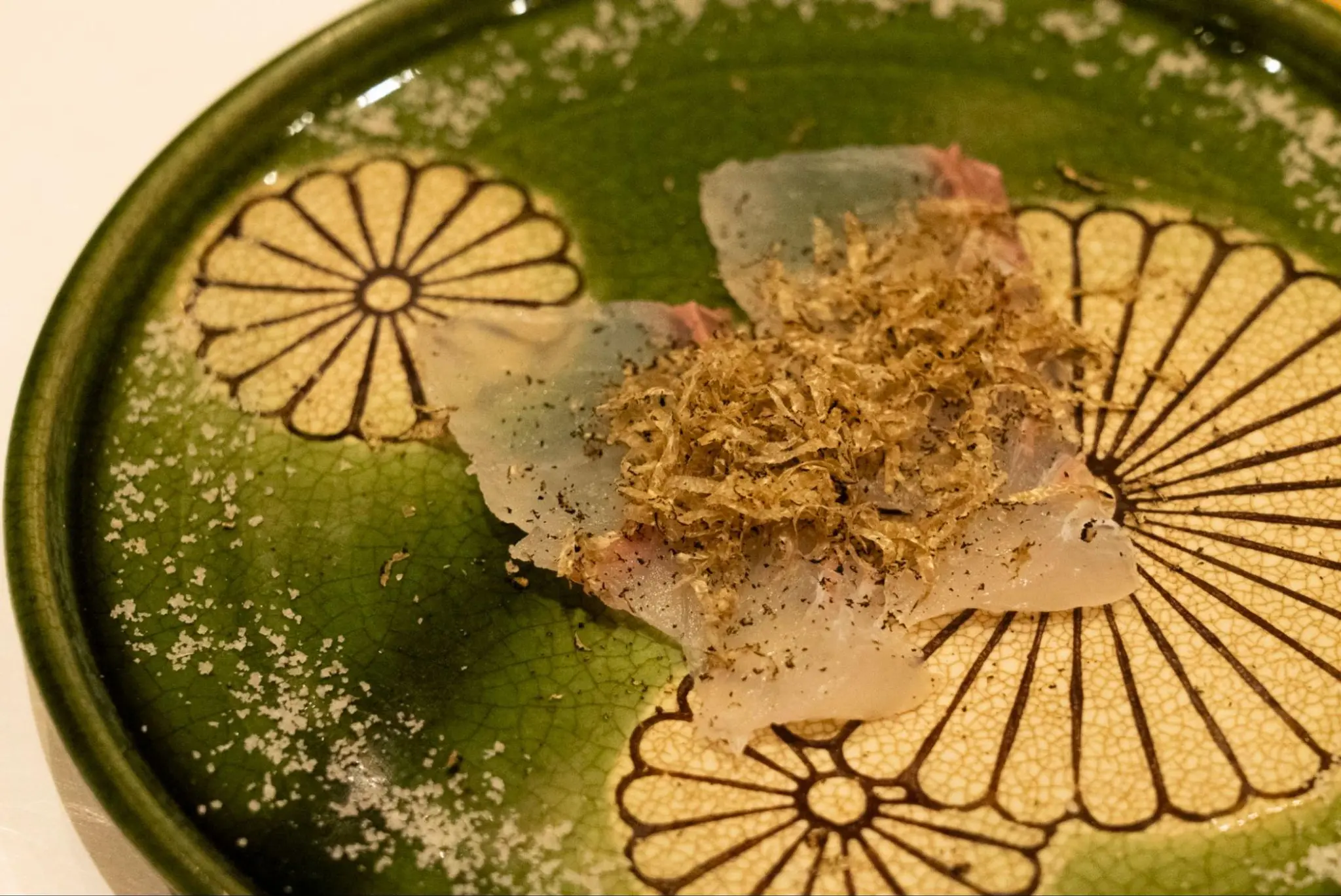
ーーー "Serious play" is quite a stylish expression. What inspired the creation of the white fish with truffle dish?
It actually came from an idea suggested by one of our regular customers. At one point, I served this customer—who has been visiting since we first opened—three slices of flounder, each seasoned differently with salt, soy sauce, and ponzu. After tasting them, the customer said, “They’re really delicious, but this style is something you can find at other places. Why not go bold and pair it with truffles?”At first, I thought, “Truffles at a sushi restaurant?” But when I tried serving it to a few other regulars, they were delighted. That’s when I started thinking, “Maybe this could work.”
That said, everyone has different preferences, and there are customers who prefer simpler flavors. So, there was a period when I stopped offering it. However, with social media these days, dishes like this get shared online. Customers began asking, “Aren’t you serving it today?” and I realized there were people who specifically came to enjoy that dish. That’s when I thought, “I can’t take this off the menu anymore,” and decided to include it as part of the omakase course.
ーーーYou mentioned that you’ve had many customers from overseas in recent years. What are your impressions of them?
We occasionally have guests who are trying sushi for the very first time, but most of them have already enjoyed "SUSHI" in their home countries and are quite familiar with it.
Therefore, we don’t make any special adjustments to the dishes to cater specifically to overseas guests—we serve the same menu as we do for our Japanese customers. When taking reservations, we ask all guests about any food dislikes or allergies. It seems that quite a few international guests tend to dislike shirako (cod milt). As we head into winter, we start incorporating dishes like chawanmushi (savory egg custard) and grilled items using shirako from Pacific cod. Even though it’s an omakase course, in addition to asking these questions during the reservation, we confirm food preferences again when guests arrive to ensure we can accommodate their requests as much as possible by preparing the appropriate ingredients.
ーーーWhat do you think is the reason you’ve been able to continue running your restaurant in such a competitive area like Ginza?
For me, it’s always been about serving dishes that I genuinely believe are delicious. This wouldn’t be possible without the support of suppliers, especially the fish vendors. If I had to sum up ingredient sourcing in one phrase, it would be “timing and communication.”I go to Toyosu Market every morning at 7 a.m. For example, I purchase tuna from the wholesaler 【Yamayuki】. Even if I don’t plan to buy anything that day, I still make sure to stop by and check on the day’s market conditions. Sometimes, we’ll even chat about things unrelated to sushi, like casual small talk or golf.
It’s really about the accumulation of small interactions. I believe that all sushi chefs share the same desire: “We want to source the best ingredients possible.”At Toyosu Market, where carefully selected ingredients from all over the world gather, there’s no auction number that tells you which item is the absolute best. That’s why I think it’s both necessary and important to put in the effort to seek out the best ingredients myself, building relationships so that I can secure the finest products.
Lessons Learned from the Meritocracy of 【Ginza Kyubey】
ーーーWhat inspired you to become a sushi chef, and could you tell us about your training before becoming independent?
Apparently, I was already telling my family in elementary school, “I want to be a sushi chef when I grow up.” At the time, my only exposure to sushi was the occasional family outing to a conveyor belt sushi restaurant, but even as a child, it must have felt like something special.
After graduating from high school, I enrolled in culinary school. During my first and second years of training, I interned at 【Ginza Kyubey】, which had a branch inside a long-established department store in my hometown of Chiba Prefecture. It’s one of Japan’s most renowned sushi establishments, but to be honest, I had no idea about its prestige when I was just a student training there. I only truly realized how remarkable 【Ginza Kyubey】 was after I graduated and officially joined the team as an employee.
ーーーWhat left the biggest impression on you during your training period?
I trained at 【Ginza Kyubey】 from the age of 20 for about eight years. At that time, they had seven locations in the Tokyo metropolitan area, and I trained at the branch inside a department store in Chiba, as well as at the Keio Plaza Hotel and the Hotel Okura Main Building.
During my time at Hotel Okura, there were frequent standing buffet parties, and during the busy New Year’s season, we had to prepare sushi for up to 1,000 people in a single day. The amount of prep work was absolutely insane (laughs).
In the beginning, I wasn’t even allowed to make sushi. I’d simply follow my seniors and help by arranging plates. As part of the prep work, I was often in charge of peeling, skewering, boiling, cooling, and cut open about 400 kuruma shrimp in a day. It was a repetitive task, but after doing that for a month at that pace, I probably racked up as many prep hours as a small restaurant would in several years.
It was incredibly busy, but thanks to that intense prep work, I became much faster with my hands. It also taught me how to think critically about efficiency—how to get things done more effectively. It was truly an invaluable experience.
ーーーIs speed and efficiency important when making sushi?
When it comes to prep work, I believe the most important thing is to work quickly, accurately, and carefully to maintain the freshness of the ingredients.
During my training, the restaurants were so busy that some seats would turn over three times in one evening. Even in such a fast-paced environment, there was a strict emphasis on consistency—whether it was the thickness and size of the cuts, the pressure applied when shaping the nigiri, or the overall flavor. No matter who was preparing the sushi, it had to be served to the customer with the exact same quality.
There were monthly study sessions to update our skills and knowledge, where everyone from senior managers to new trainees would gather to showcase their nigiri, exchange feedback, and review techniques. In my case, I was able to stand behind the counter at the Keio Plaza Hotel in my sixth year, but it wasn’t a matter of simply gaining seniority. It was a completely merit-based environment where only those with proven skills could earn that position. This experience taught me a great deal and helped me grow significantly.
ーーーWas there anything you personally valued in order to improve your skills and knowledge at such a prestigious restaurant?
Looking back, I realize I used to work from early morning until late at night. Because my personal time was so limited, the only way to get better was to make the most of every small moment I had.
For example, there were times when we apprentices were given the opportunity to practice making nigiri. To prepare for those moments, I often practiced the feel and hand movements by shaping paper napkins into the size of sushi rice (shari). I would keep my hands moving even during my commute on the train or during breaks.
When a senior asks, “Want to give it a try?” and you’re not ready, you never know when the next opportunity will come. For example, if the senior just above me was in charge of preparing anago (conger eel), it meant my turn to handle anago might be coming soon. You never know when you’ll be called upon, so to be prepared, I used to run to the fish market during my breaks, buy tanago with my own money, and practice on my own. You have to seize opportunities when they come.
I believe that both societal values and workplace systems have changed significantly since the time I was in training. However, back then, I was constantly pressed for time, doing my best with everything I had.
The Rapid Rise in Seafood Prices
ーーーHas the recent surge in prices affected your restaurant’s operations?
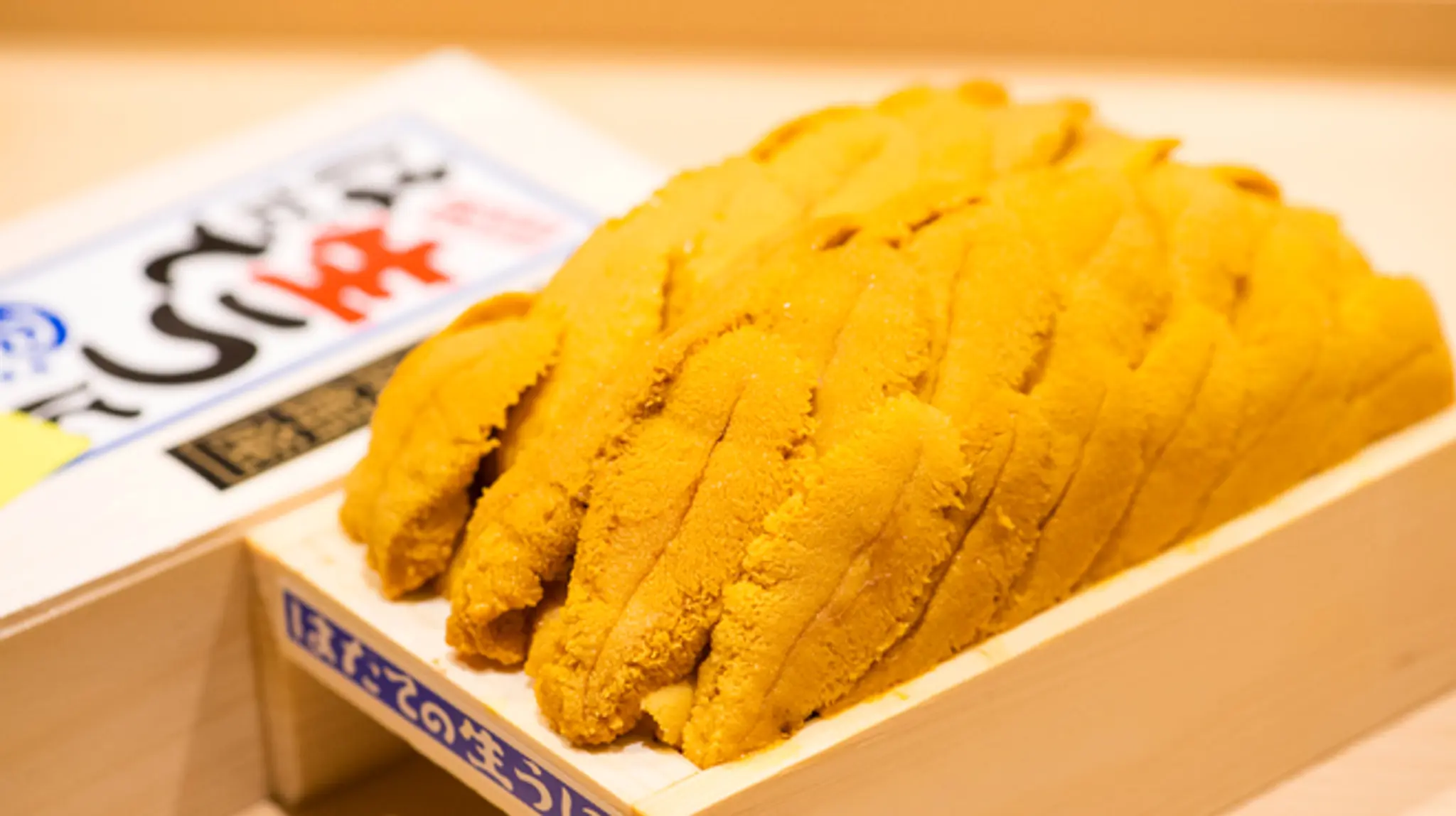
You're absolutely right—the recent surge in prices has been abnormal. I saw a news report the other day about the shortage of salmon, and it really hit home. When I first opened this restaurant 10 years ago, fresh sujiko (salmon roe) was readily available for around 4,000 to 5,000 yen per kilogram. Now, if I want the same quality, it costs about 14,000 yen per kilogram.
Even the highest-grade uni (sea urchin), which used to cost less than 40,000 yen a decade ago, now exceeds 200,000 yen. Shiro-ika (white squid) costs 11,000 yen per kilogram, and a single squid can go for 5,000 yen! Can you believe that?
I’ve been sourcing tuna from 【Yamayuki】 for many years, and they’ve been providing me with high-quality tuna at reasonable prices, which has been a huge help. Without that relationship, it would be tough to continue operating at the same price range moving forward.
I believe there are various reasons behind this, such as the effects of global warming, the depletion of marine resources, and the global sushi boom. However, when it comes to the price of seafood, I don’t see any factors that would cause it to decrease—it’s only going to continue rising. These days, I often see restaurants being featured on social media as offering "great cost performance," but when it comes to sushi, I think many customers would be shocked if they knew the real costs involved.
ーーーIt sounds like striking a balance between maintaining high quality and setting prices that customers find reasonable is quite challenging.
I believe it’s not just sushi restaurants—every establishment in the food and beverage industry is facing similar challenges. As for me, when I go to source ingredients, I almost never ask about the price of the fish before buying it.
I might be disqualified as a business owner for saying this, but I find it a bit embarrassing—and honestly uncool—to go to the market and ask, “How much is this?” before buying (laughs). As a sushi chef, I think it’s much more respectable to first look at the product, judge its quality, and then confidently say, “I’ll take this much of it.” That approach feels more authentic and professional to me.
Of course, I know the price when I pay for it on the spot, but at that moment, I’m not calculating the cost ratio as I’m sourcing the ingredients. After I get home, I write a daily report, recording detailed numbers like the quantity and weight of what I used. It’s only about two months later when my accountant sends me a financial report, that I finally see the actual cost ratio. Honestly, I’m often surprised, thinking, “It’s this high!?” It’s not uncommon to have those moments of shock.
I’ll continue doing everything I can, such as optimizing purchases to minimize waste based on reservation status and adjusting part-time staff working hours. However, if the rise in sourcing costs continues, I may have to consider revising our prices in the future. Since I don’t want to compromise on ingredients, lowering the quality is simply not an option.
A Sophisticated Social Space for Adults to Enjoy Fine Dining
ーーーCould you share your future outlook and plans?
I do have the desire to open my own restaurant overseas. In the past, I was involved in launching a new restaurant in Singapore, and it was a really fascinating experience. I believe there’s still plenty of demand in places like the U.S. and China. When it comes to expanding internationally, there are two approaches: directly running the restaurant myself or taking on a producer role. I think I’d lean more towards the latter.
I’ve received offers from overseas consulting firms to produce restaurants, but I have a deep attachment to this place. If I’m going to be standing behind the counter, I’d prefer it to be here. As long as this building stands and I have the strength, I want to continue working here for as long as possible.
ーーーLastly, what does “delicious” mean to you, Mr. Yamane?
For me, “delicious” is something created by the atmosphere in which the meal is enjoyed. Of course, the quality of the ingredients is important, but who you’re dining with, the situation, and the space in which you eat all play a significant role.For guests who come alone, I try to engage in conversation naturally, observing their mood to find the right timing to speak. On the other hand, when guests are enjoying a conversation with each other, I make sure to serve the food without interrupting their flow.I believe that creating an enjoyable atmosphere tailored to each guest is just as important as the food itself, and I value that attentiveness in my service.
Since it’s a small restaurant, even though each guest comes individually, everyone shares the same space. At times, we may kindly ask guests to refrain from wearing strong perfumes or keeping their phone notifications loud, as these can disrupt the atmosphere. In such cases, we approach guests politely to maintain the ambiance, and we appreciate their understanding.
For sushi restaurants like ours, the price range isn’t something that allows just anyone to drop by casually, which can make us seem a bit intimidating. However, I want to ensure that for those who do come, it remains an enjoyable and welcoming space where they feel at ease.
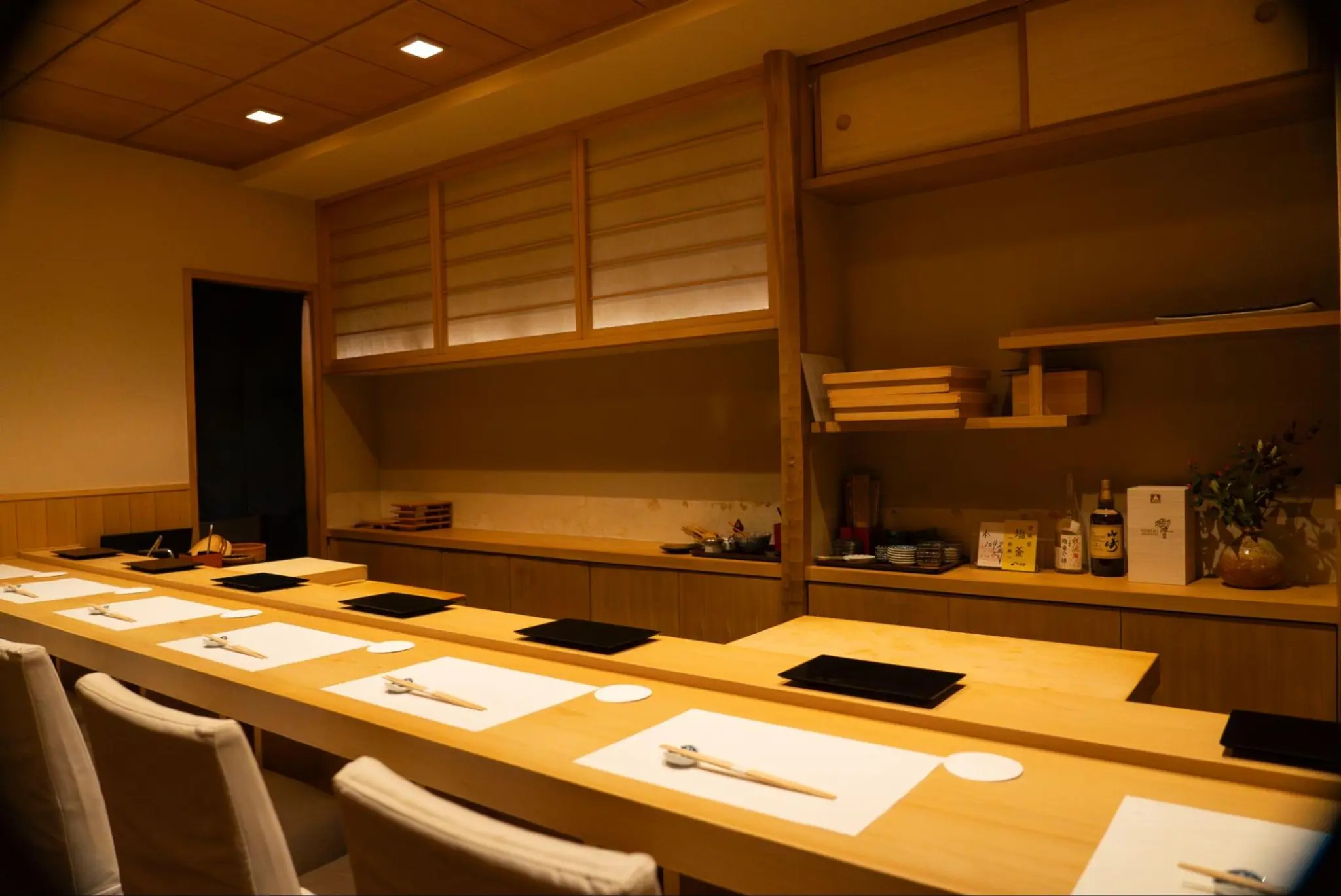
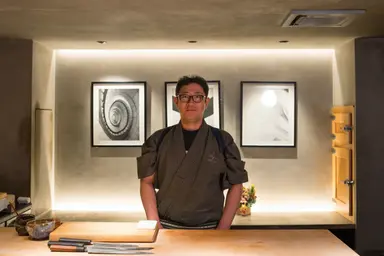
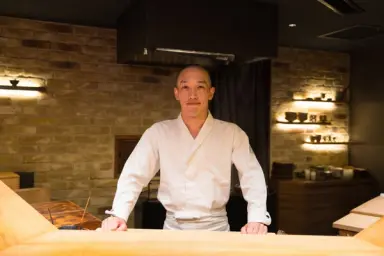
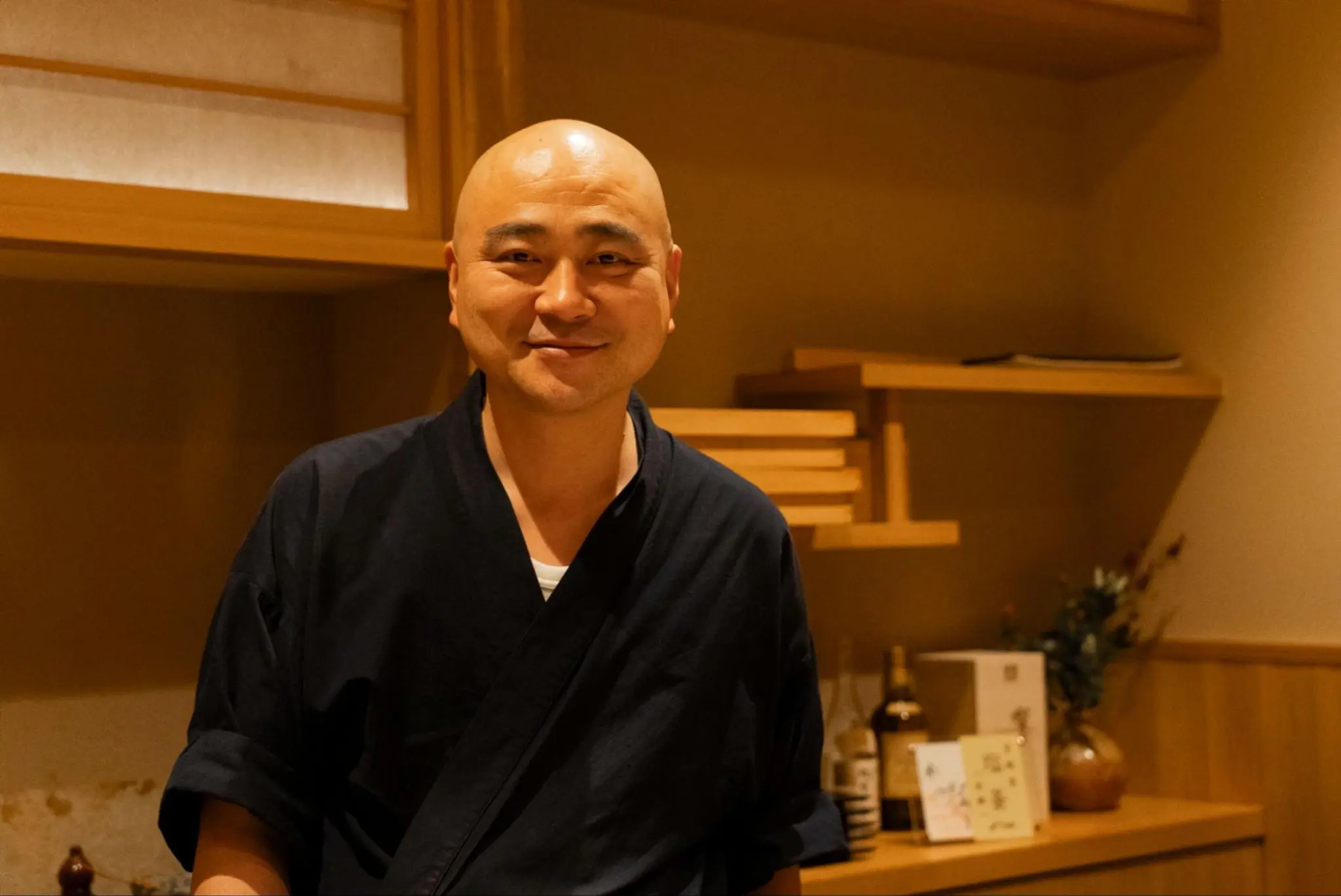
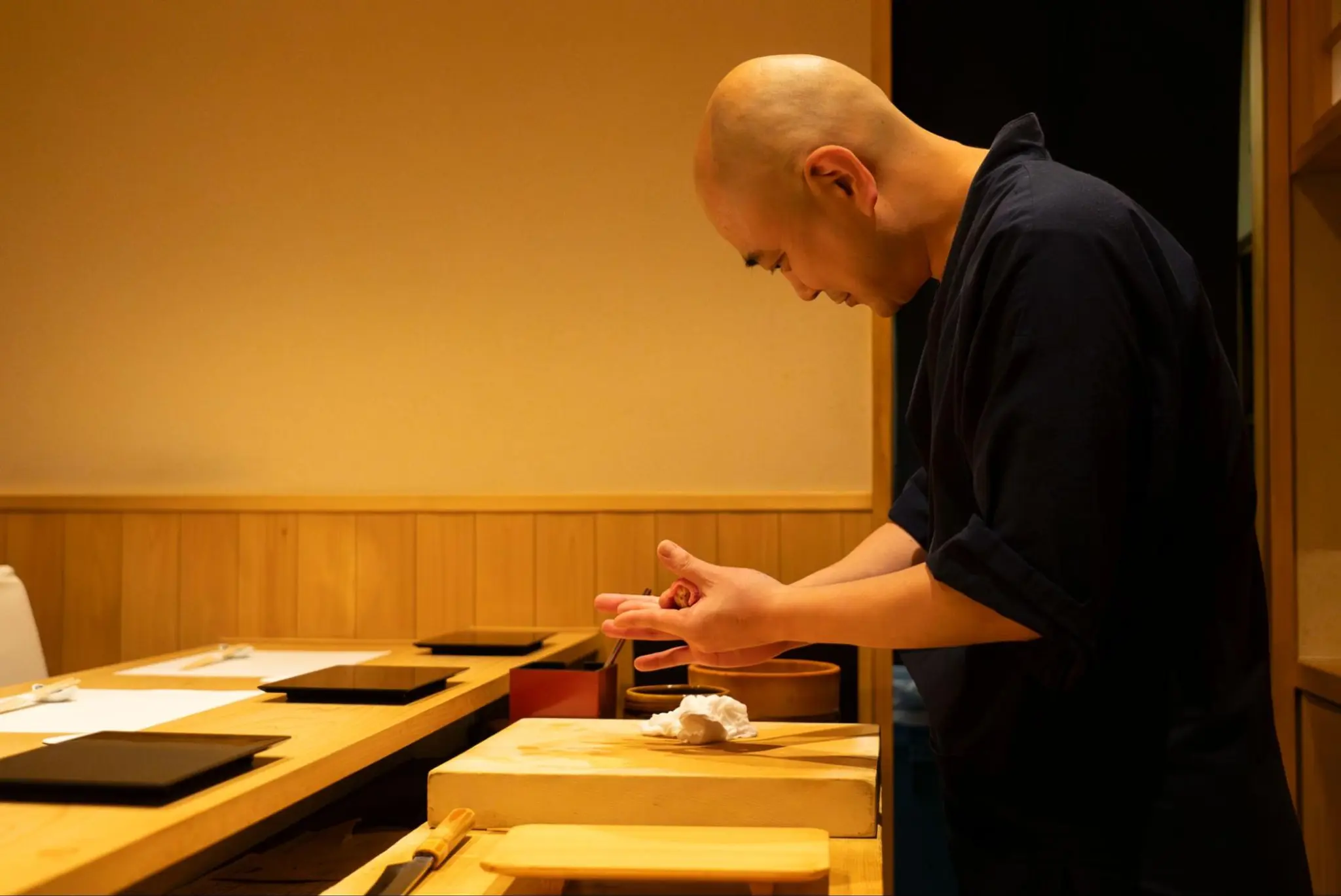
As the backstreets of Ginza transform into their glamorous nighttime persona, descending the stairs into the basement of a building reveals an interior unified by a pristine white-wood counter crafted from a single slab.There, Mr. Yamane, dressed in traditional samue, greets guests with a warm, genuine smile and a lively welcome. The perfect balance between his skillfully crafted, no-nonsense Edomae sushi and his free-spirited, inventive sakana (small dishes for pairing with sake) seems to reflect the depth and openness of Mr. Yamane himself, the master of this culinary “castle.”
Today, once again, guests will pass through the noren and gather around Mr. Yamane.
Interview & Text: Yuri Yagiya
Photography: Azusa Nakaoka
Restaurant Information
- AutoReserve Magazine
- Restaurants recommended by top chefs
- Enjoying Authentic Edomae Sushi and Sake Pairings at 【Sushi Ryusuke】 in Ginza