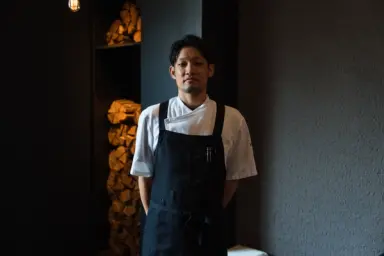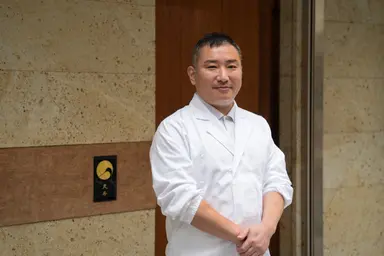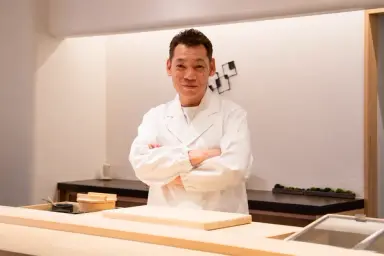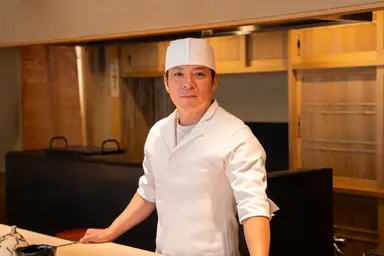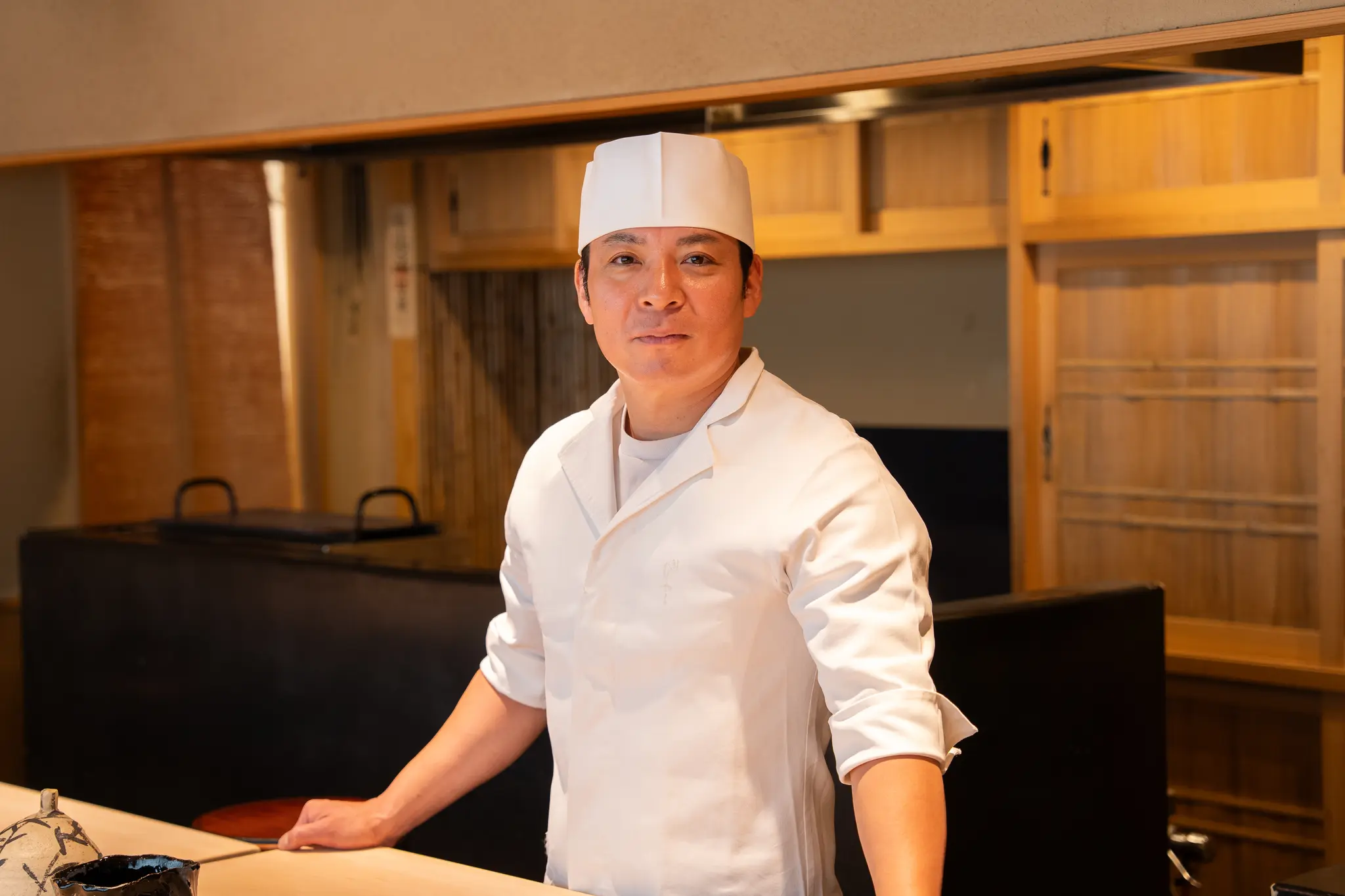
The Essence of Deliciousness Through the Eyes of 【Sushi Murayama】 Chef Daisaku Murayama: Embracing the Seasons and Nurturing People
Helping in the Kitchen Gradually Became a Passion
— What inspired you to become a chef?
I think my mother had the biggest influence on me. I grew up with brothers, and from around the third grade of elementary school, my mother would often call me into the kitchen to help her cook. At the time, it felt more like I was being made to help, but whenever we finished cooking, she would always praise me, saying things like, “This is delicious,” or “You did a great job.” Thanks to her encouragement, cooking gradually became something I genuinely enjoyed, and before long, I found myself naturally spending more and more time in the kitchen.
Later, when I was in my second year of junior high school, I began thinking seriously about my future. As I asked myself what I truly wanted to do, I realized that I wanted to dedicate my life to cooking. That decision led me to enroll in a high school with a culinary program, where I began my journey toward becoming a professional chef.
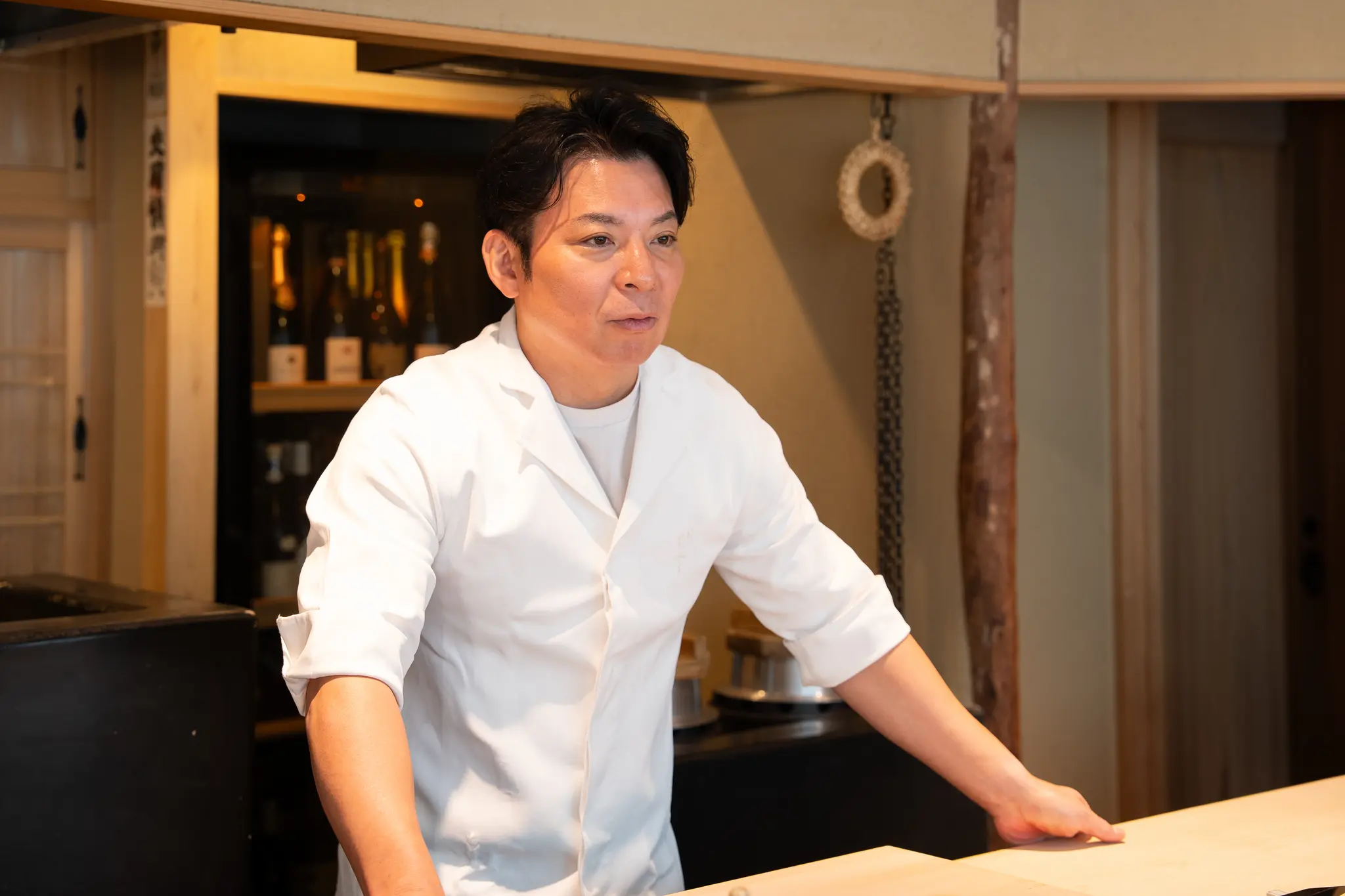
Discovering the Global Appeal of Sushi While Serving as a Chef at the Official Residence
— Could you tell us about your years of training?
The first path I chose was not sushi, but Japanese cuisine. I trained in Japanese cuisine until I was 32, and during that time I was given the opportunity to serve as a chef at the Official Residence of Japan in Washington, D.C. For about four years, I had the privilege of preparing meals for a wide variety of distinguished guests.
Whenever we prepared a meal, we would ask in advance about dietary restrictions and personal preferences. What surprised me most was the overwhelming popularity of sushi. From my experience, nearly 90 percent of our international guests requested sushi.
Japanese cuisine includes many dishes—such as osechi—whose true appeal is best understood through their cultural background and symbolism. When serving dishes like tazukuri or kuri kinton, we would explain their history and meaning. However, because these traditions are naturally less familiar to international guests, I often found it challenging to fully convey their significance.
Sushi, on the other hand, had already become widely recognized as one of Japan's iconic culinary traditions. Even then, many people overseas were familiar with sushi and appreciated its value. Witnessing that firsthand made me think, “When I return to Japan, I'd like to study sushi seriously.”
Although I had some experience preparing sushi as part of my Japanese cuisine training, I had never formally trained as a sushi chef. At first, I simply thought I would devote a couple of years to learning the craft.
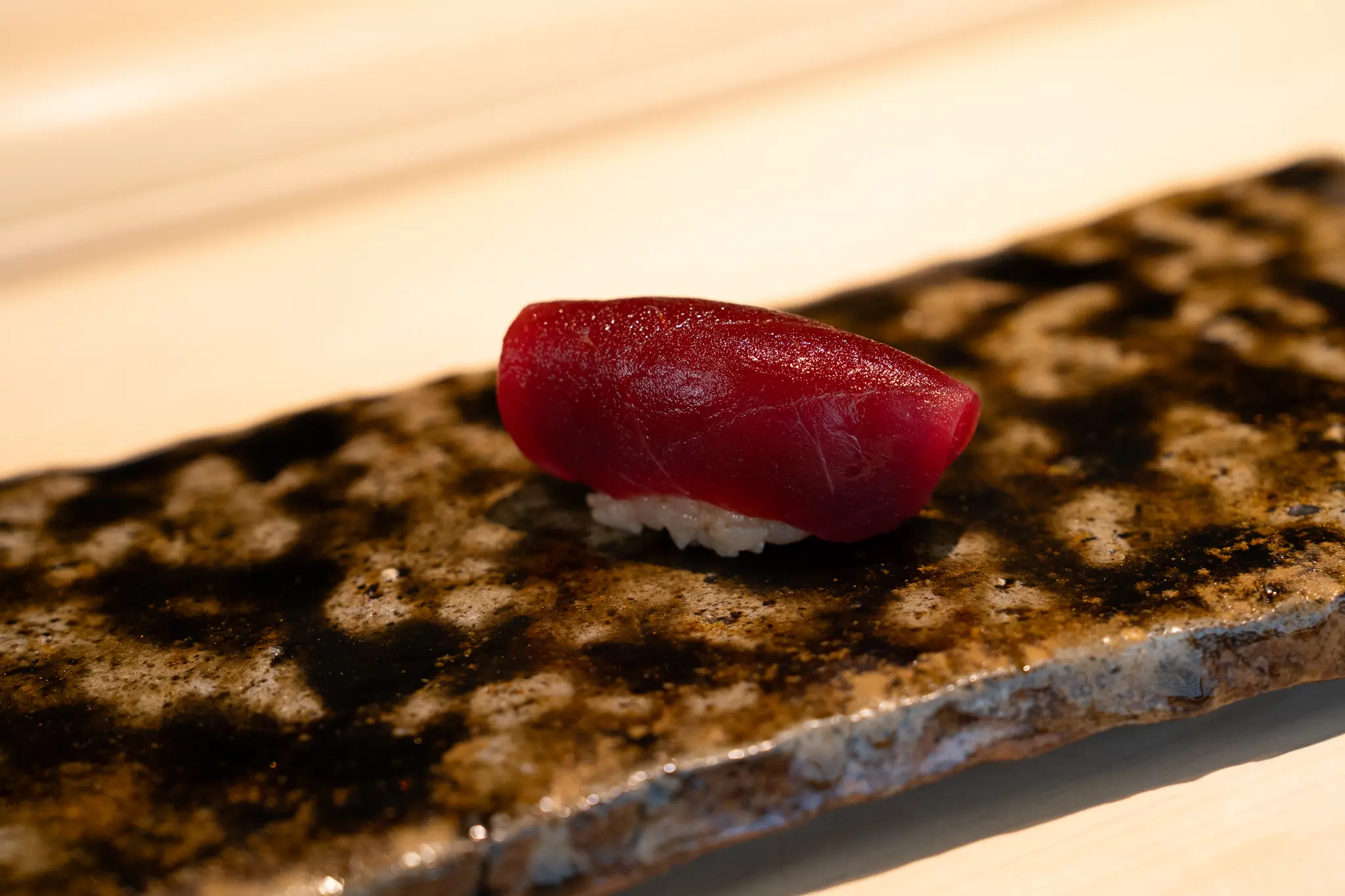
— During your sushi apprenticeship at one of Ginza's renowned sushi restaurants, were there any techniques or philosophies that had a particularly strong influence on you?
When I began training at a sushi restaurant in Ginza, the first thing that struck me was how completely different the philosophy of handling fish was between traditional Japanese cuisine and sushi.
In Japanese cuisine, it's common to salt fish before grilling or frying to draw out excess moisture. In the world of sushi, however, there are a wide variety of techniques designed to enhance a fish's flavor while carefully assessing its condition—lightly salting sashimi, curing it with vinegar, or aging it with kombu, for example.
At the time, the idea of salting sashimi had almost never crossed my mind. In fact, from the perspective of Japanese cuisine, it was practically considered taboo. Yet when I actually tasted it, the fish's natural umami and character were brought out beautifully. It was astonishingly delicious.
It was a tremendous culture shock. Everything I had taken for granted—my knowledge, my experience, my understanding of what was "correct"—was completely overturned. It was a defining moment that fundamentally changed my perspective.
Initially, I planned to study sushi for about two years before returning to the world of Japanese cuisine. Fortunately, however, I was entrusted with the restaurant's private counter.
It was an intimate private room with just four counter seats, serving only one party each day. The close proximity to the guests created an environment where they could enjoy not only the food itself, but also the conversations and the time we shared together. Naturally, it became easy to build meaningful relationships with our guests, and many returned again and again as regulars.
Working directly in front of guests and experiencing their reactions firsthand was something entirely new to me. I found it incredibly rewarding, and I realized it suited my personality perfectly. Before I knew it, I had spent seven years at that restaurant.
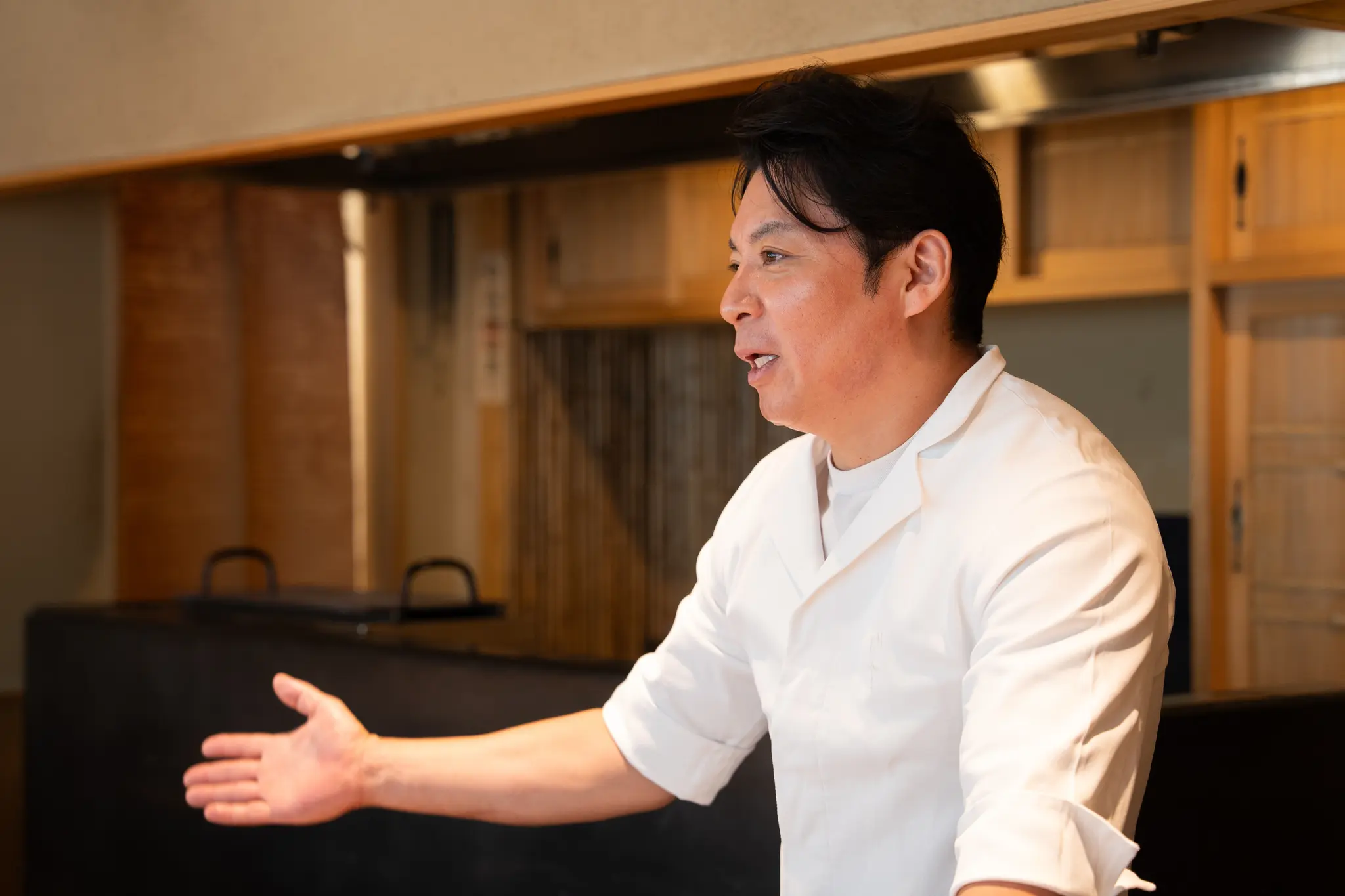
— What led you to become independent?
I wouldn't say I was determined to become independent from the very beginning. However, the words of the head chef at the first Japanese restaurant where I trained always stayed with me: “Gain enough experience so that you're ready to open your own restaurant by the time you're around forty.”
As I actually approached that age, I asked myself whether there was still anything I wanted to learn or whether there were any regrets left behind. What I realized was that, more than continuing to learn from others, I had developed a much stronger desire to express the experience and techniques I had accumulated in my own way.
Of course, opening a restaurant comes with many challenges, from securing funding to finding the right location. But thanks to the support of so many people and a series of fortunate encounters, everything gradually seemed to fall into place.
Rather than feeling that I reached this point through my own determination alone, I feel that I was gently guided toward independence by the encouragement and support of the people around me.
Reflecting the changing seasons in our menu
— Is there anything you particularly value when it comes to cooking?Seasonality is something I value very highly.
When composing a course, I try to incorporate ingredients that represent each stage of the season: hashiri, which signals the season's arrival; sakari, ingredients at their peak; and nagori, which allows guests to savor the lingering essence of the season. Whenever possible, I weave all three into a single course.
Even within the same season—whether spring or autumn—the ingredients change little by little as the weeks pass. I believe that experiencing these subtle transitions is one of the greatest pleasures of Japanese cuisine.
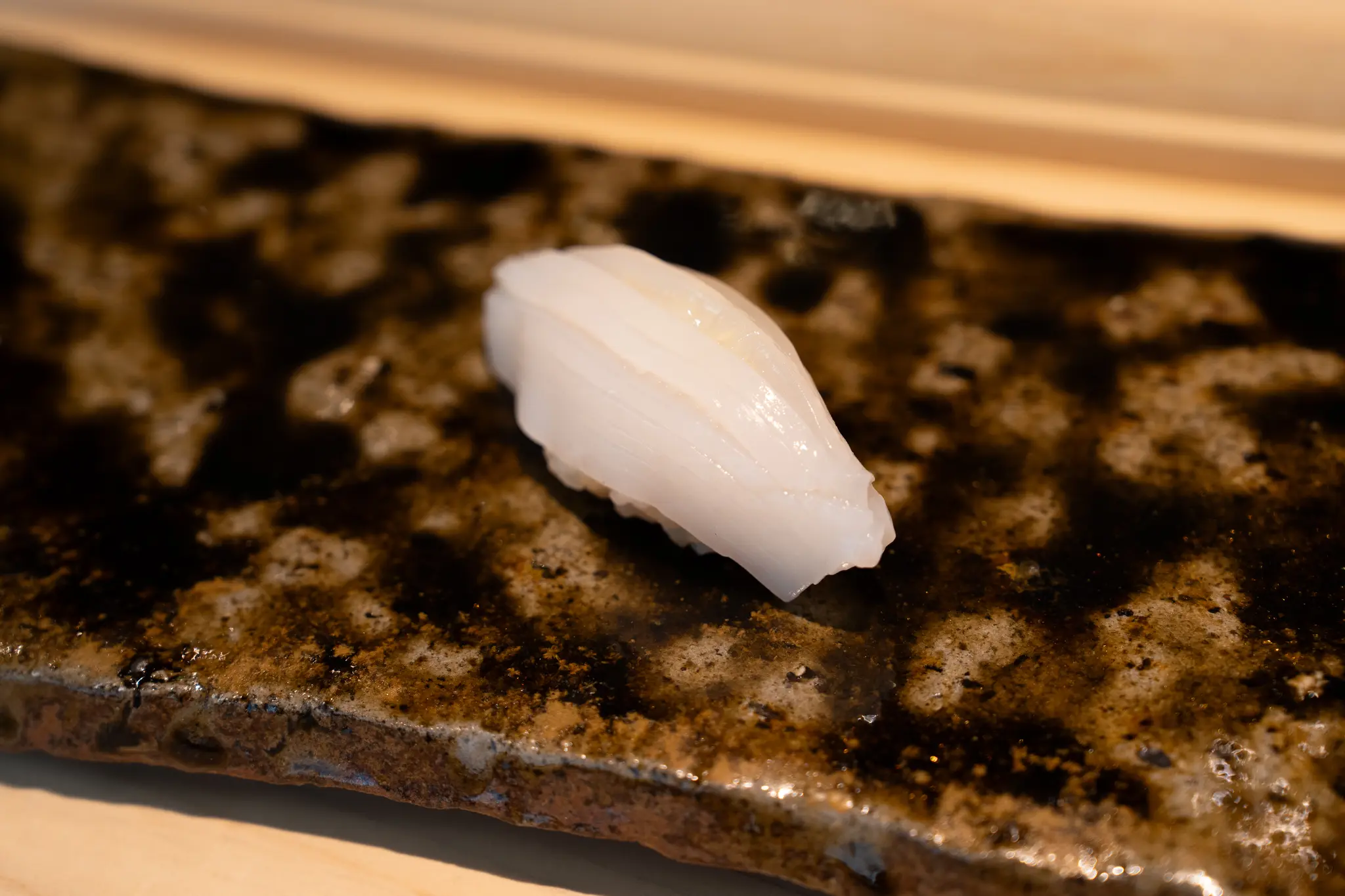
At Sushi Murayama, we completely renew our menu on the first day of every month. Some guests visit us every month, and many others come regularly throughout the year, so we want them to be able to enjoy something different from their previous visit each time.
And as the seasons change, the ingredients change too, so the menu naturally evolves as well. I build each dish around whatever is at its best at that particular time. That’s something I really look forward to, and I’d be delighted if it becomes a moment when our guests can truly feel the season.
— In addition to your sushi, your dishes served alongside drinks are also very impressive. Is there anything you particularly keep in mind when creating them?
When creating sakana (small dishes served with drinks), what I keep in mind most is not overdoing it. If I put too much emphasis on those dishes, people might think, "Then I might as well go to a Japanese restaurant." That's why I'm always conscious that, first and foremost, we are a sushi restaurant.
Of course, seasonality remains important, and I incorporate techniques and ideas drawn from my background in Japanese cuisine. In fact, some guests have even told me that they would be perfectly satisfied with the sakana alone.
Before opening my own restaurant, I spent a great deal of time thinking about this balance. I wanted to make full use of seasonal ingredients, but I found myself wondering whether I should create a sushi restaurant that also offers exceptional sakana, or a Japanese restaurant where sushi also happens to be served. I wasn't sure which direction I wanted to take.
However, after spending seven years training at a sushi restaurant, I realized that many guests already saw me as a sushi chef. Once I recognized that, the answer became clear—I wanted to create a sushi restaurant.
At 【Sushi Murayama】, sushi will always remain at the heart of the experience. At the same time, I hope to complement it with sakana that only someone who has trained in both Japanese cuisine and sushi can create.
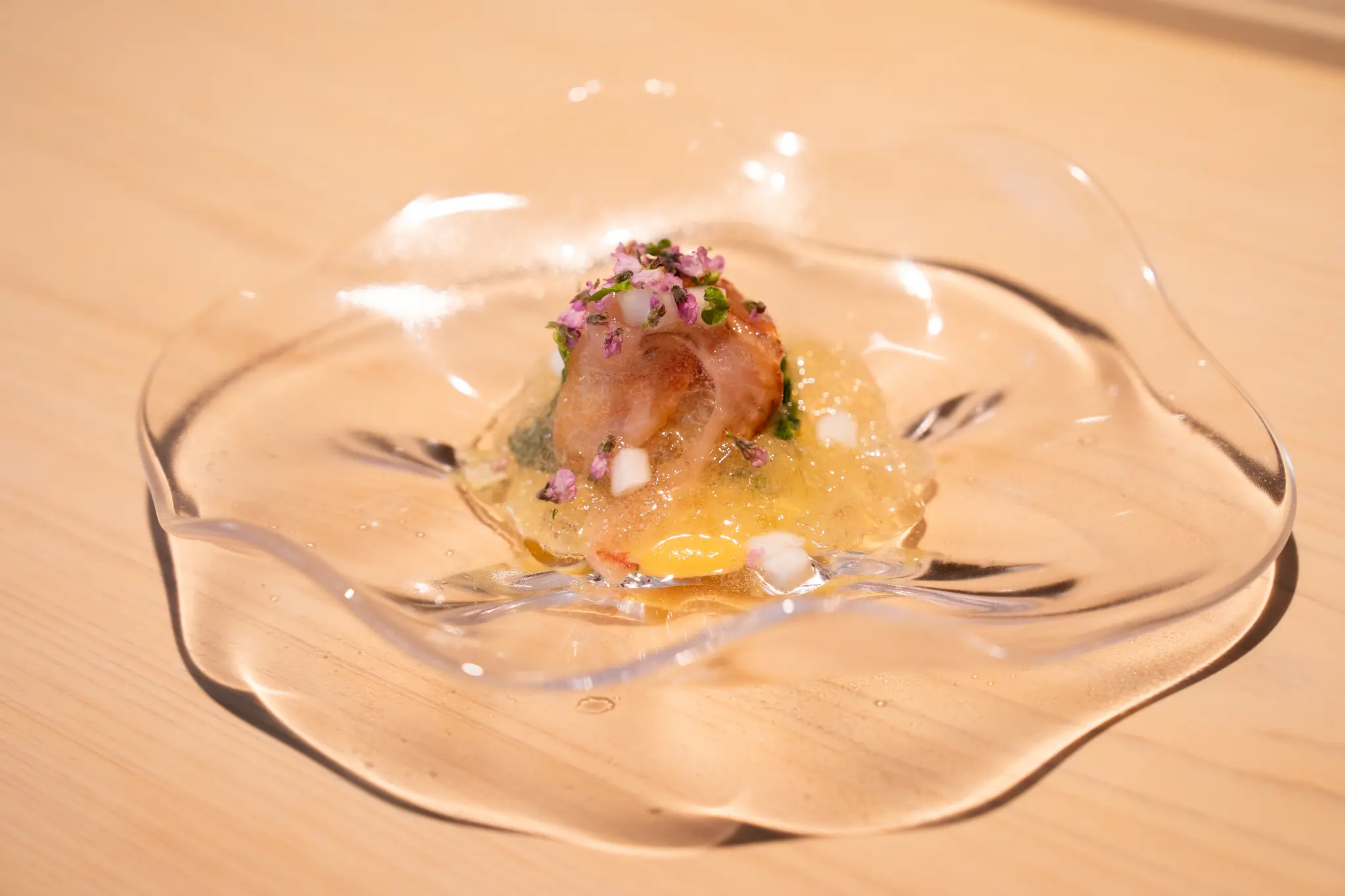
— As your guests enjoy both the sushi and the sakana, is there anything you hope they will experience or take away from the meal?
What I most want you to feel is the season itself. Of course we use ingredients that are in season, but we also place great importance on the aroma and appearance those ingredients have, and on the unique flavors that can only be enjoyed at that particular time of year.
Through my cooking, I’d be delighted if you could feel the changing seasons and find yourself saying, “It’s already spring,” or “Summer is just around the corner.”
I hope you will not only enjoy the ingredients themselves, but also feel the flow of the seasons and the atmosphere as you go through the course. I want you to fully savor the unique appeal of seasonal flavors that can only be experienced at that particular time of year.
To maintain consistently high quality as a professional
— What do you consider important when choosing ingredients?
For me, the most important thing is that an ingredient is truly in season. Choosing ingredients at their very best is a non-negotiable principle. At the same time, I also believe it's essential to be able to source them consistently.
Each month, I create the course around a particular seasonal theme, so ideally I'd like to use the same core ingredients throughout that month. Of course, there are times when availability forces us to make changes. But because we prepare these dishes every day, we continuously refine and adjust them, gradually improving the final result. That's why I prefer not to change ingredients too frequently.
Ingredients sourced directly from producers are often exceptional. However, it's not unusual to encounter situations where an ingredient is available one day but unavailable the next, or where no one knows when it will be available again. That kind of inconsistency can become a significant challenge when you're designing an entire tasting course.
For that reason, I try not to rely too heavily on any single producer or production region. Instead, I focus on building a sourcing network that allows us to consistently secure ingredients in excellent condition throughout the season.
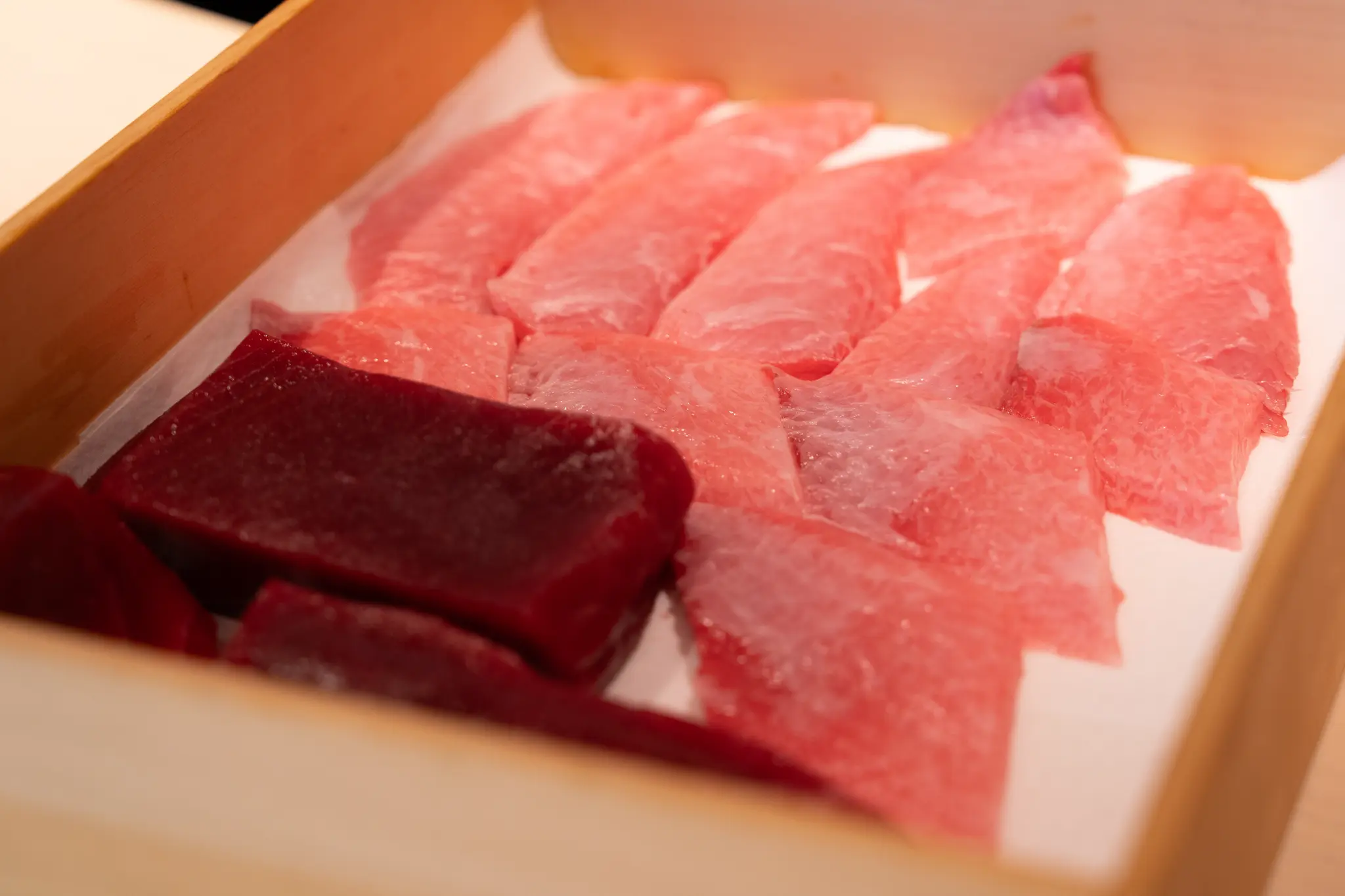
— That must make it difficult to stick to the menu you've planned.
Exactly. When we first opened the restaurant, we sourced ingredients directly from producers as well. However, there were times when ingredients we had planned to use suddenly became unavailable, which meant the quality of the dishes could vary from day to day.
We're open every day, so for us, it's just one day out of the year. But for our guests, it may be a day they've been looking forward to for six months.
In fact, many guests make reservations several months in advance. We also have regulars who travel from places like Osaka, Hokkaido, and Okinawa. They book flights or Shinkansen tickets, adjust their schedules, and make a special trip to dine with us.
From their perspective, our circumstances—such as saying, "The fish wasn't in ideal condition today"—simply don't matter. No matter the situation, it's our responsibility to maintain a consistently high standard and ensure that every dish we serve is one we can present with complete confidence.
Creating the Ideal Environment for Enjoying Delicious Food
— Is there anything you particularly keep in mind when creating the atmosphere of the restaurant and welcoming your guests?
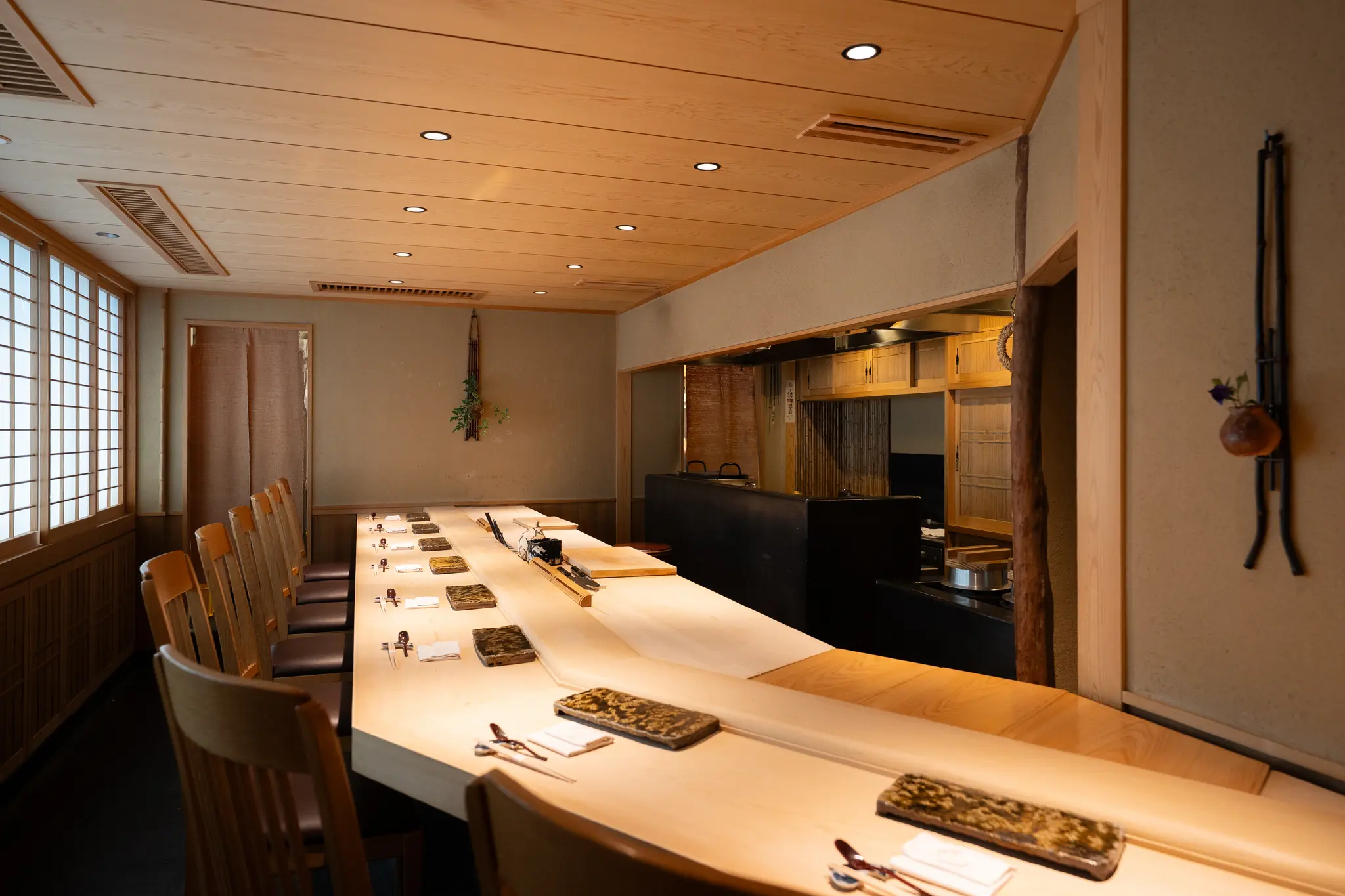
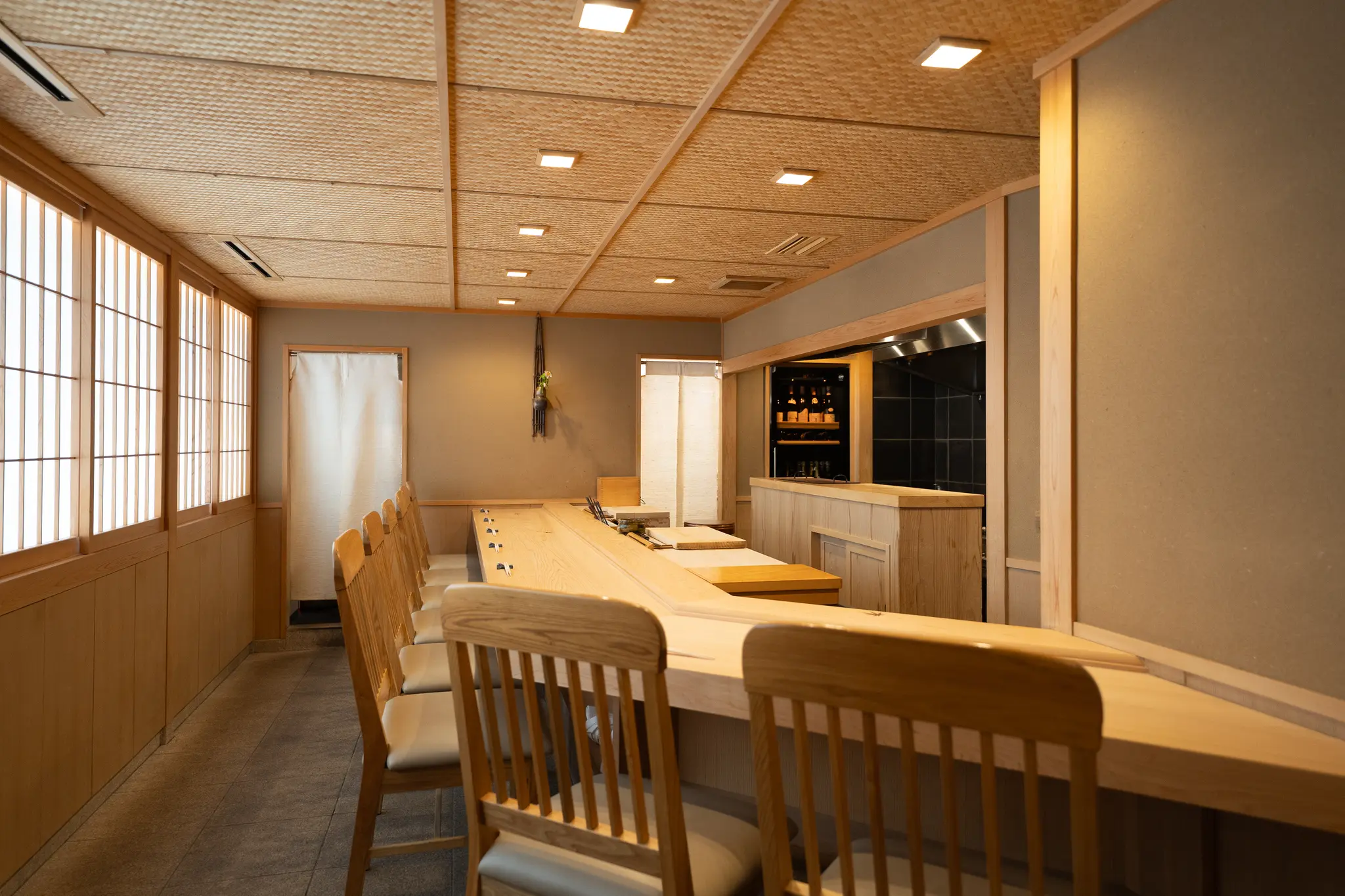
What I value most in creating the atmosphere of the restaurant is making sure our guests feel completely at ease.
When people think of a sushi restaurant in Ginza, many imagine somewhere rather formal or intimidating. But our guests have come here looking forward to the experience, so I want them to relax and simply enjoy their meal without feeling any unnecessary pressure.
I also try not to put on airs or create an overly formal atmosphere. Instead, I welcome guests as naturally as possible. I want this to be a place where I can genuinely enjoy what I do, and where our guests can enjoy themselves as well.
From a design perspective, one thing I was particularly committed to was serving every dish the moment it's ready. The gas stove, charcoal grill, and even the kettle used for preparing the sushi rice are all built into the counter, allowing every step—from preparation to serving—to take place right in front of our guests. As they watch us prepare each course, I hope they can enjoy not only the finished dishes, but also the craftsmanship and process behind them.
Another feature of the restaurant is that there are almost no partitions hiding our hands or our work. That naturally creates a certain sense of pressure—we have to work in a way that we're never embarrassed to have seen from any angle. But that transparency was something I deliberately wanted to create, and it remains an important part of what defines 【Sushi Murayama】.
— You have quite a few young apprentices. Do you hope to support them in opening restaurants of their own someday?
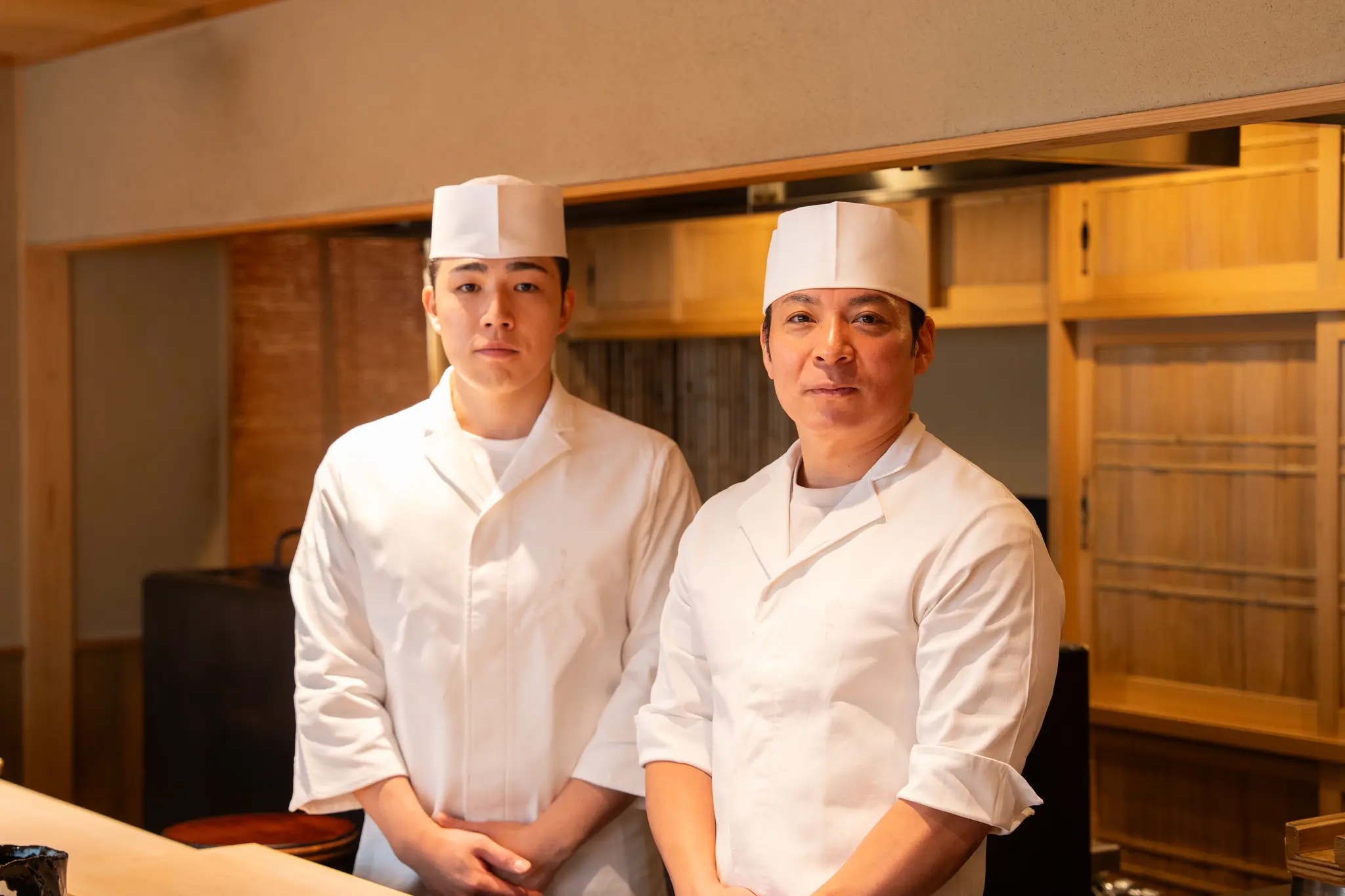
I want 【Sushi Murayama】 to be a place where young chefs who aspire to open restaurants of their own can grow. Most of the chefs who come here to train share that goal, so I believe in teaching them as openly as possible—not only culinary techniques, but also the practical aspects of running a restaurant.
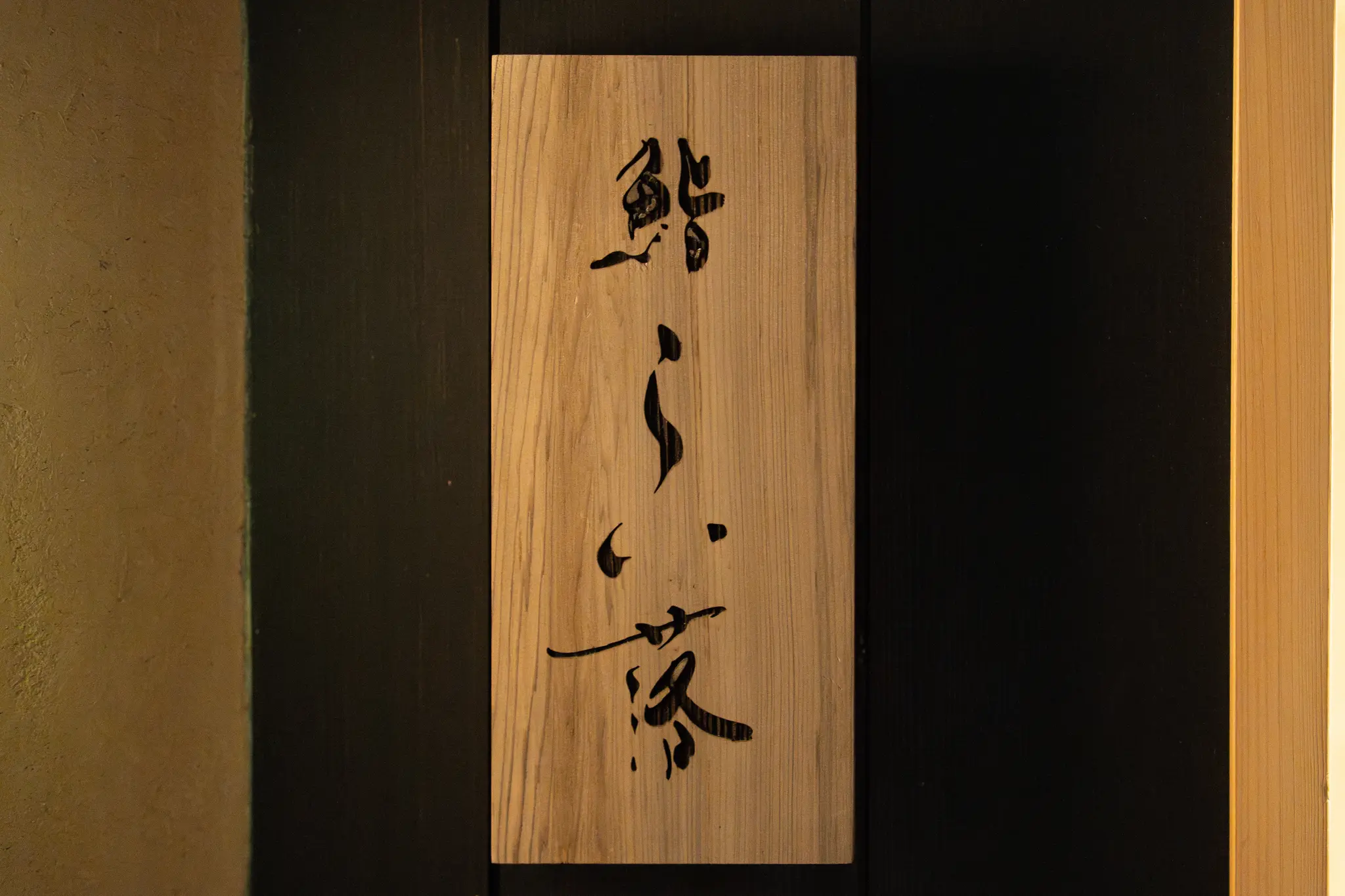
In fact, on the fifth floor of this building, we operate another restaurant called 【Sushi Rai-Raku】, which is run primarily by our younger chefs. Becoming independent brings countless first-time experiences, and I think it's a significant risk to have to learn everything from scratch after opening your own restaurant.
That's why I want them to gain as much real-world experience as possible while working in an environment where I can support them and take responsibility. I also hope they'll have the opportunity to build lasting relationships with guests who will continue to support them long after they become independent.
The technical skills required to make sushi can certainly be learned through practice. But standing in front of guests and preparing sushi for them is an entirely different experience. In the end, I believe it's the guests who truly shape a chef. You prepare sushi right before their eyes, watch them taste it, and grow through their reactions and the conversations you have with them. There is no substitute for that accumulation of real experience.
These days, there's a lot of discussion about whether sushi chefs still need years of apprenticeship. Personally, I think the answer depends on what kind of chef you aspire to become. A successful sushi restaurant isn't built on the ability to make sushi alone. There is so much more to learn—how to handle ingredients, how to interact with guests, how to create a welcoming atmosphere, and even how to manage a restaurant.
You can acquire knowledge through study, but it takes time before that knowledge becomes instinct. It's that depth of experience that ultimately earns the trust of guests and gives them a reason to return. That's why I want young chefs to gain as much hands-on experience as possible while they're still young, so that when the day comes to open a restaurant of their own, they can do so with genuine confidence.
We Also Spoke with Head Chef Aizawa of 【Sushi Rairaku】
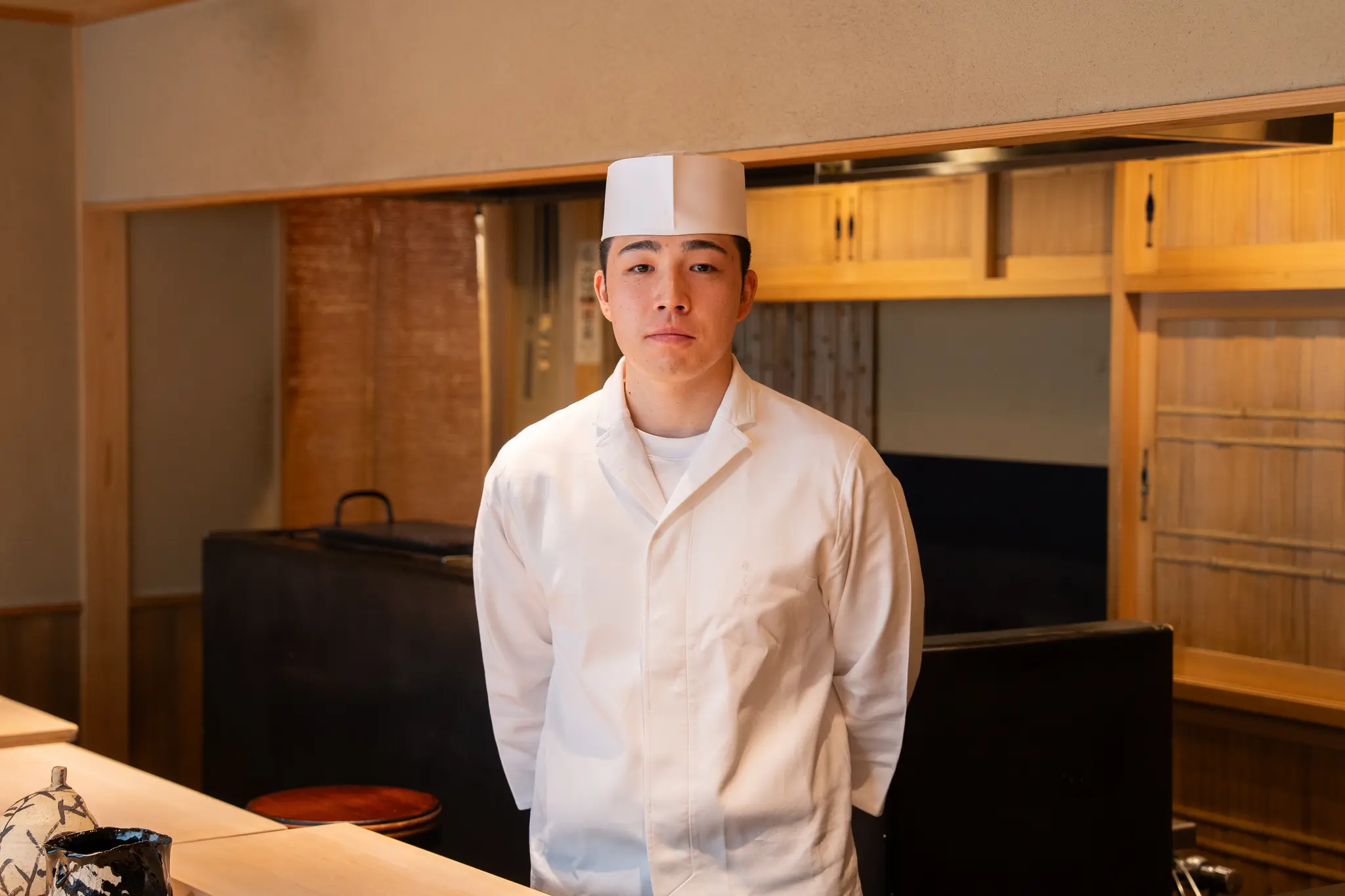
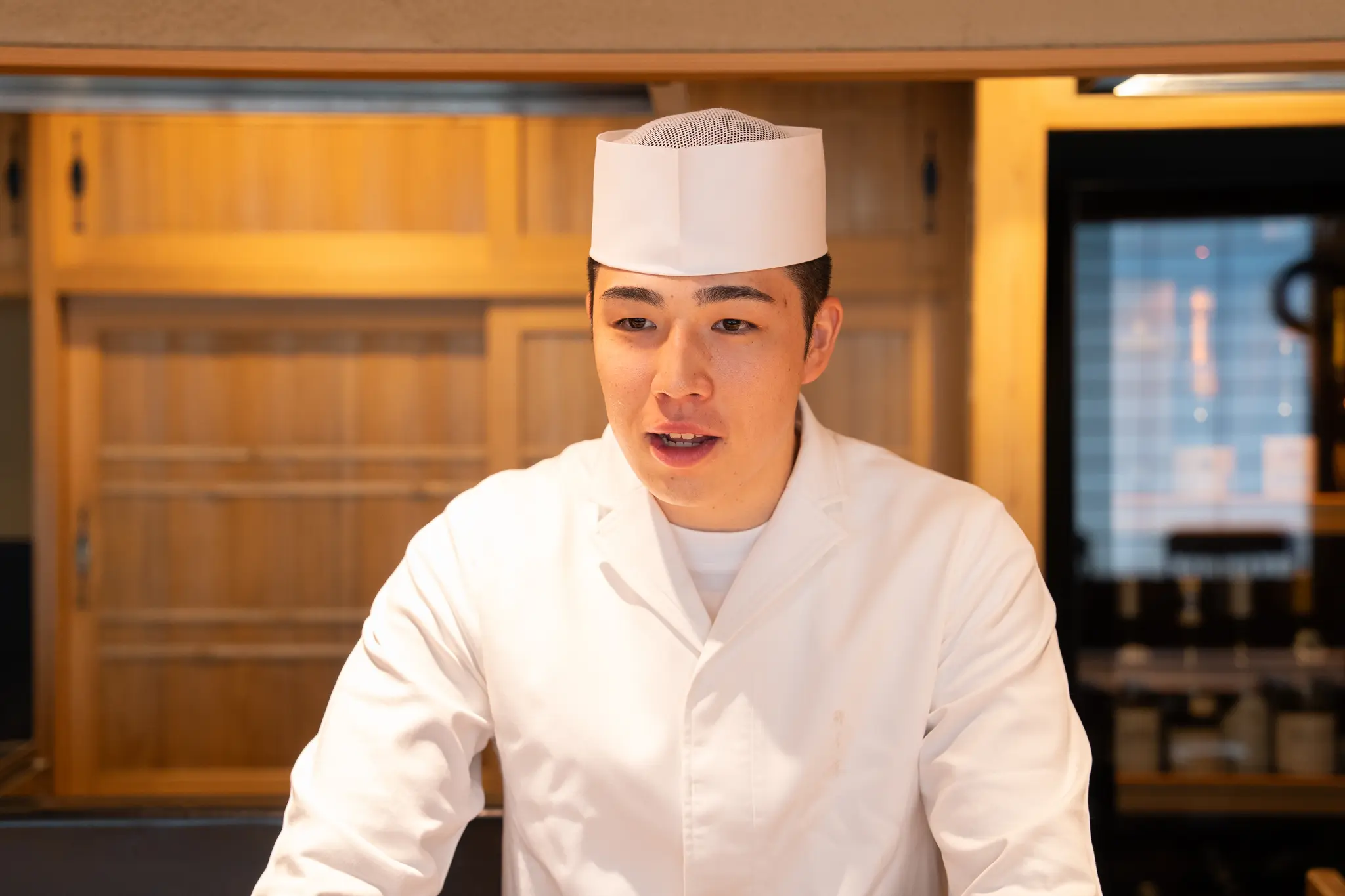
— What does 【Sushi Murayama】 mean to you, Chef Aizawa?
As long as you're willing to learn, it's a place where you're given endless opportunities to challenge yourself.
This is the third restaurant where I've trained, and what has impressed me most—especially compared to my previous experiences—is how close the relationship is between Chef Murayama and the staff. Of course, there are boundaries that should be respected as an apprentice, but beyond that, communication is remarkably open, and I feel very fortunate to work in such an encouraging environment.
At every stage of our development, Chef Murayama takes the time to help us think through the challenges we face—how we should approach them, where we should focus our efforts, and what it takes to continue growing. There are even times when he stays after service to talk with us, and through those conversations, I truly feel how sincerely he invests in each member of the team.
Those who actively seek to learn are naturally given more opportunities. If you're willing not only to fulfill your responsibilities but also to step forward and embrace new challenges, he'll wholeheartedly support you. To me, it's a truly special place—one that genuinely nurtures and encourages the desire to grow.
— Could you tell us what brought you to train at 【Sushi Murayama】?
I first met Chef Murayama at the restaurant where I began my culinary training. At the time, I was a junior apprentice, while he was the second-in-command and played a central role in running the restaurant.
Because we had worked together since those apprenticeship days, I had the opportunity to observe his craftsmanship and the way he interacted with guests from up close. Over the years, that naturally developed into a relationship of mutual trust, and that's what eventually led me to join him here at 【Sushi Murayama】.
— What would you say is the greatest appeal of 【Sushi Rairaku】?
Compared with our flagship restaurant, 【Sushi Murayama】, I see 【Sushi Rairaku】 as a place where guests can enjoy an excellent sushi experience in a more relaxed and approachable setting.
At 【Sushi Murayama】, many of our guests are long-time regulars, and it's not unusual for them to make their next reservation—sometimes as far as six months in advance—before leaving the restaurant.
【Sushi Rairaku】, on the other hand, is still in the process of introducing itself to more guests. I want it to have its own identity rather than simply being viewed as an extension of the main restaurant. That's why we've chosen not to have fixed starting times, making it easier for first-time guests to visit whenever it suits them.
We also offer a variety of course options, from menus centered primarily on sushi to courses that combine sakana with sushi, allowing guests to choose the style that best matches their mood that day.
For those who have always wanted to visit 【Sushi Murayama】 but feel it may be a little intimidating, I'd be delighted if they first experienced the warm atmosphere and unique character that only 【Sushi Rairaku】 can offer.
— Is there anything you'd like your guests to experience, or anything you particularly value?
Because sushi is at the heart of what we do, I try to offer as wide a variety of seasonal toppings as possible. My hope is that guests will discover something new—perhaps saying, "I've never seen this served as sushi before," or "This is my first time trying it." Those moments of surprise and enjoyment are incredibly rewarding.
At the same time, it creates valuable learning opportunities for our chefs. Every ingredient requires its own preparation and technique, and I believe it's through mastering that variety that they continue to grow. Creating an environment where that kind of learning can happen is something I value very much.
Rather than being bound by convention, I want 【Sushi Rairaku】 to remain a place that continually embraces new ingredients and new techniques—offering fresh discoveries not only for our guests, but for our team as well.
— What are your aspirations for the future?
My first goal is to introduce 【Sushi Rairaku】 to more people and make it a restaurant that guests genuinely want to visit.
Above all, I hope our guests leave thinking, "That was truly delicious," and wanting to come back again. If we can continue building those experiences one by one, I'm confident that, over time, more and more guests will become regulars. That's my biggest goal right now.
As for expanding to additional locations, I'm sure Chef Murayama has his own vision for the future. Personally, however, my focus is on making the restaurant I've been entrusted with—【Sushi Rairaku】—a truly successful and thriving establishment.
Passing the Craft to the Next Generation: A Chef's Responsibility
— Chef Murayama, could you tell us about your aspirations for the future?
I believe that nurturing the next generation of chefs is one of my most important responsibilities.
I am where I am today because so many senior chefs supported me and generously shared their knowledge, skills, and experience. I feel it's now my turn to pass those gifts on to the next generation.
What I want to pass on extends beyond technique alone. I also hope to teach the mindset required to approach this profession and what it truly means to live as a chef. "Preserving culinary culture" may sound like a grand expression, but I believe it's equally important to create an environment where young people can see a future for themselves in this profession and feel inspired to pursue it.
Personally, I'm approaching my fiftieth birthday, and I'd like to continue working behind the counter as actively as I can until I'm around fifty-five.
— Lastly, what does “delicious” mean to you, Mr. Murayama?
It’s difficult to define in just one word, but I think it comes down to balance.
No matter how delicious the food may be, the experience can be diminished if the atmosphere of the restaurant isn't comfortable. And because everyone's tastes are different, it's impossible to create something that every person will find equally delicious. That's why I believe the key is achieving the right balance.
No matter how exceptional the cuisine is, it's difficult to truly enjoy a meal if the atmosphere feels tense or uncomfortable. Of course, delicious food is the foundation. But I believe that genuine deliciousness is only realized when the cuisine, the atmosphere, the hospitality, and the time spent together all come together in harmony.
That's why I hope our guests leave not only thinking, "That was delicious," but also, "I can't wait to come back." That's the kind of restaurant I want 【Sushi Murayama】 to be.
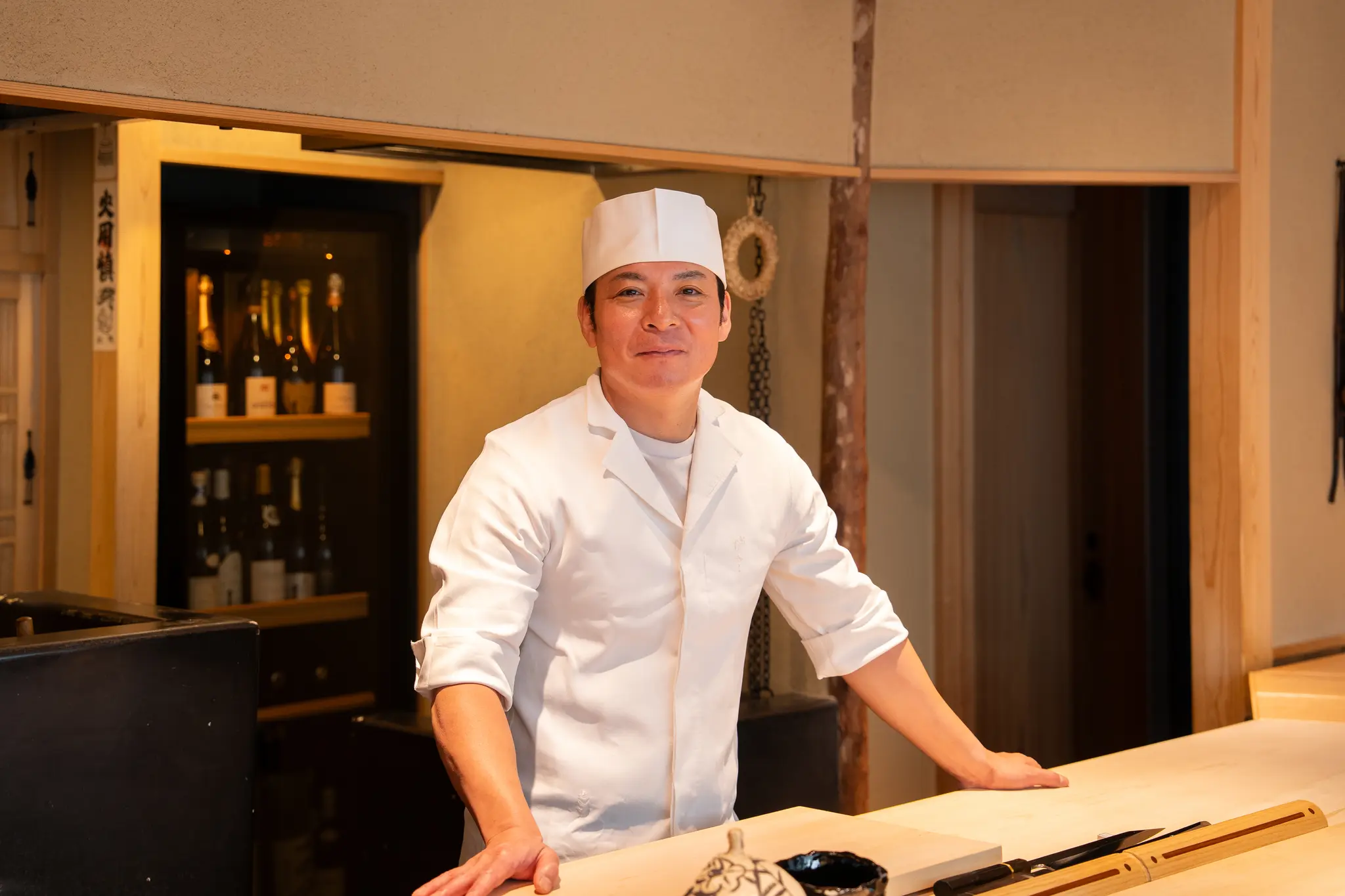
Through cuisine that reflects the changing seasons and a dining experience designed for genuine comfort, Daisaku Murayama continues to pursue his own vision of hospitality. At the heart of his philosophy lies the belief that deliciousness is not defined by food alone, but by the entire experience—one that embraces the cuisine, the space, and the people within it. The beauty of seasonal ingredients, the excitement of watching each dish come to life before your eyes, the warm and natural hospitality, and the craftsmanship refined through years of dedication—all of these elements come together in perfect balance to create what Murayama considers true deliciousness. We invite you to experience that harmony for yourself at 【Sushi Murayama】.
Interviews & Text / AutoReserve Magazine Editorial Team
Photography / Shoichi Baba
Restaurant Information
- AutoReserve Magazine
- Japan’s world-renowned flagship restaurant
- The Essence of Deliciousness Through the Eyes of 【Sushi Murayama】 Chef Daisaku Murayama: Embracing the Seasons and Nurturing People