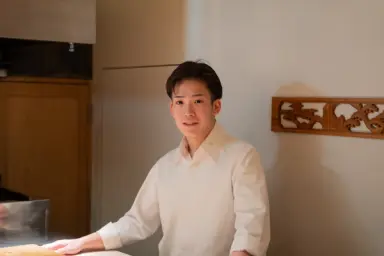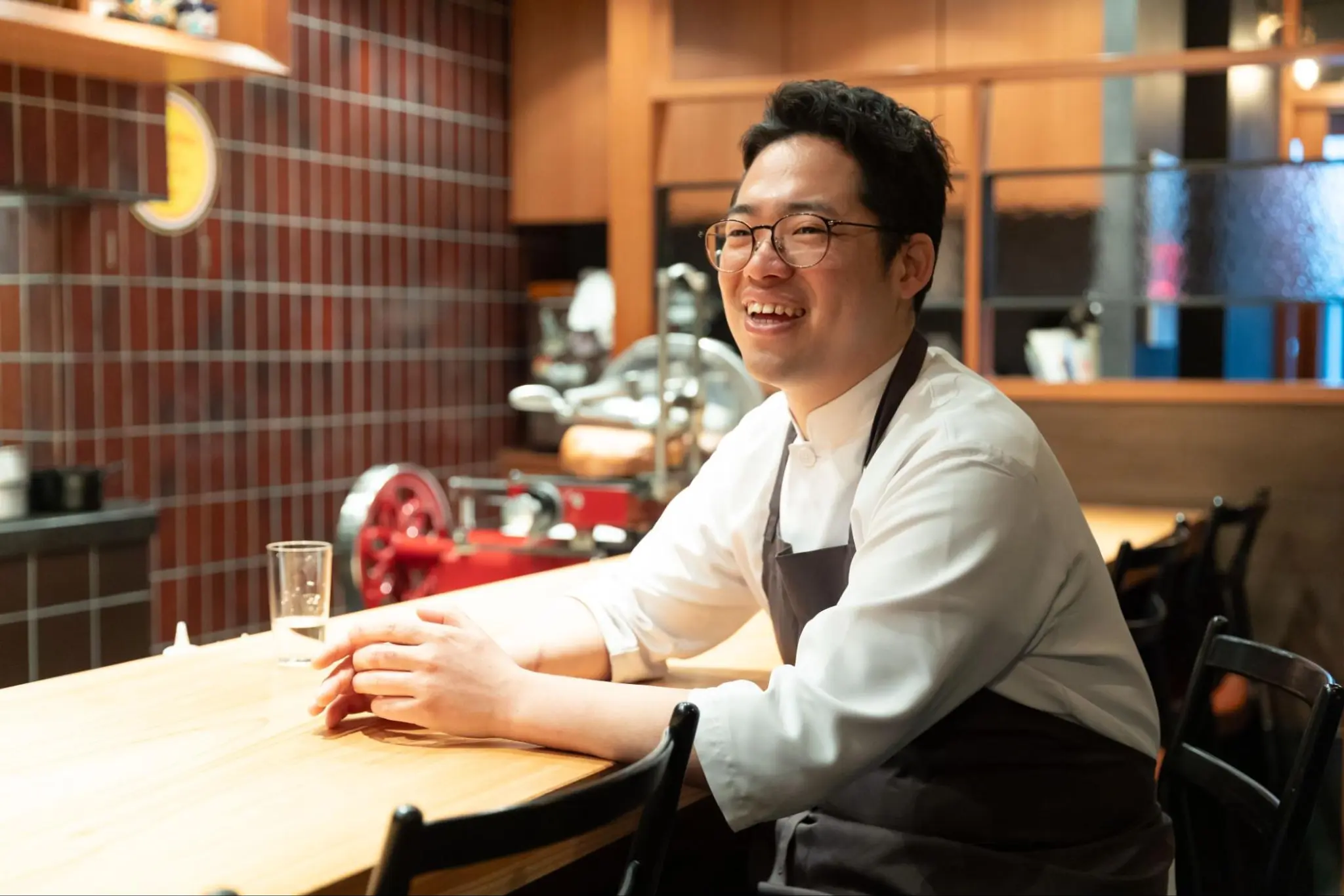
Delivering the Warm Memories of Southern Italy through the Cuisine of Chef Kousuke Sugimoto at 【merachi】
Enjoying the Simple Regional Cuisine of Southern Italy Across the Counter
ーーーThe counter is very impressive. Was it something you had envisioned from the beginning when creating the restaurant?
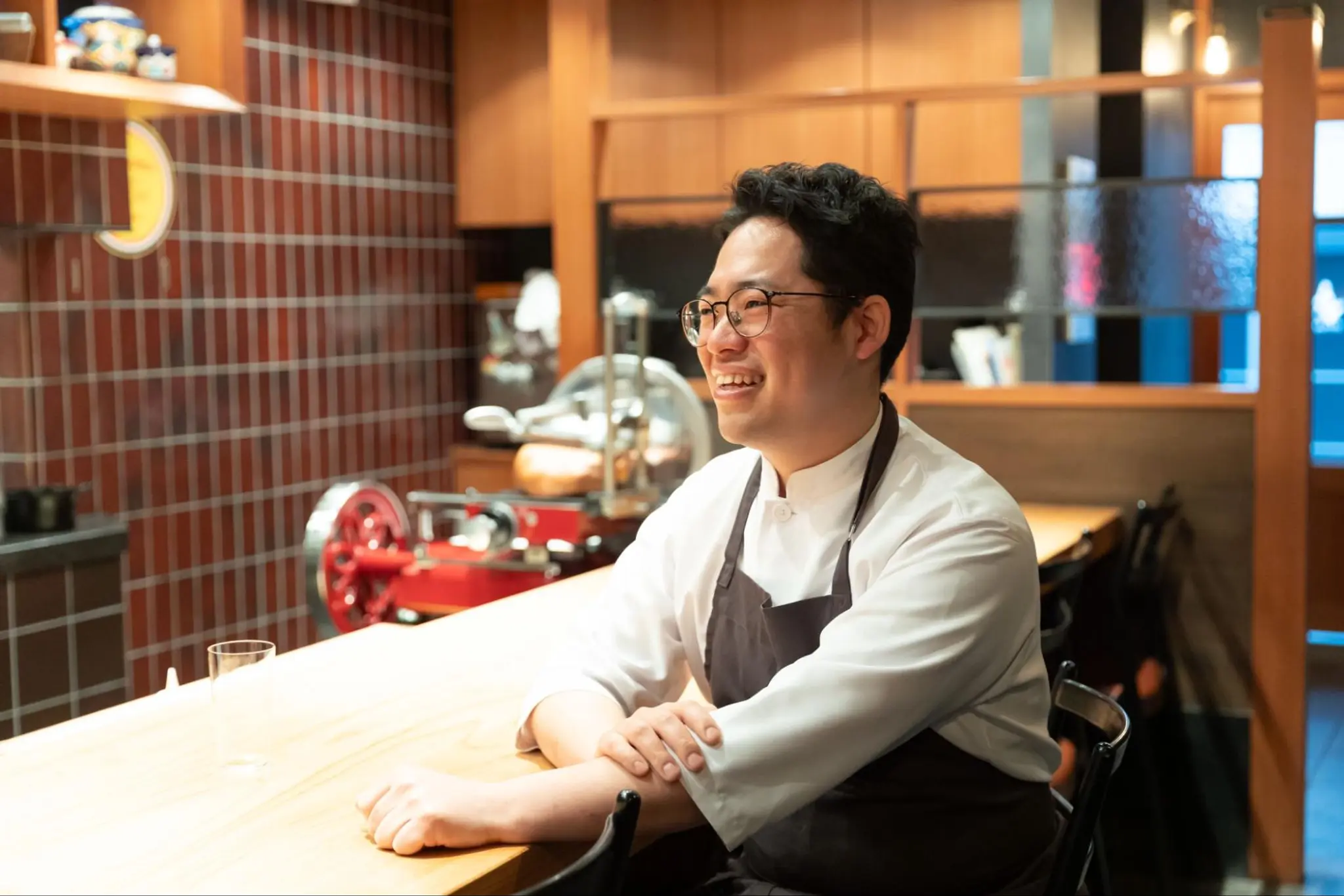
We have prepared ten seats at a counter made from a single slab of domestically sourced zelkova wood. Even before becoming independent, I had always envisioned building a restaurant centered around a counter. Initially, I was searching for a property around Azabu-Juban, but the preparations for opening coincided with the COVID-19 pandemic, making it difficult to find exactly what I wanted. It was during that time that this location was introduced to me. I hadn’t had much of a connection with Nishi-Azabu and thought, "It doesn’t really feel like me," but being tucked away in a quiet alley just off the main street, the atmosphere felt wonderful. When I came to view the place, I immediately felt, "Ah, this is it," and made the decision on the spot that same day.
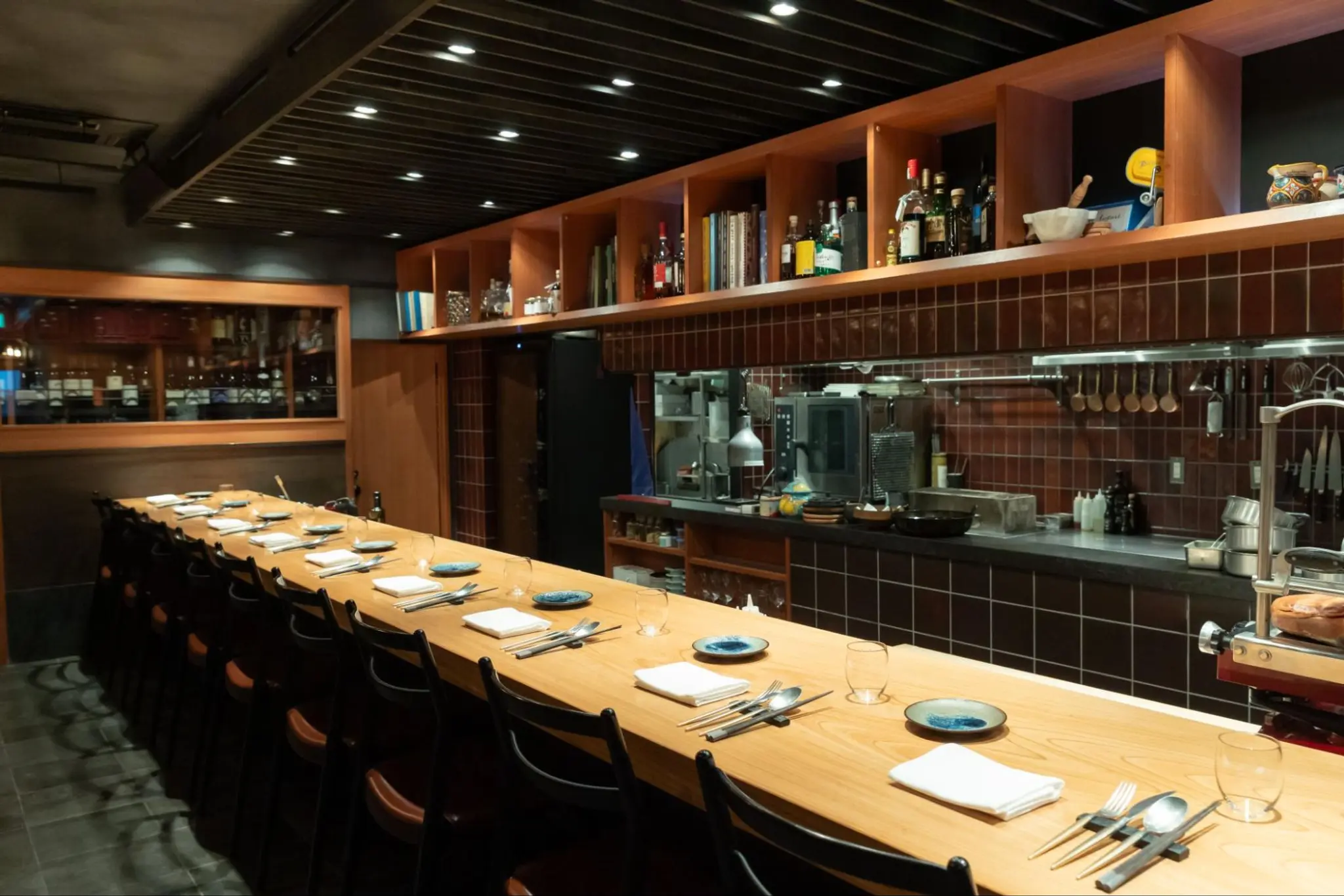
ーーーThe texture of the warm wood and the softness of the lighting create such a calming atmosphere.
Thank you very much. I asked Chef Hirotsugu Namase from "Design Works," an acquaintance of mine for some time, to handle the design. He's a gourmet himself and understands the importance of a good kitchen, so communication was quick and easy. I conveyed only the minimum of my requests and left the rest to him, and he was able to capture my tastes and images and translate them into the space. The kitchen is also extremely functional, and I truly feel it was the right decision to leave it to a professional.
ーーーCould you tell us about the features of the restaurant and the cuisine?
The basic offering is a course meal, but after 9 PM, guests can also enjoy à la carte options. Among those who come for à la carte, quite a few people say, "I want to start with pasta." In the course menu, pasta is served toward the latter half, but I completely understand the feeling of "wanting to eat the pasta you're most looking forward to while you're still really hungry." We try to accommodate guests' requests and consultations flexibly.
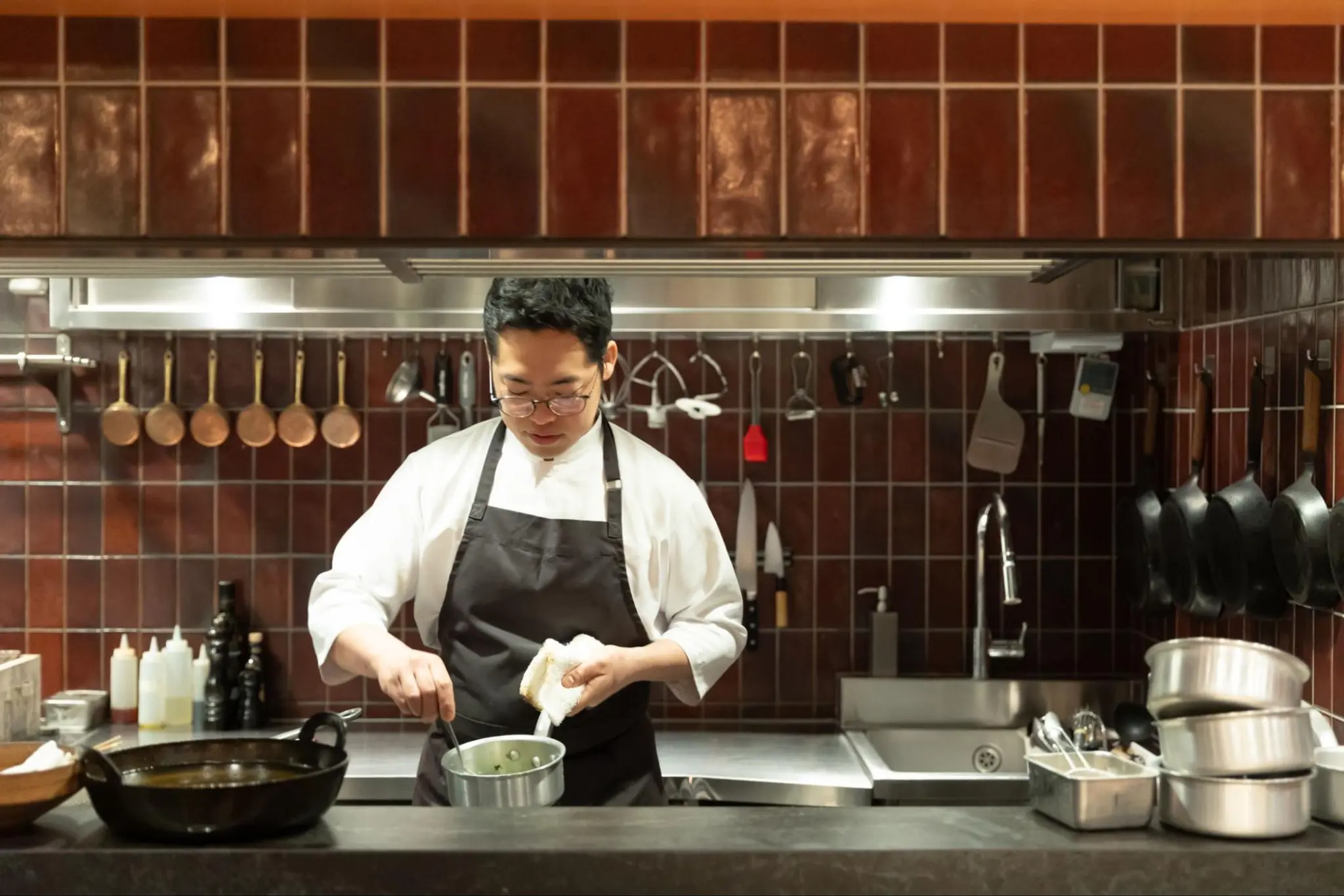
ーーーYou even make homemade pasta right in front of the guests across the counter—it feels so special.
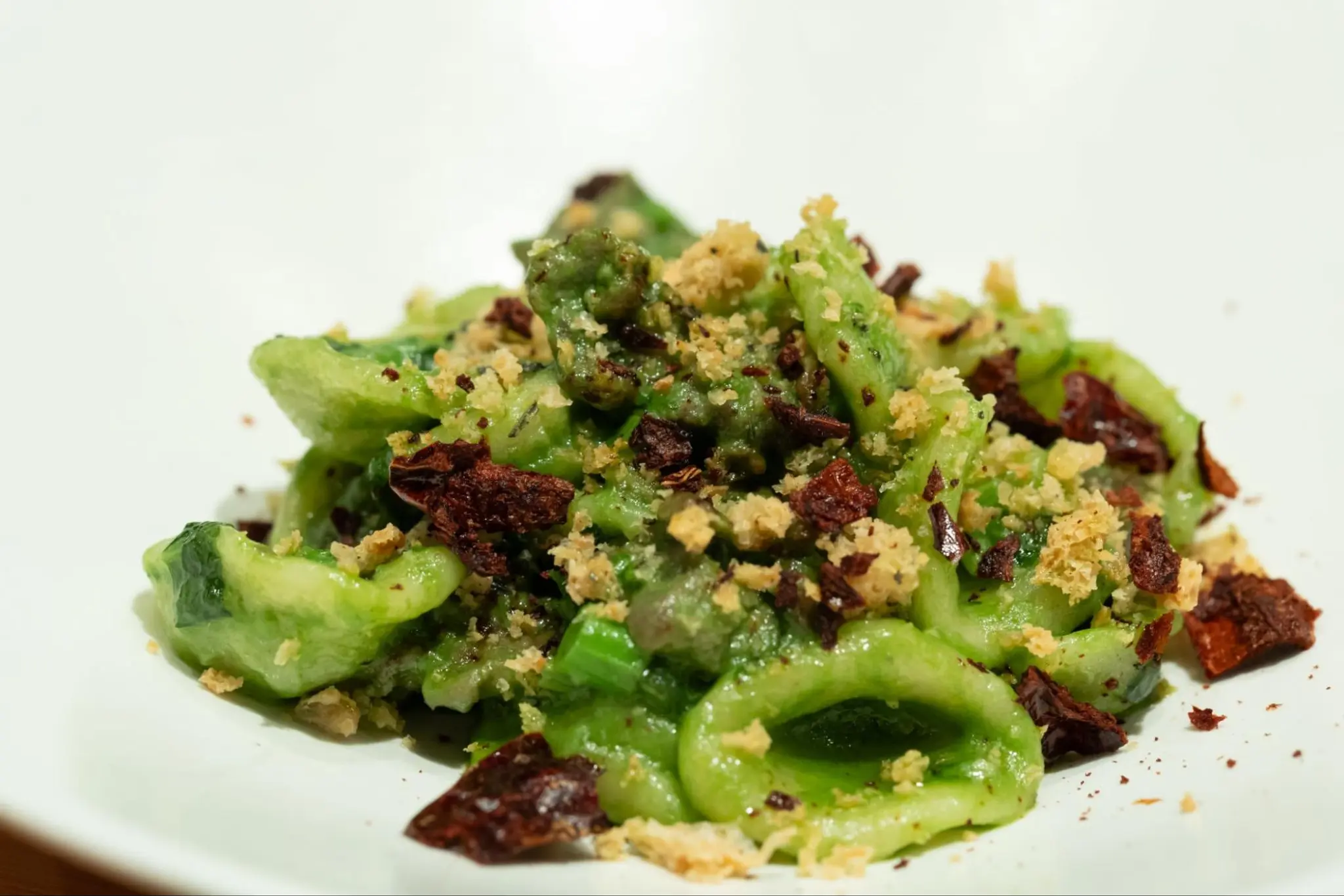
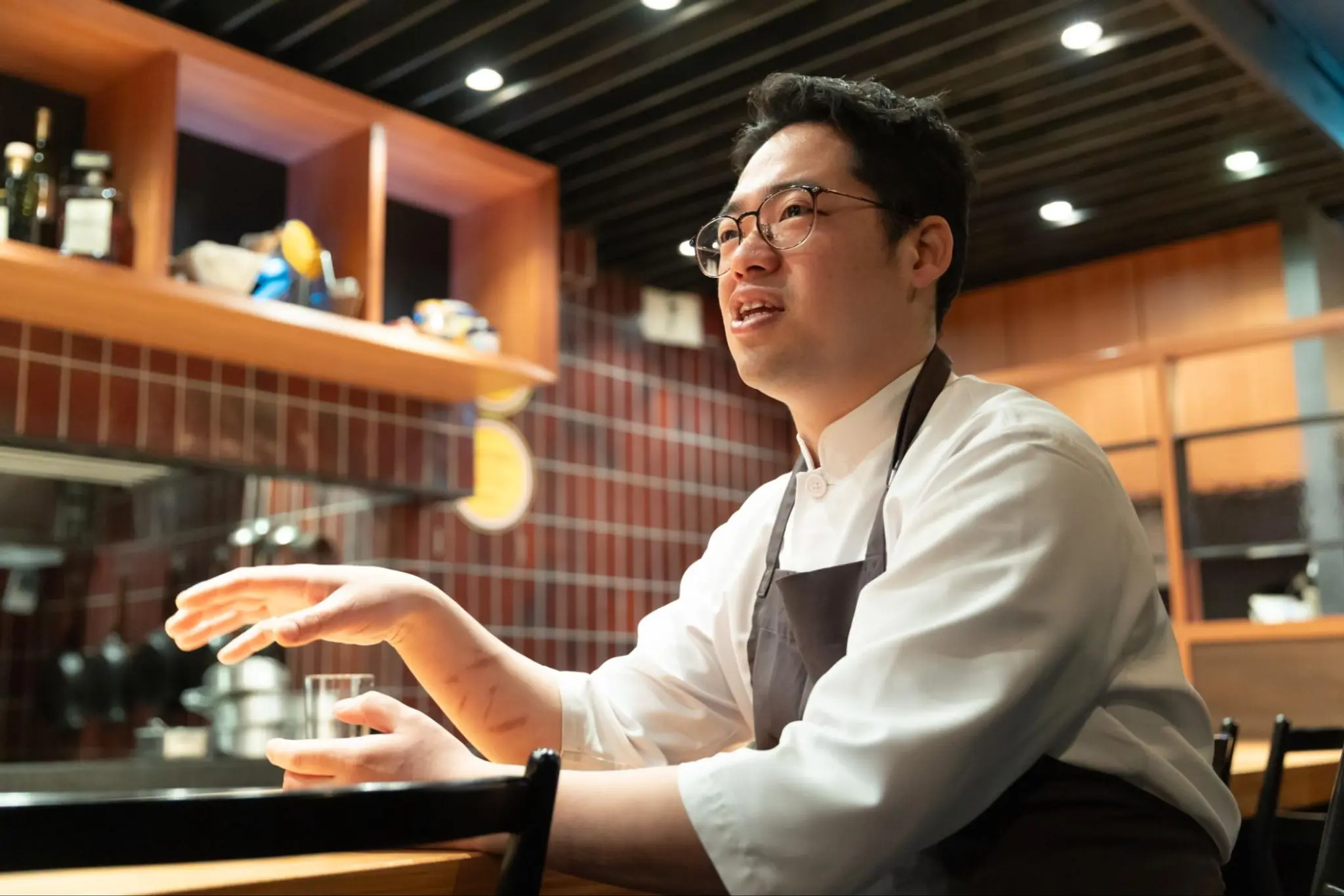
For example, with gnocchi, I make it right in front of the guests, starting from steaming the potatoes. Guests are often surprised, saying, "You're starting from there? (laughs)," but they are very pleased. The orecchiette I will be making today is a short pasta characterized by its chewy texture and its shape resembling earlobes, with the name deriving from the Italian word for "little ear" (Orecchio). It’s often eaten in places like Puglia, where I trained, and in the local areas, mothers set up tables in front of their houses and chat while making them incredibly quickly (laughs). Following that tradition, I also make them fresh on the spot for guests to enjoy.
ーーーWas there any personal experience or inspiration that led you to adopt the counter style?
When I was training in Italy, the owner of the first house I lived in treated me very kindly, and I remember it with great gratitude. He was close to my age, and every Sunday he would invite me to join the lunch gatherings with his girlfriend’s family, even though I didn't know anyone there. Sometimes he would say, "I can't make it this week, so go in my place," and I would go alone (laughs). On Christmas Day, a time when everyone usually spends time with family, a chef even invited me over to celebrate together. While the food and wine in Italy were, of course, delicious, what was truly special to me was the time spent around a large table, filled with conversation and warmth.
That's why, when creating my own restaurant, I wanted it to be a place where people could feel that same warmth. I want guests to experience that "happy time" shared with family and friends around a big table. I hoped to create an atmosphere where conversations naturally flow and where guests seated next to each other can laugh together.
Reconstructing the Simple Culinary Philosophy of Southern Italy in Tokyo
ーーーCould you tell us about the course menu?
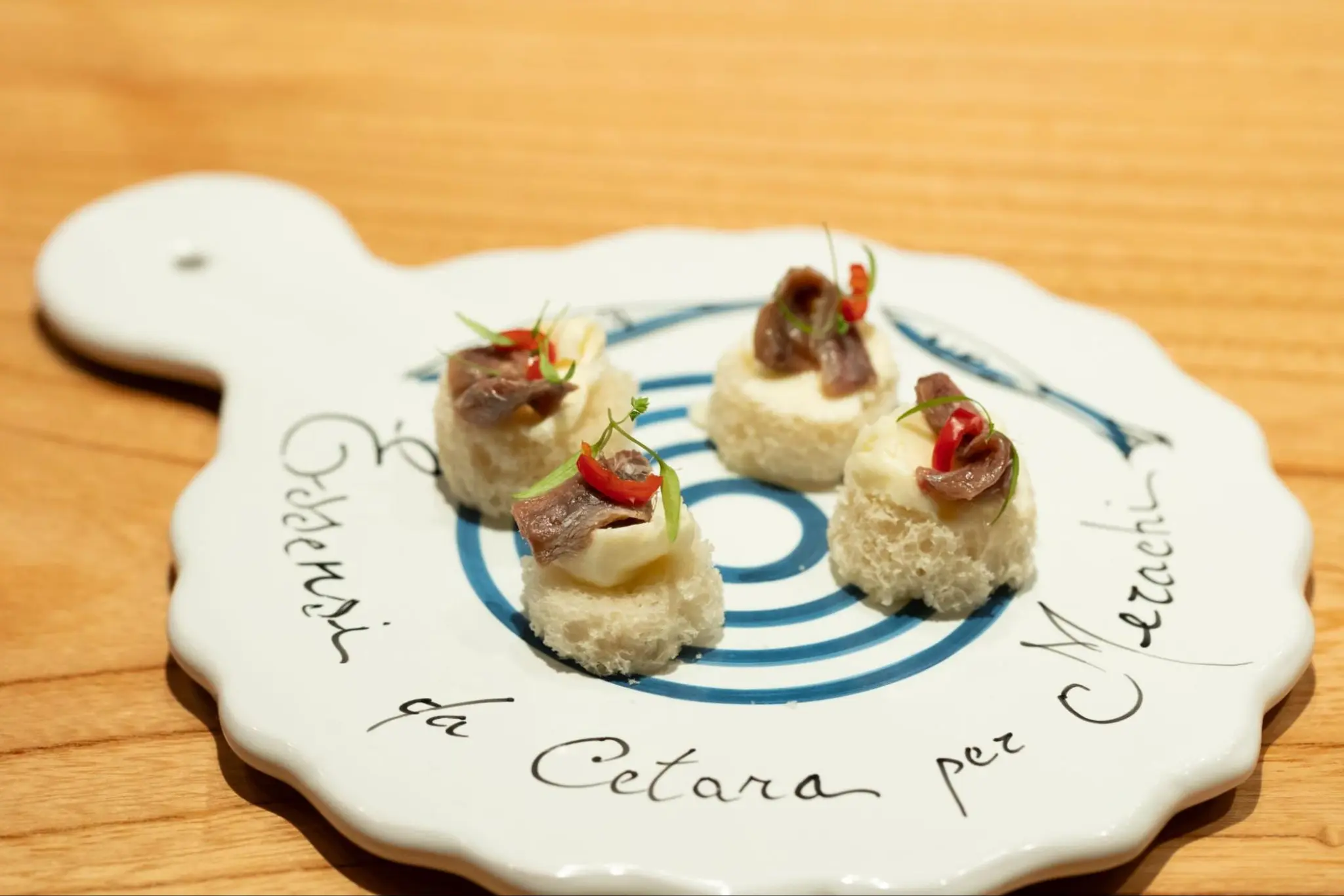
The first dish we serve is "Pane, Burro e Alici," a traditional dish from Campania. It’s a simple and rustic dish where butter and anchovies are placed on bread, but for me, it’s like my "business card"—a dish that reminds me of Salerno, the town in southern Italy where I first worked.
Our cuisine is based on the traditional dishes of southern Italy. I trained in the town of "Salerno," near Naples, and in a town called "Monopoli" in the Puglia region, and both places are known for their simple and unpretentious cooking. My style is to use southern Italian cuisine as the foundation while incorporating Japanese ingredients, and when necessary, blending in techniques from Japanese and French cuisines seamlessly. I also build the course with a playful touch, incorporating a hint of the innovative ideas I experienced in Copenhagen and Bangkok.
ーーーCould you tell us about the characteristics of southern Italian regional cuisine?
In northern Italy, there are many dishes that use plenty of heavy cream, butter, and cheese, but as you go further south, due to differences in climate, culture, and economic background, the cuisine tends to be simpler and more rooted in everyday life. Since there are many fishermen and farmers, the recipes are based on the wisdom of making use of available ingredients without waste .For example, leftover bread would be used the next day in soups or pasta dishes, and pork would be stewed down to the innards. Southern Italian cuisine often makes clever use of familiar ingredients, resulting in dishes that are simple yet extremely logical. I was deeply impressed by this practical aspect and try to reflect it in my own cooking as well.
ーーーHow do you actually incorporate that into your own cooking?
Tokyo, by its nature, isn’t a place where local ingredients are abundantly available, but it is a place where excellent ingredients gather from all over the country. I rely on trusted producers for vegetables, fish, and meat, accepting their suggestions like, "This is particularly good right now," and build my dishes based on the ingredients. I think there are similarities with southern Italy’s philosophy of "how to make the most delicious dish with what’s available," making use of local ingredients without waste and maximizing their appeal. However, trying to reproduce exactly what I learned in Italy here in Japan doesn’t often work. Even something as basic as broth—Italian chickens are richer in flavor and the vegetables are more robust, whereas Japanese ingredients are more delicate and refined. If you cook them in the same way, the result feels somehow lacking. So, I enhance the flavors by adding a touch of kombu dashi or adjusting the preparation to suit Japanese ingredients. The image I have is of reconstructing Italian cuisine using Japanese ingredients and cooking methods available now.
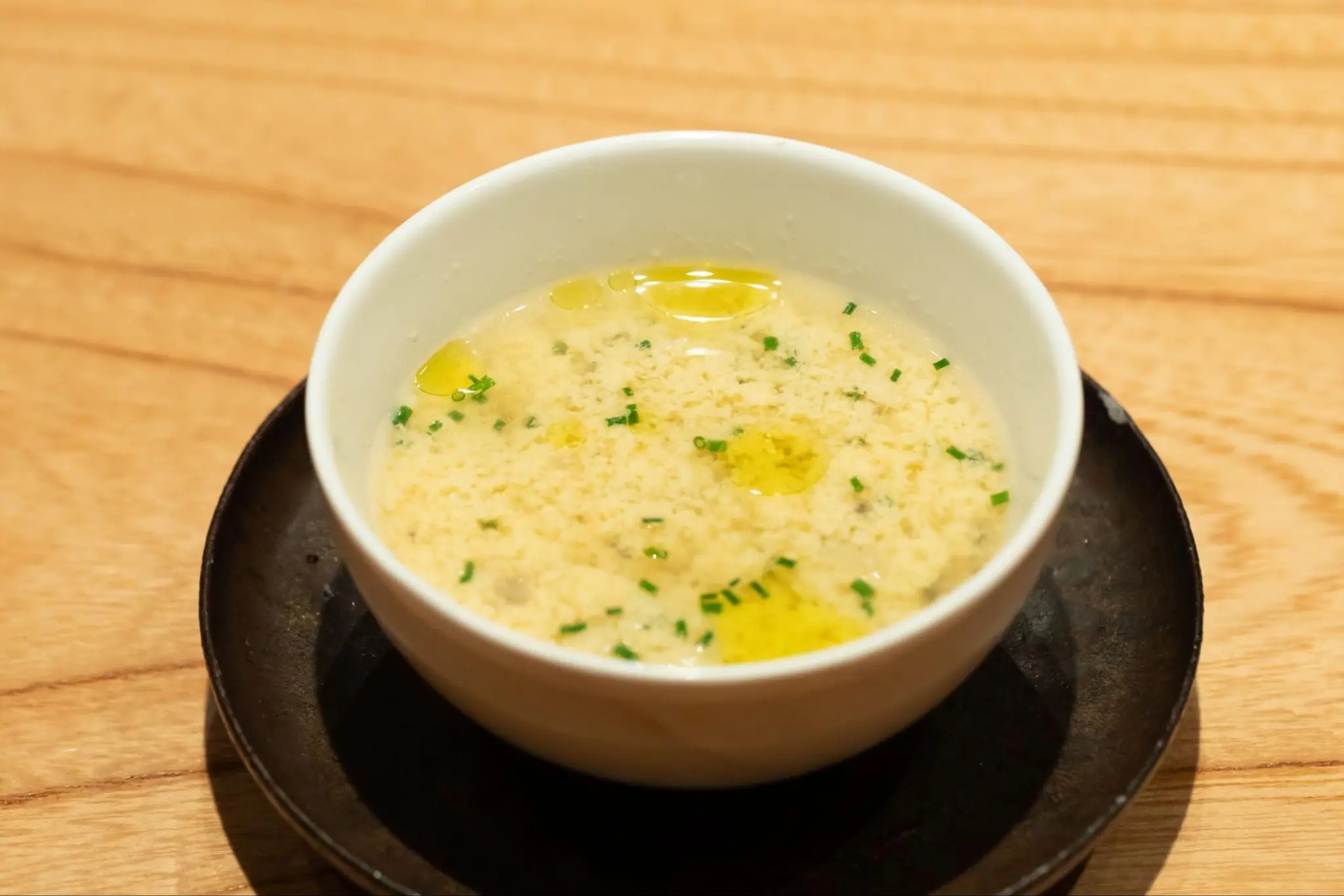
For example, "Stracciatella," a traditional Roman dish, is a soup made by combining chicken broth with egg and Parmigiano cheese.I prepare it using softshell turtle. When I serve it to Italian guests, they often say, "Oh, this is a traditional Italian dish!" but after one bite, they look puzzled, like, "Huh?"
Softshell turtle isn’t an ingredient used in Italian cooking, so when I reveal it afterward, they are surprised but delighted. It would make me very happy if Italians also feel that this has become "Italian cuisine that can only be eaten here."
Connections with Producers Create One-of-a-Kind Flavors
ーーーYou really value a "uniquely Japanese" way of thinking, don’t you?
For example, when it comes to tomatoes, I work with "Yokoyama Engei," a farm in Kiyose, Tokyo, that cultivates the Italian variety "San Marzano."I encountered them when I was looking for new producers during the COVID-19 pandemic, hoping to start something new. Unlike Japanese tomatoes, which are typically very sweet, "San Marzano" tomatoes are less sweet and better suited for cooking, making them ideal for Italian cuisine. That said, due to both the differences in the variety and the differences between Italian and Japanese soils, cultivation has been quite challenging. At one point, the producer even said, "I don't want to grow them anymore," but I was so eager to use them that I pleaded, "I’ll buy all of them," and they continue to cultivate them for me to this day (laughs).
ーーーHow do you use the tomatoes once they are harvested?
Every summer after the harvest, the producers and fellow chefs gather at my restaurant, and we prepare a year’s worth of tomato sauce together. In Italy, there’s a culture where families and relatives come together to make tomato sauce during the summer, and I feel like I’m recreating that tradition here in Japan. Last year, we processed as much as 120 kilograms of tomatoes, but it was gone in no time. At the restaurant, we use it for a simple tomato sauce pasta, and many customers are surprised, saying, "Is it really this delicious?"Of course, since the climate and soil are different from Italy, the flavor isn’t exactly the same, but I really love the tartness and feel it suits our cuisine perfectly.
We enjoy the variations from year to year as if we were making wine.
ーーーIt sounds like a lot of fun, almost like experiencing Italy itself! How about other ingredients?
For example, today’s pasta featured "Cima di Rapa," a type of rapini from southern Italy that is hard to substitute with anything grown in Japan, so we import it. As for anchovies, we have them specially made with reduced salt by craftsmen in Cetara, a small port town in Italy.
We communicated back and forth many times to ensure they would suit our dishes perfectly.
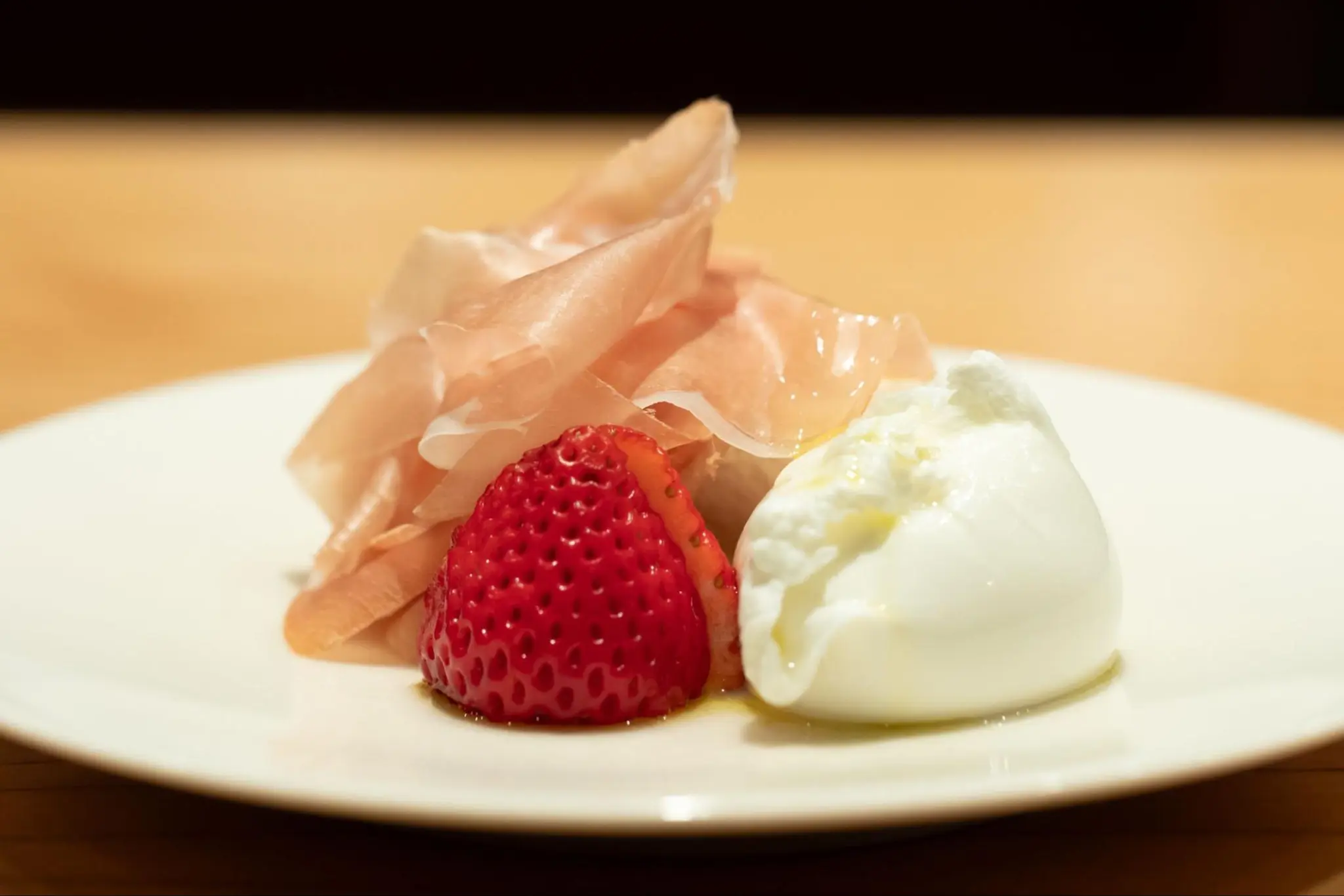
On the other hand, for mozzarella cheese, I deliberately choose to use a domestic product. There’s a craftsman, Mr. Hidetoshi Takeshima, who produces buffalo mozzarella cheese in Kisarazu, Chiba—one of the very few in Japan. During my training in Italy, I was amazed by the deliciousness of the mozzarella I had locally, but with fresh cheese, air transport inevitably compromises the flavor, texture, and overall quality. Like tofu, fresh cheese is best enjoyed right after it’s made. Interestingly, Mr. Takeshima also trained in Campania, so we immediately connected, and when I tasted his mozzarella for the first time, I thought, "This is it!"I quickly told him I wanted to use it at my restaurant, and now we’re able to offer it. Beyond the incredible taste, the fact that we can have it delivered fresh, thanks to the proximity, is a huge advantage. It truly is Italian cuisine made possible precisely because we are in Japan.
ーーーYou must really value your trust with the producers as well.
To me, producers are "craftsmen."Cuisine can only exist because of ingredients, and behind every ingredient, there is always a producer. It’s thanks to the producers that I’m able to cook and continue running the restaurant. That’s why I feel like I’m building 【merachi】 together with them. Because it’s something we’ve created together, I want to make sure it’s properly conveyed to the guests.
The Space and Cuisine Born from the Feelings Put into "merachi"
ーーーWe heard that there is a special meaning behind the restaurant's name as well.
The name 【merachi】 comes from a Greek word meaning "crafted by a craftsman with heartfelt dedication."Back when I was in Italy, the local chefs often used this word. Not only when cooking but also when making anything, they would say something like, "merachi!" It’s a word that expresses not just moving your hands but "putting your feelings into what you make." I believe that not only in cooking but also in the space, the tableware, and everything related to the cuisine, there should be "merachi," and that's why when it came time to create my restaurant, the name 【merachi】 naturally came to mind. Our restaurant is truly supported by so many people, so I wanted the name to embody the idea of a place where the "merachi" of many craftsmen gather.
Earlier, I mentioned the design, but beyond that, the cutlery is from "Ohashi Western Tableware," a tableware maker in Niigata. It’s simple, without waste, extremely easy to use, with perfect mouthfeel, weight, and the feel when twirling pasta. The color is a special custom order you won’t find anywhere else. The chopsticks are made by "Marunao," a chopstick craftsman also based in Niigata.
It’s said that shaping hard wood into fine octagonal chopsticks using temple carpenter techniques requires a great deal of skill. Some plates were even gifted by Italian friends with the restaurant name engraved on them…If I tried to count, there would be no end—the number of people involved in our restaurant is truly countless.
ーーーIt feels like your sentiments are reflected in the atmosphere of the restaurant. What kind of experience would you like your guests to have?
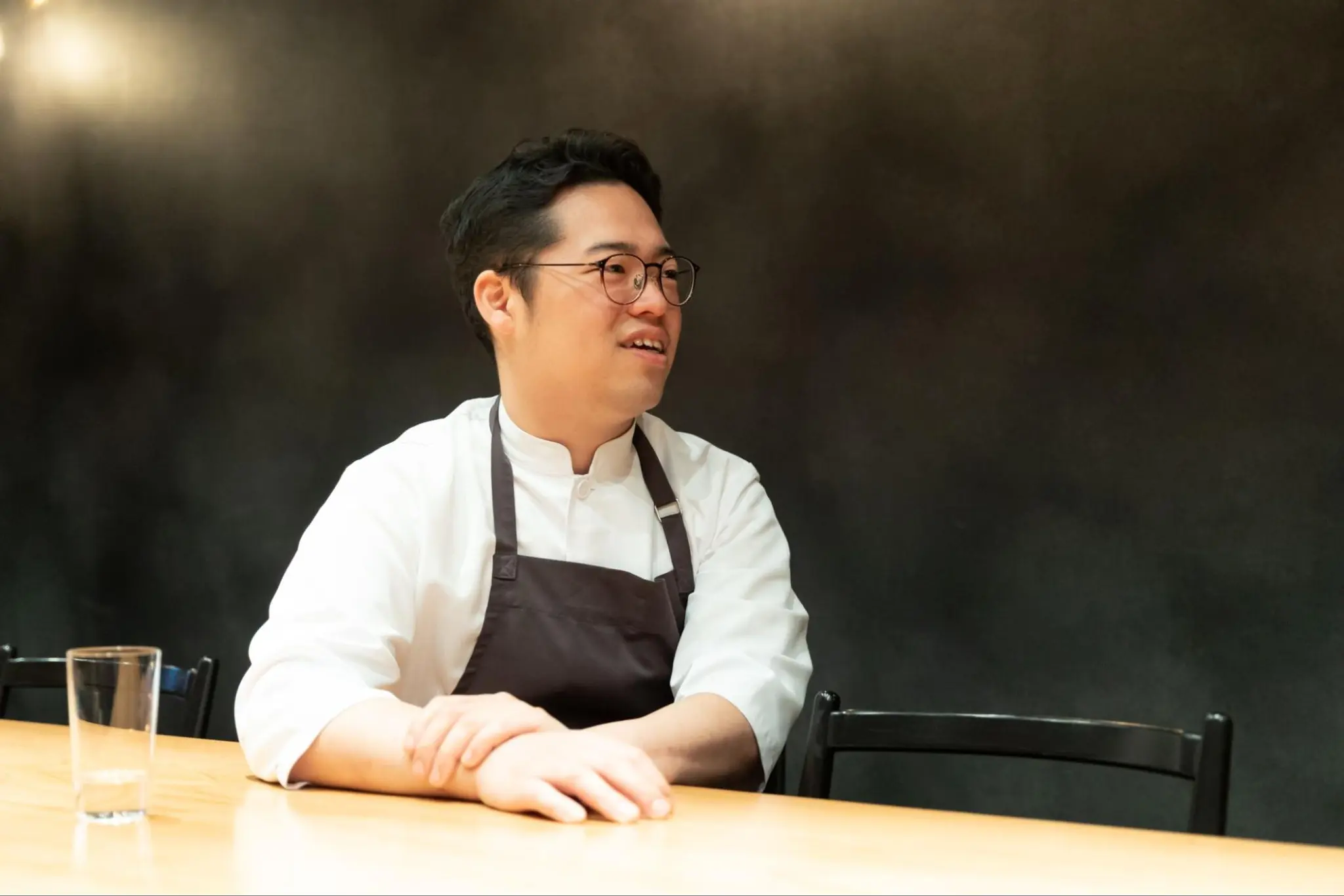
I hope it becomes a place where people feel, "Something good might happen if I come here," or "Maybe I'll run into someone," and can just drop by casually. The way Italians enjoy their holidays is really interesting. When I lived there, I would always go to the "Centro Storico," the main street of the town, on my days off. Because it was a small town, after walking back and forth a few times, I would inevitably run into someone I knew. We would greet each other with a "Long time no see!" and, over a coffee, decide what to do for the rest of the day. People would go out without any plans and just spend time with whoever they happened to meet—it was a very comfortable way of living.
I hope my restaurant can be a place where natural conversations arise between neighboring guests, the atmosphere becomes even better, and the food tastes even more delicious because of it.
That’s the kind of place I want to create.
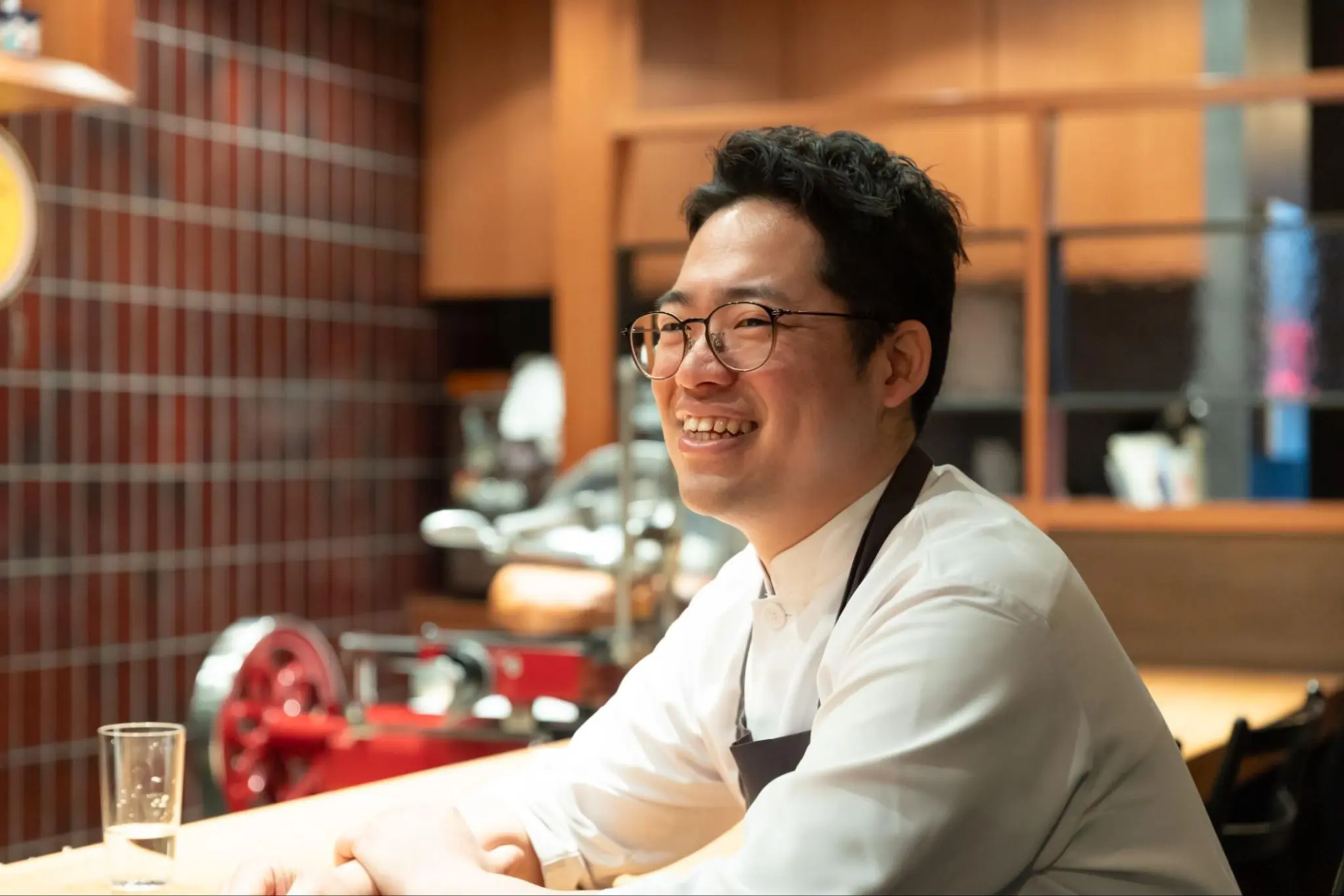
There was a time when guests from the Middle East visited the restaurant, and at the neighboring table, there was a couple who had recently gotten engaged. While enjoying their meal, the man once again said, "Will you marry me?" The whole restaurant instantly filled with a celebratory mood, and everyone joined in saying, "Let’s toast together!" Everyone shared in their joy, and the atmosphere became very lively. I think moments where guests connect with each other and share happiness are thanks to the air and atmosphere of the restaurant.It would make me very happy if many warm moments like that could naturally be born here.
ーーーDo you have any future aspirations or challenges you would like to take on?
I want to cook even more freely. Lately, I’ve had more opportunities to interact with people from the world of Chinese cuisine, and I want to learn their techniques to broaden my range of cooking.
While cherishing the philosophy of southern Italy, I don't want to be rigidly bound by it—I want to evolve beyond those boundaries.
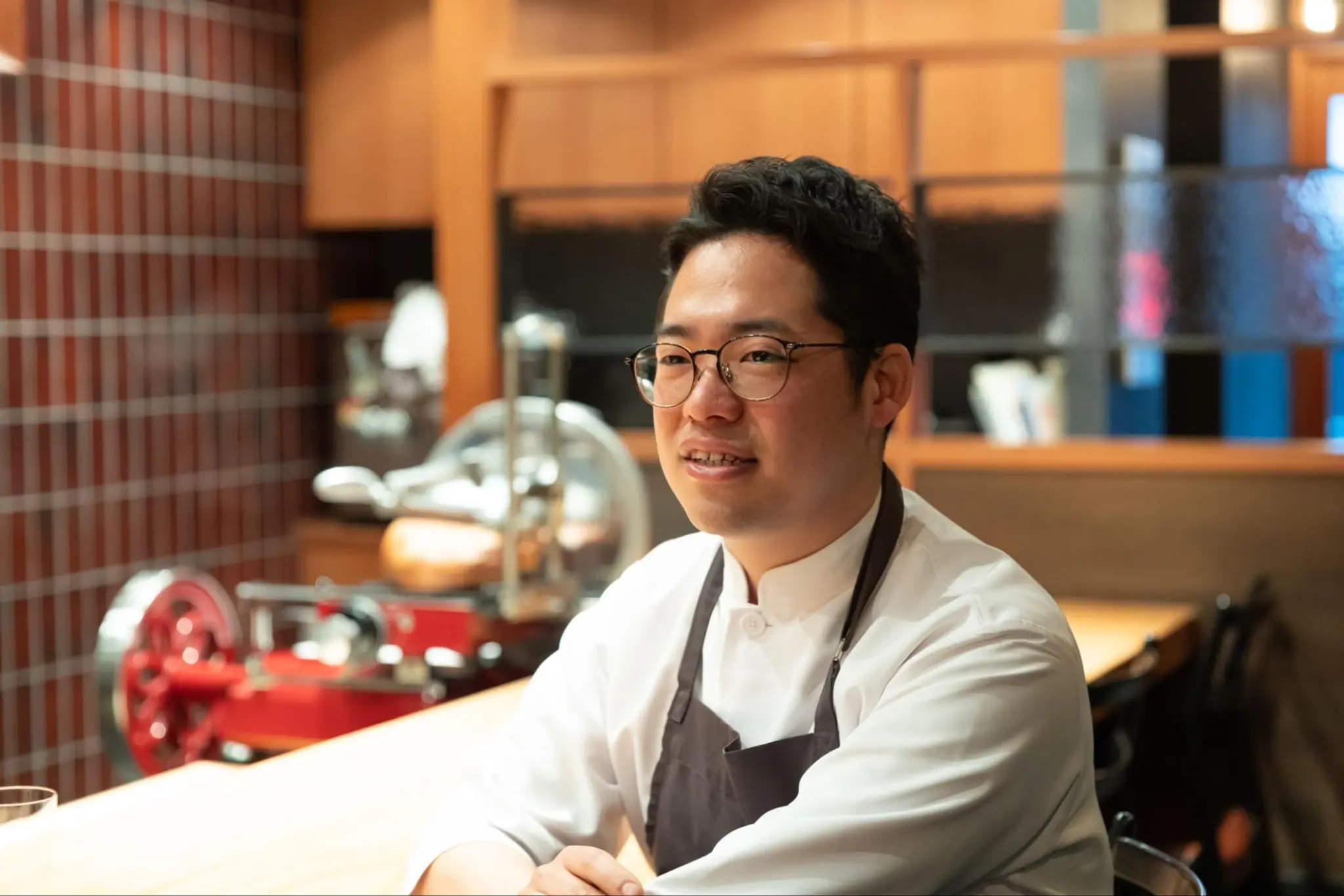
Additionally, in the future, I hope to go beyond the counter seats at 【merachi】 and more widely convey the charm of southern Italy’s atmosphere, cuisine, and culture. Currently, I am participating in the launch of a restaurant in Saudi Arabia, where I will be responsible for supervising the pasta.
I’m also considering ways to make the ingredients we use at the restaurant available to our guests and others outside the restaurant. The true appeal of Italian food and culture lies in its unpretentious simplicity. I would be delighted if I could share that goodness in various forms.
ーーーLastly, what does "delicious" mean to you, Chef Sugimoto?
I believe that "delicious" is not just about the taste of the food, but the entire experience—the people you share the meal with and the atmosphere of the place—all coming together as one.
My role is to add the necessary touches to bring out the maximum appeal of the perfect ingredients delivered by the producers and to create moments where guests feel, "That was fun / I want to come back." That, to me, is the true meaning of "delicious."
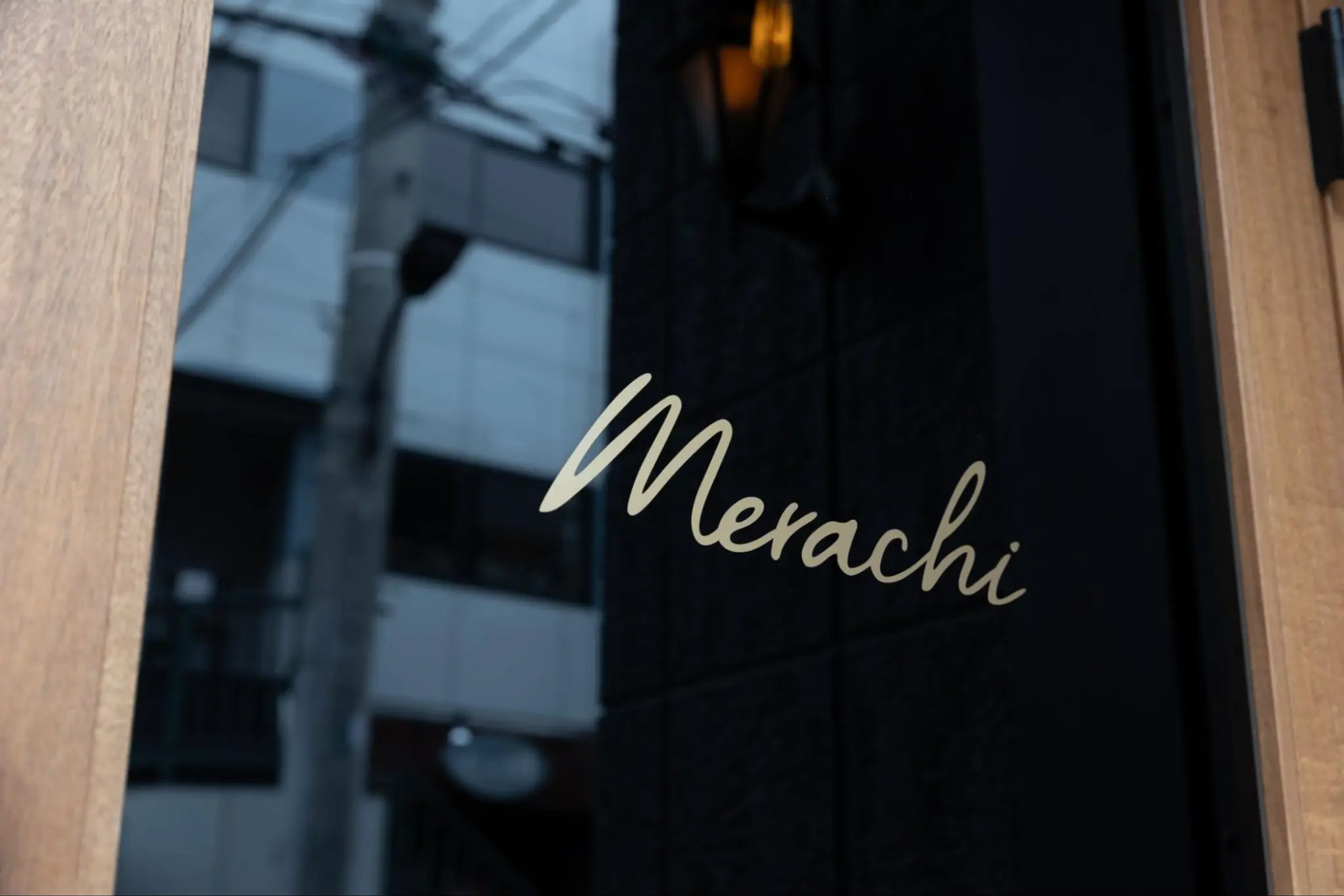
As the façade lamp lights up again tonight, one can picture the smiles of guests enjoying their meals at the counter. Drawing from the regional cuisines of various parts of Italy, Kousuke Sugimoto weaves together his rich experiences and sensibilities with the heartfelt dedication and passion of many craftsmen to create "Italian cuisine that can only be made in Japan."For someone who visits, these dishes might even become their own form of comfort food.【merachi】 overflows with a warmth that makes you instinctively want to say, "I’m home."
Interview and Text by Yuko Arakawa
Photography by Atsushi Sanada
Restaurant Information
- AutoReserve Magazine
- Restaurants recommended by top chefs
- Delivering the Warm Memories of Southern Italy through the Cuisine of Chef Kousuke Sugimoto at 【merachi】