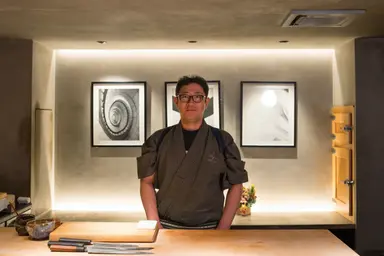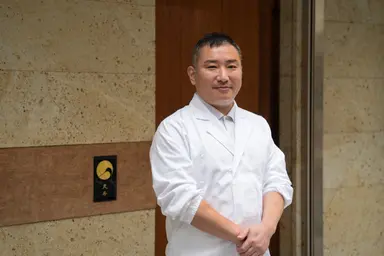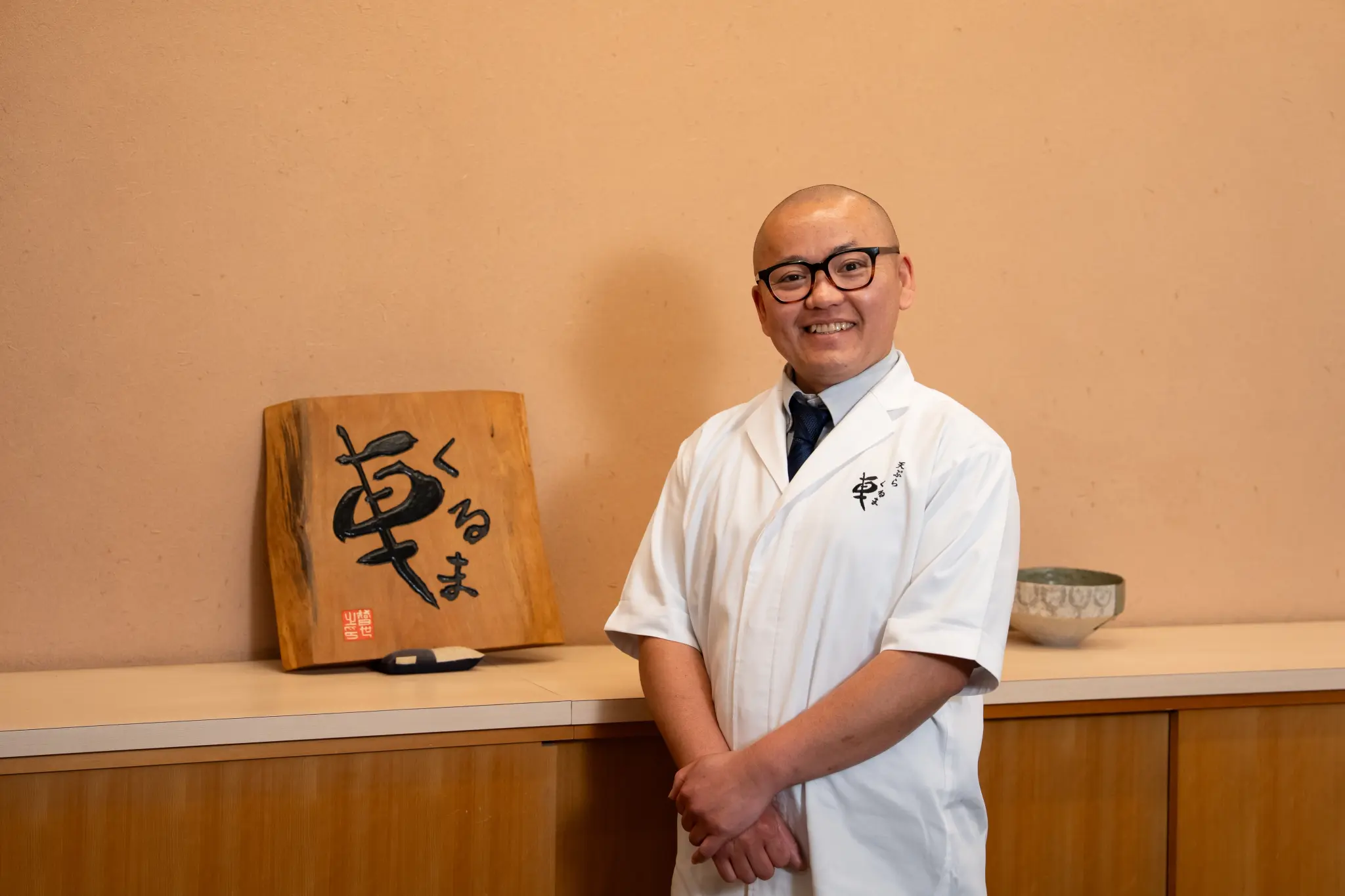
Tempura Kuruma, a solitary restaurant nestled in the countryside: the aromas and philosophy pursued by Tomoya Kurumazaki
To create delicious things on my own
— What inspired you to become a chef?
My father was a farmer, so whenever we reached milestones like finishing the rice planting or the harvest, we would go out for a nicer-than-usual meal a few times a year for “sanabori” (a celebratory feast to thank the gods for the safe completion of farm work and to reward the workers). Thanks to that, I was able to enjoy delicious food such as high-end sushi at non-conveyor-belt restaurants and quality meat.I started thinking that if I could create that kind of delicious food myself, I would have more opportunities to enjoy it. I’ve always loved cooking, and from around elementary school, I was already thinking about becoming a chef. By the time I was in high school, I had firmly decided on that path. After graduating, I attended a culinary school in Saitama, and then joined 【Ginza Tenichi】.
All of my part-time jobs during my student years were related to cooking. In high school, I worked at a Japanese restaurant, and while attending culinary school, I worked at a sushi restaurant. Having become familiar with the food and beverage industry, I realized that cooking was the kind of work that felt the least burdensome to me. I also believed that, between a job you dread and one you don’t, the latter is far closer to being a true calling.
— Is there a reason you chose that place for your training?
It all started when a teacher at my culinary school recommended it to me. I wanted to learn Japanese cuisine broadly, so I thought that even if I worked at a tempura restaurant for a few years, I would eventually need experience at a traditional Japanese restaurant as well. With that in mind, I went to the interview on the condition that they were okay with that plan.In the culinary world, many people quit along the way, so the entry barrier is relatively low, and it’s often easier to get hired than people might expect. When I first joined, there were about 30 of us, but over time, people were gradually filtered out, and it seemed that the expectation was that if five or six remained after a few years, that would be considered successful.I was the first person from my culinary school to join 【Ginza Tenichi】, so I worked with a strong sense of responsibility, thinking that if I could prove myself, it would make it easier for the restaurant to hire more students from my school in the future. I felt as though I was carrying the reputation of my school on my shoulders.
I trained at 【Ginza Tenichi】 for five years, from the age of 20 to 25. At a tempura restaurant, tempura naturally becomes the main focus from beginning to end, but when I thought about eventually opening my own place, I wanted to offer a course that included not only tempura, but also sashimi, simmered dishes, grilled dishes, and more.So, when I was looking for a place where I could gain a broader range of experience in Japanese cuisine, a teacher from my culinary school introduced me to a local Japanese restaurant, and I moved there. Although it was an independently run establishment, it handled large banquet reservations, and on weekends it was often fully booked. At times, we would serve as many as 200 guests, making it an extremely demanding and fast-paced environment.
An experience that will change your image of tempura
— What first drew you to the appeal of tempura?
When I joined 【Ginza Tenichi】, I was shocked by just how delicious tempura could be. Many people may have the impression that eating two or three pieces of tempura can feel heavy on the stomach, but depending on how it’s prepared, you can eat ten pieces without that heaviness.There are specific techniques in both frying and preparing the batter that prevent that heavy feeling. The tempura I had at 【Ginza Tenichi】 when I was 20 felt like an entirely different food—it completely overturned everything I thought I knew about tempura.I came to believe that it is the mission of tempura chefs to change people’s perception of tempura itself. Being able to transform someone’s image or understanding of a dish is what makes this work so rewarding.
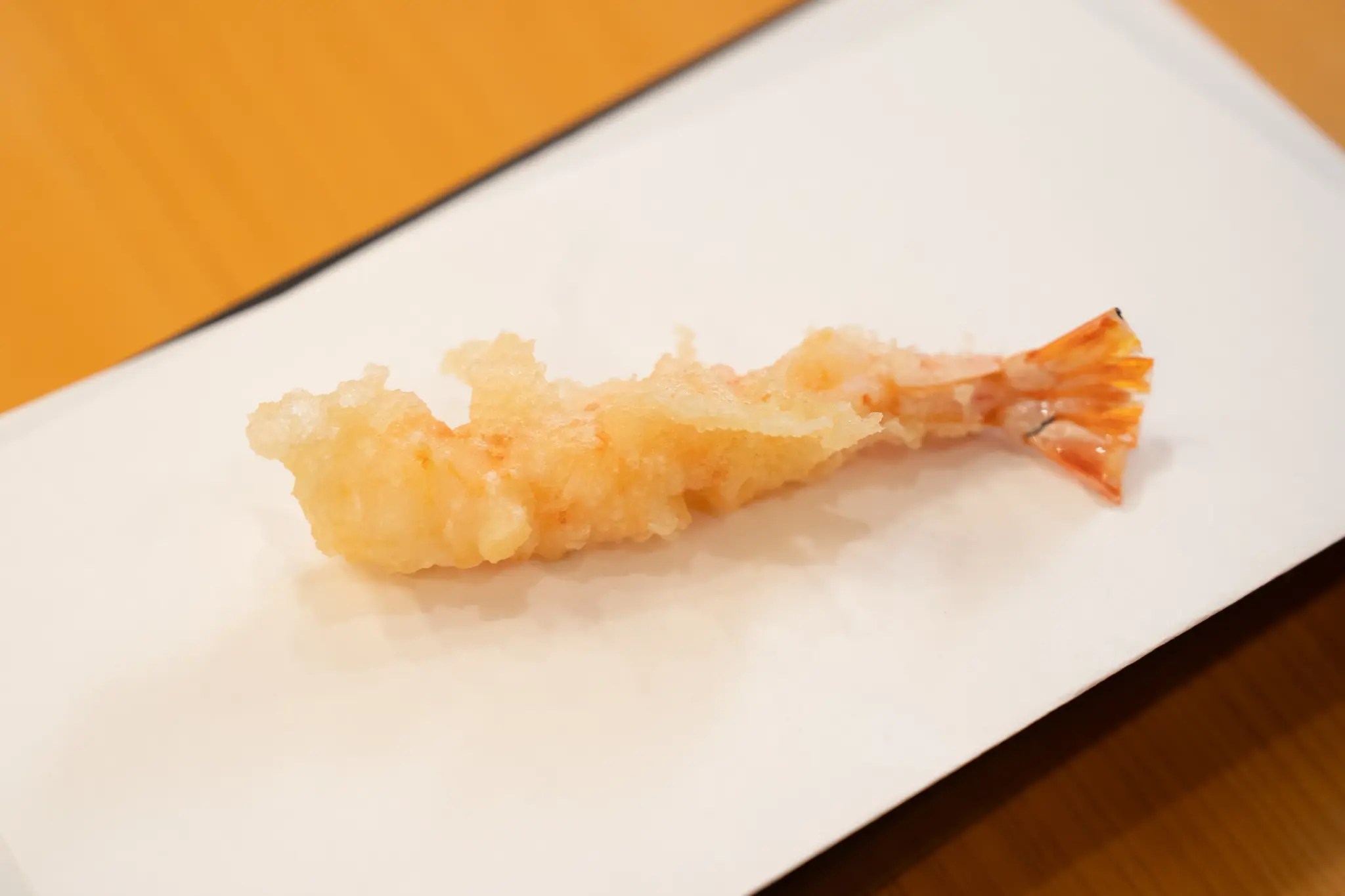
Even now, I work with the mindset that if my tempura leaves you feeling heavy, then I’ve failed. That’s why I carefully follow each step of the process every day and finish each dish with great attention—because I believe that is the role of a chef.Of course, I can’t go so far as to say I wouldn’t charge you if it made you feel heavy, but unless guests feel that it’s light and easy to eat, they may not choose to return. To prevent that from happening, I believe it’s important to continually put pressure on myself and approach my work with that sense of responsibility every single day.
— Could you share an episode from your training days?
The first thing that surprised me was how completely different the frying temperature and the thickness of the batter could be depending on the person cooking. There was a chef named Kobayashi whose way of preparing the batter was exceptional, and whose work was always precise and refined.Around my third year, when I was transferred to another branch, I was assigned to work beside him as his assistant at the fryer, and I spent about two years learning directly from him. After that, Kobayashi was transferred, and others took his place. Over the remaining two years, I observed many different chefs at the fryer, but to me, Kobayashi’s tempura was by far the best. Even after seeing the work of so many people, I never encountered anyone better, which made me feel that his level might be unmatched.For me, his tempura became the ideal. Once I had built a certain level of foundational skill, I began to feel that staying there any longer might not significantly improve my own technique. That’s when I started thinking about expanding my knowledge into Japanese cuisine as a whole and eventually becoming independent.
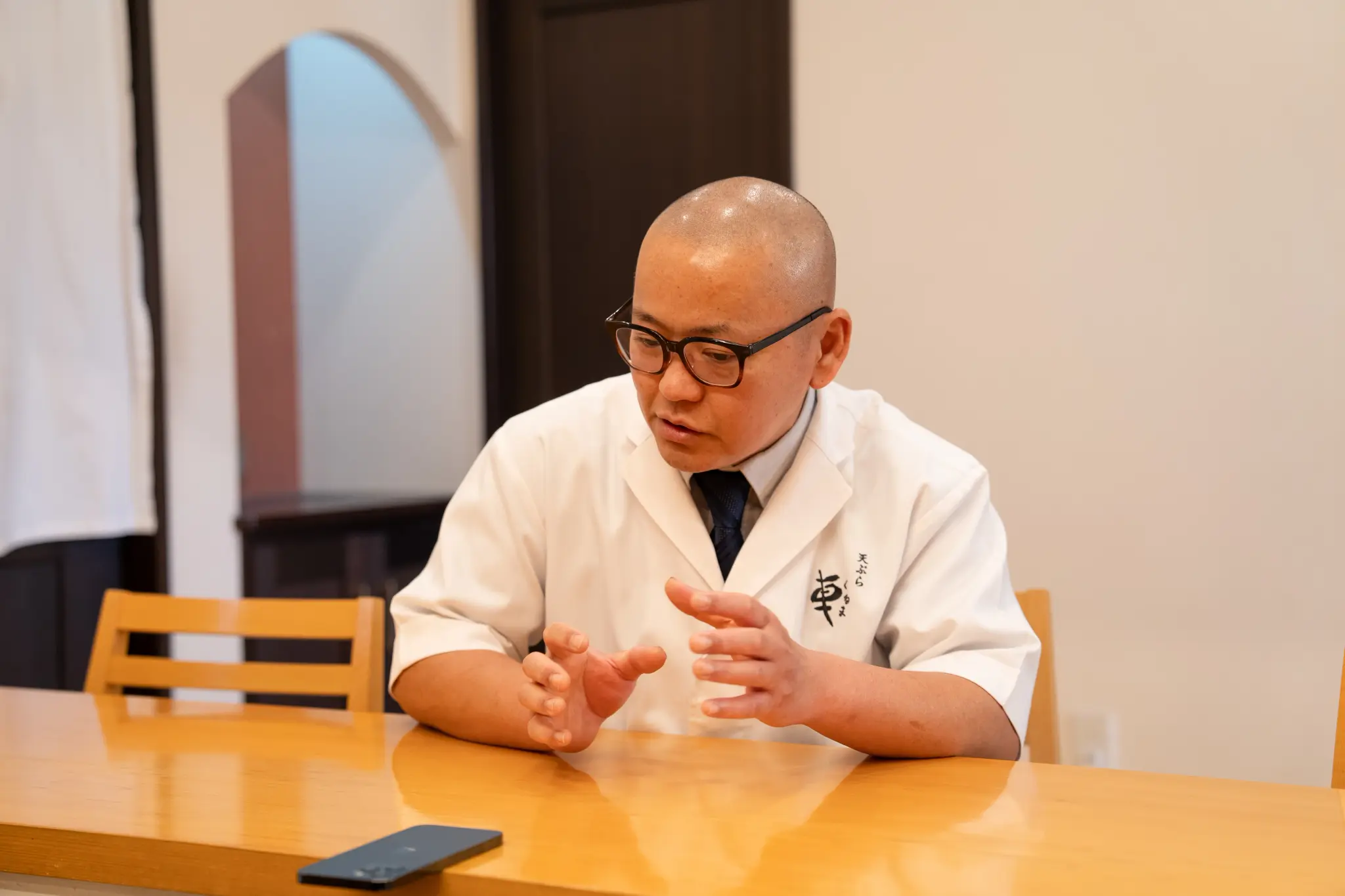
Mr. Kobayashi has since retired, but until then he continued working at 【Ginza Tenichi】 without going independent. A few years after I opened my own restaurant, I once called the head office of 【Ginza Tenichi】 to find out where he was. I told them that I wanted to specifically eat tempura prepared by him, and learned that he was at 【Ginza Tenichi Nihonbashi Muromachi】.I was able to see him not long after his transfer, but he told me, “This place uses an IH cooktop instead of gas, and I’ve gotten older as well. I’m grateful, but I can’t make tempura the way I did back then anymore.”The biggest reason I decided to become independent was what I had learned from Mr. Kobayashi, so even so, I still wanted to taste his tempura. However, the restaurant became busy, and he was replaced by the head chef, so in the end, I never had the chance to eat his tempura.Even if it had changed from before, I still wanted to experience it. That feeling made me want to create tempura that would remain in people’s memories in the same way.
Making the most of what I have to realize my ideal restaurant
— Could you tell us about your experience when you went independent and opened your own restaurant?
After working for five years at 【Ginza Tenichi】 and ten years at a local Japanese restaurant, I opened 【Tempura Kuruma】 on August 25, 2014. I had originally planned to open around May and had left the local Japanese restaurant at the end of 2013 to begin preparations.However, due to issues with bank procedures and land approvals, the opening was delayed until August. During that time, I supported myself by working late-night shifts at a convenience store, and it was truly a difficult period.
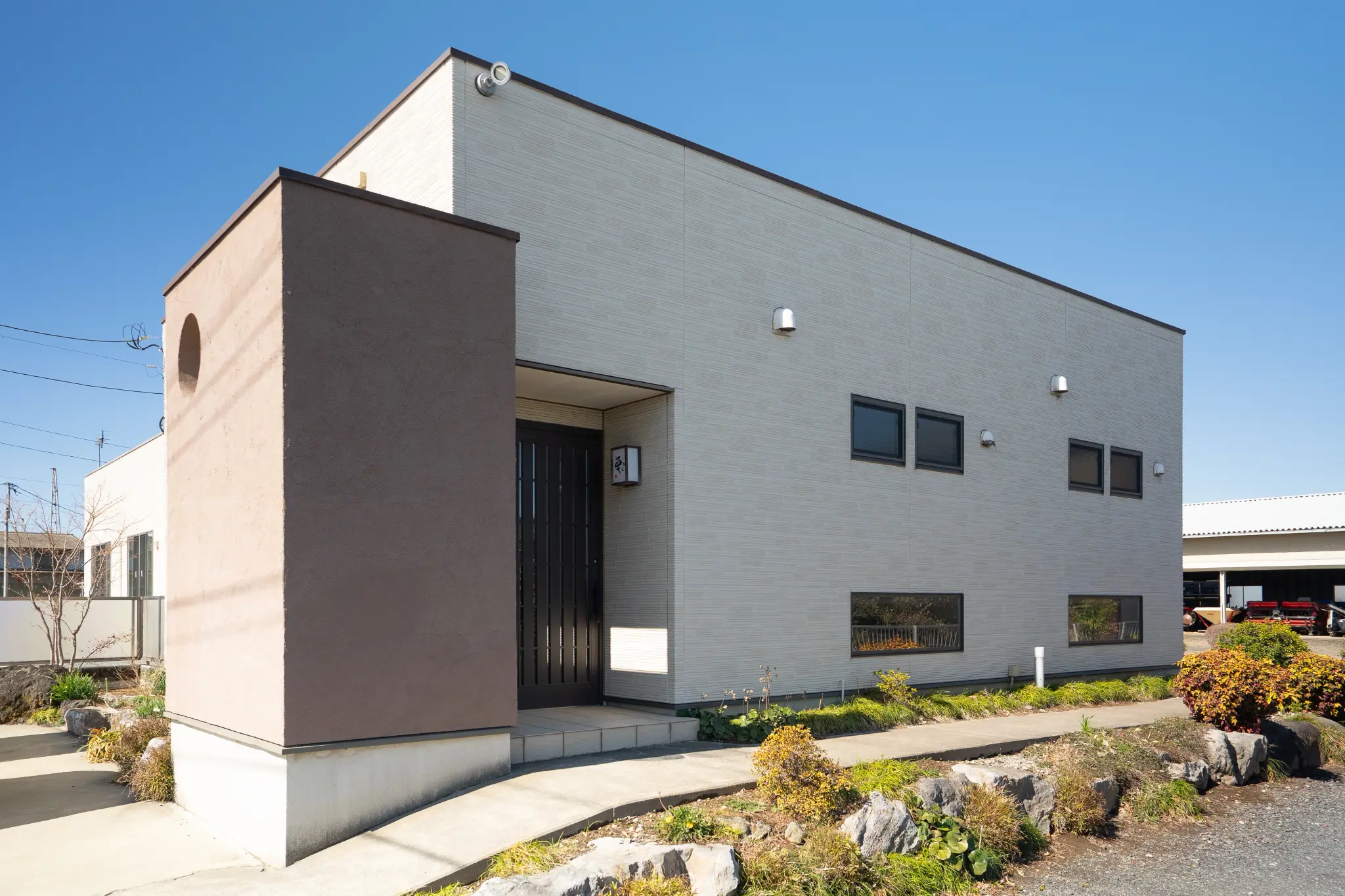
I renovated my family’s land and built a restaurant there. Originally, there was a traditional Japanese house with a garden beside it. My father had created a garden with large stones and pine trees as part of his hobby. After he passed away, we removed the trees and stones, leveled the land, and built the restaurant on that site.Between the restaurant and the parking area, there is a retaining wall made of stones, and we reused the large rocks from the original garden, preserving them as part of the stone wall.
The reason I chose to build on my family’s property was because I felt that renting a tenant space would come with too many constraints. A street-level location or a prime area would also significantly increase costs, and if the business didn’t take off, it wouldn’t be easy to withdraw. On my family’s land, even if things didn’t go well, I could step away within a year or two.If I had borrowed tens of millions of yen without having an established customer base, even if the restaurant was completed, if customers didn’t come, the business would have no choice but to close.
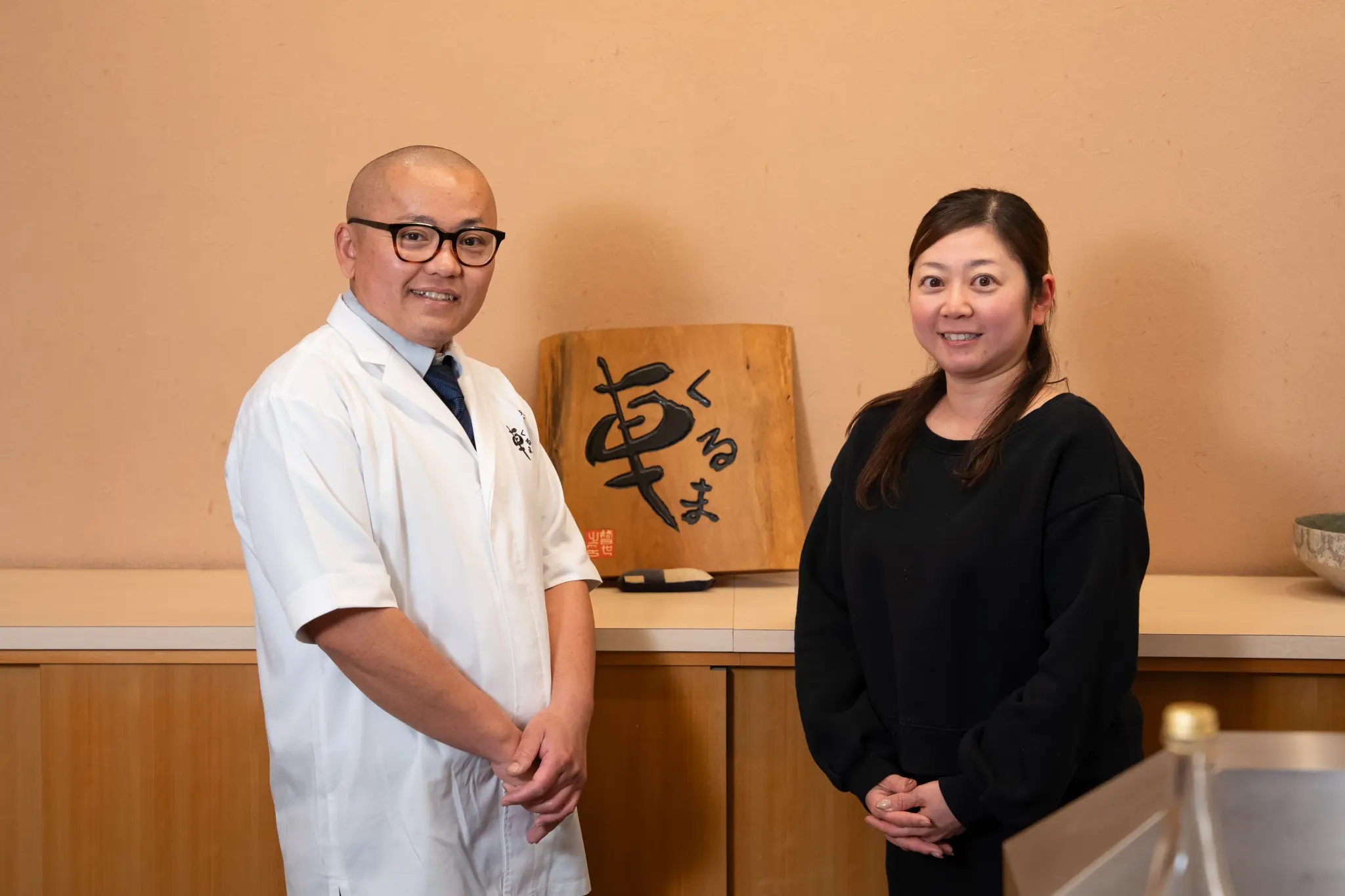
When I shared my concept—serving tempura at a counter in a standalone house set quietly in the middle of rice fields, where guests take off their shoes at the entrance—my wife immediately said, “That sounds interesting,” and supported the idea. However, the bank was very reluctant to lend to us. Since there were no real precedents of a privately run restaurant pursuing a high-end concept like this, they kept asking, “Are you sure this will work?” which caused delays in securing financing. I created a very detailed and rigorous business plan, and only after that was I finally able to receive the loan. If the restaurant had been located within Tatebayashi city, there would have been subsidies and grants available. However, this area is designated as an urbanization control zone, where the policy is to preserve rice fields and farmland, so there was no support available. We had to start the business relying solely on the loan and our own funds.
Through interviews like this and word of mouth, the recognition of 【Tempura Kuruma】 has gradually grown. As a result, the city approached us to participate in their hometown tax program, which we are now part of. For a donation of 50,000 JPY to Tatebayashi City, donors receive meal vouchers worth 15,000 JPY.
Committed to freshness and aroma
— Is there anything you particularly value when it comes to cooking or ingredients?
Basically, everything is “homemade.” This is my own philosophy, but I don’t use commercially prepared foods or artificial seasonings. It’s not that all of them are bad, but some involve reduced pesticides, preservatives, or wax, so I try to avoid imported products as much as possible. At 【Tempura Kuruma】, we use highly fresh ingredients such as fish from the market, vegetables from local farmers’ stands, and produce sourced directly from farmers. When it comes to cooking, I personally inspect and select the ingredients I truly want to use.
Another key point is “aroma.” When people are paying for a meal, it goes without saying that the food must be delicious, but beyond that, I place great importance on the aroma and texture of the ingredients. Without aroma, there is no real flavor—if you pinch your nose while eating, you wouldn’t even know what you’re tasting, right? That’s how important aroma is. To bring out that aroma, I pay close attention to freshness. Even with vegetables, as time passes, their appearance may not change much, but their aroma fades and their flavor weakens. Whether it’s vegetables or fish, if the ingredients themselves are not of high quality, you simply can’t achieve a good aroma.
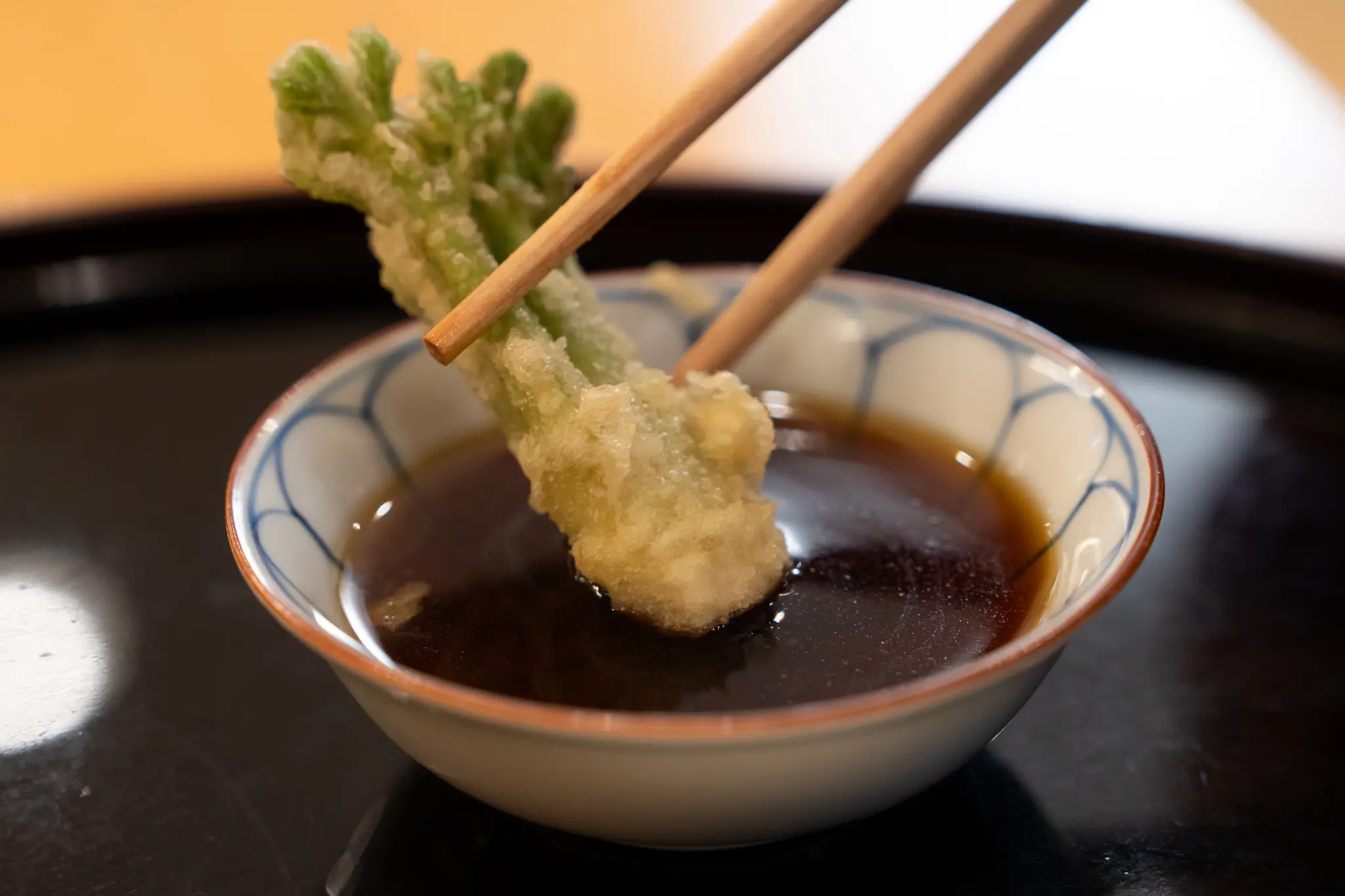
We divide our purchasing into three times a week. Since 【Tempura Kuruma】 is closed on Wednesdays, we source two days’ worth of ingredients on Monday, Thursday, and Saturday. This helps reduce food waste, and by purchasing frequently, we are able to maintain a high level of freshness. It takes about an hour and a half by expressway to reach Toyosu Market from Tatebayashi, so we leave around 4:30 in the morning. If we leave later, we risk getting caught in traffic and may not be able to secure the fish we want. While it is possible to pre-order essential items, there are ingredients that I prefer to select in person on the day. Arriving early and carefully choosing them with my own eyes is an important part of my commitment to quality ingredients.
It’s the daily accumulation that brings excellence to the details.
— Could you tell us about your vision for the future?
We are planning a renewal on August 25, 2026. The goal is to create a better space where guests can relax and enjoy their meal at a comfortable pace in a calm atmosphere. We are not considering expanding to multiple locations. For now, I simply want more people to visit 【Tempura Kuruma】 and feel that our tempura is truly delicious. What I am most grateful for is that both regular customers and first-time guests continue to visit us steadily. I am not aiming for anything grand. Each day, I simply focus on our guests and the tempura we serve, and beyond that, there is nothing more I particularly seek.
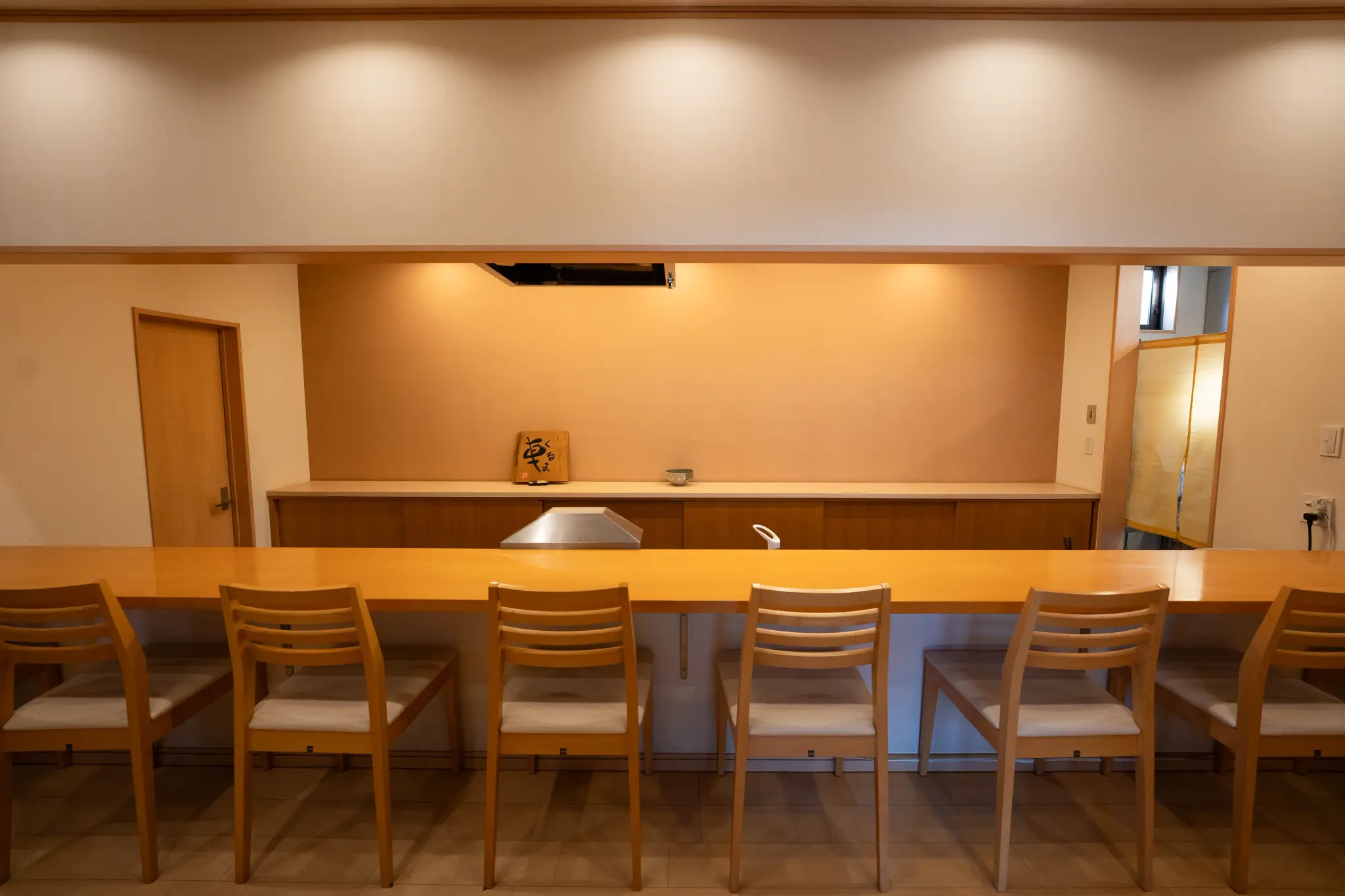
I believe that in this work, what matters most is the accumulation of daily effort. Even if you expand to multiple locations, it’s difficult to maintain the same level of quality. It’s only because I stand in front of the fryer every day that I can understand the condition of the oil at any given moment and sense its temperature. It’s similar to how sushi chefs can gauge the approximate weight of rice by feel. Because we work with ingredients every single day, we can tell when something is not at its usual level of freshness or vitality.
For example, with kisu (Japanese whiting), the texture varies depending on where it’s sourced. Edo-mae (from Tokyo Bay) tends to have thicker, plumper flesh. Even if two fish are the same length, the Edo-mae one feels fuller—this is something you only notice through daily experience. Someone handling it for the first time likely wouldn’t recognize the difference. These may seem like small details, but it’s not about whether customers consciously notice them. It’s about our own commitment to using better ingredients and our desire to serve them in the best possible condition.
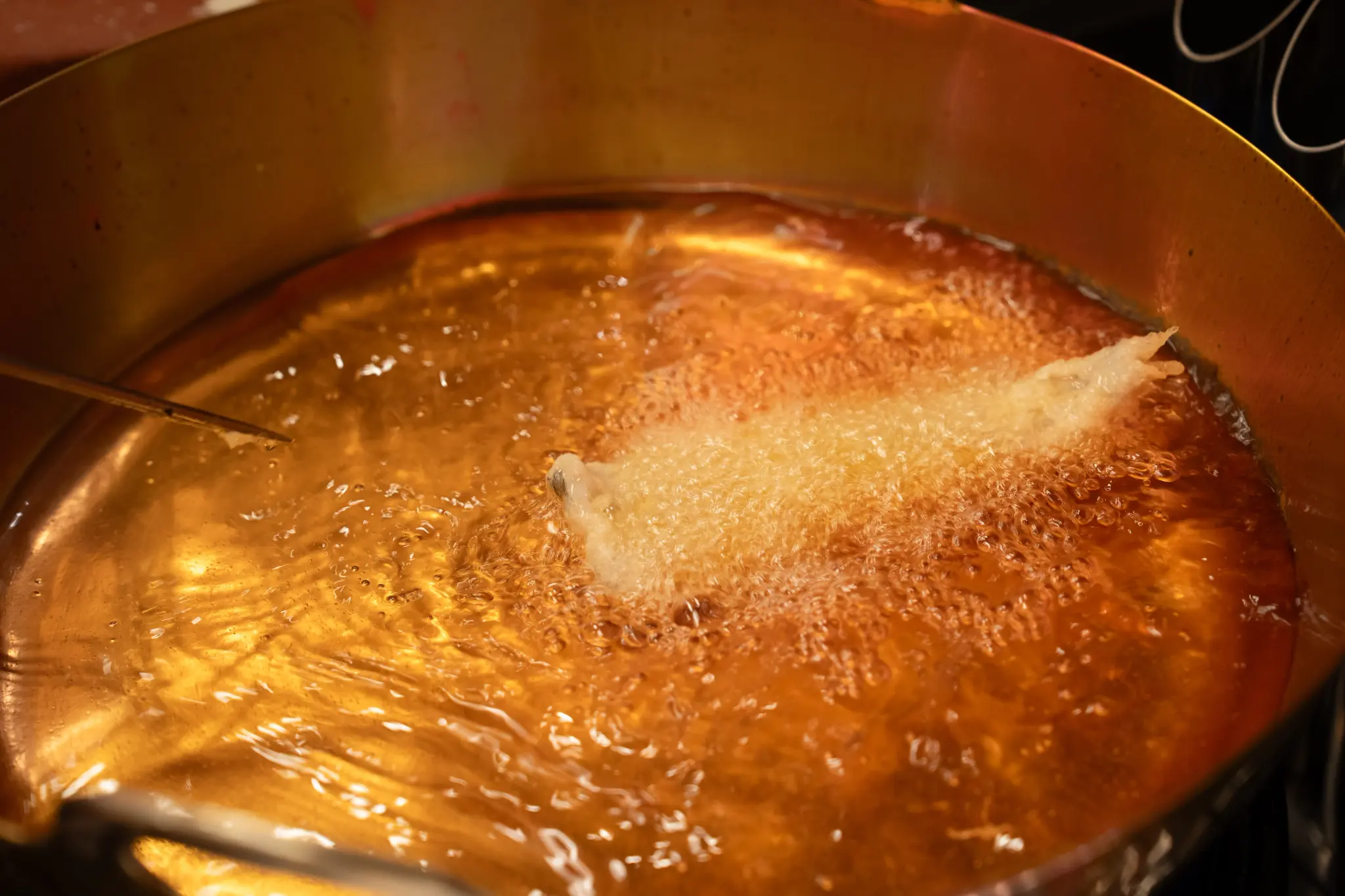
Because the work is repeated every day, some people may find it monotonous and unchanging. But for me, even if the tasks themselves are the same, the content is never exactly the same as the day before.
Take something as simple as making tempura batter—if you mix it a thousand times, you’ll end up with a thousand different results. Even a slight difference in the flour, down to just a few particles, will naturally change the batter. The measurements aren’t strictly fixed either, so each day as I prepare it, I pay close attention to subtle differences—thinking things like, “the batter turned out well today,” or “it wasn’t as good as yesterday,” even though customers may never notice these details. I believe that being able to adjust and create the most suitable batter for each moment is part of growth, which is why every day feels like a new challenge. The quality of cooking can vary from person to person, and even within myself there are fluctuations. In the end, the only way to achieve consistency is to keep doing it, day after day.
— Lastly, what does “delicious” mean to you, Mr. Kuzumazaki?
The experience of eating something truly delicious is the “ultimate luxury,” isn’t it? Dining out is often reserved for special occasions, and when you buy something like a watch or a wallet for an anniversary, it remains with you in a tangible form. You can continue to use it and cherish it over time. Food, on the other hand, leaves no physical trace. You may think, “That was delicious,” but in the end, what remains are only memories. You can take photos, of course, but essentially it is a luxury that exists only in your experience. Even if you spend the same amount as you would on a watch, you are choosing a dining experience that lasts only one or two hours, fully aware that what remains afterward is just the impression and the memory of how it tasted. Whether someone travels for hours to get here or arrives in just five minutes by car, every guest makes the effort to visit. I believe that the way we can honor that feeling is by delivering true deliciousness through our cuisine.
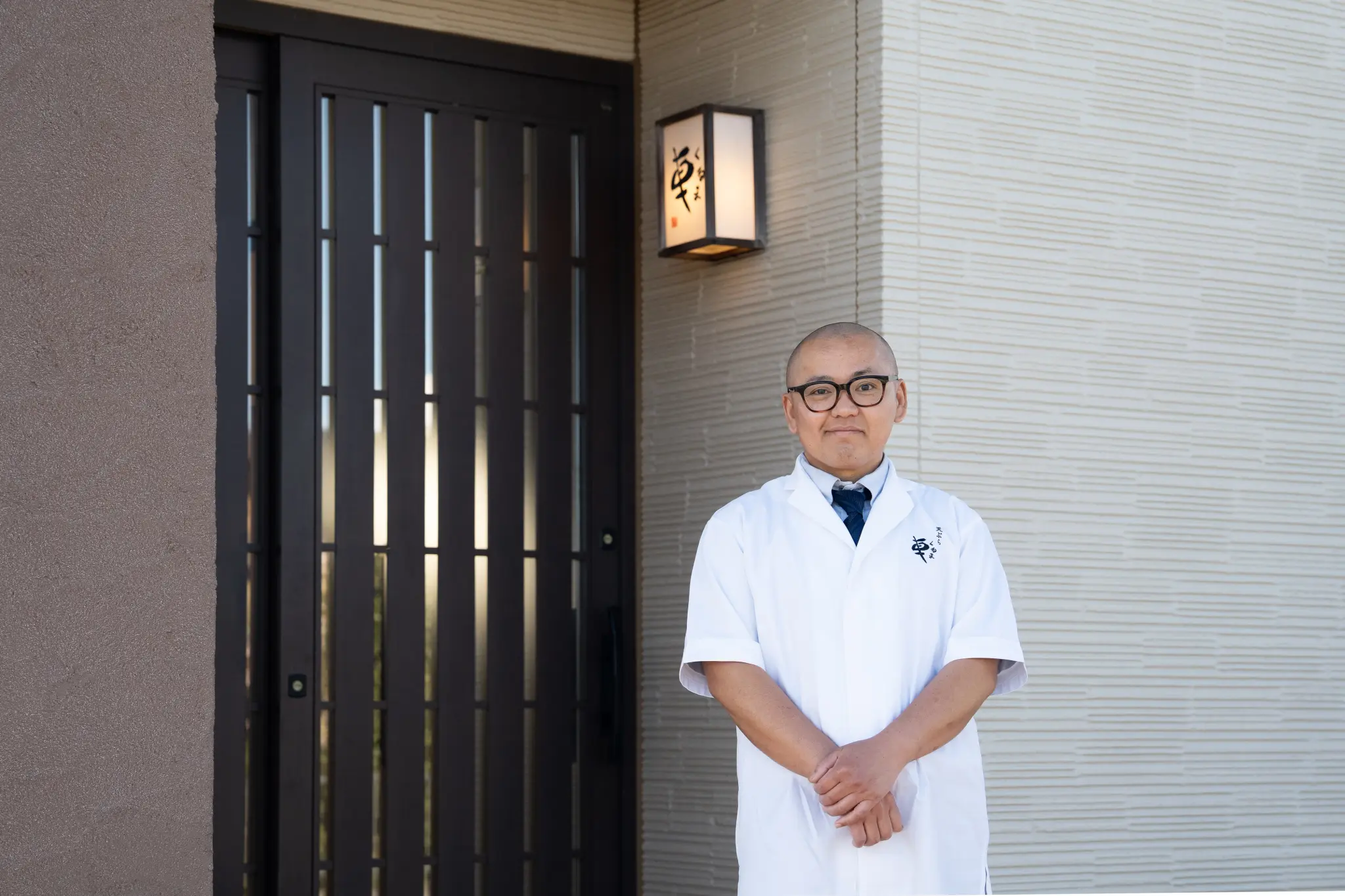
Once a dish is eaten, it disappears, leaving behind only the intangible memory of “that was delicious.” Even so, Chef Kuzumazaki believes that a chef’s role is to respond to the feelings of guests who come seeking that fleeting experience. To serve each dish in its best possible state, he is meticulous about the freshness of his ingredients, carefully monitoring the condition of the oil, the thickness of the batter, and the moisture content of each ingredient as he stands at the fryer day after day. Even within tasks that may appear the same as the day before, there are always new discoveries and challenges.
Why not visit 【Tempura Kuruma】 and experience tempura shaped by the time, dedication, and craftsmanship that Chef Kuzumazaki has accumulated over the years?
Reporting & Text / AutoReserve Magazine Editorial TeamPhotography / Shoichi Baba
Restaurant Information
- AutoReserve Magazine
- Japan’s world-renowned flagship restaurant
- Tempura Kuruma, a solitary restaurant nestled in the countryside: the aromas and philosophy pursued by Tomoya Kurumazaki