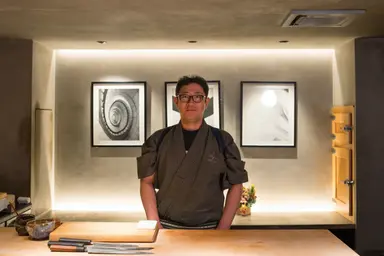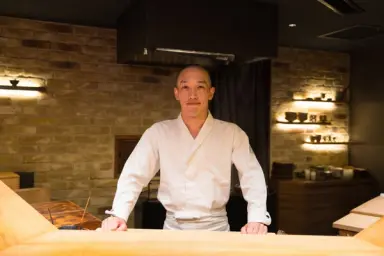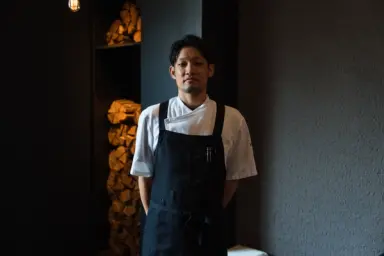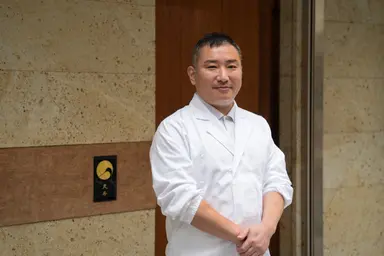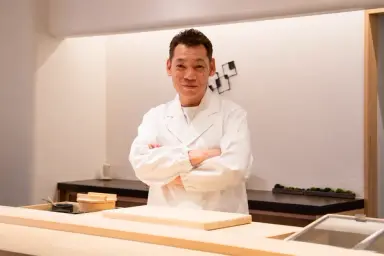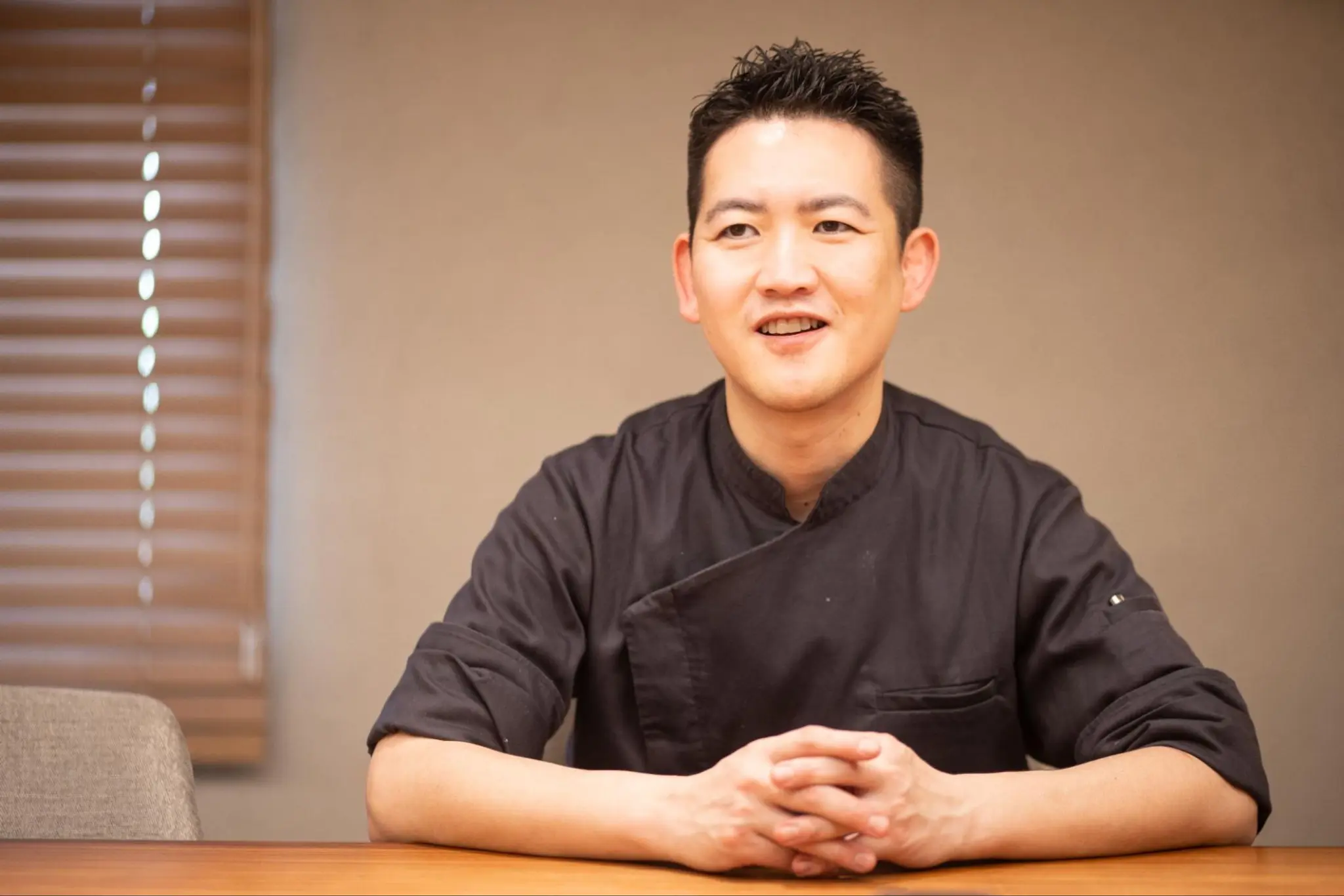
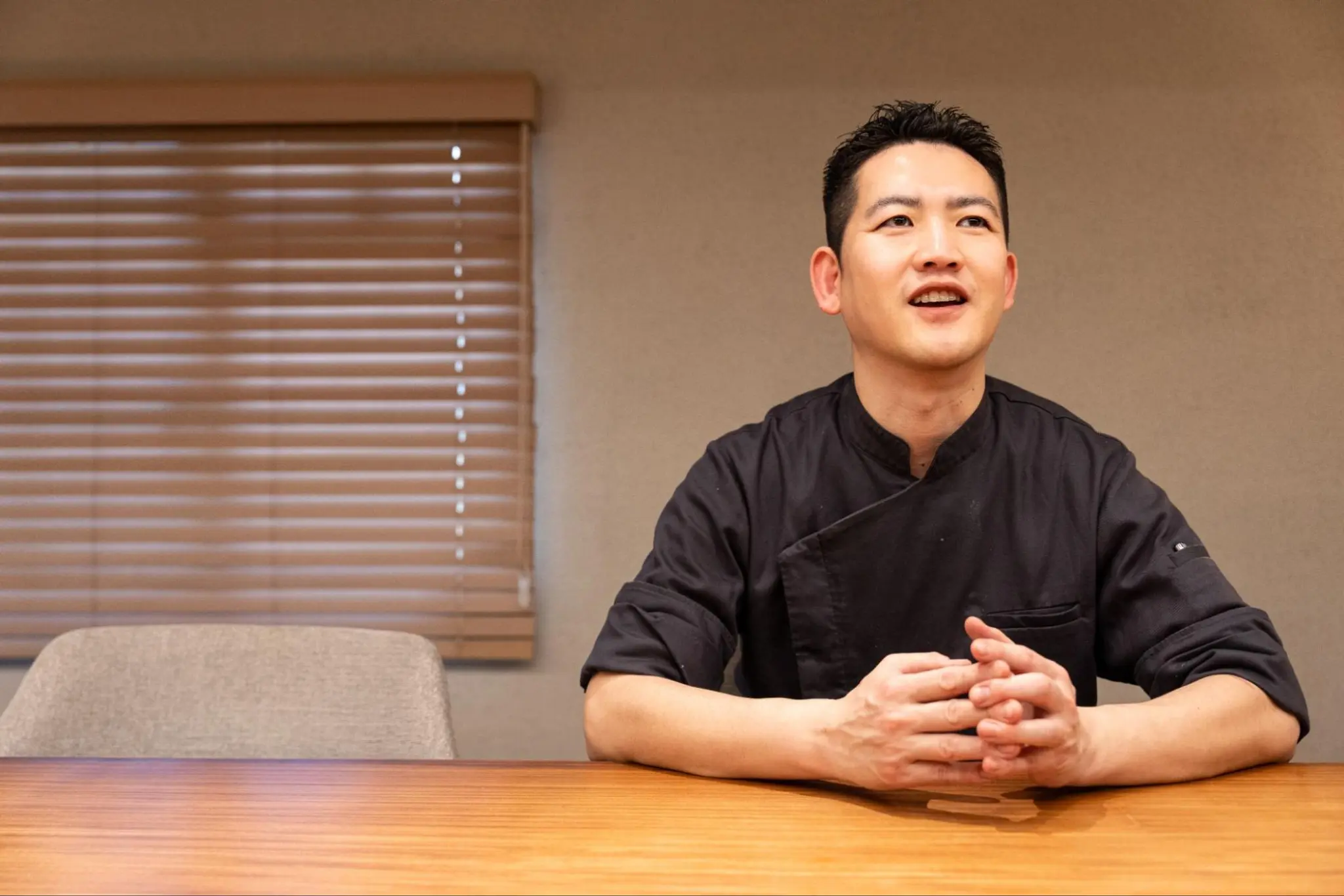
Delivering Happiness to the Five Senses! A Dish Connecting People and Ingredients by Chef Kenta Kakihara of 【Rooots Nakanoshima】
Touching Ingredients and Developing an Interest in Cooking Laid the Foundation for Becoming a Chef
ーーーWhat inspired you to become a chef?
Since both my parents worked, when they came home late and I was hungry, I had no choice but to make something myself. I enjoyed cooking by imitating what I saw in cooking books and manga. I grew up in the generation of titles like "Cooking Papa," "Oishinbo," and "Mister Ajikko," which I often watched back then. My father also liked cooking, so the meals he made with market ingredients were delicious. When we returned to my paternal family's home on Awaji Island, there was a farm where I would pick and eat ingredients directly. I believe that not only making dishes but also interacting with ingredients gave me a foundational experience of enjoyment with cooking.
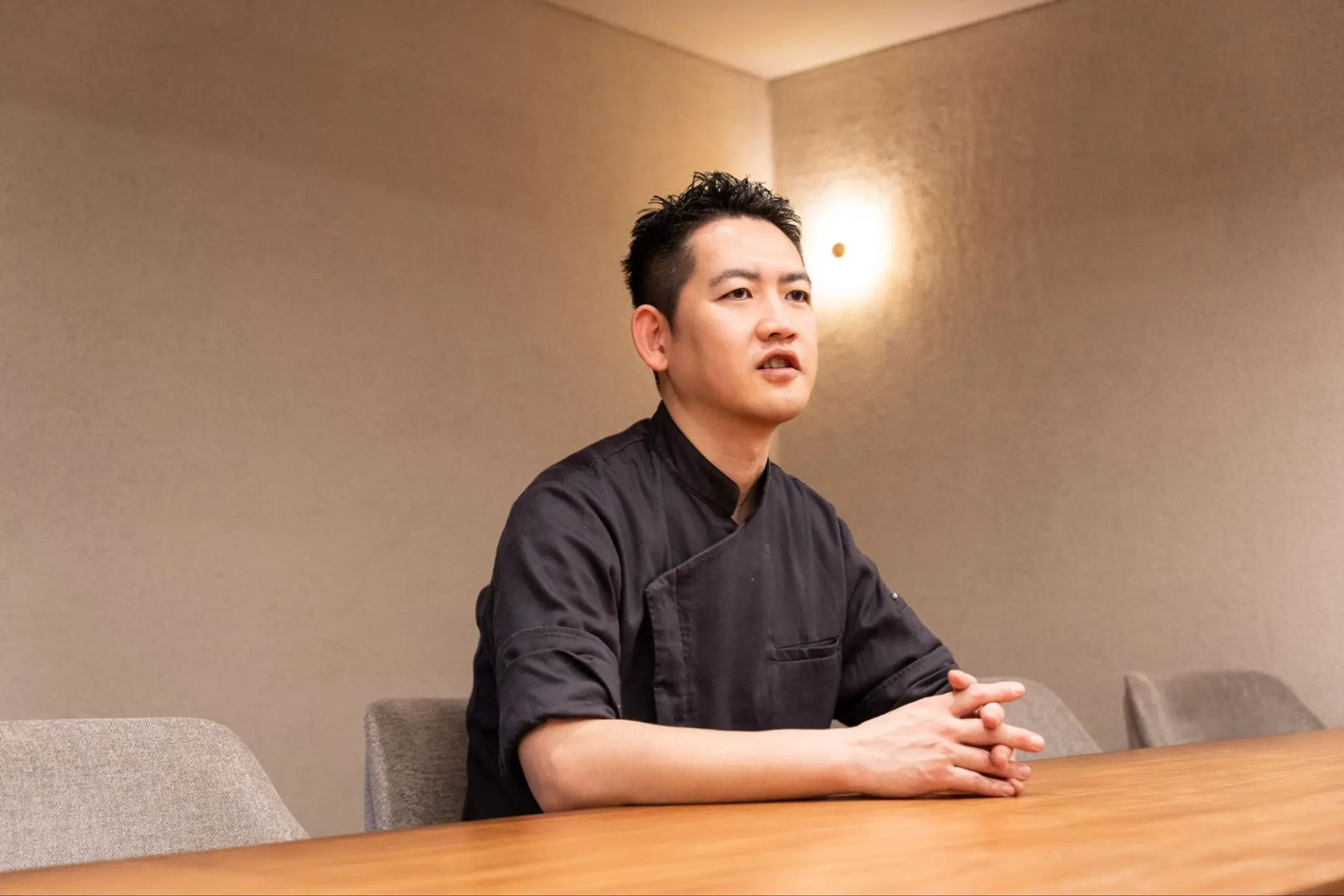
ーーーWhen did you start seriously considering a career as a chef?
It was around the time I was in high school. While working part-time at a restaurant, I found that I really enjoyed working in the kitchen, so I gradually began to think that I wanted to pursue the path of a chef. After graduating from high school, I attended the Tsuji Culinary Institute (Osaka campus).
Pursuing Culinary Growth in Italy!
ーーーCould you share some episodes from your training days?
At first, I worked at 【Da Ugo】 in Miyakojima, Osaka. I joined as part of the opening staff at a restaurant where the owner was about to become independent. At that time, I had almost no experience working on site and didn’t understand much, so the owner and another chef taught me cooking one-on-one. I worked intensely there for one year, and after the chef left, I was responsible for creating the menu by myself. Whether good or bad, I was put in a situation where I had to do things on my own, and proactively reading books and studying became valuable experiences for me.
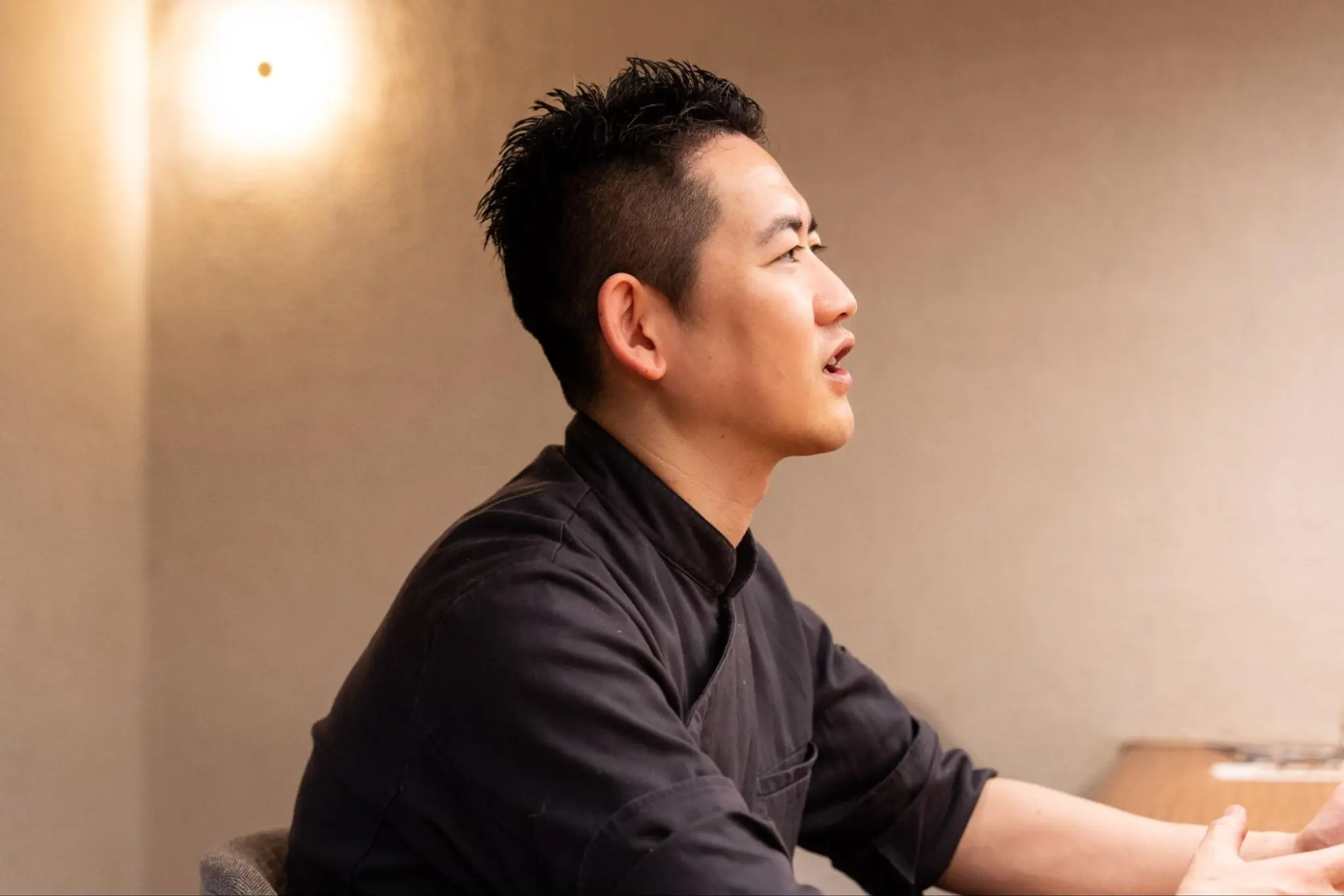
Next, I studied abroad in Italy. It was a culinary school specializing in Italian cuisine for foreigners, where I spent two months learning language skills, the stories behind Italian dishes, and regional cuisine training. After that, I entered on-site practical training for four months, working in kitchens, spending a total of six months in Italy. At that time, I had studied the language to some extent, so I didn’t struggle much with the language barrier. However, some students in my group had difficulty communicating. Since I was not shy about speaking, I quickly got along with the chefs and Italian staff. Because I had prior experience working in restaurants, I sometimes even helped mediate when trainees were scolded by chefs. When the chefs were angry, I would calm them down by saying, “Let’s just have some coffee,” and we ended up drinking about 15 cups of coffee in one day (laughs).
ーーー It sounds like you had an experience similar to being a workplace manager!
Many people express their emotions quite directly, so calming them down and supporting the team as a member was necessary, and it became a valuable learning experience. When running a restaurant, there are limits to what one person can do alone. While doing everything yourself may seem easier, if you want to achieve more than before, you need to rely on others. This experience made me realize the necessity of management firsthand.
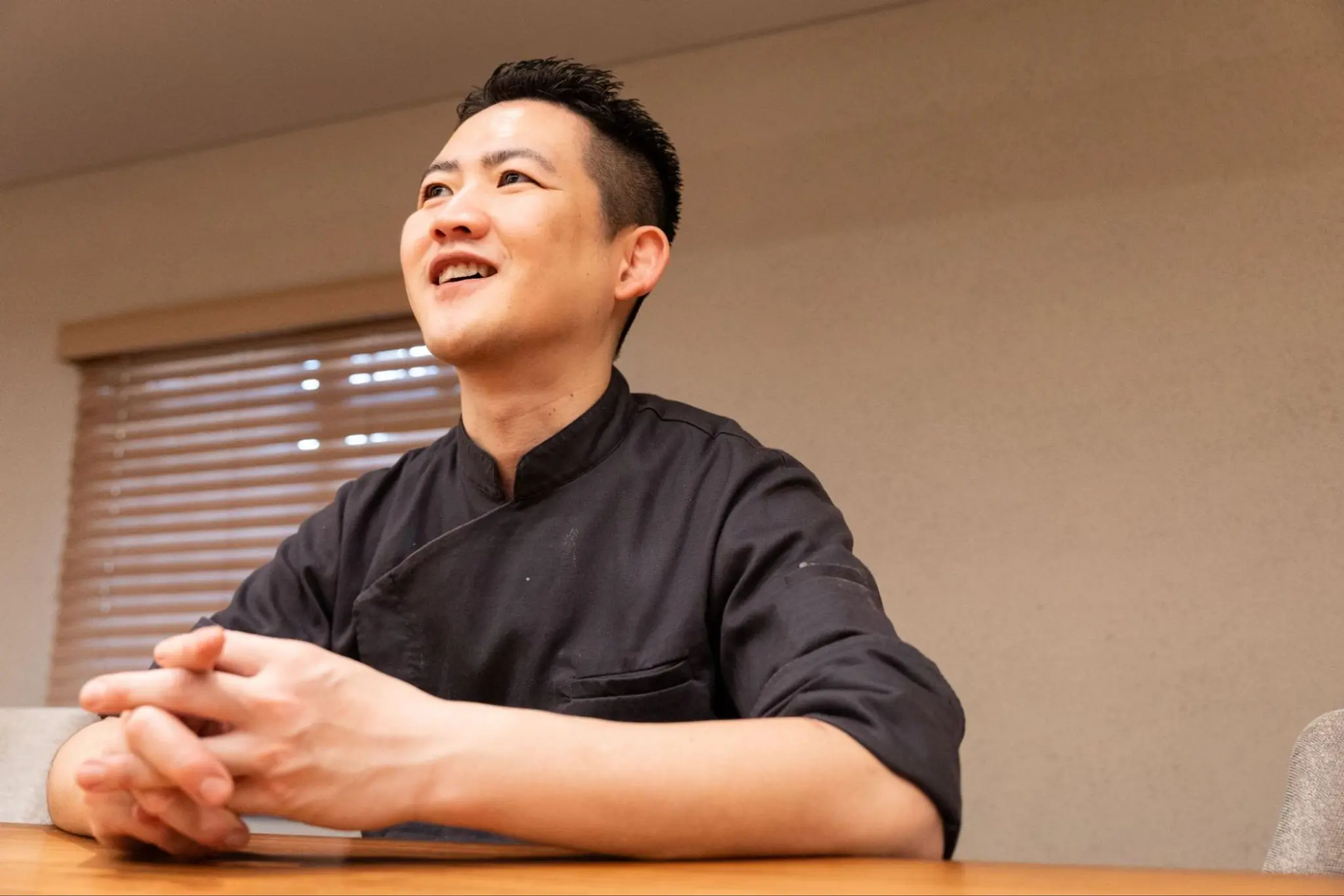
ーーーHow was your experience after completing six months of training in Italy?
After returning to Japan, I worked for about seven years at 【Piatto Suzuki】 in Azabu-Juban, Tokyo. Tokyo is a tough environment where many customers demand very high quality from restaurants, so it was a great stimulus for me and contributed greatly to my growth. I learned the importance of focusing on every single dish I served and paying attention to what was right in front of me.
After that, I went back to Italy and stayed there for about 11 years. Since the cuisine varies greatly depending on the region, I wanted to explore the differences across various areas, including Florence and others. I trained again at a restaurant that had supported me during my previous stay in Italy, and visited coastal port towns like Livorno, the northern Italian city of Bolzano, and Puglia, which is known as the “heel” part of Italy’s boot-shaped peninsula (laughs). During my first training period in Italy, I had no chance to travel around, so during my second stay I was able to actually see, feel, and learn about many different places firsthand.
Connections and Support from People Made It Possible
ーーーHow did you come to meet Chef Nakado?
When I was about to return from my second stay in Italy, I happened to meet a mutual acquaintance who introduced me to Chef Nakado. This kind of introduction through the community of chefs and workplace connections was quite common both during my time in Italy and afterward. Since I had spent a long time in Italy, I felt somewhat detached from the Japanese perspective, but I found Chef Nakado’s concept and his approach to cooking very instructive, and I wanted to work with him.
For example, European ingredients differ from Japanese ones, so I was impressed by how thoroughly Chef Nakado confronts the ingredients, thinking carefully about how to best utilize them with suitable cooking methods and seasonings for each. Also, Chef Nakado is knowledgeable about wine, and I witnessed firsthand how his passion for not only cooking but also enjoying drinks resonates deeply with customers, which gave me great inspiration.
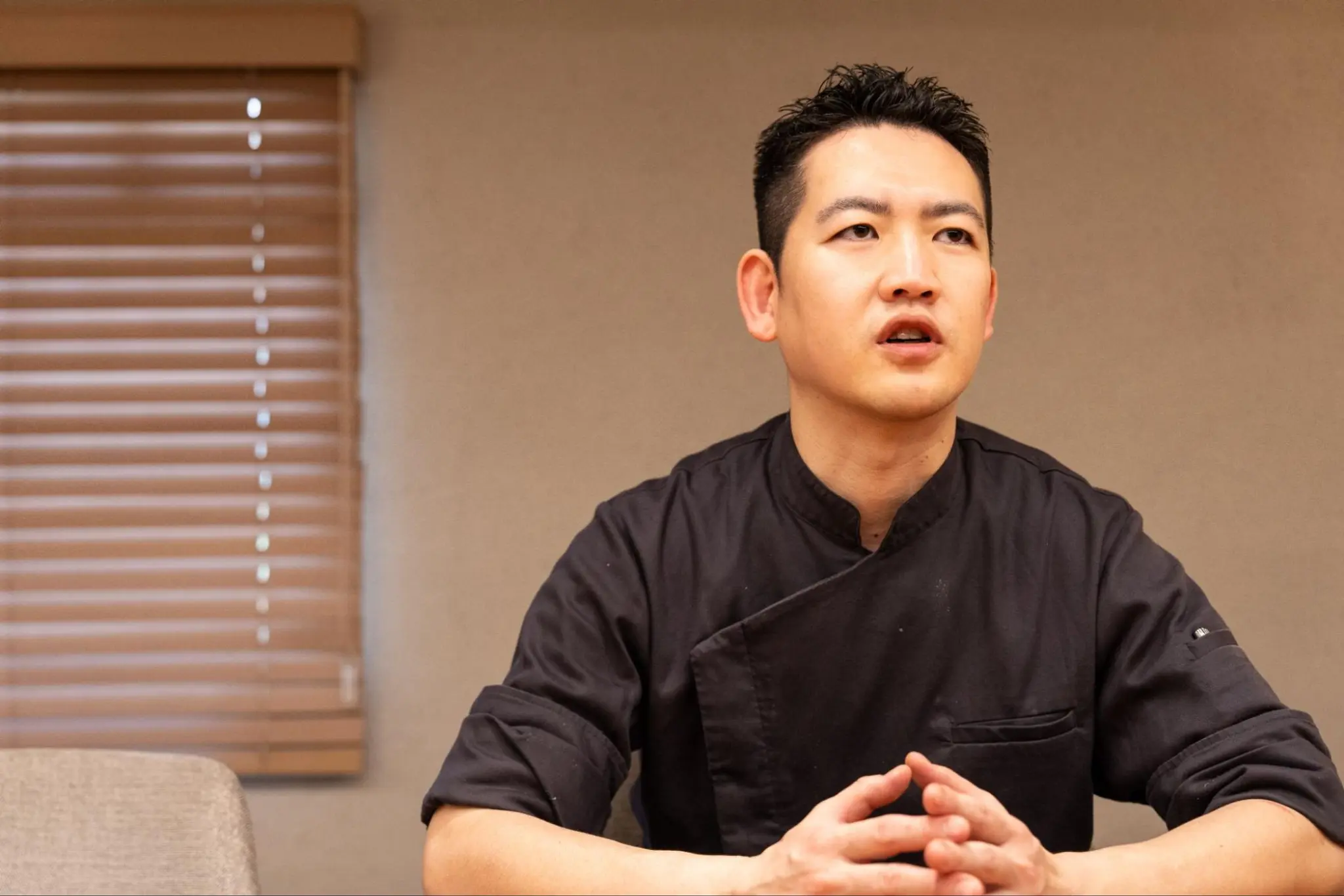
ーーーHow do you feel about your role as head chef at 【Rooots Nakanoshima】?
Before feeling a sense of accomplishment, I mostly feel that there is still much to achieve. I assumed the position of head chef in July 2024, and I believe that the one Michelin star rating was possible thanks to the support of everyone around me. Before taking the role, there were aspects I couldn’t understand until I actually tried, and naturally, I felt some anxiety. However, through various experiences while continuing to run the restaurant, the skills I have developed as a chef have gradually become a source of confidence for me. I want to keep improving continuously.
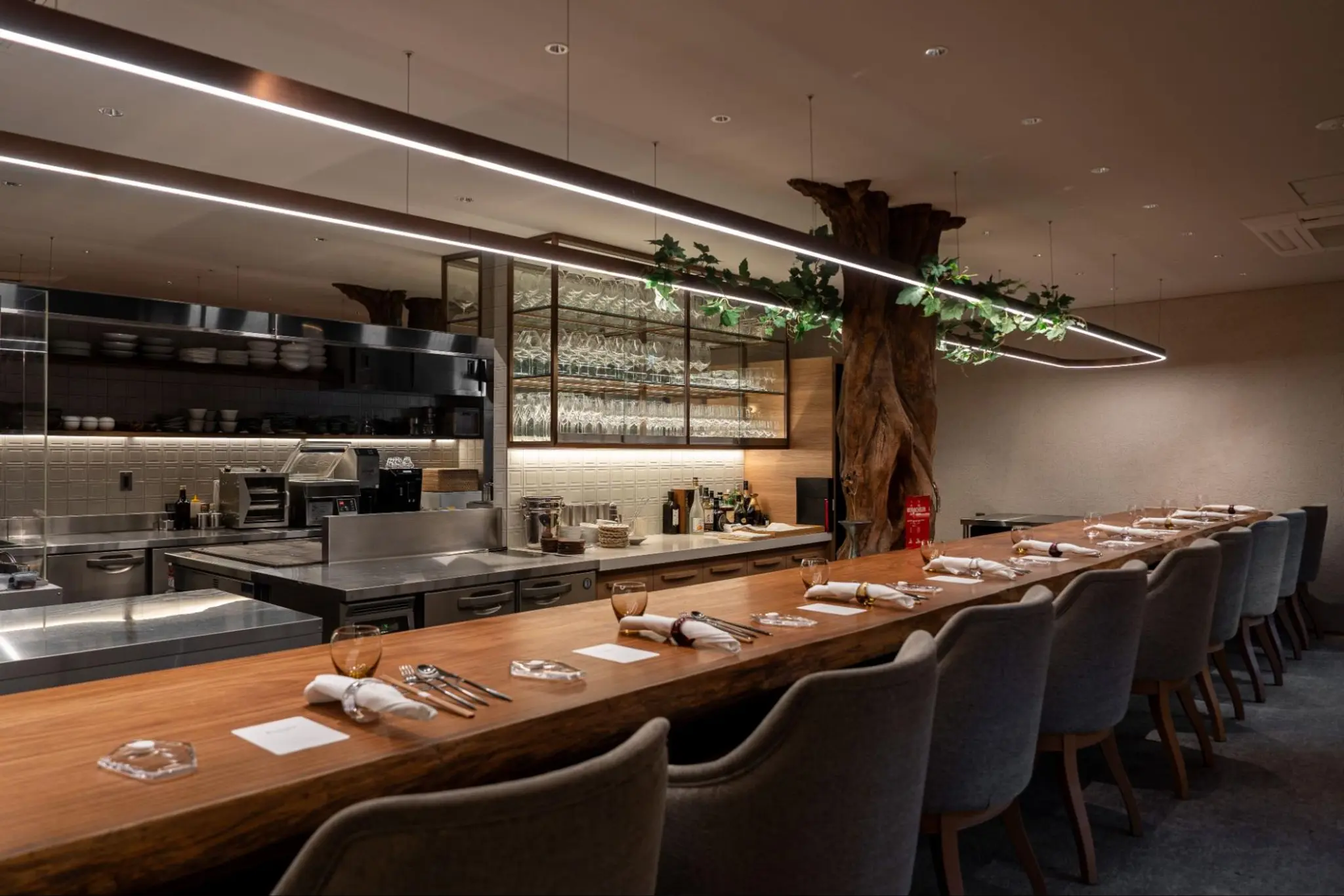
ーーーThe interior is really wonderful! What are the unique charms of an open kitchen?
The biggest appeal of a counter kitchen is definitely the close proximity to the customers. Not only can they watch the cooking process, but we can also interact through explanations of the dishes and casual conversations, which is a real delight. Being able to feel the customers’ reactions up close is stimulating for a chef as well. Recently, the number of overseas customers has been increasing, so sometimes I get a bit flustered (laughs).
Cooking with Ingredients, Treasuring the Stories of Those Who Produce Them”
ーーーCould you tell us a little about today’s dish?
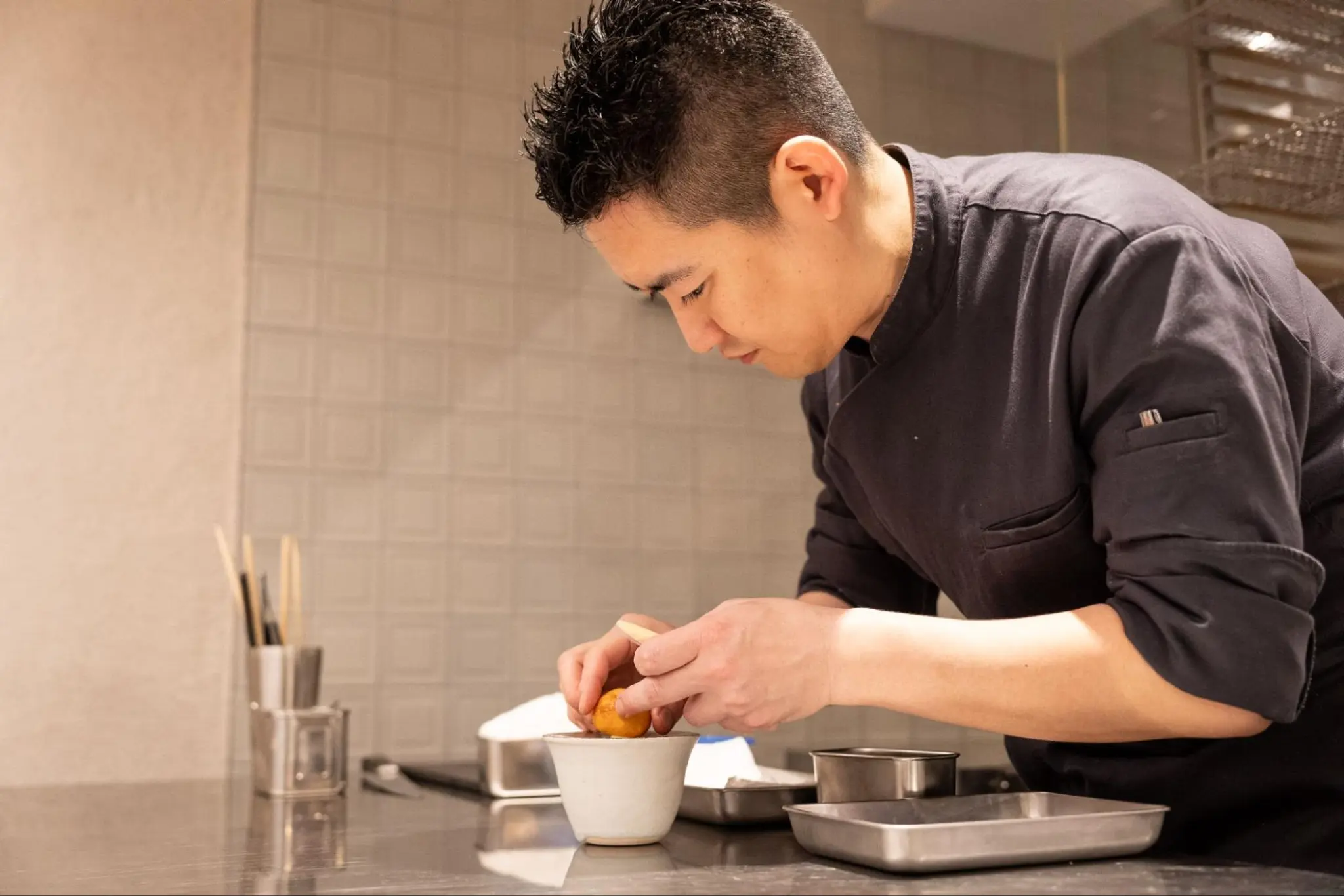
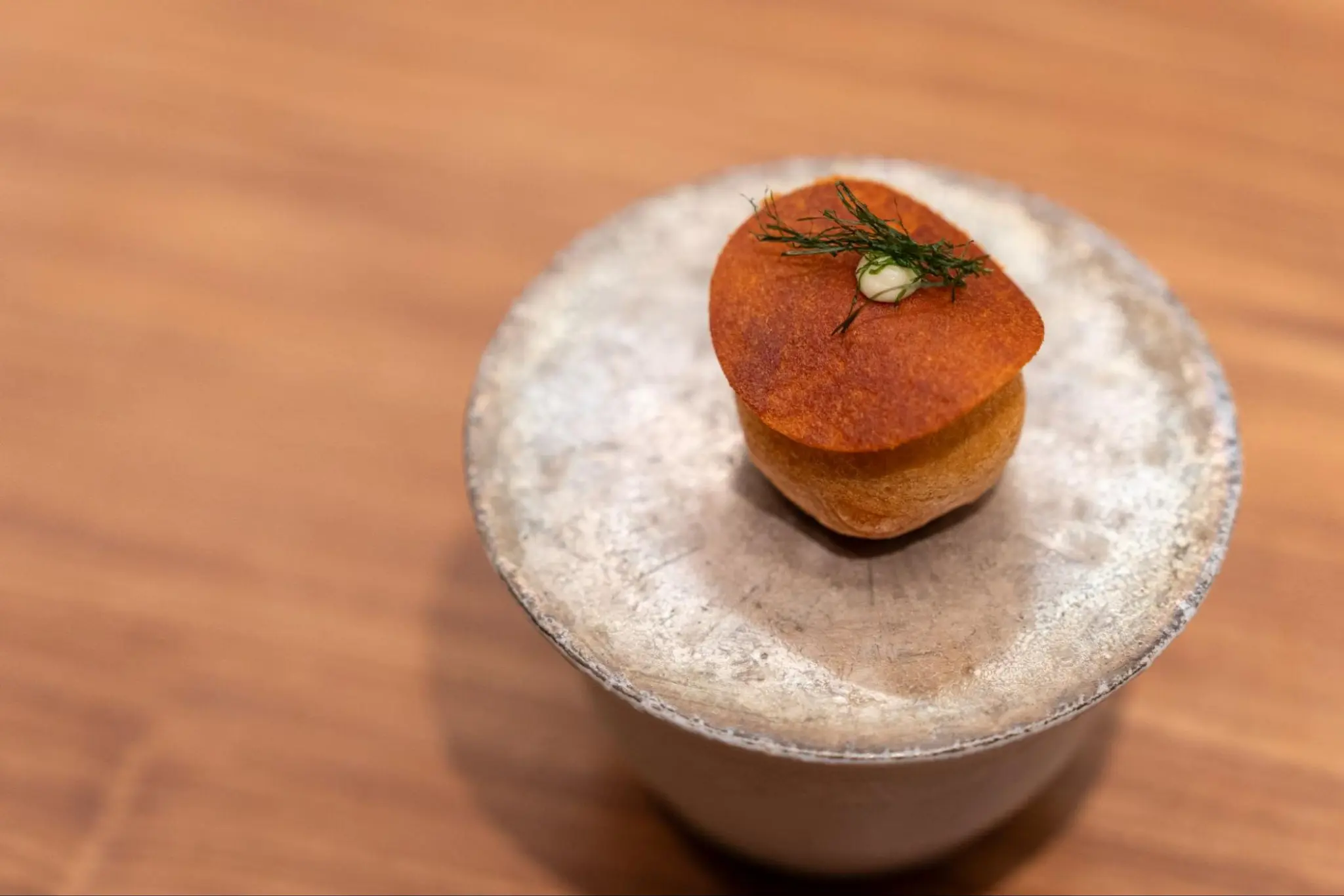
First, this is an arrangement of a Danish dish called Aebleskiver, originally a sweet dish, reimagined to evoke Osaka’s soul food, “takoyaki.” The batter is prepared using bouillabaisse, and cooked octopus is hidden inside. The red topping is a chorizo sheet that serves to enhance the umami flavor. The white aioli sauce tastes like garlic mayonnaise, and on top, we place “aosa” seaweed to evoke the image of green seaweed flakes used on takoyaki. We hope guests enjoy the surprising contrast between the appearance and the flavor.
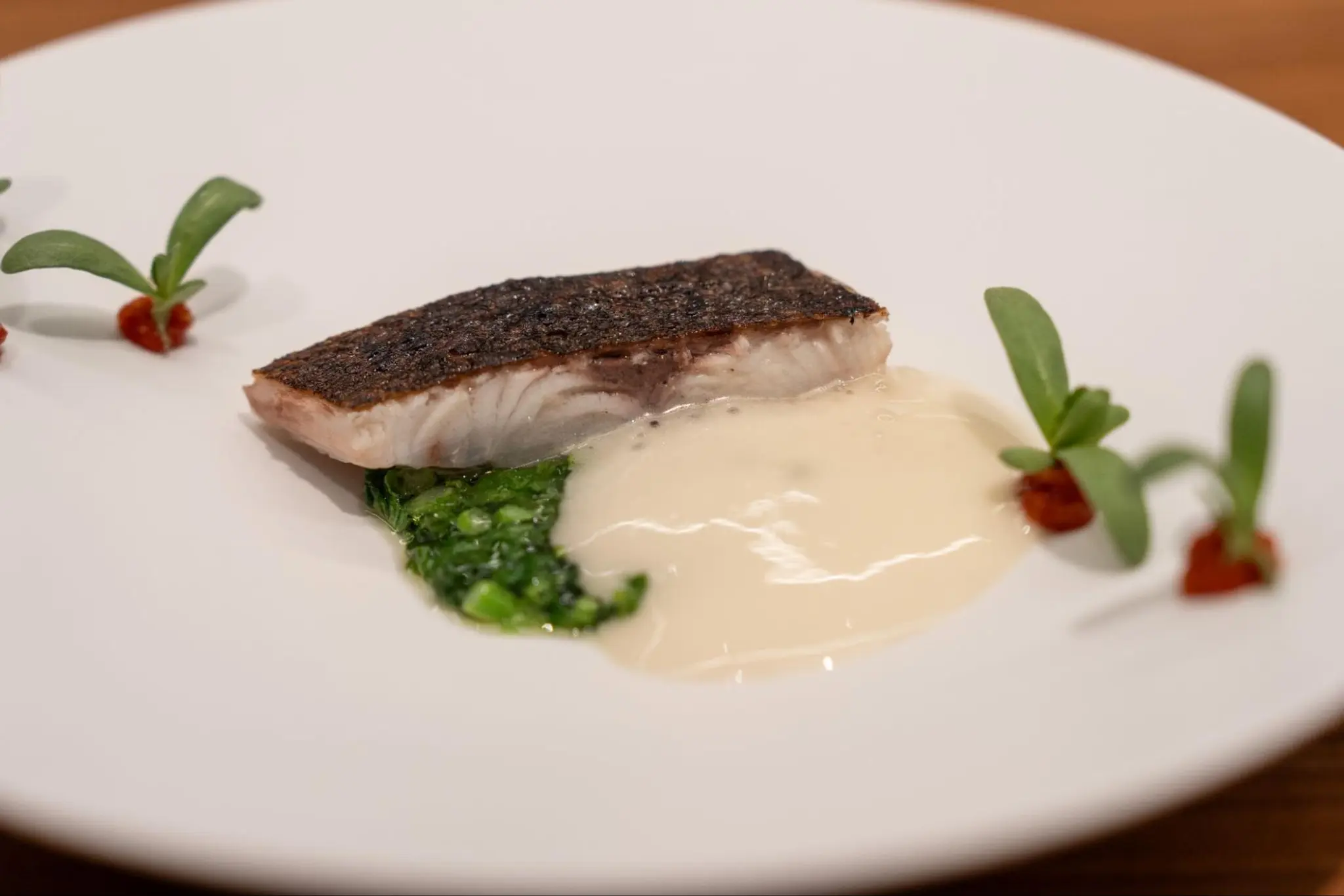
As the fish dish, we served a piece made with “Ooseto Isaki,” farmed in Kushimoto Town, Wakayama Prefecture. Although it is farmed Isaki (grunt fish), it has a rich quality fat and excellent natural flavor. When grilled, the skin becomes crispy with a fragrant aroma, which I really like. The sauce is flavored with garlic oil and accompanied by nanohana (rapeseed blossoms) lightly simmered in kelp broth, as well as an espuma made with shellfish extract to evoke the minerals of the sea.
On the side of the plate, there is finely chopped homemade dried tomato and micro baby leaves of shungiku (garland chrysanthemum) sent from “Yama no Mannaka da” in Hiroshima. While most microgreens on the market are hydroponically grown, these are grown in soil from scratch, which brings out their unique characteristics.
The Isaki is enjoyed together with the sauce and espuma underneath, and I recommend also eating it with the dried tomato midway for a “flavor change” that adds acidity. We also source other micro baby leaves from “Yama no Mannaka da,” which we serve as a salad within the course.
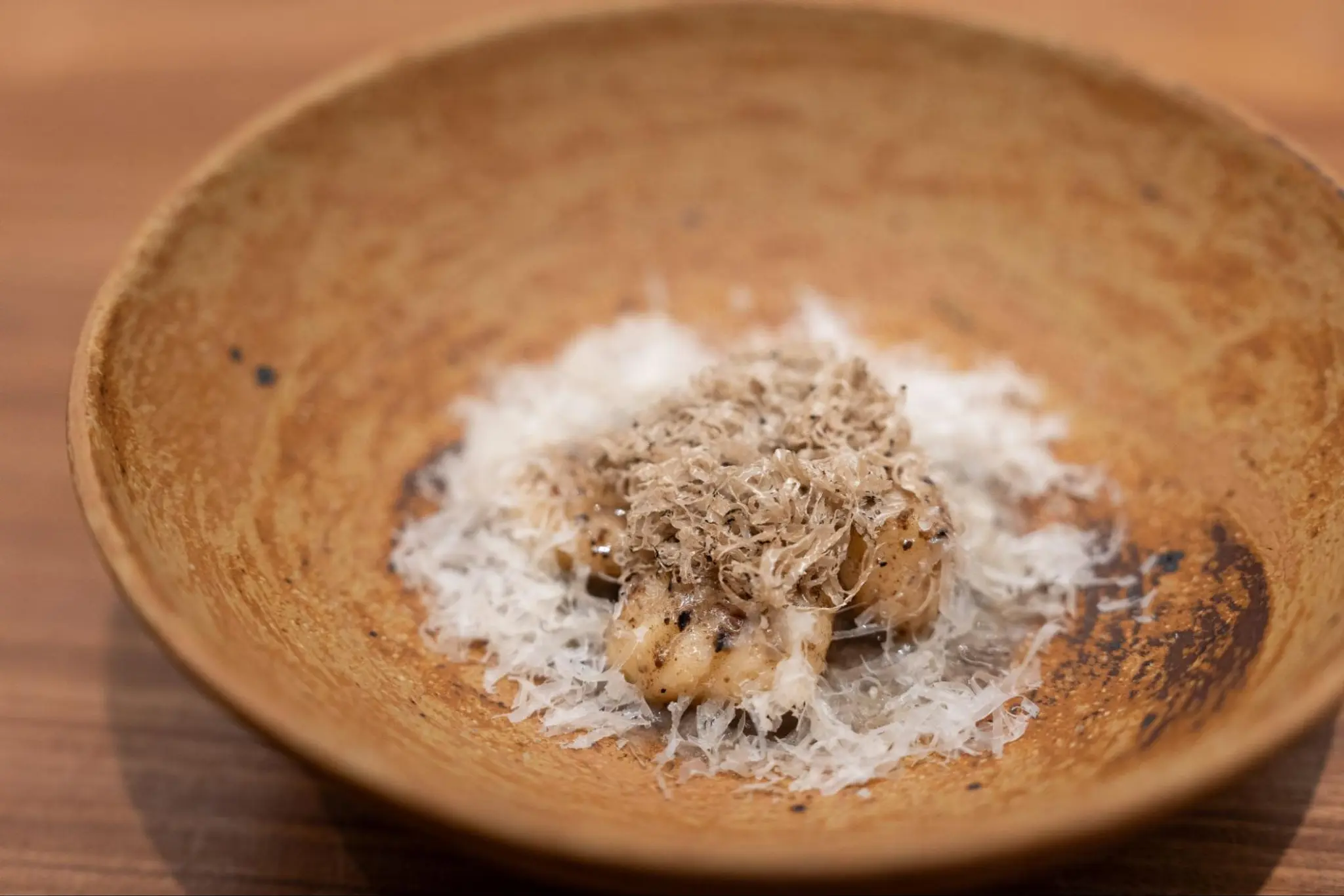
Another dish is the “Potato and Truffle Gnocchi,” which was also selected as a “Memorable Dish by Inspectors” in the Michelin Guide Kyoto & Osaka 2025. Currently, we use summer truffles, while earlier we used Biancetto, a spring truffle, and in winter, black truffles. This dish is prepared year-round by changing the truffle according to the season. At the end, we shave Parmigiano and fresh truffle on top, adding richness, aroma, and depth to the flavor. For plating, we use ceramics by Masahiko Ichino from Tanba Sasayama in Hyogo Prefecture, matching the dish.
ーーーYou source ingredients from all over Japan. Could you tell us about your commitment in selecting them?
Of course, the most important factor is that the ingredients are delicious, but as a chef, I prefer ingredients that come with a background or story that I can emotionally connect to, and where I can feel the passion of the producers. For example, the “Ooseto Isaki” I mentioned earlier — I spoke directly with the fish farm and was impressed by their dedication to the fish, environmental considerations, and their long-term vision. Naturally, the quality of the fish is outstanding, so I use it. I want to cherish not only the taste of the ingredients but also the thoughts and passion of the producers, using ingredients that I personally resonate with and approve of.
ーーーWhat do you consider most important when preparing your dishes?
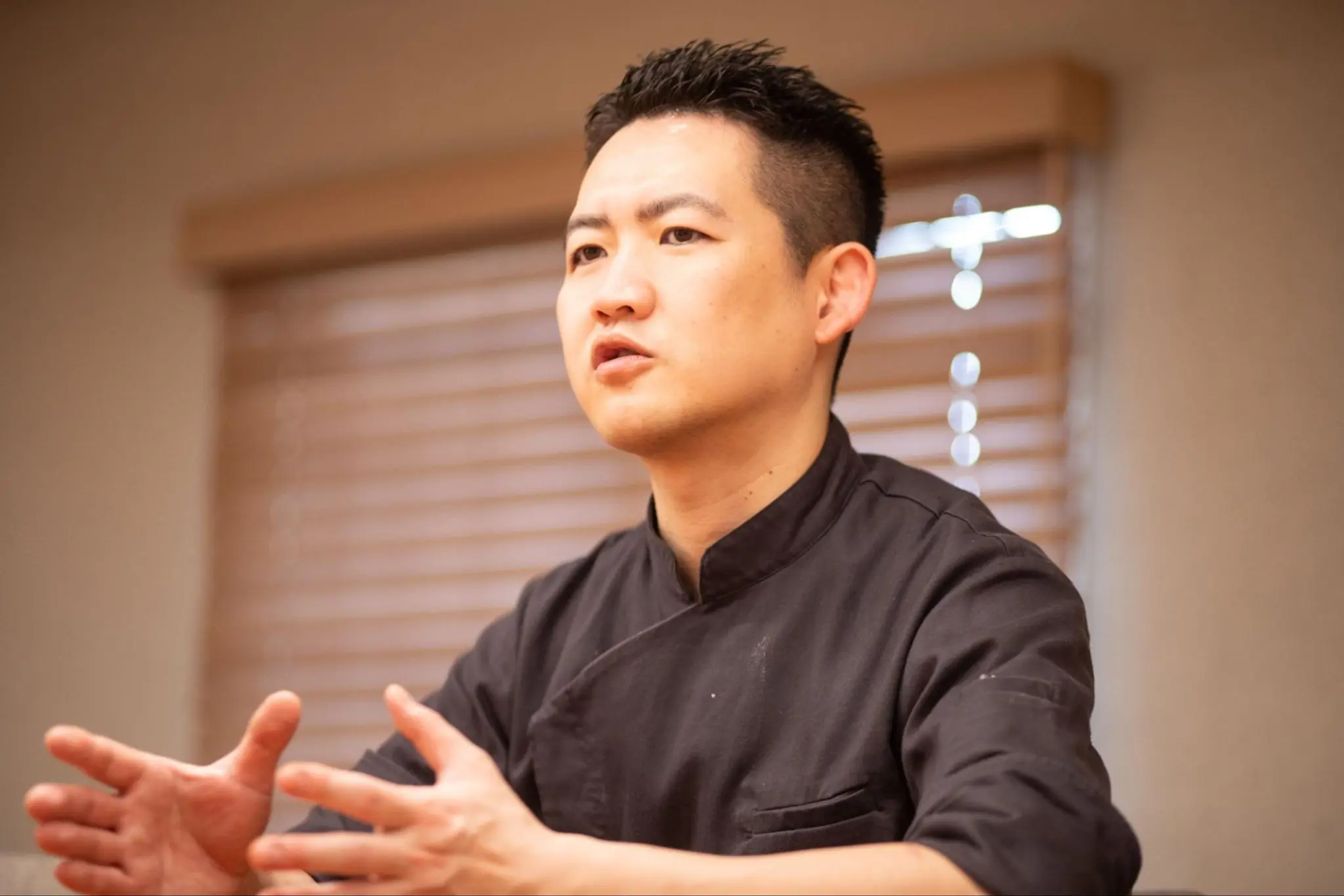
The thing I focus on the most is balance. I think about the balance of flavors as well as the order in which dishes are served. For example, after serving a dish with a strong acidity, I provide something with a different element to create contrast and rhythm, so that guests can enjoy the meal until the very end. I also pay attention to the balance of ingredients. Drawing from the cooking methods and knowledge I have cultivated so far, I always keep the overall balance in mind when composing the course.
Above all, I’m simply happy if guests genuinely enjoy the meal. Since they have taken the trouble to visit our restaurant and dine with us, it is the greatest honor as a chef to be able to bring even a little happiness to our guests.
Creating a More Sustainable Food Cycle
ーーーWhat are your future aspirations?
Regarding ingredients, I have a strong desire to support producers. Producers rarely have direct contact with consumers, so while I may not act as a full intermediary, I want to bridge the gap between producers and consumers and provide feedback from customers to them. On the other hand, by encouraging consumers to take an interest in the production side, I hope to broaden the base of support and help create an environment where producers are protected. As chefs, nothing starts without ingredients, so I want to collaborate closely.
Additionally, I want to focus more on “food education” going forward. I hope to help people genuinely enjoy the act of eating itself and spark curiosity, such as “How is this made?” I grew up developing my own interest in food this way. First, by responding to our customers’ needs, I want to increase the number of people who can enjoy food. This is a challenge I embrace.
ーーーLastly, what does “delicious” mean to you?
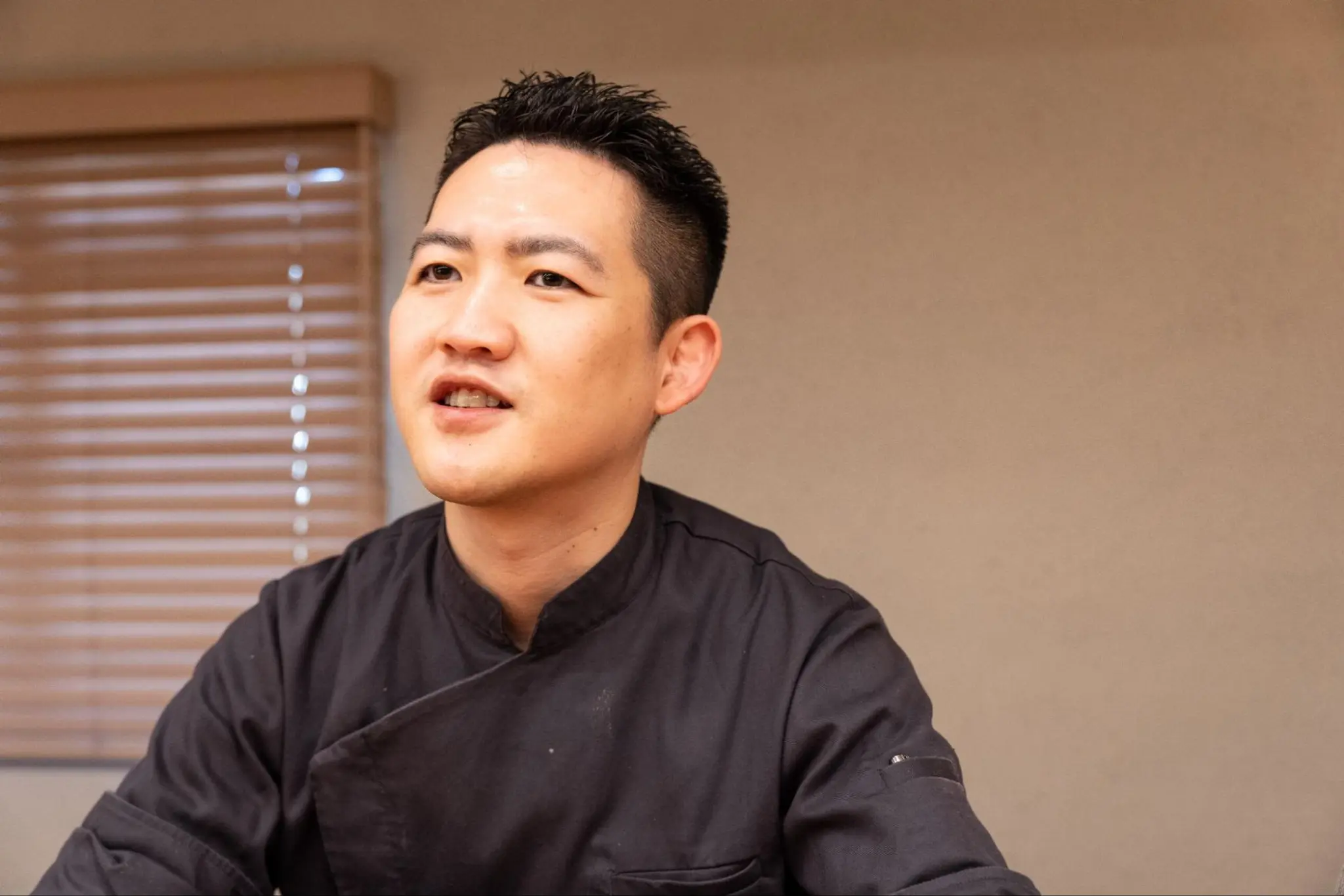
I think taste preferences vary, but what’s important is that eating brings a sense of “happiness.” It could be the surprise and enjoyment from the appearance, the appetite stimulated by the aroma — not just the flavor of the dish itself, but what can be experienced through all five senses. Various elements felt through the senses enhance the deliciousness of the dish and lead to greater satisfaction. Ultimately, I believe it is essential that the experience brings happiness. Moving forward, I want to continue creating dishes that deliver happiness to our customers.
With rich culinary experience cultivated through training across Japan and various regions of Italy, Chef Kakihara has established his own cooking style. Never forgetting respect for producers, he sincerely engages with ingredients, infusing each dish with his desire to deliver happiness to his guests. Looking ahead, he envisions expanding the richness of the food world by bridging producers and consumers and focusing on “food education.” Why not visit 【Rooots Nakanoshima】 to savor the passionate cuisine crafted by Chef Kakihara?
Interview and Text / AutoReserve Magazine Editorial Department
Photography / Masato Suzuki
Restaurant Information
- AutoReserve Magazine
- Delivering Happiness to the Five Senses! A Dish Connecting People and Ingredients by Chef Kenta Kakihara of 【Rooots Nakanoshima】