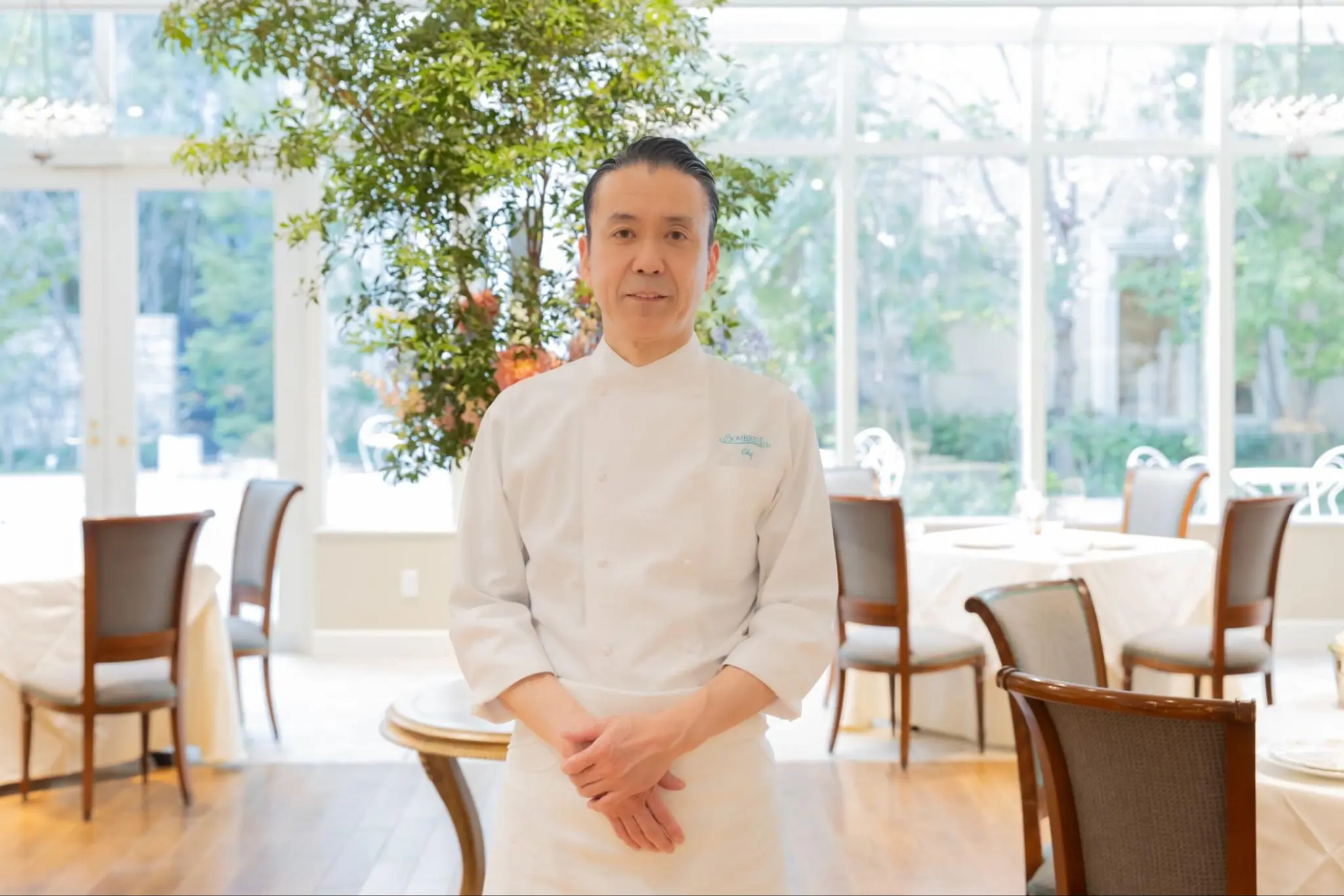
Delivering the Depth and Joy of French Cuisine: The Conviction of Chef Toshinori Wakatsuki of 【SOMBREUIL】
The Exhilaration of French Cuisine Realized in a Standalone House Setting
ーーーI understand you were involved from the very beginning of 【SOMBREUIL】.
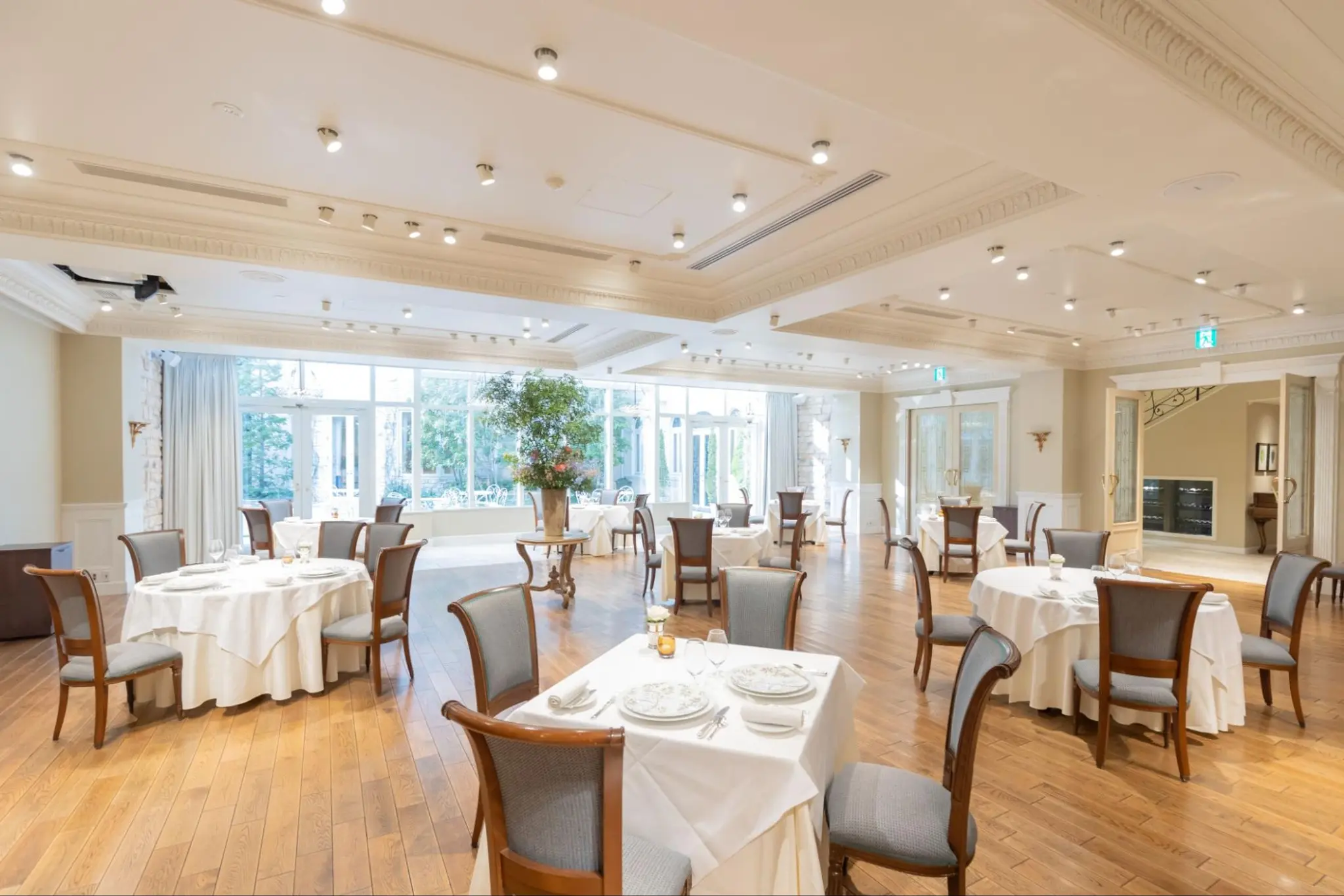
Our restaurant was designed so that the first and second floors can simultaneously operate as a restaurant and a wedding venue, with a spacious kitchen. Not only the kitchen but also the entire service flow is arranged as a “stage” to deliver dishes to our guests. This is a defining feature of the 【SOMBREUIL】 space. The core theme at our founding was to “create our own concept of what a restaurant should be.” Nowadays, it’s rare to find a standalone house restaurant with a garden in Tokyo. Most restaurants operate within commercial facilities, mainly as tenants. We believe that dining is an “experience” that includes the space itself. From the moment guests pass through the entrance to when they take their seats, and enjoying a garden view through the window while dining—all of this composes the “time spent at the restaurant.”
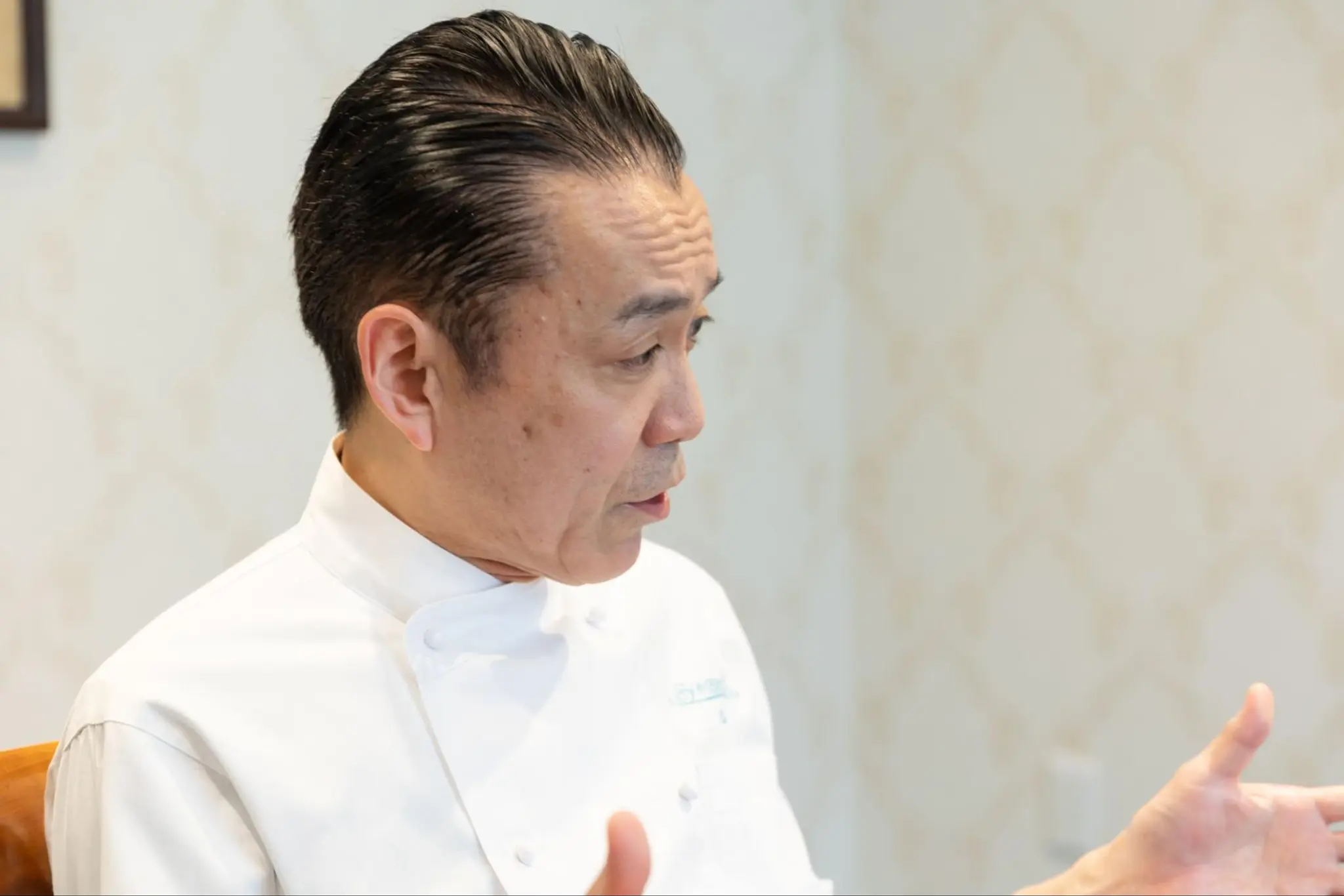
I was involved not only in the cuisine but also in the design of the space for this restaurant. Previously, I spent 10 years at the standalone house restaurant 【Aimee Vibert】 in Kojimachi, which placed great emphasis on the creation of the environment. Drawing on that experience, my colleagues and I started from scratch by searching for land and envisioning what kind of experience we wanted to offer. From the cuisine itself to the guest flow, service, and overall atmosphere — we designed 【SOMBREUIL】 from the ground up on what was originally a parking lot. While not overly formal, we want guests to feel a special sense of occasion throughout the entire space from the moment they arrive, a feeling that says, “Today, I have come to enjoy French cuisine.”
ーーーWhat are your key commitments when it comes to your cuisine?
The most important thing is that the dish’s name matches its cooking method. If the menu says “roast,” then it must be properly roasted in the oven. If it says “poêlé,” then it must be correctly pan-seared. Anything less is unacceptable in my view. There are cases where fancy menu names are borrowed but the actual preparation is completely different, and I believe that’s wrong. French cuisine has a specific context and tradition that must not be broken. While I do incorporate modern and innovative approaches, I never abandon the fundamental techniques. Having a solid foundation gives meaning to what you add or how you evolve the dish. Without that base, no matter how new it is, it’s merely a personal style and ceases to be true French cuisine.
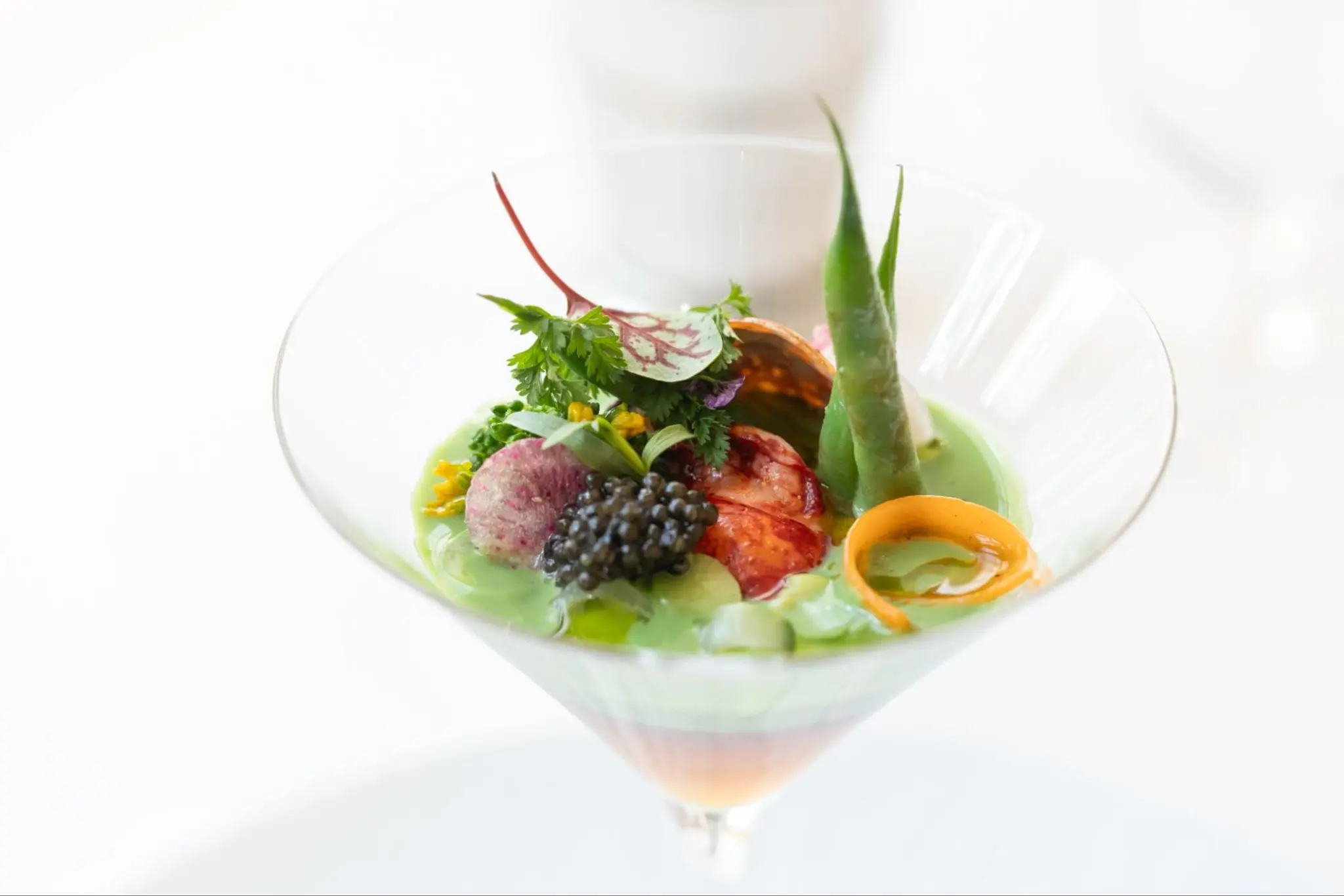
Telling a Story Through Ingredients on Every Plate
ーーーWhy does Chef Wakatsuki value classic French culinary styles?
The environment in which I grew up as a chef was always like that. I have worked exclusively at so-called “grandes maisons” in both Japan and France. These are places where a team, rather than a single individual, works together to create each dish. One staff member prepares the sauce, another prepares the garnish, and yet another sears the main. Multiple techniques come together to complete a dish for the guest. This may seem inefficient at first glance, but to me, this is “what French cuisine truly is.” Nowadays, efficiency is often prioritized, and “small-scale” cooking styles are highly regarded. Many chefs produce wonderful dishes within those frameworks. But precisely for that reason, I want to continue making dishes that involve time and care.
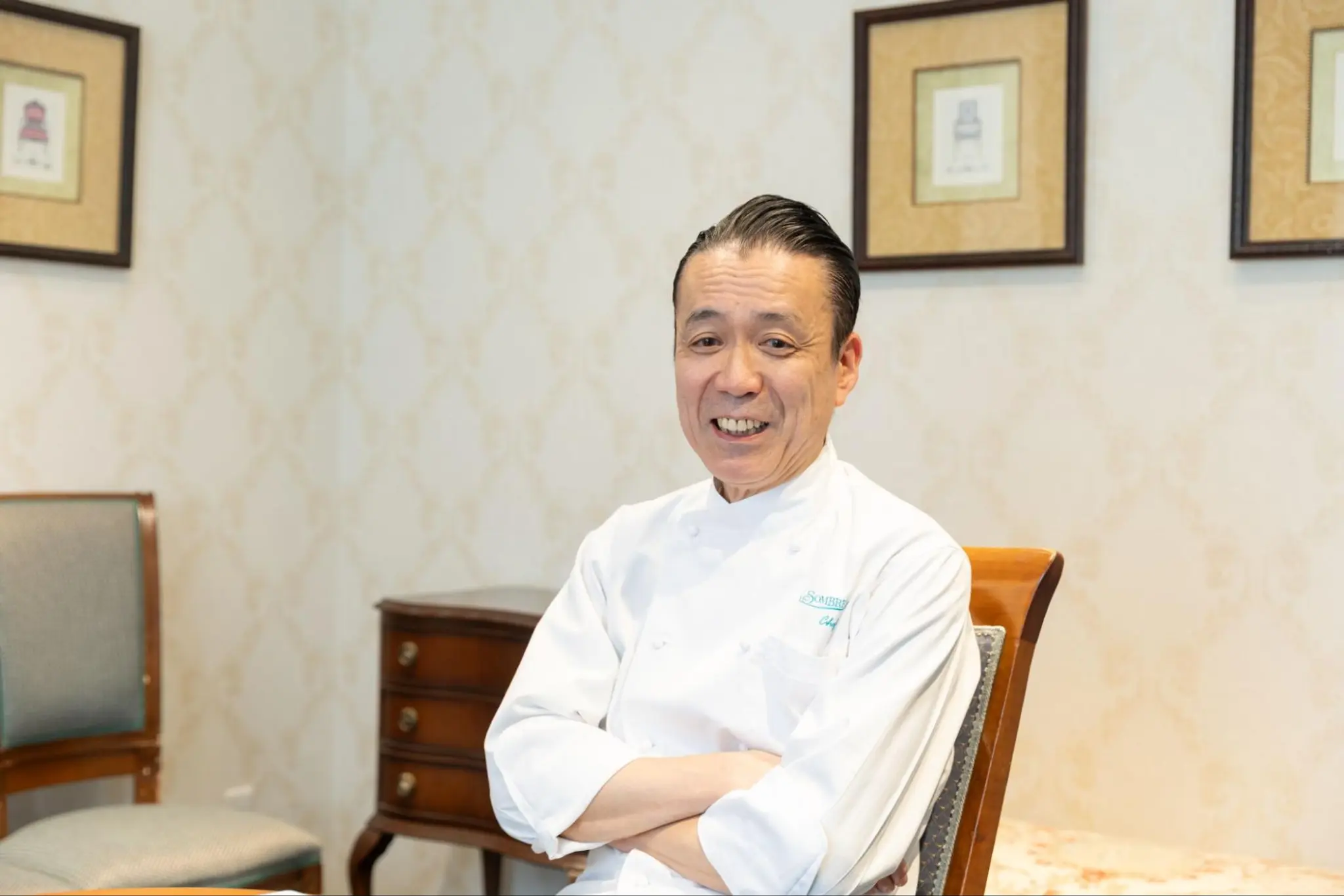
For example, when you travel to a quiet provincial town in France and visit a standalone house restaurant with a peaceful garden, where numerous staff greet you with classic service and carefully prepared dishes are served — those moments become lasting memories. I wanted to create a restaurant in Tokyo where guests can have that kind of experience. That’s what I strive to achieve at our establishment.
ーーーHow do you build a dish from selecting ingredients to its final presentation?
There are many ways to approach this, but for me, it’s not just about “what to use and how to use it,” but also “why to use it.” There are several elements I cherish in classic French cuisine, and one of them is foie gras. To me, French cuisine without foie gras is unthinkable. I have devoted myself to perfecting how to prepare it as a dish.
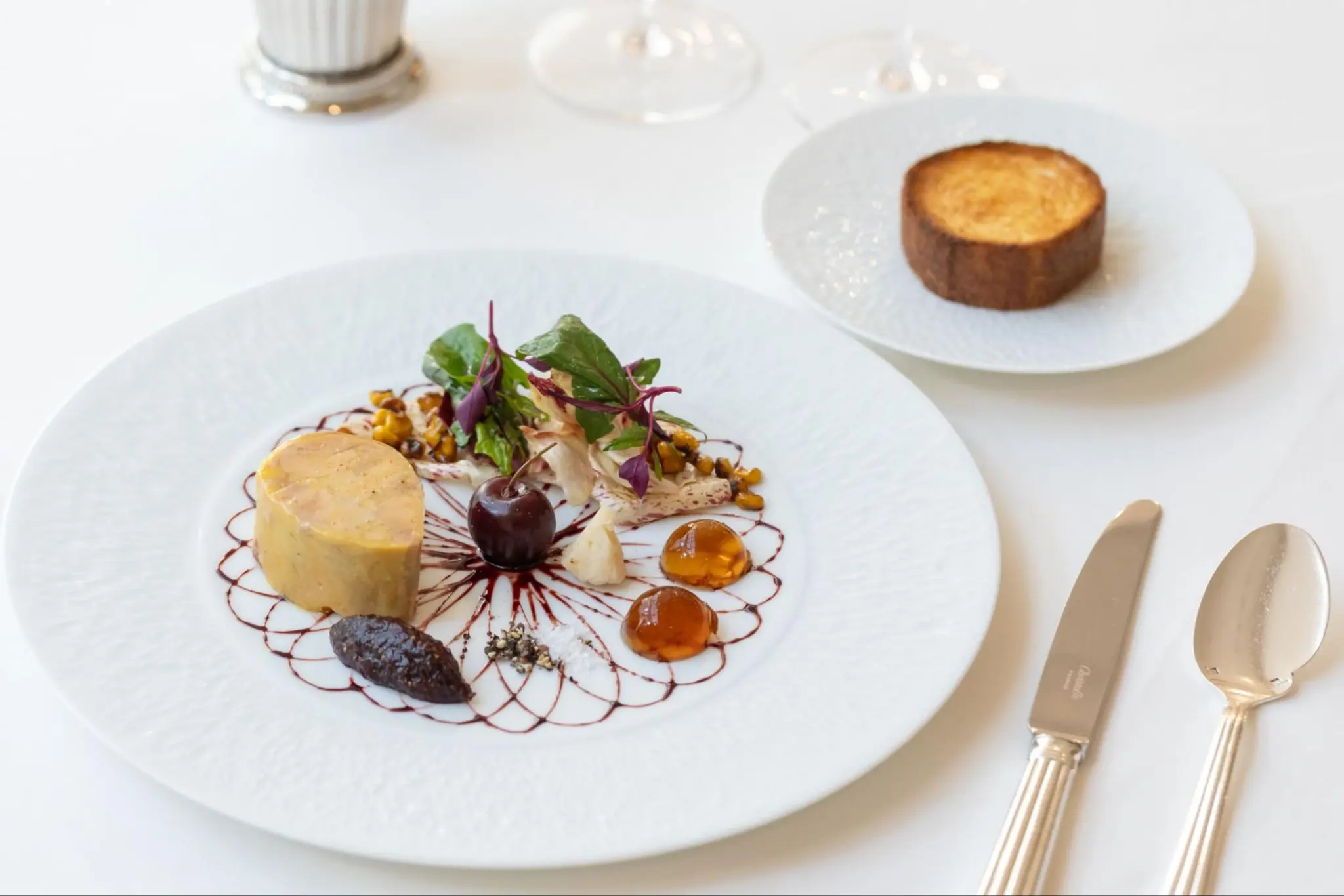
ーーーHow do you actually compose this dish?
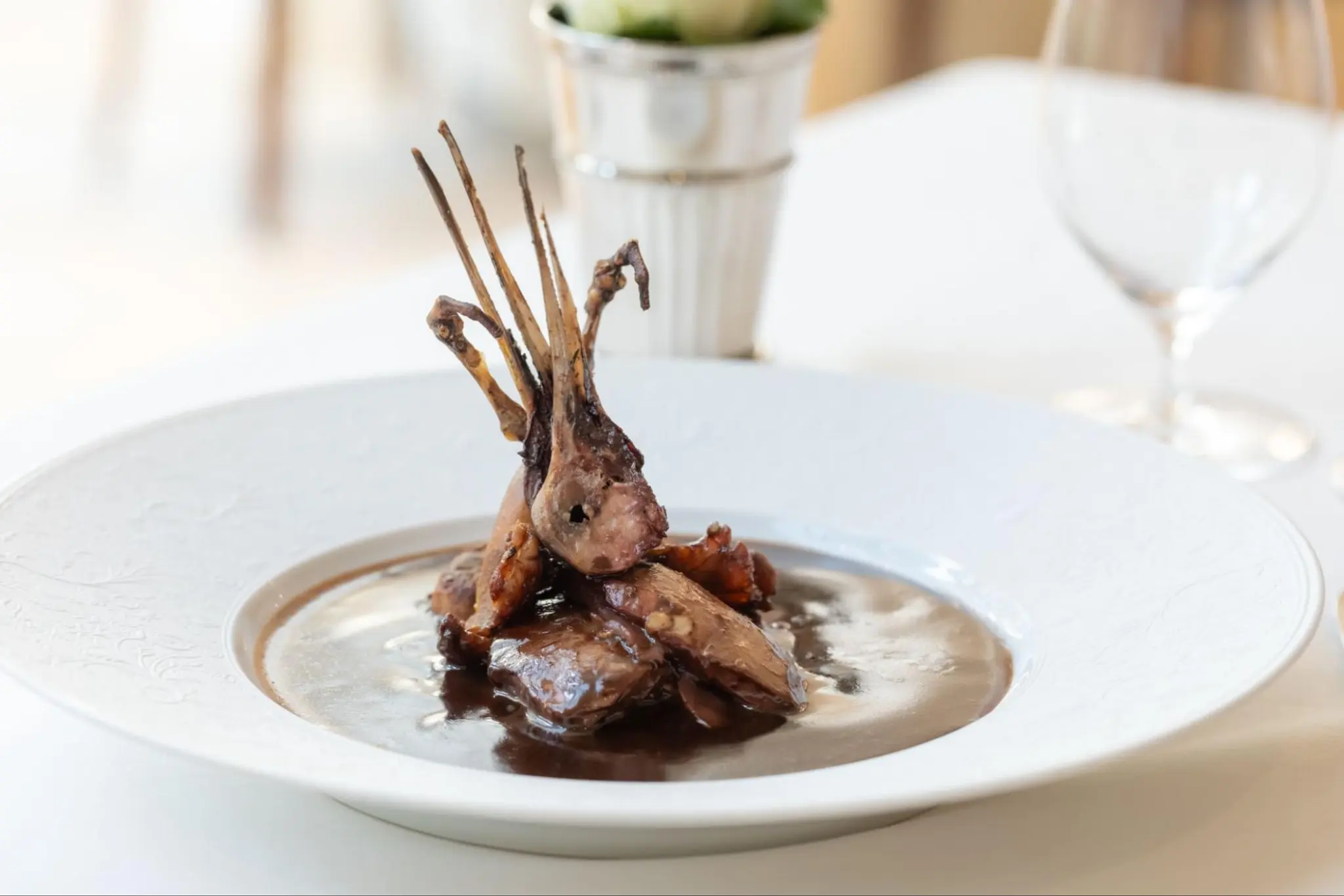
For me, foie gras is “duck cuisine.” I don’t consider it simply as a piece of liver, but want to treat it as a whole life. Therefore, I make sure every ingredient in the dish has a reason. For example, I choose corn as a side because ducks are raised eating corn. I personally think festival-style grilled corn is the tastiest, so I char it to add a smoky aroma. The cooking method and fragrance all connect to “how that duck was raised,” and instead of olive oil or butter, I use duck fat. Duck fat pairs best with duck, naturally. The idea is to complete the dish within the life of the ingredient without adding unnecessary elements. Additionally, the sauce base uses port wine, which helps unify the flavors, but I value the connection among elements on the plate. When serving a dish with such a “story,” even without directly explaining everything to guests, they somehow sense the harmony. I want every ingredient to be thoughtfully considered—from how it was raised to how it’s utilized—before placing it on the plate.
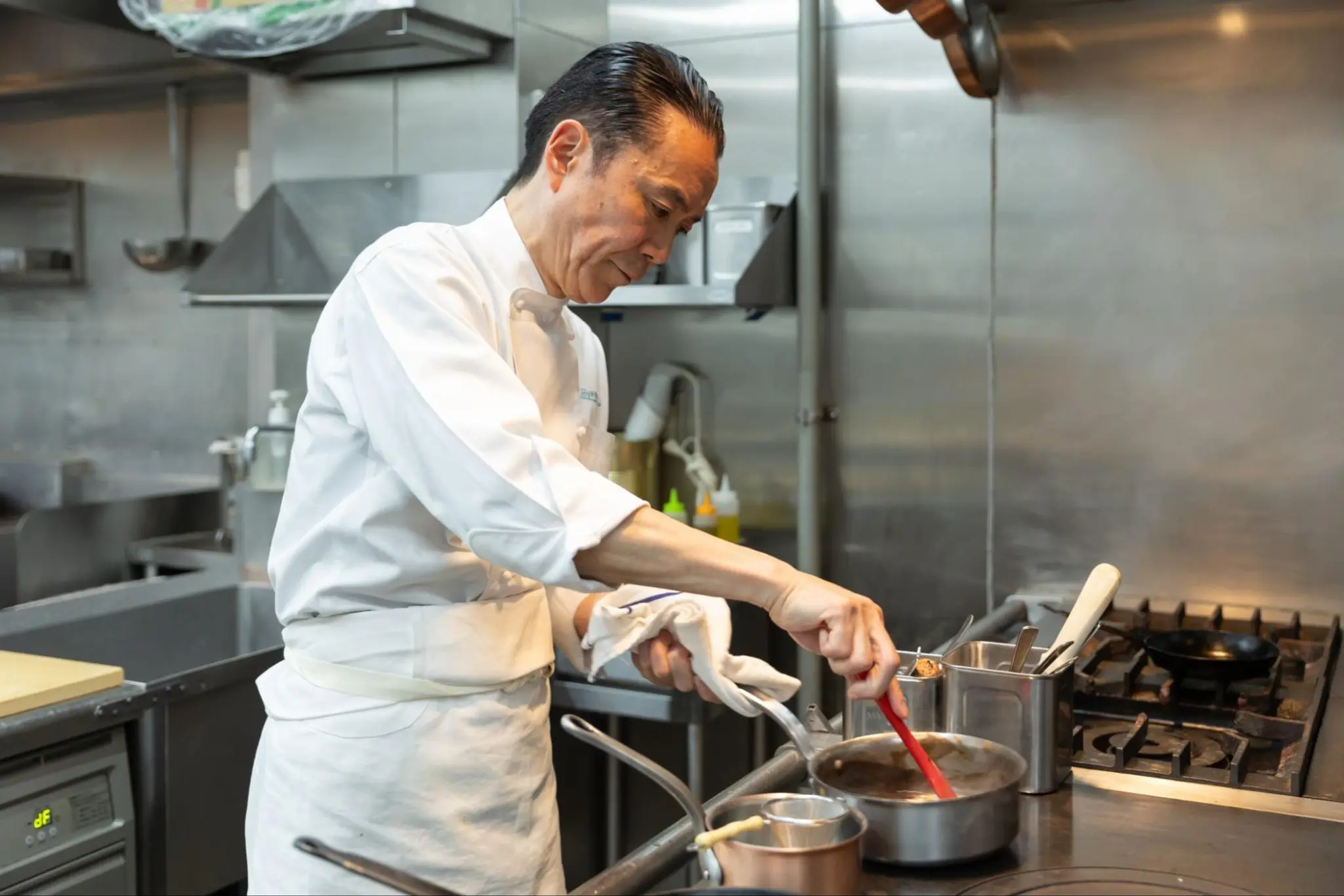
Cooking Is a Team Effort, So I Keep Working Alongside
ーーーWhat kind of team do you work with to complete the dishes?
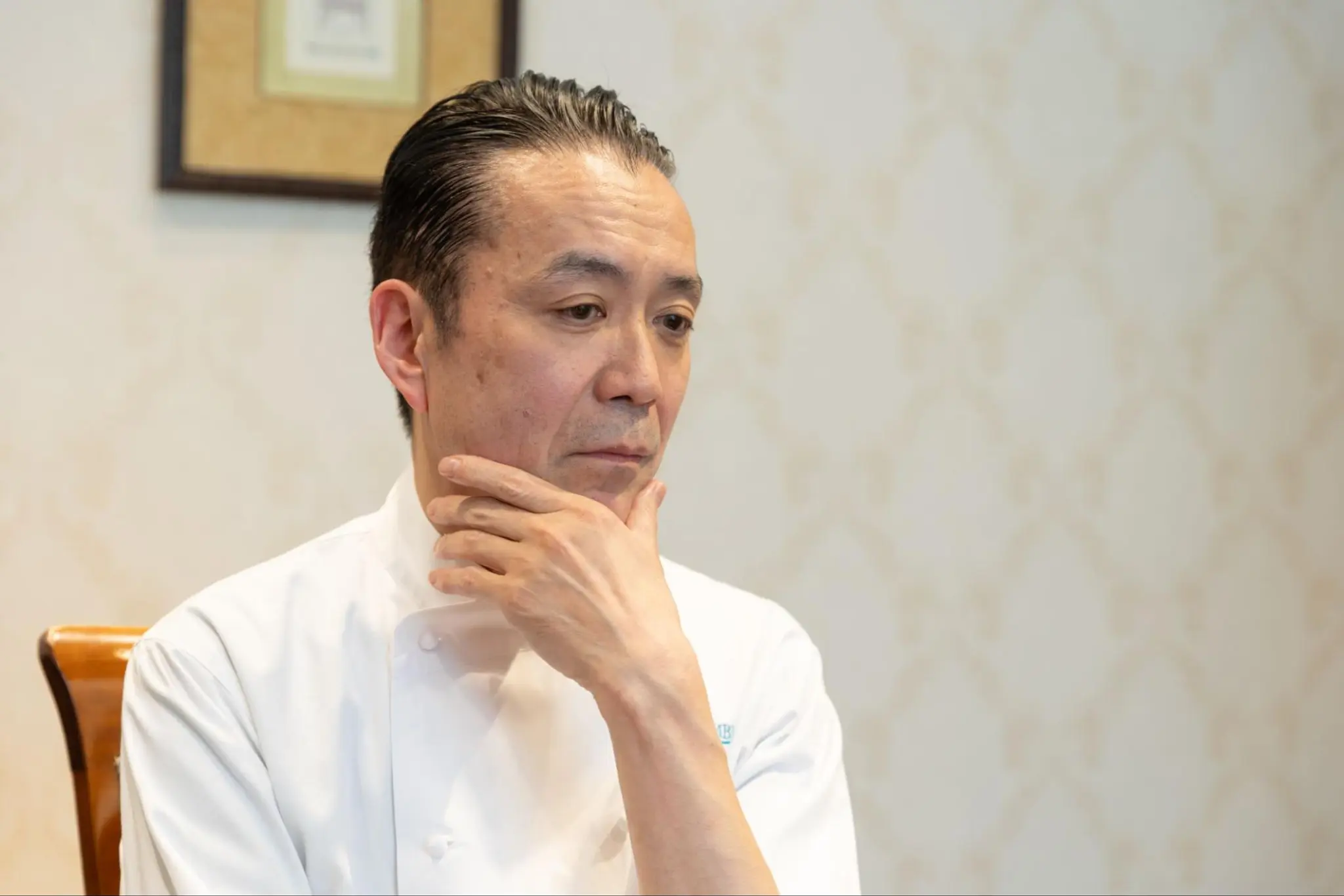
Our current team is mostly in their 20s. I’m in my 50s, and our chef pâtissier is in his late 30s, but nearly all the other members are young staff. Some even joined straight out of school and are working hard as chefs from scratch. I never tell any staff “You’re not ready for this” or “You can’t do that.” From filleting fish, cooking, prep, to plating, I let them handle everything from the start. Mistakes can be corrected on the spot. It’s through such experience that they grow as chefs. I myself grew up that way. Young people absorb quickly; if we teach properly, their growth is astonishing. Sometimes not having experience is an advantage. Of course, it’s tough too. The younger generation today is exposed to far more information than we were, so it’s easy for them to feel lost. That’s why I believe it’s my role to patiently organize and explain, “This is how it is, and this is how you do it,” step by step.
ーーーYou continue to stand at the forefront of the team while also dedicating yourself to nurturing young talent.
I don’t want to be just someone who talks. During service, I’m always right there in front of them, cooking with the utmost seriousness and care. I believe showing this attitude builds trust. Cooking is a team effort, and if I stop moving, the whole atmosphere relaxes. That’s why I believe the leader’s role is to lead by example and keep moving first.
ーーーIsn’t it tough for the head chef to always be present on the floor?
It’s enjoyable! I truly love cooking. There’s a great joy in being fully absorbed in preparing a dish and feeling, “Yes, that’s it.” I don’t think a head chef is just about giving orders. Being on the floor allows me to notice the staff’s expressions and shifts in atmosphere, and understand what needs to be taught. As a chef, there’s no reason to be away from the floor. So I believe I will continue to stay present in the kitchen for a long time to come.
The Foundation of My Culinary Path: The “Form” Learned in France and the “Flow” Cultivated in Japan Support My Current Cuisine
ーーーWhere did your journey into cooking begin?
As a child, I happened to watch a cooking show on TV called “World Cooking Show,” and thought it looked interesting. Foreign chefs cooked in the studio, and there was a segment where one audience member was chosen to eat with them. It looked really fun and cool. I was drawn to Western cuisine. Although it probably wasn’t a show intended for elementary school kids, it sparked my desire to cook from then on.
ーーーAfter training in Japan, you went to France, correct?
I had decided in my heart that “when I turn 25, I will definitely go to France!” There was no real basis for this—just enthusiasm (laughs). I relied on a senior who was in France and started my life there. The training was tough. Especially when I joined a three-Michelin-star restaurant, every day felt like a battle. Even one mistake could halt the entire flow, creating intense pressure. However, this rigor thoroughly honed my attitude and concentration toward cooking. Moreover, the Japanese chefs I met there were all hungry, serious, and determined—I never wanted to lose to them. That period was one where I constantly motivated myself to push forward.
ーーーAfter completing your rigorous training in France, how did you proceed with your career upon returning to Japan?
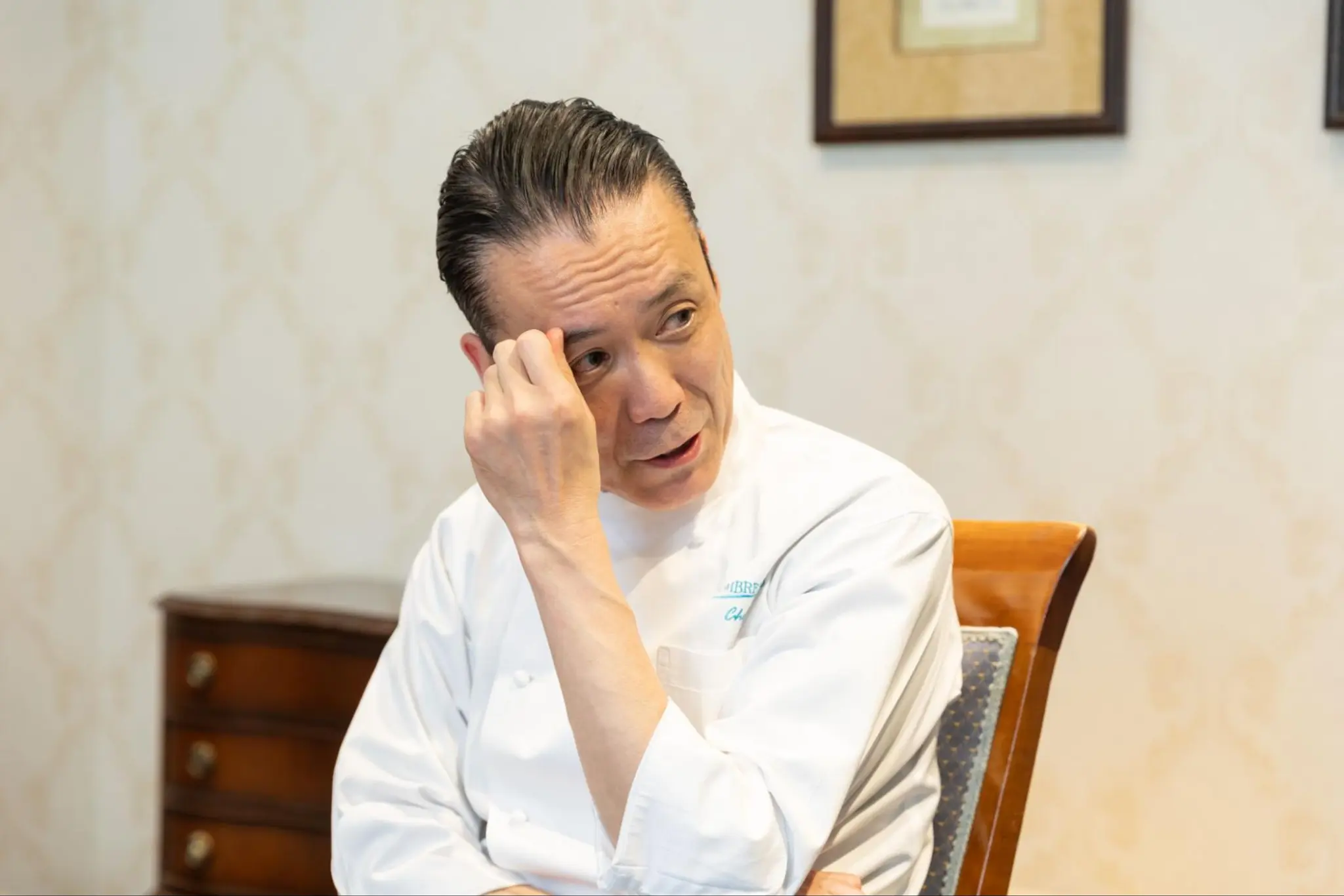
When I returned to Japan, I had neither money nor work, so I started by working at a resort hotel to save funds and rebuild my foundation. At that time, a respected senior advised me, “You should also gain experience in banquet cooking.” Until then, I had only worked with French course cuisine, so honestly, I was quite reluctant at first. However, trusting the strong advice that “it will definitely be beneficial,” I took the plunge and indeed gained a lot from the experience.
In large-scale cooking environments, precision in preparation and the ability to read the flow are paramount. Serving dishes for dozens of people all at once and on time actually requires great skill. Because of this experience, I believe I was able to build a system at our restaurant that allows us to operate both the dining and wedding services in parallel.
A Valuable Dining Experience That Begins with “What Shall I Eat Today?”
ーーーYou insist on a prix fixe menu rather than an omakase-style course, correct?
I believe the true pleasure of French cuisine lies in “being able to choose.” While crafting the entire course as a single narrative is wonderful, at our restaurant, we deliberately offer a prix fixe menu so that guests can enjoy the fun of deciding—“Maybe I’m in the mood for fish today, the lamb main sounds good, but perhaps I’ll go with duck after all”—as they peruse the menu. Serving “today’s course is this” in a one-sided way is one style, but it leaves no room to reflect the guest’s mood that day. Dining at a restaurant isn’t just about being served; the value also lies in “choosing for oneself.”
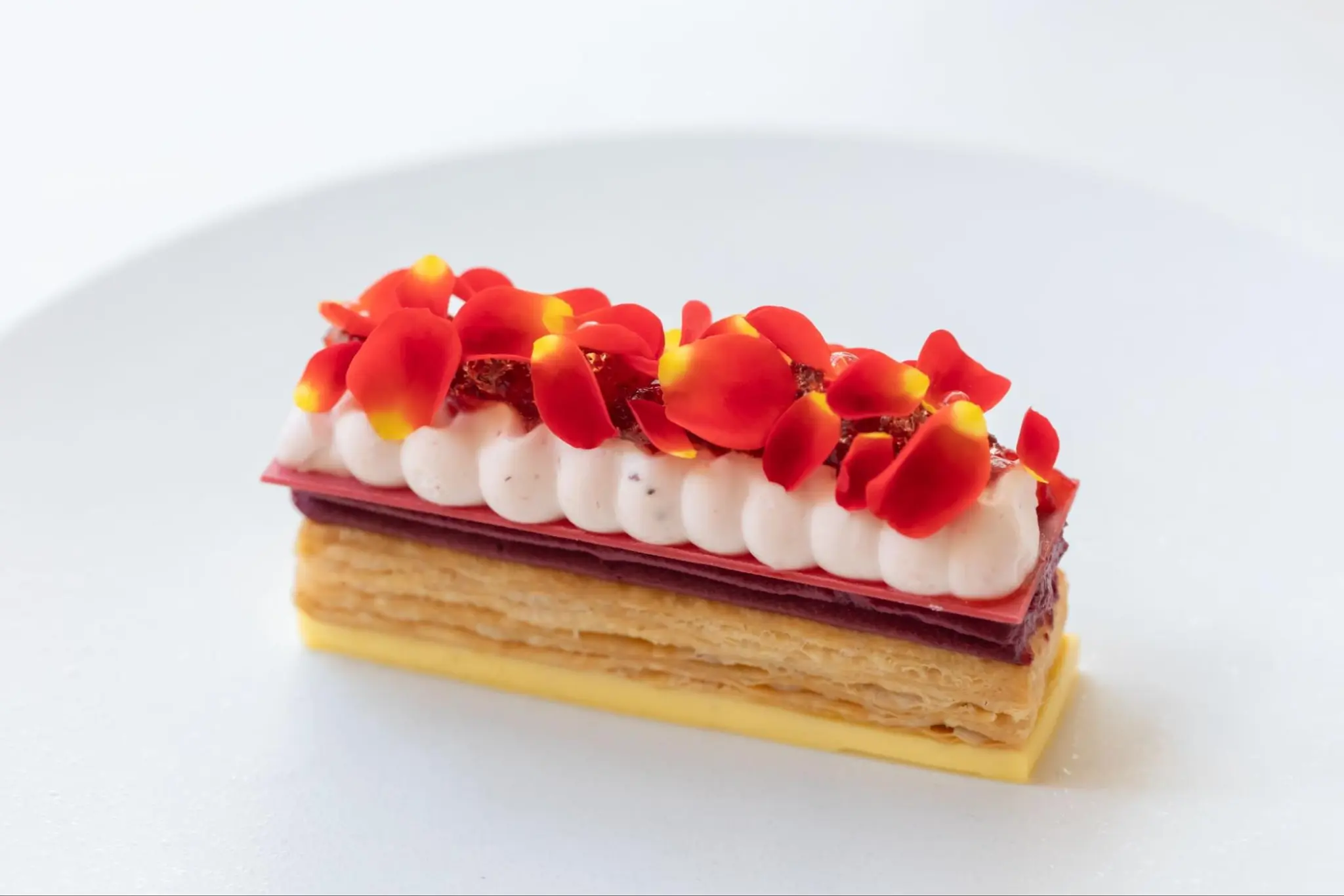
ーーーThe joy of choice is certainly one of the highlights, isn’t it?
It’s not just the guests who enjoy it. With a prix fixe menu, the kitchen team must constantly monitor the situation and adapt flexibly. We make real-time decisions like “Let’s advance the cooking on this one first” or “Prepare twice the amount of sauce.” Of course, it gets challenging, but it’s also very engaging for the chefs. In contrast to an omakase style where you simply follow a predetermined flow, prix fixe requires constant anticipation and judgment. This is one reason our young staff grow so quickly. They learn to think independently about what needs to be done next, broadening their perspective and providing great motivation for the entire kitchen.
ーーーSo the “ability to choose” provides stimulation and value for both guests and chefs?
Exactly. That’s why we aim to offer as much variety as possible on our menu. For fish dishes, we provide both white-fleshed and red-fleshed options; for meat, varieties like duck and lamb, even considering the number of legs, creating diverse choices. We also balance the colors of seasonal vegetables so that the overall harmony is achieved. Preparation is certainly demanding, but that’s the “depth” of French cuisine. While respecting the core of French cooking, responding to what the guest wants to eat in that very moment—that’s what I believe my role is at our restaurant.
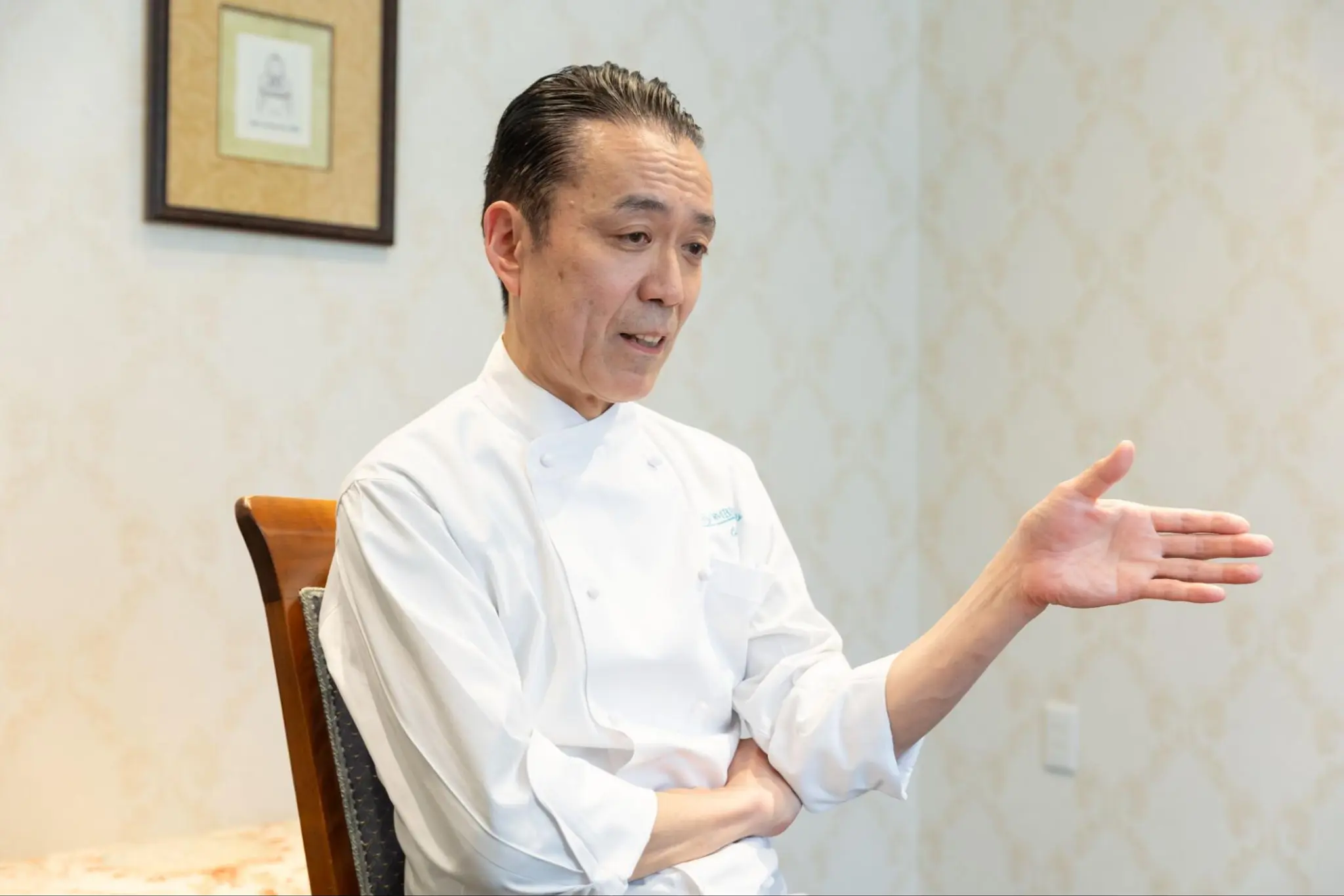
ーーーFinally, what does “delicious” mean to you?
To me, “delicious” means a dish I can truly stand behind. Every cooking technique in French cuisine carries meaning, and it’s precisely because of that meaning that I want to build dishes accordingly. I believe this careful accumulation creates the “convincing power” of a dish. My commitment to “doing what needs to be done properly” stems from this belief. Our dishes may not be flashy, but I aim to create plates with a “quiet conviction” that makes those who eat them feel the care and precision involved. We take on even the labor-intensive tasks ourselves, step by step. I believe that this dedication results in dishes that can only be experienced here.
Based on classic French cuisine, the dishes at 【SOMBREUIL】 embody both the joy of choice and precise technique, reflecting not only the flavors but also the true essence and traditional pleasures of French cooking. Each plate tells a small story, seamlessly connecting to the next. The entire composition feels like a carefully crafted “script” performed on the stage of a standalone house. Chef Toshinori Wakatsuki delivers cuisine not just as taste but as an experience of time itself. It is this very setting that gives birth to a uniquely memorable French dining experience found here.
Interview & Text / Yuko Arakawa
Photography / Atsushi Sanada
Restaurant Information
- AutoReserve Magazine
- Restaurants recommended by top chefs
- Delivering the Depth and Joy of French Cuisine: The Conviction of Chef Toshinori Wakatsuki of 【SOMBREUIL】