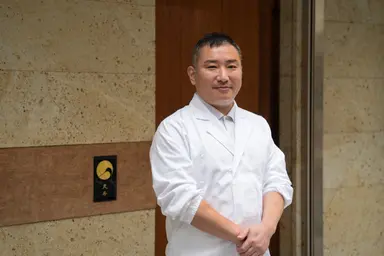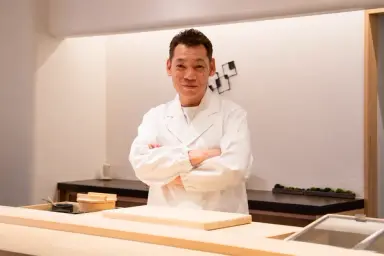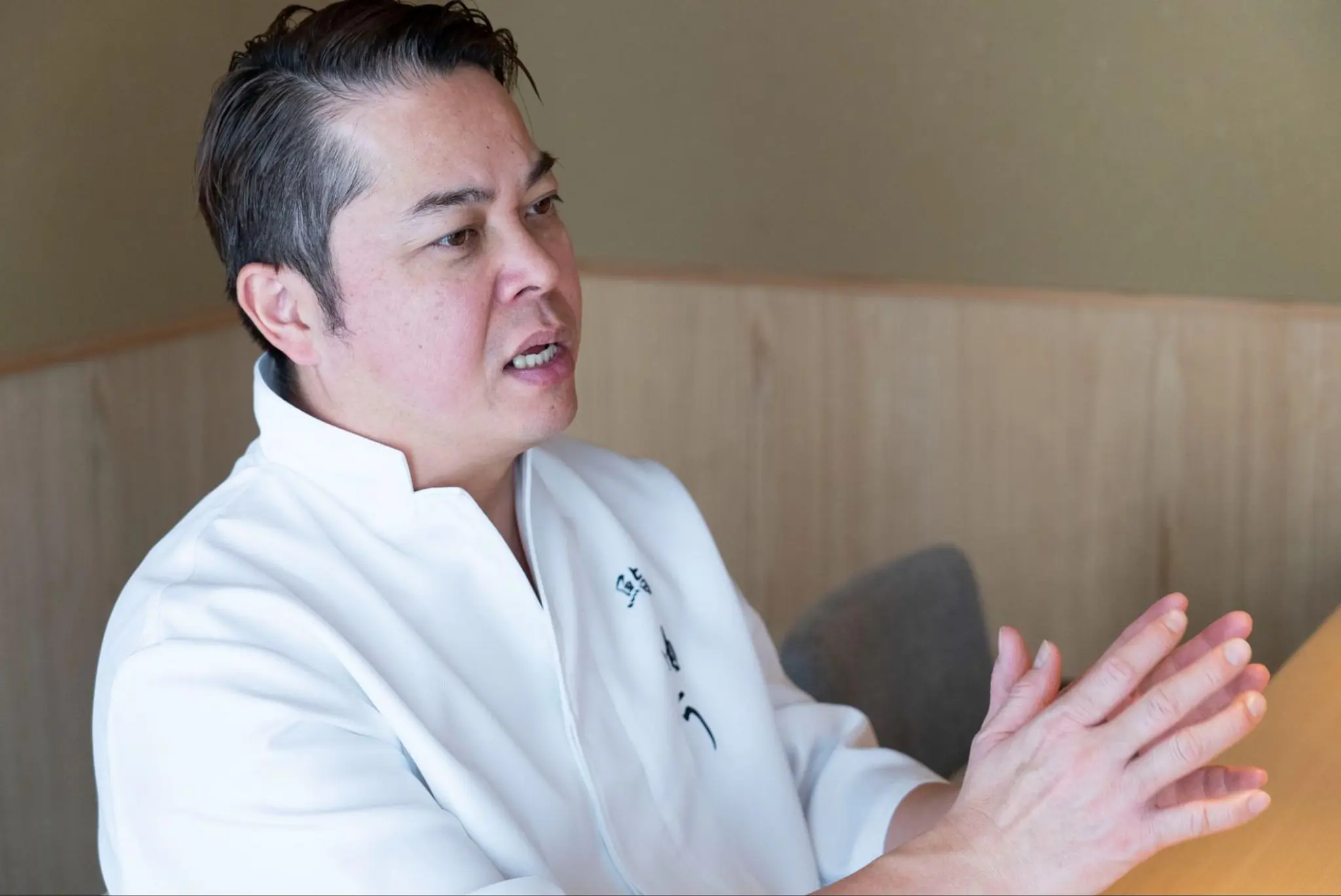
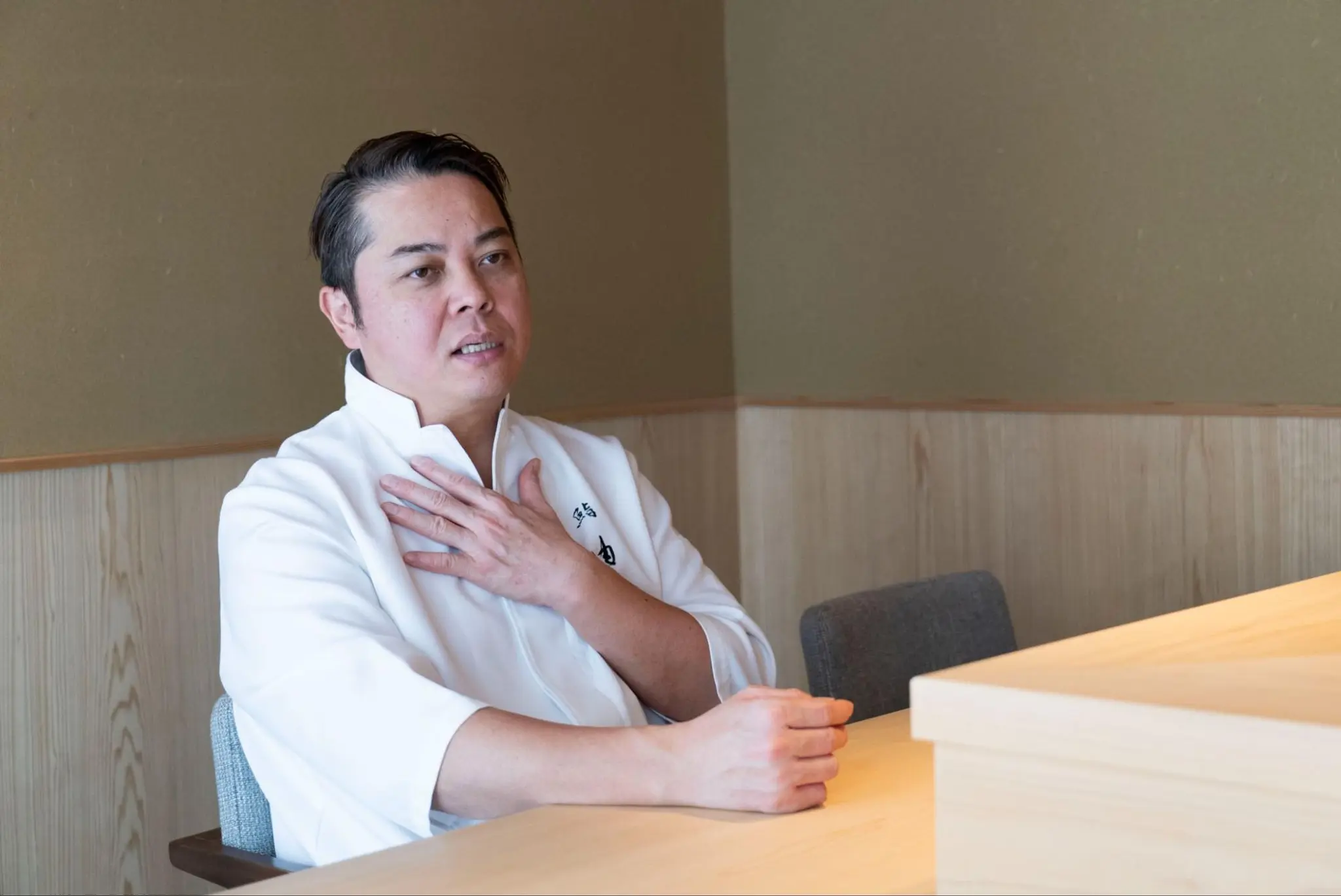
The charm of Mr. Ozaki of 【Ginza Sushi Yuu】, a first-class sushi chef who also stands out for his exceptional business acumen
His vision of creating “a fun restaurant” rooted in his personal experiences
ーーーCould you tell us about the unique aspects of your restaurant?
Our establishment is certainly high-end, but we strive to create an atmosphere where guests can enjoy their meals without feeling overly formal. Traditional sushi restaurants often have strict rules, such as prohibiting photography, but our approach is the complete opposite. Guests are welcome to take photos, and sharing on social media is absolutely fine. We want our customers to fully enjoy their time at our restaurant. This philosophy has remained unchanged since we first opened in Roppongi eight years ago.
ーーーWhat inspired this perspective?
Reflecting on my own experiences, there was a time when I visited a well-known sushi restaurant as part of my learning process. However, I found myself so tense and upright that I couldn’t relax and enjoy the meal. In fact, I was so nervous that I don’t even remember how the food tasted. No matter how delicious the meal is, if you’re too anxious while eating, you miss out on fully appreciating it. That experience made me realize the importance of creating a comfortable and enjoyable dining environment.
When I started my restaurant, I felt that delivering a great dining experience was just the baseline. Beyond that, I believed that if we could offer a comfortable space where customers could truly enjoy themselves, they’d want to return. On top of that, when like-minded customers gather and share in that positive atmosphere, it naturally enhances the ambiance of the entire restaurant.
ーーーHow have customers responded to your effort to create an enjoyable atmosphere?
Initially, many customers were quite surprised. During our first year, we had a mix of reactions—some people were delighted, while others weren’t as receptive, so opinions were divided. However, now that we’re in our eighth year and have been featured on TV and in various media outlets, our recognition has grown. As a result, more and more customers are visiting us, having discovered us through media or social platforms, and they genuinely enjoy our hospitality.
Our Japanese clientele tends to be in their mid-30s to 60s, often business owners. For overseas customers, the age range is a bit wider, from their early 20s to 50s, with about 70% of our patrons coming from outside Japan. We consistently welcome around 15 customers daily. A large number of our Asian guests find us through their local social media channels, and sometimes our entire counter is filled with customers from Hong Kong. In fact, our international reputation might be even stronger than it is within Japan.
The birth of our signature dish that went viral on social media!
ーーーWhat inspired the creation of the widely celebrated “Purin Roll” and “Minato-ku Roll”?
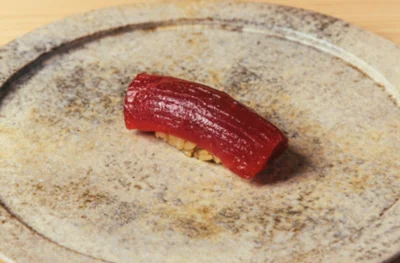
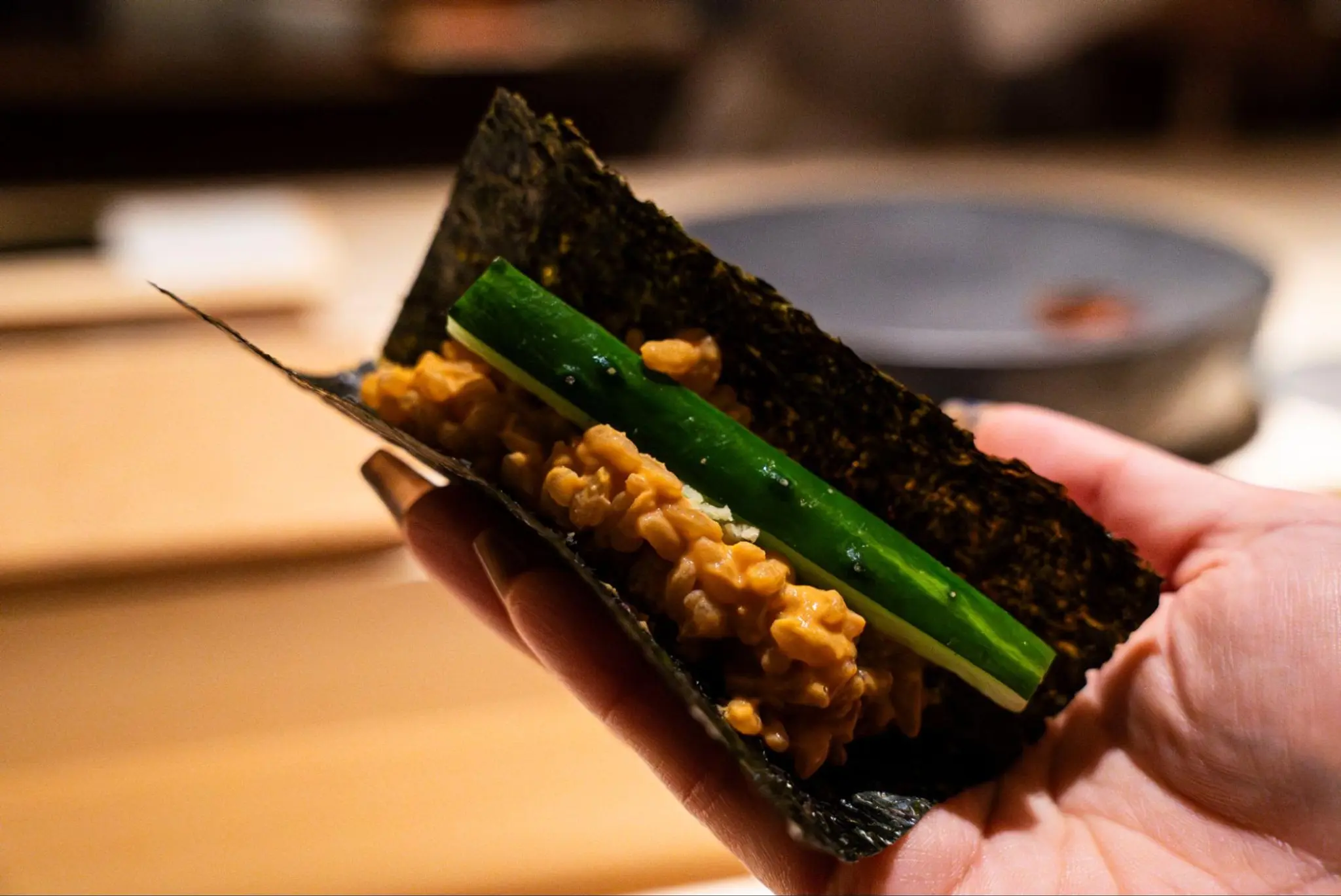
The “Purin Roll” actually came about by chance, thanks to a customer’s request. Originally, we served ankimo (monkfish liver) cooked in blocks as a small appetizer, which was well-received. One summer, when ankimo wasn’t on the menu, a guest asked if we could still prepare it for them. Around that time, I happened to be browsing social media during a break, thinking about ankimo. I came across a video from another restaurant where they mixed uni (sea urchin) with sushi rice and rolled it into a hand roll. Because I had ankimo on my mind, I imagined using it the same way. I started experimenting by sieving the ankimo and mixing it with sushi rice, and that’s how it all began. Interestingly, the leaner ankimo available during the summer turned out to be especially delicious when mixed with sushi rice. In the winter, when ankimo becomes more fatty, I intentionally use fresher, slightly leaner portions to maintain a rich flavor. I also refined the recipe by adding cucumber to balance the richness, creating a fresher taste. As ankimo is rich in “purines,” I named it the “Purin Roll” and even secured a trademark for it.
ーーーHow did the “Minato-ku Roll” come to be?
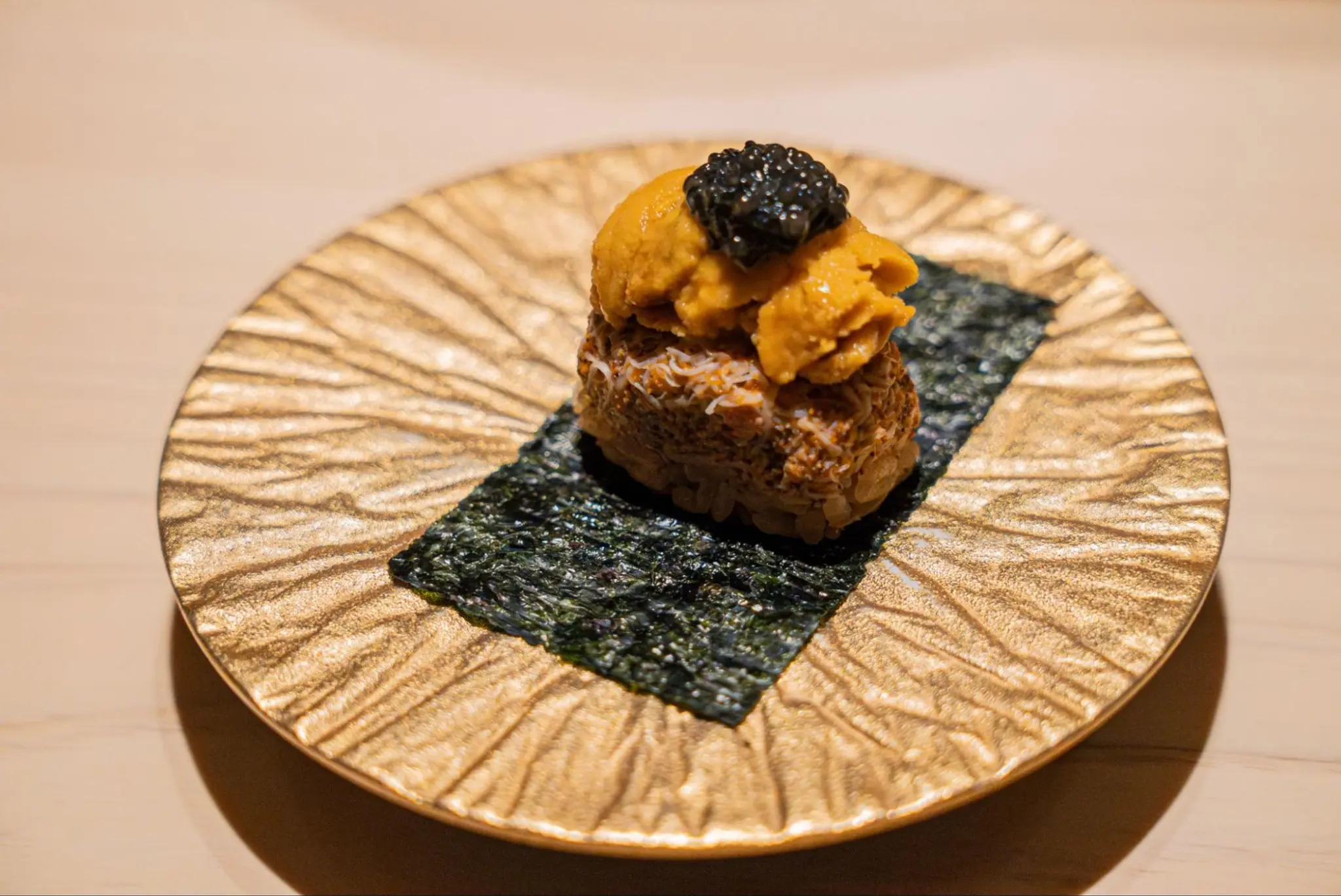
Originally, we served a piece of nigiri with crab and uni as part of our course. One day, one of our regulars, who happens to farm “Haru Caviar,” suggested, “Why not try using this caviar?” We decided to add a dollop of caviar to the crab and uni sushi and then thought about giving it a suitable name. We asked our customers for suggestions. Since our restaurant was originally located in Roppongi and the roll features an array of luxurious ingredients, “Minato-ku Roll” emerged as the most fitting name from the many suggestions. Seven years ago, the term “Minato-ku” was also gaining attention in various media, which helped solidify the decision.
ーーーCould you describe the unique features and key aspects of your dishes?
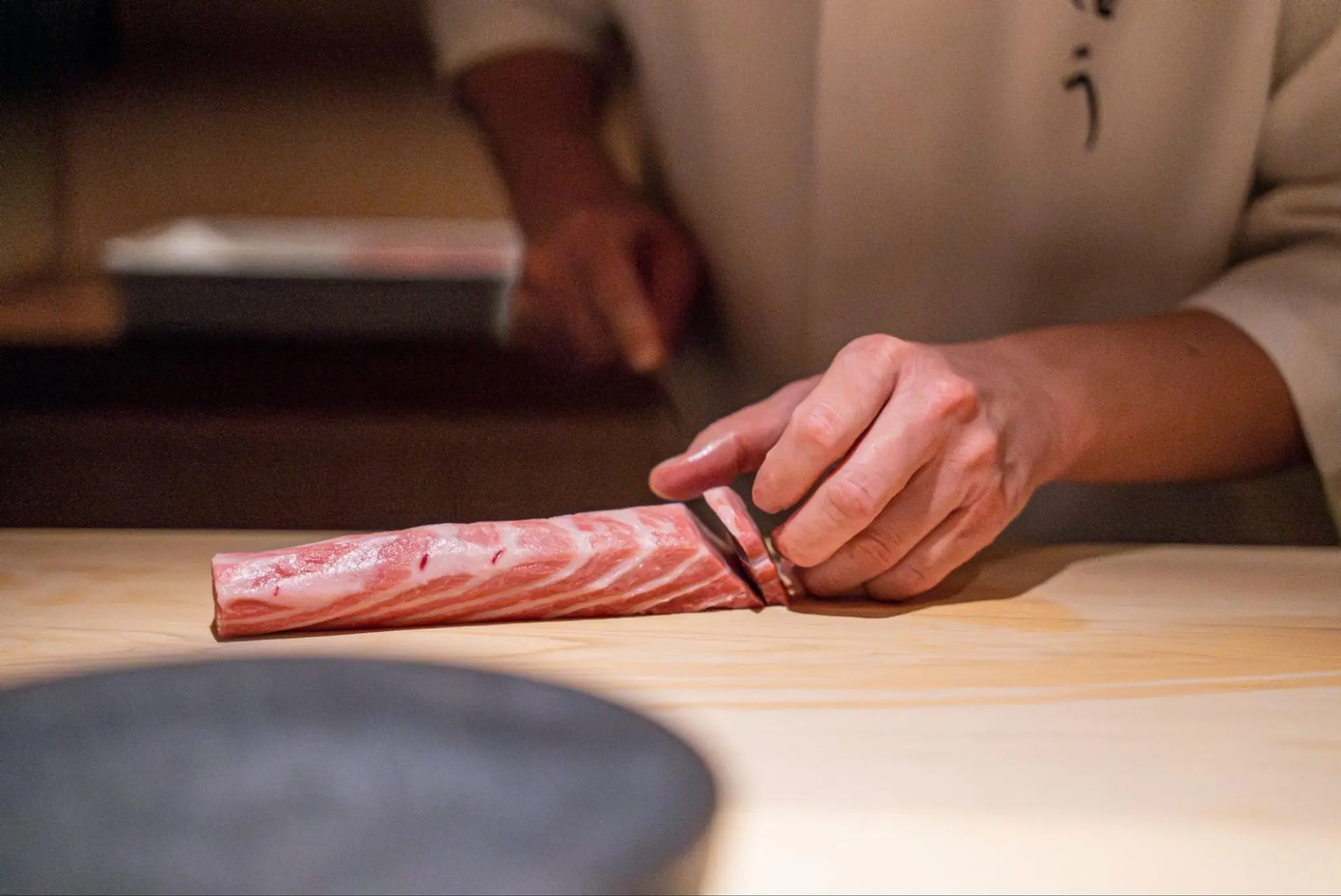
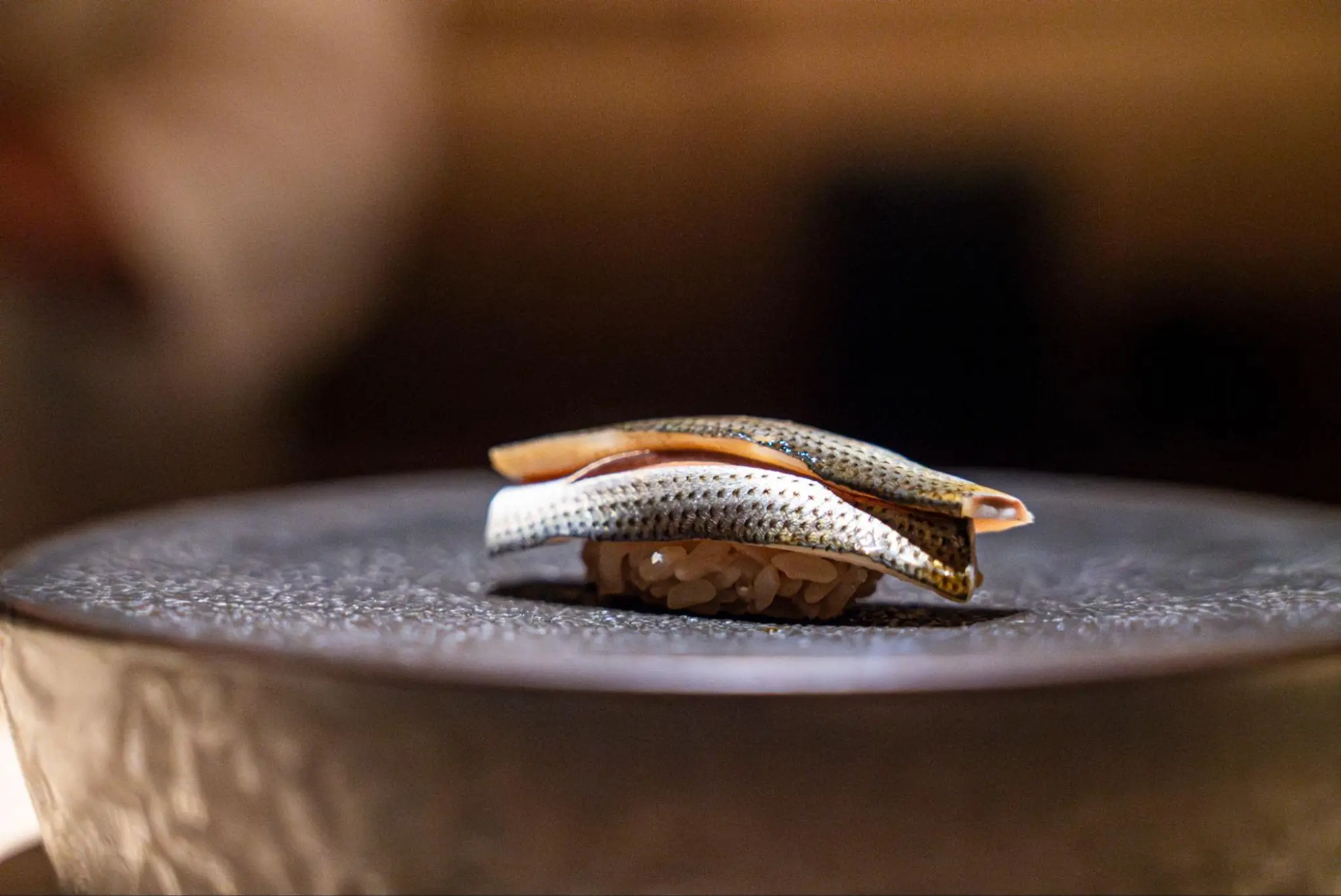
We use a blend of two types of red vinegar for our sushi rice, prepared at a slightly warmer temperature. The course menu consists of about 20 items, alternating between 10 pieces of sushi and 10 small appetizers. We take great care to follow the teachings of my mentor from my training days, paying meticulous attention to every step of the preparation process.
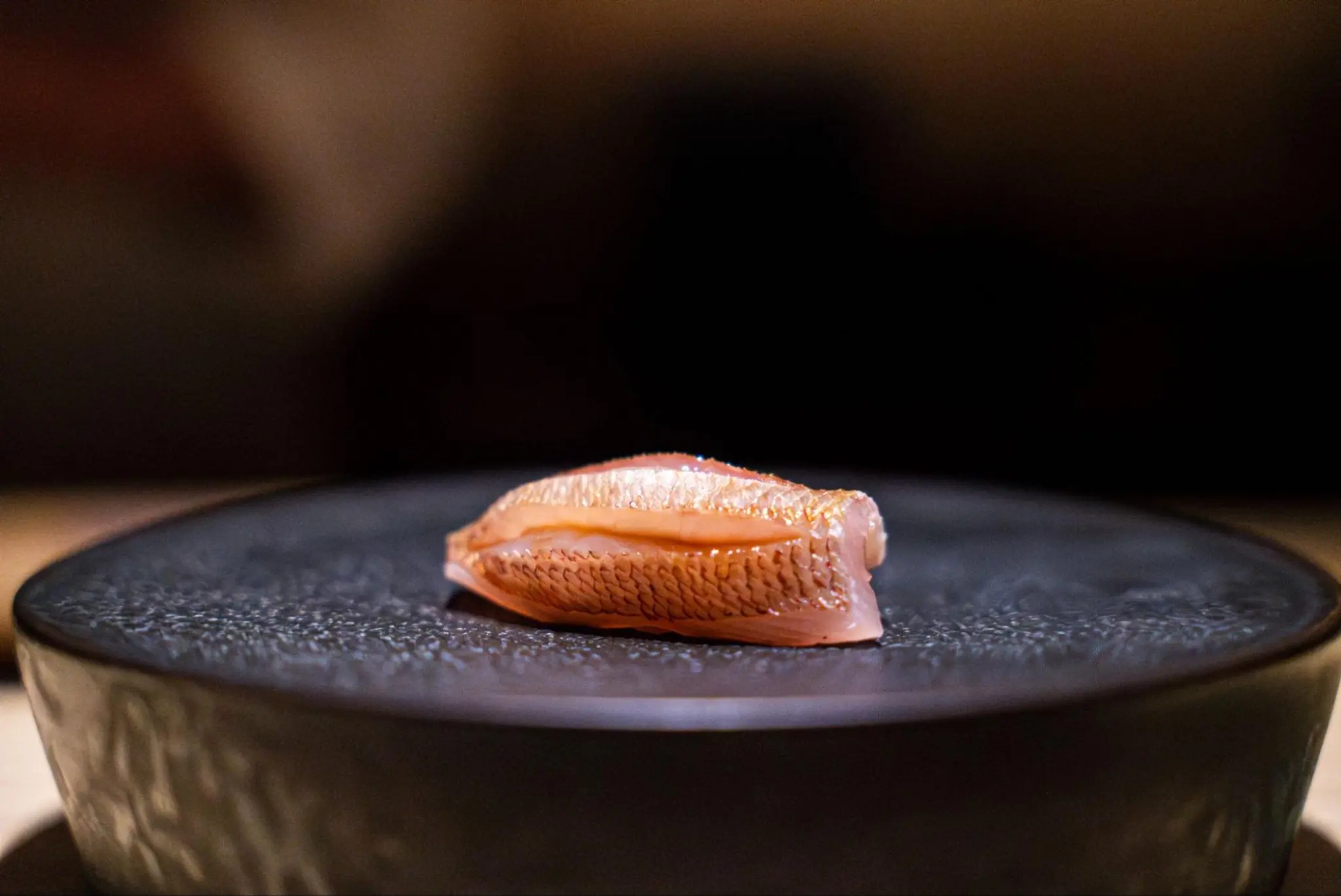
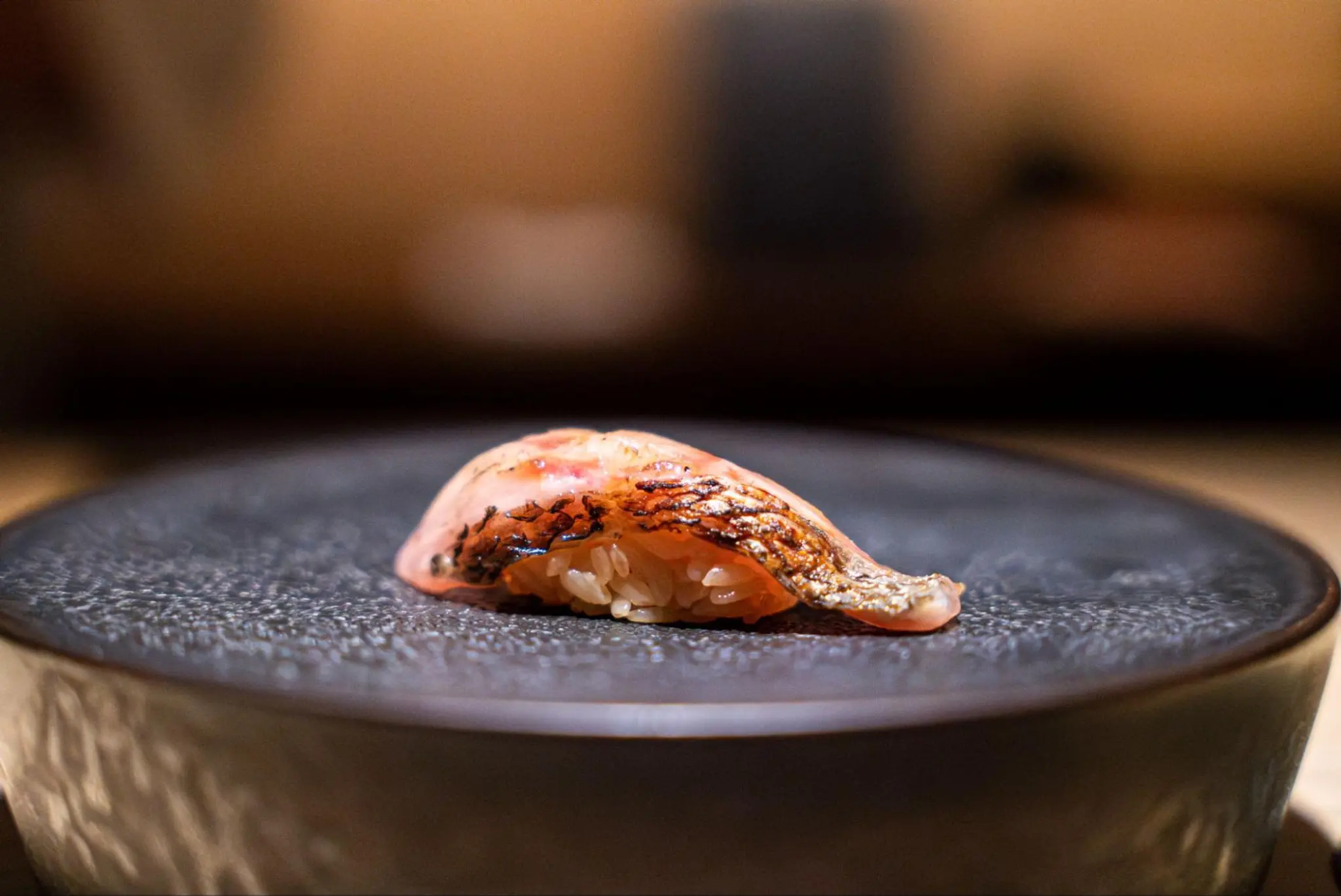
For instance, we handle silvery fish, like horse mackerel, with particular care since they oxidize quickly. Left unprocessed for five hours, they can develop the characteristic off-putting odor of blue-skinned fish. To counter this, we use a method called “tamasu.” We rinse the horse mackerel in a mild vinegar solution that’s diluted with water and sake. This creates a delicate layer of vinegar that slows down oxidation, allowing the fish to remain fresh and maintain a texture akin to raw fish.
ーーーWhen designing your courses, what do you focus on most?
To me, it’s a lot like a song! With music, if it’s all chorus all the time, it gets monotonous—you need highs and lows. The same goes for ingredients. A course made up entirely of rich, luxurious items can become overwhelming. That’s why I make a point of including palate cleansers and lighter dishes to give diners a moment to reset, creating a natural rhythm throughout the meal. When we serve signature items like the “Purin Roll” and “Minato-ku Roll,” it’s always a lively highlight for our guests.
When we first opened, our restaurant was relatively unknown, so I knew we needed to do something special to stand out. Just sharing photos of sushi wasn’t enough—we’d get lost in the crowd. Eight years ago, we began taking pictures with our guests alongside the chefs, showing our faces and personalities. That approach helped us quickly gain recognition and allowed more people to discover our restaurant.
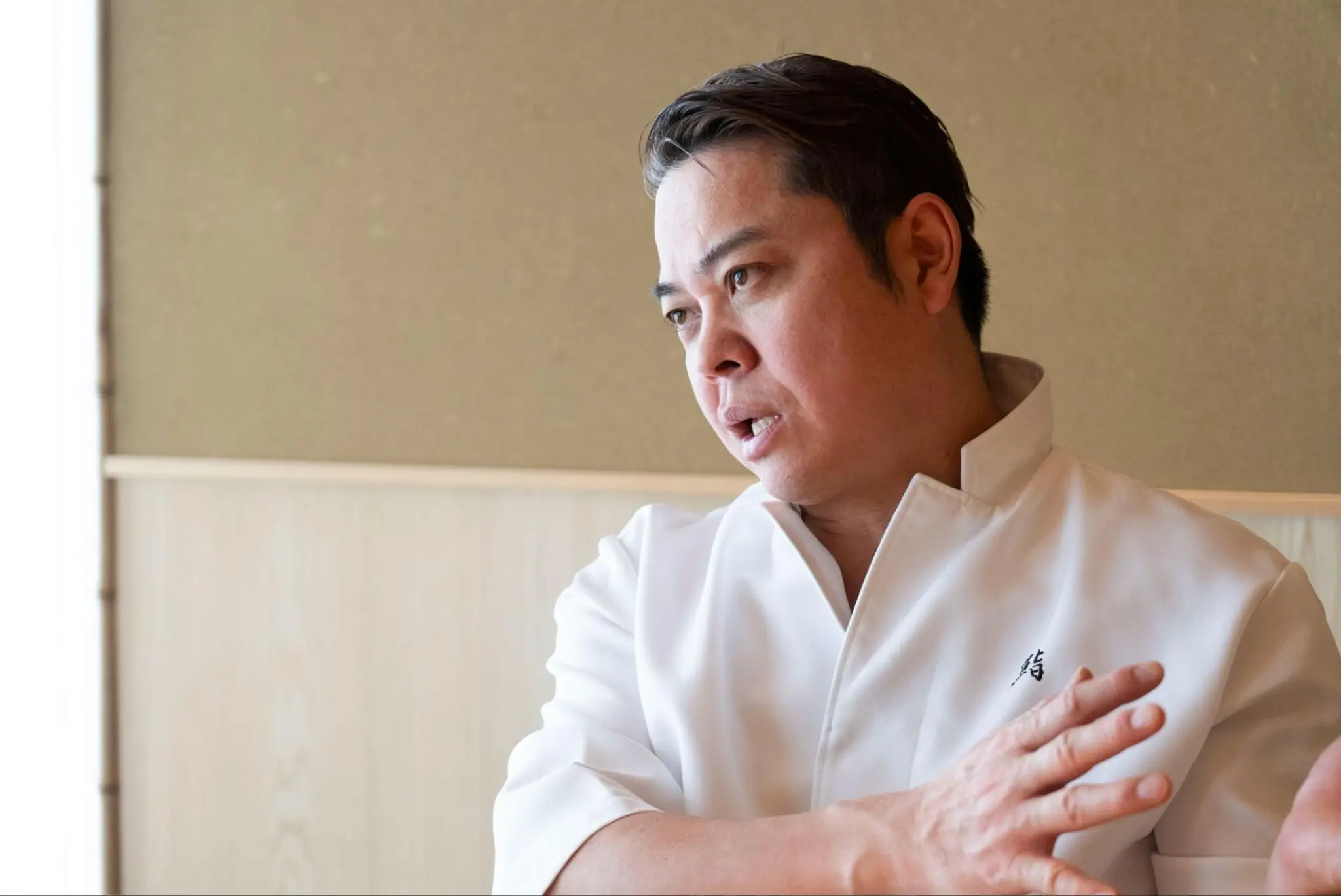
Behind the popularity lies meticulous effort
ーーーWas the idea of showing your face along with the sushi a spontaneous inspiration?
It was actually a strategic move as part of our service approach. For two years, I consistently encouraged guests to post about their visits on social media, saying, “When you post, please tag me! I’ll personally respond to your posts.” Guests loved this idea—it’s pretty exciting to get a comment from the head chef after posting about a new dining experience. This effort led to a surprising discovery: nobody posted negative comments, because they knew I’d see them. As a result, only positive feedback circulated for those two years. Having genuine, enthusiastic recommendations from our customers helped our reputation spread rapidly and significantly boosted our visibility.
In addition, some people who commented on our customers’ posts received personal messages from me. I’d follow them and send a thank-you message along with a polite greeting. This often led to new visits, gradually bringing in more guests and creating a virtuous cycle. At that time, it was quite rare for chefs like me to actively engage with social media, so it stood out. On top of that, we were fortunate enough to earn a Michelin star in our very first year. For an unknown restaurant like ours, it was an almost miraculous achievement.
ーーーWould you say that your strategic approach allowed you to ride a positive wave overall?
Absolutely. The timing for everything was truly exceptional. Our restaurant’s ratings on popular gourmet review sites skyrocketed, which not only boosted our visibility but also led to a surge in reservations. At the time, these review sites carried even more weight than they do today, so we had days when our phone rang nonstop with new reservation requests. Then, earning a Michelin star further solidified our momentum. Every aspect of the timing was just right. Because we started leveraging social media from the beginning, our visibility grew steadily. People who already knew about us then saw that we received high scores on gourmet sites or earned a Michelin star, which gave them the final push to visit. It’s as if all these elements came together in perfect harmony.
ーーーWhy did you stop actively managing your social media after two years?
Although I would have loved to continue because it brought so much joy to our customers, after two years I opened a second location and simply didn’t have the manpower to keep it going. It wasn’t so much a decision to stop as it was a matter of no longer being able to maintain it. By that time, people had become well acquainted with me, so I shifted my focus to introducing our staff to customers. My goal now is to ensure that our staff members also gain recognition so that when they eventually venture out on their own, they have the foundation to succeed.
ーーーSo you’re keeping young talent in mind as well?
When I was younger, it was quite a different era. Back then, apprentices rarely got hands-on experience and were simply expected to observe and learn on their own. I can hardly recall any direct guidance from my mentor. Looking back, I often thought that if I’d been given more opportunities at a younger age, I could have contributed much more to the restaurant’s success. People naturally strive harder when they see tangible opportunities, but it’s tough for most to fully dedicate themselves when the path forward is unclear—when they’re left wondering when they’ll finally reach the next level.
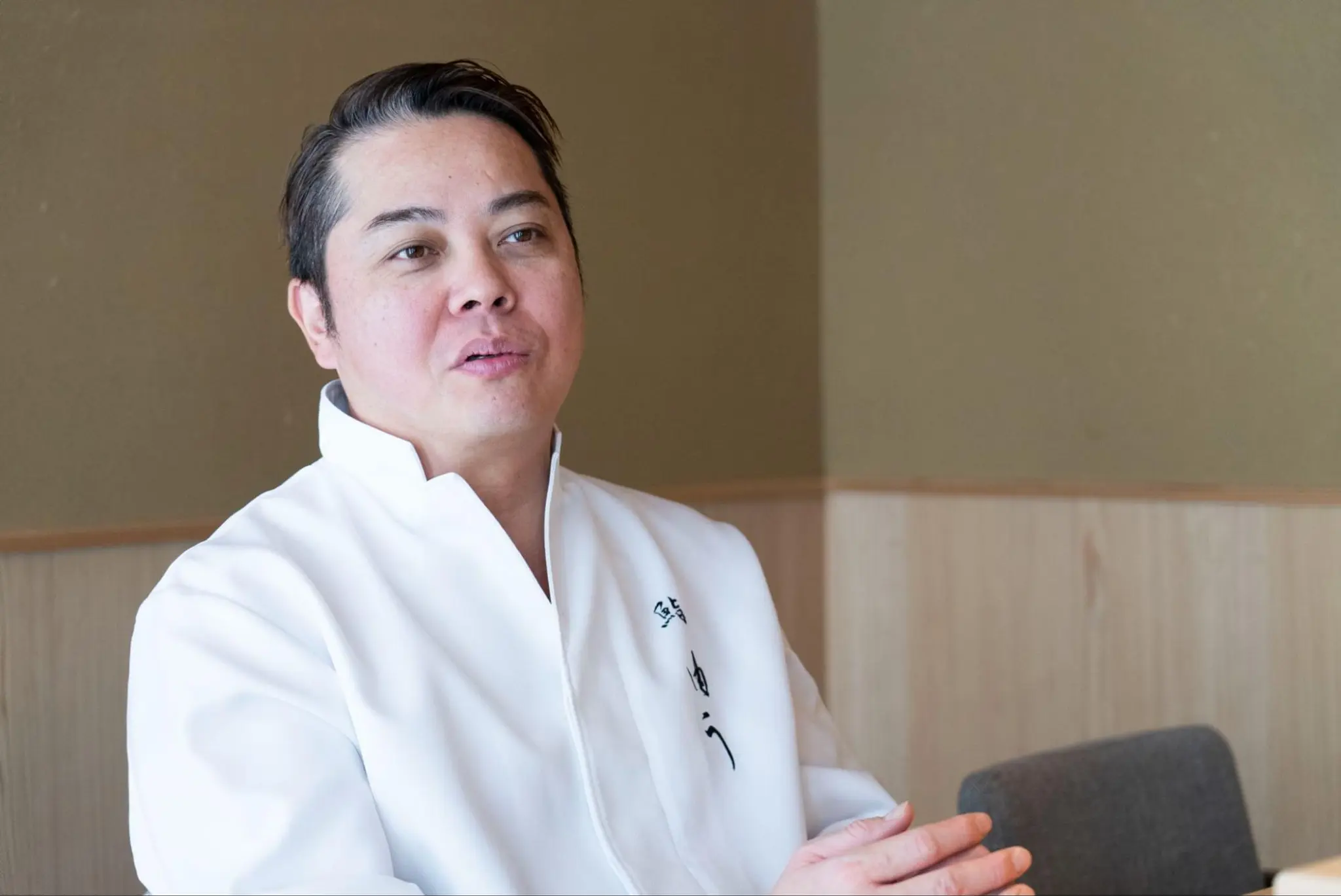
People are motivated when they have clear goals or milestones to aim for. Having experienced hardship myself, I understand how important this can be. That’s why we provide clear guidelines at our restaurant. In their first year, apprentices don’t handle the fish, but by their second year, they begin learning how to fillet. By the third year, they move into the junior level and start making sushi. However, this isn’t automatic for everyone; only those who meet certain standards through effort and practice can move forward. Those who aren’t ready must continue training for another six months. This system encourages everyone to work hard. In this way, we foster our young talent, and we’ve also established a dedicated space for them. In Ebisu, we run a restaurant called 【Sushi Yu Tsubasa】, where younger chefs can gain hands-on experience making sushi at a more affordable price point.
With a foundation of past successes, we chose Ginza as the stage to connect even more closely with our customers
ーーーSo timing, intuition, and decisiveness were the keys to your success?
It’s been eight years since we first opened, and now we have six restaurants under the same umbrella. Every location is fully booked, and I’m incredibly grateful to both our staff and our customers. Although I’m a craftsman at heart, I actually lean heavily toward a merchant mentality—I really enjoy the business side of things. Whether it’s leveraging social media or implementing various strategies, things have gone well, and in many ways it’s played out as I anticipated (laughs). When opening a restaurant or starting any new endeavor, I have one guiding principle: always consider how the customer feels. That’s the most important factor for me.
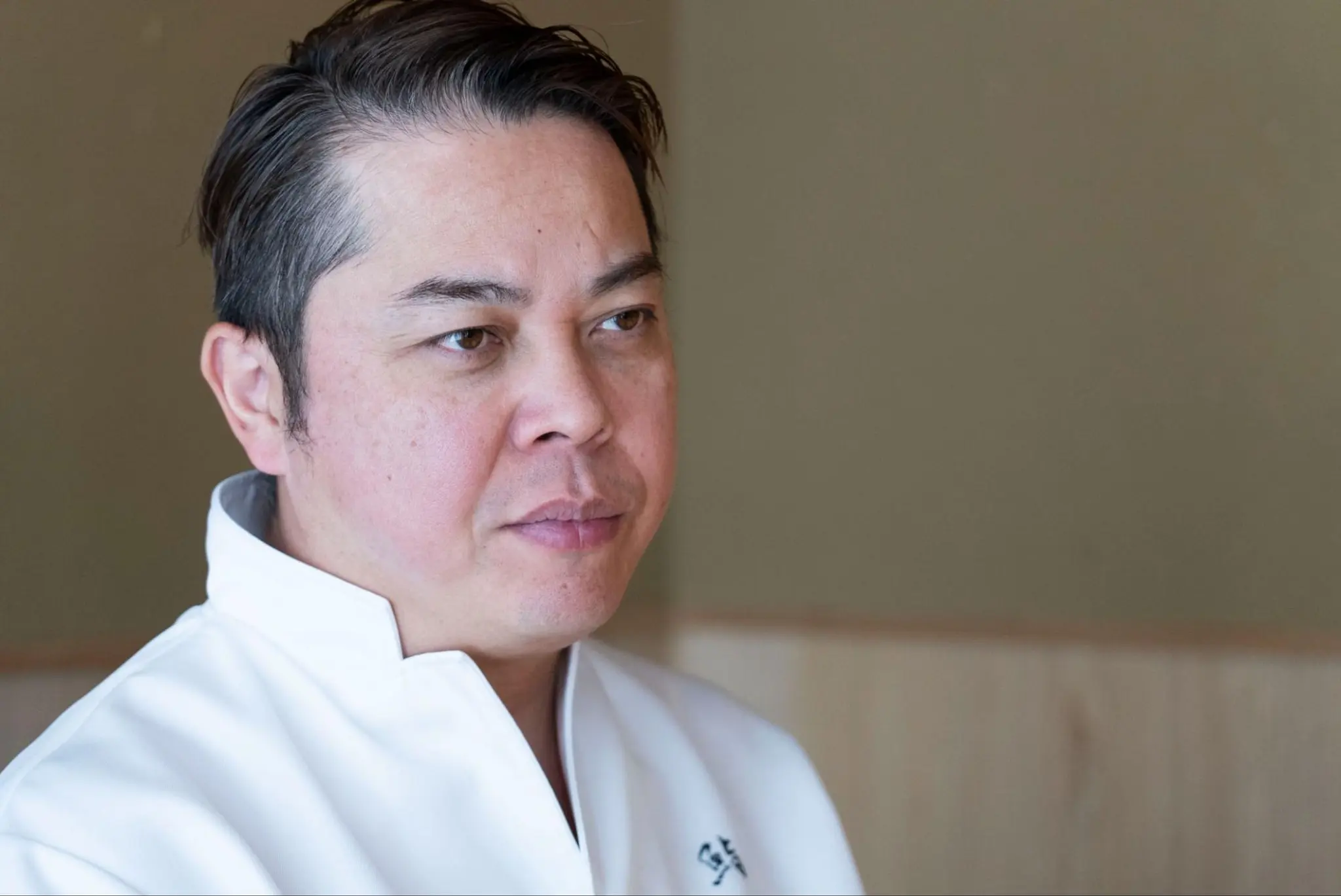
Rather than focusing on what’s easiest for the restaurant staff, I first consider what kind of atmosphere, environment, and service will make customers want to return. From there, we build the structure of the restaurant and figure out what we need to do. When a restaurant is created with this foundation in mind, it may not necessarily become a trending hotspot, but it will be stable and won’t fail. Essentially, by minimizing risks in this way, things tend to turn out well.
Popular restaurants often share certain qualities: a clean, well-maintained space, attentive staff, beautifully presented dishes, and a comfortable environment. These aspects, beyond just the quality of the food, help maintain their appeal. At a high-end sushi restaurant like ours, where a single meal costs ¥30,000–¥40,000, customers aren’t likely to drop by on a whim simply because a new location has opened. That’s why it’s critical to focus on both exceptional taste and added value. We aim to create a place where customers can enjoy themselves, feel at ease with the friendly chef, take photos freely, and hear positive reviews from others. By emphasizing these additional elements, I strive for overall excellence.The goal is to stand out as the clear choice within our price range—offering the same quality and price, but ensuring that our restaurant is the one people absolutely want to visit.
ーーーHow have you found the move from Roppongi to Ginza?
Once again, the primary consideration was our customers. Our current location on Showa Avenue offers excellent taxi access. In Roppongi, we were located on a basement level with only stairs, which became a challenge for some customers as they aged or experienced mobility issues. Now, with an elevator available, even guests who use canes can visit us without stress. We also designed the space to accommodate wheelchairs, and we’ve welcomed several wheelchair-using guests.
We’ve included a fully equipped private restroom in our private dining room, making it ideal for a variety of clientele—from celebrities to sports professionals—ensuring that we can meet diverse needs. I truly feel that we’ve achieved my vision for the restaurant. Although the costs were substantial, we’re now one year in and should be able to finish repayments within our second year.
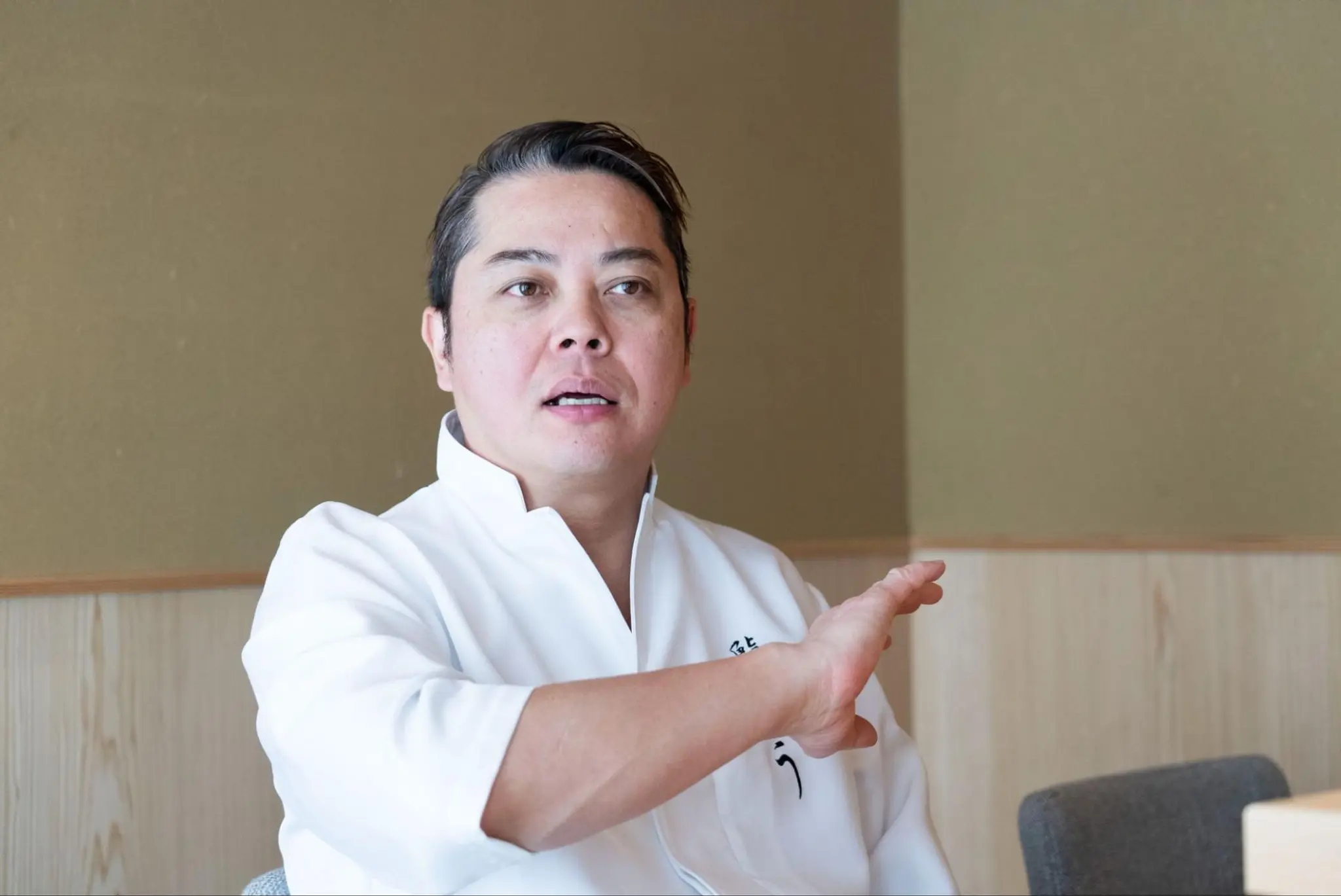
Providing equal opportunities for young staff and watching their growth
ーーーCould you share more about your career path and experiences from your training days?
I first set my sights on striving for excellence in fine dining when I was 23, working at a restaurant called 【Kamakura Izumi】 in Kanagawa. It was just my mentor and me, and the five years I spent there became the foundation of my skills as a sushi chef. My mentor was incredibly strict, handling most of the tasks himself. I could only learn by watching, which often left me feeling frustrated. Before that, I had been in an environment where it was normal for head chefs and senior staff to leave once the customers were gone. But my mentor was different—he’d head to the market earlier than me and only leave the restaurant at the same time as I did. He wasn’t just meticulous about preparation and ingredients; he also taught me what it truly means to be a mentor.
This mentor’s approach—insisting on doing everything himself—taught me the value of delegation and teaching. While I deeply respect his methods, there was also an element of seeing what I wanted to do differently. That realization ultimately led me to adopt a style at my own restaurant where guiding others and helping them advance to the next level became central.I love this profession and want to stay active in it as long as possible. Working from morning to night can take a toll on one’s body over the years. That’s why I’ve made a point to focus on developing young talent. By giving them opportunities and entrusting them with tasks outside of business hours, I can maintain my peak performance during service. It’s a way for me to continue enjoying my work and staying on top of my game for years to come. Once I embraced that mindset, I adjusted my approach to teaching and managing the team.
ーーーWhat do you prioritize when communicating with your staff, and what messages do you strive to convey?
With multiple locations, it’s not always possible to connect with every individual daily, but I do maintain regular communication with the head chefs by going to the market together every morning. When problems arise, I make sure to sit down and talk with each staff member individually. Since I’m currently focused on training young talent, I emphasize the importance of how much effort they put in on their days off. I ask the younger staff at each location to send me photos of their practice efforts—whether it’s fish preparation, sushi-making, or tamagoyaki—so that after every day off, I receive updates from everyone. Reviewing these efforts allows me to assess how they’re progressing. I’ll also check in with the head chefs, asking how these younger staff members are doing. If they’re putting in a lot of effort, I’ll consider giving them more opportunities to prove themselves.
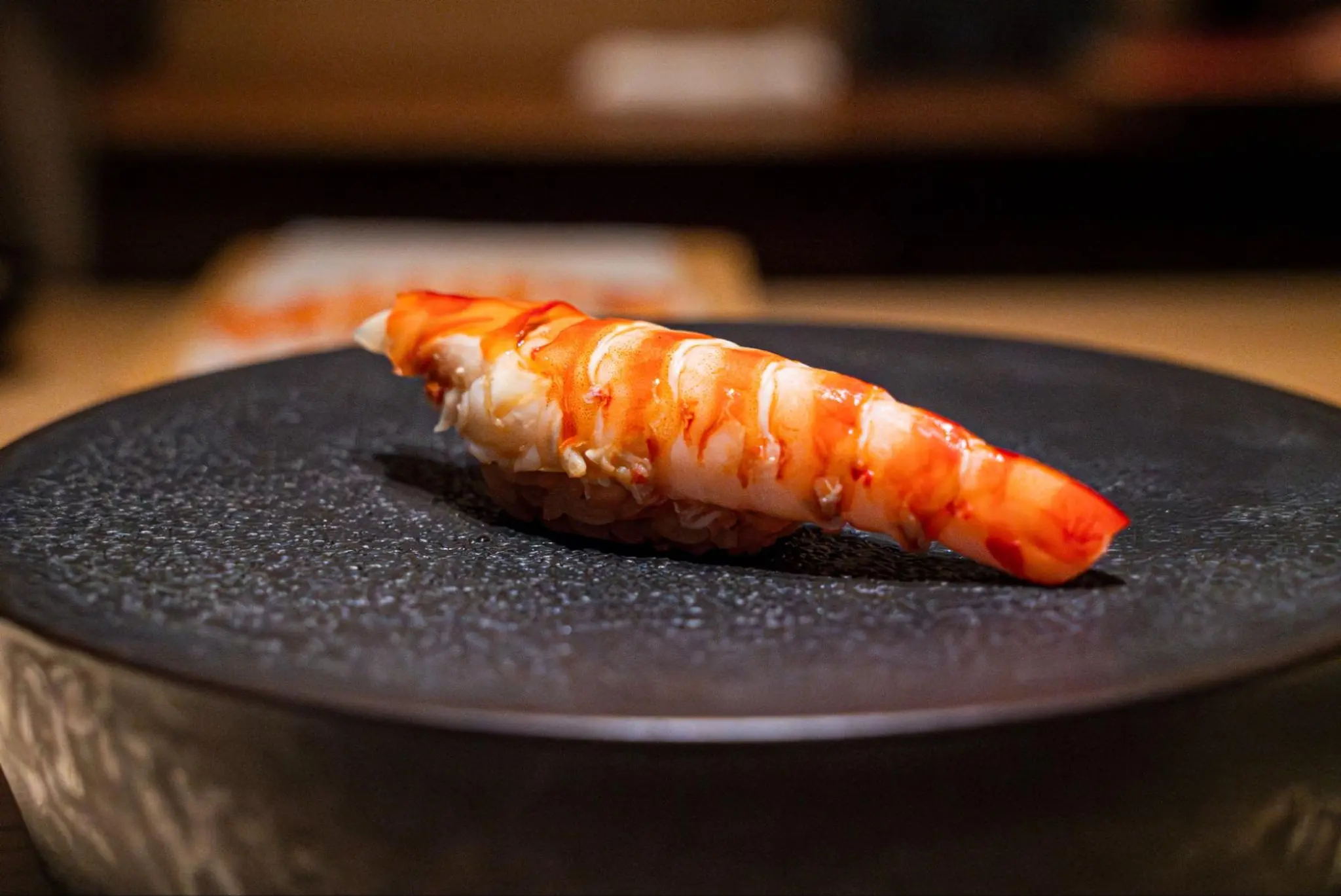
The added value beyond the basics is what brings a smile to our customers’ faces
ーーーIt seems there’s a balance of strictness and care in your approach.
I regularly tell my staff, almost like a mantra, that “putting in the effort is a given.” If someone isn’t willing to put in the effort, they won’t get opportunities here. Even athletes considered “geniuses” practice more than anyone else. If those labeled as geniuses work tirelessly, how can we, as ordinary people, expect to stand on the same stage without putting in the same effort? My perspective is that if you’re unwilling to work hard, you don’t belong at our company. On the flip side, I encourage everyone to actively showcase their accomplishments. Some people naturally highlight their work, while others remain quiet. To ensure fairness, we require everyone to make their efforts visible (laughs). If the possibility of gaining more opportunities is tied to showing your work, why wouldn’t you do it? When I was training, opportunities didn’t come no matter how much you did, so in that sense, I believe this creates a better working environment. Watching our staff grow is the most rewarding part for me.
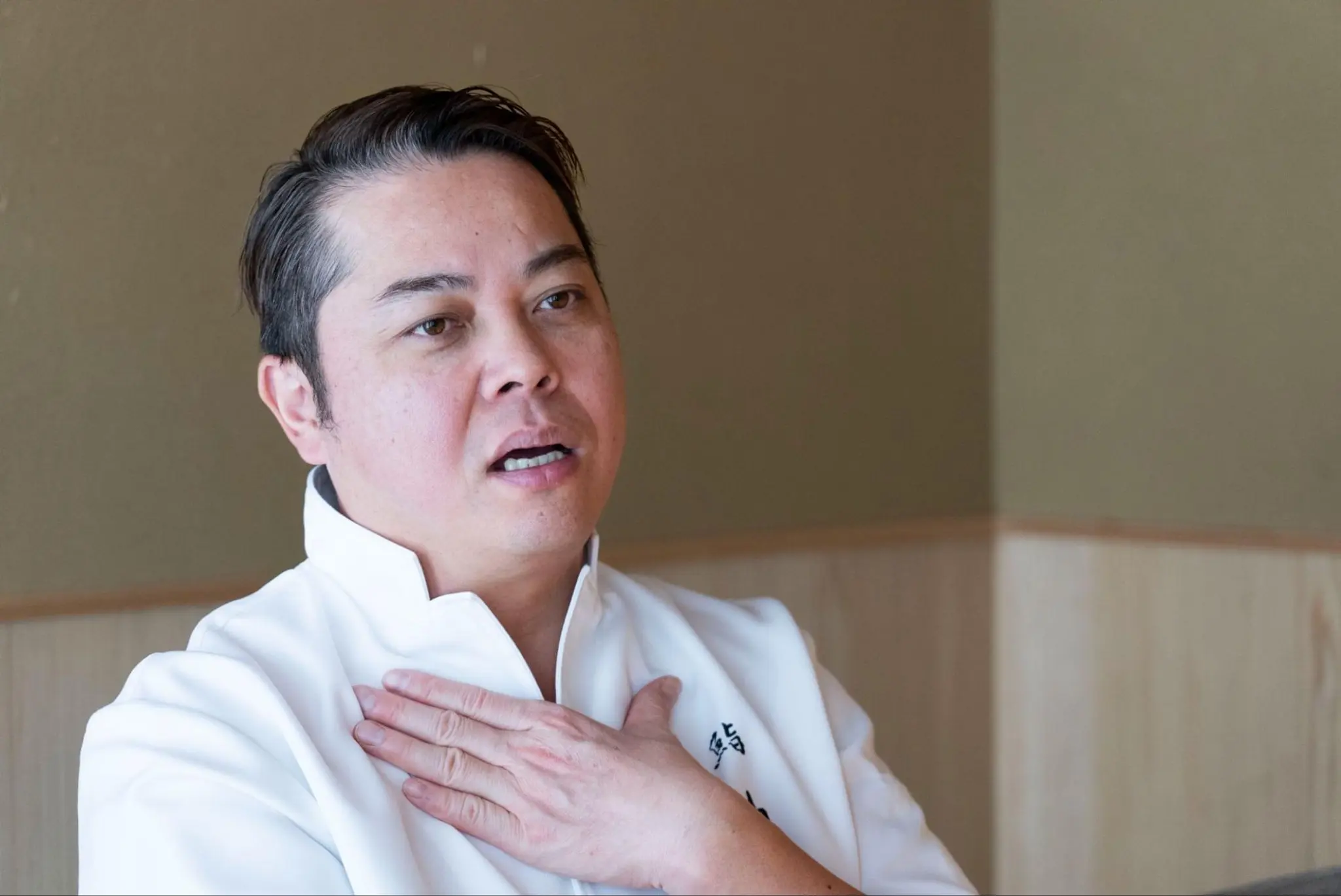
ーーーLastly, what does “delicious” mean to you?
Of course, the food itself has to be delicious, but beyond that, it’s about creating a comfortable and enjoyable atmosphere. When customers leave saying, “That was fun,” it brings me the greatest joy and a deep sense of fulfillment. For me, the highest level of “delicious” is “fun.” Naturally, if the food isn’t good, it can’t be fun. Only when the food is great, the environment is welcoming, and everything comes together perfectly does the experience become “fun.” So, in my view, “delicious” is just the baseline—the minimum requirement. From there, we add more value to ensure that guests can say, “The meal was both delicious and fun; it was the happiest experience!” That’s what we’re striving for. We’ll continue to work as a team so that every guest leaves saying, “Today was wonderful! I’ll be back again.”
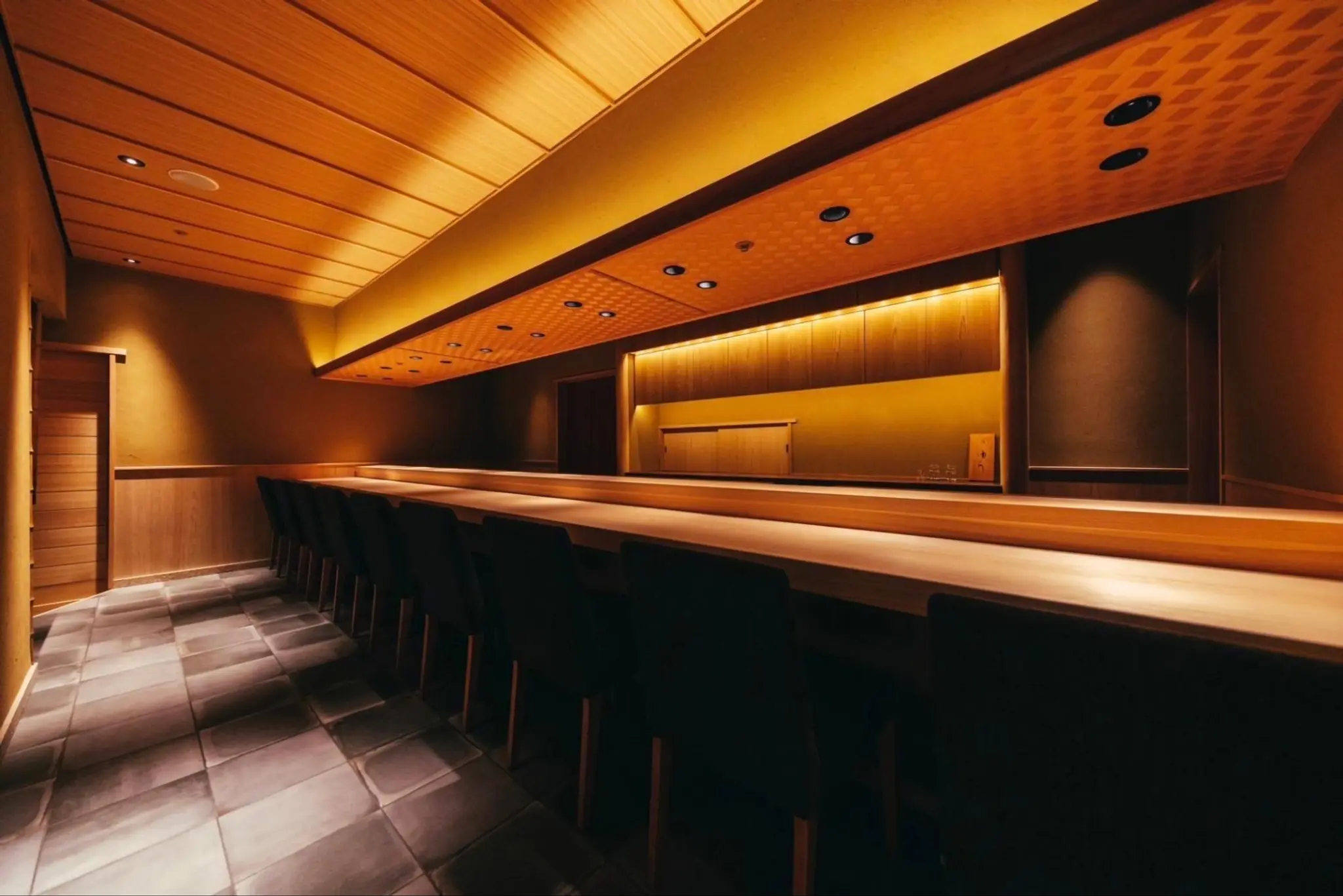
Chef Ozaki’s philosophy is clear: “As a craftsman, putting in effort and ensuring deliciousness are simply expected.” Even eight years ago, he was already leveraging social media to keenly listen to customer feedback and gauge their interests, making a concerted effort to visualize every aspect of a “fun restaurant.” Furthermore, by providing visible opportunities to the next generation, he has created a stage where young talent can envision a brighter future. Beyond his exceptional skills as a chef, Ozaki’s broad perspective as a merchant and business owner has enabled him to bring these ideas to life. His ongoing efforts and innovative approach remain captivating and worthy of attention.
Interviewed by / Yuri Yanagiya
Written by / AutoReserve Magazine Editorial Team
Photography by / Azusa Nakaoka
Restaurant Information
- AutoReserve Magazine
- Restaurants recommended by top chefs
- The charm of Mr. Ozaki of 【Ginza Sushi Yuu】, a first-class sushi chef who also stands out for his exceptional business acumen