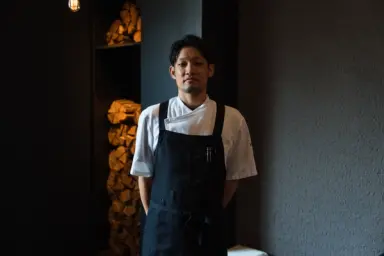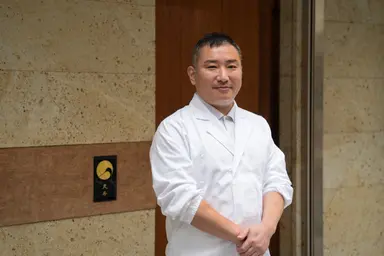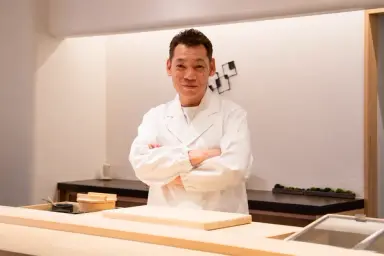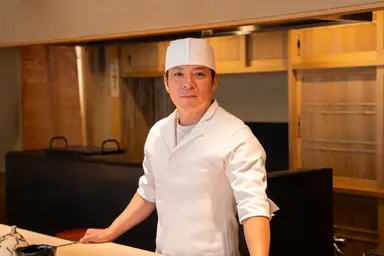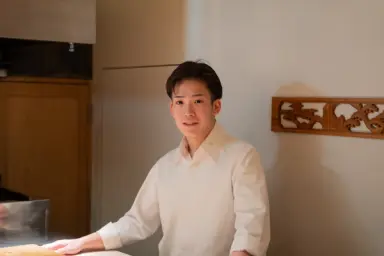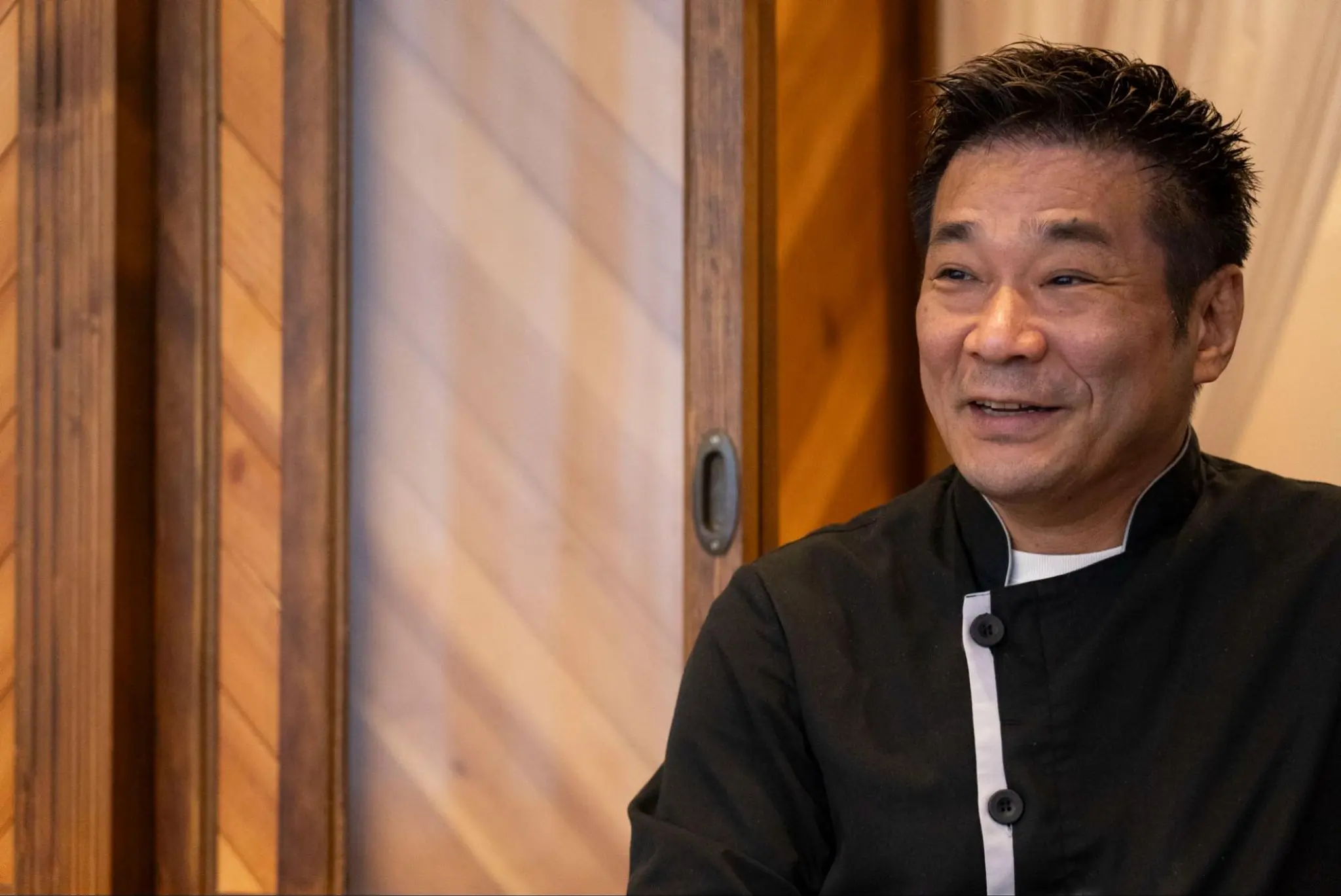
The journey through diverse experiences has led to the deep intention behind creating a "fun space" for the customers at 【Komiyama】
A single suggestion can lead to a major change in life
ーーーWhat was the trigger and process that led you to transition from being a salaryman to becoming a chef?
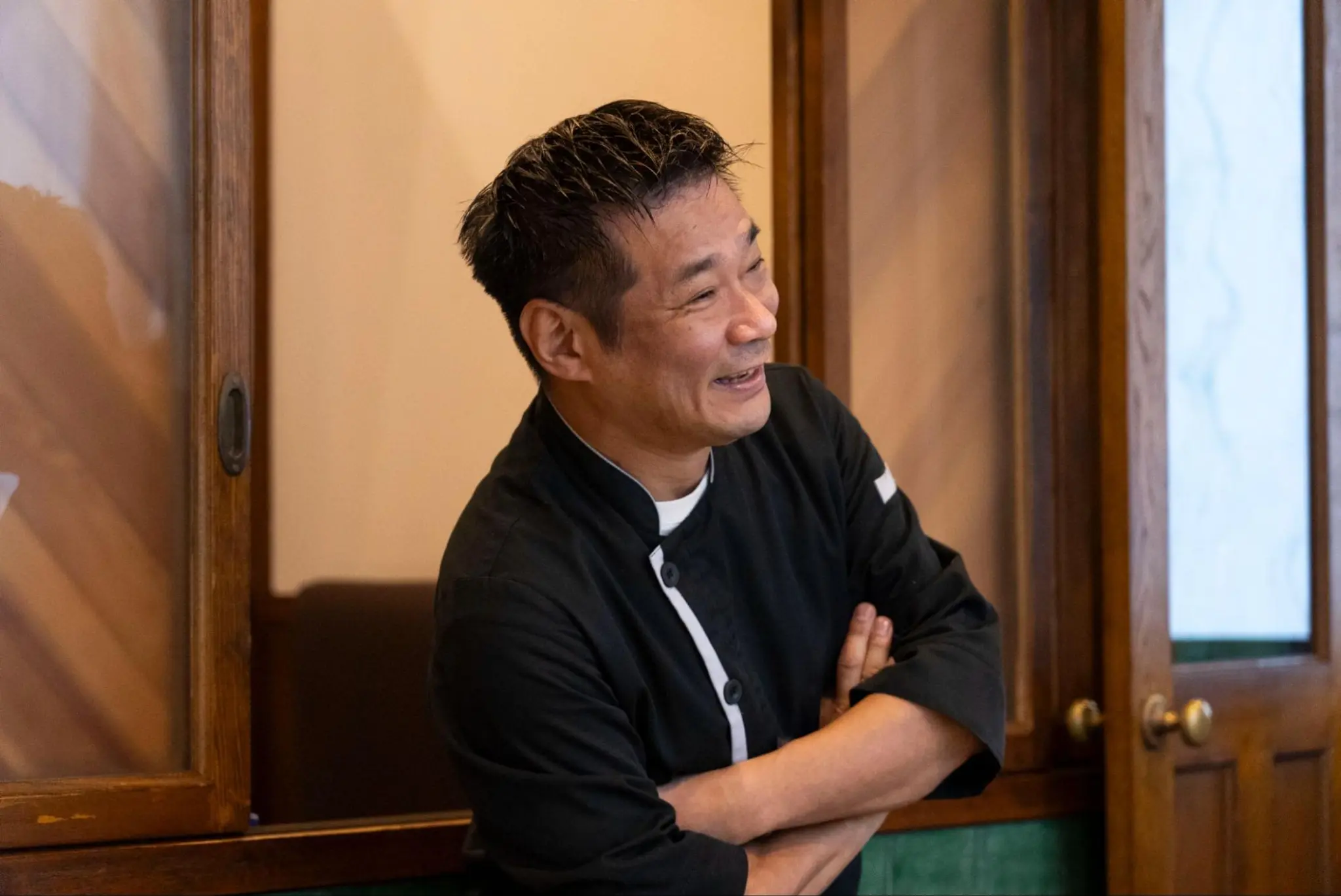
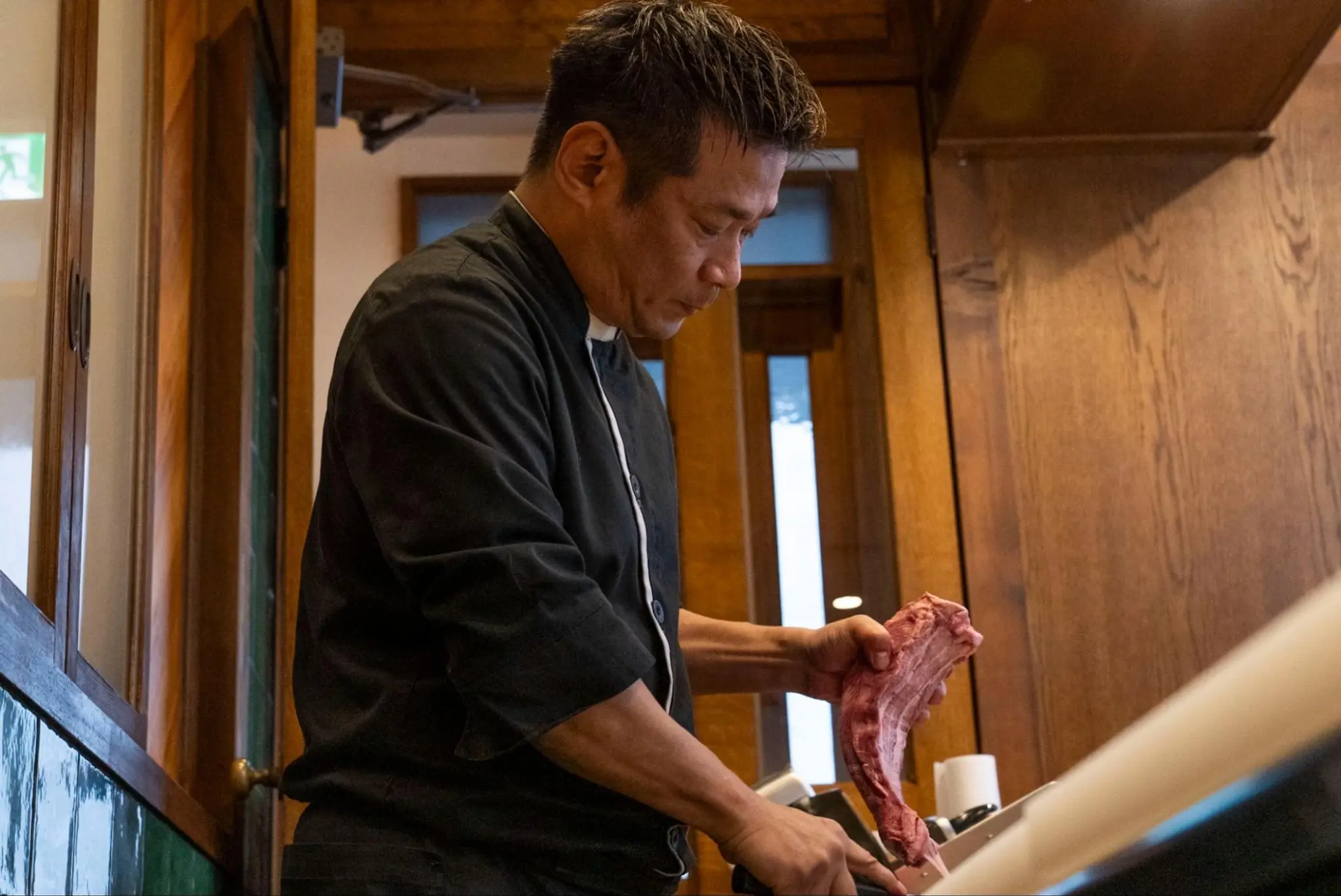
It was all kind of circumstantial (laughs). Back in high school, I worked part-time at a small butcher shop in my hometown of Shinagawa, where I got to know one of the meat wholesalers. After graduating from college and working at my uncle’s company for about three to four years, that wholesaler approached me, saying he was starting a yakiniku restaurant and asked if I wanted to join him. That’s how it all started.
He told me, “I want you to run everything as the manager.” On one hand, it seemed like a fun opportunity, but on the other, I’d hardly ever done any cooking before, so I thought, “What am I supposed to do with that?” But he reassured me it would be fine—just slice the meat, arrange it on plates, and pour on some sauce. So I figured, why not give it a shot?
Still, I had my doubts. The proposed location was in a residential area between Yoga and Kaminoge, where there weren’t many restaurants. I wondered if opening a place there would even be feasible. I knew the restaurant business wouldn’t be easy. I didn’t dislike cooking, but I had never even seen or handled raw, skin-on beef tongue before.
ーーーSo despite those concerns, it sounds like the opening went smoothly?
Back then, the owner was supplying meat to a popular restaurant called 【Beeftei】 in Nakameguro, and about two or three weeks before our own place was finished, he suggested I go check out their operations. I spent about two weeks there, and I was completely blown away by how fast they worked.
That said, the old-fashioned yakiniku restaurants mostly offered a limited selection of cuts, like kalbi and loin. They would purchase specific parts of the meat for each purpose—belly for kalbi, certain sections for loin—so when it came to prepping our own ingredients, I didn’t really feel lost.
In fact, when we first opened, we had so few customers that we actually had plenty of free time. The owner wanted the place to have a stylish, upscale vibe for that era, but there was no internet at the time, so we couldn’t announce the opening widely. This made it a bit intimidating for people to just walk in unless they heard about us through word of mouth. Our nighttime sales alone weren’t enough to keep things afloat, so with my wife’s help, we started offering lunch service and worked without any days off.
Eventually, a few locals who worked in the area began coming by. Since yakiniku during a limited lunch break was a tough sell, we tried new approaches, like offering weekly specials of Chinese dishes. Gradually, word of mouth from our evening customers started to spread. But I remember that first year being nothing but continuous losses until we were finally able to shift back to just nighttime service.
ーーーDuring that challenging period, did you find that your own approach or perspective toward yakiniku changed in any way?
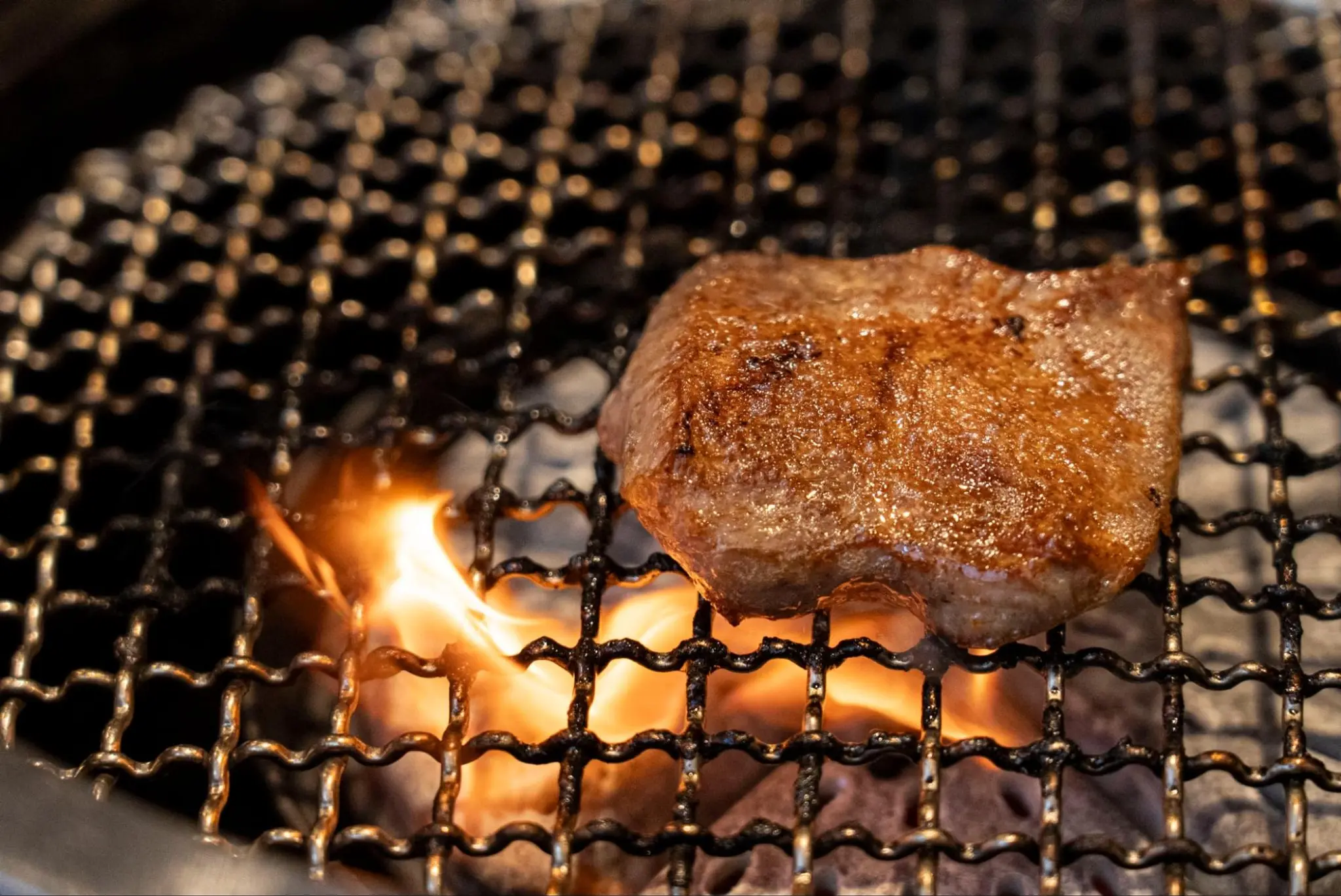
I started to think it wasn’t very interesting to keep using the same old sourcing methods and having the menu dictated by those limitations. Since the owner was in the wholesale business anyway, I decided to try buying an entire cow. At that time, no yakiniku restaurants were doing that.
But once we actually got the whole cow, I was like, “What do I even do with this?” (laughs). I didn’t have a mentor or anyone to learn from, so I’d never had the experience of being taught these things. All I could do was learn by trial and error—cutting, grilling, and tasting every day. I didn’t even know the names of the cuts, so I started labeling them “A,” “B,” and so on. As I went, I’d notice things like, “Oh, this cut tastes this way, but if I slice it this thick, it gets tough when grilled.” I kept track of all these discoveries in a notebook. It was all self-taught.
ーーーHow did you deal with the risks of carrying inventory?
I saw it as a time to just keep eating and learning. Over time, I realized that buying whole cows was more cost-effective than purchasing specific parts. Back then, the kinds of loin and sirloin we handled at our restaurant would cost over 10,000 yen per kilogram when bought in parts. But with a whole cow, even though it came as a “carcass” with fat and shank still attached, the meat quality was just as good, and the cost was only 3,000 to 4,000 yen per kilogram.
Using those extra cuts effectively required having enough customers, but luckily, about a year and a half after opening, we started seeing more and more patrons. We even got media coverage, and before long, there were lines of people waiting outside before we opened.
ーーーIt sounds like that first year and a half brought some dramatic changes, didn’t it?
Fortunately, word-of-mouth brought in even more customers, and soon people were lining up before we even started our prep. We set up a waiting list for people to write down their names, but by opening time, we’d often already reached our “full for the day” limit.
We crammed in an intense schedule, serving about 100 customers in roughly four and a half seatings over a six-hour shift. That required an incredible pace—we had to get every order on the table within ten minutes of the first request. Although it was à la carte service, we insisted on hand-cutting everything only after the order came in, so it was really tough. Before opening, we’d prepare as much as we could, but there wasn’t enough room in the restaurant’s refrigerator. During service, we’d have to run to a nearby storage space to grab more meat, break it down, and keep cutting—non-stop. I ended up with perpetual tendonitis from all the work (laughs).
ーーーWould you say that using higher-quality meat helped drive the restaurant’s growing popularity?
I think that was part of it, but the real draw was the incredibly low prices. We were sourcing only female A5-grade wagyu, and both kalbi and loin cuts were priced at just 500 yen. Even at the highest price point, it was only about 580 yen. The average customer spend was around 4,000 yen, so even on a “big sales day,” we’d only bring in about 400,000 yen from 100 customers.
Back then, what we now call “casual yakiniku” didn’t exist. Yakiniku restaurants were often small, traditional places with an unapproachable vibe, and chain stores weren’t around yet. I wanted to create a place where anyone could walk in casually and enjoy yakiniku.
Running through those tumultuous early days after going independent, you must have come away with some new insights
ーーーYou stepped away from the restaurant in 2007 while it was still packed every day. What prompted that decision?
For those 10 years leading up to my departure, every day felt like a battlefield. It wasn’t just me—my staff was also wearing down. I found myself in a state where I barely had time to connect with our customers. I started questioning what I was even doing. There were even times when issues would arise between customers, and I had to stay on edge to prevent conflicts, making sure everything was handled perfectly no matter how busy we were. Although everyone would leave saying, “That was delicious,” and my wife was doing her best to help manage things, I was too overwhelmed to even properly greet people. So, after those 10 years, I felt that I’d given enough back to the community and decided to step away from the restaurant industry altogether.
ーーーWhat did you do after leaving the restaurant industry?
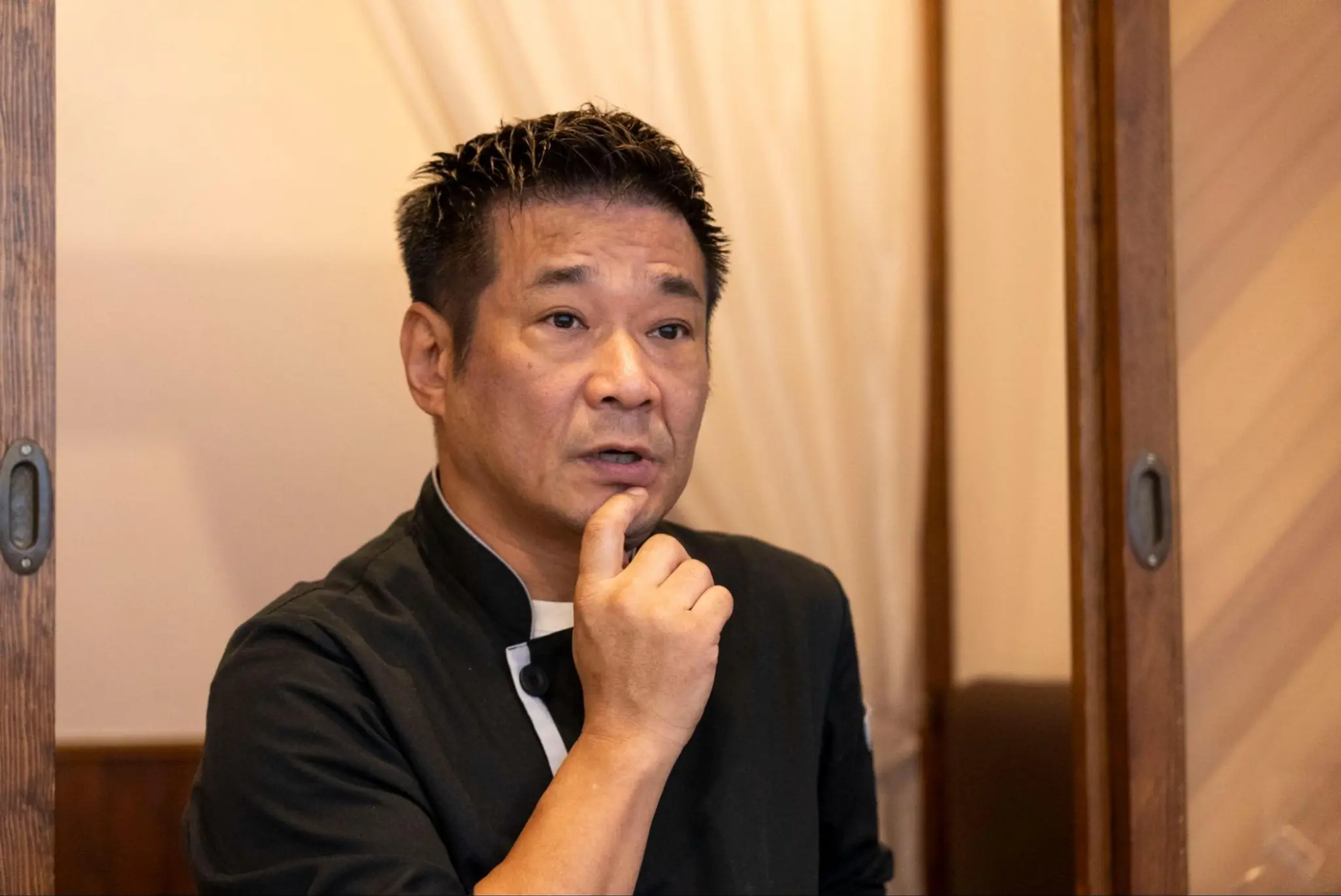
A friend who ran a construction business invited me to work with him in Kansai. I got the necessary licenses and took on a variety of tasks, from plumbing to carpentry. After about a year, I moved back to Tokyo. By 2009, at age 39, I’d become fairly proficient in interior construction. That’s when one of the regular customers from my time at the restaurant in Yoga approached me. They told me they missed my yakiniku, and they offered to invest if I’d return to the restaurant business. I already had a steady job in construction, so I was hesitant, but in the end, I decided to give it another shot.
This time, I relied on what I’d learned from my first successful restaurant experience. Instead of prioritizing a prime location, I focused on finding a more affordable space. I chose a quiet residential area about a 20-minute walk from Komazawa Station. Using my construction skills, I spent three years building up the new restaurant, which I named 【Cossott’e】.
Beyond the food itself, a shift in the approach to interacting with guests has emerged
ーーーConsidering those hectic 10 years of experience, what did you focus on in your next steps?
I wanted to be able to see and connect with the guests, so I went with a semi-open kitchen design. Even though I sometimes talk a big game, I’m actually a bit timid (laughs), so I wanted to watch the guests’ reactions and learn, “Oh, this person likes these flavors.” I aimed to tailor the seasoning as much as possible to each individual’s preferences. By adopting a more personalized, interactive style, I found more enjoyment in my work and realized, “I really like working with people.” Yakiniku is often associated with the image of meat being brought out from somewhere in the back, so I wanted to provide guests with a sense of reassurance.
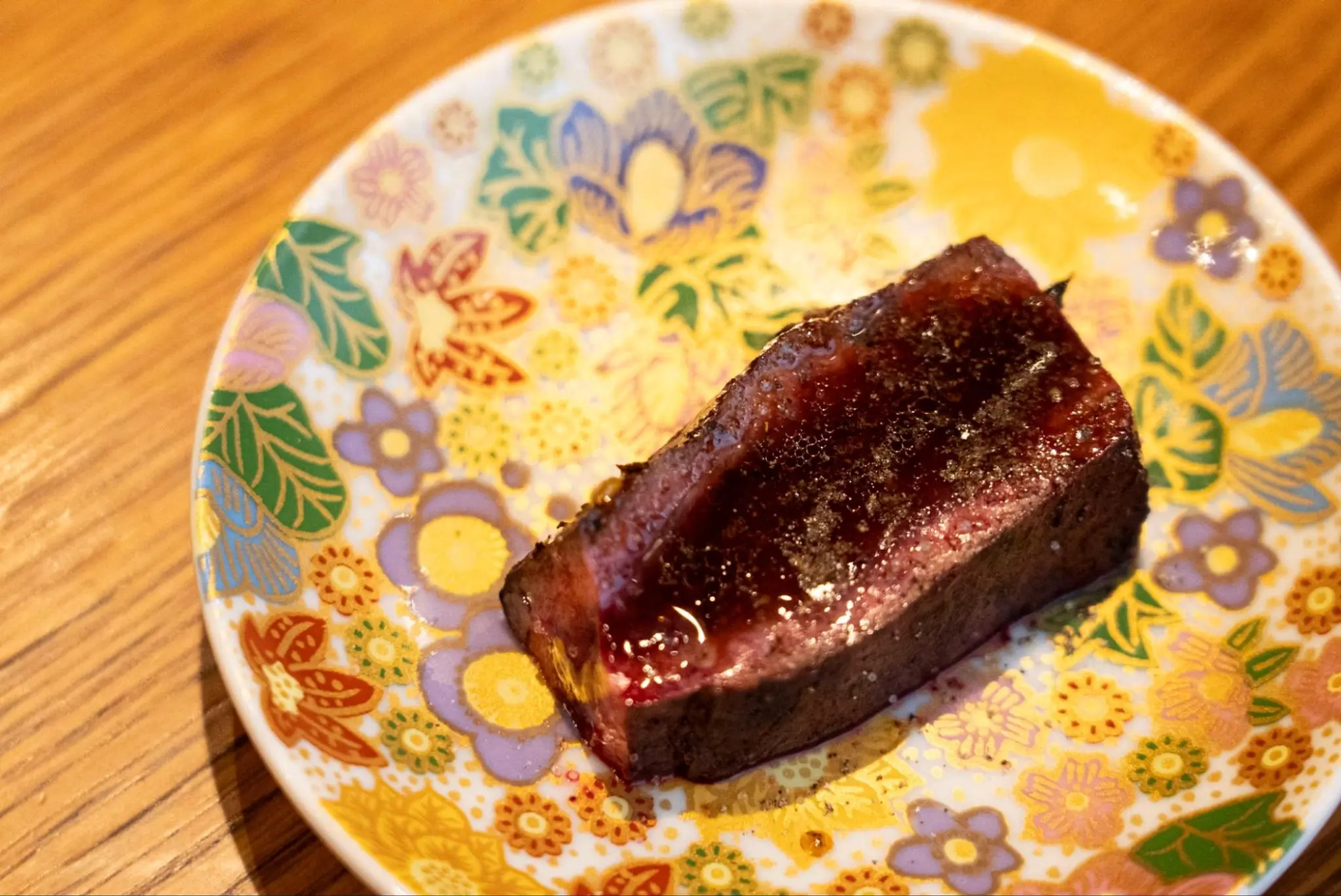
In addition to the à la carte options, I introduced a “chef’s selection platter” that allowed guests to sample a variety of cuts, with each person getting just one piece of each. This concept was well-received, and almost every guest ended up ordering it.
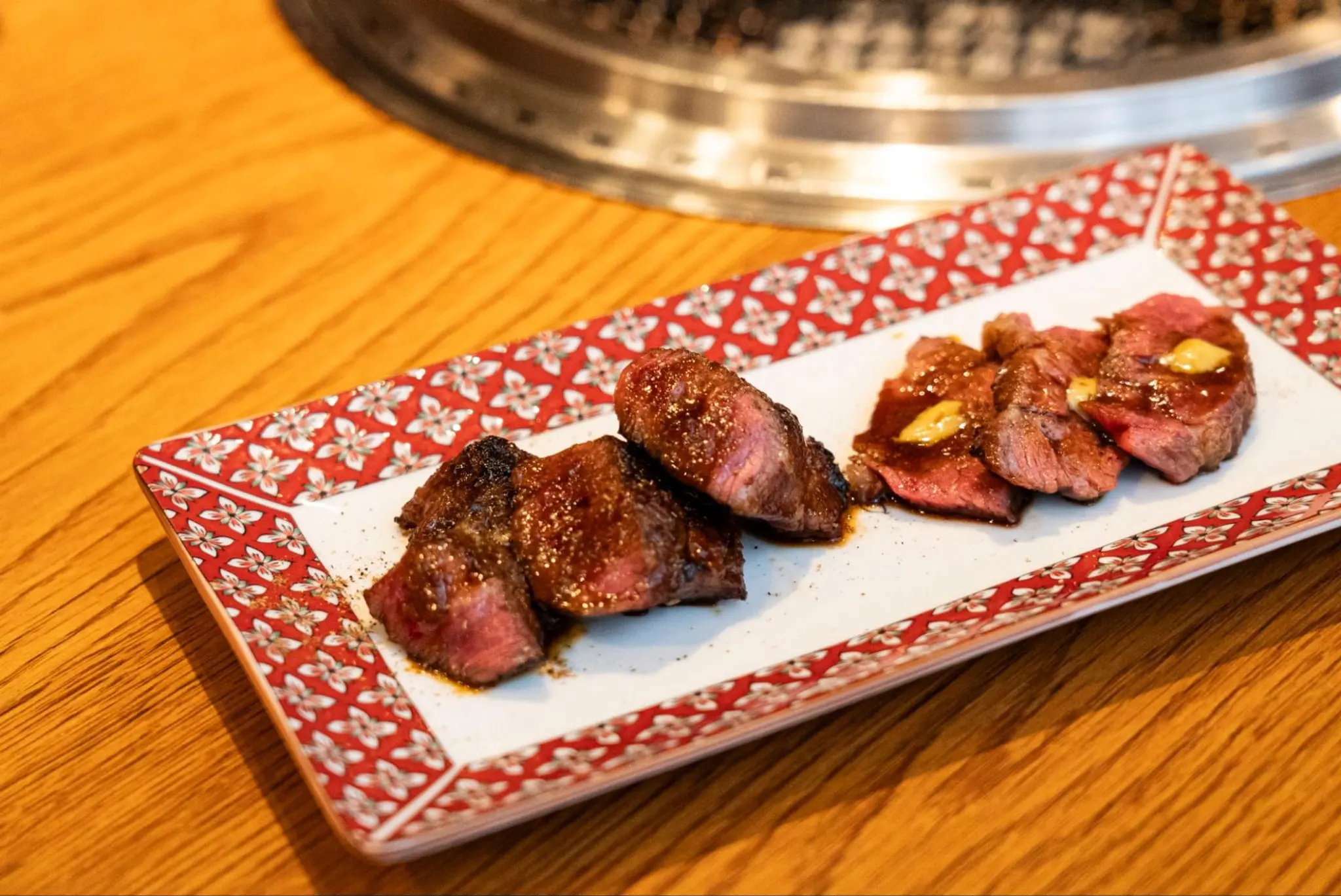
ーーーI imagine it must be quite challenging to adjust the flavor for each guest...
It was challenging, especially since we also had an à la carte menu, but for the “chef’s selection platter,” we would guide guests by saying something like, “Try this cut with the tare sauce, and this one with wasabi soy sauce.” Additionally, while the default was for guests to grill their own meat, we occasionally had our staff handle certain cuts. That approach wasn’t very common at the time, so I think it felt fresh to our guests. We wanted them to enjoy the meat at its absolute best, so we’d grill it for them while explaining, “This is the ideal way to cook it for the best flavor.”
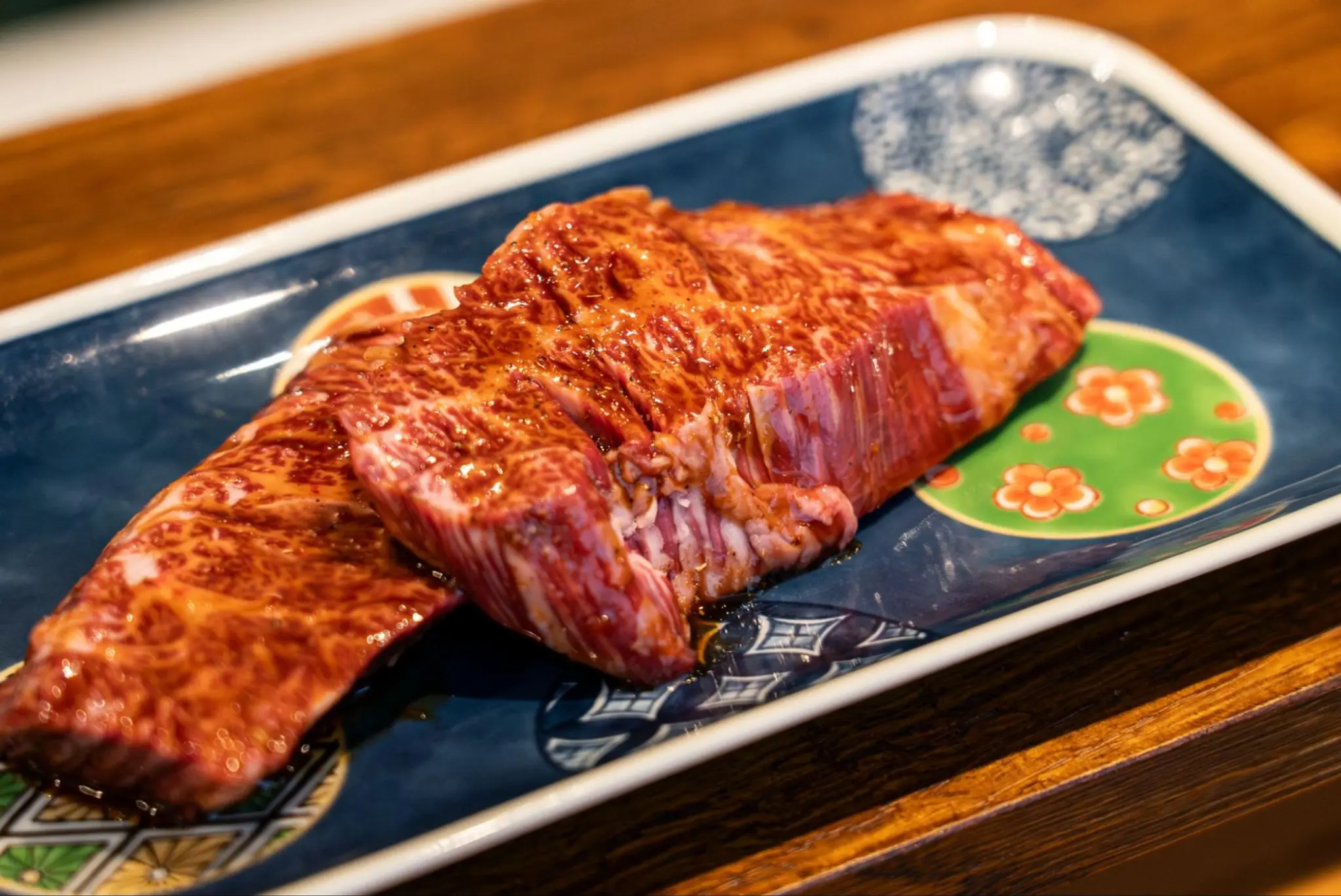
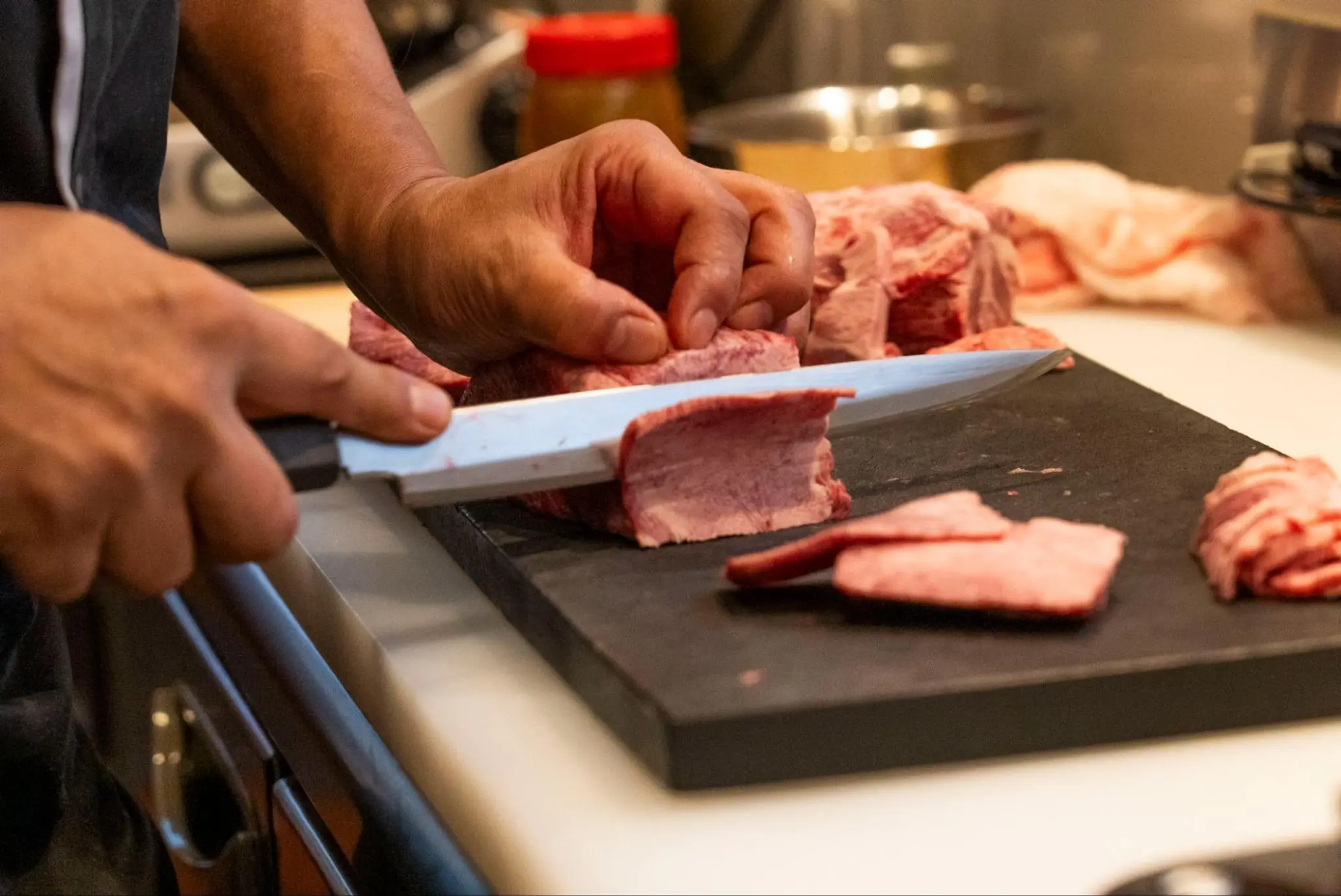
I also paid a lot of attention to how we cut and served the meat. If every piece is cut to the same thickness, it leaves no lasting impression. By varying thickness—some thicker, some thinner—and presenting rich, flavorful cuts alongside lighter, more delicate ones, we created a sequence that brought balance and contrast to the experience.
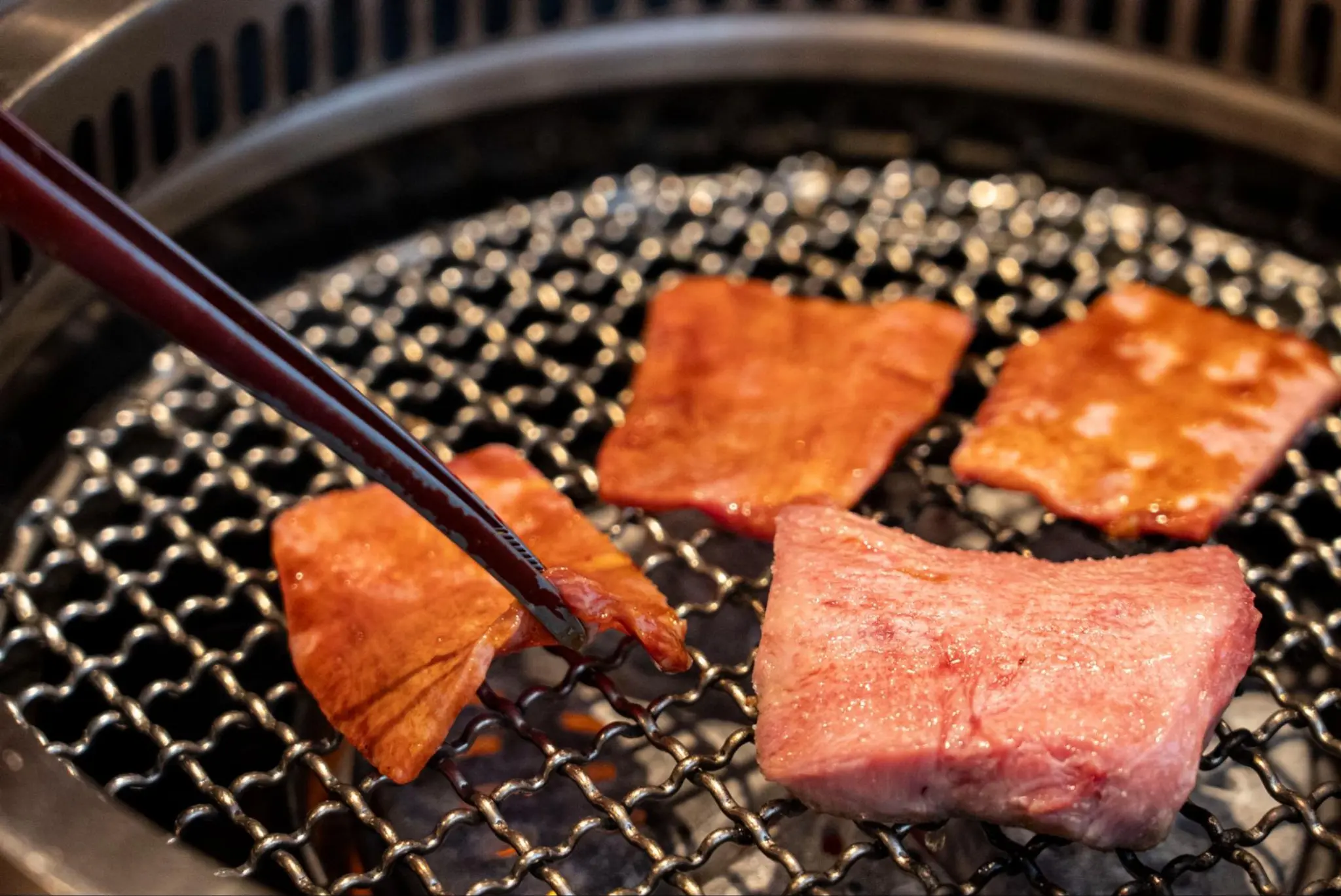
ーーーFor example, do you have specific thickness guidelines for different cuts?
I actually took the opposite approach. Typically, tougher cuts are sliced thin, but when grilled, they often end up dry and crumbly. Meanwhile, fattier, tender cuts taste great when thick-cut, but a single piece can leave you feeling full. So I intentionally cut tender cuts thin and tougher cuts thick.
For example, with tougher sections like shank—usually never used at yakiniku restaurants—I’d slice them very thick, scoring the muscle in a crosshatch pattern during prep, then coating them with homemade salt koji. When customers grilled those pieces, the thickness made it nearly impossible to cook them all the way through. As a result, they’d end up eating them rare, which kept the meat tender and enjoyable.
ーーーThe complete opposite of the typical approach!
It might have been something I could only achieve because I didn’t have a mentor or traditional guidance—there were no preconceived notions holding me back. Of course, I’d explain it to the customers, and those who were knowledgeable about meat were always surprised.
ーーーYou went on to open a second location for 【Cossott’e】 after that, didn’t you?
The second location in Azabu Juban was going well, but my health started to deteriorate. I went for a check-up and was diagnosed with cervical spondylosis, which required surgery and forced me to take some time off. I was 46 by then, and I started to worry that continuing to work on the floor might end up burdening the staff. Around the same time, my uncle in Yamanashi faced a succession issue at his factory, and it was decided that I would take over temporarily. That became the turning point where I decided to entrust the restaurant to younger staff and step away from the restaurant business.
Overcoming illness, a final challenge as a chef begins
ーーーThis was your second time stepping away from the field. What brought you to start your current venture, 【Komiyama】?
I honestly thought I was done. But after a few years, my wife and I decided to try running a small restaurant again. Still, I had doubts, especially with a three-year gap in Tokyo. Around that time, I reached out to Taka from “ONE OK ROCK,” who I’d known for over a decade. He strongly encouraged me, saying, “You should definitely get back into it. If you run into trouble, I’ll throw everything I have into helping you.” His support is what gave me the push to start again.
At first, I wanted to open a low-profile place in a quiet area like Meguro, but I couldn’t find the right property. Expanding my search led me to the current location. I knew the higher rent and different settings meant we couldn’t stick to the previous pricing structure. So, I decided to design a space where I could engage with guests even more than before. I personally drafted the plans, down to every few centimeters, and I shifted the menu to a set course format that felt more natural for me.
Although it meant raising our prices, the restaurant got off to a great start. Friends, acquaintances, and new guests all came by. It felt like a very narrow window of opportunity, just before I turned 50.
ーーーWhat do you consider most important when serving food to your customers?
There’s no shortage of delicious food in the world these days. When I was younger, my goal was always to serve “the best-tasting dishes in the area.” Over time, my perspective began to shift. I’ve come to realize that “delicious” is ultimately a matter of personal taste—it’s simply a question of whether the food suits someone’s preferences or not. While I do want to gauge each guest’s preferences and serve something they’ll enjoy, I’m not obsessed with that idea. My focus now is on creating a pleasant atmosphere tailored to the purpose and occasion of each guest’s visit.
In the past, I took great joy in hearing people say, “That was delicious.” But these days, I’m happier when someone tells me, “That was a great experience.” I used to pay close attention to online reviews and ratings on gourmet sites, but I don’t look at them at all anymore.
ーーーIt sounds like your perspective has changed quite a bit since you were younger.
It’s really a reflection of how arrogant I was in my twenties. If you asked me whether I could have had this perspective back then, I’d say it would have been tough. Honestly, if I could go back and meet my younger self, I wouldn’t bother with words—I’d just give him a good punch (laughs).
But you know, adopting this new mindset has really helped me let go of stress.
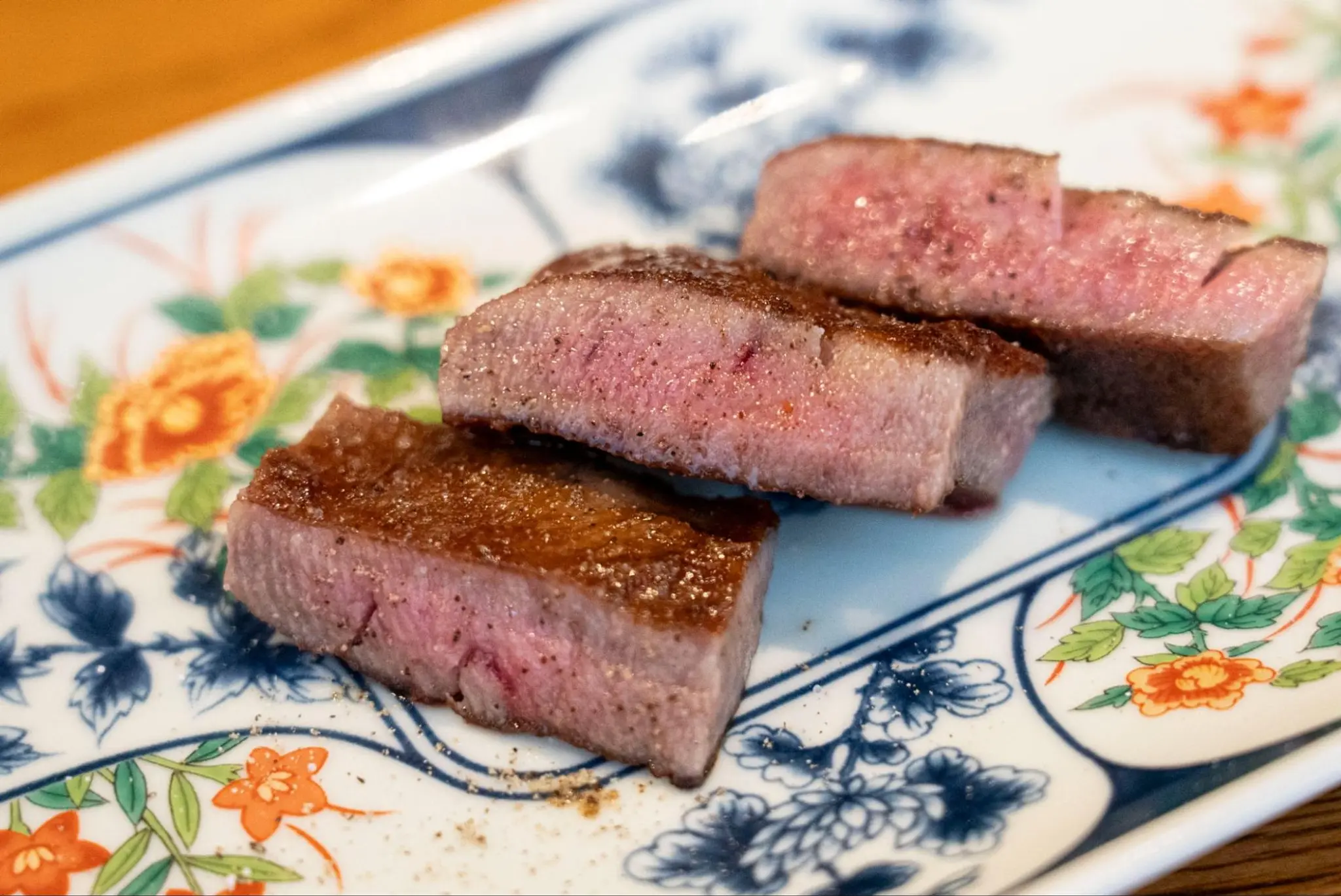
It’s not just about serving “delicious” food—it’s about connecting with guests on a personal level
ーーーWhat do you prioritize when creating a space that feels connected to your guests?
I’d say it’s all about being attentive. When a guest arrives, I try to quickly gauge the relationship dynamics in their party and adjust the order in which we serve dishes accordingly. Additionally, we generally don’t impose strict time limits, allowing guests to enjoy themselves freely. That flexibility is something I think is most important.
Our restaurant opened in 2019, but the experience of dealing with COVID-19 may have been a major turning point in shaping my current mindset. While we did lose some connections during that time, I also deepened my relationship with many others. People came forward to help, offering support and encouragement. It was during that period that I was finally able to visit some restaurants I’d always wanted to try, and I developed new bonds with fellow chefs. These relationships led to collaborative events and mutual cooperation, which gave me a wealth of new insights.
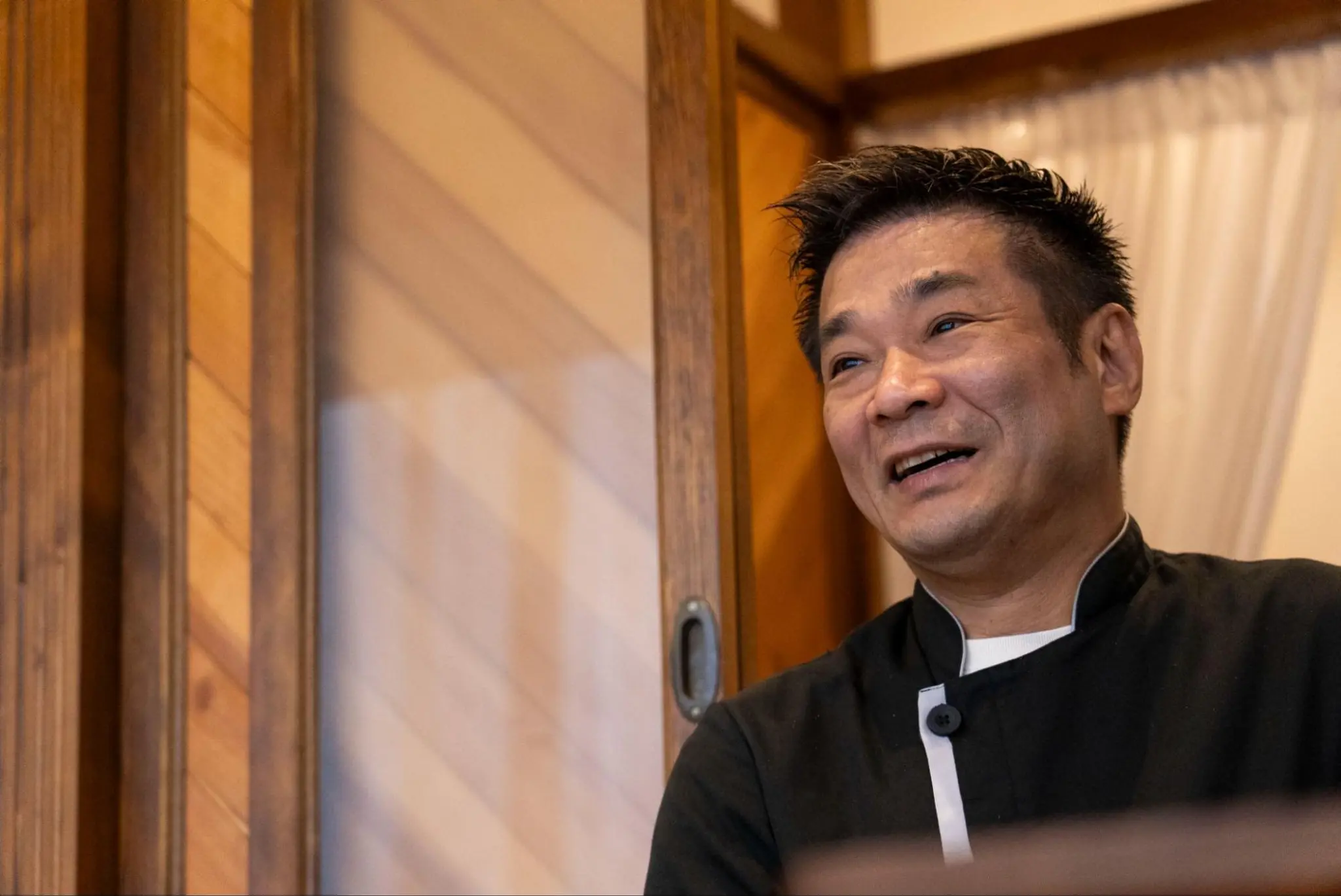
ーーーSo, it seems that the connections and relationships you’ve built have become one of 【Komiyama】’s key attractions.
Some customers even call it their “home in Nishi-Azabu” (laughs). Especially those in their late twenties to mid-thirties—they call us “Mom” and “Dad.” They’ll walk in with a cheerful “I’m home!” and we’ll see them off with “Take care!” We have many musicians and actresses among our clientele, most of whom have left their hometowns to work hard in Tokyo. It’s really touching to see how they look up to us—not just as a chef and customer relationship, but as a kind of family.
ーーーFinally, what does “delicious” mean to you, Chef Komiyama?
I think “delicious” ultimately comes down to people’s feelings. In the end, it’s really about who you share the meal with. That’s why food enjoyed in a pleasant and comforting atmosphere naturally feels more delicious. Moving forward, I want to continue welcoming guests to this restaurant and providing them with a warm, inviting space.
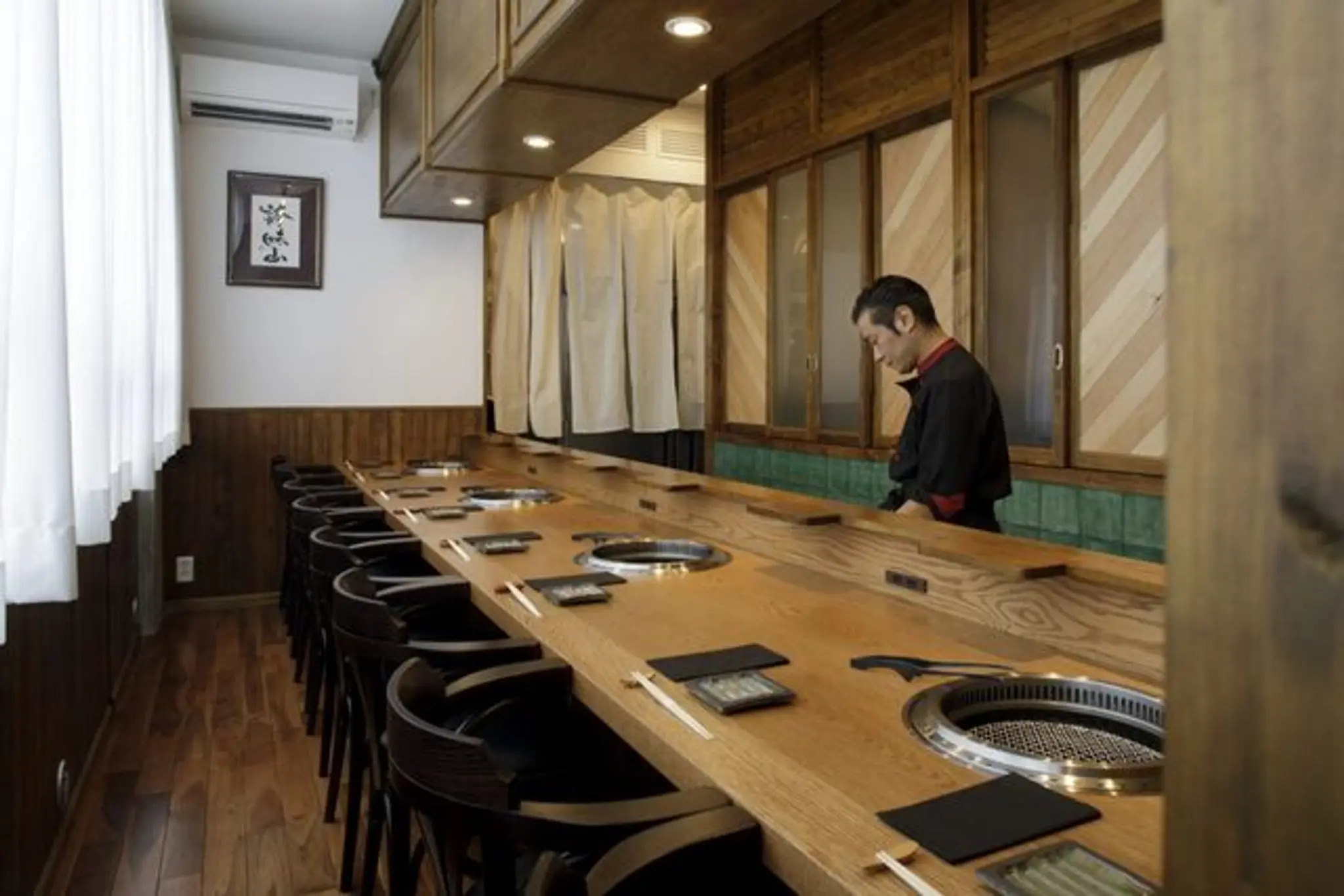
Looking out across the warmly designed wooden interior, Chef Komiyama smiles brightly, saying, “Everything I’ve done so far has led to this.” The layout, with counter seats and tables arranged around the grilling station, allows a clear view of every guest. With the exception of the private dining area, all 16 seats are fully attended to by Chef Komiyama himself. The space, which he personally designed and built, is infused with his deep desire to provide thoughtful attention to each individual guest. Once again tonight, 【Komiyama】 is filled with a peaceful atmosphere. Guests savor his carefully grilled, premium yakiniku, served with the utmost skill and heartfelt care. You can almost hear the cheerful laughter of satisfied diners enjoying a truly special experience.
Interviewer/Yuri Yanagiya
Text/AutoReserve Magazine Editorial Team
Photography/Azusa Nakaoka
Restaurant Information
- AutoReserve Magazine
- Restaurants recommended by top chefs
- The journey through diverse experiences has led to the deep intention behind creating a "fun space" for the customers at 【Komiyama】