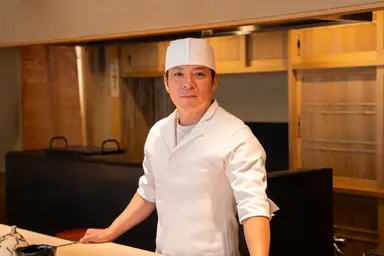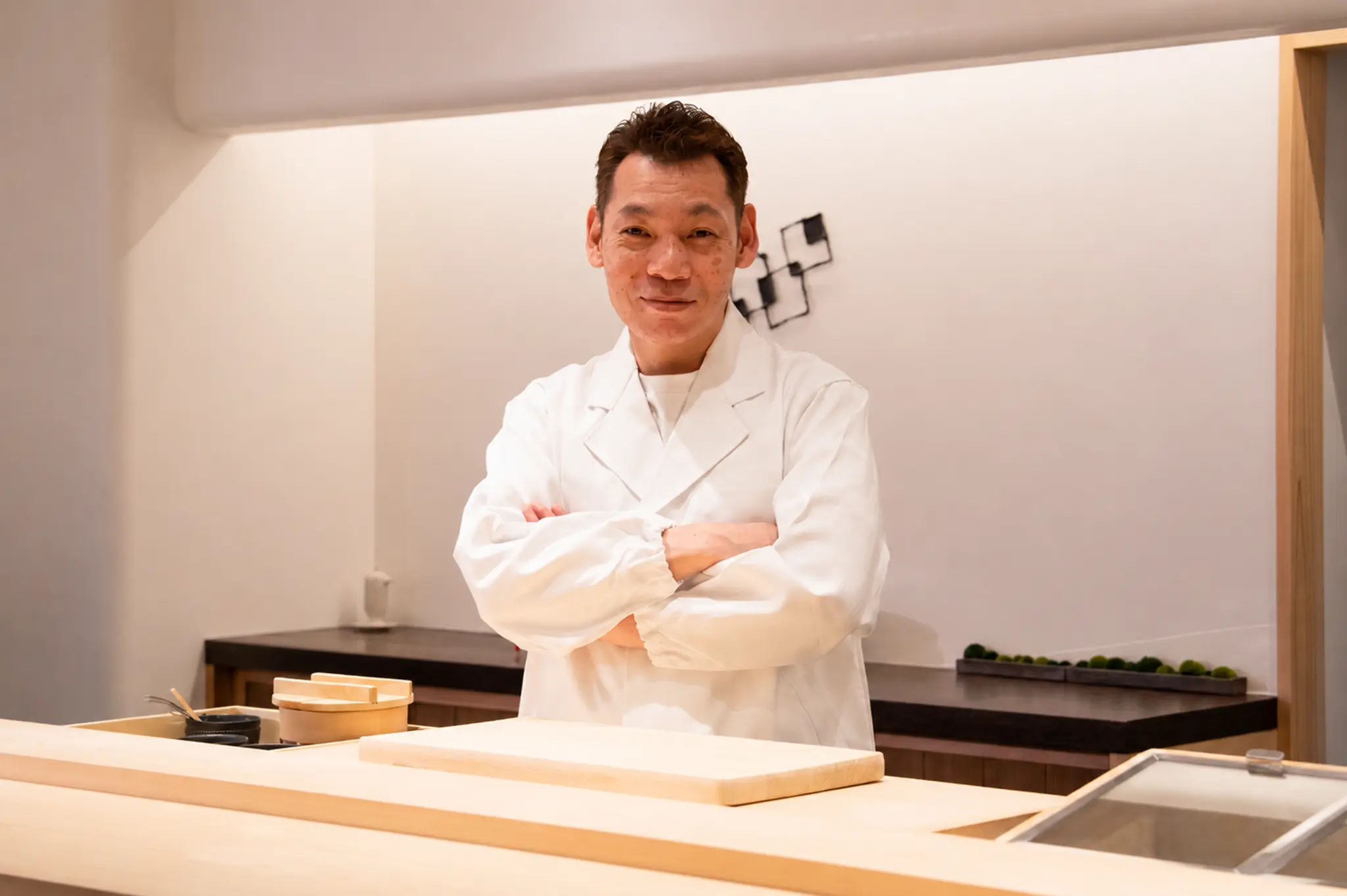
Inspired by the Craftsmen Across the Counter
— What inspired you to become a chef?
At the time, I never really considered any path other than becoming a chef. Back then, in the world of craftsmanship, it was simply taken for granted that you learned by stepping into the workplace and mastering your craft through hands-on experience.
It's not that I had an exceptional passion for cooking or was particularly talented at it from the beginning. My father, however, loved both cooking and good food, and I think his influence was significant. Although he never became a chef himself, he seemed to have a deep admiration for the culinary world and introduced me to all kinds of food from an early age.
One of my father's senior colleagues owned a sushi restaurant, and every so often he would take me there. In those days, omakase wasn't yet the standard. Guests would sit at the counter and order whatever they liked. Watching the conversations between the chef and the customers across the counter, I remember thinking, "That looks so cool." Looking back, that may well have been what first inspired me to become a sushi chef.
That said, if I had followed the more conventional path of attending an academic high school and then university, I might never have become a chef at all. I probably would have been sitting on the other side of the counter, enjoying the sushi rather than making it.
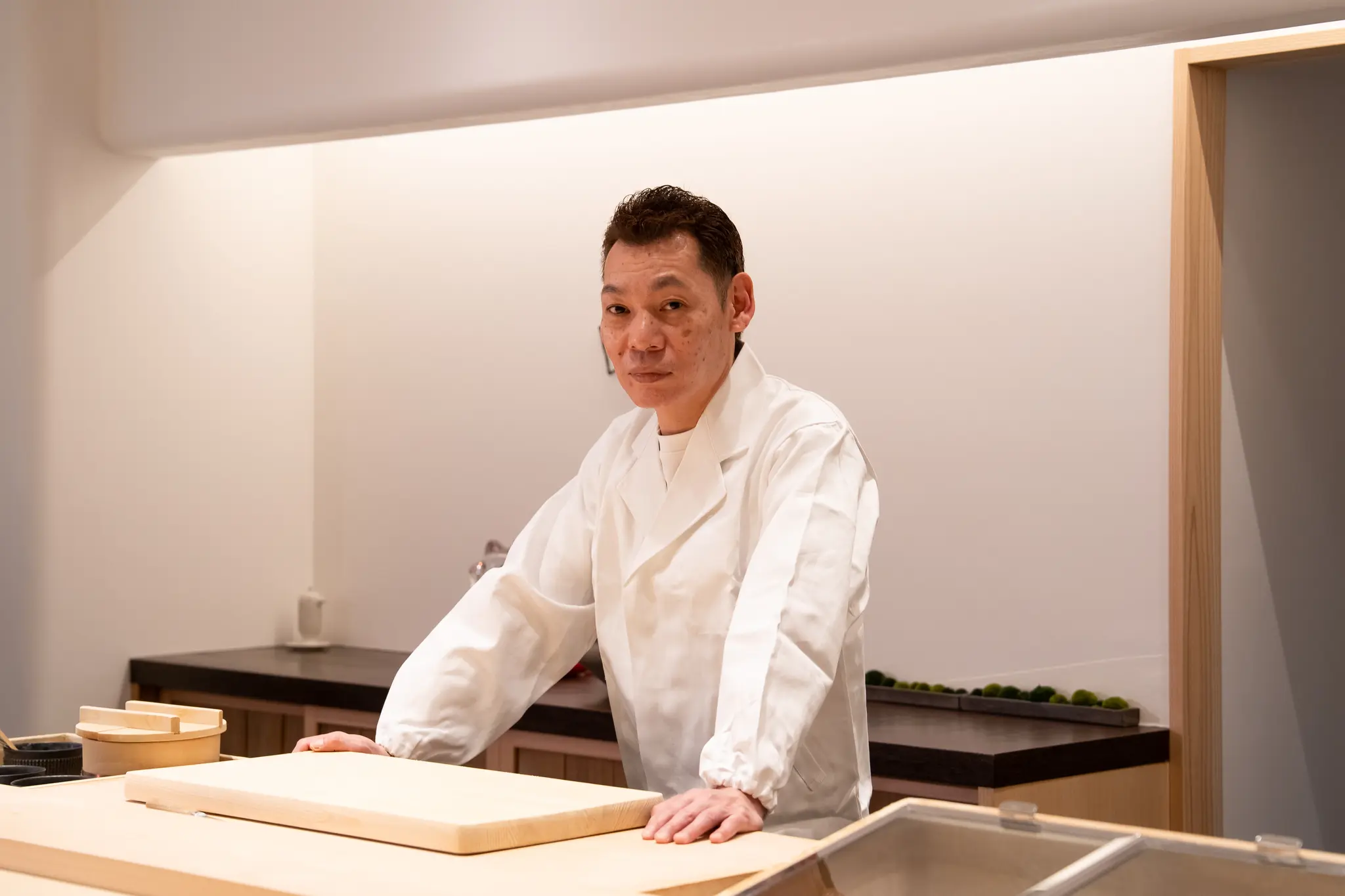
Refining the Foundations of Edomae Sushi in Ginza
— Could you tell us about your years of training?
After graduating from a culinary high school where I earned both a high school diploma and a chef's license, I wanted to move to Tokyo. To me, sushi meant Tokyo, so when I saw an opening at a restaurant in Tsukiji, I decided to seize the opportunity.
The restaurant operated four locations in Tsukiji, along with additional branches in Kasumigaseki and Toranomon. Because it was such a large organization, however, there were already many apprentices ahead of me, and my opportunities to expand my responsibilities were limited. I felt it would take too long to become a fully accomplished chef if I stayed, so after four years I moved to an independent sushi restaurant in Ginza.
I spent six years there, learning every aspect of the craft. At the time, I imagined eventually returning to my hometown to open my own restaurant. But having come all the way to Tokyo, I also wanted to experience working at one of the city's most prestigious sushi establishments.
As I browsed through job listings, I found many renowned sushi restaurants. Since I wasn't sure which one to choose, I simply contacted the first one that caught my eye alphabetically and whose name I already recognized—【Ginza Sushi Aoki】. After interviewing there, I was fortunate enough to be offered a position, and it became the third restaurant where I trained. The foundation in traditional Edomae sushi that I gained there continues to shape the way I work today.
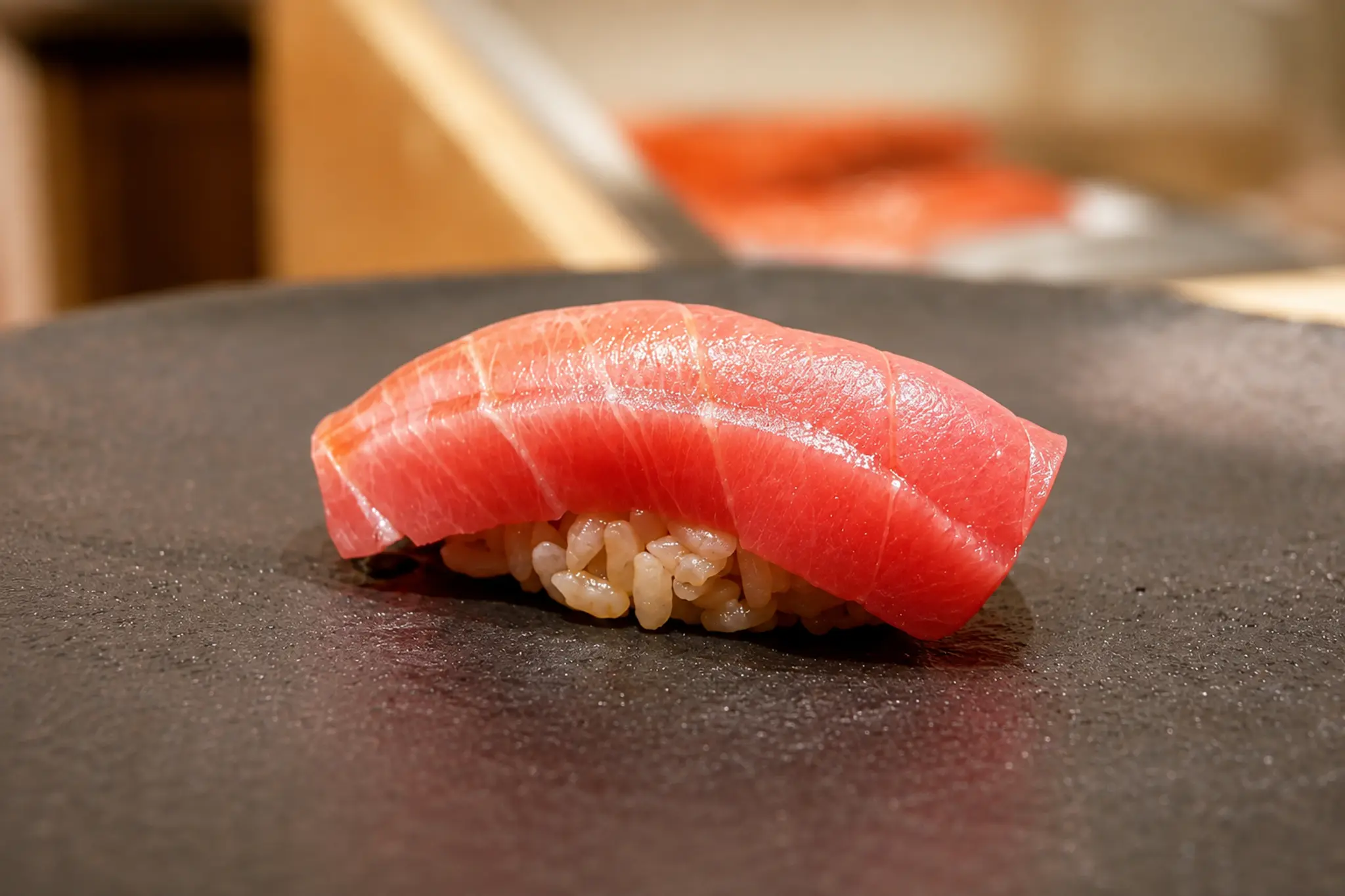
One experience from my apprenticeship remains especially vivid in my memory. I once had the opportunity to enjoy nigiri at 【Sushi Kiyota】. It was tuna prepared with akazu (red-vinegar) sushi rice, and I was genuinely astonished by how delicious it was.
At the time, 【Ginza Sushi Aoki】 used rice vinegar for its sushi rice, so it was my very first experience tasting sushi made with akazu. That single meal left such a profound impression on me that I made a promise to myself: "When I someday open my own restaurant, I'll use red-vinegar sushi rice." That decision has stayed with me ever since.
— What led you to open your own restaurant?
I had always planned to open my own restaurant around the age of forty. I chose Ginza because I felt that if I returned to my hometown, I would simply become one of many neighborhood sushi restaurants, and that wasn't the kind of sushi chef I aspired to be.
Ginza is a place where you can sense changes in the industry almost immediately, and where guests naturally have exceptionally high expectations. I believed that working in such an environment would continue to challenge me and help me grow as a chef. That's why I decided to open my restaurant here.
Quality Sustained by Trust
— What do you value most when selecting ingredients?
As for sourcing ingredients, I leave most of it to a fish supplier I trust. I used to visit the market and select the fish myself, but over time I came to believe that the most reliable approach is to have a trusted supplier secure fish in the best possible condition for me.
A truly exceptional fish supplier doesn't simply sell fish—they listen carefully to what I'm looking for and make thoughtful recommendations. For example, if I'm buying horse mackerel, I might ask for one that's a little firmer and around a certain size. If it's gizzard shad, I may want one with just the right amount of fat and of a particular size. They understand those requests and find fish that perfectly match them.
They even visit the restaurant to experience our sushi themselves. After tasting it, they sometimes suggest, "With this style of shari, I think this particular fish would work beautifully as well." That kind of relationship, built on mutual trust and understanding, is incredibly important to me.
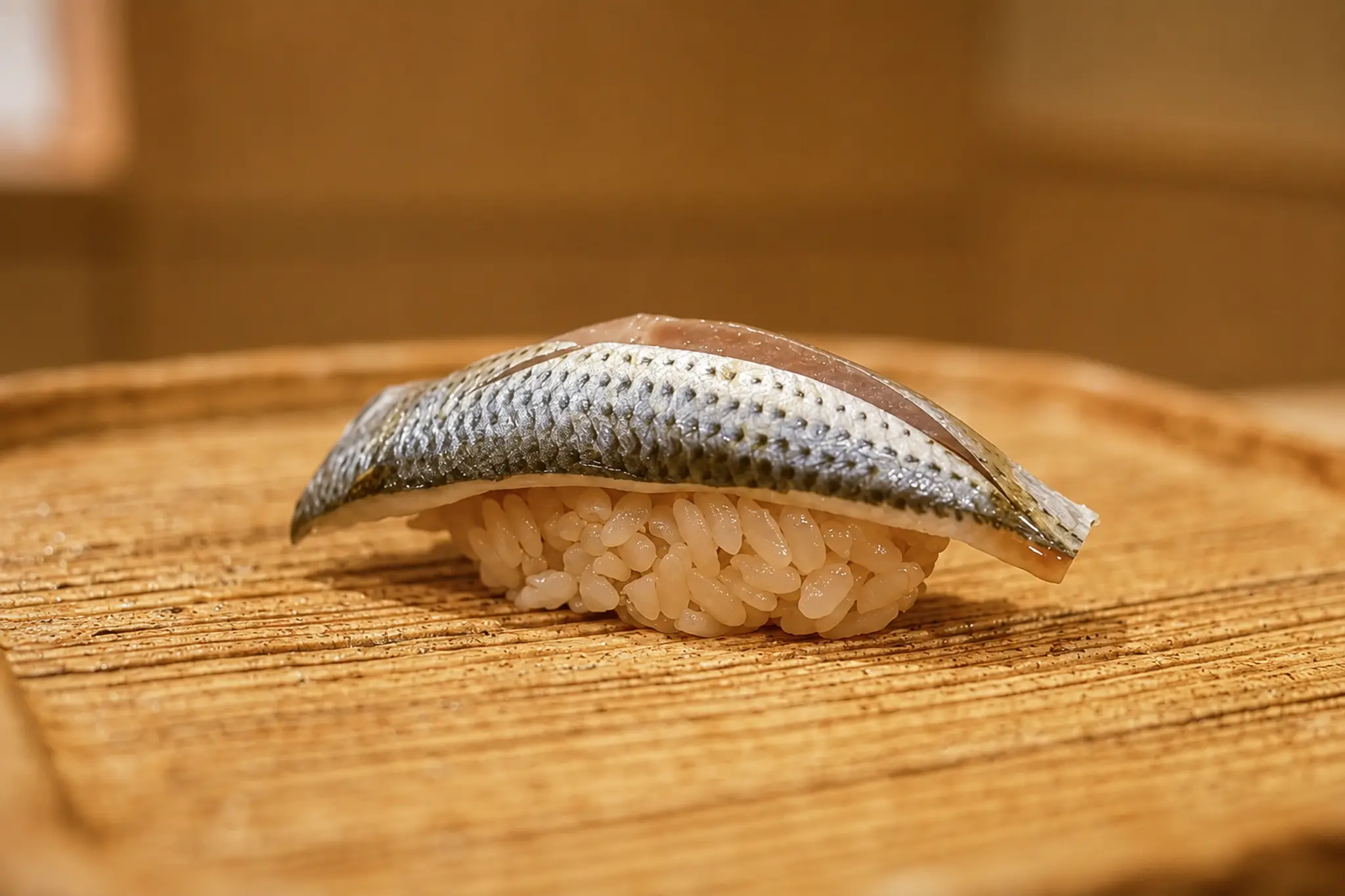
Once I've explained exactly what I'm looking for, if my supplier tells me, "There isn't anything good enough today," I don't push the issue. If the ingredients aren't up to the standard I'm after, I'd rather go without than settle for a substitute. I'm uncompromising when it comes to quality.
The same goes for tuna. My suppliers know exactly what I look for in terms of size and the quality of the flesh, so if nothing meets those standards, they'll tell me honestly.
That kind of trust is important not only when sourcing fish, but also vegetables and other ingredients for our sakana. When it comes to the ingredients themselves, the people who work with them every single day are the true specialists. I believe it's important to trust their expertise and judgment.
— What do you value most when creating a course menu?
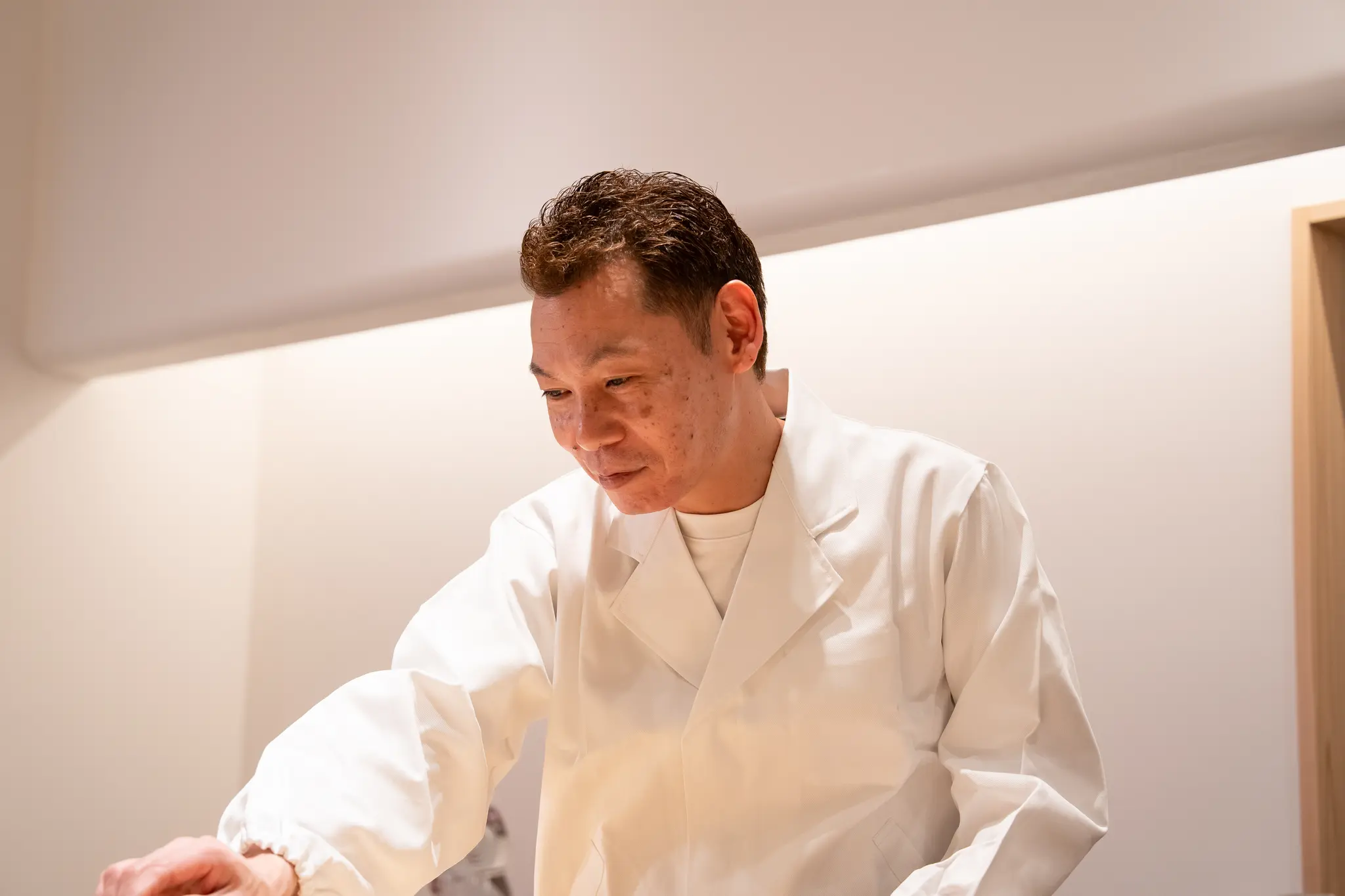
Simplicity is something I value above all else. With that as my foundation, I try to create dishes that I myself would genuinely want to eat.
When I first opened the restaurant, I also experimented with trendy ingredients. But over time, I came to realize that nothing surpasses simplicity. Our guests have responded very positively to that approach, and I feel their reactions have reaffirmed that belief.
Of course, everyone has different tastes, so it's impossible to create something that everyone will find delicious. Even so, I would never serve a dish that I don't personally believe is truly delicious.
Whenever I come across something memorable while dining out, I try not to simply imitate it. Instead, I think about how I can reinterpret the idea and express it in my own way.
— As you've continued running your restaurant, is there a philosophy you've always held close?
Ginza has long been home to countless outstanding sushi restaurants, so naturally the competition is fierce. That’s why I’m always asking myself what makes someone choose 【Sushi Suzuki】 over all the other options.
At the same time, I don't believe I can answer that question on my own. That's why I often ask our guests directly. During conversation, I'll ask questions like, "What brought you here?" or "What makes you come back?" Some guests are introduced by friends or acquaintances, while others discover us online.
In recent years, we've also welcomed a significant increase in guests from overseas. We've always had international visitors, but their numbers have grown noticeably since the pandemic. I imagine that's partly because people were unable to visit Japan for several years, and the weaker yen has certainly played a role as well.
Many of our international guests come through word of mouth, while others are referred by hotel concierges. I'm truly grateful for that support.
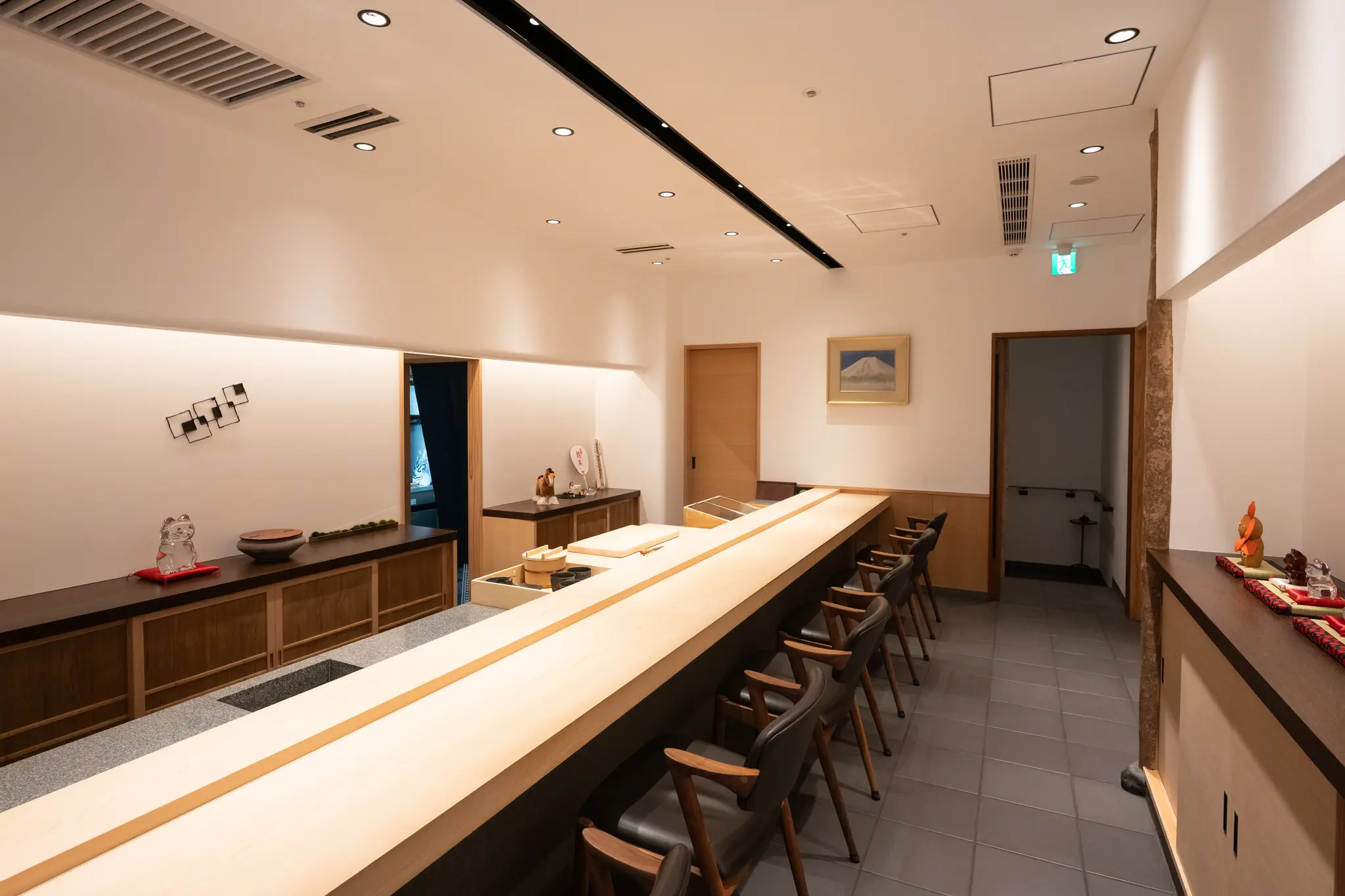
Ginza is home to many restaurants with a highly formal atmosphere, but that's never really been my style. I prefer to interact with my guests in a relaxed and approachable way, and I think many people appreciate that sense of ease.
To me, a memorable dining experience is about far more than the food alone. No matter how delicious the sushi may be, guests are unlikely to want to return if they don't feel comfortable in the restaurant.
If the atmosphere is tense or voices are raised around them, it's difficult for anyone to truly relax and enjoy a meal. That's why I place just as much importance on creating a warm, comfortable environment where guests can simply be themselves and enjoy their time.
The Balance of Deliciousness Is Built Over Time
— What are your aspirations for the future?
To be honest, I don't have any grand ambitions for the future.
Rather than pursuing something new, I simply want to keep building, one day at a time, and continue refining what we've created.
I have no plans to expand by opening multiple restaurants, nor do I intend to return to my hometown. My responsibility is to preserve the quality of 【Sushi Suzuki】 and continue meeting the expectations of every guest who chooses to dine with us.
— Lastly, what does “delicious” mean to you, Mr. Suzuki?
I don't believe there's a single, definitive answer to what deliciousness is.
If I had to say what matters most, it would be balance. Of course, delicious food is the foundation. But I believe true deliciousness comes from the entire experience—including the atmosphere of the restaurant, the hospitality, and how comfortable guests feel throughout their time with us.
No matter how exceptional the food may be, it's difficult to fully appreciate it if the atmosphere isn't welcoming.
Even when guests visit us from overseas, language can sometimes be a barrier. Although we may not always be able to have long conversations, I make a point of communicating as much as I can—asking where they're from or where they plan to visit after their meal.
There are certainly times when we're too busy to talk very much. Even so, I believe it's the entire experience—including those small interactions—that ultimately shapes a guest's sense of deliciousness.
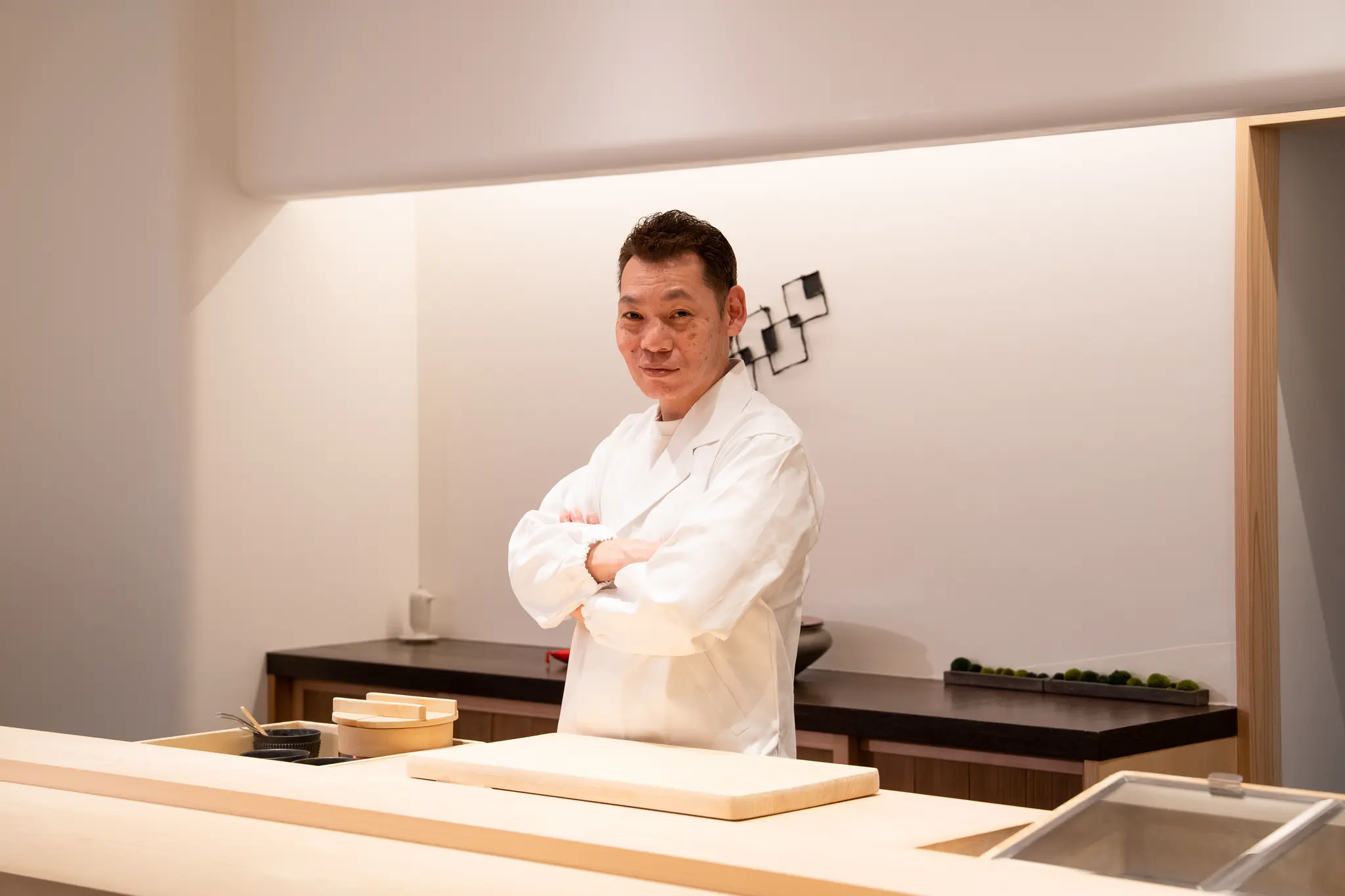
From the origins of his journey as a sushi chef, to the skills he cultivated through years of apprenticeship, and the unwavering sincerity that has defined him ever since opening his own restaurant, Takahisa Suzuki's words reveal the quiet conviction of a craftsman who believes that excellence is built one day at a time. The trust he places in those who source his ingredients, his commitment to serving only what he himself believes is truly delicious, and the care he takes to ensure every guest feels comfortable—each of these is reflected in every piece of sushi served at 【Sushi Suzuki】.
If you'd like to experience Edomae sushi refined through years of dedication and the steady accumulation of daily craftsmanship, 【Sushi Suzuki】 is a place well worth visiting.
Interviews & Text / AutoReserve Magazine Editorial Team
Photography / Shoichi Baba
Restaurant Information
- AutoReserve Magazine
- Japan’s world-renowned flagship restaurant
- Building Sushi and Trust in Ginza: Takahisa Suzuki of 【Sushi Suzuki】