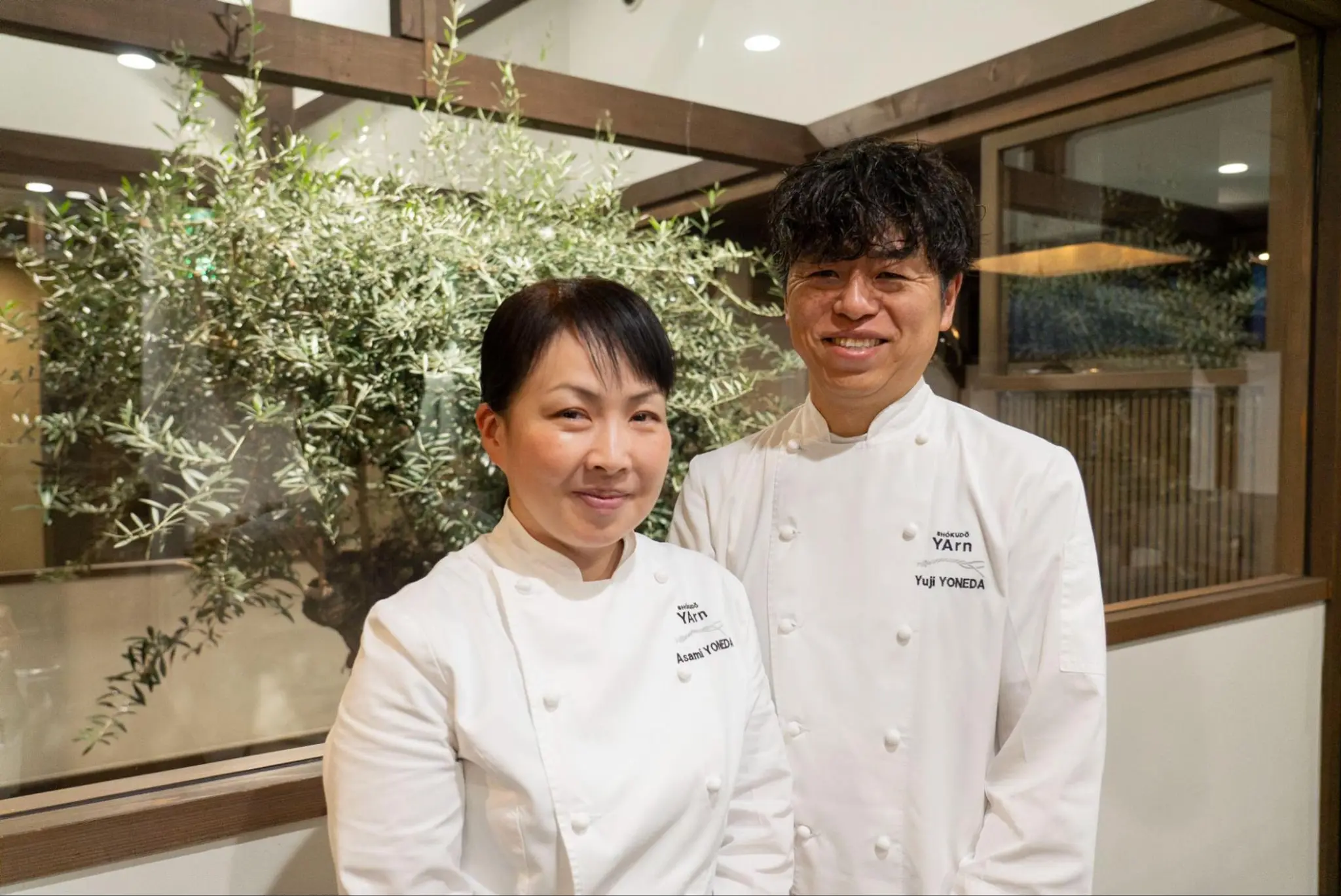
The Secret of Deliciousness in 【SHÓKUDŌ YArn】's Unique Style—Where a Husband-and-Wife Team Weaves Love into Their Cuisine
From a Science Major to a Culinary Career—Starting as a Chef in Italy
ーーーWhat led you to pursue a career in cooking?
Yuji: Since both of my parents worked, I developed the habit of cooking for myself whenever I got hungry from a young age. As I grew older, I started hosting dinner gatherings for friends and even cooked for after-parties at my house following nights out. I really enjoyed making food and seeing people happy. I initially pursued a science degree and considered a career in that field, but during my job search in my third year of university, I took the time to reevaluate what I truly wanted to do. That led me to travel to Italy alone. Immersed in the local atmosphere, I realized once again how much I loved cooking. So, after graduating from university, I moved to Italy to begin my culinary training.
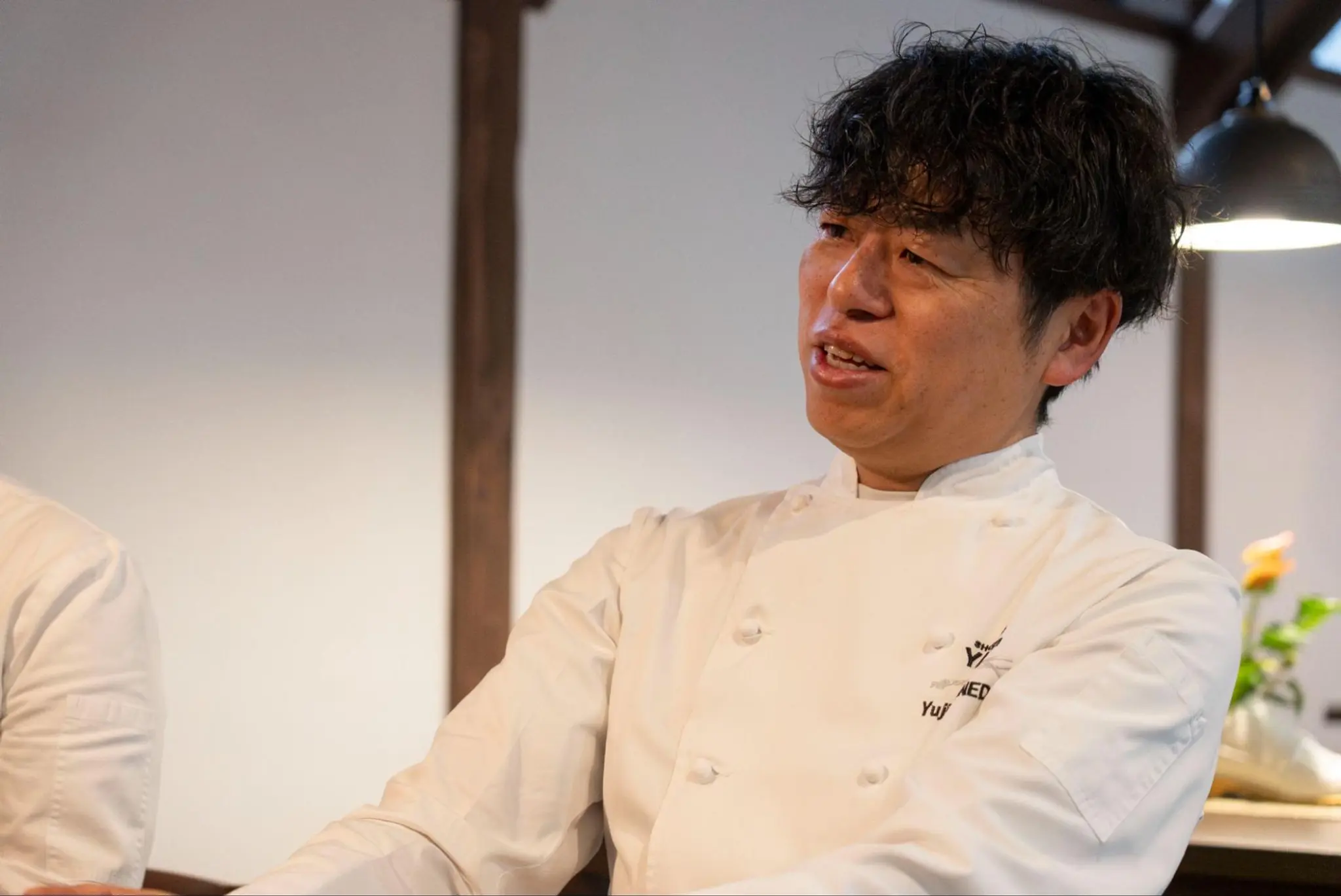
Among the many types of Western cuisine, I chose Italian cuisine not only because I had always loved dishes like pasta, but also because I wanted to focus on enjoying cooking rather than getting too caught up in techniques and precision. Additionally, during my university years, several master chefs in Italian cuisine were emerging, sparking an Italian food boom in Japan, which also influenced my decision.
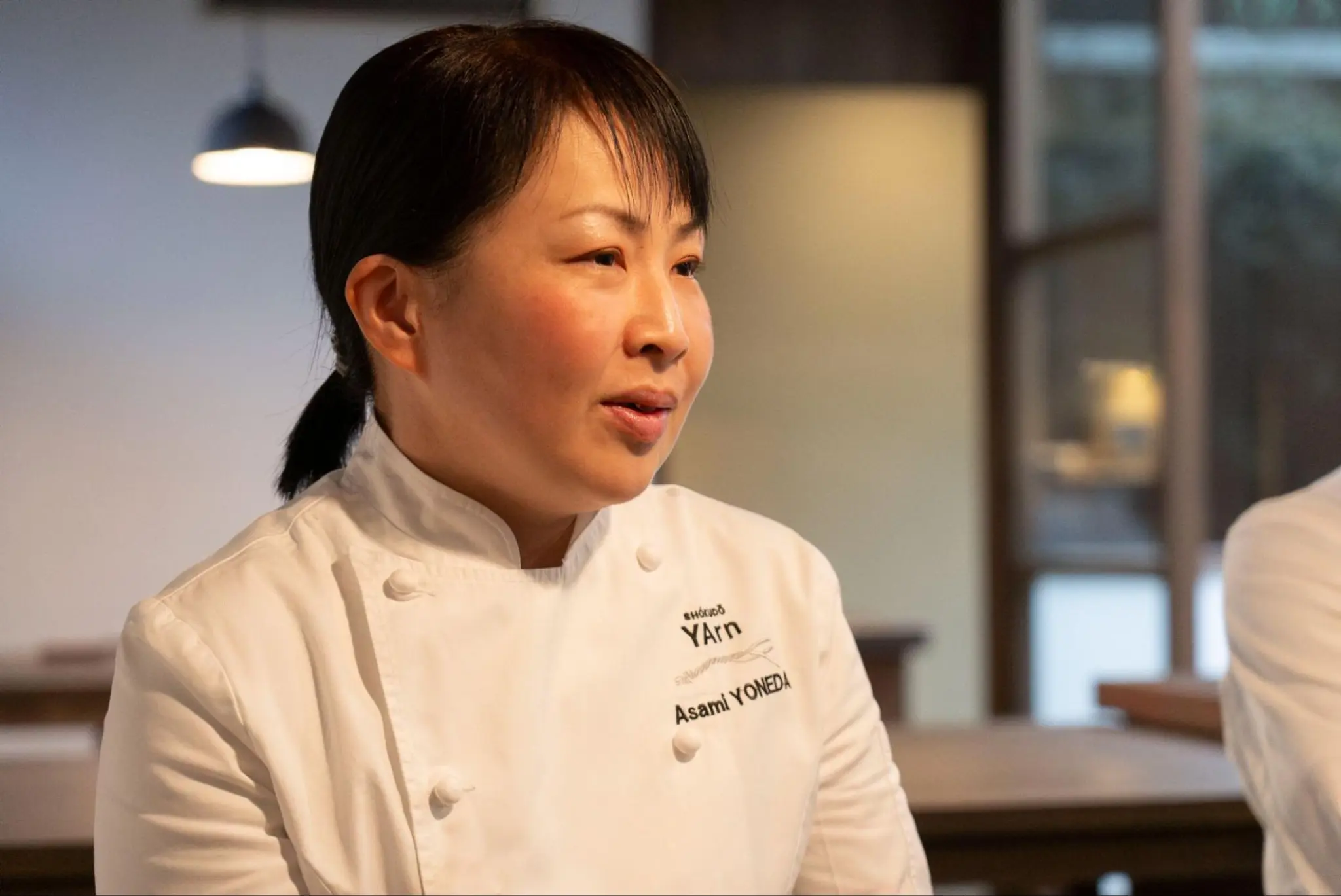
Asami: I also majored in science and studied in the medical field. After obtaining a rehabilitation qualification, I returned to my hometown and worked at a hospital. My husband and I have been together since high school, and we have always talked about doing something together in the future. While I enjoyed working in the medical field, we felt that sharing the same experiences and being in the same environment would help us stay on the same path. After working for about three years, I decided to leave my job and move to Italy as well.
ーーーWhat kind of experiences did you have in Italy?
Yuji: I enrolled in a language school in Siena, Tuscany, and worked at six different restaurants across Italy. In the world of Japanese cuisine, becoming a chef typically requires many years of apprenticeship, but in Italy, even with no prior experience, they would say, "Alright, give making pasta a try," and let you jump right in. This hands-on approach allowed me to gain a variety of experiences, which I was very grateful for. As I became more fluent in Italian, I was able to deepen my connections with people, and I was fortunate to be surrounded by warm, family-like individuals. It was an incredibly enjoyable time.
Asami : After joining Yuji in Italy, I started working with him at a family-run restaurant owned by one of his friends. It was my first time cooking professionally, but they welcomed me warmly, making it easy to adjust. Yuji stayed in Italy for a total of five and a half years, while I stayed for two and a half years. In the last year and a half, I worked in Spain.
ーーーWhat challenges did you face when creating dishes?
Yuji: One of the biggest challenges was achieving the flavors that local people expected. Unless you truly understand the subtle nuances of Italian home cooking, it’s difficult to recreate the kind of taste that makes locals say, "This reminds me of my grandmother’s cooking."
Asami: For example, if a foreigner tries to make Japanese home-style miso soup, it would be hard to capture the exact essence of what Japanese people grew up with. Even if it tastes good, something might feel slightly off. Similarly, when we were cooking in Italy, we found it difficult to fully express the flavors of traditional home-style Italian cuisine.
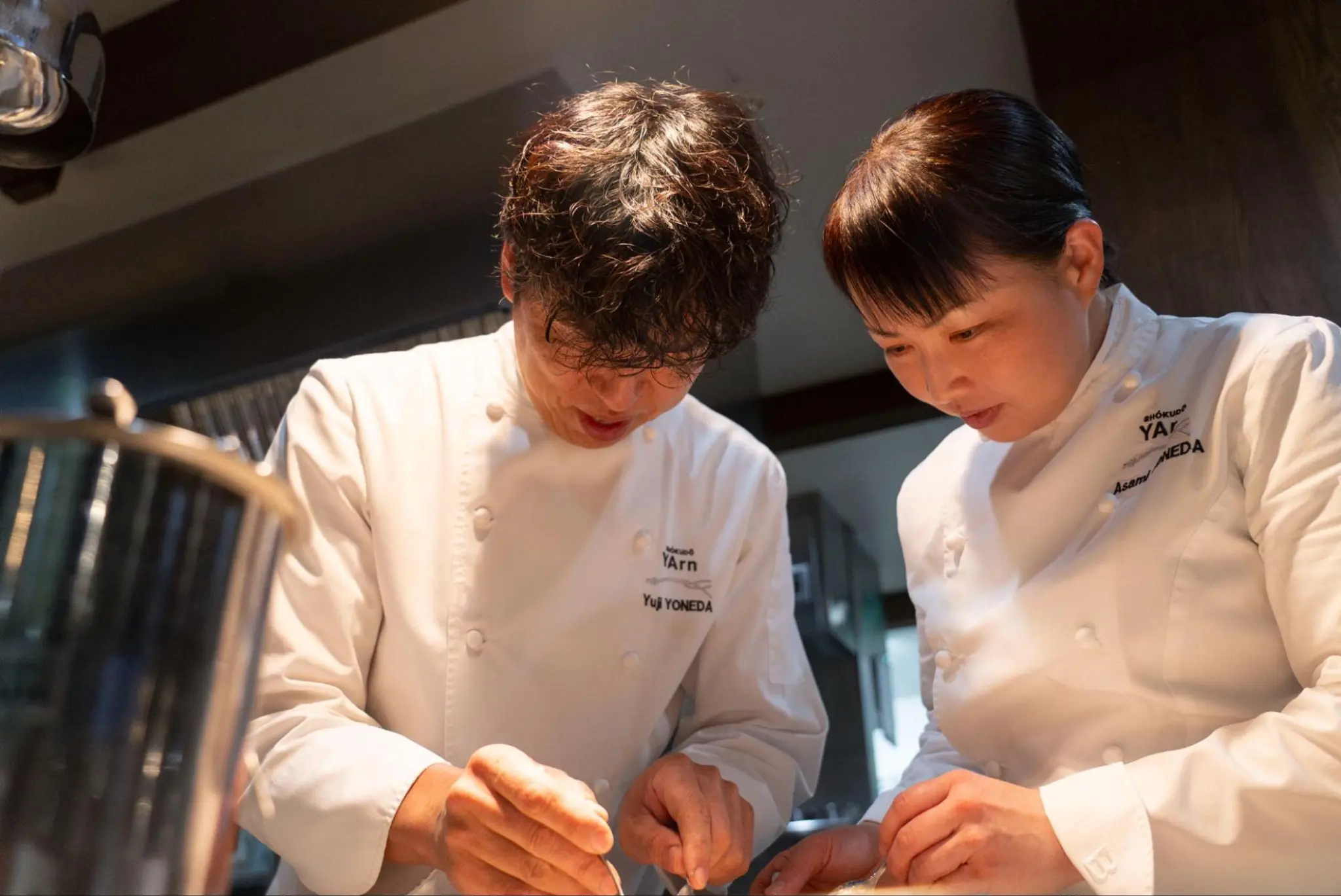
Yuji: Even while we were still in Italy, we had already started conceptualizing 【SHÓKUDŌ YArn】. However, I often wondered—if we were creating dishes that we ourselves didn’t fully understand, and if the people eating them were also unfamiliar with those dishes, how much of their true deliciousness would actually come across?
In Japan, most Italian restaurants take Italian cuisine as their foundation while incorporating Japanese ingredients. But for us, it felt more natural to do the opposite—using Japanese cuisine as the base and adding various creative approaches to it. Among Japanese cuisine, we chose to focus on familiar home-style flavors as our foundation and then reinterpreted them in different ways.
As a result, the dishes we create today carry a sense of nostalgia when tasted, yet at the same time, they offer an element of surprise and contrast for our guests to enjoy.
ーーーWhen did you decide to return to Japan?
Yuji: I had originally planned to continue working in Spain for a while, but visa issues made my long-term stay uncertain. This prompted me to reconsider whether I should continue working there or take a different path.
At that time, we were approaching 30, and we already had a vision of opening our own restaurant. Staying abroad would have allowed us to gain more experience, and that was certainly one option. However, after discussing it, we decided that rather than staying overseas indefinitely, we should start moving toward our goal.
We also thought that maybe the visa issue was a sign—an opportunity pushing us to take the next step on our own path. With that in mind, we made the decision to return to Japan.
Asami: Nowadays, the Michelin Guide covers many regional areas in Japan, but 10 to 20 years ago, that wasn’t the case. In Europe, however, there are many Michelin-starred restaurants even in rural areas, attracting customers from around the world by showcasing the unique characteristics of their local cuisine. Seeing this made us feel that opening a restaurant in the place where we were born and raised made the most sense for us.
After returning to Japan, we went back to Kanazawa, the place we know best.
Creating a Restaurant That Blends Japanese and Western Influences Through Japanese Cuisine
ーーーWhat kind of experiences did you have after returning to Japan?
Yuji: Since I had moved abroad without first gaining culinary experience in Japan, I felt that I had lost my identity as a Japanese chef. This was something I struggled with while living overseas.
After returning, I realized I needed to learn more about my own culture, so I started training at a Japanese restaurant. I also began practicing tea ceremony, as part of my journey to reconnect with my Japanese identity. That period was a time of rediscovery for me, helping me regain my foundation as a Japanese chef.
Gaining a deeper understanding of my own heritage was an invaluable experience, and it is something that is now reflected in the dishes I create.
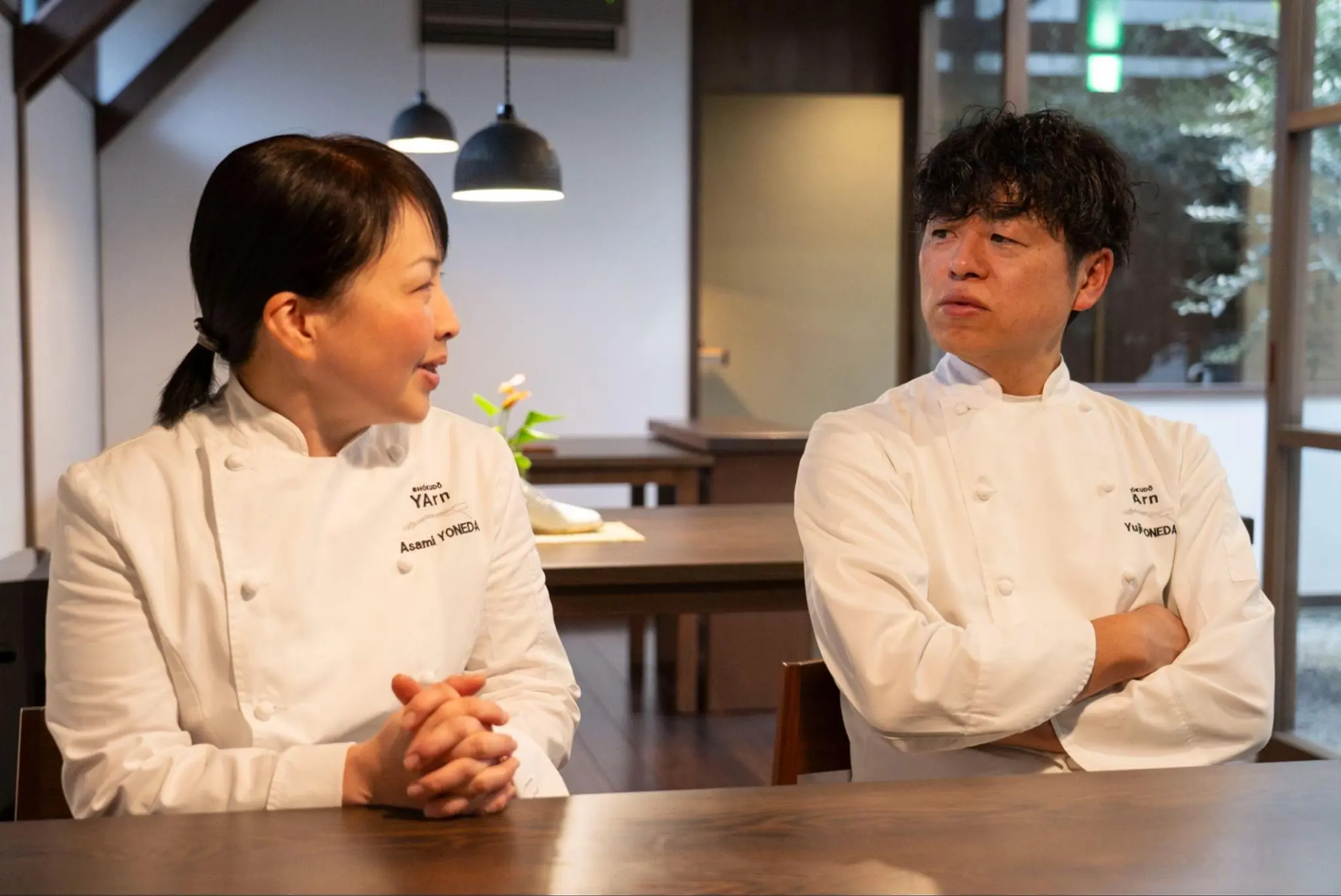
Asami: By the time we returned to Japan, we had already been together for 12 to 13 years, so the first thing we did was get married. After that, we were blessed with three children. While raising them, I worked at bakeries and pastry shops to stay connected with food. However, we struggled to find the right timing to open our own restaurant, and there were moments when I felt anxious about it.It wasn’t until we were nearing 40 that we finally started taking concrete steps toward opening our restaurant.
ーーーWhat prompted you to start moving toward opening your restaurant?
Asami: Our restaurant is located in a warehouse that was originally part of my family’s yarn factory. While it was one of the potential sites for our restaurant, at first, we didn’t envision using it as a dining space as it was. However, when we consulted an architect, they told us that the entire space could be transformed into a functional and unique restaurant. That’s when we seriously started moving forward with the idea.
Since it was difficult to explain what kind of food we wanted to serve in words, we invited people to our home to experience our dishes firsthand. Through these dining experiences, we conveyed our vision for the restaurant.
The architect understood our concept, and as we worked together, we built a strong relationship. The design and construction progressed smoothly, and eventually, the building was completed as a space that fully embodied our intentions.
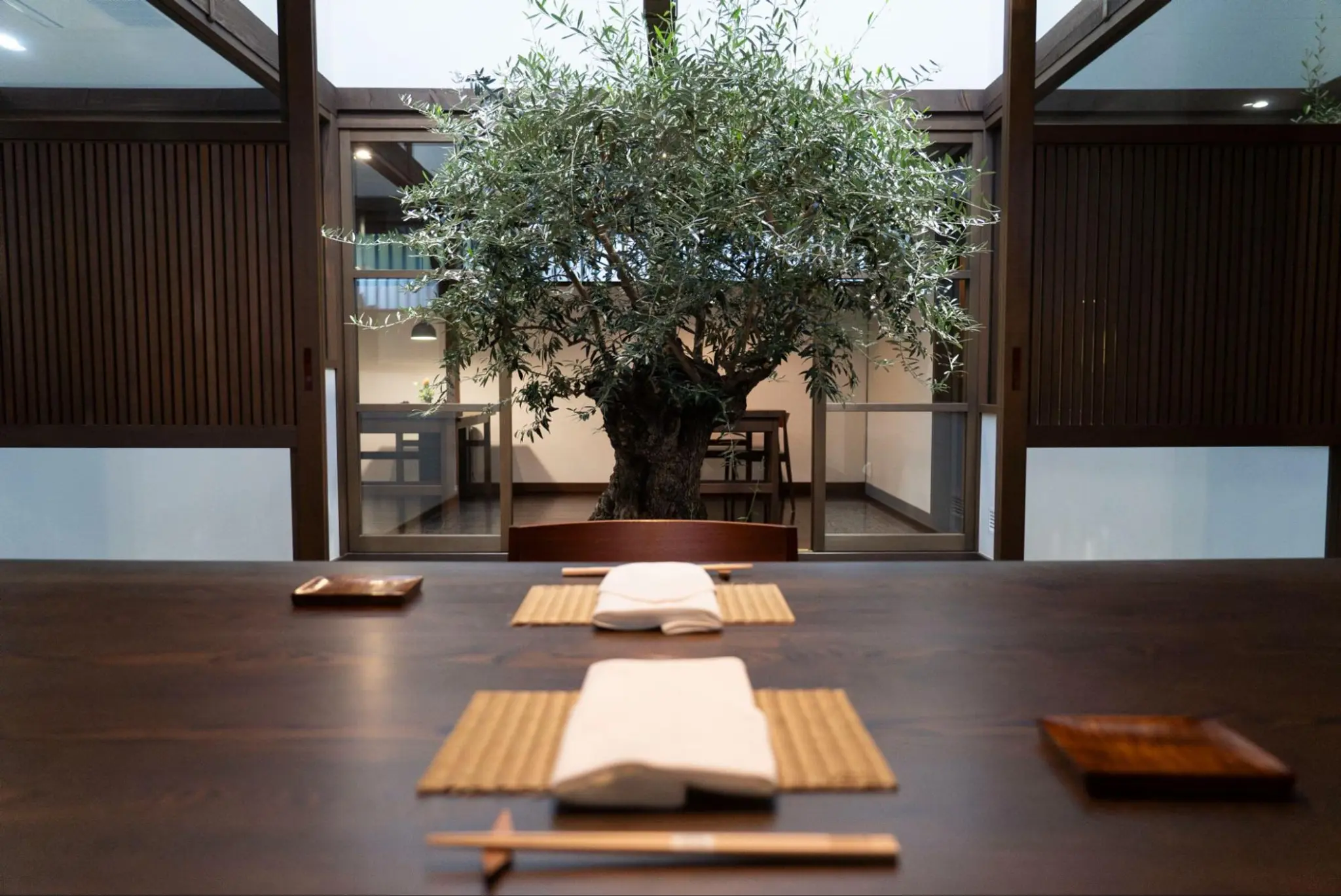
ーーーWhat were your priorities in designing the restaurant space?
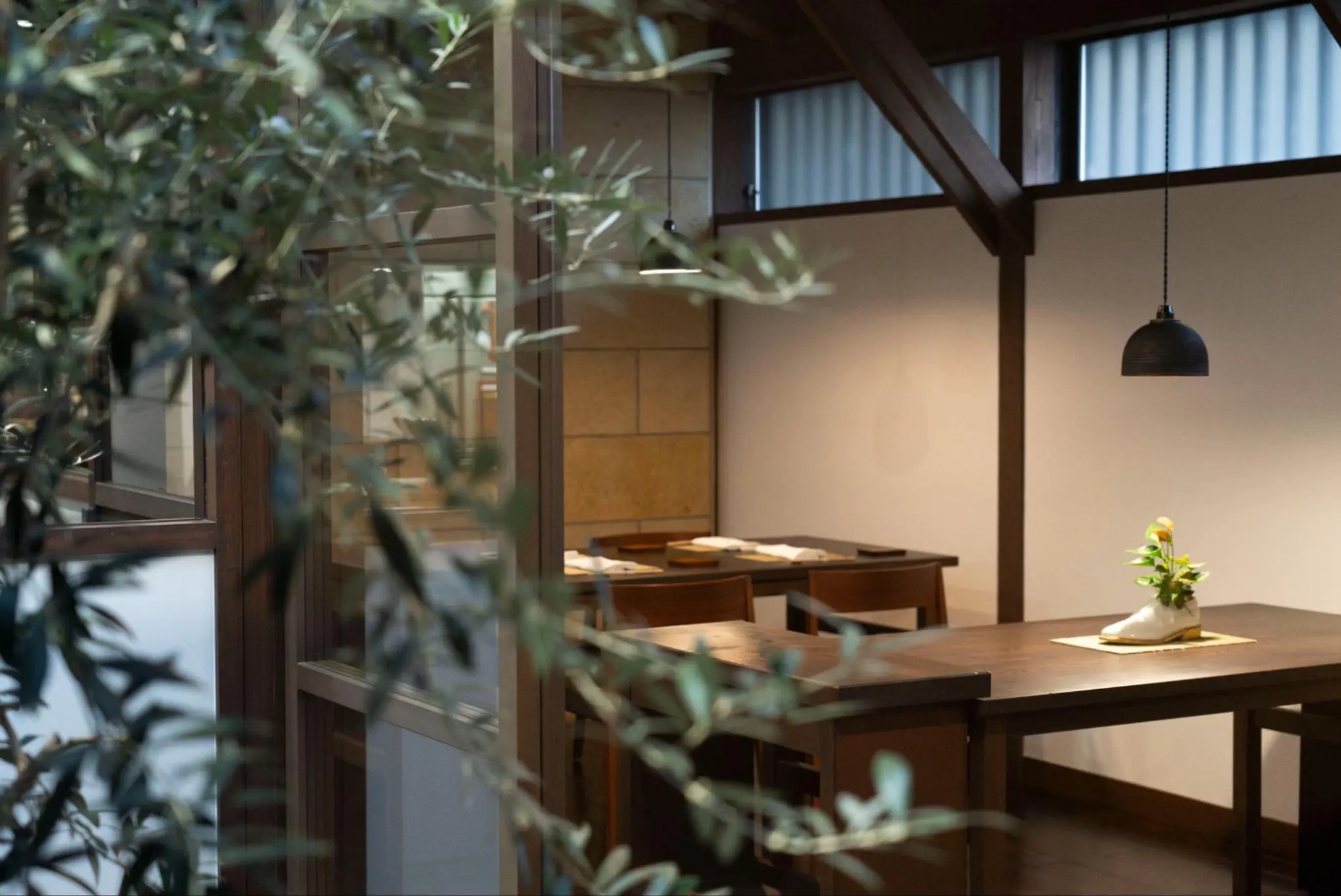
Yuji: Since our cuisine incorporates both Japanese and Western elements, we made it a theme to reflect both influences in the restaurant’s design as well. The space with windows overlooking the courtyard is inspired by the nostalgic feel of a traditional Japanese house, while at the center, we planted an olive tree, which is a symbol of peace in Europe.
Additionally, every seat in the restaurant offers a full view of the open kitchen through glass. Open kitchens are not very common in Europe, but in Japan, they have long been an established style. Being able to see our guests’ expressions and engage in direct interactions with them aligns perfectly with the kind of experience we want to create.
We also placed counters beside each table, allowing guests to enjoy watching the final touches of their dishes being prepared right in front of them. The close proximity between us and our guests creates a space where both sides can feel the shared atmosphere, making the dining experience even more intimate and engaging.
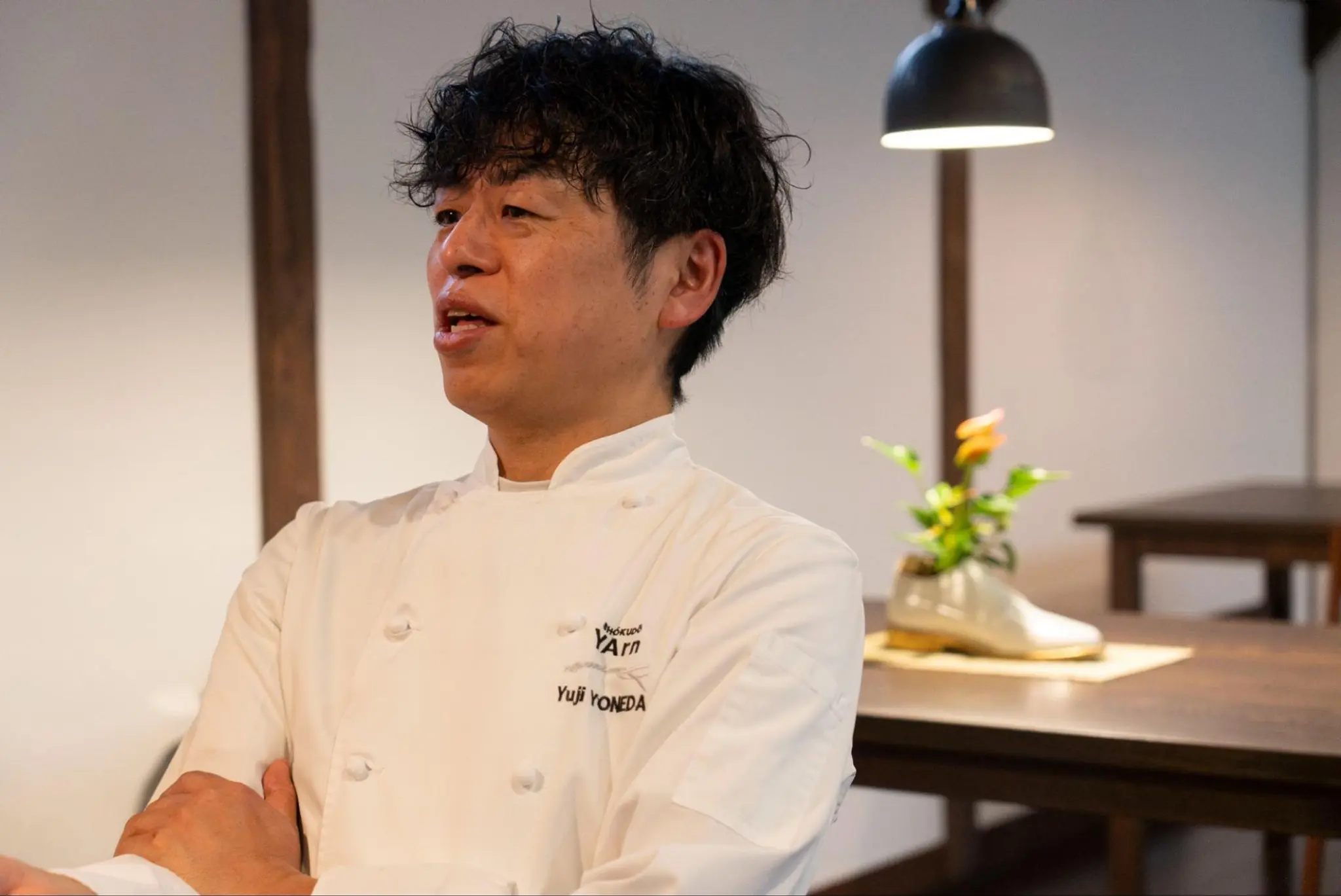
Balancing the Everyday and the Extraordinary—The 【SHÓKUDŌ YArn】 Approach
ーーーWhat is most important to you when creating your dishes?
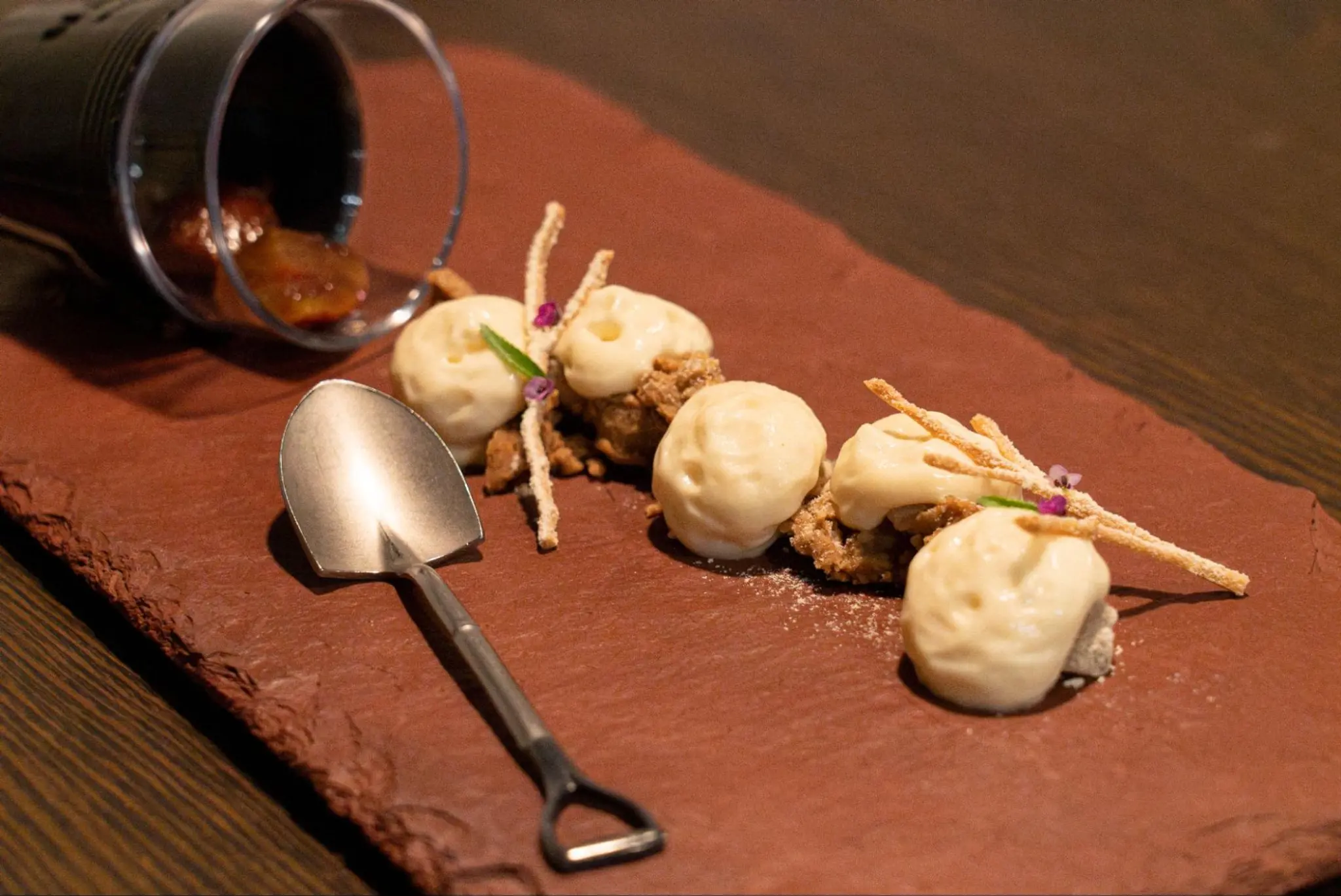
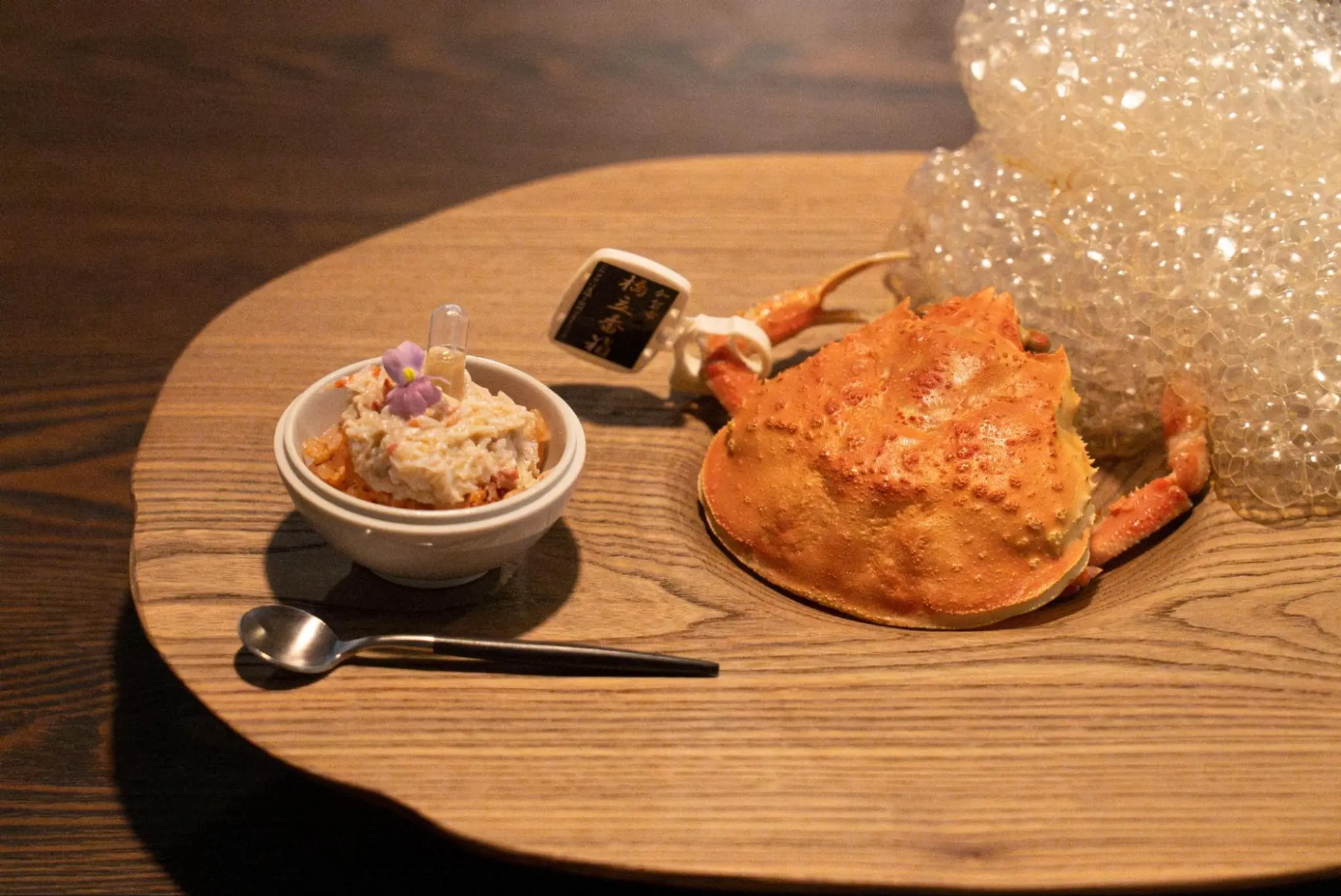
Yuji: We focus on balancing the ordinary and the extraordinary. For example, we might serve food in a steaming hot canned container or have guests open a supermarket bag to find their dish inside—experiences that you wouldn’t normally expect in a restaurant.
By placing familiar, everyday elements within the extraordinary setting of a restaurant, we create a unique and entertaining experience.
We also make sure to incorporate humor into our dishes. For instance, our "Nikujaga" (Japanese meat and potato stew) retains the traditional flavor, but we alter its appearance and texture. The contrast between how the dish looks and how it actually tastes is a key theme in our approach to cooking.
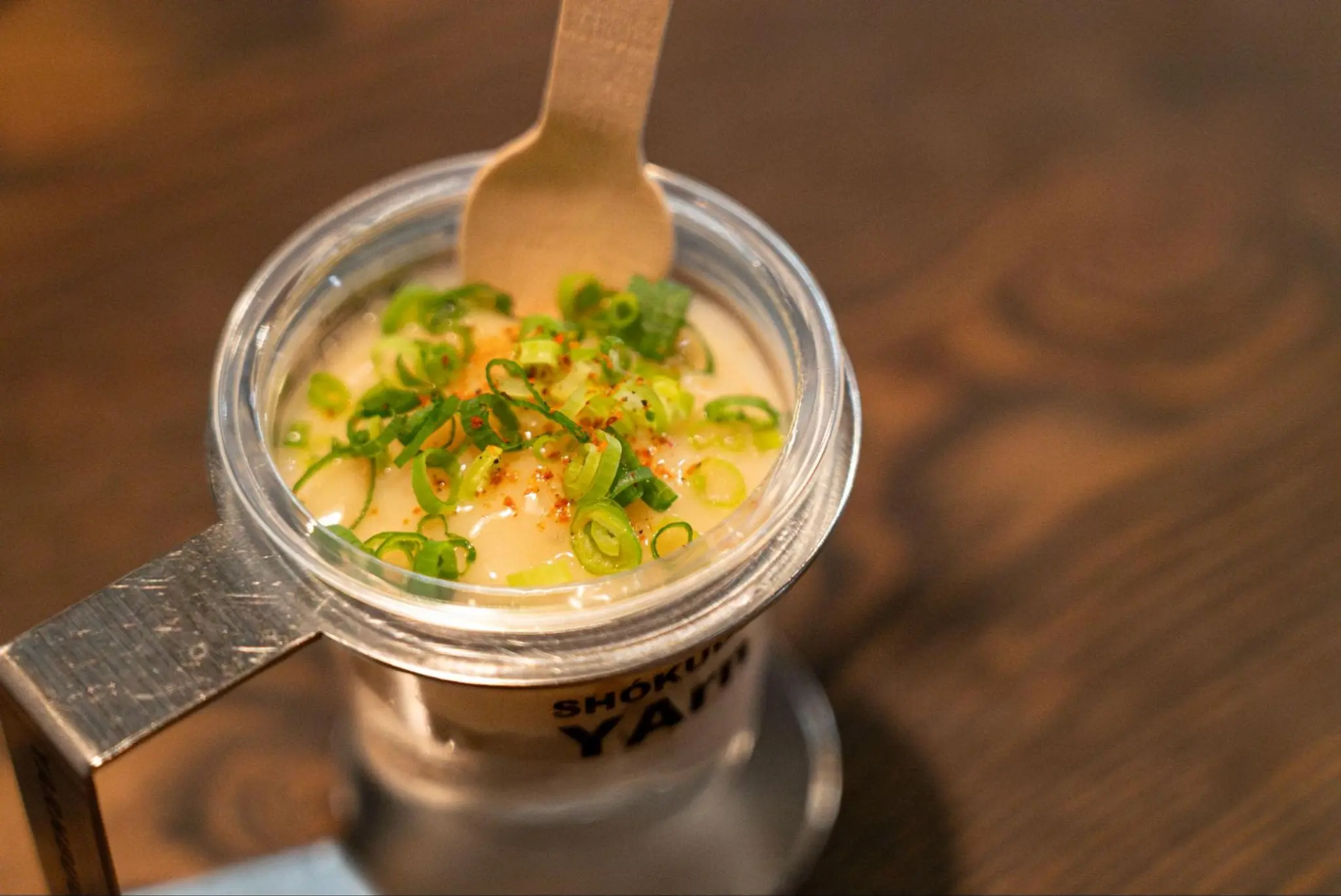
Asami: When structuring our course menus, we carefully consider how much contrast to introduce in each dish and how to balance the overall experience.
We base our dishes on flavors that provide a sense of comfort and familiarity, particularly those that resonate with Japanese sensibilities. This allows our guests to feel a subtle nostalgia when they dine with us.
Many of our ideas come from everyday life—often, we’ll think, "Wouldn’t it be fun to bring this experience into the restaurant?" and from there, we develop the concept into a dish.
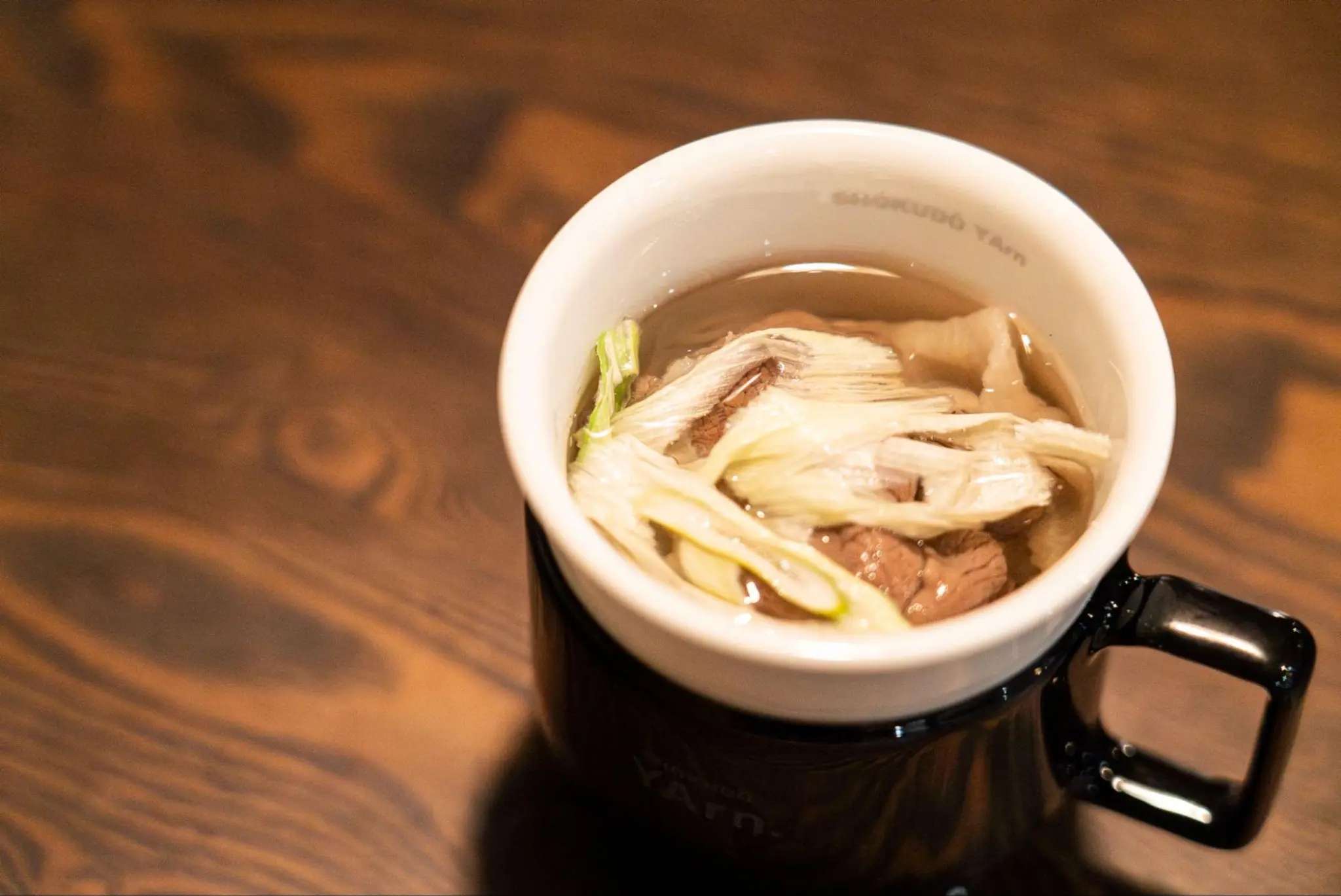
ーーーThe dish names on your menu are quite unique.
Asami:
I imagine that just looking at our menu, guests might not be able to tell what kind of dishes they’re about to experience. But that’s intentional—we want our guests to have fun with their dining experience from the moment they read the menu.
At first, we only made slight puns and wordplays in the dish names, thinking it would add a small touch of humor. However, we found that our customers really enjoyed it—some even asked, "Why isn’t this dish name a wordplay too?"
That led us to refine our approach and put more effort into making the dish names fun and engaging. We also take into account customer reactions and suggestions, so our menu names are constantly evolving.
While our dishes change seasonally, sometimes we keep the same dish but switch up its name based on the theme of the month. Some guests have told us that looking at our menu feels like waiting in line for an amusement park ride, which makes us really happy.
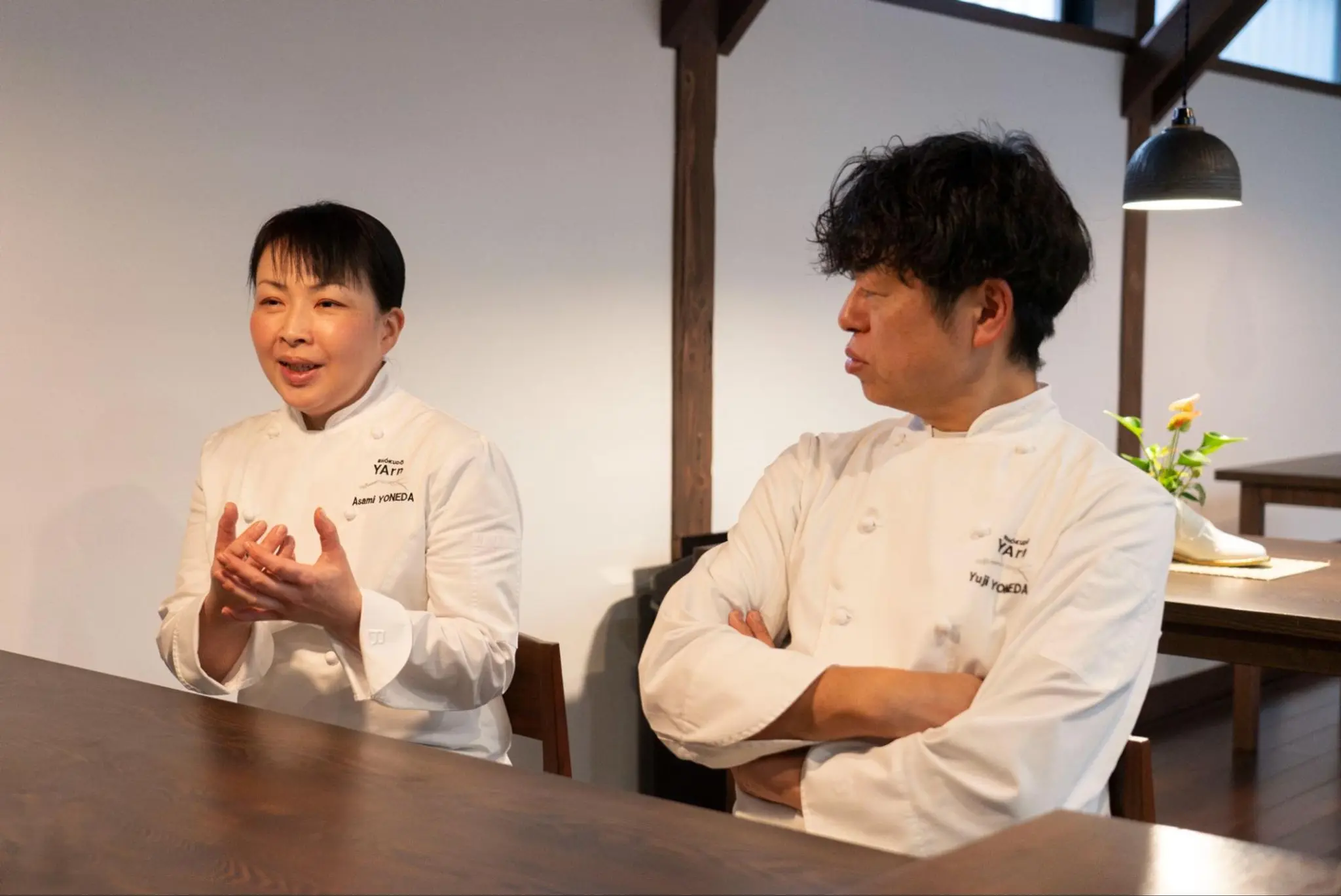
Yuji: Given the uniqueness of our menu names and overall concept, we initially expected our customer base to be somewhat limited to people in their 40s and 50s. However, in reality, we've had guests ranging from a 7-year-old child to a 103-year-old grandmother. Many families come and enjoy the experience together, which has been a delightful surprise.
ーーーHow did you establish relationships with your ingredient suppliers?
Asami: We started completely from scratch, searching for producers across different regions. Many of the farmers we work with produce only small quantities of crops, so we personally visited them, introduced ourselves, and gradually built relationships.
Most of our ingredients come from Ishikawa Prefecture, including produce from Noto, Komatsu, Nomi, and Nanao. We source our water from the sacred spring at Yatsumizu Kannonzan Reisuidō in Nomi City, and we use aromatic Noto cypress chopsticks.
We also use tableware crafted by local artisans from Ishikawa, with many of our wooden pieces made to order. For Kutani ware, we select simple designs that complement our dishes and enhance the dining experience.
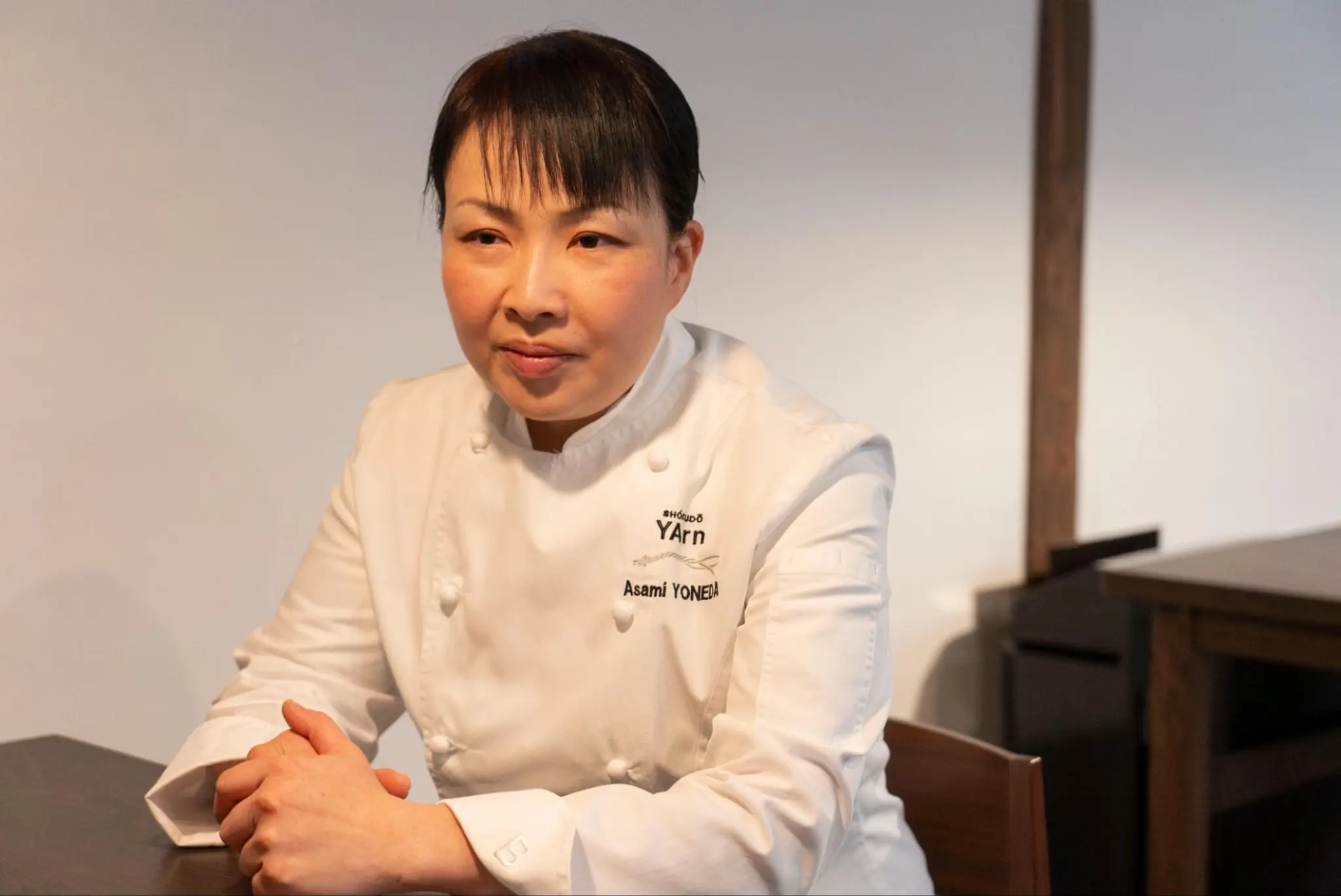
Yuji: We have used many ingredients from Noto, but some producers have been unable to continue their work due to the impact of the earthquake. Typically, when we serve a dish, we explain what ingredients are used. However, we also make a point of informing our guests about the ingredients that can no longer be sourced due to the disaster.
For example, the artisan from "Nakamae Saltworks" in Suzu City passed away, meaning that we can no longer obtain their salt. Similarly, Noto-grown watershield plants (junsai) are no longer available, and some pottery artisans had to leave Noto after their workshops were damaged. By sharing these stories, we hope to prevent the memories of the disaster from fading.
ーーーWhat do you focus on when expressing 【SHÓKUDŌ YArn】’s unique approach?
Yuji: In the culinary world, there are many dishes that are highly creative but require explanations to be understood. However, we believe that clarity is essential in food.
When we create test dishes, we have our staff try them, and if they don’t immediately react with the response we were hoping for, we scrap the idea.
Since we make somewhat unconventional dishes, we believe it’s even more important that the flavors of the ingredients come through clearly and that the intended expression of the dish is immediately recognizable. If it’s too ambiguous, it fails to communicate what we want to convey through our food.
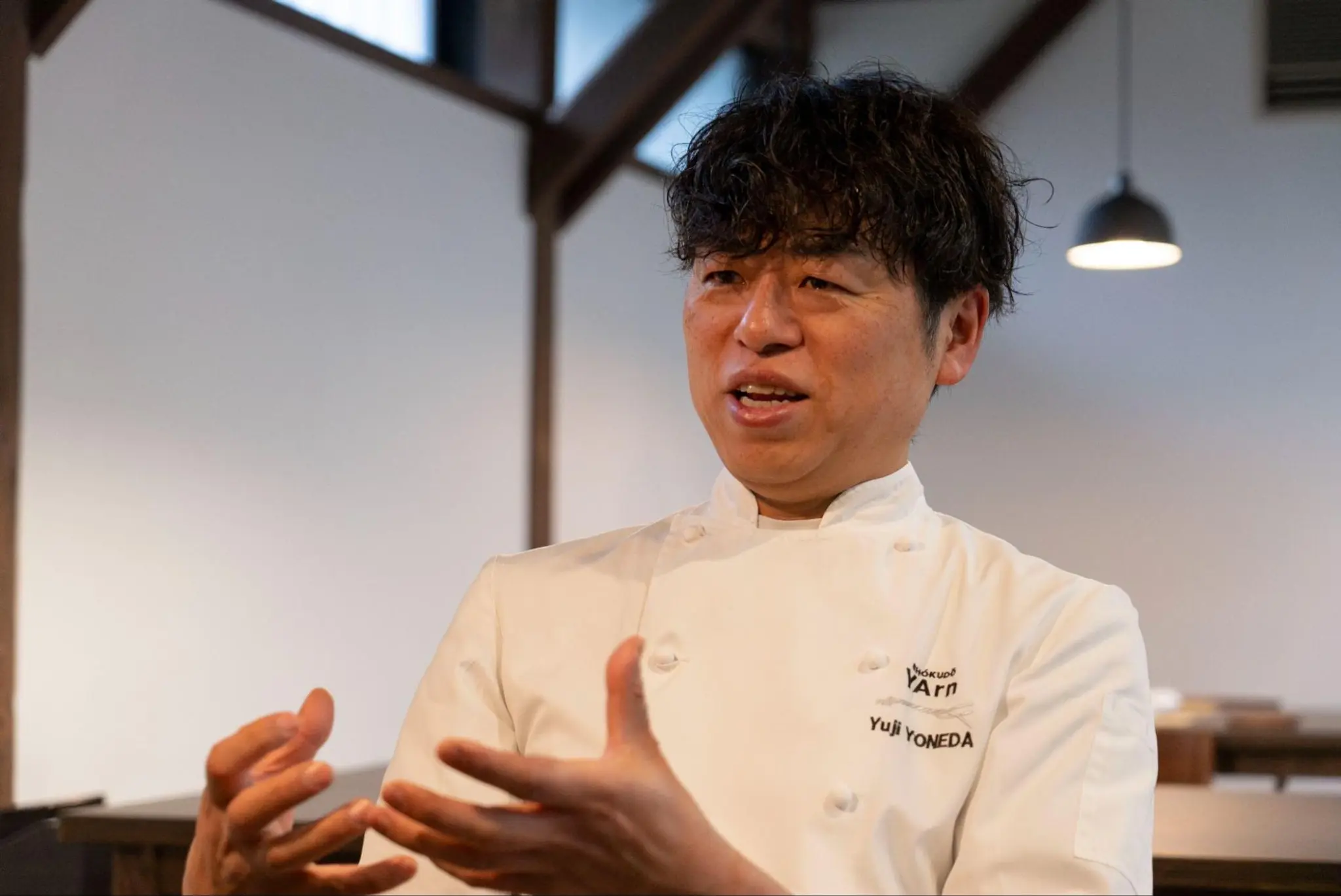
When I was in Spain, the world of avant-garde cuisine was constantly evolving, with new techniques and expressions emerging all the time. However, chefs often discussed how focusing too much on innovation while neglecting tradition could result in something hollow.
No matter how many advanced techniques are layered on, if there is no solid foundation, the dish ultimately lacks substance. That’s why we prioritize creating dishes that are rooted in a strong foundation while still allowing room for creative expression.
Bringing Smiles Through Food—For People Working Hard in Different Environments
ーーーHow do your three children react to having both of you as chefs?
Asami: Since we run the restaurant together as a couple, our children see it as a proper workplace and respect it as such. They have developed an interest in our work and understand what we do, supporting us in their own way.
Sometimes, we even invite them to dine at the restaurant. During the COVID-19 lockdowns, when schools were closed, they would come to the restaurant to study. Seeing them sitting at the wooden tables, it almost looked like a school classroom! (laughs)
That period also allowed us to spend more time with them, which was very special. There were times when I felt anxious about the gap in my career due to raising children, but watching them grow up made me realize that all the effort we put into this restaurant was truly worth it.
ーーーWhat are your future goals?
Yuji: Last year, we had the opportunity to provide meals at a senior care facility in Ehime, and the elderly residents responded so positively—they truly enjoyed the experience.
The foundation of our journey in cooking has always been the desire to bring smiles to people through food, to create moments of joy. With that in mind, we hope to extend this to more people, such as those in senior care facilities or children in pediatric wards who are battling illnesses. Even if just for a brief moment, we want to offer them a joyful experience through our food.
Every year, we close our restaurant for Christmas and invite children from a child welfare facility in Komatsu City for a special dinner. Since our second or third year in business, we have continued this tradition, hoping to provide comfort to children who might feel lonely during the holidays.
In the first year, many of the children were hesitant, their expressions serious, with strong preferences and a sense of caution. But over time, they began to smile more, dressing up for the occasion and telling us how much they look forward to it each year. Seeing this transformation made us realize how truly worthwhile this effort has been.
Going forward, we hope to continue using our food to bring smiles to as many people as possible.
ーーーFinally, what does "delicious" mean to you?
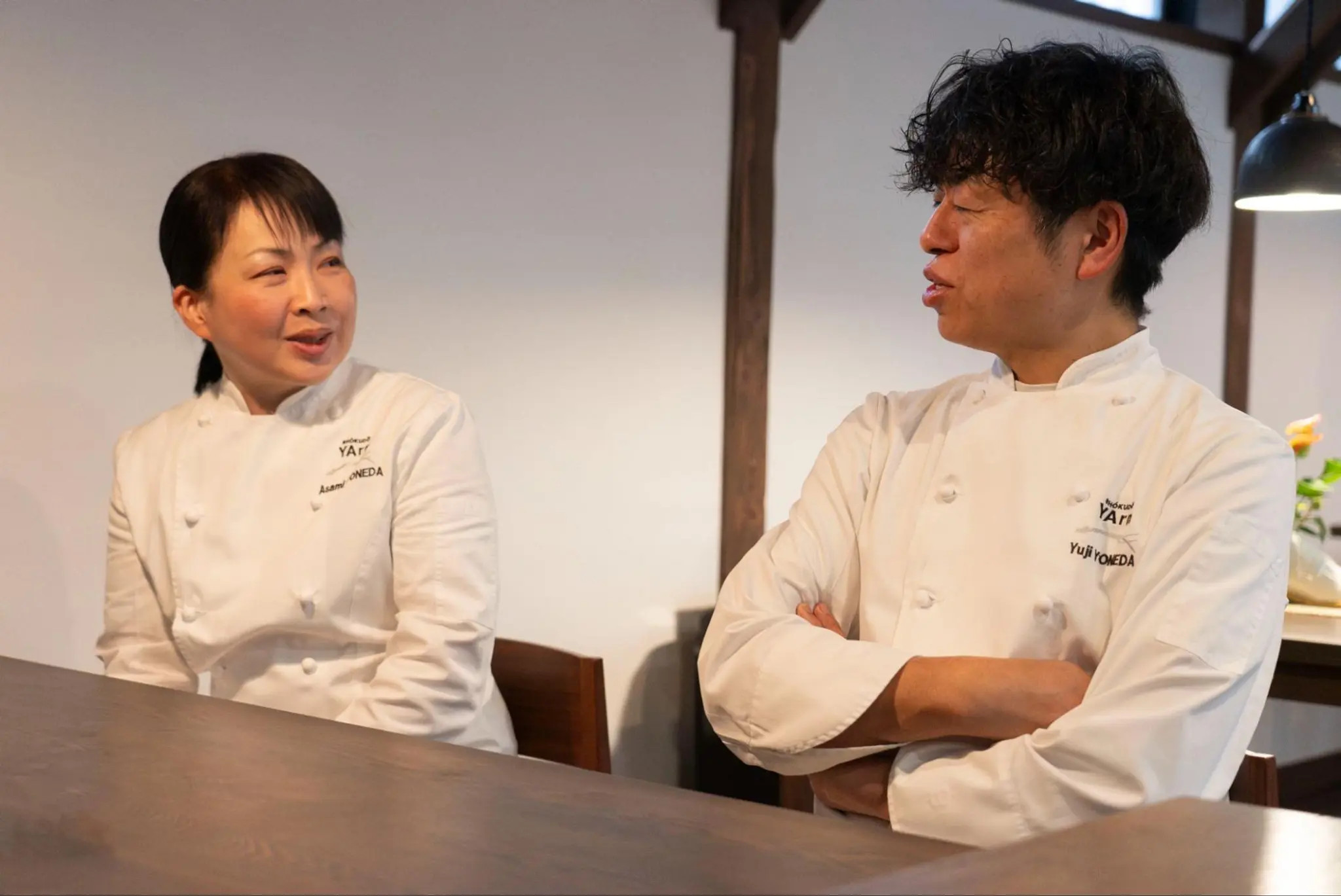
Yuji: To me, "delicious" is about having fun. Food tastes best when you're smiling and enjoying the moment.
People often say that a mother’s cooking is the most delicious, but what makes it different from other food? It’s the love and care that’s put into it. Even if a dish is perfectly executed, if there’s no heart behind it, it won’t truly be delicious.
I believe that the most important thing is that food carries a sense of thoughtfulness and emotion.
Asami: Even if a mother’s homemade bento is cold or contains frozen food, it still feels delicious because of the comfort that comes from knowing it was prepared just for you.
At our restaurant, many customers don’t just say, "That was delicious"—they also say, "That was fun." I believe that when people feel joy or a sense of warmth, it enhances the experience of deliciousness.
Moving forward, we want to continue creating dishes and hospitality in our own unique way, bringing smiles to our guests through the experience we offer here.
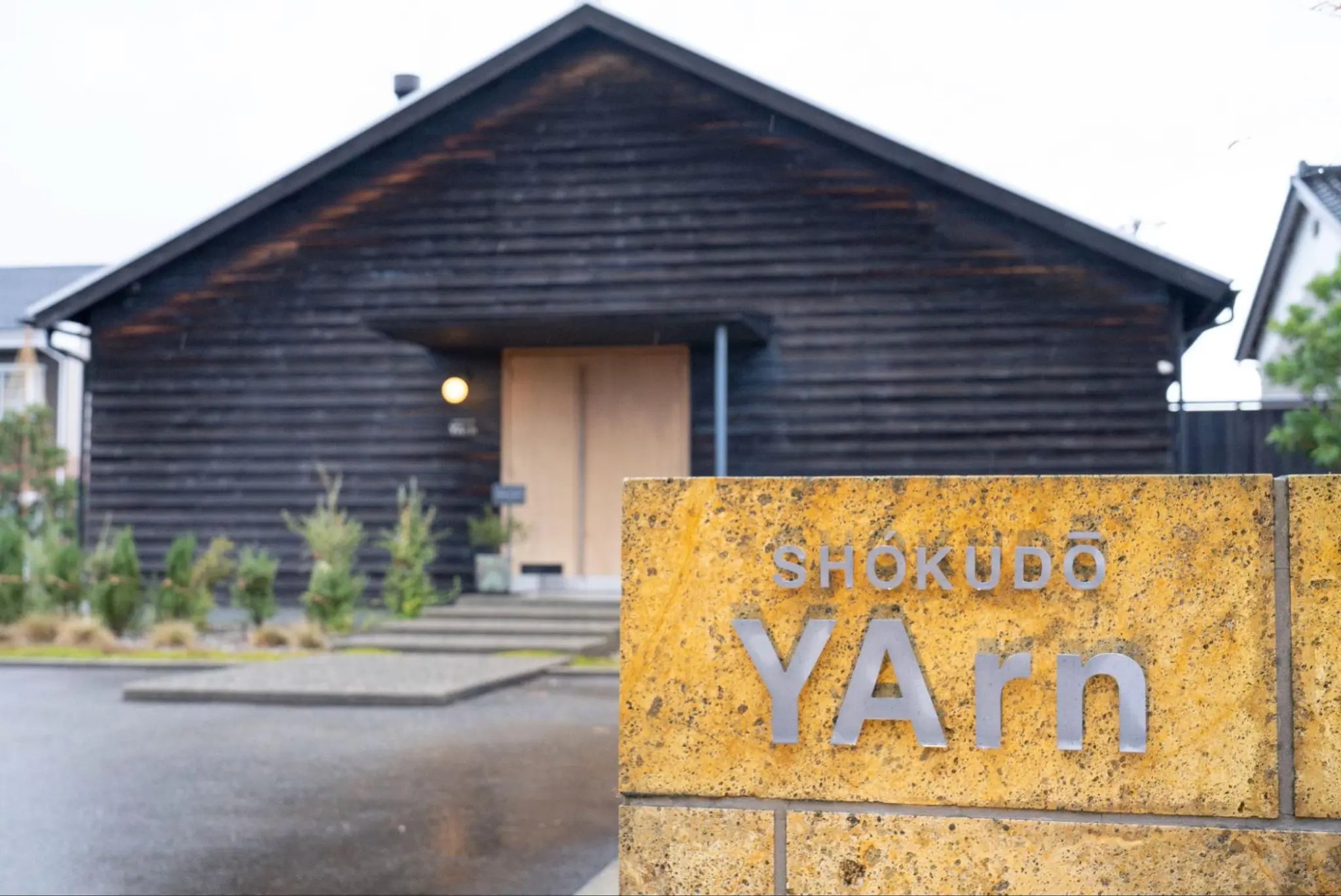
The name "Yarn" refers to spun threads, symbolizing the weaving together of various elements to create a culinary experience that can only be found here.
The unique dish names and the chef's playful presentations bring smiles to guests even before the food is served. And once they take a bite, the dishes’ simplicity and clarity of flavor showcase the precision and skill behind them.
At 【SHÓKUDŌ YArn】, every detail reflects the Yoneda couple’s deep passion for making guests smile and enjoy their meals. We invite you to fully immerse yourself in their world and experience the joy they have carefully woven into every dish.
Interview & Writing / Yuka Sada
Photography / Azusa Nakaoka
Restaurant Information
- AutoReserve Magazine
- Japan’s world-renowned flagship restaurant
- The Secret of Deliciousness in 【SHÓKUDŌ YArn】's Unique Style—Where a Husband-and-Wife Team Weaves Love into Their Cuisine
.jpg?format=webp)