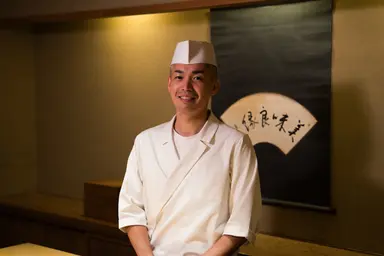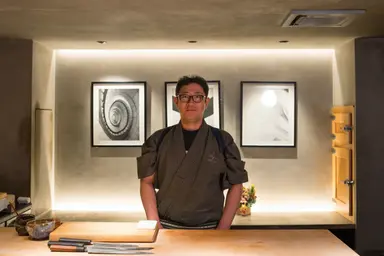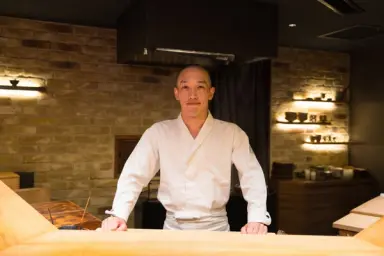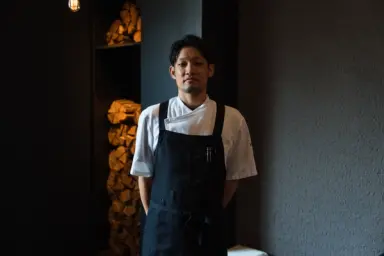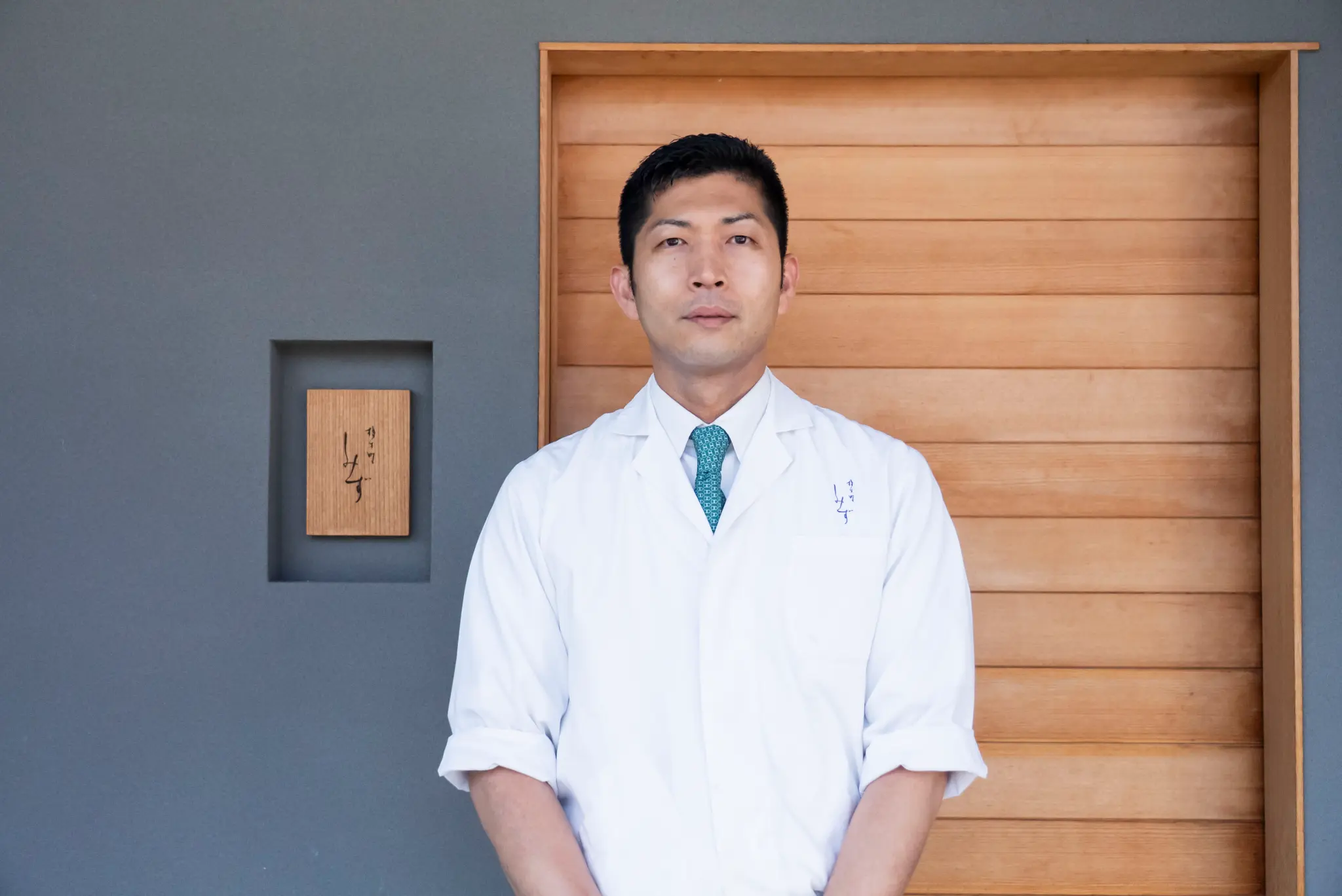
【Shumokuchou Shimizu】— Experiencing Japanese Culture Through Cuisine, Tableware, and Space by Chef Yousuke Shimizu
An Unwavering Passion for Becoming a Chef
ーーーWhat first inspired you to pursue the path of a chef?
Since both of my parents worked during my childhood, I often spent time with my grandparents. My grandmother loved cooking and would make a wide variety of dishes for us. As a child, I gradually began to feel that I wanted to cook delicious meals for my grandmother in return—that was the beginning. Later, when I was in elementary school, I watched the TV drama Aji Ichimonme, which deepened my interest in Japanese cuisine and strengthened my desire to become a chef. I’m the type of person who, once I decide on something, continues without wavering, so since then, my determination to become a chef never changed. In fact, even outside of cooking, I’m really stubborn in my personal life as well—I push through without changing my opinions, which sometimes makes people think I’m a bit difficult (laughs).
Learning Japanese Cuisine and Culture
ーーーWhere did you first work after starting your career?
After graduating from culinary school, I had the privilege of training at 【Honkogetsu】 in Osaka. In the beginning, it was utterly exhausting—every day felt like a battlefield. I had colleagues who were quick learners and extremely skilled, and compared to them, I struggled a lot and was scolded almost daily. 【Honkogetsu】 is a very high-level Japanese restaurant that has even received cultural awards, and it has been featured in publications such as “Honkogetsu: The World of Hideo Anami”. I was fortunate to begin my training at such an extraordinary establishment, and the experiences I gained there laid the foundation for the chef I am today.
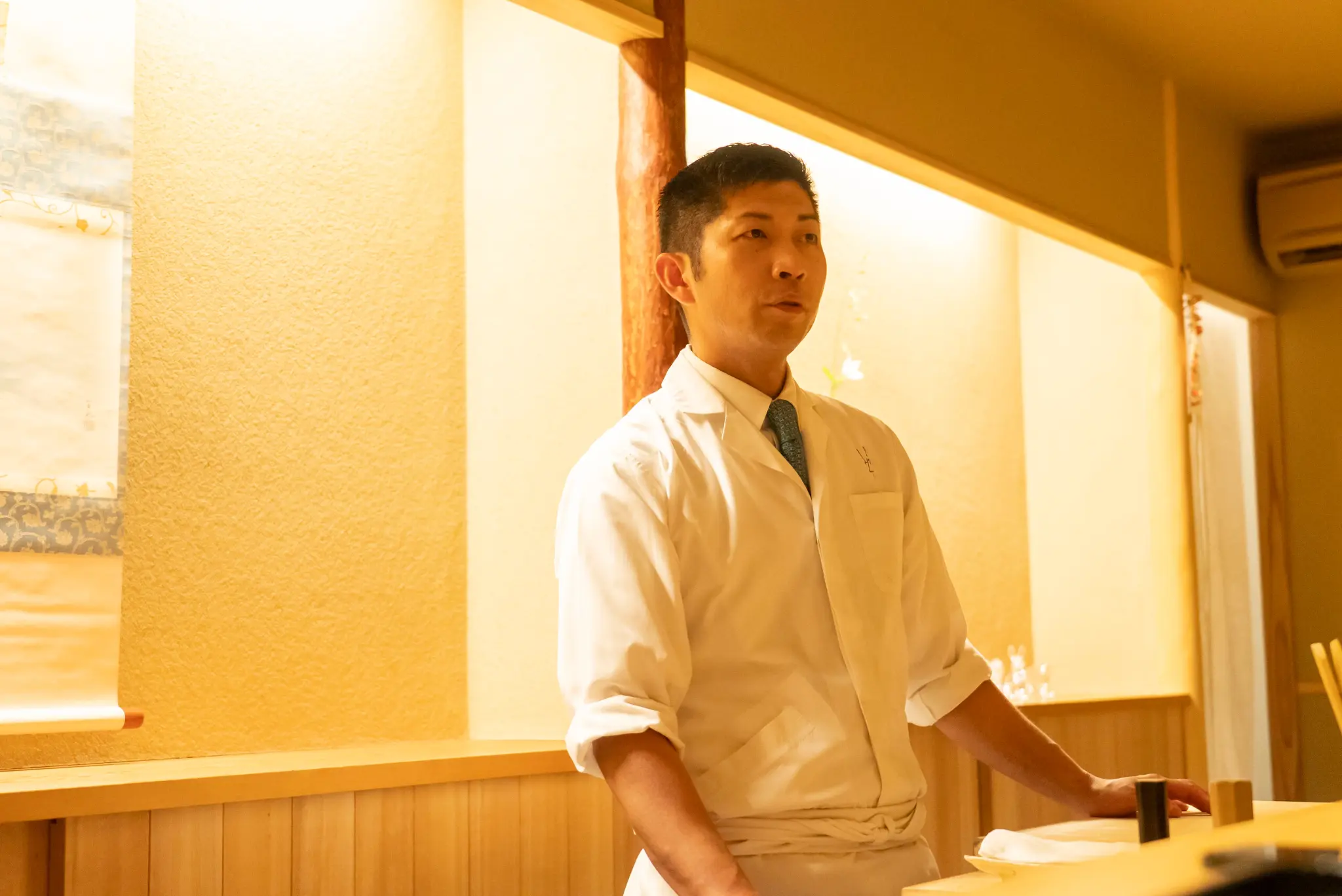
My mentor (the owner of 【Honkogetsu】, Chef Hideo Anami) often told me, “Become a true chef.” Of course, he emphasized mastering cooking techniques, but more importantly, he taught me to understand the culture and meaning behind them. It’s not just about making delicious food—when creating Japanese cuisine, it is essential to have a true grasp of Japanese culture. For example, the origin of kaiseki cuisine comes from the tea ceremony. If one were to drink thick tea (koicha) right away, it would be too strong and could upset the stomach. Therefore, the custom began of having a light meal beforehand—this was the beginning of kaiseki. What most people commonly see today as matcha is actually thin tea (usucha), but the original tea is much thicker, denser, and richer in consistency.
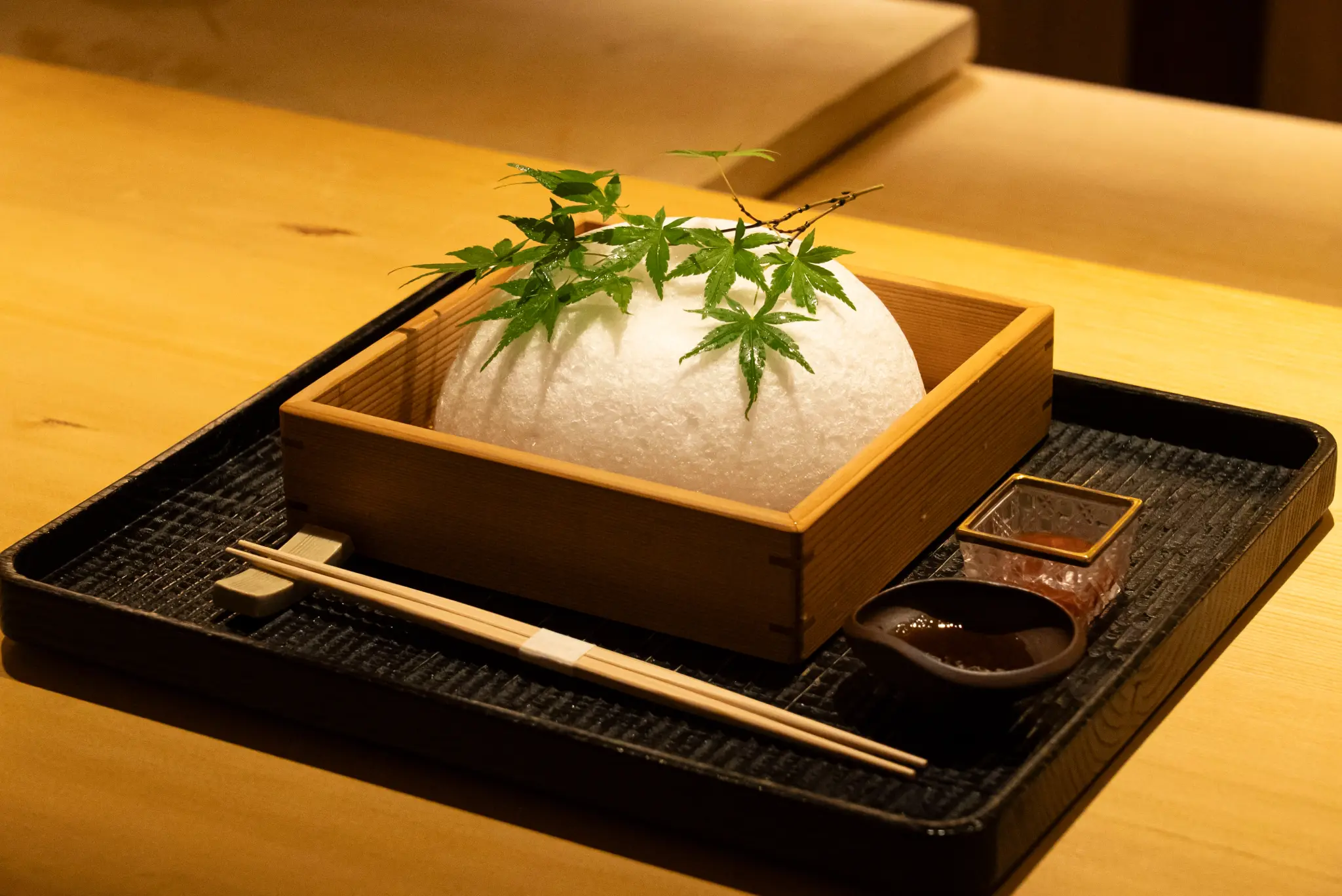
Japanese cuisine also changes throughout the year in harmony with the seasons and traditional events. For instance, according to the old lunar calendar, there is an event called Himuro no Sekku held on June 1st (which corresponds to July 1st today). It’s not very well known, but in this ceremony, ice that had been stored in icehouses by the Imperial Court was eaten as part of a purification ritual for safely passing through the summer. In the past, it was very difficult for children to survive the summer healthily, so people observed this custom to pray for their well-being.I was taught to cook while taking such cultural backgrounds into account. When using ingredients, it should not be for reasons like “because every restaurant is using it” or “because it’s sold at the market right now.” Rather, I must understand why a particular ingredient should be used in that season. Through this, I learned how to approach food, and acquired the cultural knowledge essential to preparing authentic Japanese cuisine.
ーーーWhat led you to open your own restaurant?
From the very beginning, I started my training at 【Honkogetsu】 in Osaka with the goal of eventually becoming independent. I had always envisioned opening a restaurant in Nagoya, and in order to study not only the local ingredients but also the regional geography and culinary culture, I went on to train at 【Takada Hasshou】 in Gifu. After spending 11 years at my first training ground, 【Honkogetsu】 , and then 6 years at my second, 【Takada Hasshou】, I finally achieved independence and opened my own establishment.
Led by Timing and Circumstance
ーーーCould you share the story behind opening your own restaurant?
After leaving【Honkogetsu】 , I had planned to become independent after three years of training in Gifu. However, I was given the opportunity to serve as head chef at 【Takada Hasshou】. I decided to take on that responsibility for three years and continue my studies there. Afterwards, although it happened to be during the COVID-19 pandemic, I had already resolved to open my own restaurant, so I went ahead with it as planned.
It was purely by chance that I ended up opening my restaurant in Shumokuchou. I knew that this Shirakabe area of Aichi Prefecture was home to many refined residents, and I thought the location was quiet and ideal, so I immediately decided to open here. It wasn’t that I had a particular attachment to this land—it was simply a matter of circumstance. There was a vacant first-floor space in a condominium that had never been rented to any tenant. Apparently, the owner had planned to use it as an office, but the real estate agent recommended it to me. Since it was completely empty and in a condition where I could personally make all the necessary modifications, I chose this place. Honestly, I can only say it was pure luck. At the time, there were still many famous restaurants nearby (though some have since relocated). After opening, customers often said to me, “You really found such a great location.” As the years have passed, I’ve come to truly feel that I was blessed to encounter such a wonderful place.
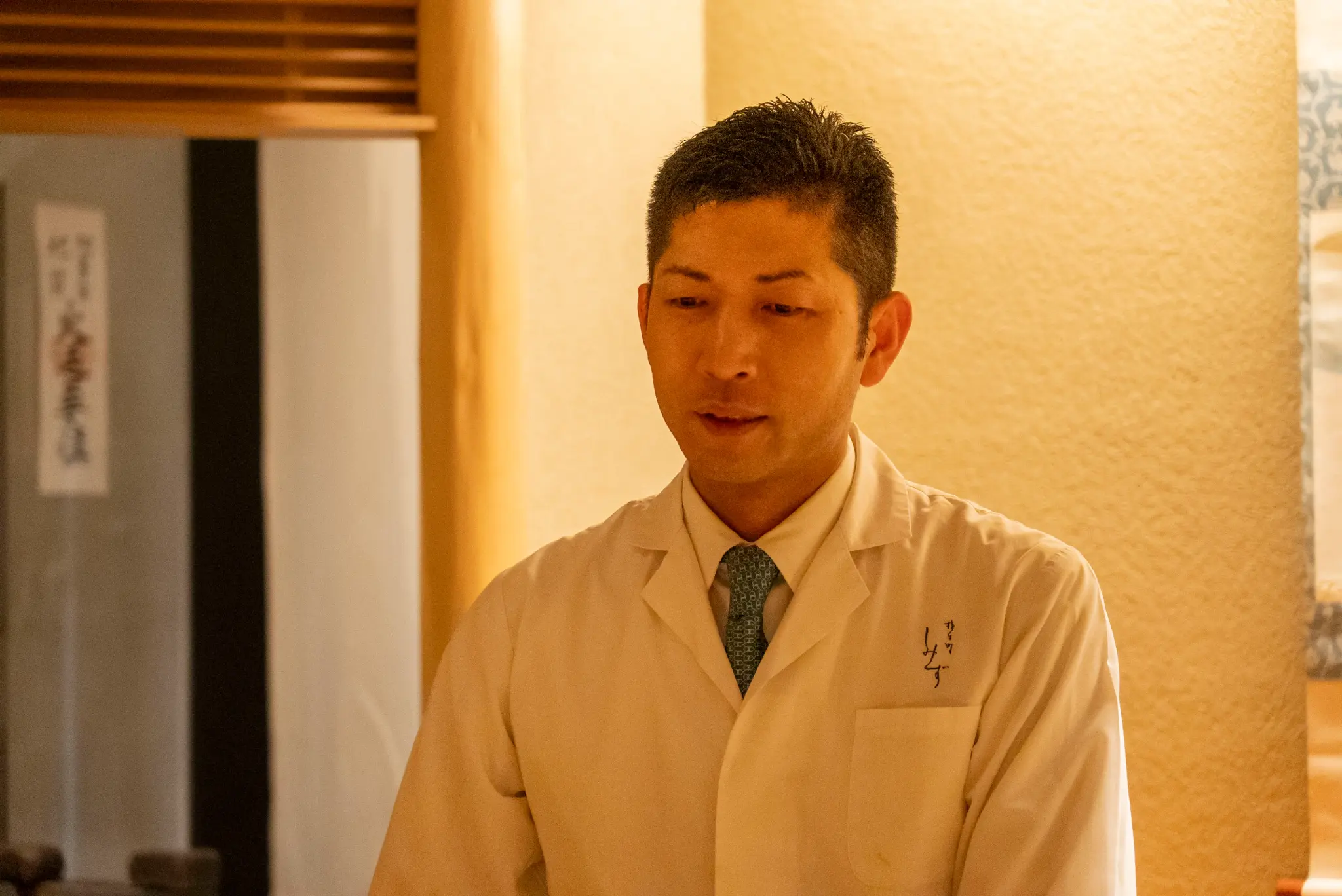
Nowadays, I have apprentices who support me, which has given me more opportunities to speak directly with guests. But in the beginning, I was making every single dish by myself, so I had no leeway for that, and all of the service was entrusted to the okami-san (my wife, who manages the front of house). Since I tend to immerse myself in cooking, I wasn’t able to appear in front of guests very often—and even now, there are times when I’m hardly out there. The okami-san communicates with customers across the counter and manages everything smoothly. I truly owe it to her.
ーーーDo you have any particular commitments when it comes to ingredients?
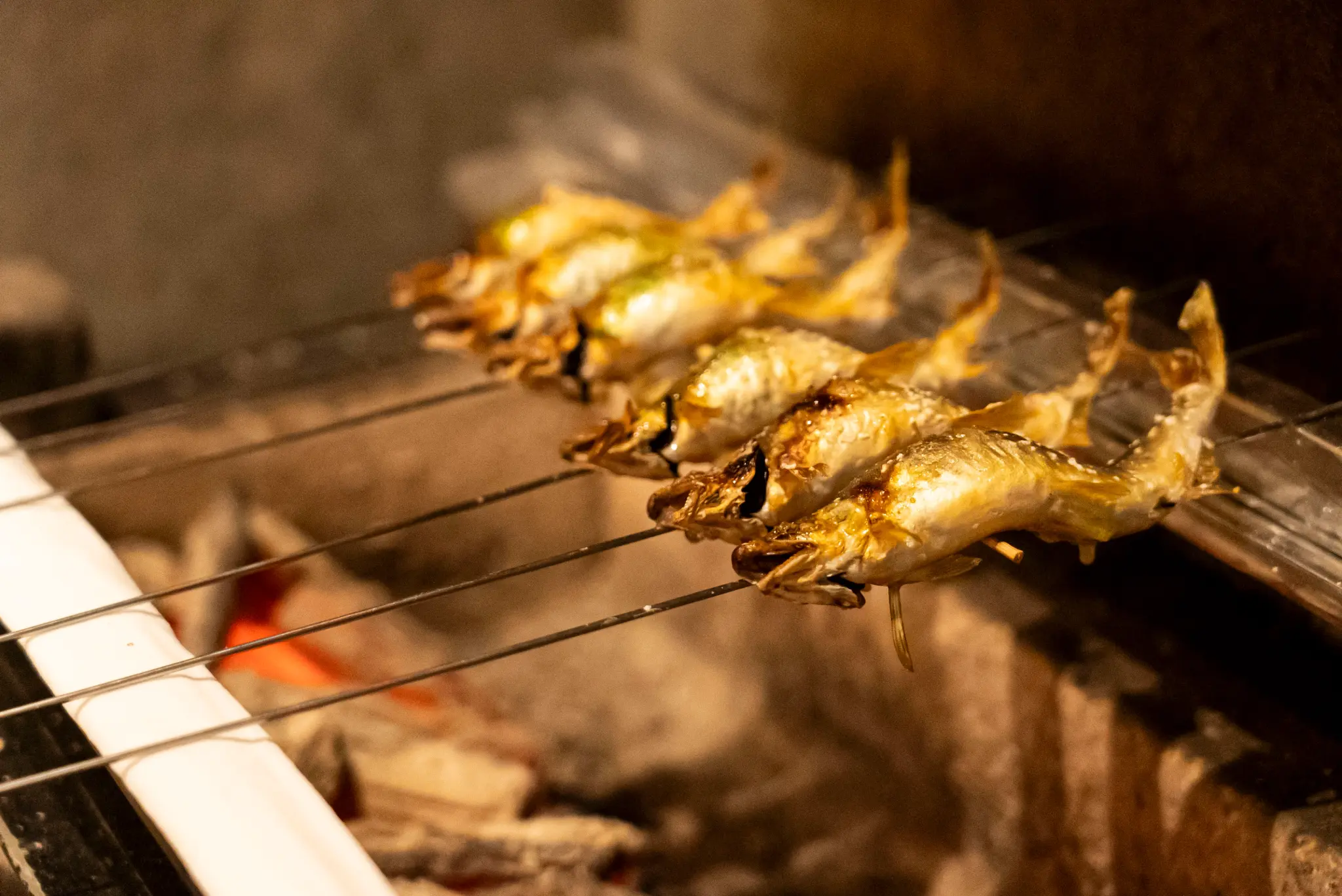
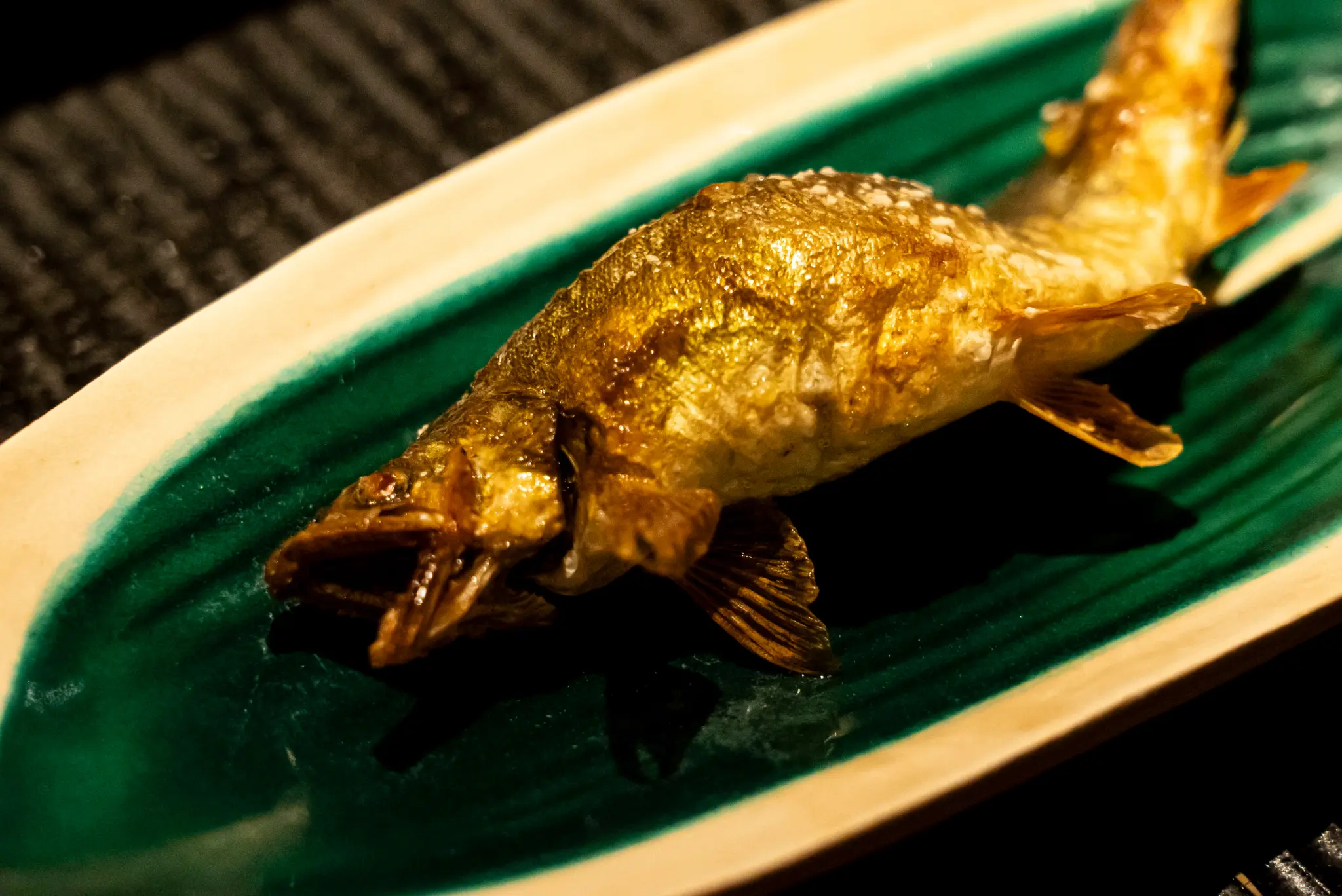
Since I’m from Gifu, I also use ingredients from my hometown, such as Wara Ayu sweetfish caught in Gujo Hachiman. Gifu is famous for its delicious ayu. Wara ayu has won the most Grand Prix titles at the “Ayu Tasting Grand Prix” and I procure it directly from the fishing cooperative of the Wara River. Last year (2024), it even won the Runner-up Grand Prix. As for other ayu, I’ve relied on a nearly exclusive master ayu fisherman since the very beginning of my restaurant, and I continue to request his catch every year.
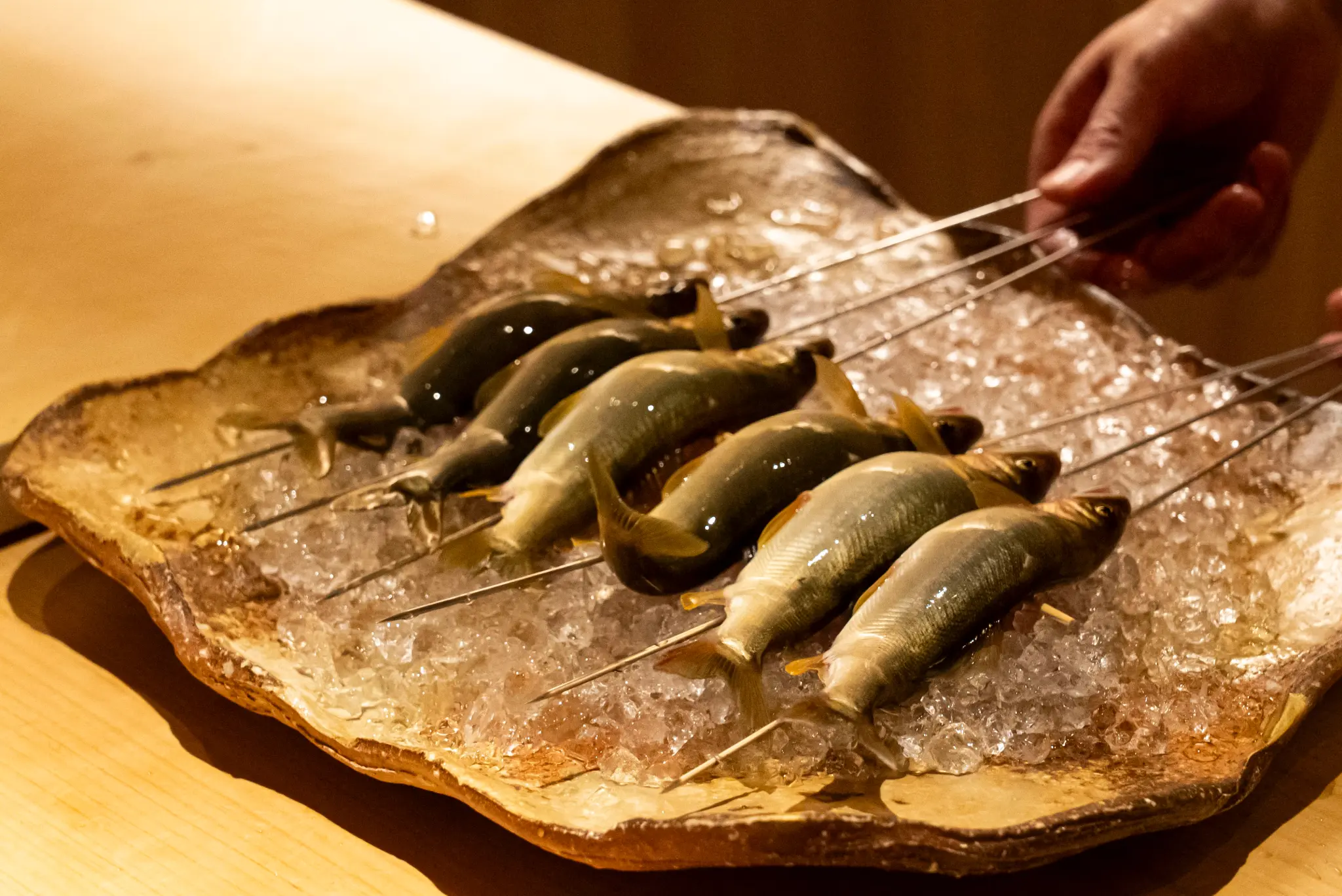
ーーーSo there really is a master ayu fisherman! About how many fish does he usually catch in a day?
It varies, but there’s never a day when he catches none (laughs). While others might only catch a few, the master can haul in 30 to 40 fish in the same time. I even heard that once an elderly fisherman who had been fishing there before him got so frustrated that he yelled, “Don’t you come here anymore!” (laughs). In a sense, it’s almost like he’s depleting the fishing grounds (laughs).
Creating a Space Where One Can Feel the Shifts of the Seasons Through Tableware and Atmosphere
ーーーWhen it comes to creating your restaurant, what aspects do you pay particular attention to?
For the interior design, I entrusted the work to Kyoto-based architect Mr. Tetsu Kijima. While being shown the interiors of various restaurants, I found his designs especially remarkable. His restaurant spaces carry a dignified and tense atmosphere, yet at the same time, they evoke warmth and a sense of calm. Both the okami-san and I were deeply drawn to that quality, and through acquaintances, we were introduced to Mr. Kijima.
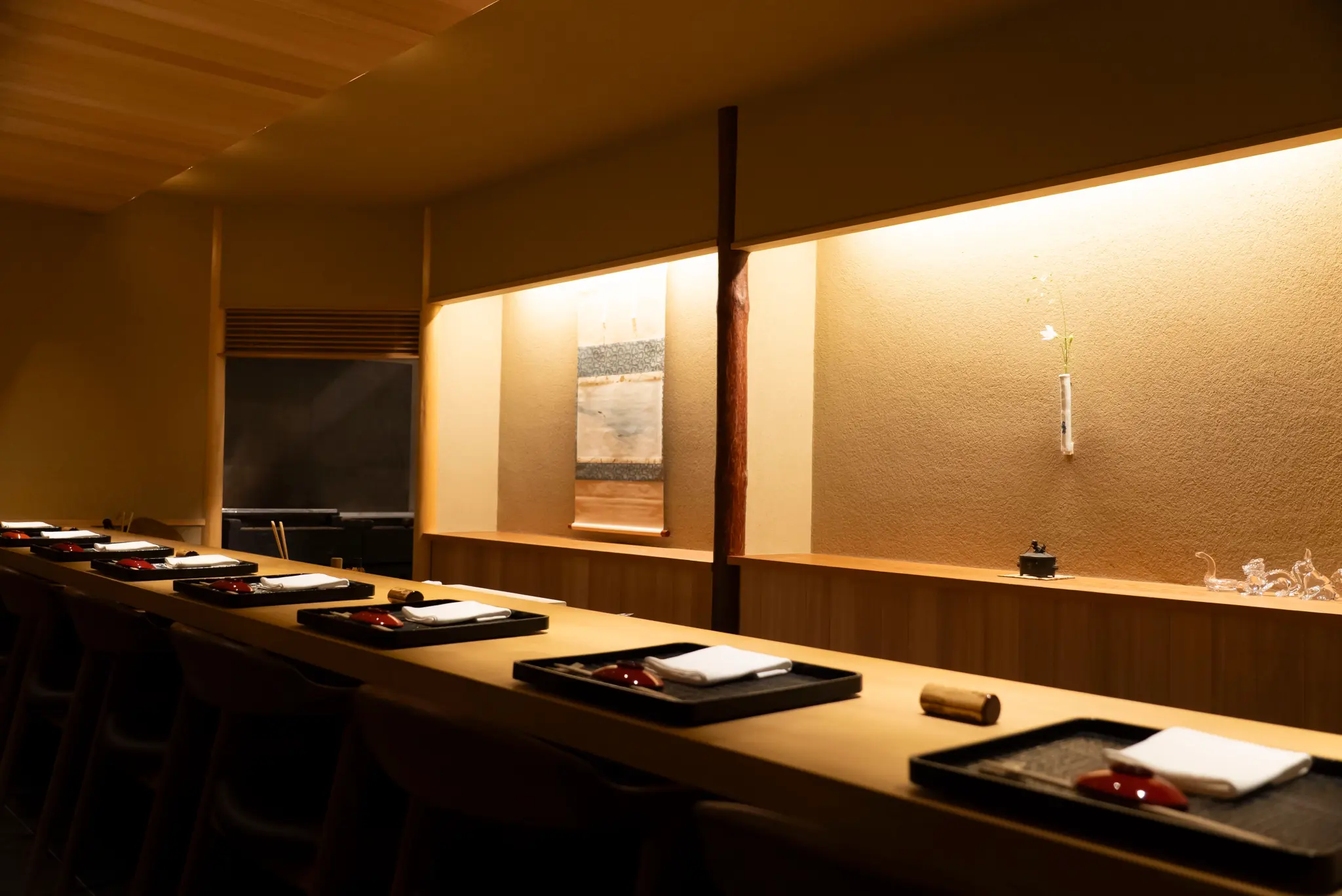
I also burn incense and try to keep the space as uncluttered as possible. When things feel messy, it becomes uncomfortable, so I consciously maintain a simple, clean environment. Since last year, I’ve finally been able to purchase hanging scrolls (jiku), whereas before I would display flowers or Saga masks (amulets used to ward off evil). Now that I’ve collected a decent range of tableware, I’m at the stage where I’d like to start refining the overall interior arrangements. There are still many aspects I want to improve, and I certainly don’t yet have enough tableware. Because the menu changes every month, I need to completely change the tableware as well. In Japanese cuisine, there are so many pieces that can only be used in a specific month. For example, lilies for June and July, or perhaps the most recognizable—kashiwa (oak) dishes for May. The reason oak leaves are used during Tango no Sekku (Boys’ Festival) is that oak leaves do not fall until the new leaves grow in. Once the next generation arrives, the old leaves fall away. This symbolizes the smooth passing of generations, which is why oak leaves are incorporated. In this way, tableware is always matched to the season or the festival, so I constantly find myself needing to purchase more.
ーーーDo you have any particular standards when choosing tableware?
I try to balance both antique pieces and modern works when composing a course. This, too, was a teaching from my mentor at 【Honkogetsu】. He told me that while it is impressive to serve everything on antiques—like 300-year-old pieces or works by Rosanjin—if that’s all you use, it can actually overwhelm the guests. When every dish is presented on centuries-old antiques, guests may feel pressured, and the tableware starts to overshadow the food itself. By incorporating modern pieces alongside antiques, the flow of the course feels more natural. I was taught that this balance makes the overall dining experience more comfortable. So, I make sure not to lean too heavily in one direction. Just as I carefully structure the flow of the dishes, I also consciously compose the flow of the tableware.
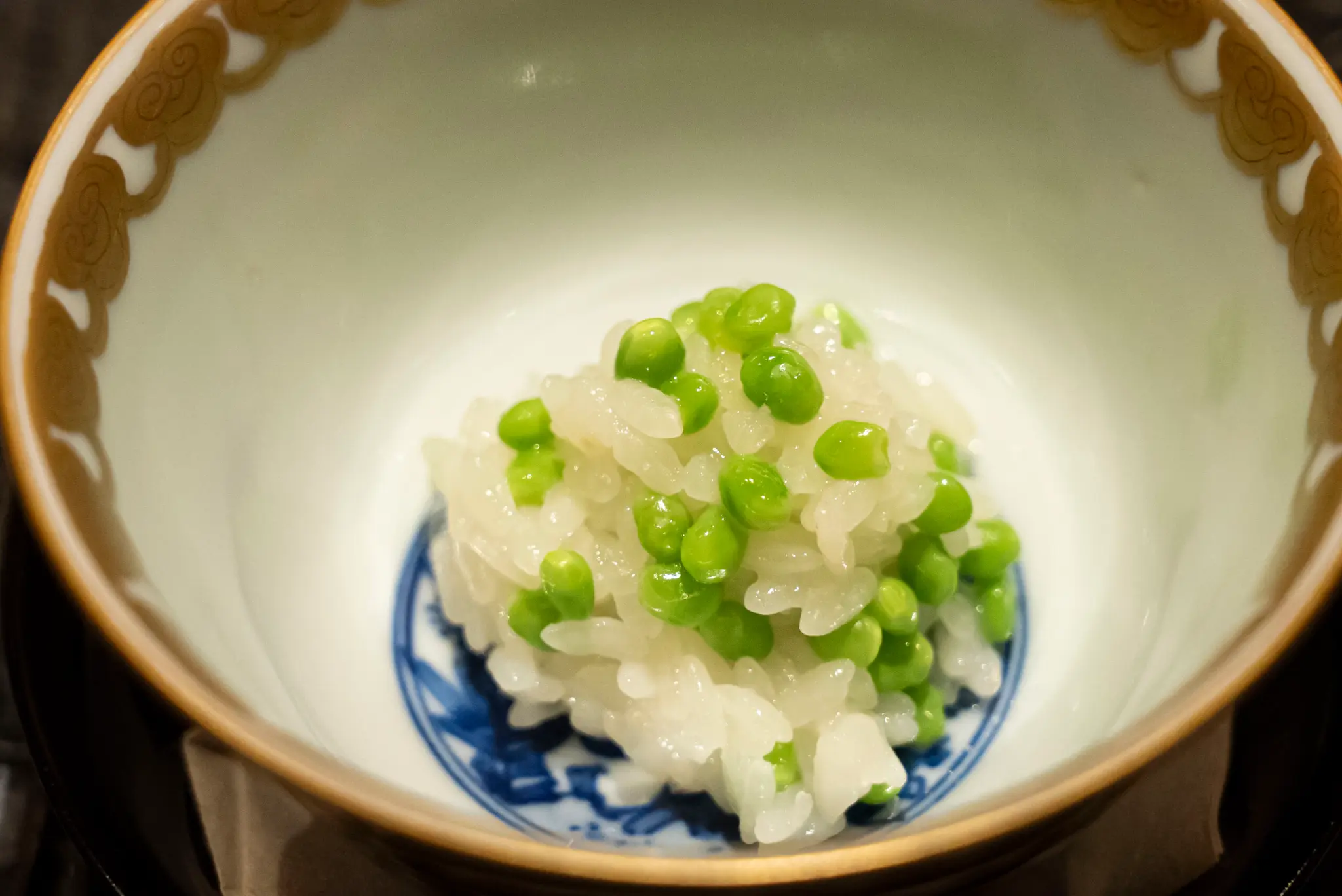
The tableware I’ve been collecting mainly centers around Raku ware from the “Senke Jisshoku” (the ten crafts families who have served the Sen tea schools for generations). Since I once studied tea ceremony, I’ve developed a particular fondness for the works of the Raku and Eiraku families. I had already been collecting many pieces from the Eiraku family, and more recently, I’ve finally been able to start gradually acquiring works from the Raku family as well.
It’s all really just hand-me-down wisdom from my mentor—I’m simply putting into practice what he taught me. And in the same way, I pass those teachings on to my own apprentices. Some of them have 【Shumokuchou Shimizu】 as their very first training ground, so I tell them, “Make sure you master these things properly now, so you won’t regret it later,” while also conveying to them the spirit and mindset that a chef should uphold.
Valuing Expressions That Reflect the Season
ーーーWhen it comes to your cuisine, what do you place the most importance on?
Recently, guests often tell me, “You’ve been using more of these ingredients lately, haven’t you?” But I don’t adhere strictly to the concept of local production for local consumption. If I were to limit myself to that while creating traditional kaiseki cuisine, the scope of what I could express through food would become too narrow.
There are times when I want to use a particular ingredient in a given month, but it may not be available locally, or various circumstances such as traditional events make it restrictive. I believe that local production for local consumption is a truly admirable approach, but for me, my goal has always been to create courses that incorporate the seasonal culture of each moment. That’s why I haven’t deliberately focused on sourcing everything locally. As a result, it just so happens that I’ve ended up using many local ingredients. Over the years, I’ve come to know farmers in Aichi as well as local fish suppliers, and naturally, the amount of regional ingredients in my cooking has increased.
I also try to use ingredients from Gifu whenever possible. As I mentioned earlier, I mainly serve Wara Ayu. Around June, I sometimes prepare an ayu tasting—serving two different kinds from separate regions within Gifu—so that guests can experience firsthand just how distinct the flavors can be, even among ayu from the same prefecture.
Wanting Guests to Rediscover the Traditions and Culture Passed Down Through Generations
ーーーWhen you change your menu each month, what guiding principle do you base it on?
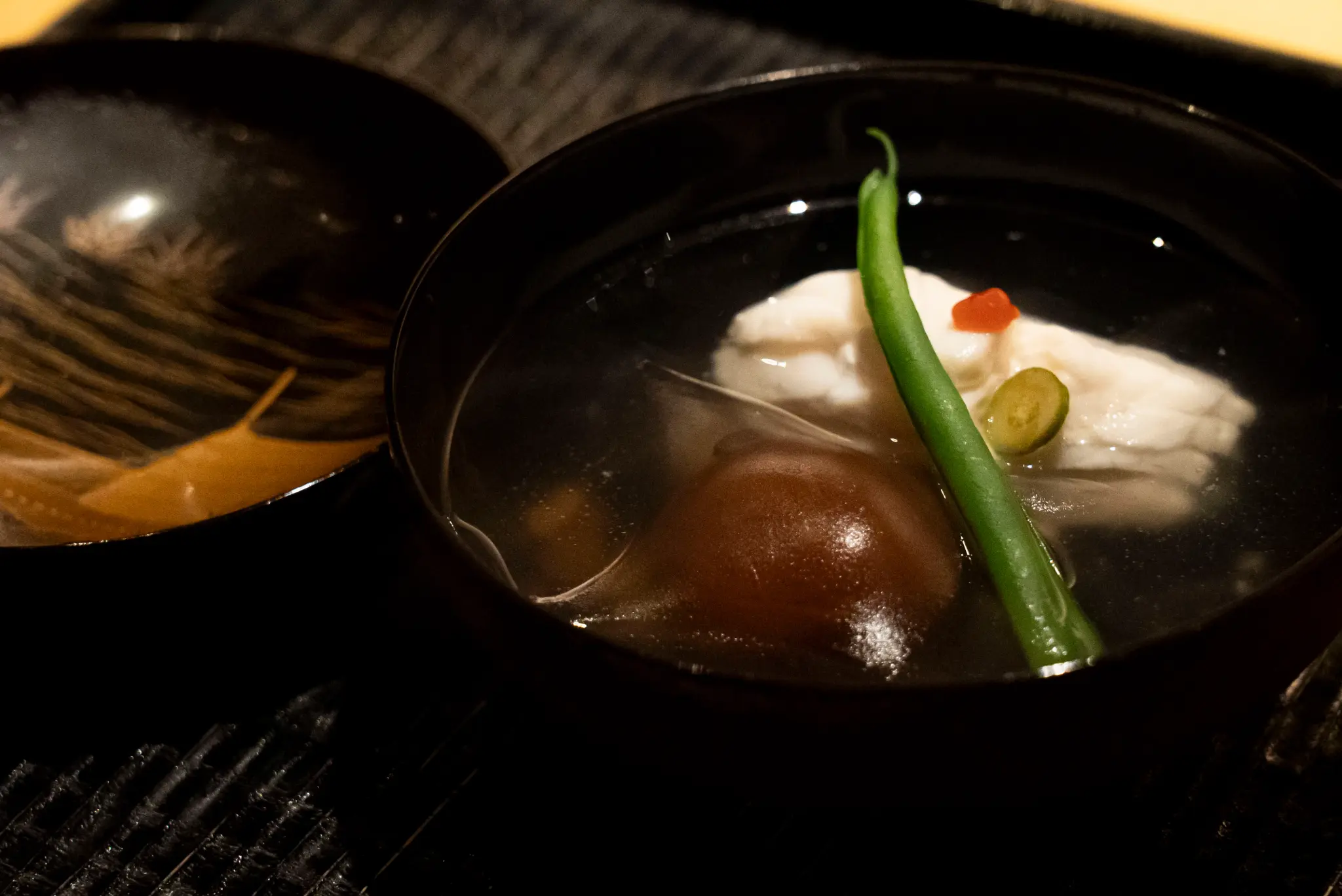
I begin by thinking about the cultural events of that particular month. For example, in July, there is Tanabata, so I start by asking myself, “What do people do during Tanabata?” From there, I expand the idea—since it’s the hot season, what kind of dishes would help guests feel cool and refreshed? Which ingredients should I use, and how should I prepare them? In Japanese culture, the foods we eat are closely tied to traditional events. For instance, during certain occasions, people eat specific ingredients to pray for health and safety. There are many foods with symbolic meanings—whether as good-luck charms or as expressions of wishes—and I like to incorporate such elements into my dishes.
ーーーDo you have any thoughts on your future outlook?
I truly feel that I am still in the midst of a process of change, so every day I think about how I can grow and make things better. I don’t believe the flow of my courses is perfected yet, and I’m certain there’s room for improvement. I want to keep refining everything further. It’s all about maintaining the spirit of daily dedication and continuous self-improvement.
Passing Down the Culture and Spirit He Has Inherited to the Next Generation
ーーーHow do you approach teaching your apprentices?
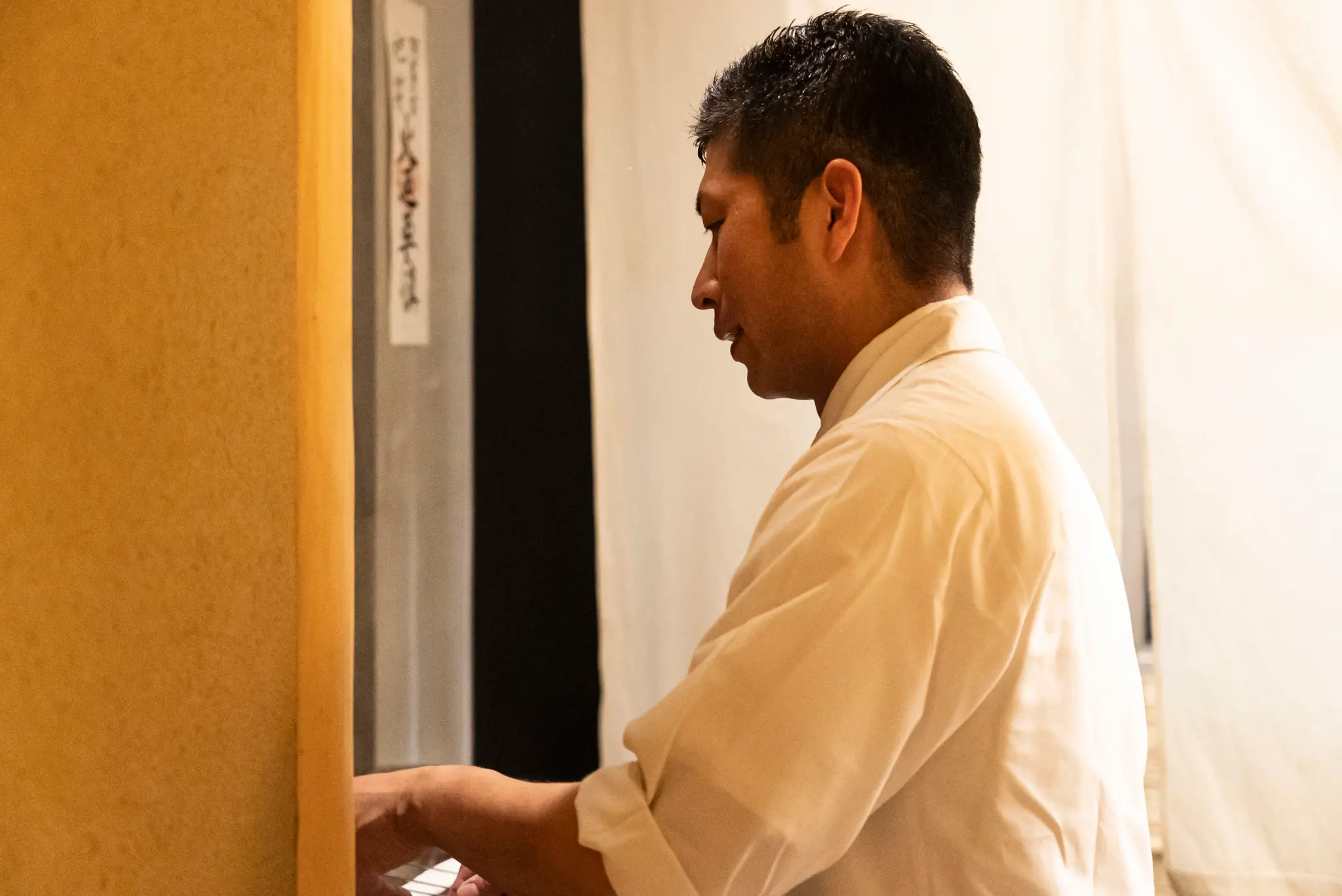
I teach them to thoroughly understand the cultural background and the meaning behind why something is done. When you’re in the middle of learning, you often don’t realize how useful knowledge or teachings will be. But later, once they’ve taken root and you can carry them out naturally, that’s when their true importance becomes clear.
And I tell them to value each and every task, to “put your heart into the food.” Of course, what ingredients you use is important, but ultimately, food carries the feelings of the one who prepares it. Even when using the exact same ingredients, the taste can turn out completely different depending on the chef’s state of mind. I want them to have respect for the producers. Sometimes we are entrusted with ingredients that are not normally available, and it is thanks to those ingredients that we are able to create our dishes. That sense of gratitude is essential. The very presence of guests who come all the way to dine with us is also something I deeply appreciate. As chefs, we have the role of carrying the spirit of the producers and delivering it to our customers through cuisine. When I cook, I always ask myself whether I am doing justice to the ingredients that were so carefully raised or harvested, whether I am truly honoring the producers by serving food that is worthy of their efforts. I put my whole heart into ensuring that I never disregard their devotion.
ーーーLastly, what does “delicious” mean to you?
For me, it’s a given that the food itself must be delicious—but beyond that, I believe elements such as the atmosphere and the people you share the meal with also play a role. Dining is not just about the dishes; it’s a complete service that includes the space and the hospitality. When everything comes together, it leads to the thought, “That was wonderful—I’d love to come back again.” If the food is delicious but other aspects are neglected, the impression becomes, “The food was good, but…” I often hear customers say that about other places. I don’t mean it in a negative way—after all, that too is a valid form of dining experience. But personally, I prefer when the reason someone wants to return is a positive one, like, “I want to come back because of this particular experience.” That’s the kind of motivation I find most rewarding.
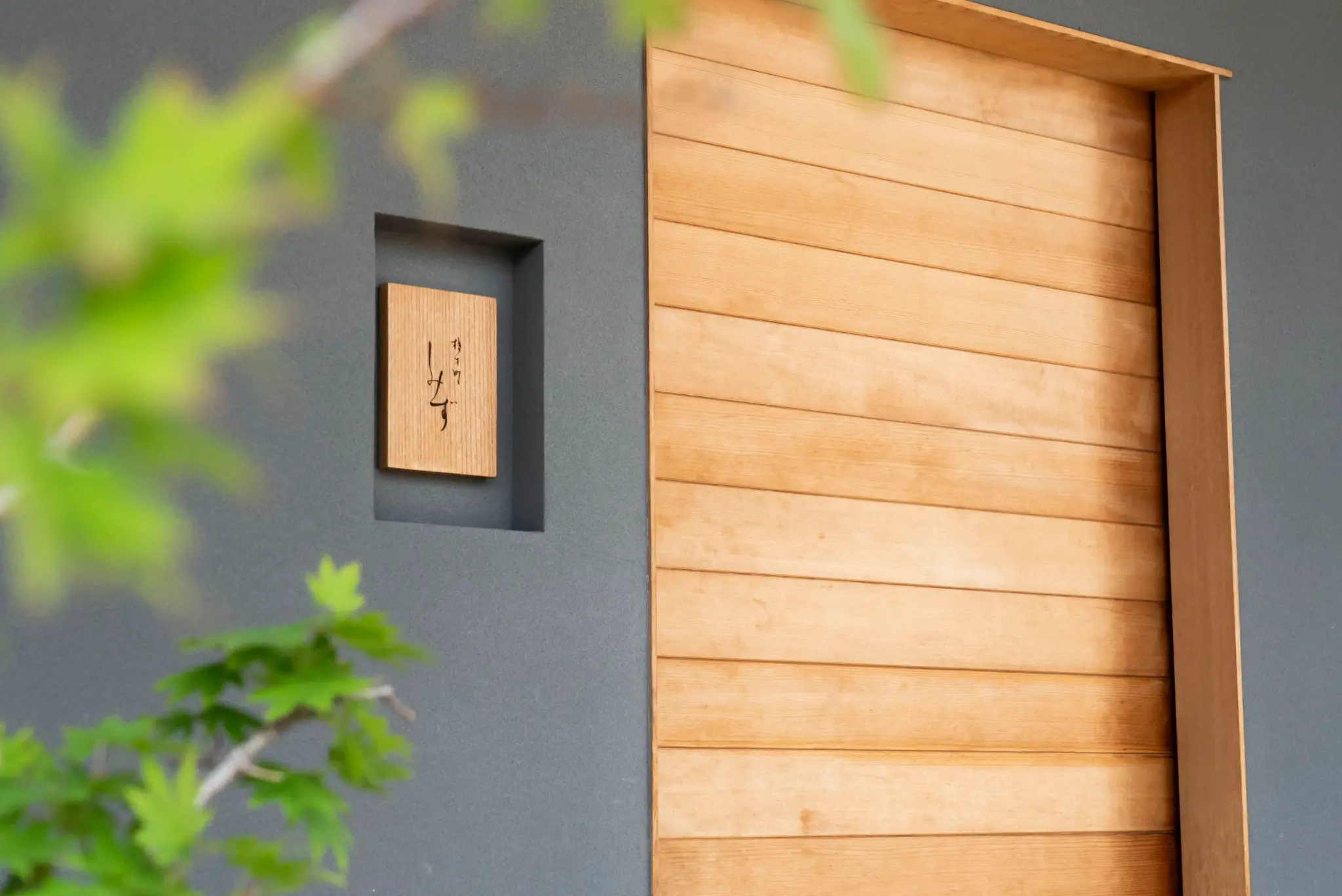
Chef Yousuke Shimizu’s Japanese cuisine, imbued with an understanding of Japanese culture and traditions as well as a deep respect for producers, is more than just delicious food—it is cuisine with meaning, and perhaps even an expression of culture itself. At 【Shumokuchou Shimizu】, where dishes, tableware, space, and heartfelt hospitality all come together, the dining experience truly embodies the essence of omotenashi. It is a moment in which one can immerse oneself in the beauty of Japanese aesthetics and the profound depth of Japanese culture that Chef Shimizu conveys.
Text & Interview / AutoReserve Magazine Editorial Team
Photography / Azusa Nakaoka
Restaurant Information
- AutoReserve Magazine
- Japan’s world-renowned flagship restaurant
- 【Shumokuchou Shimizu】— Experiencing Japanese Culture Through Cuisine, Tableware, and Space by Chef Yousuke Shimizu