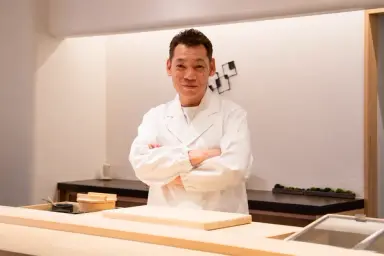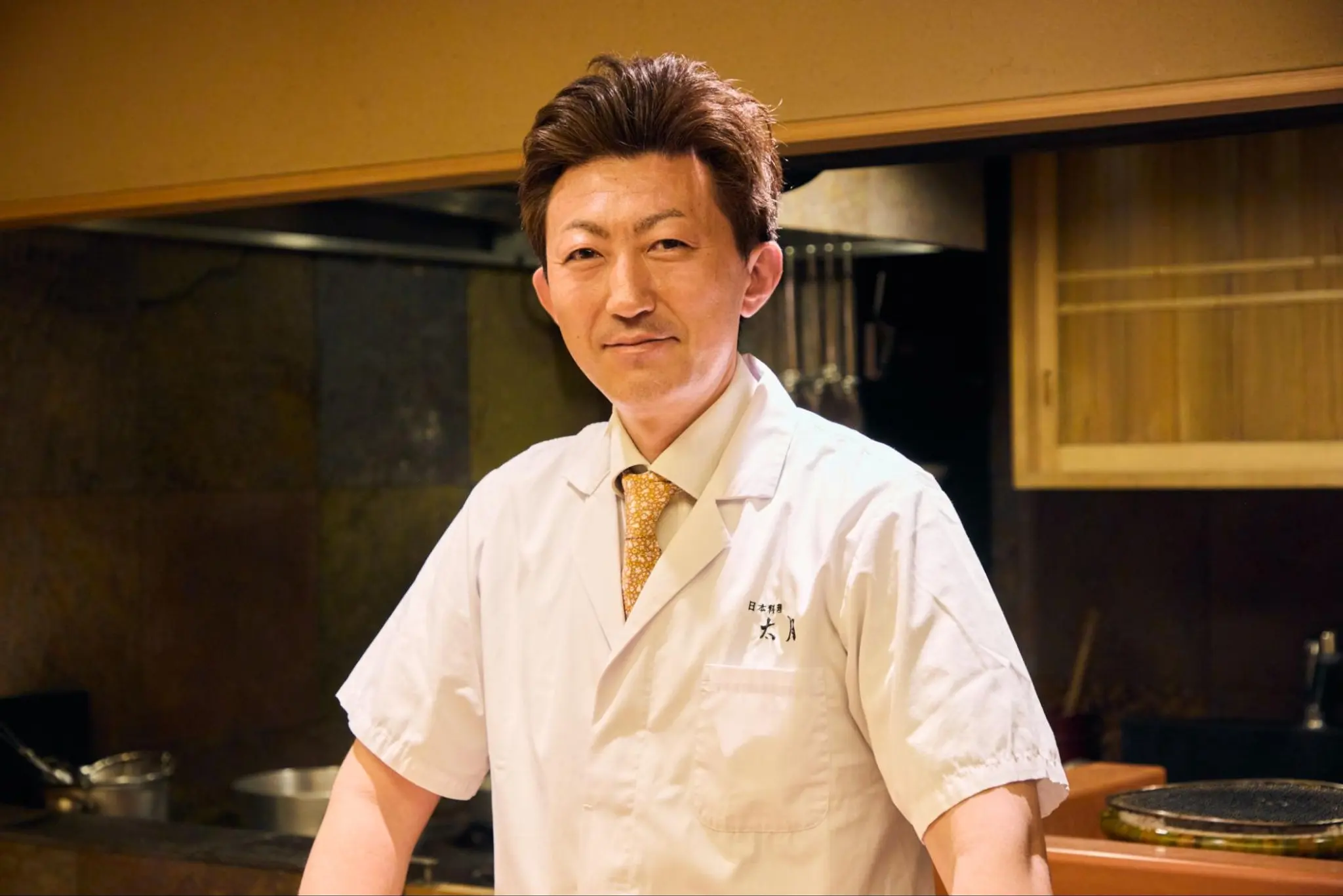
"Studying the old to understand the new" – The Unending Challenge of Chef Hideo Mochizuki of 【Tagetsu】
The Charm of Japanese Cuisine Lies in "Dashi"
ーーーPlease tell us about the features and special characteristics of Japanese cuisine at 【Tagetsu】.
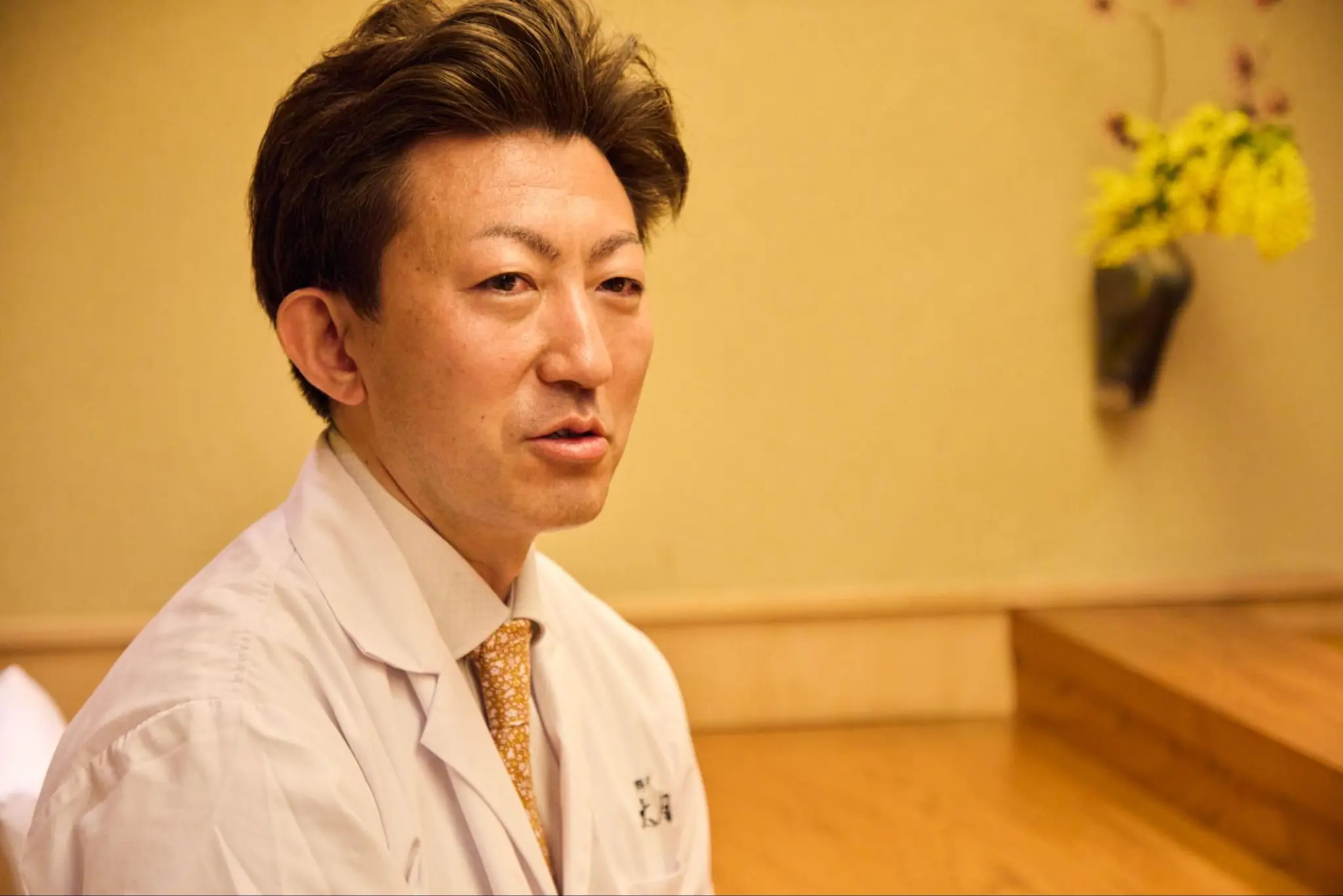
In Japanese cuisine, we use different types of dashi depending on the seasonal ingredients and cooking methods. Even within the course meal, each dish is made with a different type of dashi, and sometimes multiple dashi are combined. At our restaurant, as a way to allow our guests to experience the essential "dashi" in Japanese cuisine, we prepare the dashi for each guest individually after their arrival. For the water-extracted "kombu dashi," which requires time to prepare, we do it in advance, but for the "katsuobushi dashi," which is extracted quickly in hot water, we shave the bonito flakes and prepare the dashi after the guest arrives. The freshly made katsuobushi dashi has an exceptionally good aroma. If desired, guests can taste the freshly shaved katsuobushi or compare the flavors of kombu dashi and katsuobushi dashi. Although it takes more time to serve the dishes compared to restaurants that prepare dashi in advance, the fragrance of freshly shaved katsuobushi is truly incomparable. We want our guests to enjoy the sound of the bonito flakes being shaved, the rising aroma, the process of making dashi, and the color and flavor of the dashi, which differ depending on the ingredients, through all of their senses.
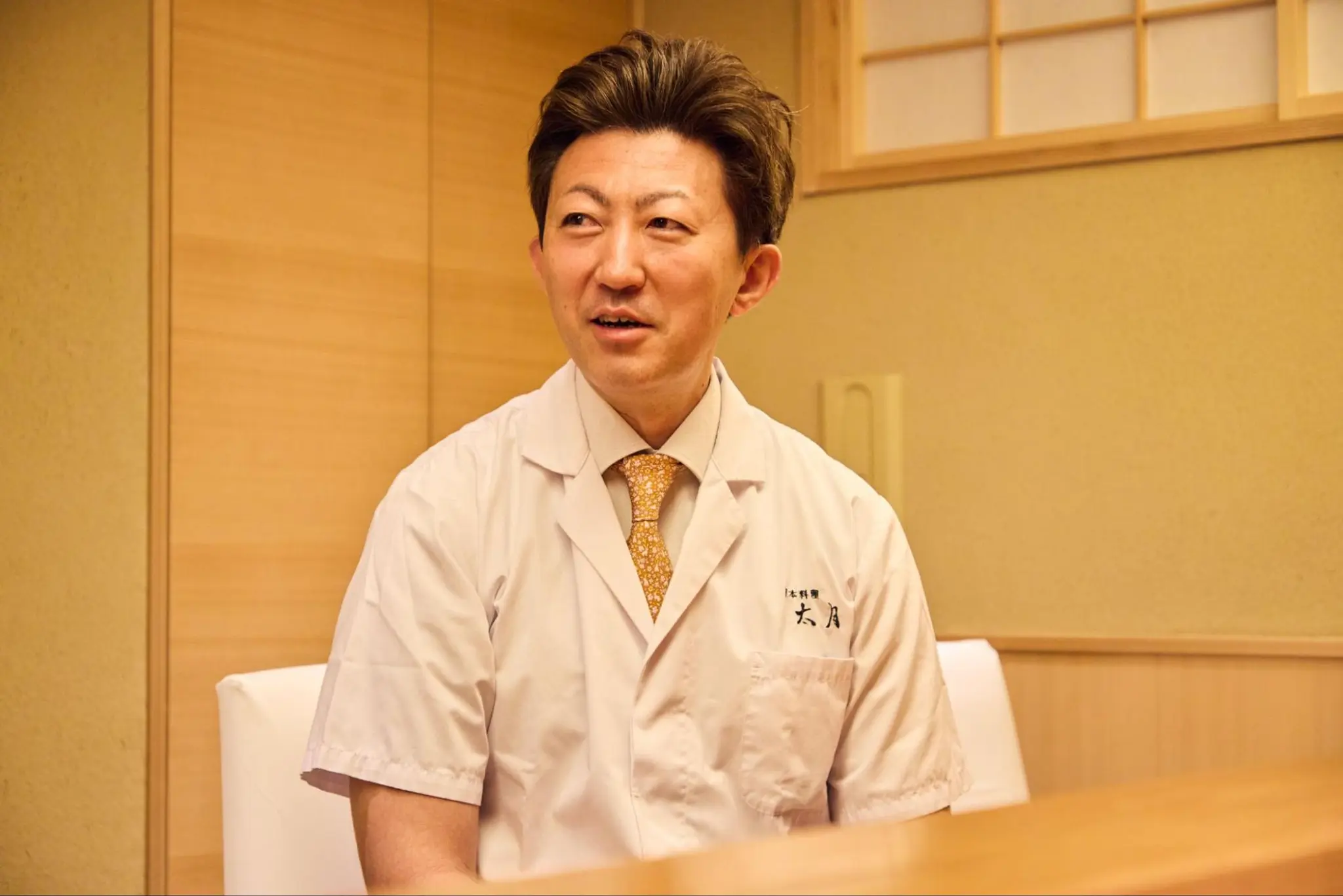
I once had a guest ask me, "Why are you shaving wood?" when I was shaving bonito flakes. I suppose it's because the bonito flakes have a wood-like appearance. While the existence of dashi in Japanese cuisine is widely recognized, many guests are unaware of the process by which dashi becomes a part of the dish. However, I don’t intend to perform or explain things in a way that would overwhelm the guest with knowledge. I hope that by allowing them to see the techniques and process of making dashi, which is an essential part of Japanese food culture, they will feel closer to Japanese cuisine and find an interest in it.
ーーーAre there any other ways you help guests experience the dashi?
I try not to overdo the preparation of the dishes and focus on expressing the harmony between the natural flavors of the ingredients and the dashi. When we first opened, we used to adjust the flavor of the soup by adding salt and soy sauce to the dashi, but now we make it without any added seasonings. When combining different types of dashi or adjusting the amounts, the quantity of kombu and katsuobushi increases, which raises the salinity, but at the same time, the umami of the dashi becomes more complex. This made me realize the potential of dashi—enhancing the flavor of dashi actually makes it tastier. It’s not about overwhelmingly dominating the dish with the aroma of dashi; instead, I aim to balance the dashi to enhance the dish by considering the harmony with the ingredients. I value finding the perfect balance where both the saltiness and umami of the dashi and the flavor of the ingredients complement each other without overshadowing one another. In dishes other than soups, I do use seasonings like salt, soy sauce, and mirin, but I always prioritize the harmony between the dashi and the ingredients, with the seasonings serving as supporting roles.
ーーーCould you tell us more about the dashi that you are particular about?
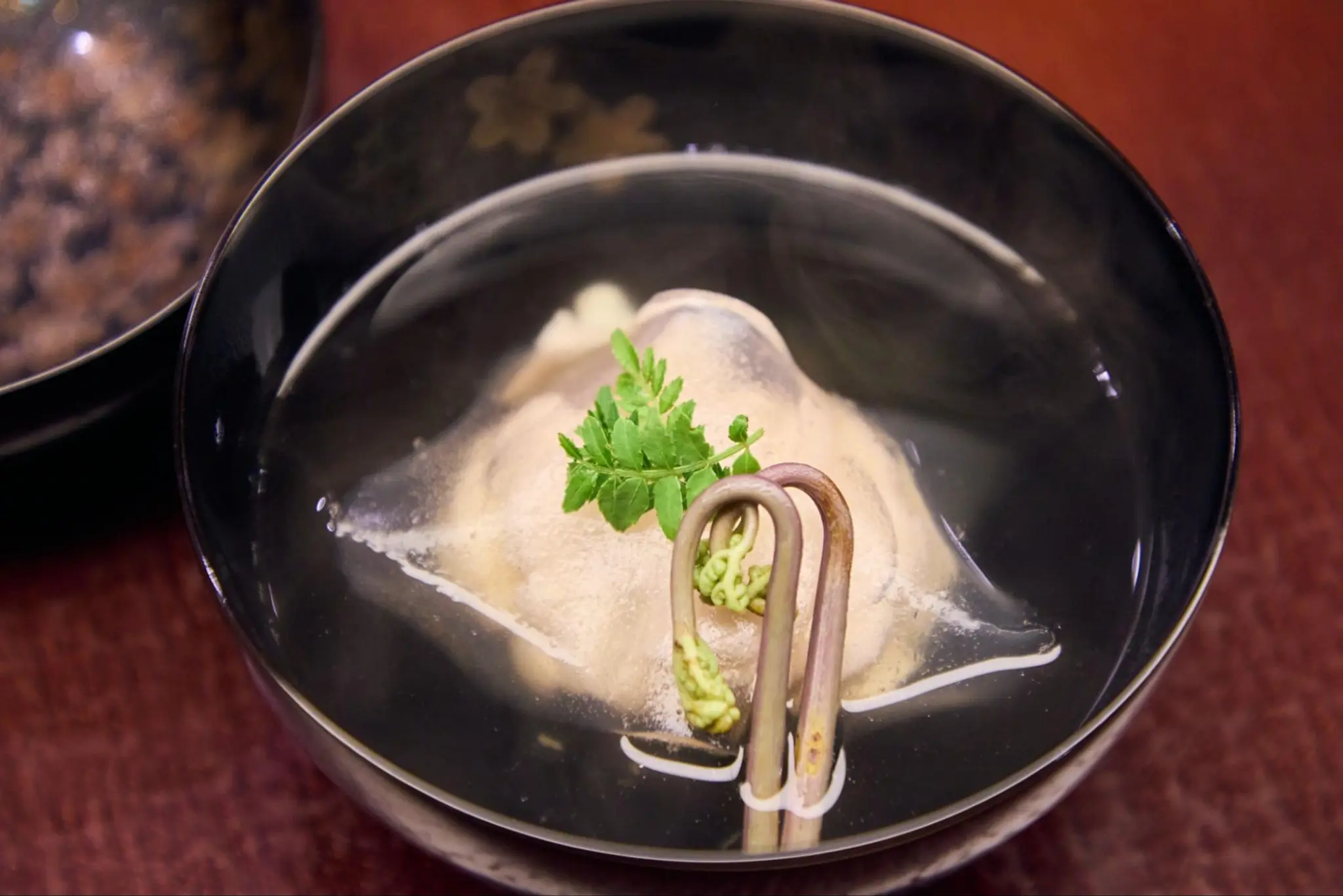
The dashi is mainly made from kombu and katsuobushi. For the kombu, I use Hokkaido and Tohoku's true kombu and Rausu kombu from the Shiretoko Peninsula. I prepare the dashi by soaking them in both cold water and hot water. For the katsuobushi, I use honkarebushi (dried bonito flakes) from Makurazaki City in Kagoshima Prefecture and Yaizu City in Shizuoka Prefecture. I use the first dashi extracted by soaking the shaved katsuobushi in water at a temperature of 72-75°C, and then use the second dashi with additional katsuobushi added. The different parts of the bonito also have distinct characteristics: the back part has a fragrant aroma and is low in fat, providing a clean, refreshing taste, while the belly part is rich in fat, giving it a deep, robust flavor. For soup-based dishes, I use cold-extracted kombu dashi, and for simmered dishes, I combine hot-extracted kombu dashi and katsuobushi dashi, sometimes blending multiple dashi types to suit the dish.
Additionally, water is very important in Japanese cuisine. I have tried various types of water, such as hydrogen water and filtered water, in the past, but now I use natural water from the Shirakami Mountains for the soup-based dishes. It has low hardness and low mineral content, which allows the flavors of the dashi to be expressed clearly.
ーーーHow do you source your ingredients?
About half of my ingredients come from Toyosu Market and the other half directly from producers. With the exception of matsutake mushrooms, most of the mushrooms and vegetables are sourced directly from producers. The benefit of sourcing directly from producers, without going through the market, is that it reduces the distribution time, ensuring freshness and lowering costs. For bamboo shoots, I always rely on the same producer each year. When you buy them from the market, they tend to develop bitterness over time, but the bamboo shoots sourced directly from the producer are so fresh that they can be eaten straight away, which opens up a wider range of cooking methods and dishes. Nowadays, I can communicate directly with producers via social media, and even if we haven't met, farmers and fishery workers with strong business acumen will reach out to me. Every year, I take my staff on a mushroom picking trip, and through these interactions with the producers, we get a direct sense of their passion for "craftsmanship," which naturally deepens our attachment to the ingredients.
Responding to Customer Requests for "It Would Be Nice If..."
ーーーI hear you offer both lunch and dinner service.
For both lunch and dinner, we offer three types of courses: "high quality with smaller portions," "standard omakase," and "special omakase." We also offer a "short course" at lunch. Due to the rising cost of goods, prices at restaurants, not just in Japanese cuisine but across the board, have been increasing. The reason we created the "short course" was that many people might feel that Japanese cuisine is "too high-end" or "not affordable for casual dining," so I wanted to provide an opportunity for those people to experience Japanese cuisine in a more approachable way. I hope that through the "short course," guests will learn about Japanese culinary techniques and perhaps be encouraged to try more or develop an interest in Japanese cuisine.
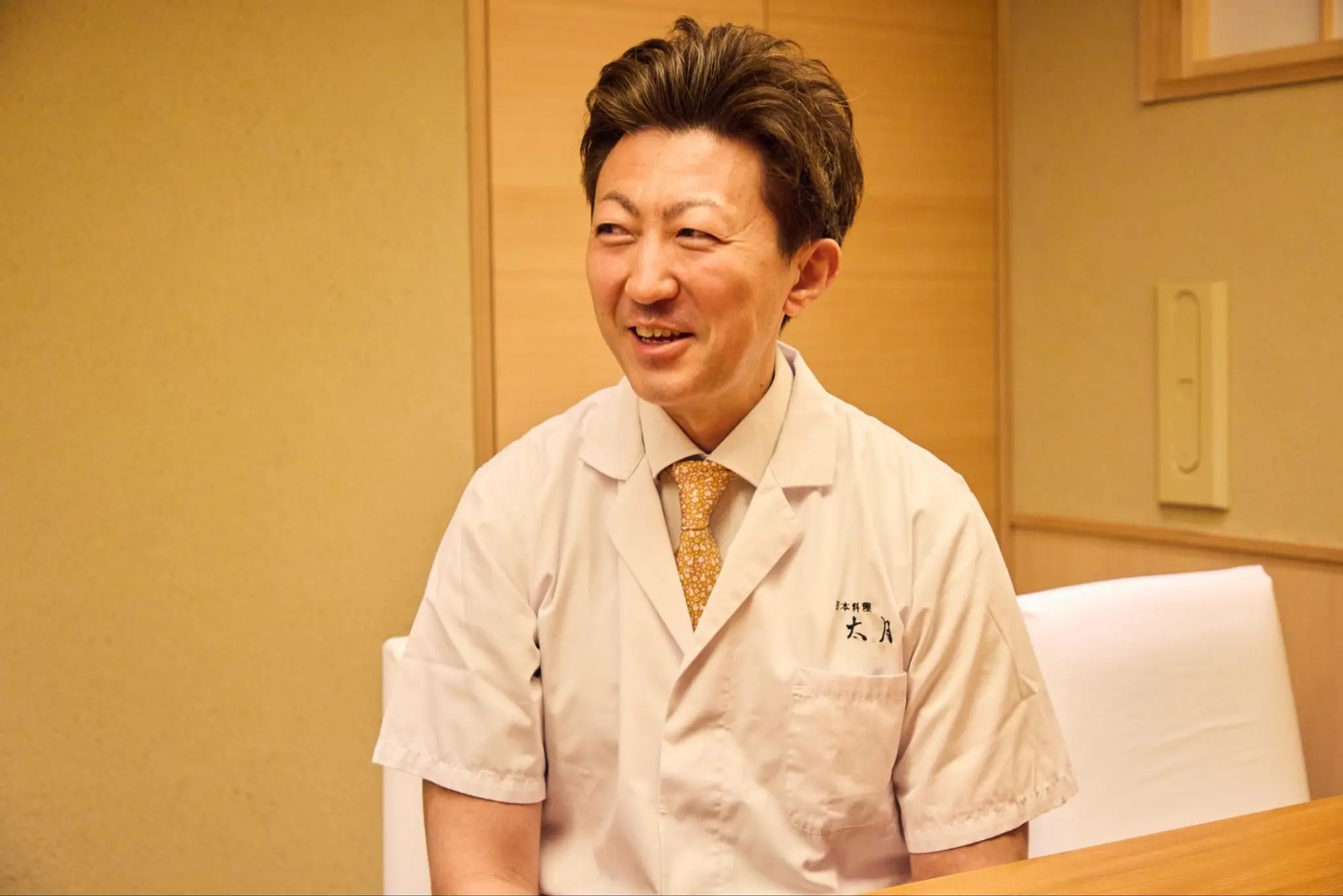
Each course follows the same structure, with variations in ingredients and portion sizes. After the course, if a guest feels that the portion size is not enough, we may offer small rice bowls or zosui (rice porridge). Unlike in the past, when it was standard to assume a certain amount of food for a course, the needs of guests today vary based on age, gender, and eating habits. We strive to meet individual requests as much as possible.
ーーーWhat kind of guests typically dine at your restaurant?
We have many customers who come for business meetings, and around 30% of our guests are from overseas. Since we are near Meiji Shrine, which is a popular area for weddings, we also often host family events on weekends such as engagement dinners, family introductions, birthdays, and "okuizome" (the celebration of a baby's first meal). We also welcome children at lunch. Children who are old enough to enjoy a course meal can dine at the counter, so we encourage families to come and spend meaningful time together.
When we first opened, both my staff and I were quite busy, so we focused entirely on the immediate tasks at hand. Although we had the desire to better meet our customers’ needs even back then, looking back, there were things we couldn't quite manage. Now, with more chefs on staff, we’ve gained more flexibility and are able to do more. Additionally, our restaurant does not operate with a fixed starting time or a two-turn system. We accept reservations according to the guests' schedules, allowing them to enjoy a relaxed dining experience.
ーーーThe open kitchen and traditional Japanese decor create a comfortable atmosphere, don't they?
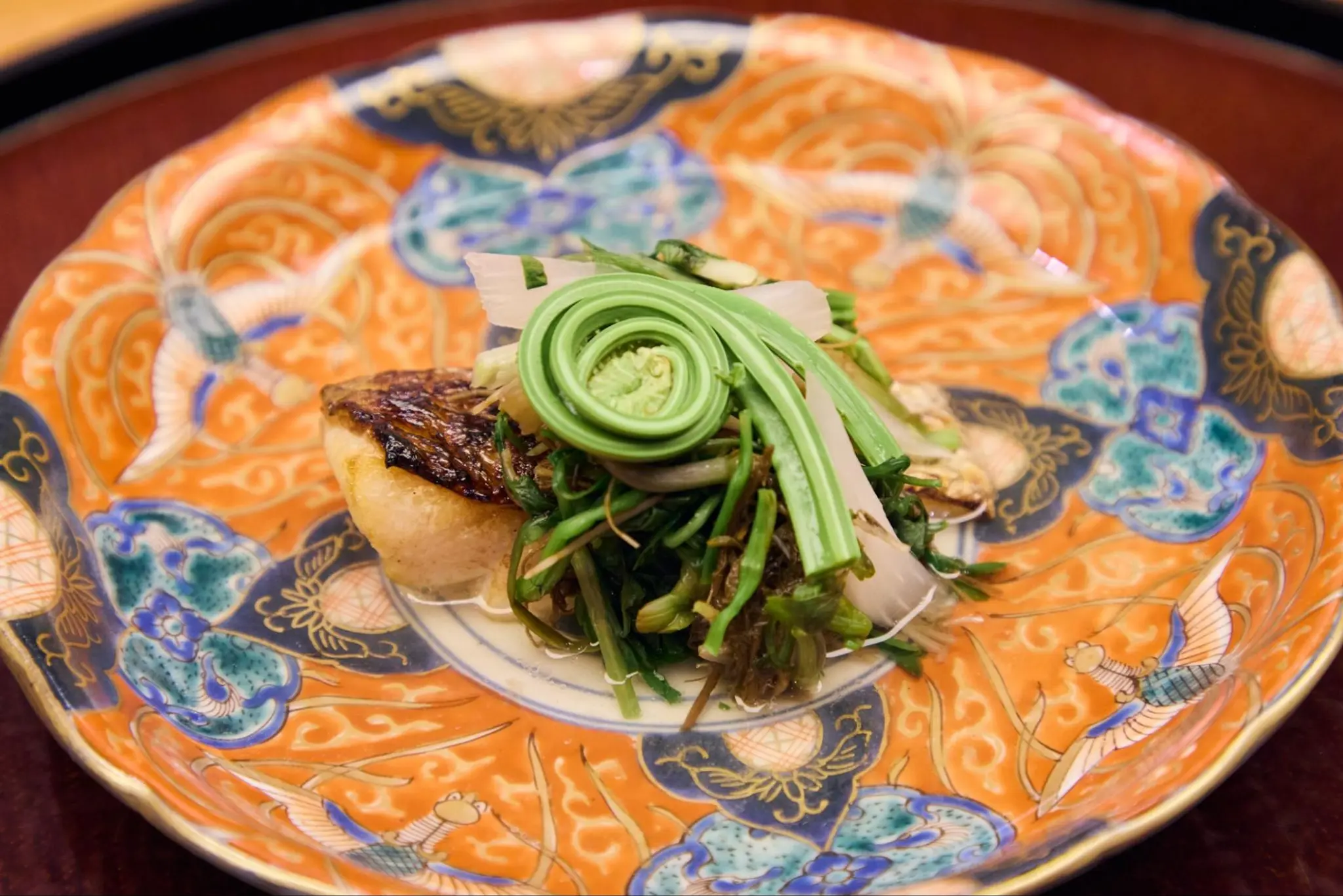
In 2023, we underwent a major renovation, turning the kitchen into an open space where the cooking process naturally comes into view for our guests. I don’t like excessive theatrics, but I do believe that it’s important to create an environment where guests can feel the history and presence of Japanese cuisine. We decorate the counter with seasonal flowers, and express the changing seasons through the tableware. In early summer, we keep cricket insects, placing them near the entrance or in the closet inside the restaurant, so that guests can enjoy the sound of their chirping. Some first-time visitors think it’s background music, and they’re surprised to find out that it’s the real sound of crickets (laughs). This is a form of hospitality that Sen no Rikyū, who lived over 400 years ago, practiced in the tea room. In one corner of the counter, we place a kettle used in the tea ceremony, and if guests wish, we can prepare matcha for them.
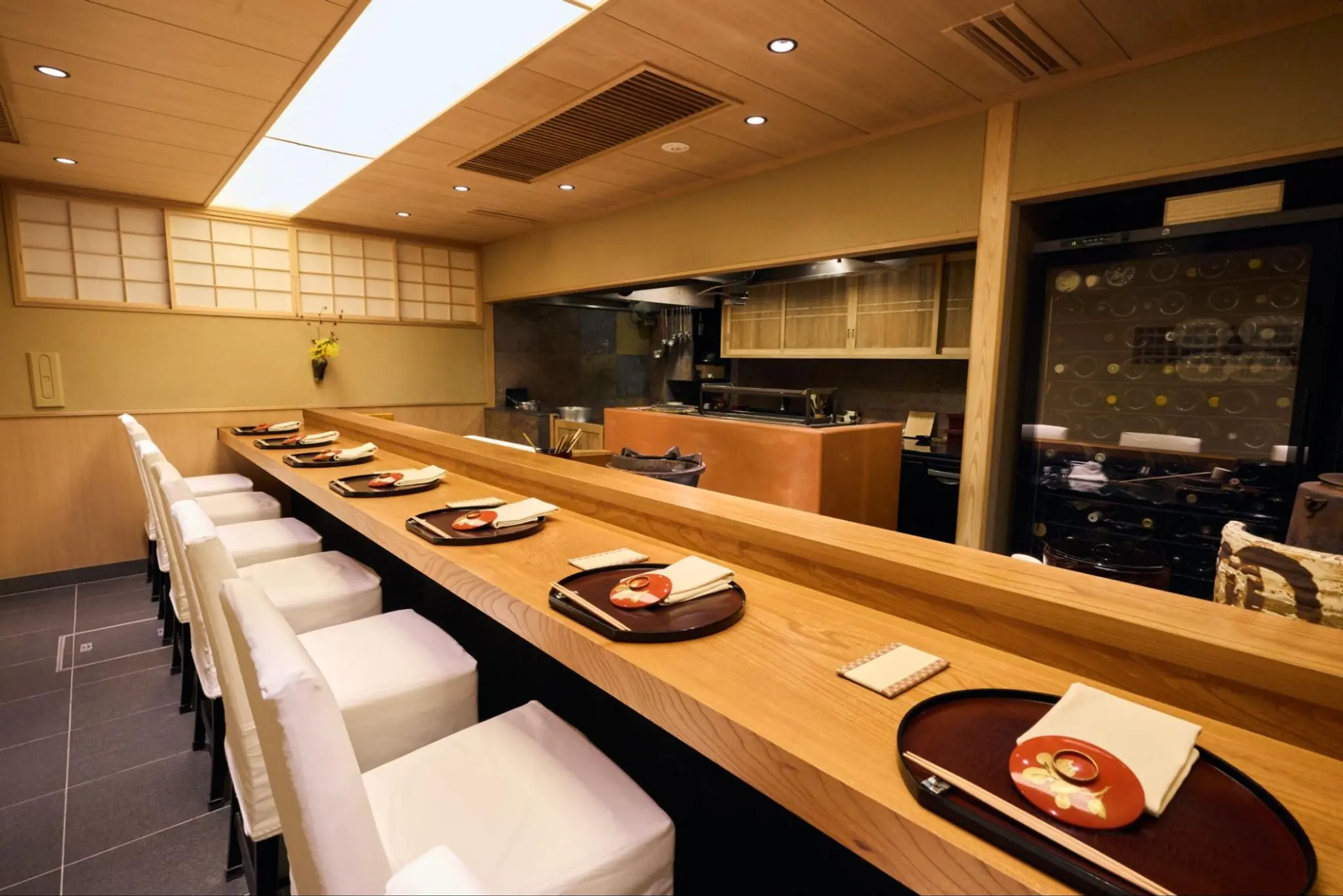
"Studying the Old to Understand the New" – Passing Down the Charm of Japanese Cuisine Without Resisting the Times
ーーーWhat is most important to you when creating dishes?
Within the category of Japanese cuisine, there are sub-categories such as chaji (tea ceremony meal) and kappo. Chaji, which originated as a meal to entertain guests while the tea was being prepared, is one aspect of Japanese culture. The tea ceremony is not just about the meal, but also encompasses elements such as elegant calligraphy and the arrangement of the space, all of which reflect the comprehensive art of Japanese culture, each with its own historical background and tradition. For example, the "hassun" (a variety of seasonal side dishes) in tea ceremony meals and the "hassun" in kappo restaurants share the same name but differ in content. While it would enrich the experience to enjoy the meal with an understanding of its history and knowledge, I don’t believe that one cannot appreciate or enjoy Japanese cuisine without it.
Today, it is an era where people are free to explore without being limited to one genre, not just in Japanese cuisine. While I have a strong desire to convey the techniques and beauty of traditional Japanese culinary culture, I don’t want to create something that cannot be enjoyed without understanding history and tradition. There are times when guests are surprised and say, "This is something new!" when I serve a dish that has been in Japanese culinary history for centuries. I often explain that it’s actually not new, but a historical dish, sharing the story behind its origin.
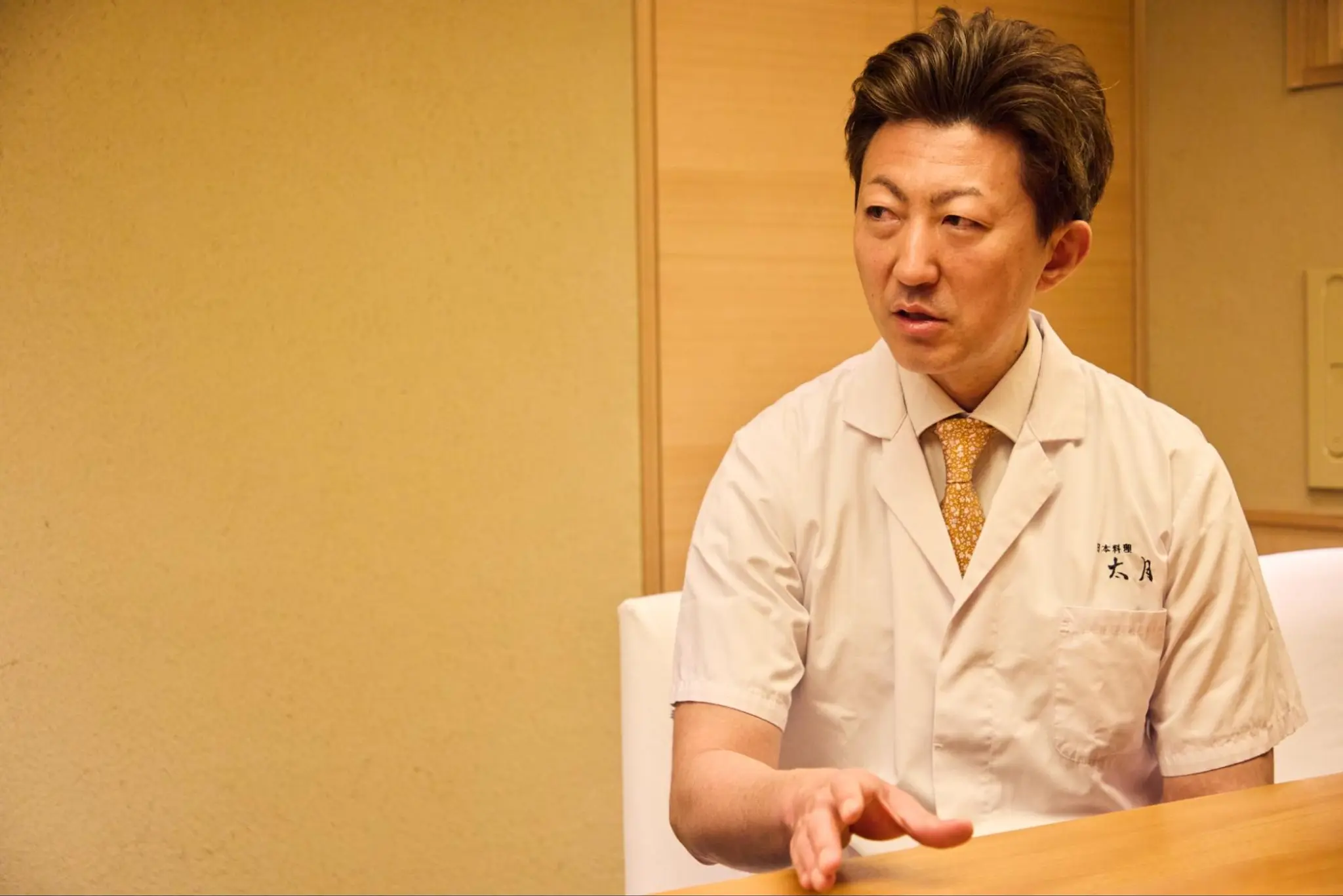
While inheriting tradition and incorporating new elements is something every chef may think about at some point, let’s consider a situation where someone creates a new dish, and I try to replicate it. Since there is no copyright in cooking, I believe it’s fine to imitate, but I think I would still feel a sense of "stealing" in some way. Take "kabura-mushi," a dish with a long history and traditional techniques, for example. Many chefs in Japanese restaurants make this dish, but when I prepare kabura-mushi, I don't feel like I’m "stealing" someone else’s technique, and I don’t think others see it that way either. It’s like "studying the old to understand the new." I believe that finding new charm in things that have existed for a long time and learning new knowledge from teachings and techniques that have stood the test of time are important. I want to be a chef who inherits the history of Japanese cuisine and passes it on to future generations.
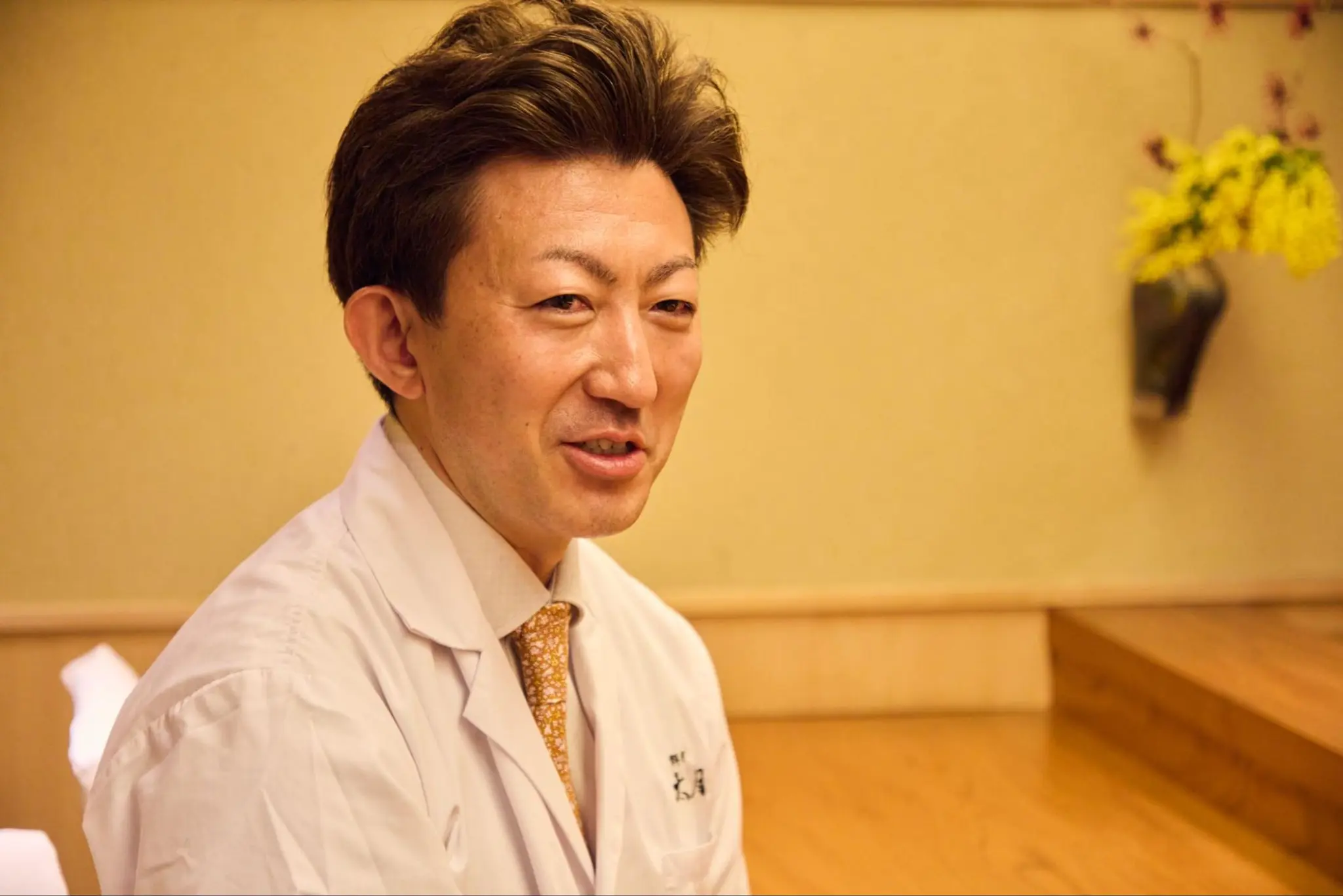
ーーーUnderstanding the history and food culture of Japanese cuisine seems like it would enhance the dining experience.
Some guests come to our restaurant after studying Japanese cuisine, but it can be difficult, especially for international customers, to convey the exact nuances of Japanese cuisine. For example, at our restaurant, we serve dishes with "wet chopsticks," but we once received negative feedback from a guest who didn’t know what they were. As a result, we now provide an English explanation of what "wet chopsticks" are, as well as the importance we place on dashi. "Wet chopsticks" refer to pre-moistening the chopsticks with water to prevent them from getting dirty when picking up food, and to ensure no excess food or flavors are left on the chopsticks. This practice originates from the tea ceremony, where the host would prepare tea and serve a meal for guests. We respond to questions from our customers and, as long as it doesn’t interrupt the conversation, we sometimes share more about Japanese cuisine with them.
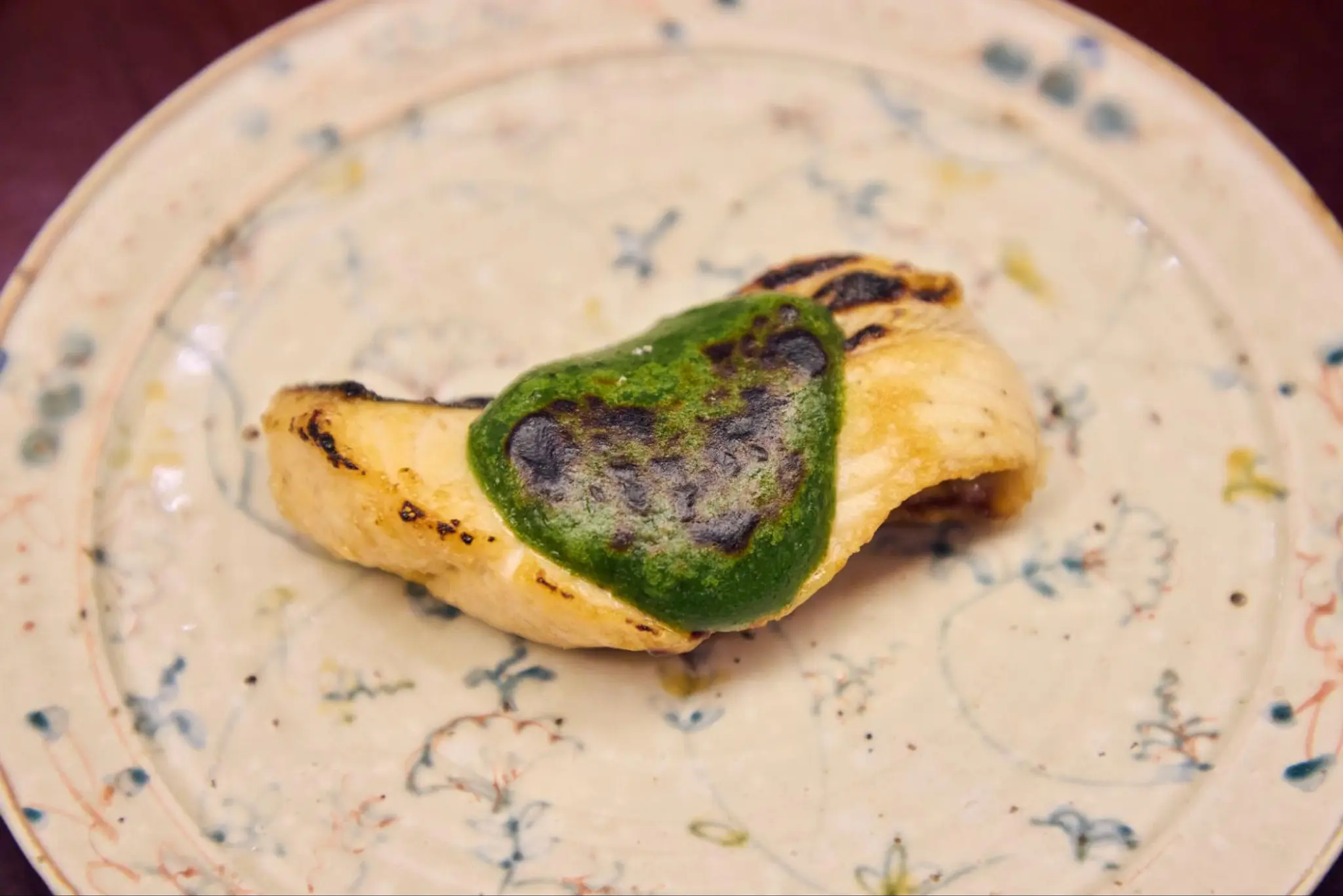
Inheriting the history walked by my parents, I want to carry on the legacy of Japanese cuisine under the name 【Tagetsu】
ーーーWhat inspired you to become a chef?
My parents ran a shabu-shabu and steak restaurant, 【Tagetsu】, in my hometown of Hadano City, Kanagawa Prefecture. My father’s name was Taiji Mochizuki, and the name 【Tagetsu】 was derived from the first two characters of his name. When I was in elementary school, I often helped out at the restaurant, doing things like washing dishes. From an early age, cooking was a familiar part of my life, and I vaguely thought that I would eventually follow that path. However, during middle and high school, I became consumed with baseball and somewhat forgot about cooking. But when I was 18, I made up my mind that my future path would be as a "chef," so I left home to study cooking. I started my apprenticeship with the goal of one day taking over the family business. I trained in teppanyaki and French cuisine before further honing my skills at 【Ryūun-an】, 【Genyaten Hamadaya】, and 【Kappo Kisaku】.
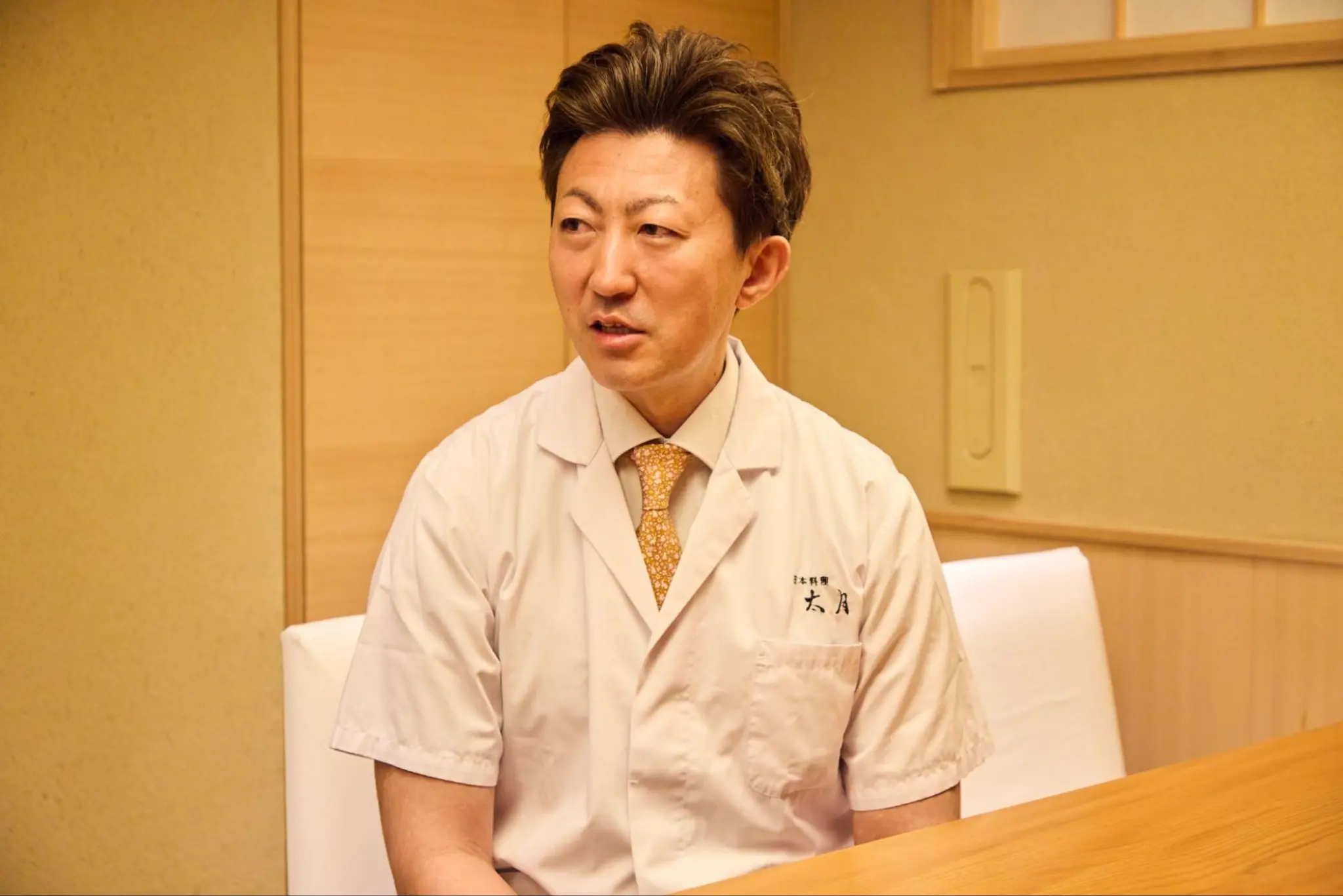
ーーーDo you have any memorable episodes from your apprenticeship?
The times were different back then, with hierarchical relationships and long working hours, so every restaurant I worked at was tough. However, I never once thought about quitting or hating my work. If anything, I think the tough life I had as a student, playing baseball all the time, was even harder (laughs), so maybe that helped toughen me up. A memorable experience was the 8 and a half years I spent at 【Ryūun-an】 in my early twenties. The head chef was responsible for preparing the tea ceremony meals for events hosted by the Urasenke school of tea, and I was fortunate enough to be part of the kitchen for about 8 years. I watched the head chef teach guests about tea ceremony cuisine, and after a few years, I was tasked with explaining some basic concepts myself, which made me scramble to study about tea (laughs). I remember the head chef telling me, "If you try to study every corner of the tea world, you'll never finish learning it in your lifetime."
In the past, tea ceremony cuisine was at the center of culinary culture, and it encapsulated aspects of vegetarian cuisine and regional dishes, so the more I studied, the more I understood about the cultural aspects as well. I think that’s why many people in Japanese cuisine also study tea. In my case, it was a necessity, but I spent my days off reading books and personally took lessons from a tea master, learning everything from how to wear kimono to tea, kaiseki, and etiquette in my twenties. That was an invaluable experience. The head chef of 【Ryūun-an】, who is now in his 80s, is still an outstanding figure who continues to teach culinary techniques for Urasenke to this day.
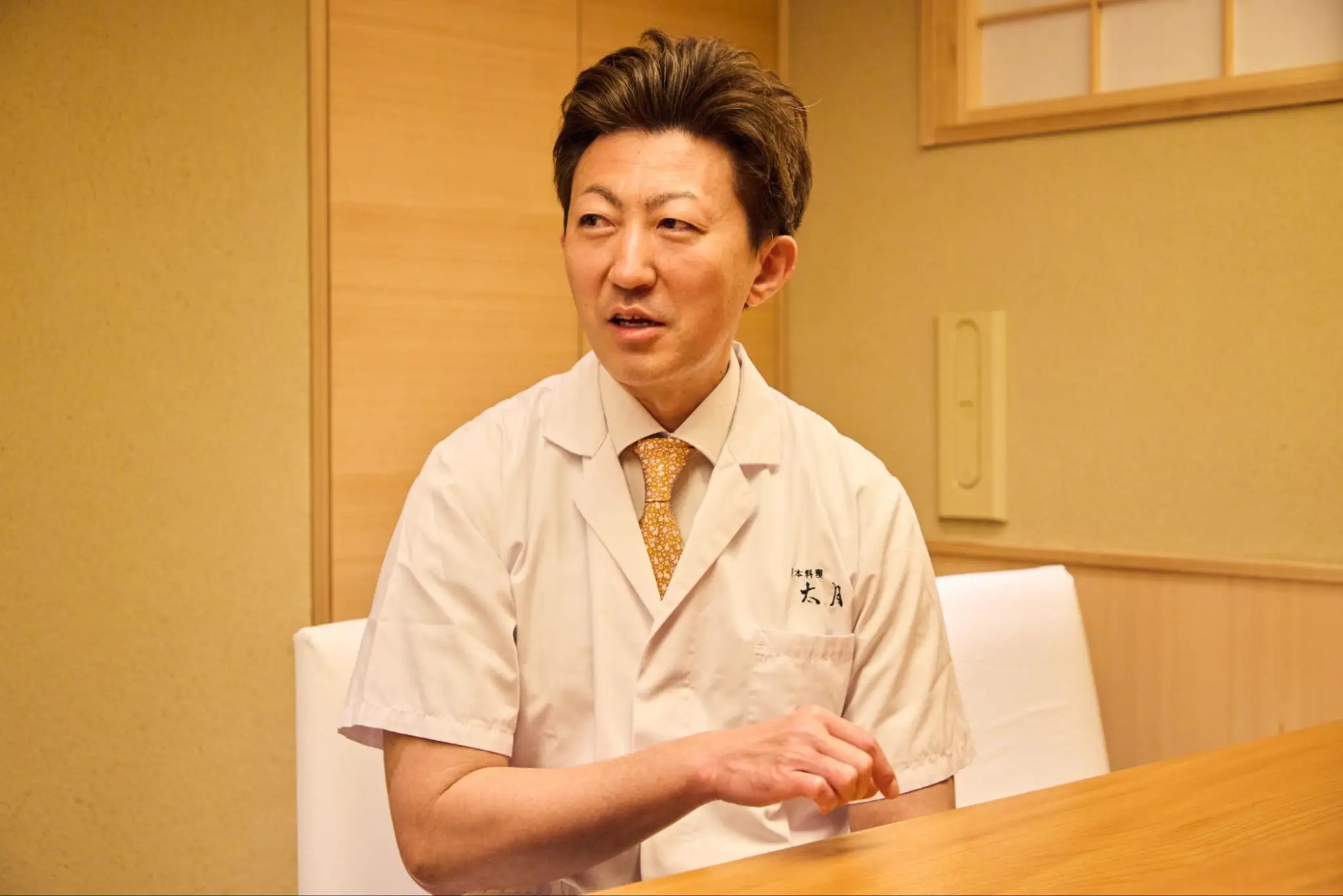
Afterward, at 【Genyaten Hamadaya】 and 【Kappo Kisaku】, I was able to learn a broad range of approaches to cooking, as the approaches were completely different. During my time at 【Kappo Kisaku】, my mother was diagnosed with cancer, and my father made the decision to close our family restaurant to care for her. During this difficult time, I wanted to become independent and take over the signboard of 【Tagetsu】 while my mother was still alive, so she could see me take on the business. I felt that after the training I had received, I was ready to do it. In 2013, I opened 【Tagetsu】. I was able to call my mother to the restaurant when it first opened, and she was very happy. Unfortunately, she passed away three months later, but I’m really glad that she was able to see me take over the business and meet her grandchildren.
ーーーSince becoming independent, you are now in a position to mentor young chefs. What would you like to pass on to them?
I’ve learned many things from my head chefs and senior colleagues, so I want to teach my knowledge and techniques to motivated young chefs. At our restaurant, we change positions every two weeks. We also change the menu every 3 to 4 weeks, and I’ve incorporated this into our practice to give them the experience of working with the same menu from different perspectives. I also want them to experience working in the front of the house, even if they are chefs. A chef’s job isn’t just about cooking; without being able to interact with customers, it’s tough to run a restaurant. I want them to be chefs who can converse with customers while observing their moods, and I want them to learn how to entertain customers just as much as they learn how to cook. If the customers aren’t enjoying themselves, they won’t come back for a second visit.
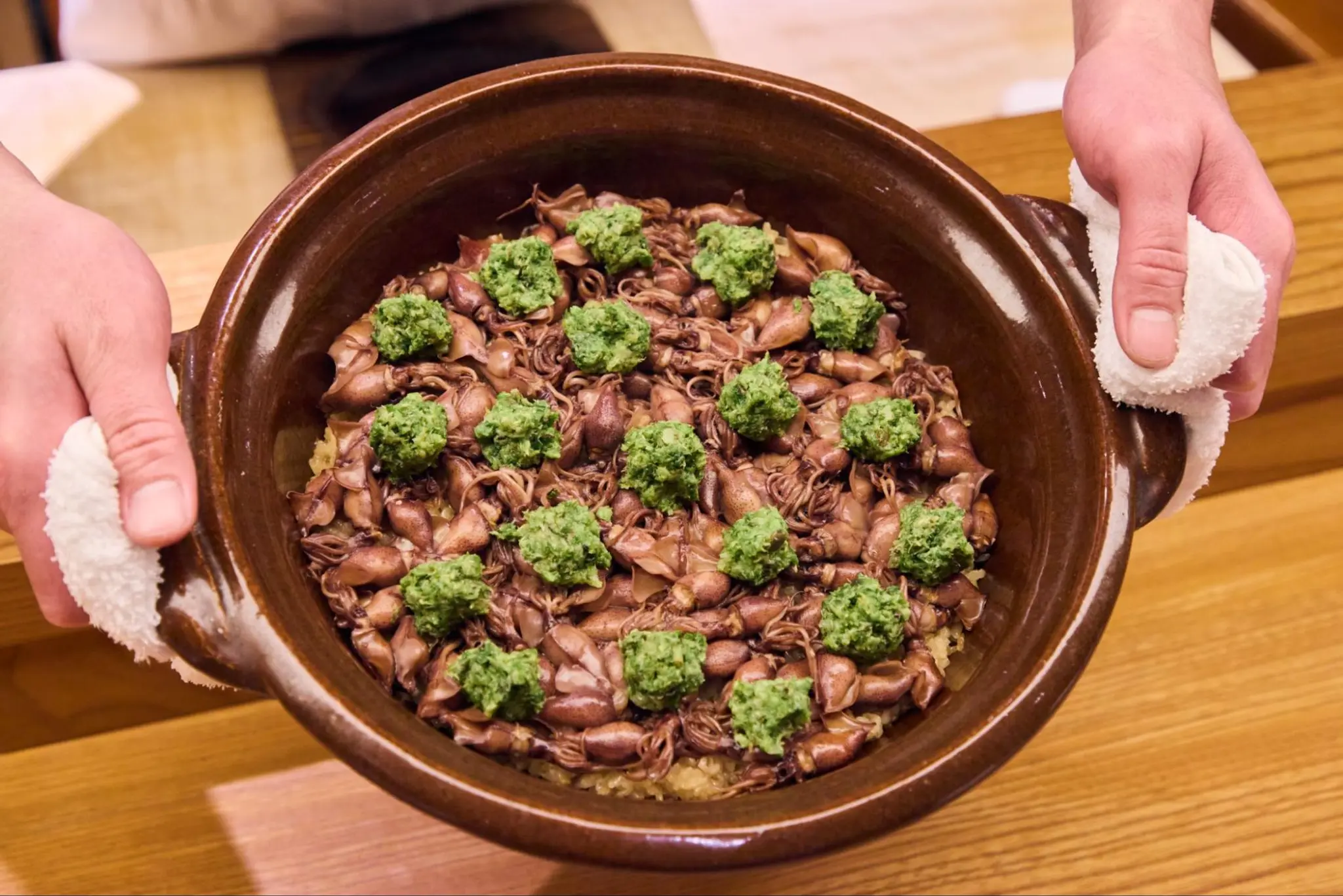
Recently, more restaurants have emerged where chefs operate solo and cater to small numbers of guests. While this approach has its merits, relying solely on regular customers means that the customer base cannot grow beyond that, limiting the reach of the business. Since there is no need to train apprentices, I’m concerned that the traditions and skills passed down through apprenticeships might eventually fade away.
Expansion Plans to Taiwan: Fostering Japanese Culinary Culture in a New Location
ーーーWhat are your future goals and plans?
Currently, I am planning to open a restaurant in Taipei, Taiwan, in a production capacity. The local representative of the investors has taken a liking to our restaurant, and they established a fund to make it happen. The goal is to open in June 2025, using an old traditional house as the venue for the Japanese restaurant. The restaurant will be named【Tsuki no yu】, derived from the two characters of my name (Hideo Mochizuki). The building is 75 tsubo (approx. 247 square meters), with a 120 tsubo (approx. 396 square meters) garden. I have been involved in the design process and am currently in discussions regarding the interior construction and the menu. They requested a Japanese garden for the property, but Taiwan is warm year-round and doesn't have distinct seasons, so expressing that has been a challenge. There are various regulatory and cost-related hurdles, but I hope to propose a Japanese restaurant that incorporates local building materials and ingredients.
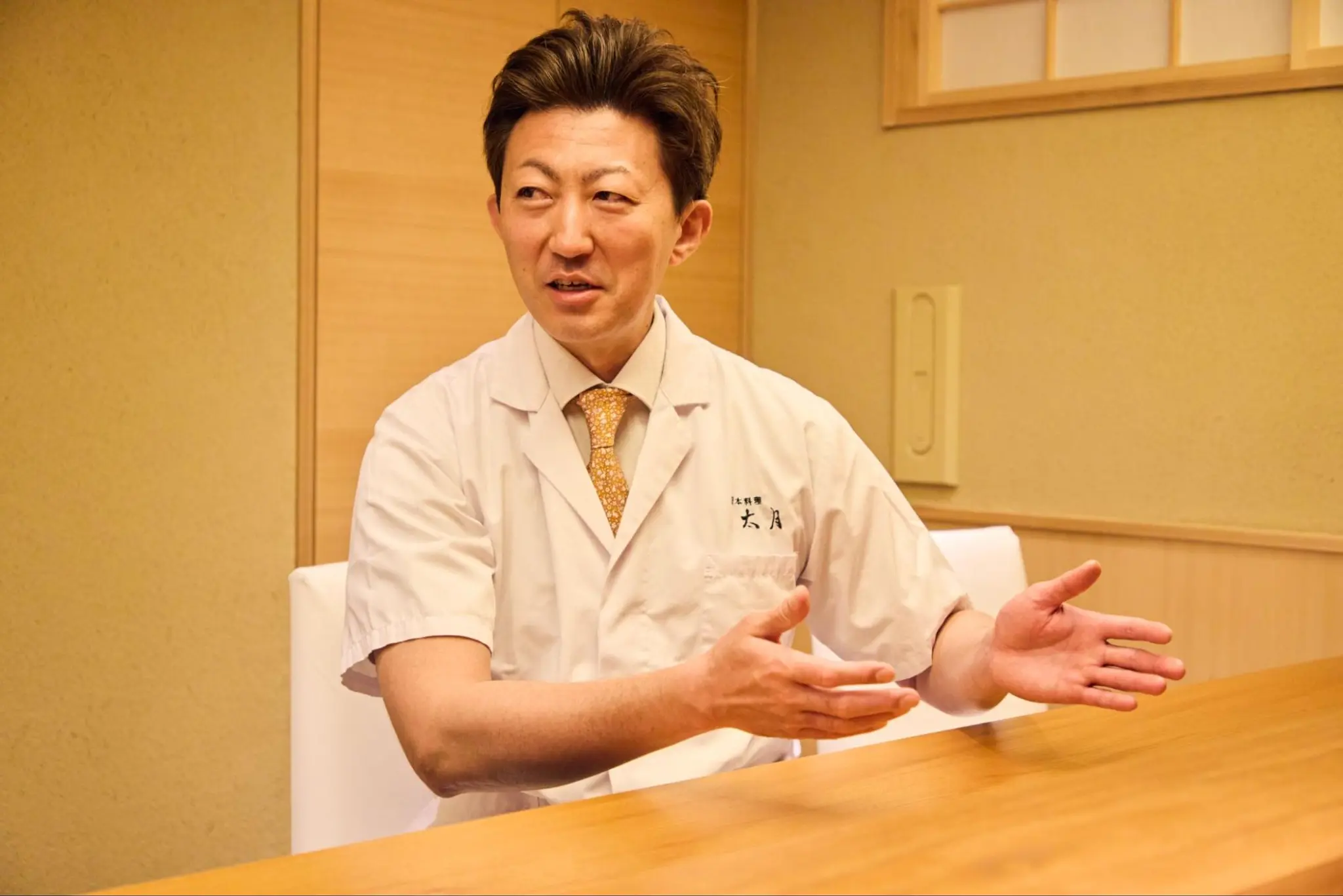
I’m not particularly focused on the overseas market, but my goal is to ensure that as many people as possible enjoy Japanese cuisine and that Japanese culture is properly passed down. While facing the limitations of available ingredients, my approach remains unchanged: I will continue to work diligently every day to increase the number of customers who enjoy Japanese cuisine. I will just keep doing what I can now, step by step.
ーーーLastly, Mr. Mochizuki, what does "delicious" mean to you?
I believe that "delicious" is created when the balance between the condition and flavor of the ingredients, customer satisfaction, and price is just right. As a chef, I feel fulfilled when I can serve a dish that brings joy to customers by using seasonal ingredients at their peak during the "shun" (prime season), prepared in a way that highlights their natural flavors without overdoing it.
When I go out to eat as a customer myself, I’m more impressed when I encounter a dish that makes the most of ingredients in their peak season, rather than one that seems out of place for that time of year. When I taste such a dish, I can’t help but think, "This is delicious!" Also, the peak season not only brings out the best flavor but also stabilizes the market price due to the consistent supply of those ingredients. Given the significant rise in prices today, being able to enjoy ingredients at a reasonable price during their peak season may be an essential condition for achieving the balance of "delicious."
The way "delicious" is perceived varies between customers and chefs, and it is subjective to each individual's personal preference. However, I believe it’s important to share and empathize with each other’s sense of "delicious." If we cannot serve something that aligns with the customer's tastes, we won’t be able to increase their satisfaction. I always think about why customers choose 【Tagetsu】 among the many restaurants out there. As customer needs continue to diversify, I want to continue pursuing the Japanese cuisine I believe in, while also valuing the customers who resonate with it.
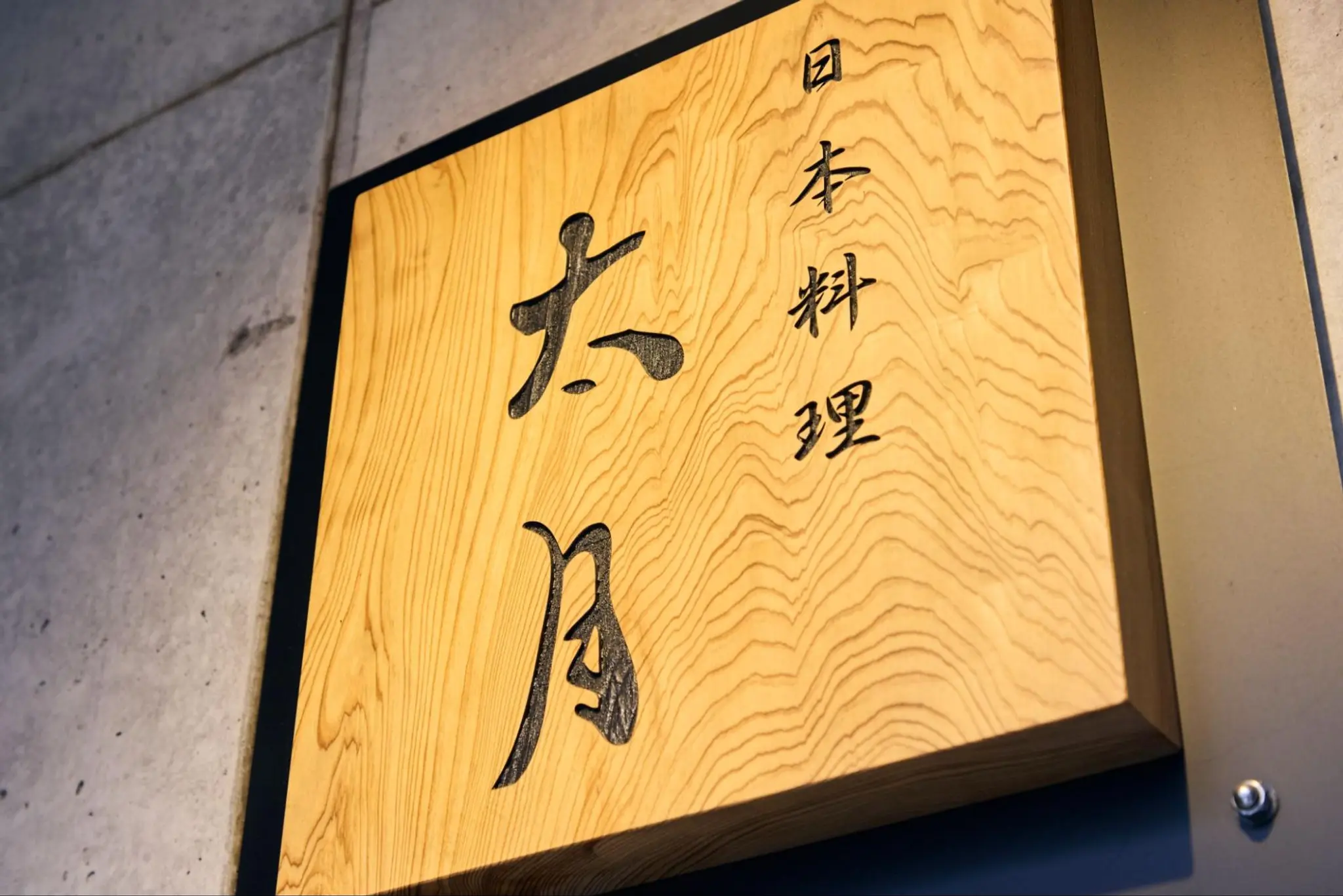
Chef Hideo Mochizuki of 【Tagetsu】 approaches the essence of Japanese cuisine with a careful focus on extracting the umami of dashi and ingredients, tirelessly pursuing his craft. The more he delves into the pursuit of dashi and the umami of ingredients, the more he realizes the importance of harmony within these elements. He speaks of how his cooking has evolved into a simpler form, aiming for the beauty that lies beyond eliminating the unnecessary. This perspective is reminiscent of the tea ceremony philosophy and aesthetics, which he learned during his apprenticeship under his mentor. In his dedication to hospitality, Mochizuki continues to honor the history and culture of his predecessors, maintaining a space that fills both the palate and heart of his guests. His endless pursuit of excellence is rooted in the spirit of "温故知新" — "study the old to know the new." His ongoing challenge is one that will undoubtedly continue to captivate us.
Interview and Article by: Yuri Yanagiya
Photography by: Tomohiro Yasui
Restaurant Information
- AutoReserve Magazine
- Japan’s world-renowned flagship restaurant
- "Studying the old to understand the new" – The Unending Challenge of Chef Hideo Mochizuki of 【Tagetsu】