Food connects people, leading to "enjoyment." Adding new value to Italian cuisine at Ebisu【H1】
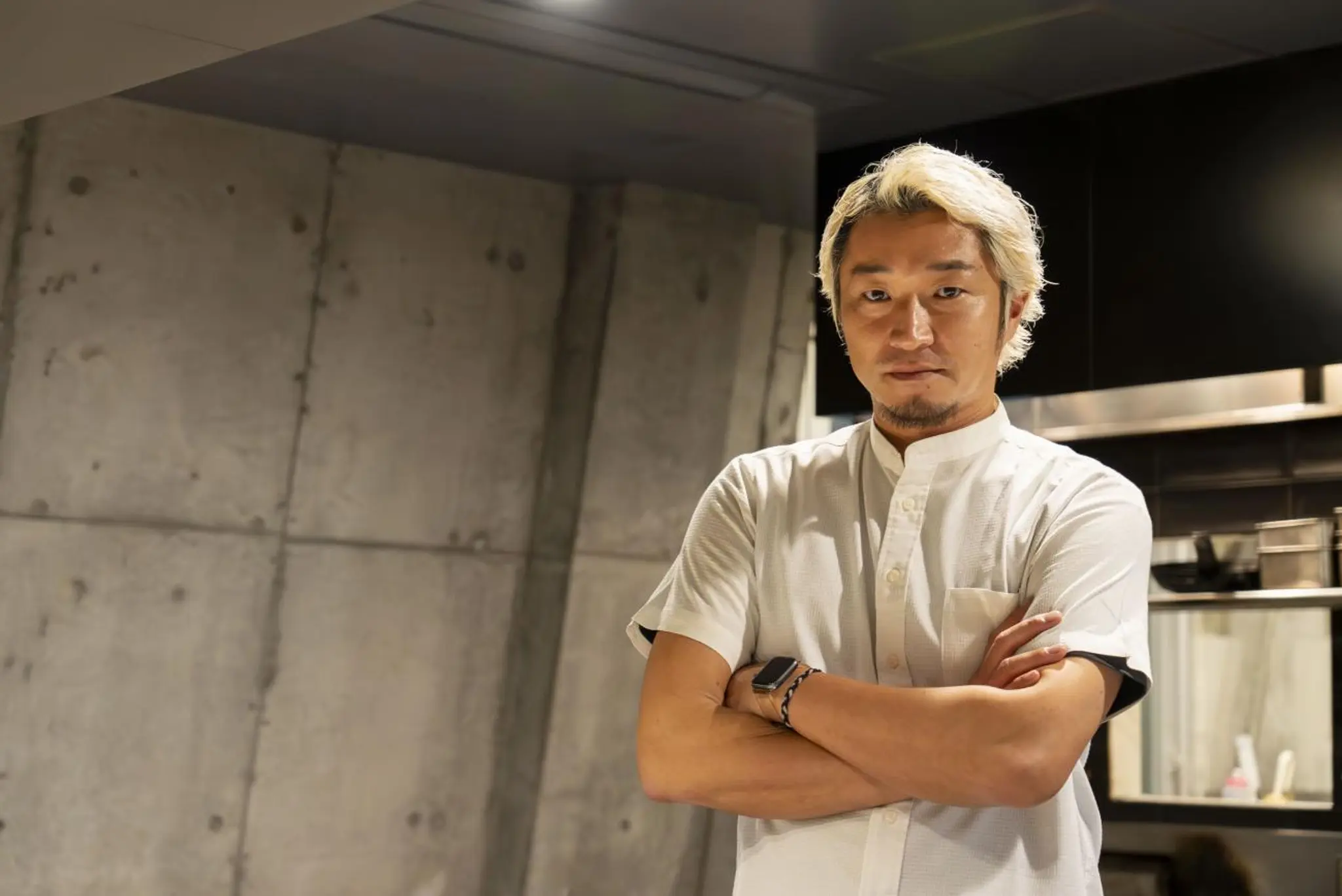
The origin of his pursuit of freedom and creativity lies in Europe
ーーーPlease tell us about your career history.
Since my father was a French chef, I had no hesitation in following the same path. I initially started by studying pastry, but as I helped out at a restaurant owned by one of my father's acquaintances, my desire to learn more about cooking grew stronger. At the age of 24, I decided to go to Italy alone for training. With a single-minded determination to learn on-site, I went to Italy and started by doing miscellaneous tasks at restaurants while picking up the language.
I spent four and a half years in Italy, working at a variety of restaurants, from casual local eateries to one-star, two-star, and even three-star establishments. There were certainly challenges along the way, but in the end, I was entrusted with key positions at Michelin-starred restaurants, which provided me with invaluable experience. After that, a chef I met in Italy introduced me to opportunities abroad, and I spent about a year working at restaurants across different countries, including Croatia, Austria, Sweden, and Denmark. That experience also proved to be incredibly valuable.
ーーーWhat left the strongest impression on you during your training?
When I was working in Japan, I had this image that Italian chefs were deeply patriotic and only cooked traditional Italian cuisine. I went to Italy with the mindset of learning exactly that. However, once I arrived, I was surprised to find that many of the chefs I met were skillfully incorporating various regional and international influences, adapting them into their own unique styles while still maintaining the essence of Italian cuisine. For instance, some chefs who had trained in France returned to Italy and integrated French techniques into their Italian dishes. It was also not uncommon to see Italian chefs using Japanese ingredients .Seeing this made me realize that cooking is truly free—there are no rigid rules. These chefs weren’t confined to a single concept, yet their final creations still remained unmistakably Italian. I found that incredibly inspiring.
ーーーHow did you feel about the way the chefs you met approached their work?
Their passion for their work was truly exceptional. In Italy, people choose their career paths around the age of 14, so many chefs start studying culinary arts and gaining hands-on experience in professional kitchens even earlier than Japanese students who graduate from junior high school. Compared to Japan, the gap between the rich and the poor is much wider, so everyone is incredibly ambitious. There’s an intense drive, a mindset of "I want to sharpen my skills and become famous!" The determination they had was remarkable. I also went to Italy with a strong passion for cooking, but if I had even the slightest dip in enthusiasm, I would have been left behind. There was no room for complacency. It really kept me on my toes. I still keep in touch with many of them. Last year, I even held a collaboration event in Italy, and through these continued relationships, I received a lot of inspiration.
―――What kind of career did you pursue after returning to Japan?
After returning to Japan, I initially helped out at a friend's restaurant before being entrusted as the chef of 【H acca (Acca)】 in Kagurazaka from 2020. The cuisine was often described as innovative fusion, essentially a creative take on Italian cuisine. After operating in Kagurazaka for a year, the restaurant relocated to Ebisu, where it was renamed 【H (Acca)】 and continued until 2023. With the opportunity to purchase the restaurant from the previous owner, I decided to go independent, officially opening 【H1 (H-One)】 in October 2024.
―――How do you feel about opening your own restaurant?
Generally, when chefs go independent and open their own restaurants, they usually start in a completely new location. In my case, both the restaurant's location and I, as the chef, remain the same. While we have made some renovations to the interior, the challenge now is how to convey our independence to our guests while still building on the flavors and experiences we have cultivated so far. Moving forward, we will continue to pursue unique dining experiences and services that can only be found at 【H1】.
―――What kind of customers visit your restaurant?
The restaurant has only eight counter seats, with reservations available for up to ten guests in the case of private bookings. The majority of our customers are in their late 30s to late 40s, and many visit in groups of three to four. We offer a nine-course meal, and from 9 PM onwards, à la carte options are also available. The restaurant operates on a fully reservation-based system, with lunch service available only on weekends.
The diverse background of the cuisine and the passion behind independence
―――What are the characteristics of the cuisine at 【H1】?
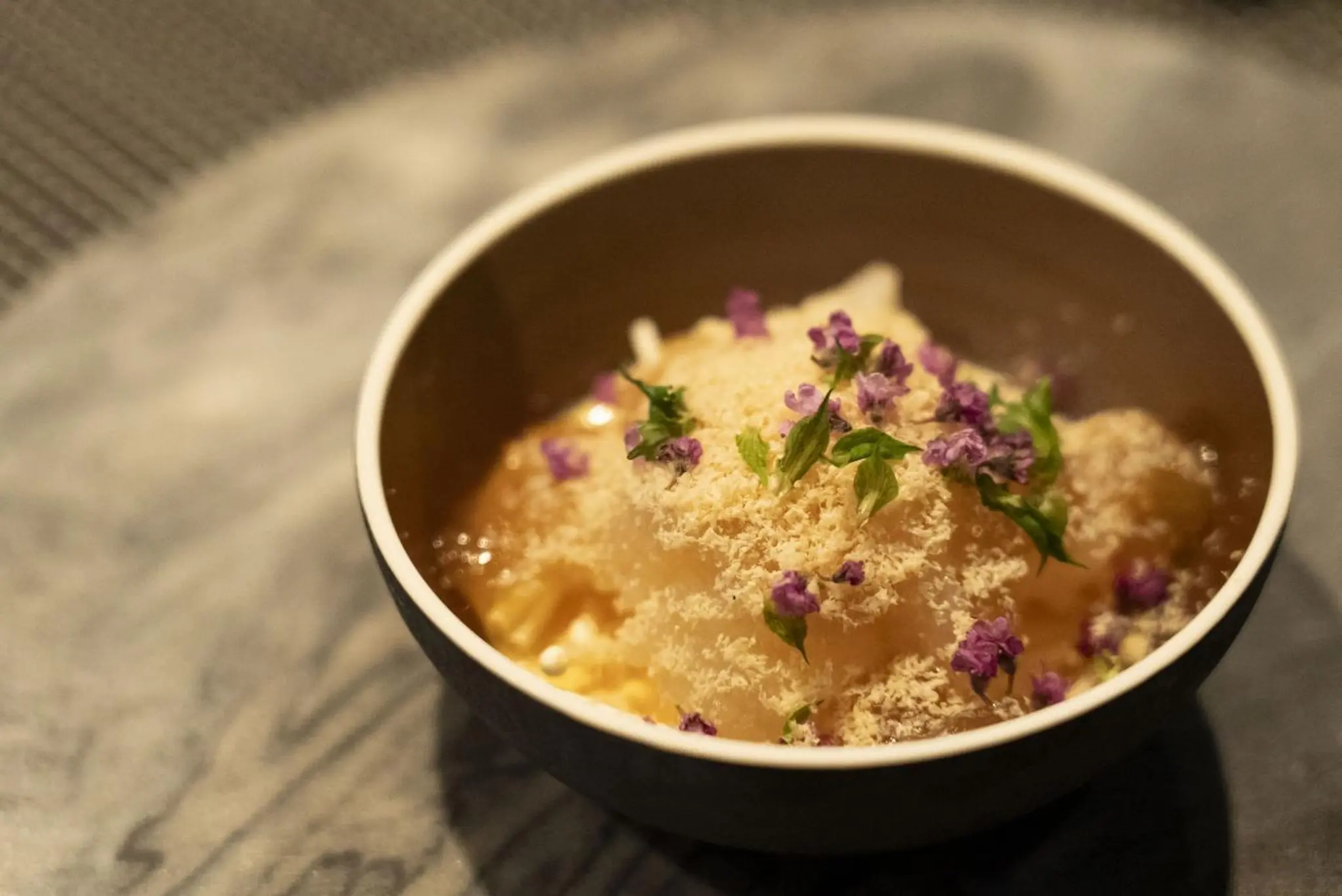
Although we present our cuisine under the Italian genre, it is more of a "H1-style Italian" with a creative touch. My cooking is undoubtedly influenced by my experiences in Italy and various European countries, including the Nordic region, as well as by my father, who is a French chef. Moreover, Tokyo offers access to exceptional ingredients from all over Japan, and I want to actively incorporate these into my dishes. My focus is on crafting an Italian cuisine that is uniquely expressed through my own perspective—an Italian dining experience tailored for Japan.
―――Could you introduce an example of a course dish featuring Japanese ingredients?
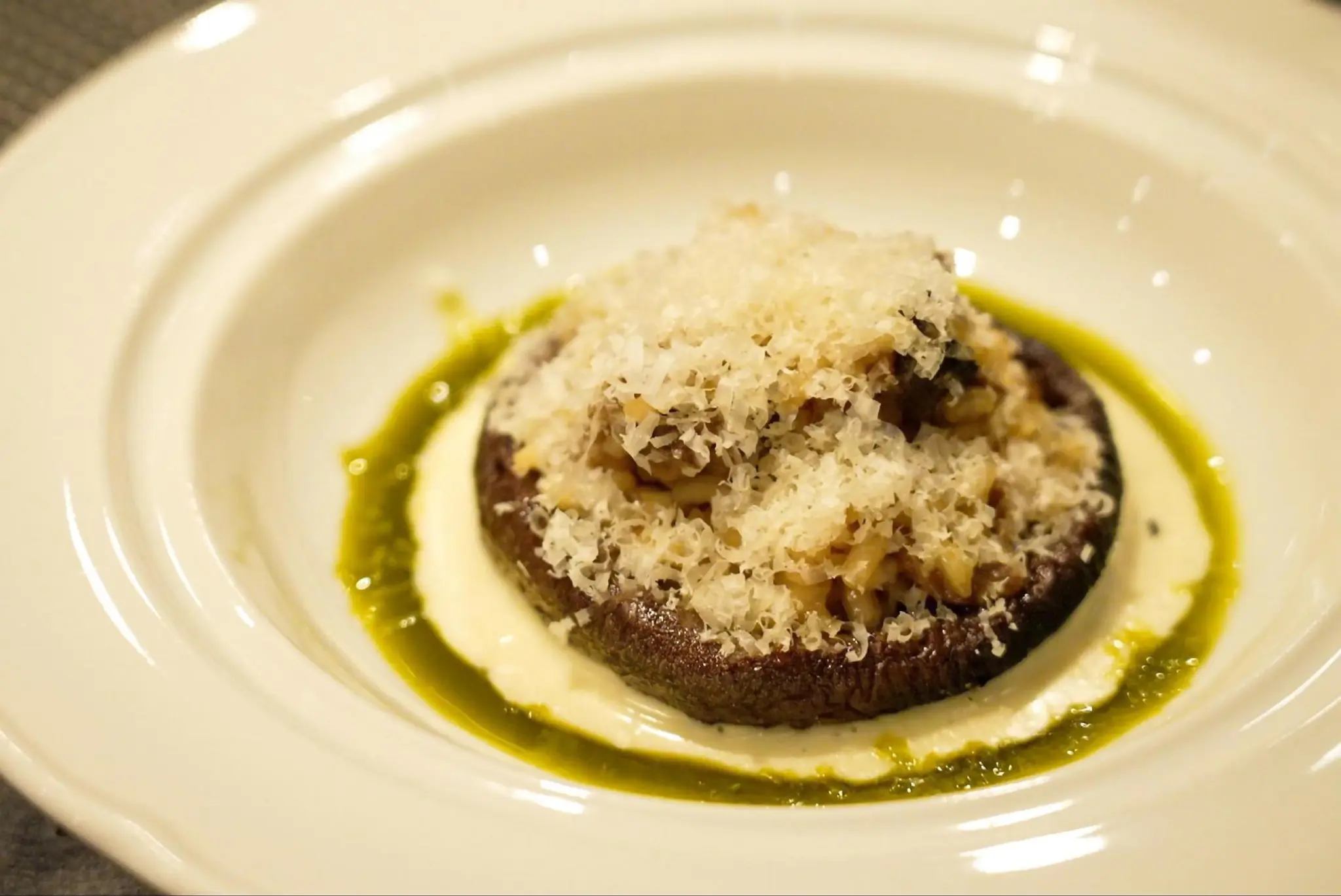
For example, our risotto features rice grown by Mr. Takemoto of 【Takemoto Farm】 in Nomi City, Ishikawa Prefecture, using the Carnaroli variety, combined with Yairo Shiitake cultivated by Mr. Seki of 【Seki Farm】 in Minamiuonuma City, Niigata Prefecture. While Europe has plenty of excellent Carnaroli rice and mushrooms, Japan also boasts ingredients with just as much umami, without the need for long-distance shipping. Mr. Seki’s Yairo Shiitake is grown on a bed of oak chips sourced from Toyama Prefecture, with a nutrient-rich blend of rice bran from Uonuma-grown Koshihikari rice and powdered oyster shells. This results in thick, flavorful shiitake mushrooms .Rather than sticking to the conventional concept of risotto, we make the shiitake the star of the dish, highlighting its rich texture and aroma.
―――Not only do you mention the origin of the ingredients, but also the names of the farms and producers! How do you go about meeting these producers and selecting your ingredients?
Now, I can introduce these producers while picturing their faces, but when I returned to Japan after five years in Europe, I was shocked by how little I actually knew about ingredients.Up until then, senior chefs had been in charge of ordering, so I had taken it for granted that high-quality ingredients would simply arrive without me having to think about it.
However, when I was entrusted with sourcing ingredients at the restaurant in Kagurazaka, I realized how little I actually knew—not just about what kinds of ingredients were available across Japan, but also how they were cultivated, the names of the producers, and most importantly, their passion and philosophy. It was an embarrassing realization. Up until that point, I had understood cooking techniques, but I had almost no real knowledge of the ingredients themselves.
From that point on, I started visiting farms in person, seeing and touching the ingredients firsthand, and talking with the producers. Through these experiences, my perspective on cooking deepened, and my appreciation for ingredients grew even stronger. Japan is home to many incredible producers. I wanted to share not just their names, but also their passion and the stories behind their production process with our guests. That’s why our menu includes not only the place of origin but also the names of the farms and producers .These details often spark conversations with our guests, and if that helps them feel a deeper connection to the dishes, I couldn’t be happier.
―――When creating dishes, what do you value most when it comes to ingredient pairings?
Italian and French cuisine involve combining ingredients, processing them into sauces, and adding seasonings—essentially, creating dishes by carefully considering multiple ingredient pairings. Rather than focusing solely on the presence of a single ingredient, I prioritize how the combination of ingredients transforms into a complete dish.
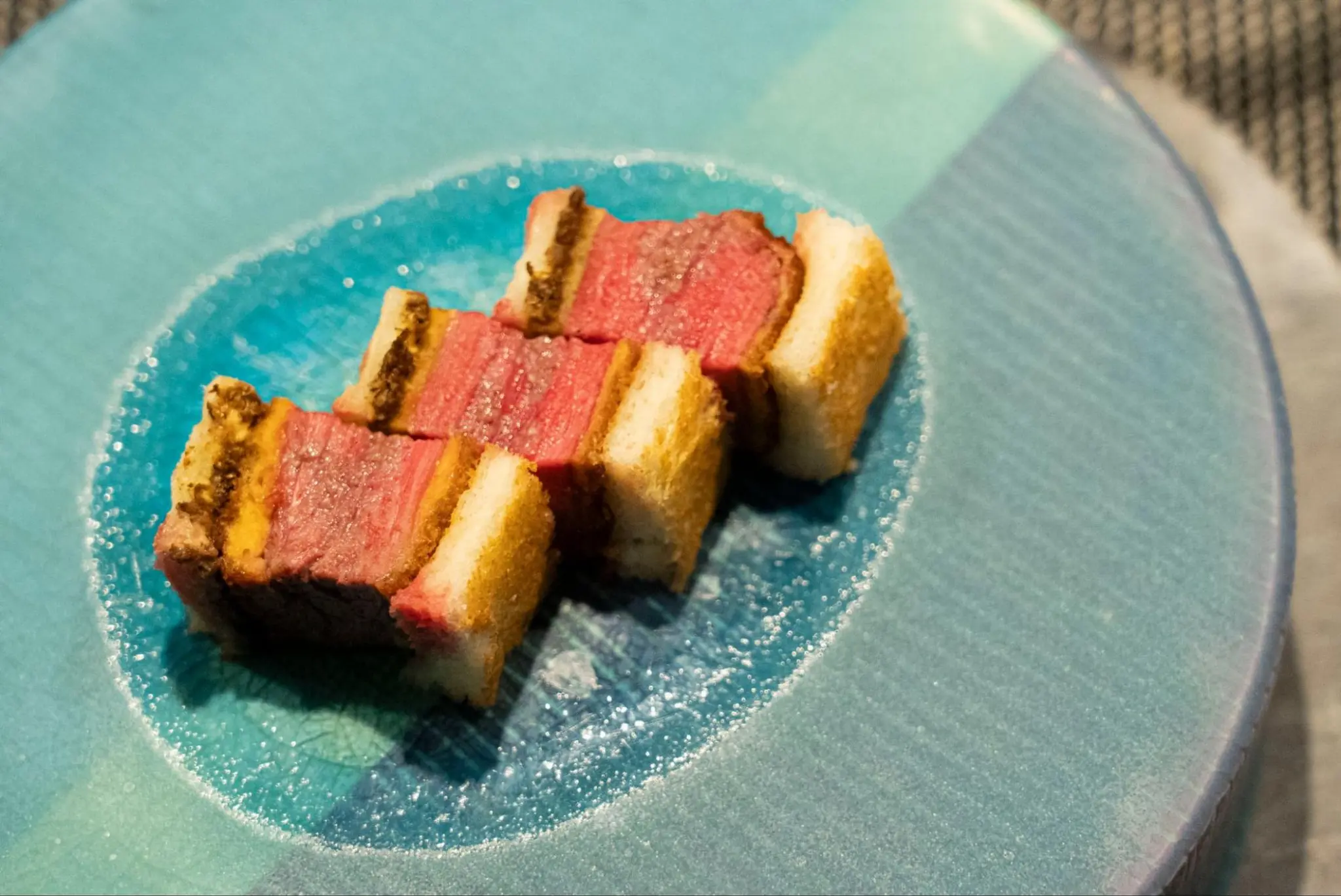
There was a time when I tried using freshly baked bread for our signature ostrich sandwich, but the bread’s aroma was so strong that it overpowered the ostrich, which was supposed to be the star of the dish. In Japanese cuisine and sushi restaurants, high-quality ingredients are often showcased on their own, highlighting their natural presence. However, in this case, the balance between the ingredients didn’t work well, making me realize how crucial it is to maintain harmony between different components. I always pay close attention to the balance of ingredients, ensuring that each element complements the others rather than overshadowing them.
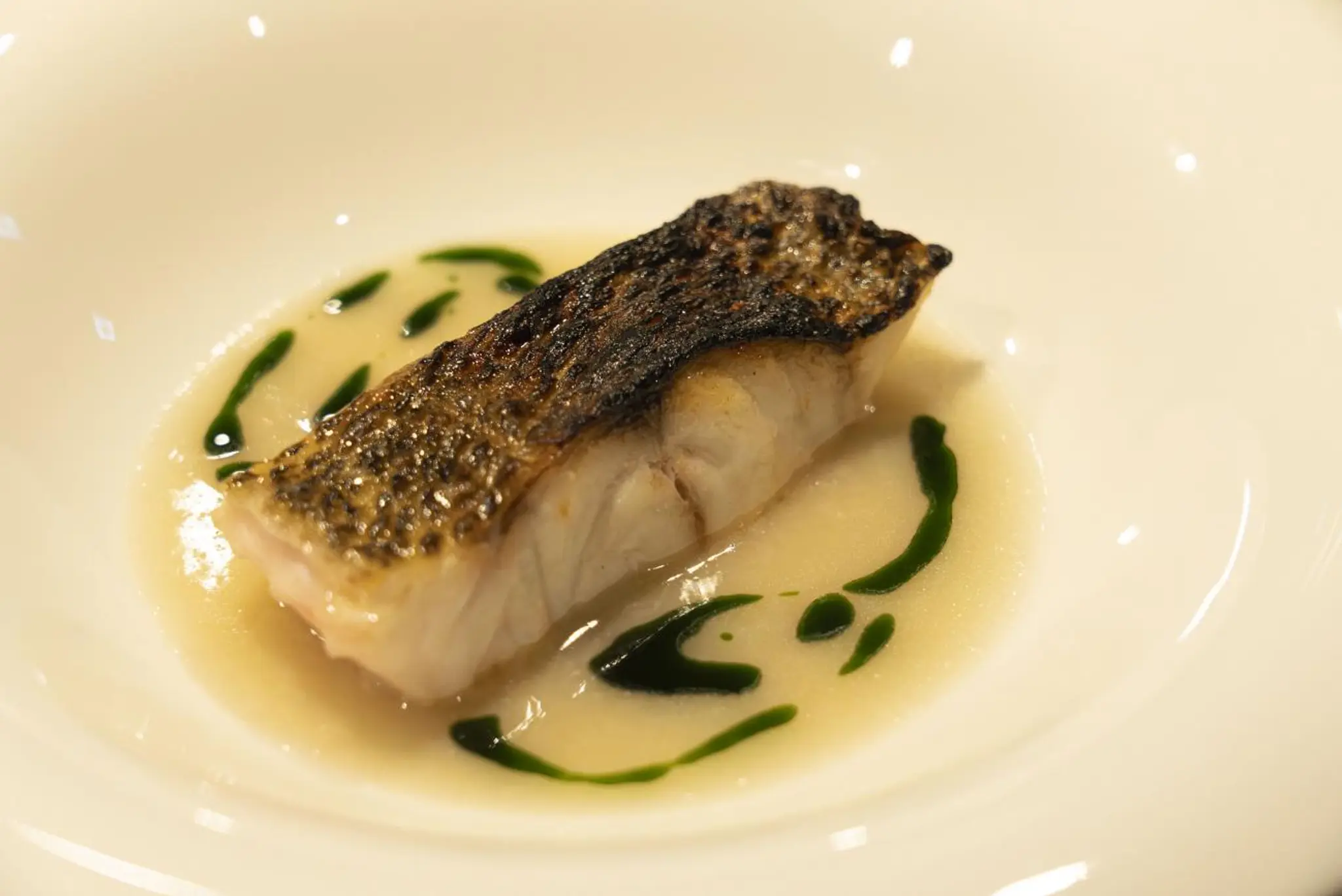
I generally aim to complete each dish with about three to four key components or techniques. In Michelin-starred restaurants, renowned chefs often have teams of dozens, each responsible for different sections such as meat, fish, or sauces. However, since I run this kitchen alone, I prioritize creating dishes that convey their deliciousness in a simple and straightforward way rather than relying on overly complex techniques. I focus on enhancing the natural essence of each ingredient without excessive manipulation. My goal is for guests to fully experience and appreciate what they are eating through all five senses, enjoying the dish in its purest form.
I want this to be a place where everyone’s "enjoyment" is created
―――What kind of restaurant do you want to create moving forward?
Of course, creating delicious food is important, but more than anything, I want this to be a place where everyone feels, "That was an enjoyable experience." I believe a restaurant is something that is built together by everyone involved. It’s not just about me as a chef—it’s about the manager overseeing the floor, the part-time staff supporting us in the kitchen and dishwashing, and the entire team working as one. If the staff aren’t enjoying their work, that feeling will inevitably be passed on to the guests. It’s not just about the customers; I believe it’s my mission to continuously create a space where everyone who gathers here can truly enjoy themselves.
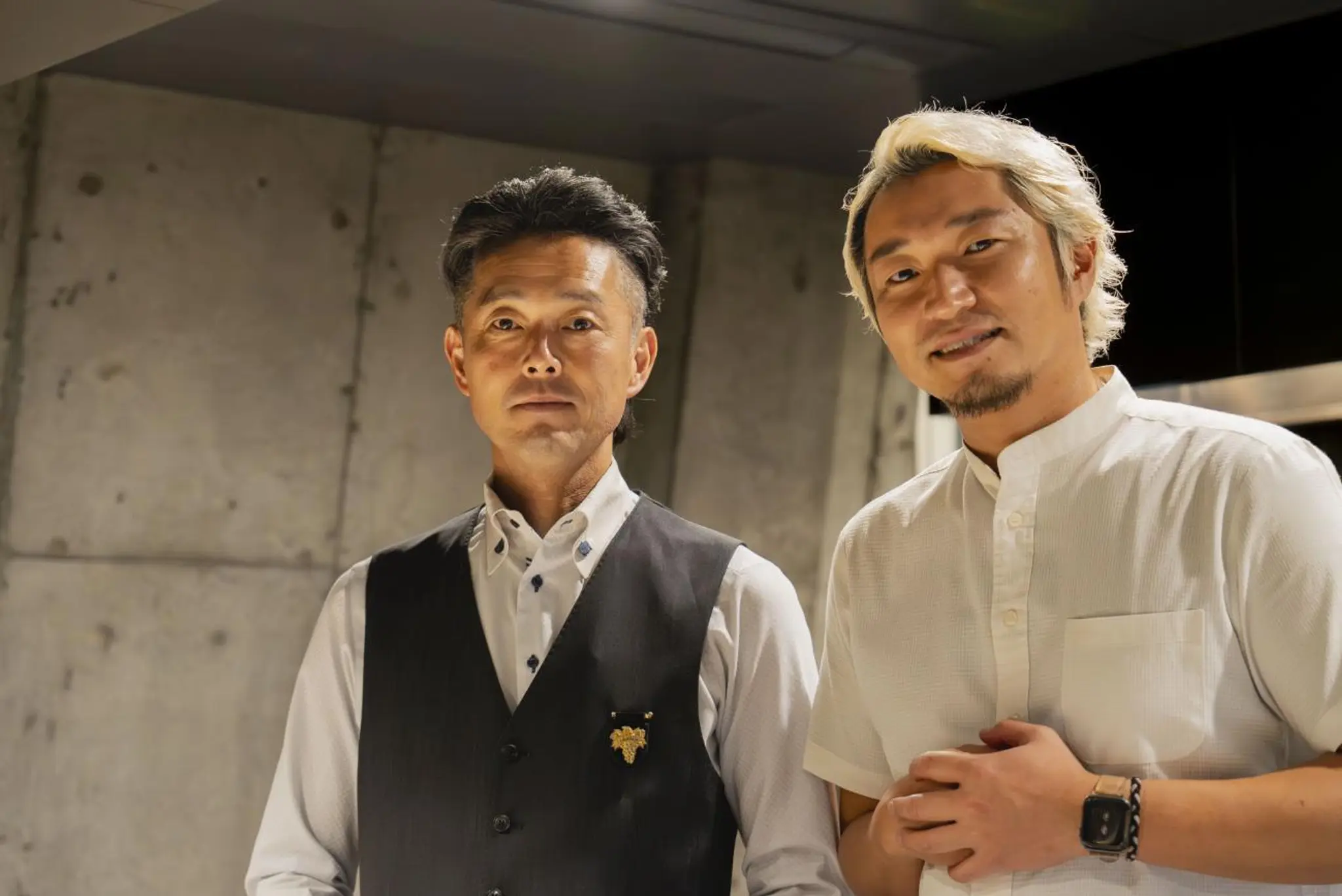
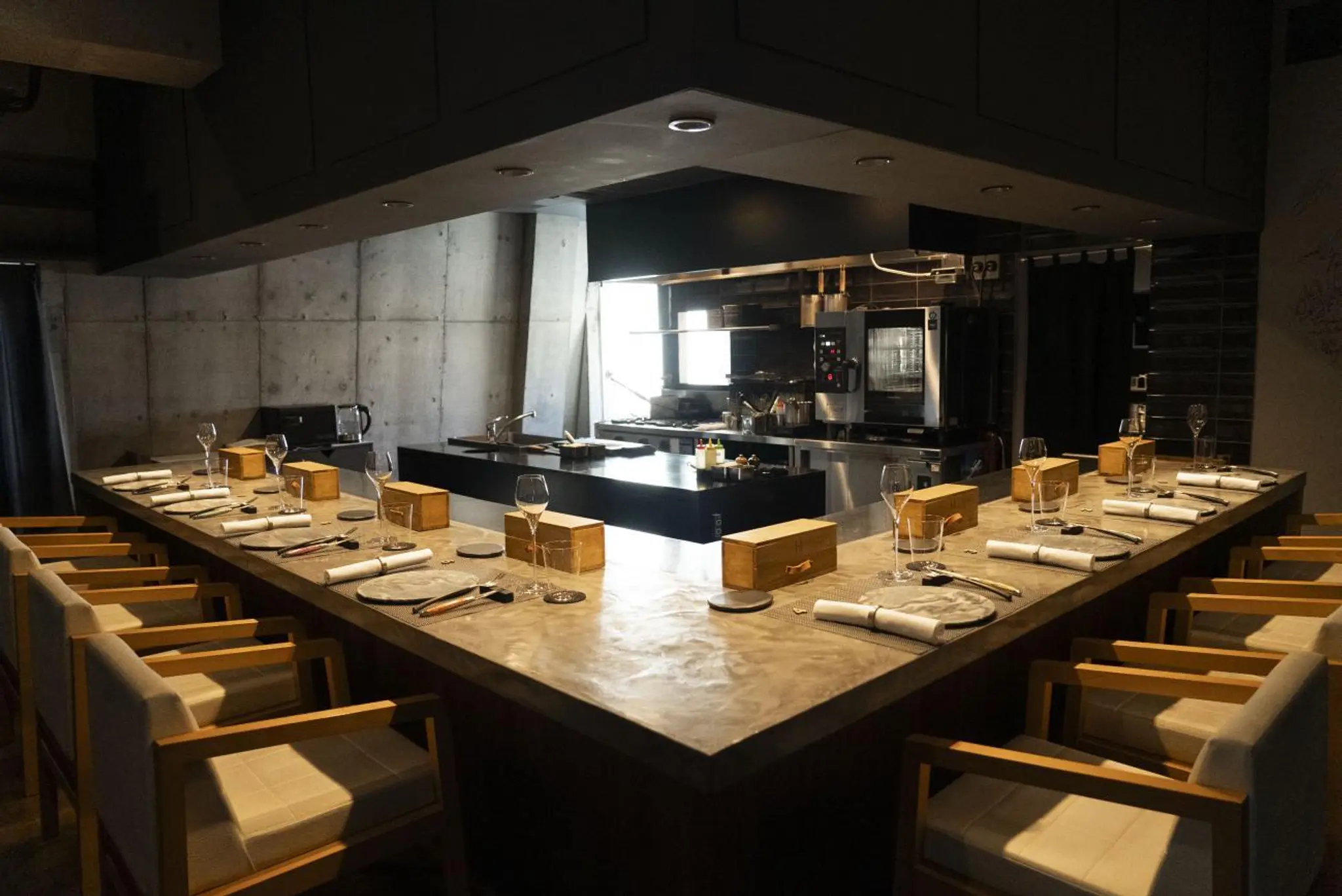
―――The L-shaped counter gives a sense of openness. How does this seating arrangement affect the dining experience and service?
As you can see, there is nothing obstructing the view of the kitchen in our restaurant. From opening the refrigerator or oven doors to slicing ingredients at the center counter, plating dishes, and serving meals—every aspect of the process is visible from each guest’s seat. The counter setup allows guests to fully experience the live atmosphere, immersing themselves in the aromas, sounds, and movements of our team, as well as the conversations we share. I believe this dynamic interaction is one of the unique charms of counter dining.
Additionally, since the distance between us and our guests is so close, we can clearly observe their expressions and reactions. Even in a space designed for "enjoyment," some guests prefer conversation while others appreciate a quieter experience—everyone has their own way of enjoying a meal. That’s why I always keep an eye on the overall atmosphere, ensuring that our interactions enhance the experience without disrupting the guests’ individual preferences.
Another important aspect is not missing small signs from our guests. For example, if a female guest wearing light clothing subtly places her hand on her arm, it might indicate that she’s feeling cold. In such cases, we consider adjusting the room temperature or offering a lap blanket to ensure her comfort. Regardless of whether a restaurant has Michelin stars or not, meticulous attention to detail is essential. That’s why I constantly share this mindset with my staff, ensuring that we all remain attentive to even the smallest cues from our guests.
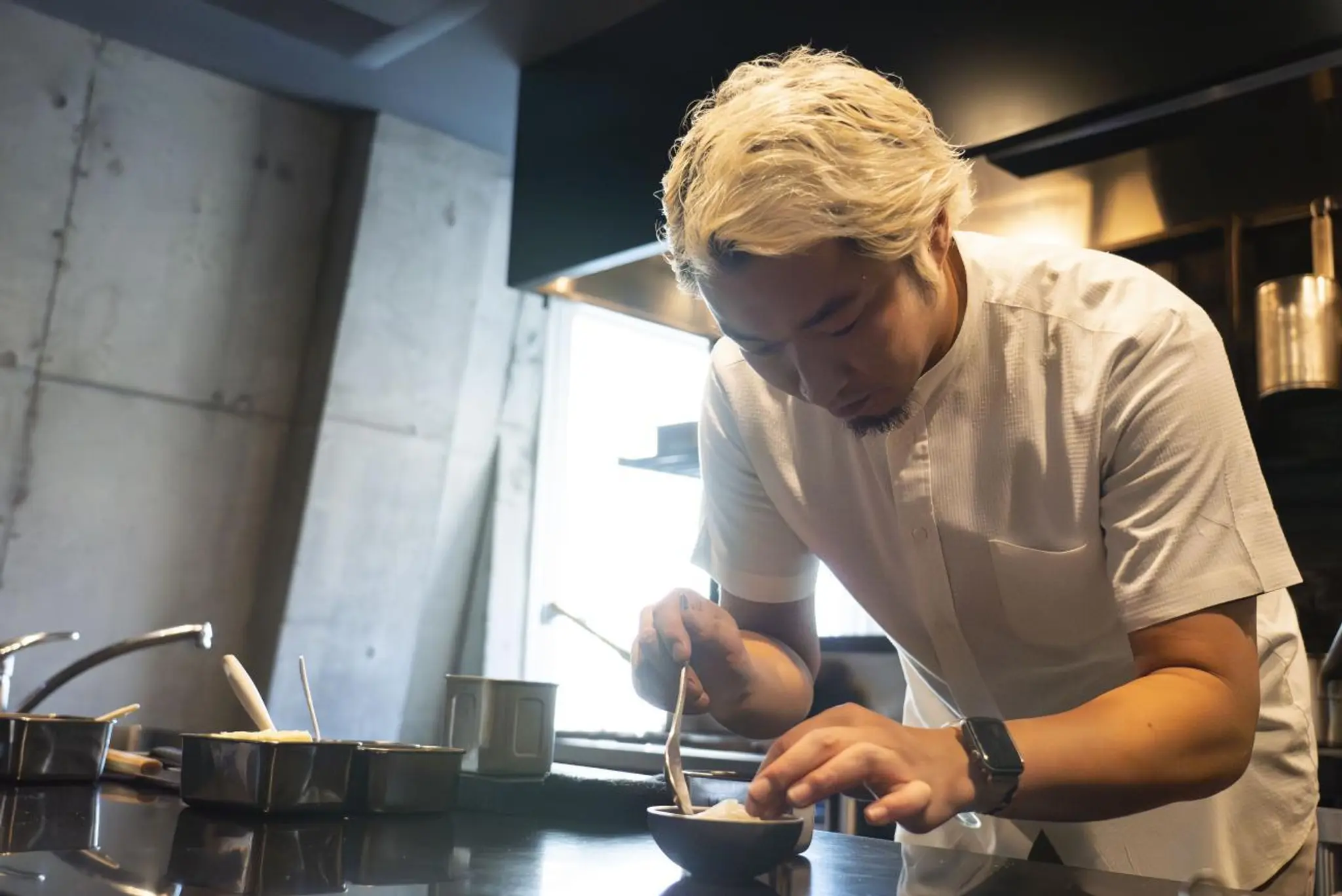
"Oishii" is a universal language that connects the world
―――Could you share any future plans or visions you have?
There are many things I want to do. First, I want to further expand the range of cuisine offered at 【H1】. One key focus is strengthening our à la carte menu. This is a new initiative since becoming independent—starting from 9 PM, we offer reasonably priced à la carte dishes, allowing not only guests who have enjoyed our course menu but also those visiting as a second stop to experience and enjoy our food.
The second plan is that a new chef will be joining our team in May next year. He is a colleague I worked with in Italy, and I’m really looking forward to it. With his addition, the variety of dishes we offer will expand beyond just my own style, bringing in new nuances and perspectives to our cuisine.
The third plan is that I may travel overseas next year to collaborate on a special dinner event at another restaurant. Collaboration events provide a valuable opportunity to learn about different chefs' approaches to cuisine and service. They also allow us to reflect on our own cooking and hospitality from a fresh, objective perspective. I plan to share these experiences with my staff and use them to enhance the management and operation of our restaurant.
Outside of 【H1】, I am also considering the idea of opening a slightly more casual restaurant. The location and details are still undecided, but if I find the right place and the right people, I would love to take on this challenge. One day, if a young chef with a dream of creating their own unique cuisine joins us, I want to support them in their journey. My goal is to create a space where we can grow together, take on new challenges, and provide opportunities for young talent to shine. I want to build a company where everyone finds joy in what they do, and to achieve that, I will never stop evolving.
―――Lastly, what does "delicious" mean to you, Mr. Horie?
I believe that "delicious" is something that brings smiles to people's faces. In Europe, especially due to the influence of anime, the Japanese word "Oishii!" is surprisingly well understood across different countries. When we look at the world, there are complex issues such as differences in skin color, culture, and religion. However, among the essential aspects of life—clothing, food, and shelter—it is "food" that has the power to instantly connect people and bring happiness. As a chef devoted to the pursuit of "deliciousness," I am constantly connected with producers, staff, and guests through food. Moving forward, I want to continue enjoying the process of weaving this shared appreciation for "Oishii" together with everyone.
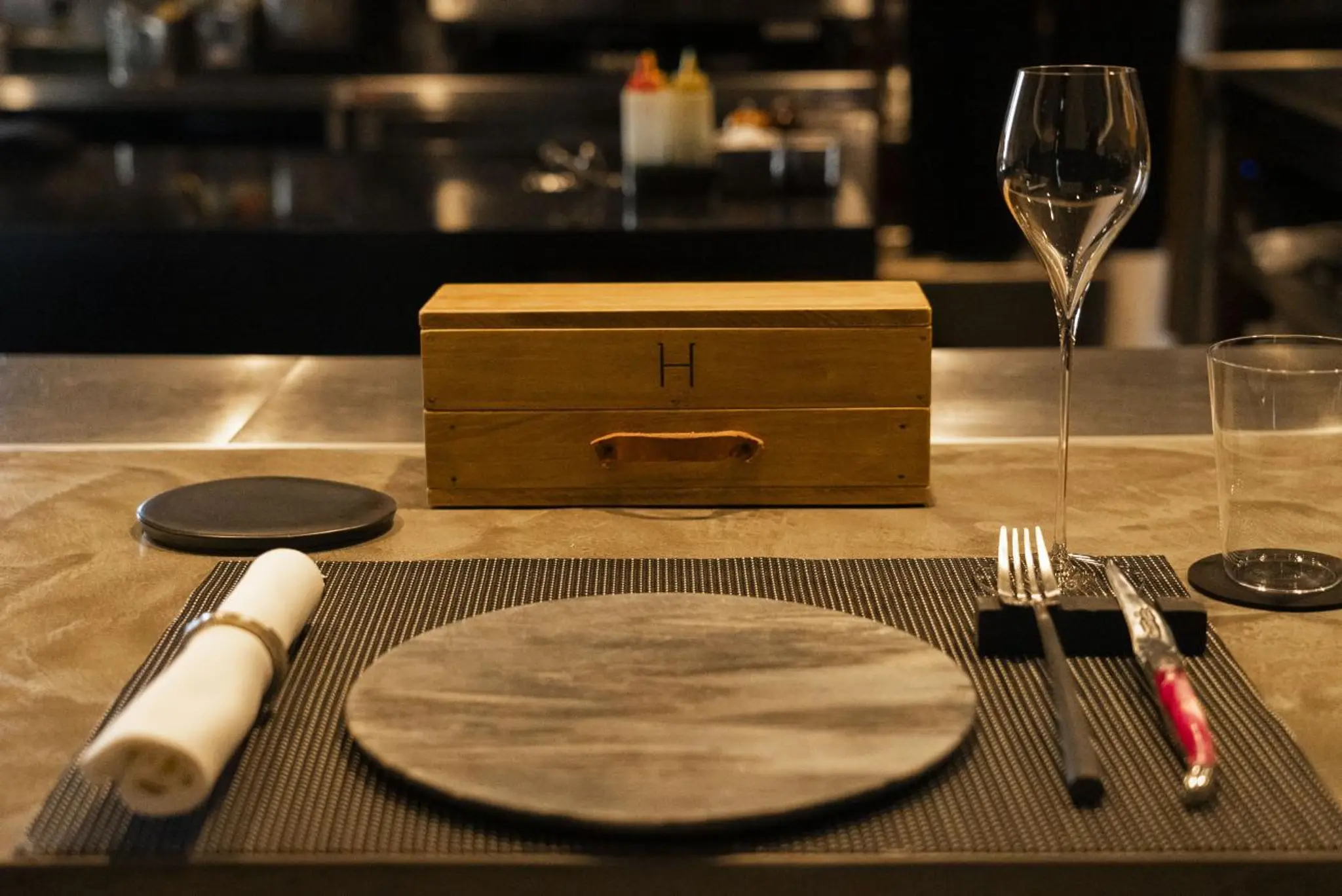
At each counter seat, a list begins with the words "SPECIAL THANKS TO ARTISAN", displaying nearly 20 ingredients along with their origins, suppliers, and the names of the producers. This not only allows guests to enjoy imagining the flavors but also creates a deeper story behind each dish as it is served before them. When presenting the dishes, Horie himself explains each ingredient, and it is truly impressive that he remembers every detail. His deep sense of hospitality toward guests, respect for ingredients and producers, and passion for creating cuisine are evident in every aspect of his work.
Now, as Horie embarks on this new chapter, beloved by many loyal guests, one can’t help but wonder how he will continue to add color to the history of 【H1】. His journey will surely be one to watch.
Interview & Writing: Yuri Yanagiya
Photography: Azusa Nakaoka
Restaurant Information
- AutoReserve Magazine
- The hottest new shop right now
- Food connects people, leading to "enjoyment." Adding new value to Italian cuisine at Ebisu【H1】