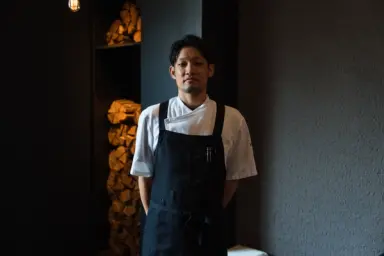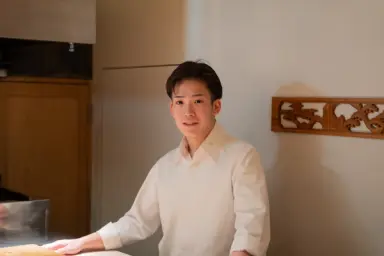
Table ENSO L'asymetrie du calme】 With delicate yet bold ideas, the chef of 【Installation Table ENSO L'asymetrie du calme】 elevates cuisine to the heights of gastronomy.
From Aspiring Washi Artisan to the World of Japanese Cuisine – Drawn to the Unified Beauty of Food and Tableware
ーーーI heard that before becoming a chef, you aspired to be a washi (Japanese paper) artisan.
Yes, that's right. When I actually started training as a washi artisan, it didn’t quite feel right for me, and I found myself in a state of frustration. Seeing my classmates advancing to university or pursuing their own passions, I kept asking myself, “What is it that I truly want to do?” But I had no idea how to move forward, and I felt lost in life.
ーーーHow did you then find your way into the culinary world?
In an effort to broaden my horizons beyond being a washi apprentice, I started working part-time at a Japanese restaurant. It was there that I discovered the joy of cooking. Japanese cuisine has a deep-rooted tradition, with graceful gestures like how to hold chopsticks and the formalities surrounding soup bowls. In traditional restaurants, a wide variety of dishes are used, and the way food is presented on the plate is considered very important. The Japanese culinary philosophy that “food and tableware are one” has become a foundation for my own approach to cooking.
Once I started cooking, I felt with certainty, “This is the path I want to pursue.” Though the training was tough, I genuinely enjoyed it. The hierarchical environment was strict, but I think I was able to overcome it because I have a strong mental fortitude (laughs).
ーーーWere you already interested in French cuisine at that time?
I was drawn to the delicate presentations in Japanese cuisine that reflect the changing seasons, as well as to its simple cooking methods that bring out the natural flavors of the ingredients. However, I wanted to acquire techniques that couldn’t be learned through Japanese cuisine alone. So, while working at a traditional Japanese restaurant, I also used my days off to work part-time at French and Italian restaurants.
When I first started learning French cuisine, I was confused by how different it was from Japanese cooking. Japanese cuisine is often referred to as "subtractive cooking," where the aim is to highlight the essence of the ingredient by removing anything unnecessary. In contrast, French cuisine is "additive cooking," where layers of ingredients and seasonings are combined to create new flavors and textures—completely the opposite. I eventually took on the role of head chef at a French restaurant, and through that experience, I naturally incorporated elements of French cuisine into what I create now. That said, the dishes we serve here are quite different from traditional French cuisine. I don’t confine myself to any particular genre—I simply cook what feels true to my own style.
Influenced by the European Style of Using Local Seasonal Ingredients
ーーーI heard you also trained overseas?
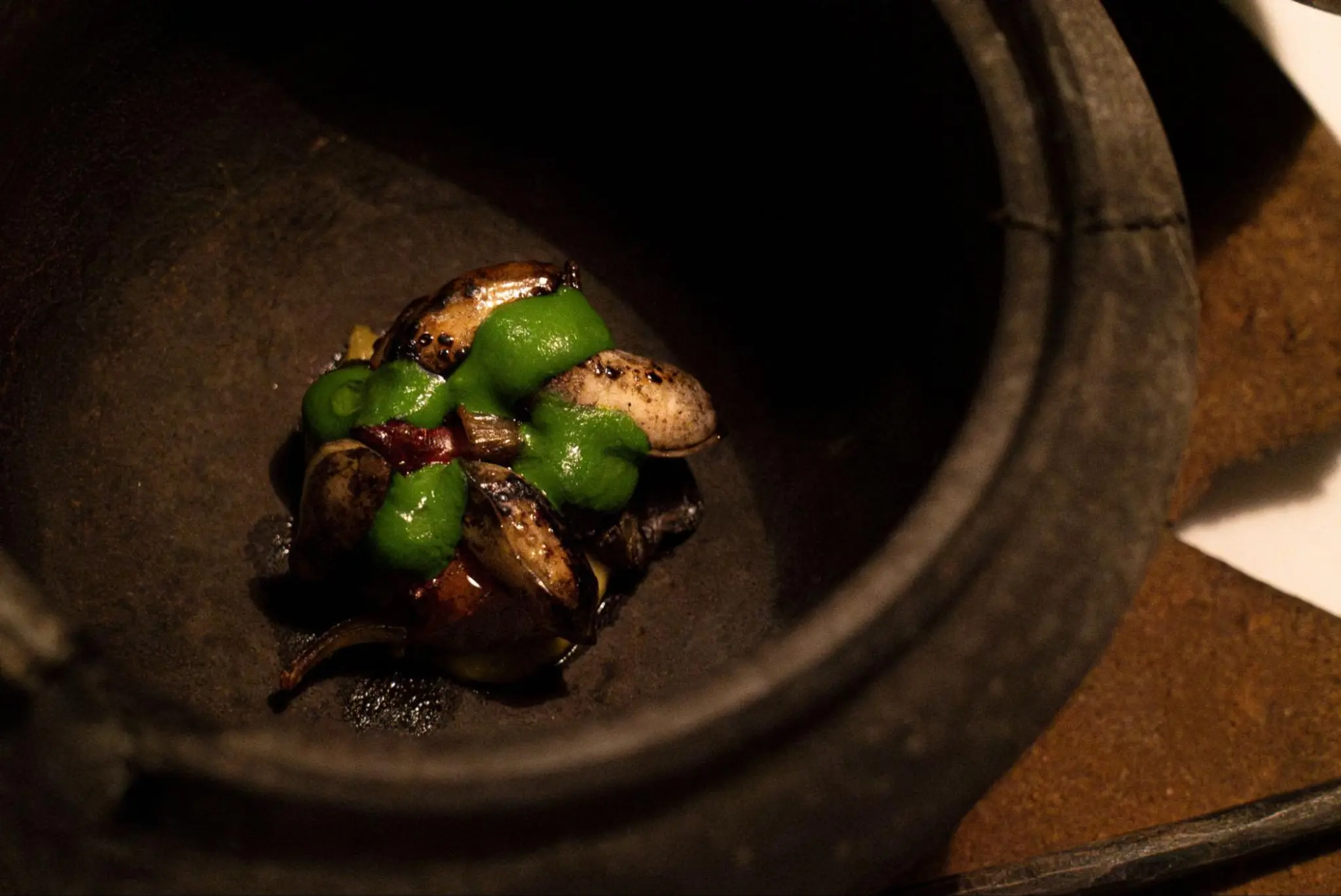
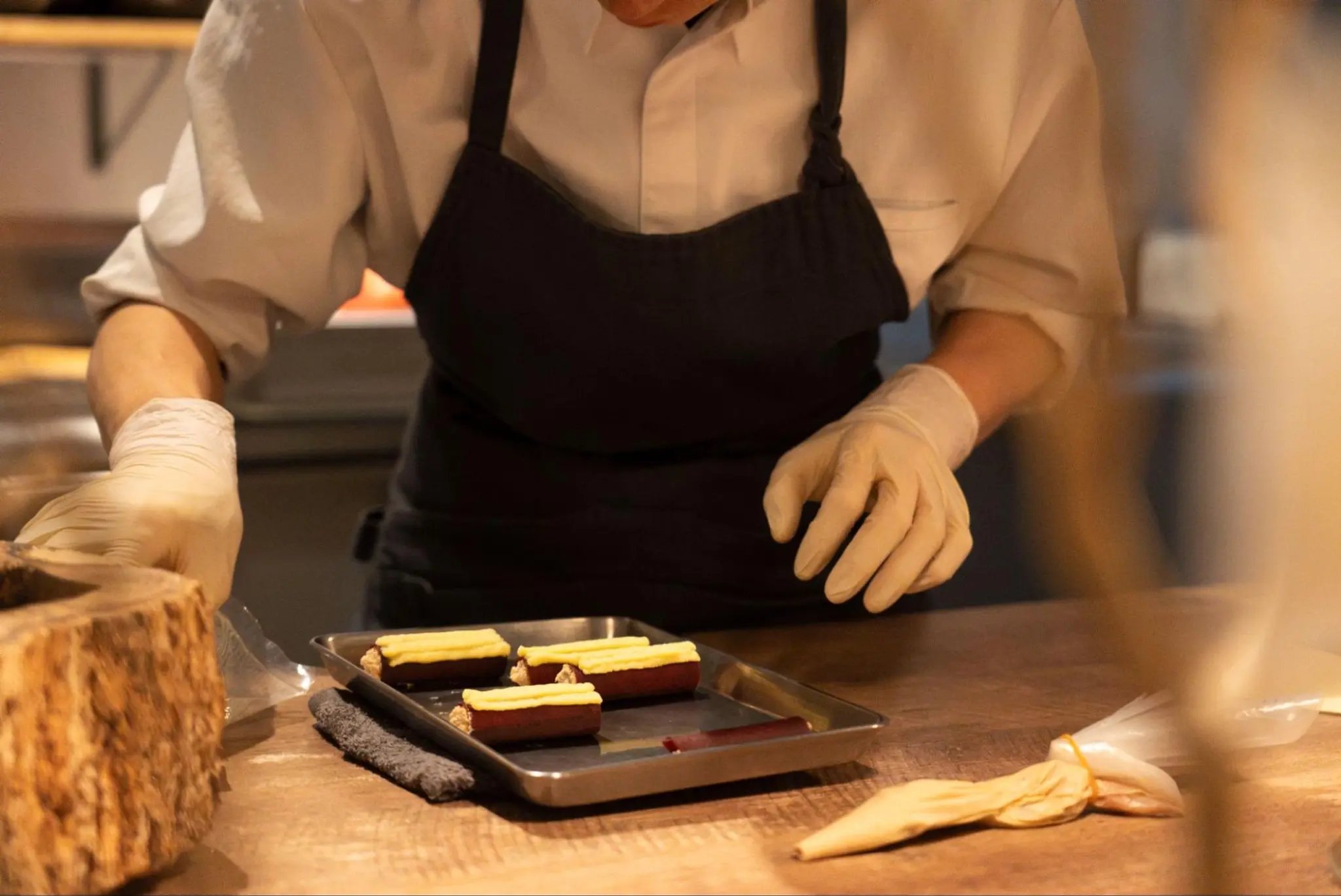
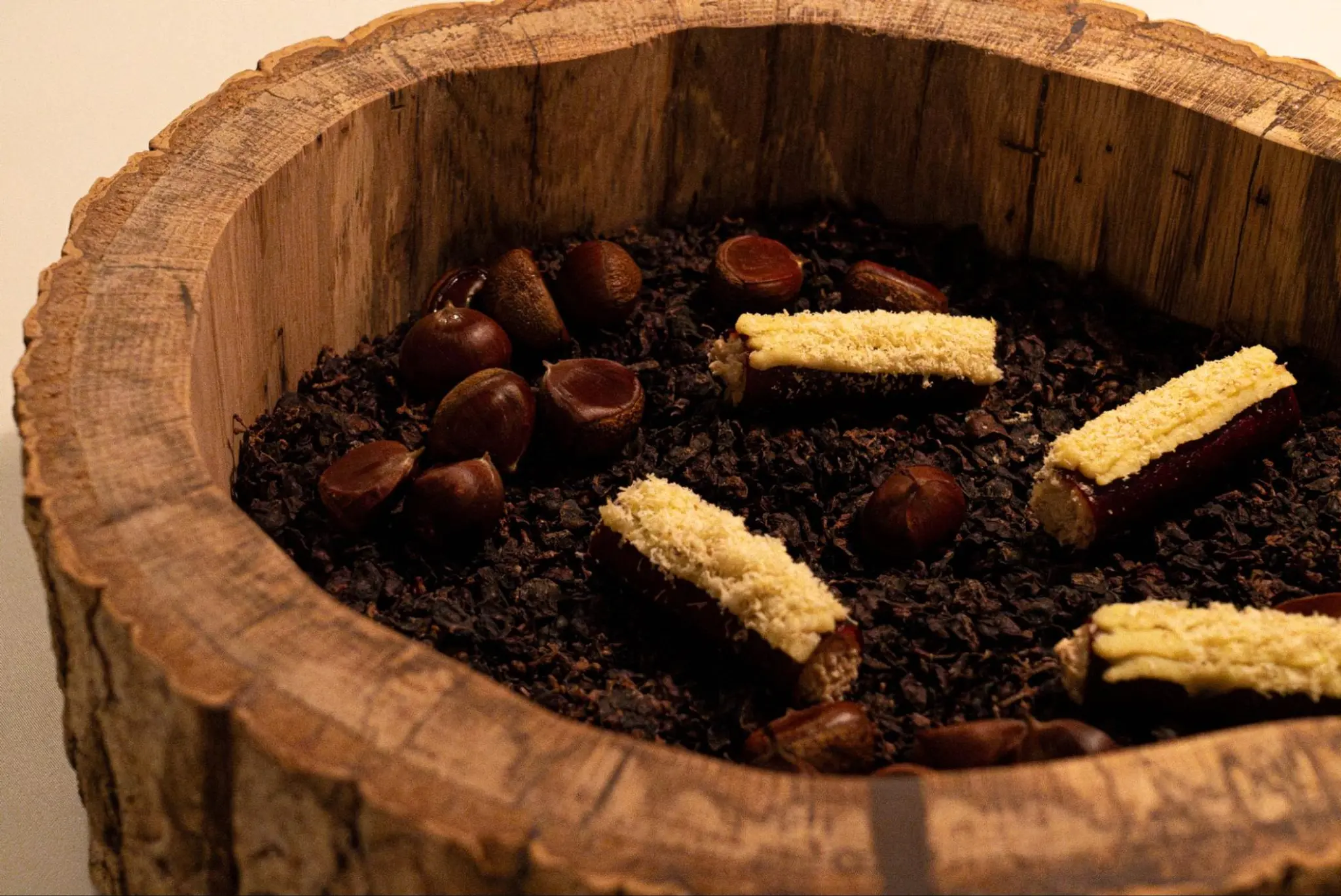
Yes, I went to Europe because I wanted to see and experience things for myself. I was particularly interested in how chefs overseas think when they create their dishes. I believe that the way one approaches cooking and how one manages a kitchen are aspects that are deeply influenced by direct human interaction and experience. When I actually went abroad, I was truly impressed by the chefs I met and their dedication to exploring ingredients. Especially in Northern Europe, the range of ingredients that can be harvested is much more limited compared to Japan. That’s precisely why I felt their passion for making the most of what they had. What left a lasting impression on me was how restaurants in the countryside, even more so than those in the cities, were devoted to using local ingredients. I worked in restaurants that deeply resonated with me—not only in Switzerland, but also in France, Sweden, Denmark, and Finland. The style of cooking that uses what’s available in the region in the most natural way possible has had a tremendous influence on my current culinary philosophy.
ーーーAfter returning to Japan, did you experience any changes in your mindset compared to before you went abroad?
After coming back to Japan, I returned to Tokyo for a time and was even offered the opportunity to work as a head chef there. I do believe Tokyo is an amazing environment where top-quality ingredients from all over the country are gathered, making it an ideal place to cook with the very best. However, after gaining overseas experience, I became more attuned to the culture and climate of a particular place. That’s why I decided I wanted to cook in an environment that truly resonated with me—one where I could engage closely with the changing seasons and nature itself. So, I began searching for a place where I could open my own restaurant.
ーーーOut of all the regions in Japan, what led you to choose Kanazawa?
I knew from the start that using fresh seafood was a non-negotiable for me, so I was considering either Onomichi in the Seto Inland Sea or Kanazawa, both known for their abundance of seafood. When I actually visited Kanazawa and traveled around the Noto Peninsula, I was captivated by the rich variety of both seafood and mountain produce. I also realized how close the city is to the production areas, making it easy to meet with producers directly. In addition, Kanazawa offers a unique blend of traditional culture, crafts, and historical architecture alongside modern elements. It’s a compact and convenient city, and that ease of movement also appealed to me. All of these factors led me to choose Kanazawa as the place to start my own restaurant.
ーーーThe interior has such a warm, wooden feel with a touch of retro charm. It’s beautiful.
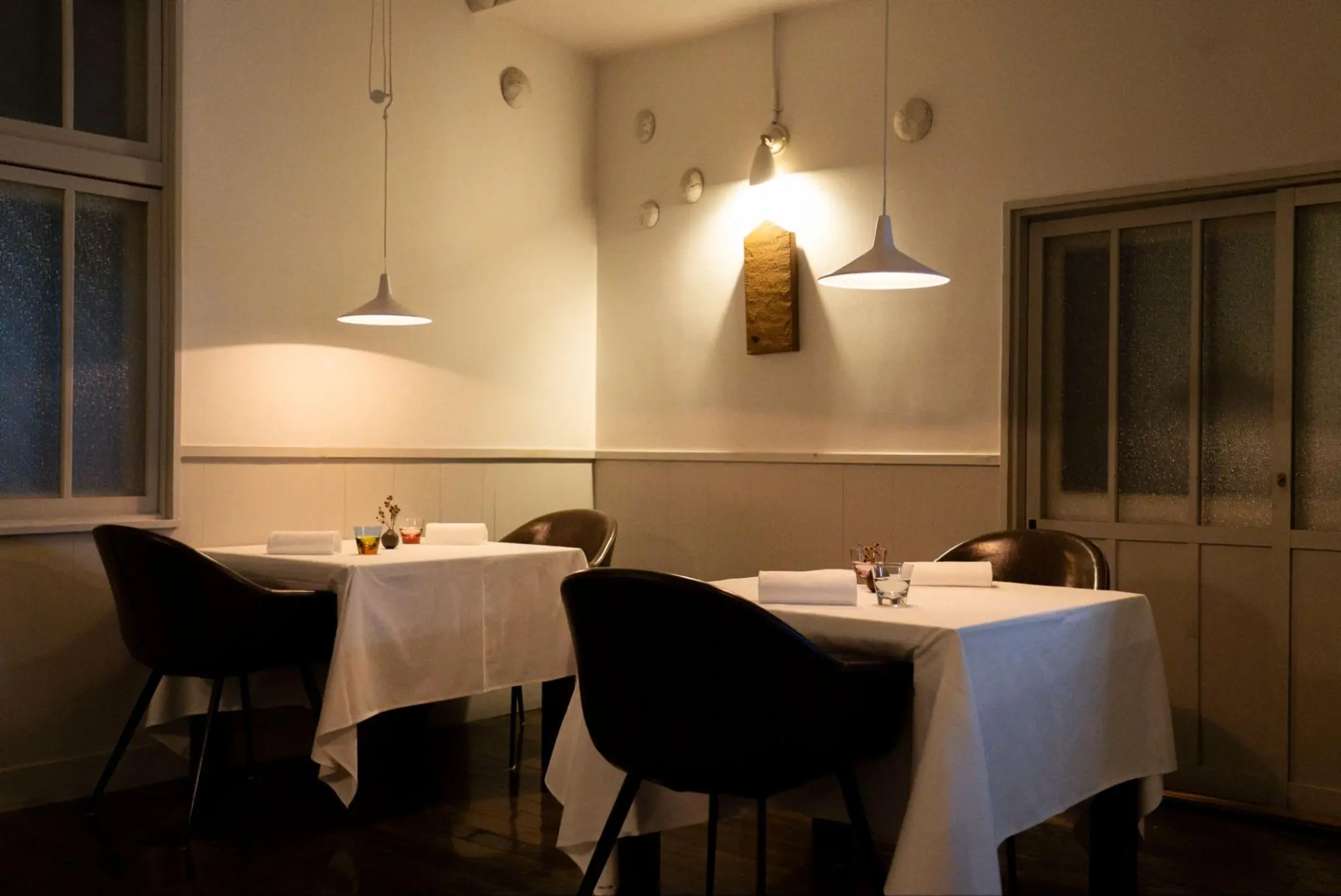
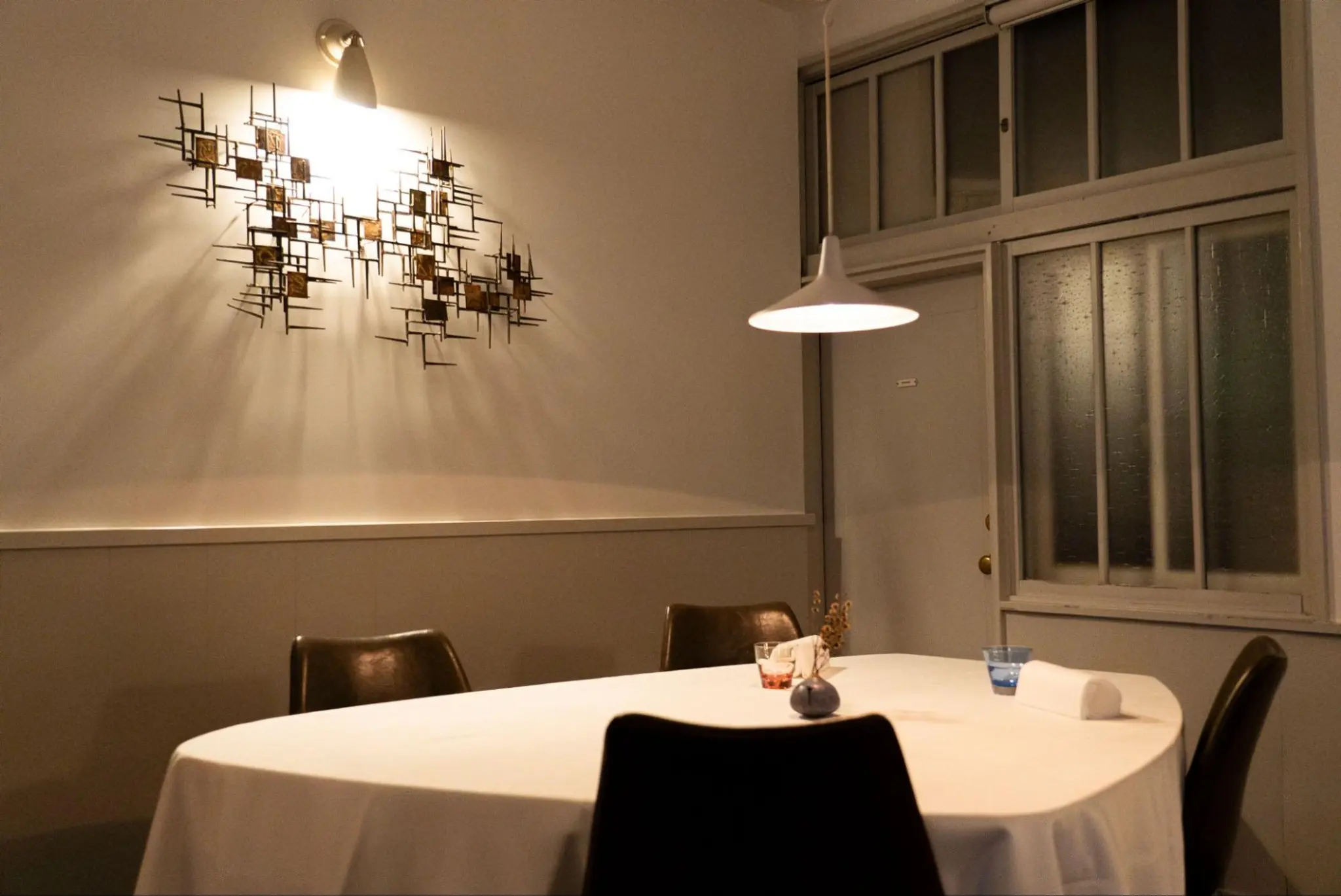
This building was originally a dressmaking school built in the Meiji era. I happened to come across it and immediately fell in love with it, so I decided to renovate it into a restaurant while preserving the character and charm of that time. Ever since I was a child, I’ve had many opportunities to be around antiques, and I’ve always been more drawn to things that have aged over time and developed a unique charm—beauty that you just don’t find in new things.
ーーーCould you tell us the meaning behind the name of your restaurant?
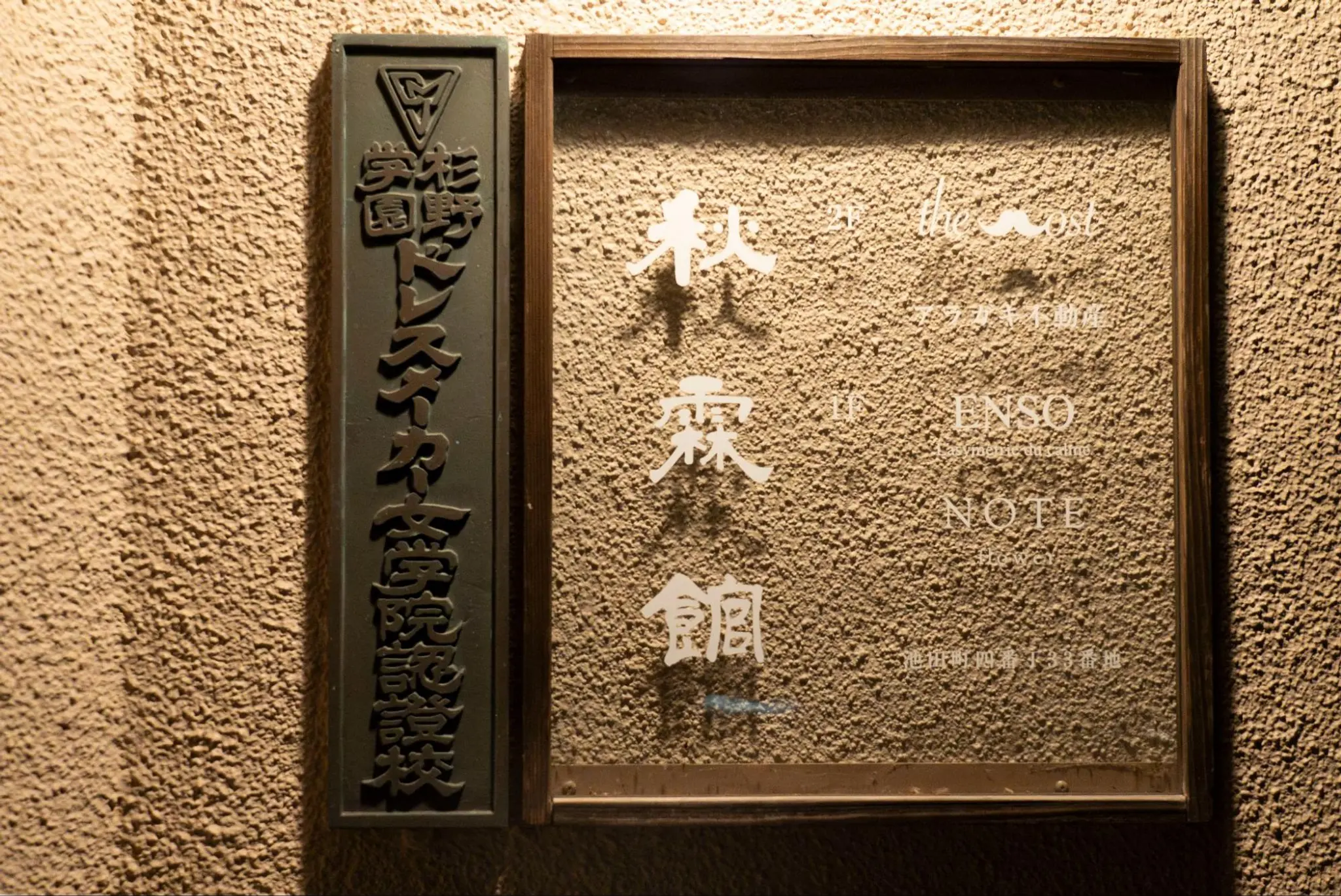
The name of the restaurant, 【Installation Table ENSO L'asymetrie du calme】, includes the word “ENSO,” which refers to a simple seasoning—just lightly salted. I chose it because I wanted to convey the importance of simplicity. The dishes I actually create might have strayed a bit from that simplicity (laughs), but at the core of my philosophy is a desire to make cuisine that brings out the natural flavors of the ingredients in a simple way.
However, I felt that “ENSO” alone wasn’t enough to express everything I wanted to convey. So I added “L'asymetrie,” meaning asymmetry, and “calme,” meaning calm or tranquility. “Installation” is an art term referring to a space that is experienced as a complete work of art. I want guests to enjoy not only the food, but also the smells, sounds, and the full atmosphere—including the view of the kitchen and even the chef’s footsteps.
Valuing a Sense of Live Experience, Expressing the Real World of Food
ーーーHow has it been since opening your restaurant?
For about a year and a half after opening, it was quite tough to get the business off the ground. Financially, things were challenging, and I often received discouraging comments from those around me. However, one guest said to me, “This restaurant will definitely become a place where people gather.” Those words became a source of encouragement, and I’ve continued to push forward without fear of change.
ーーー In your journey of creating dishes, do you feel you’ve grown in any way?
My top priority is always for the guests to enjoy themselves, but I also think it’s important to consider what additional value I can offer on top of that. Rather than fixating on technique or culinary skills, I want to bring a sense of freshness to the dining experience—not only for myself, but also by inspiring the guests’ palates in new ways. It’s incredibly difficult to execute the vision I have for each dish perfectly, and I continue to struggle with it—but I work hard every day, refining my craft with that goal in mind.
ーーーWhat is most important to you when creating your dishes?
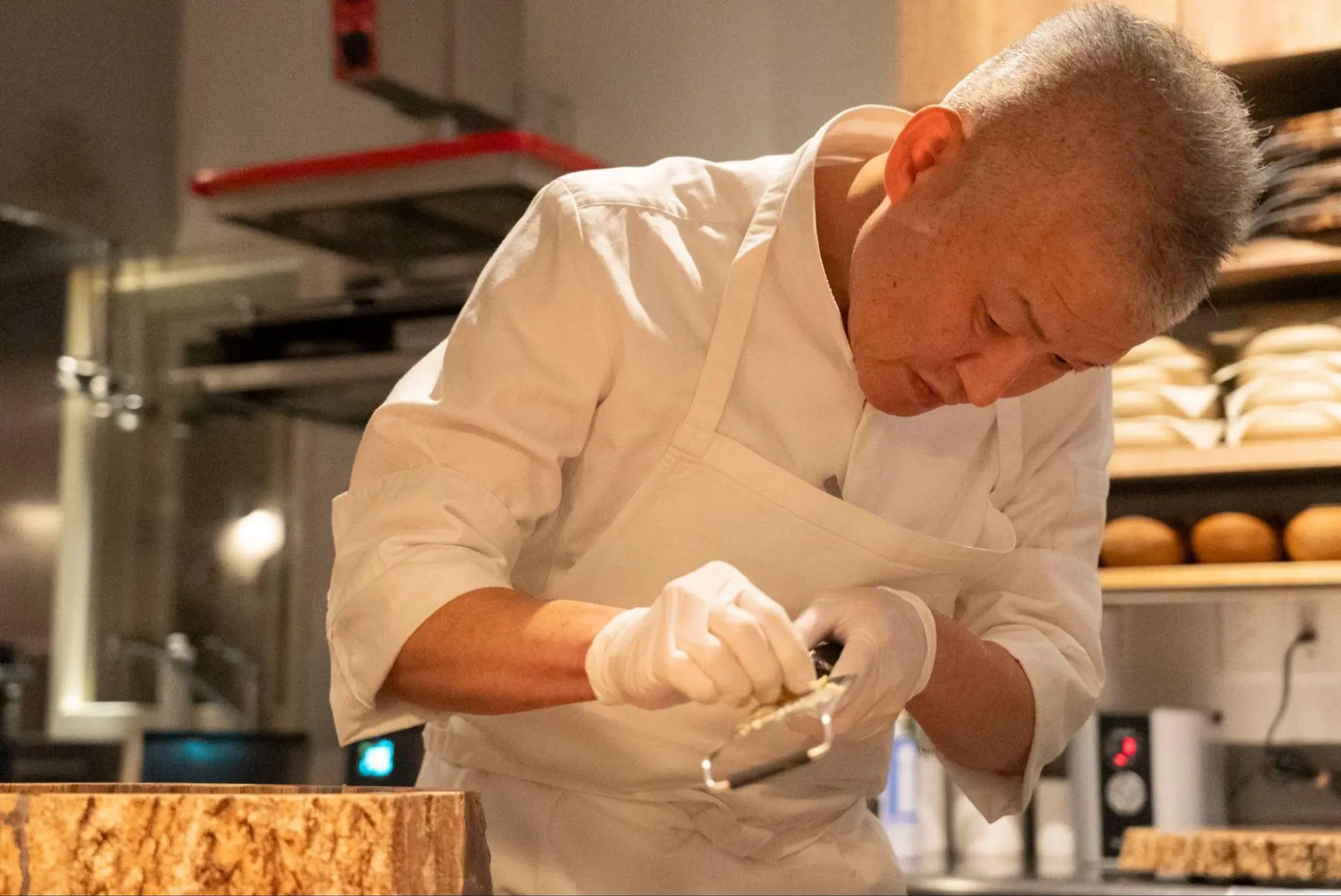
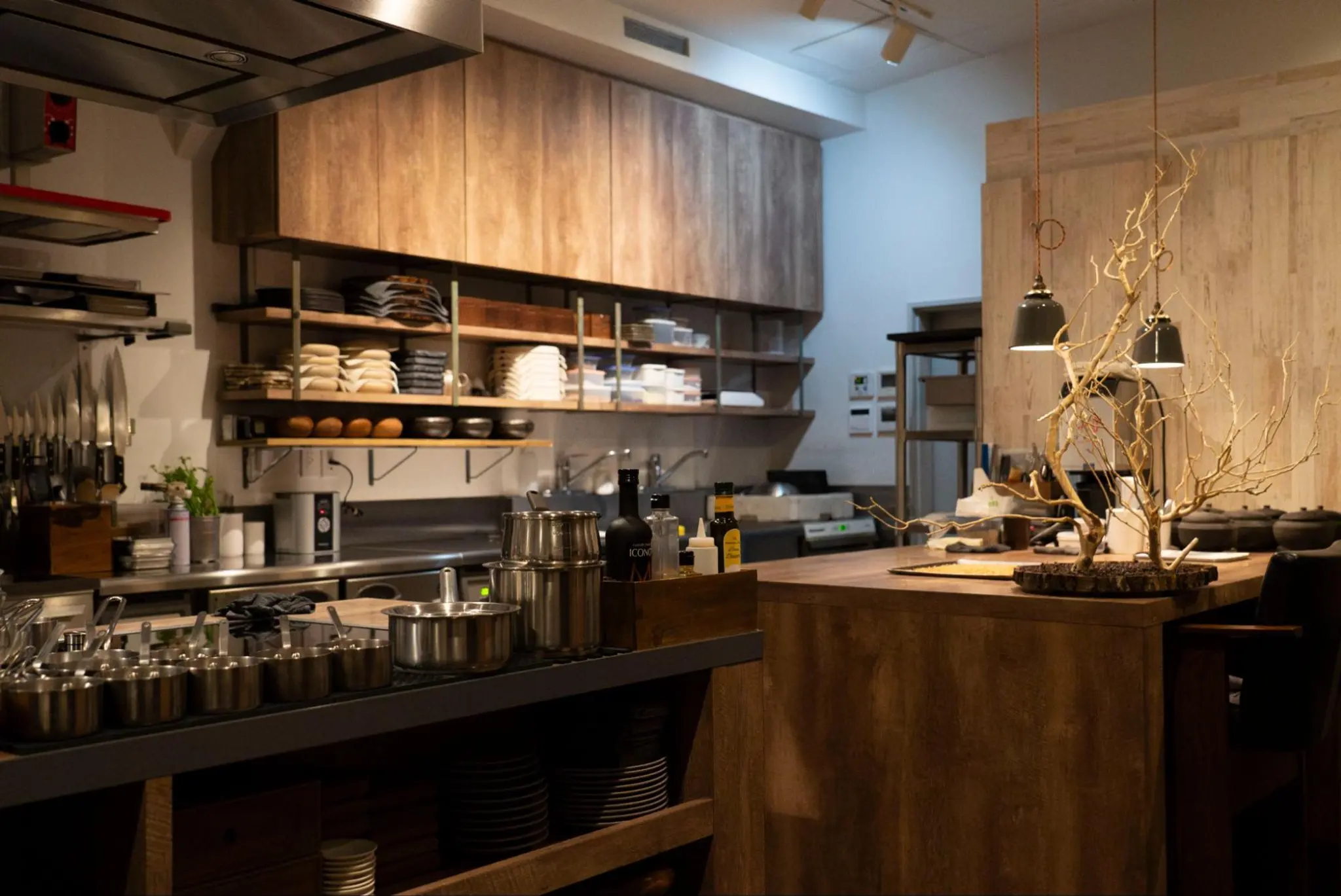
I place great value on pursuing a sense of reality—expressing a culinary world that allows guests to truly feel the atmosphere of the moment. In other words, I strive to create "dishes with realism." Our restaurant is compact, and the distance between us and the guests is very close. There are no walls separating the kitchen from the dining area. It’s an open kitchen, where guests can watch the cooking process unfold before them and enjoy the entire space as part of the experience. Creating a setting that offers a sense of live performance is something I care deeply about.
ーーーI heard you don’t have a traditional, written menu?
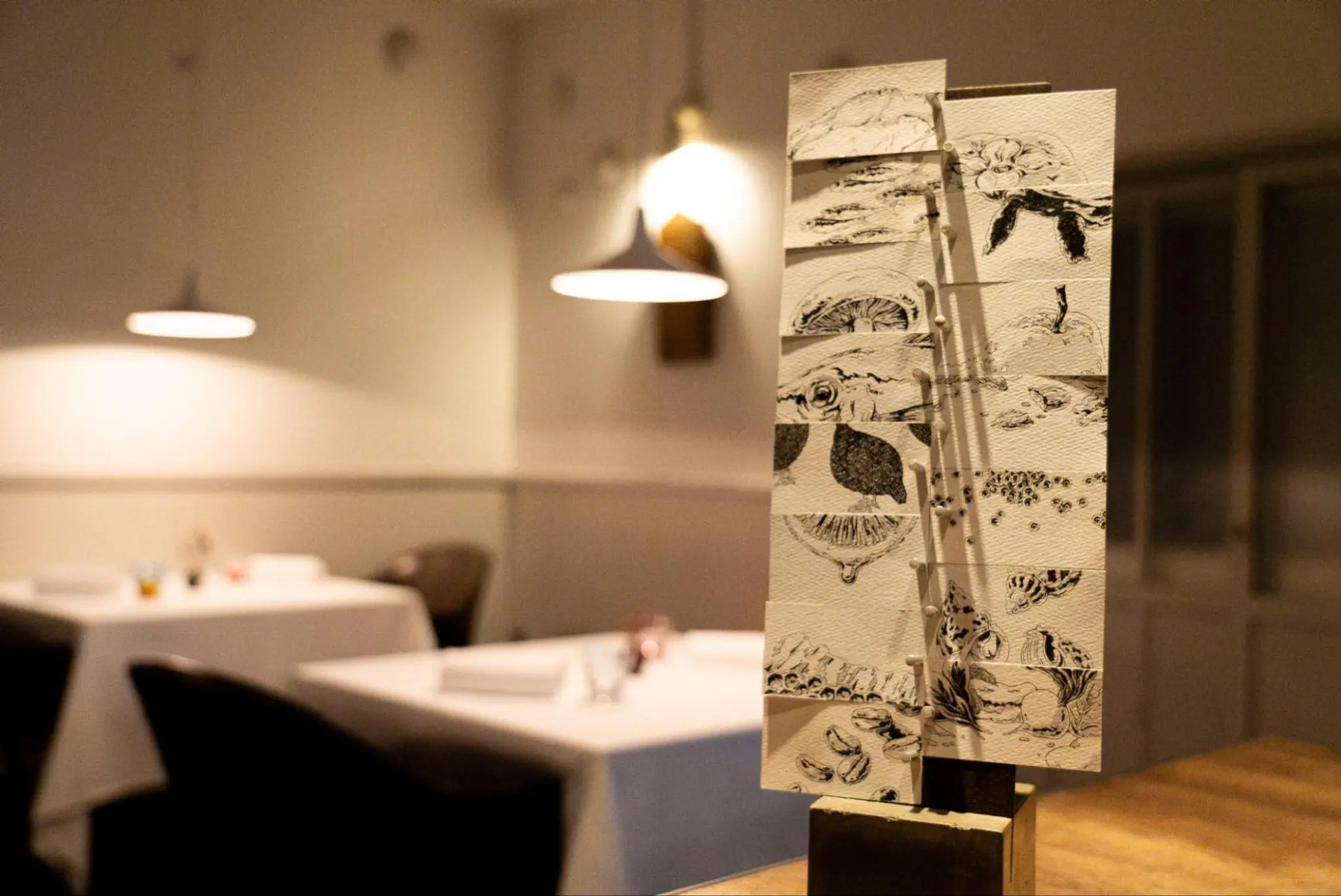
That’s correct. Instead of naming each dish, we present them as black-and-white illustrations. A panel made up of these drawings is placed on each table. I started using illustrations for the menu because I wanted to create an exciting and imaginative atmosphere where guests could let their curiosity roam.
It encourages conversation—people start wondering what’s coming next—and that becomes part of the enjoyment and builds anticipation. Since our course includes more than 10 dishes, this system also allows us to be flexible: if we want to change just one dish to reflect the season, we can simply swap out one illustration, making it easy to adapt to changes in ingredient availability.
Pursuing the Ideal Form of Cuisine While Drawing Inspiration from the Outside the Kitchen
ーーーHow do you approach the visual beauty of your dishes?
There’s a famous quote by Rosanjin Kitaoji: “Tableware is the kimono of cuisine,” and I truly believe that to be the case. When I was training in Japanese cuisine, we would sometimes use authentic Rosanjin pieces at the ryotei. Honestly, when I looked at the plates alone, I couldn’t quite understand their value. But the moment a dish was plated, everything came together—the beauty of the food was instantly elevated. That experience made me realize that harmony between food and tableware is essential. With Rosanjin's pieces, no matter who does the plating, the dish looks stunning. To me, that’s the sign of truly great tableware. That’s why I place a lot of importance on the dishes I use, and everything I learned through Japanese cuisine has become the foundation of who I am today.
ーーー Where do you draw your inspiration from when creating dishes?
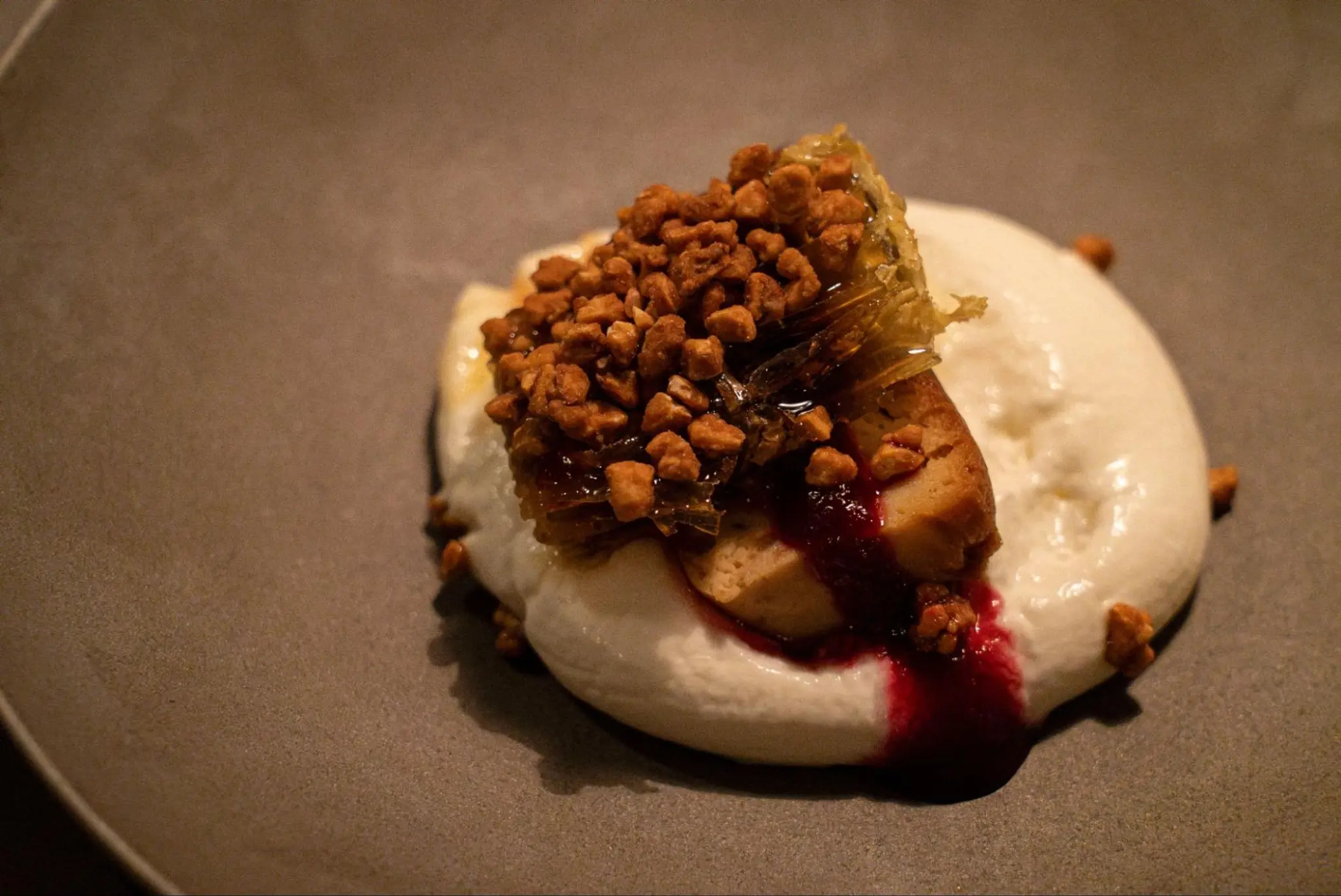
The greatest source of inspiration comes from meeting producers. For example, in the dessert I served today, I shaved beeswax with a knife in front of the guest and added honey right there. That idea came to me when I visited a beekeeper. I was given a piece of honeycomb to try on the spot, and I was so moved by how delicious it was that my entire perception of honey changed. It wasn’t just the taste—it was the experience of eating it straight from the hive that created a sense of visual and emotional freshness. In addition to touching and seeing ingredients in their place of origin, just listening to producers share their stories can also spark new ideas. And of course, it’s not only about spontaneous inspiration. I believe that all the people I’ve met, the ingredients I’ve encountered, the philosophies and techniques I’ve learned since I was born—all of it comes together to form the inspiration I feel in each moment.
I often find myself inspired by conversations with people from different fields—such as architects or ceramic artists. One thing I realized while talking with an architect is that cooking and building a house are quite similar. In homebuilding, you take into consideration the preferences of the homeowner, the scenery of the building site, and work with materials like concrete and wood to design and construct a structure. Cooking is much the same—within the boundaries of a budget, we consider how to bring out the best in vegetables, meat, or fish to shape a dish. These conversations with professionals from other industries are always educational. I also enjoy visiting the workplaces of craftspeople. There are even plates I use today that were born from ideas that came to me during those visits.
As a Chef, I Want to Help Preserve Our Disappearing Resources and Environment
ーーーWhat are your aspirations going forward?
After witnessing the devastation caused by natural disasters, I’ve become even more determined to connect more people with the wonderful things Ishikawa has to offer through food and culinary techniques—especially at a time when some producers and artisans are being forced to close their businesses. I believe the time has come for all of us, regardless of industry or culinary genre, to come together and seriously think about what we can do right now to preserve the region’s rich resources and environment. I feel that we may have taken for granted the incredible natural assets right in front of us—our satoyama (village mountains), farmland, and seas. It's truly heartbreaking to see so much of that being lost. We need to reflect more deeply on the value of these resources, appreciate them fully, and reaffirm their importance. Visiting the production sites and experiencing them firsthand is also vital. I also want to do whatever I can to support my fellow colleagues in the food industry who have continued operating their restaurants in Noto, despite having faced two major disasters. And as for myself—I'm constantly evolving. As long as I’m alive, I want to keep changing. I want to live in harmony with the times and cook with gratitude for everything and everyone I encounter along the way.
ーーーLastly, what does “delicious” mean to you, Chef Doi?
For me, I want guests to enjoy not just the taste, but to use all five senses—to take in the sounds and aromas during the cooking process as well. I believe that “deliciousness” is born through experiencing and being moved by everything, including the explanations provided by our service staff. Our job, I believe, is to deliver that sense of “delicious” not only through the tongue, but also through the eyes, ears, and heart. At our restaurant, we put great thought into allowing guests to enjoy every part of the experience—from the cooking process to the moment the dish is served. It would bring me great joy if guests could truly feel what “delicious” means through this space.
The long name of the restaurant reflects Chef Doi’s desire for guests to fully experience not only the cuisine but the entire space—where the flavors of ingredients are pursued in their purest form within a setting of serene tranquility. Deeply valuing what he encounters at the source, Chef Doi creates dishes through his finely honed sensibilities that are so breathtakingly beautiful, they often leave guests in awe. Born from his sincere dedication to both producers and the land itself, 【Installation Table ENSO L'asymetrie du calme】 stands as a world-class restaurant that encapsulates the charm of Kanazawa and the Hokuriku region. It will no doubt continue to move and inspire many guests in the years to come.
Interview & Text / Yuka Sada
Editing / AutoReserve Magazine Editorial Team
Photography / Azusa Nakaoka
Restaurant Information
- AutoReserve Magazine
- Japan’s world-renowned flagship restaurant
- Table ENSO L'asymetrie du calme】 With delicate yet bold ideas, the chef of 【Installation Table ENSO L'asymetrie du calme】 elevates cuisine to the heights of gastronomy.