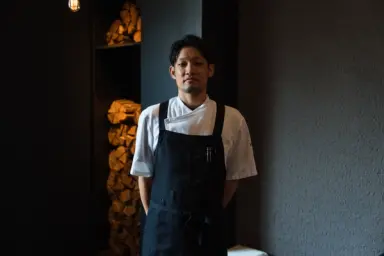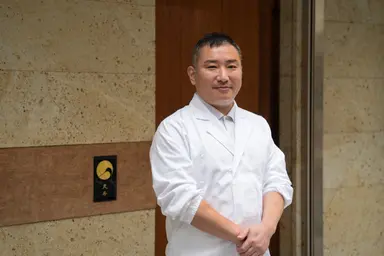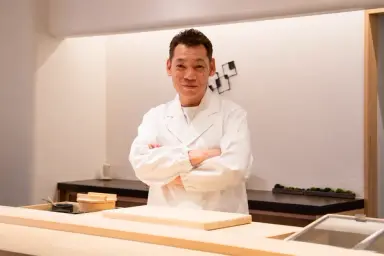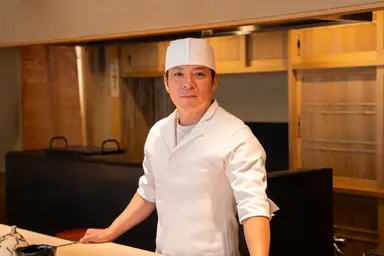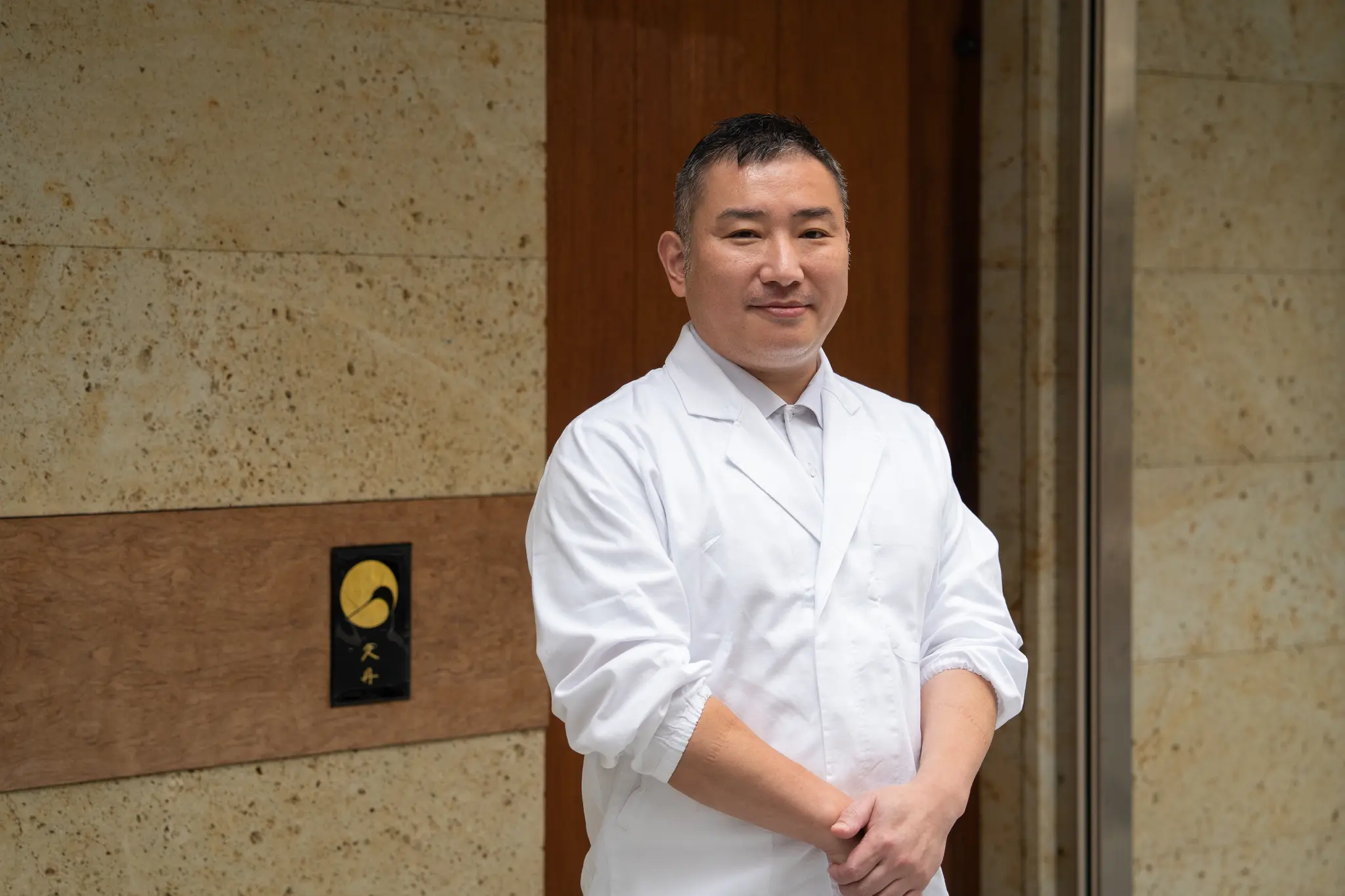
The Quality Born from Years of Dedication: Kotaro Nakashima of 【Nihonryori Kutan】 on the Meaning of “Beautiful Flavor”
A Chef’s Journey That Began with the Dream of Becoming the World’s Best in Japanese Cuisine
—— What inspired you to become a chef?
After failing my junior high school entrance exam, I reached a turning point. I decided that I didn't want to continue down an academic path and made up my mind to become a chef instead. I had always been interested in cooking, and I think my mother was a major influence on me as well.
The reason I chose Japanese cuisine was quite simple: I'm Japanese. Italian cuisine was very popular at the time, and I thought it was exciting and stylish. But as a Japanese person, I felt a stronger desire to devote myself to mastering Japanese cuisine. I remember thinking that if I could become the best in Japan at Japanese cuisine, that would essentially mean being the best in the world. After all, even if you became the best Italian chef in Japan, that wouldn't necessarily mean you were the best in Italy, would it?
And of course, there was another simple reason: I genuinely loved Japanese cuisine.
—— Could you tell us about your years of training?
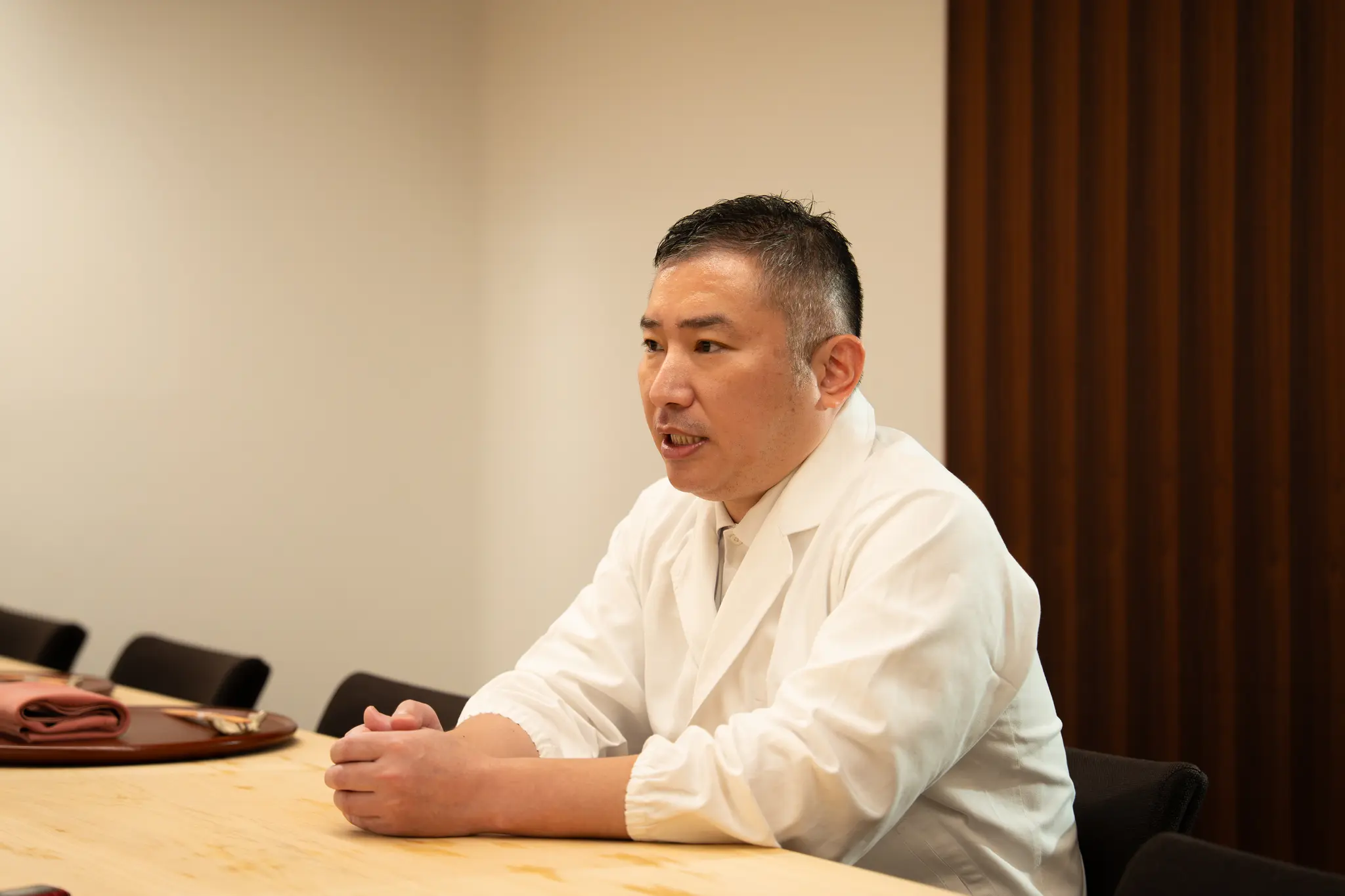
The first restaurant where I trained, in Fukuoka, was an incredibly demanding environment. Back then, working 16 to 20 hours a day was considered normal, and we had only around 11 days off a year. Every day, I would head to work wondering, “What am I going to get scolded for today?” It was a very different era—almost unimaginable by today’s standards.
Looking back, however, I’m extremely grateful that I was able to gain such an extraordinary volume of hands-on experience during my twenties, which I consider one of the most important periods in a chef’s development.
By the time you reach your thirties, what matters is no longer the sheer quantity of experience, but the quality of your work. At the same time, I believe I was only able to develop that quality because I had accumulated such a strong foundation of experience in my twenties.
—— In such a demanding environment, was there anything that helped you keep going?
Whenever I entered a new environment, there were times when I found myself working under senior colleagues who were younger than me. Even so, the experience I had accumulated over the years gave me both confidence and a sense of pride. It made me feel that no matter where I went, I could continue building new experiences on top of that foundation.
Even now, whenever I feel myself starting to let my standards slip, I sometimes think, “My mentor in Shikanoshima would scold me for this.” It almost feels as though he is still watching over me. People naturally tend to gravitate toward the easier path, but if you cut corners, the consequences eventually come back to you. Thinking, “My mentor would never accept work like this,” taught me to hold myself accountable and maintain my own standards. I believe that who I am today is built on the foundation he gave me during those years.
When I left Fukuoka, my mentor sent me off with these words: “You’ve learned how to handle fish here. Now go to the city and learn how to cook.” Following his advice, I went on to broaden my experience as a chef in Los Angeles and later at 【Nihonryori Kanda】.
Seeing Japanese Cuisine from an Outside Perspective
—— Could you tell us about your time training in Los Angeles?
At the time, I had no intention of leaving Fukuoka. But then I encountered the cuisine of Masaharu Morimoto, who appeared on the television program “Iron Chef,” and it had a profound impact on me. The dishes he was creating while serving as executive chef at 【NOBU】 in New York were incredibly avant-garde, and I remember thinking, “I want to discover a culinary world like this.”
As I looked into it further, I learned about 【Matsuhisa】 in Los Angeles, the original restaurant that preceded 【NOBU】. I thought that if I was going to make the journey, I wanted to learn at the place where it all began. That was what ultimately led me to move to Los Angeles.
—— Did you face any challenges adjusting to the cultural differences?
When I actually started working there, I was surprised to find that I didn't find it as difficult as I had expected. At the time, 【Matsuhisa】 was known as one of the most demanding restaurants in the Japanese culinary scene in the United States, and many Japanese chefs worked there as well. Even so, after the training I had gone through in Fukuoka, I didn't find the environment particularly difficult.
Since 【Matsuhisa】 was also a sushi restaurant, I wanted to develop a solid foundation in sushi as part of my training in Japanese cuisine. After all, from a global perspective, sushi is an essential part of Japanese cuisine. Still, as a Japanese chef, the idea of saying, “I learned sushi in Los Angeles,” somehow felt a little strange to me (laughs). I had always associated sushi with Edomae sushi, so after returning to Japan, I began to feel that I wanted to study it more seriously in Tokyo.
The most valuable thing about going abroad was having the opportunity to see Japan from an outside perspective. It allowed me to recognize both the challenges I might never have noticed while living in Japan and the qualities that make Japan so remarkable. Being able to look at my own country more objectively was an invaluable experience.
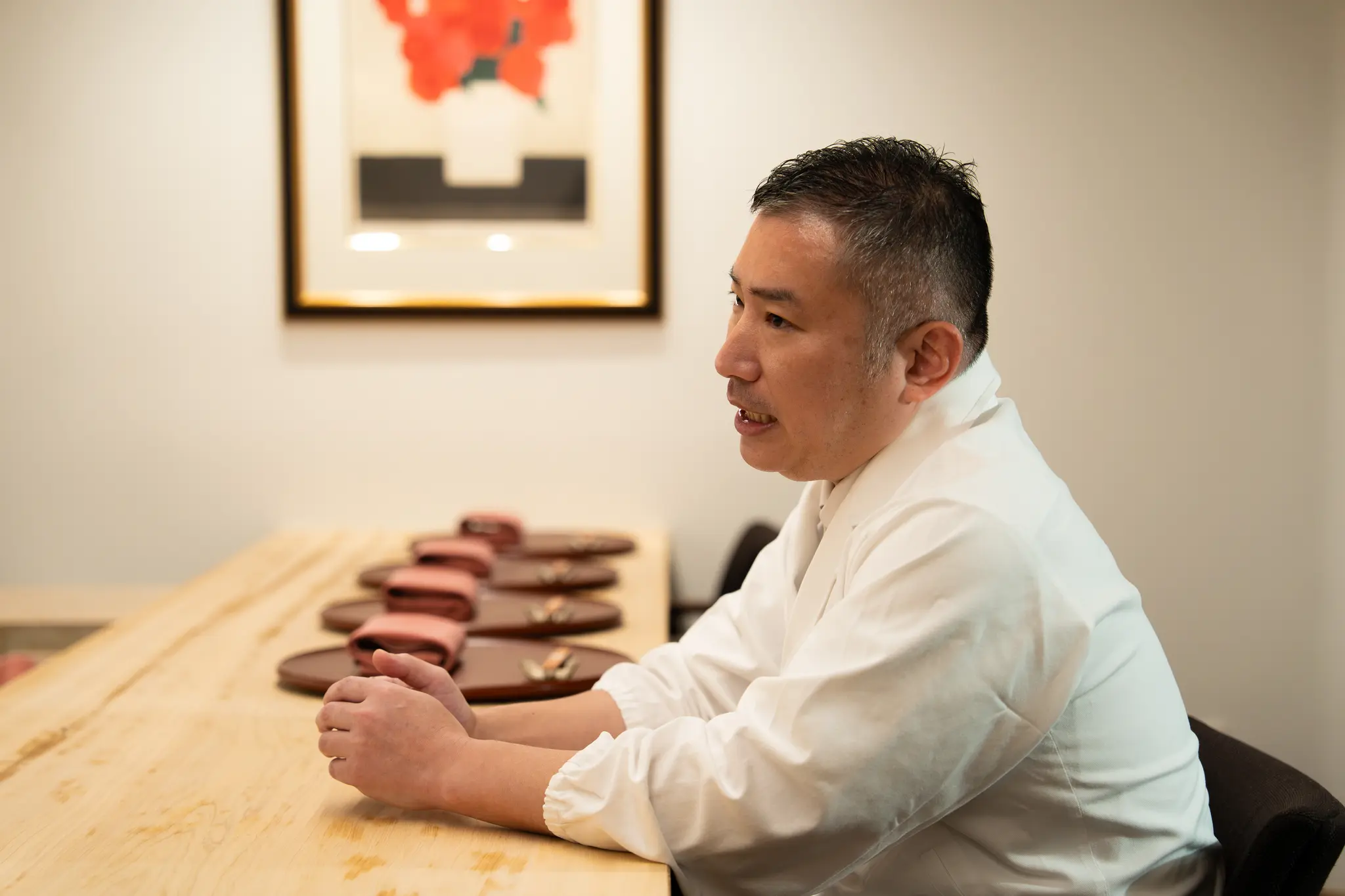
—— Could you tell us about your time at 【Nihonryori Kanda】 after returning to Japan?
I began training at 【Nihonryori Kanda】 when I was around 28 or 29 years old. By that point, I already had about ten years of experience as a chef, but I spent my first two or three years there going back to the fundamentals and learning them thoroughly. After that, I was entrusted with the role of second-in-command.
For the next eight years or so, I took on significant responsibility and became deeply involved in the day-to-day running of the restaurant. It was an experience that taught me an incredible amount.
I believe the foundation of who I am today, both as a chef and as a restaurant owner, was first shaped by the years I spent under my mentor in Fukuoka. The eleven years I spent at 【Nihonryori Kanda】 then helped me grow even further. I learned not only about cooking, but also how to think about and manage a restaurant as a whole. Those years gave me invaluable experience that continues to shape the way I work today.
Quality Is Born from a Wealth of Experience
—— Looking back on those demanding years of training, are there any lessons or principles that still guide you today?
Looking back, I’m truly grateful that throughout my twenties and into my early thirties, I had the opportunity to gain such an enormous amount of hands-on experience. Of course, I would never encourage anyone to work in a way that compromises their physical or mental well-being. At the same time, the kind of environment I experienced simply cannot—and should not—be recreated for younger chefs today. That is precisely why I believe it has become even more important for them to take the initiative and actively seek out opportunities to learn.
I often tell my staff, “At this stage, rather than overthinking everything, keep your hands moving and gain as much experience as you can.” There are times when I have to be strict or say things that may be difficult to hear, but I do so because I believe that staying silent when something needs to be said would ultimately do that person a disservice.
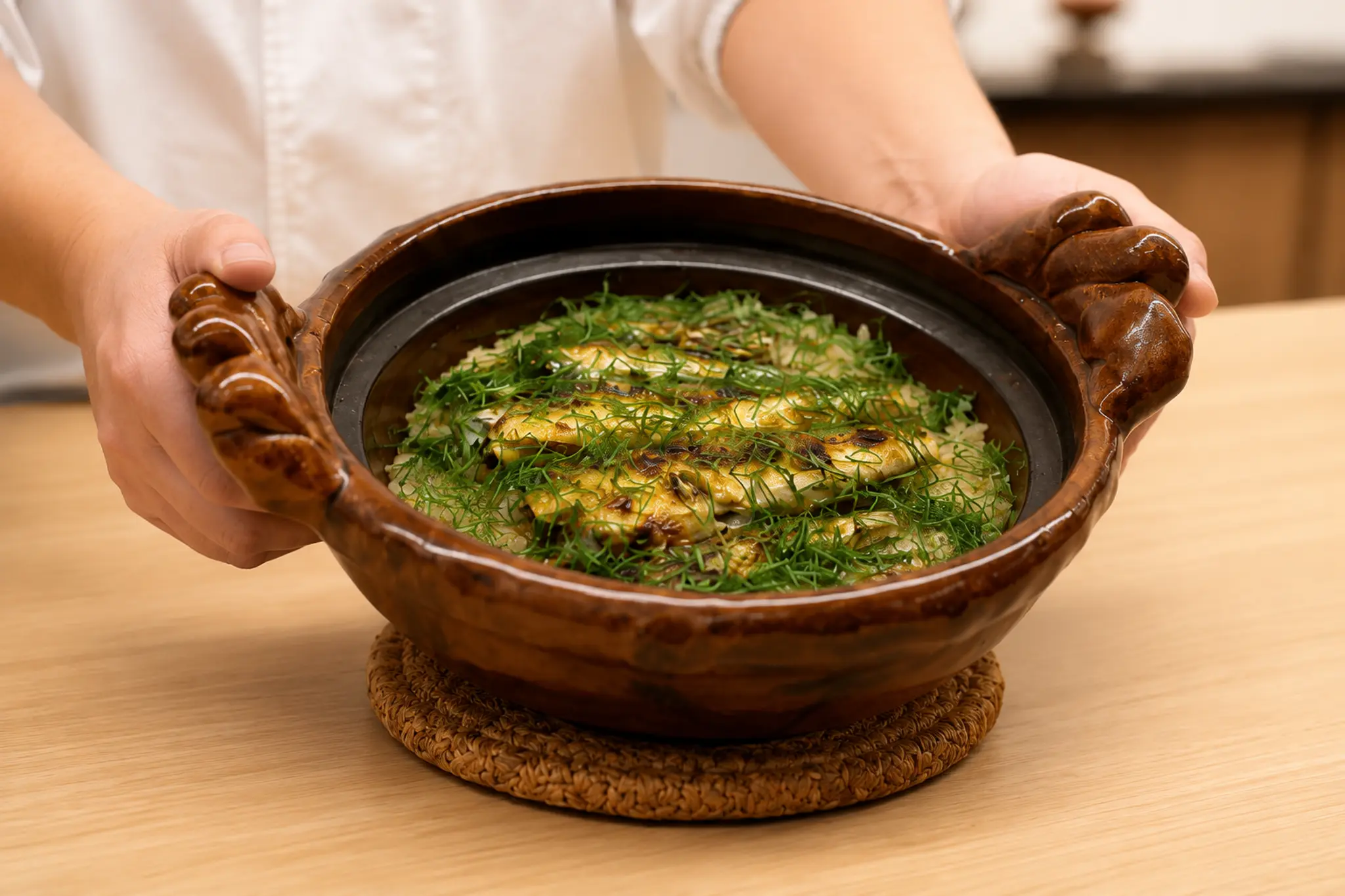
—— Could you tell us a little more about what you mean when you say, “Quality comes from quantity”?
First, you have to accumulate experience through repetition. As you do, you become capable of more, and you naturally become faster and more efficient at your work. Eventually, you develop the confidence to say, “This is something I can do better than anyone else.” That confidence gives you a sense of composure, which changes the way you approach your work and, ultimately, raises the quality of what you do.
These days, we often hear that “quality is what matters.” But I believe that quality can only emerge after you’ve accumulated enough experience. It’s through doing something over and over again that you begin to recognize subtle differences—to see that “this way is better,” or “doing it this way makes it taste better.” That’s why I believe that before you can talk about quality, you first need to put in the repetitions.
When you’re young, as long as you take care of your health, you should gain as much experience as you can. I believe quality will follow naturally from there. All I can really do is encourage the younger chefs and say, “Give it a try.”
—— Could you tell us about the journey that led you to open your own restaurant?
I opened my own restaurant at the age of 39. I had always set myself the goal of having a restaurant of my own by the time I turned 40. When I was 35, I spoke to my mentor about becoming independent. He said to me, “I stayed until I was 40, so why don’t you do the same?”
His words made me think again about whether I was truly ready. I knew how to create the cuisine of 【Nihonryori Kanda】, but I wasn’t yet confident that I could create cuisine that was genuinely my own. I felt that if I opened a restaurant at that point, I would probably end up relying too heavily on what I had learned at 【Nihonryori Kanda】.
So for the next several years, while continuing to prepare the cuisine of 【Nihonryori Kanda】 at work, I also spent a great deal of time thinking about what I personally wanted to express through my own cooking.
I also needed to be prepared to take full responsibility for a restaurant of my own, as well as to be financially ready. When 【Nihonryori Kutan】 first opened, there were just three of us. I needed the physical stamina to remain fully involved in the kitchen, and of course, running a restaurant comes with financial risks as well. Ultimately, I decided the timing was right after considering all of those factors—my age, physical stamina, financial situation, and overall readiness.
—— What was the most challenging part of opening your own restaurant?
The greatest challenge was simply getting guests through the door. During my years of training, I had always worked at restaurants where being fully booked every day was the norm. Somewhere along the way, I had come to assume that guests would simply come.
Once I opened my own restaurant, however, I quickly realized that was something I could never take for granted. There were days when the phone didn't ring at all—so quiet that I even found myself wondering whether the phone line had been disconnected.
I've never been particularly good at promoting myself online, and when we opened, I didn't really understand the modern ways of attracting new guests. But little by little, people began finding us through word of mouth. Then, in the same year we opened, we were awarded one Michelin star.
Looking back, that period taught me firsthand that creating good food and getting people to come to your restaurant are two entirely different things.
A Culinary Philosophy for Creating a Complete Dining Experience
—— What do you value most when it comes to cooking and ingredients?
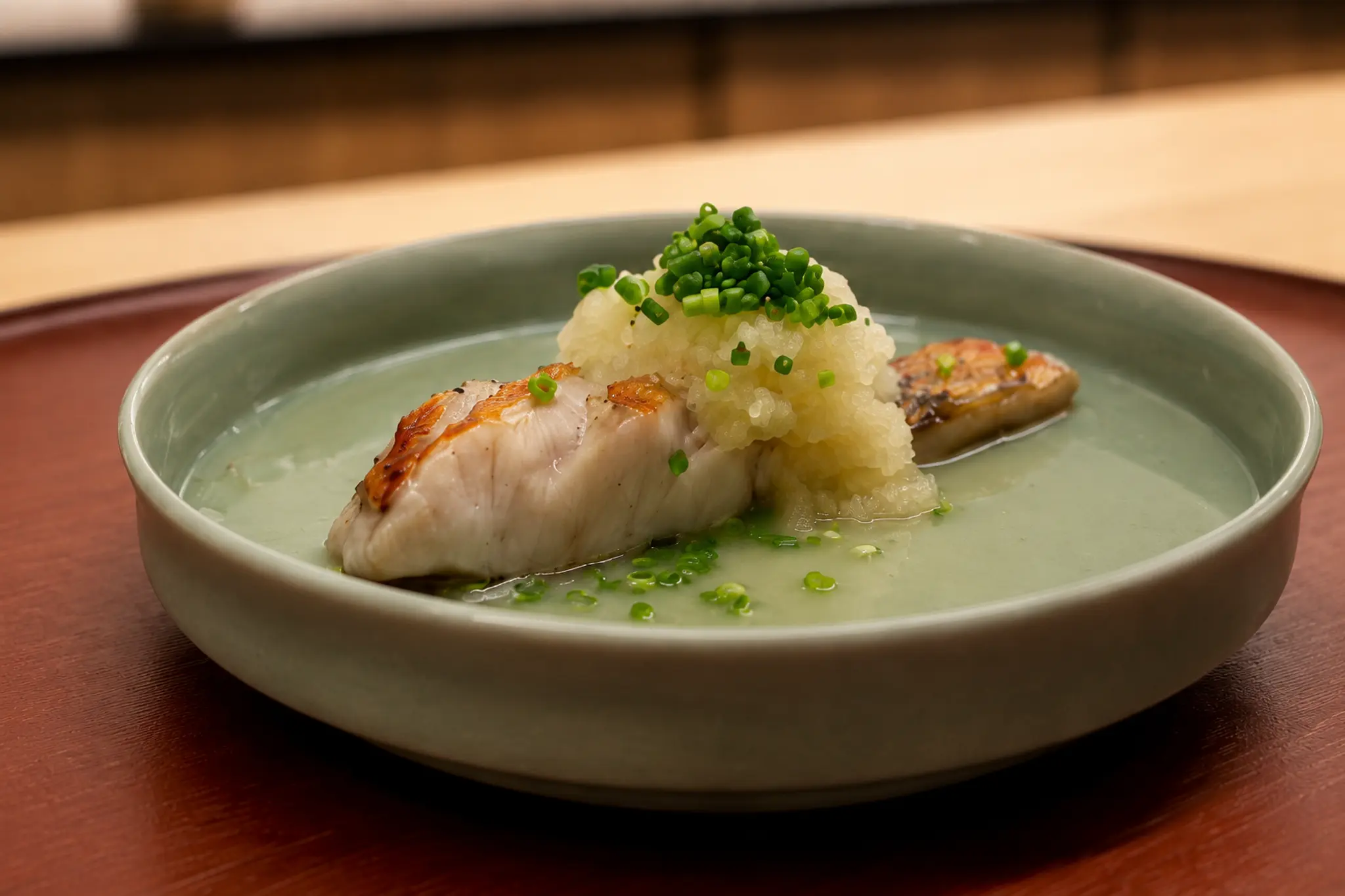
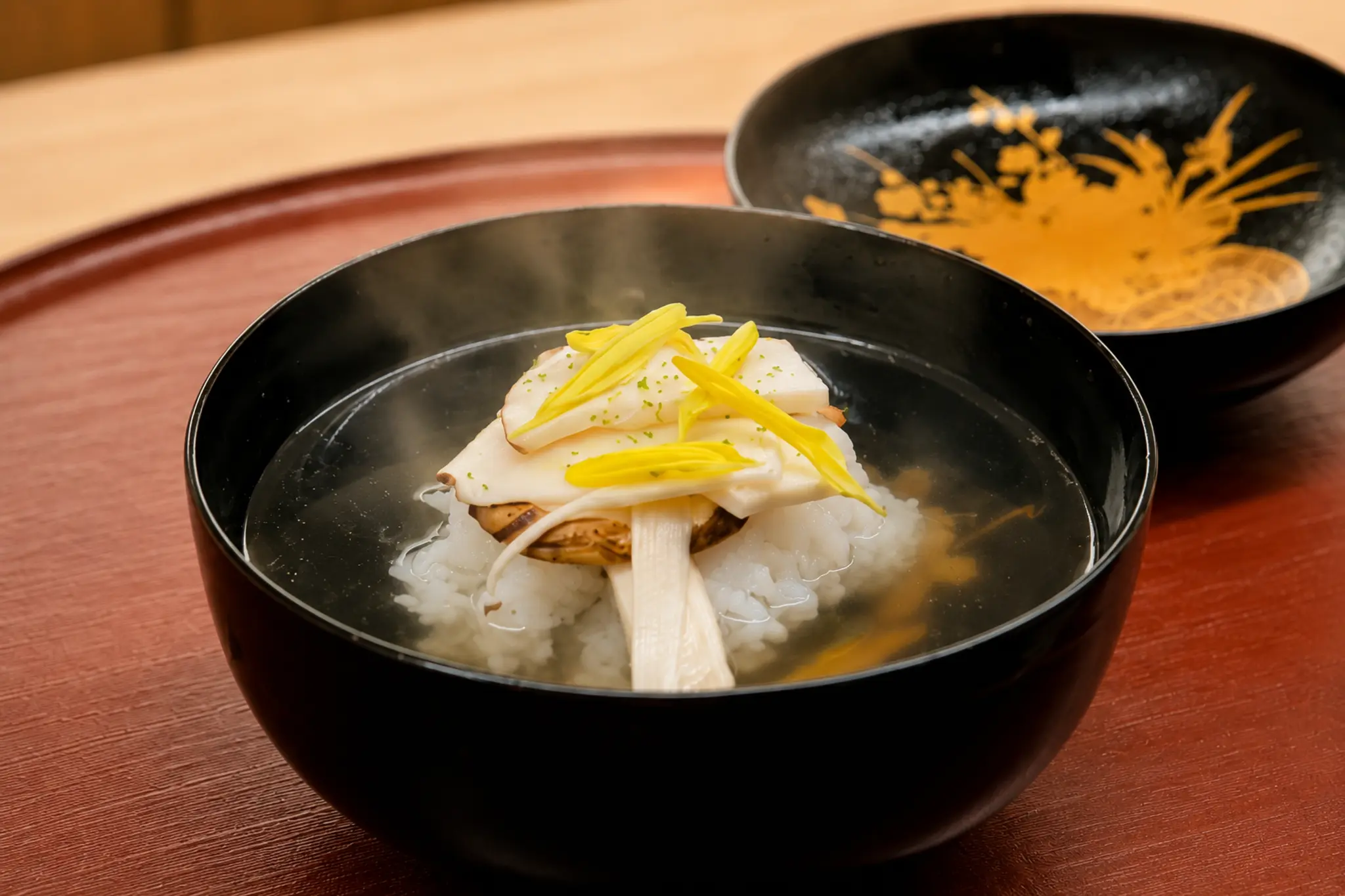
When composing a meal, there are three things I value above all: temperature, aroma, and how you feel after eating. I believe a dish is only truly complete when it is enjoyed at its very best.
During my training at 【Nihonryori Kanda】, my mentor taught me, “Temperature itself is part of the feast.” A warm dish on a cold day, or a chilled dish on a hot day—the temperature itself can become part of what makes the experience special for the guest.
And when the temperature is just right, the natural aromas of the ingredients can be experienced at their most expressive. It is a lesson that has stayed with me ever since and remains fundamental to the way I cook today.
—— What do you keep in mind when it comes to how guests feel after the meal?
With a course menu, I want guests to feel comfortable all the way through to the end. They should leave feeling satisfied, but never weighed down. Ideally, by the next morning, they should naturally find themselves looking forward to eating again. That is the kind of feeling I want a meal to leave behind.
To achieve that, the way I use fat, salt, and sugar is extremely important. Rather than thinking about each dish in isolation, I compose the course with the overall balance in mind, so that the entire meal feels satisfying and comfortable from beginning to end.
—— What do you value most when selecting ingredients?
I source my ingredients through long-standing relationships of trust with wholesalers and producers. Whether in Fukuoka, Kyoto, or Toyosu, I rely on people I trust in each region to provide me with the very best ingredients available at that particular time.
Given the expectations our guests place on us, I feel a responsibility to select exceptional ingredients and honor their value through the dishes I create.
Once I've communicated exactly what I'm looking for, if a supplier tells me, “There isn't anything good enough today,” I don't push the issue. If an ingredient isn't in the condition I want, I would rather go without than force a substitute. I'm uncompromising when it comes to quality.
Ultimately, the people who work with these ingredients every single day know them better than anyone. They are the true specialists, and I believe trusting their expertise and judgment is just as important.
—— As a chef, how do you approach the question of how much to do to an ingredient?
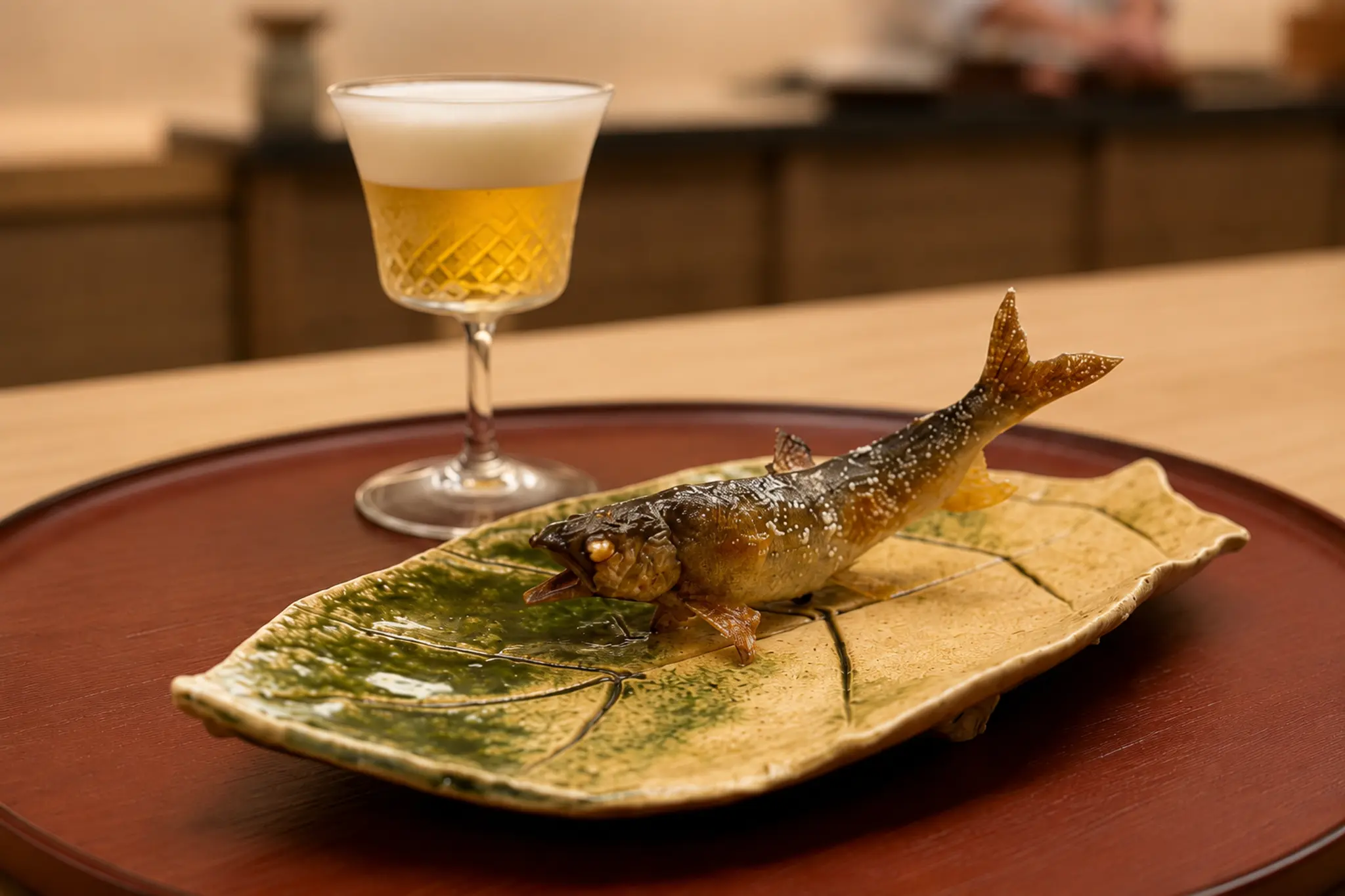
I don't believe that simplicity alone is necessarily the answer. To me, cooking is about “helping” the ingredients—bringing out what they naturally have to offer and making them more delicious and enjoyable to eat. A chef's role is to do whatever is necessary to achieve that.
In fact, the better the ingredient, the more I find myself wondering just how much I should do to it. Do too little, and you may not bring out its full potential. Do too much, and you risk losing what makes the ingredient special in the first place. I believe the key is knowing where to draw that line.
Take a single cucumber, for example. Sometimes, rather than simply slicing it with a knife, it tastes better when it's thoroughly chilled and broken apart by hand before being served. I consider that cooking, too. It reflects a chef's belief about the most delicious way to enjoy an ingredient, as well as the chef's own sensibility.
You look at the ingredient in front of you and ask yourself, “How much should I do to it as a chef?” Making that judgment requires experience, and I believe it is the accumulation of those decisions over time that ultimately gives rise to a cuisine that is uniquely your own.
What Lies Beyond Years of Steady Progress
—— Could you tell us about your vision for the future?
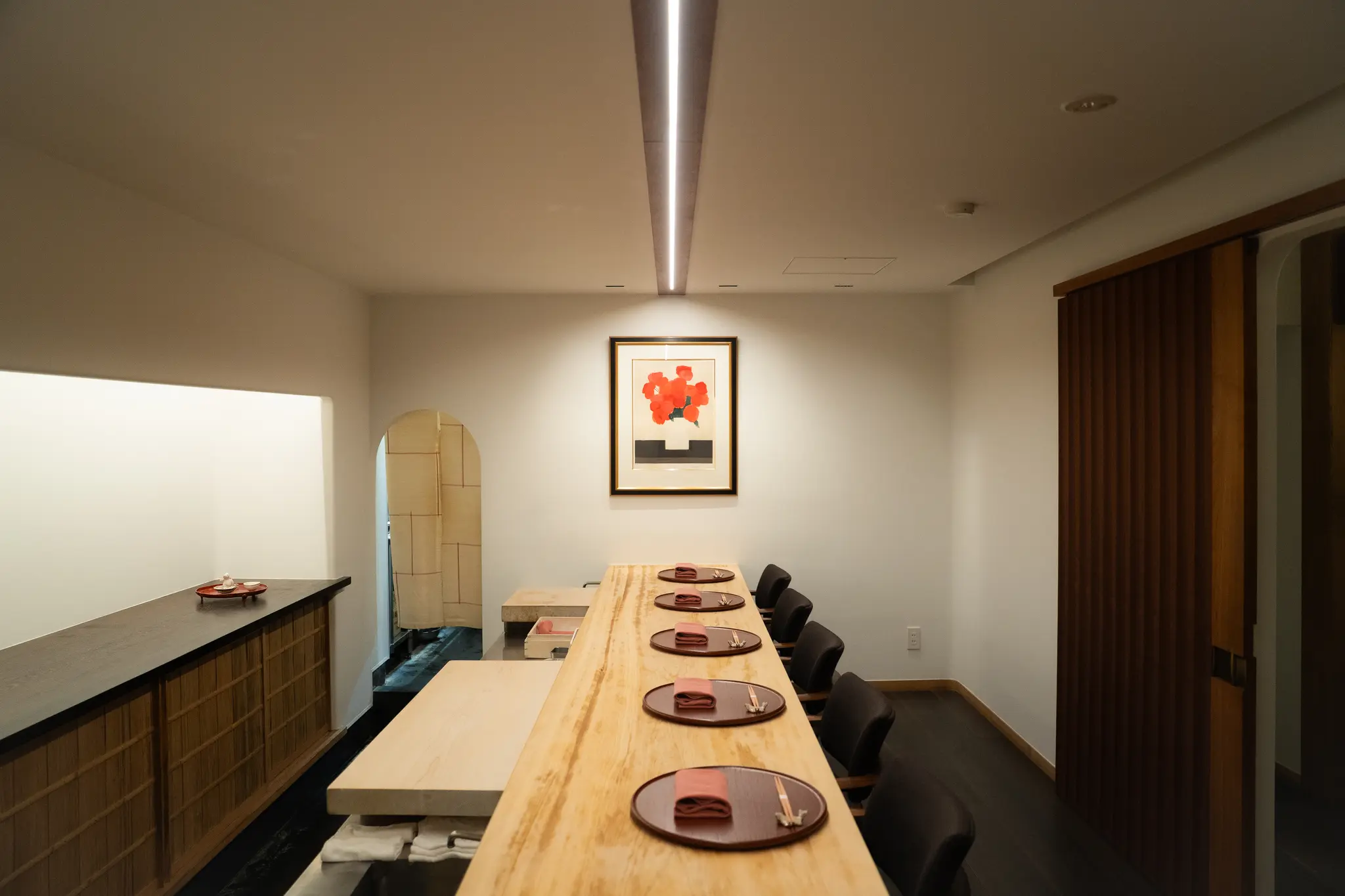
First and foremost, I want to continue making this restaurant better. We’re very grateful to have been awarded two Michelin stars, and one day, I hope to build this into a restaurant worthy of three.
When it comes to the cuisine itself, I want to keep refining what we already have, little by little, building on what we’ve achieved to make it even better. As our staff continue to grow, if the right timing and opportunities come along, it could also be exciting to take on a new challenge overseas someday. But before any of that, my priority is to continue developing and strengthening the restaurant we have here.
I’m 48 now, and I’d like to remain at the forefront as a chef for another ten years or so, until I’m around 60. Of course, there is only so much I can accomplish on my own. That’s why I want to support the growth of each member of my staff while continuing to move forward, little by little, adapting to the times and circumstances around us.
Rather than simply maintaining the status quo, I value the idea of “adding one more layer.” If you keep stacking sheets of paper one by one, before you realize it, you find yourself standing somewhere higher than before. I believe that kind of steady accumulation is what ultimately allows the restaurant to grow as well.
Someday, I’d like to share that way of thinking with my staff, too. For now, though, I believe they’re still at the stage where they need to keep their hands moving and accumulate experience rather than think too much about it. The first step is to build a strong foundation. From there, I hope each of them will gradually develop their own philosophy and their own style of cooking.
—— Lastly, what does “delicious” mean to you, Mr. Nakashima?
“Beautiful flavor.”
To me, “umai” and “oishii” may seem similar, but there is a subtle difference between them. I believe that distinction is incredibly important, and I’m still searching for exactly what it is.
I think of “umai” as a more direct response to the taste itself. “Oishii,” on the other hand, goes beyond flavor. It encompasses the aroma, the atmosphere, our service, and even the way the food is presented. I believe true “oishii” emerges when all of those elements come together and resonate with the guest.
Of course, I’m always happy when someone tastes my food and says, “Umai.” But if I can create a moment when a guest pauses, takes it all in, and says, “Ah, oishii,” savoring the lingering impression of the experience—that, to me, is one of the greatest rewards of being a chef.
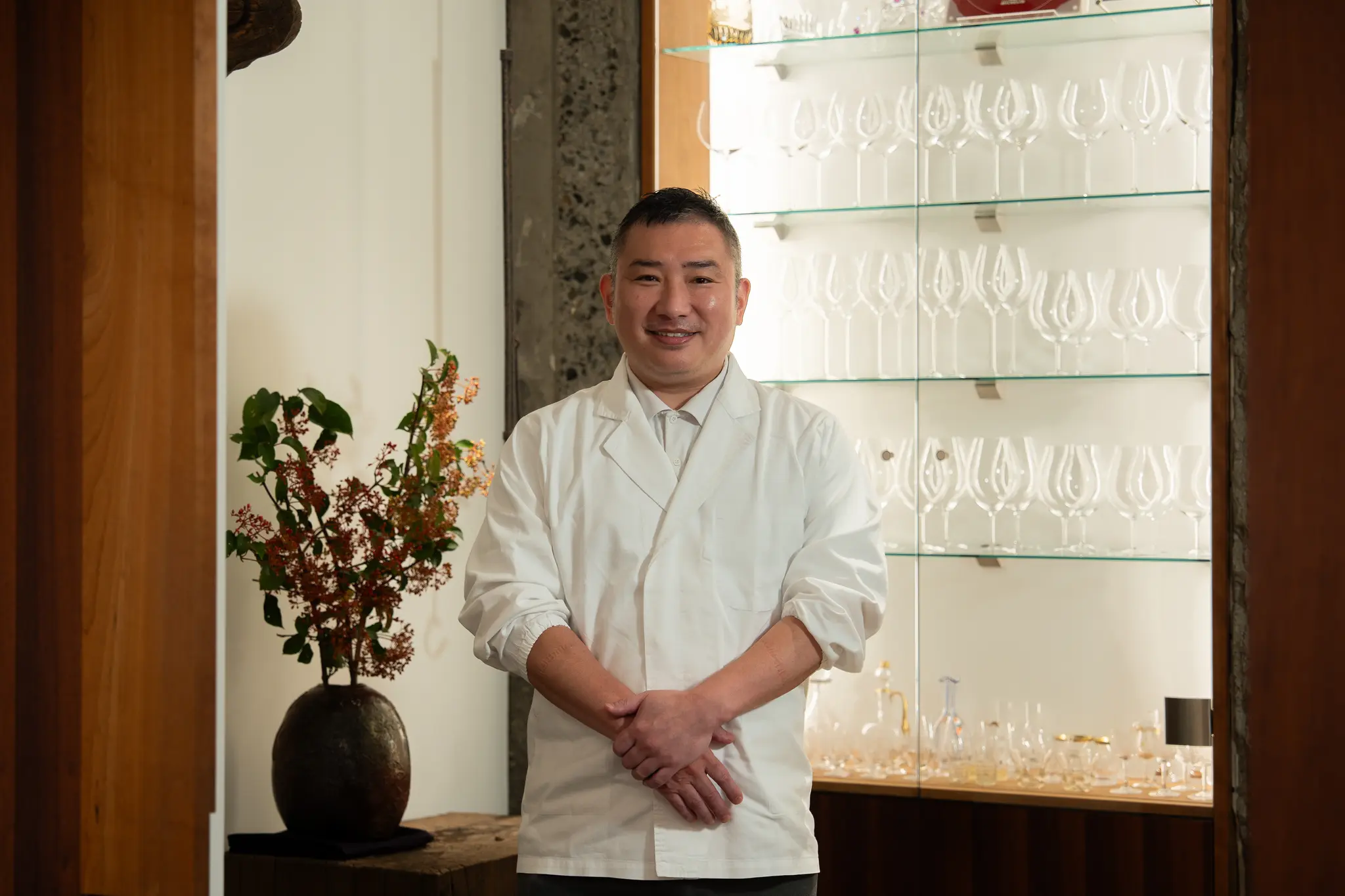
What stood out most in speaking with Kotaro Nakashima was his belief in the power of steady accumulation. From his decision to become a chef and his demanding years of training in Fukuoka, to his experience overseas, the eleven years he spent at 【Nihonryori Kanda】 after returning to Japan, and the challenges he has taken on since becoming independent, each experience has built upon the last, forming the foundation of what 【Nihonryori Kutan】 is today.His words—“Quality comes from quantity” and “Rather than maintaining the status quo, add one more layer”—reflect a philosophy that extends beyond cooking to the way he develops his staff and continues to shape his restaurant.
Cuisine, atmosphere, and service all come together to create a meal that stays with the guest long after it is over. It is this thoughtful attention to every element of the experience that Nakashima continues to build upon, quietly and steadily, at 【Nihonryori Kutan】.
Interviews & Text / AutoReserve Magazine Editorial Team
Photography / Shoichi Baba
Restaurant Information
- AutoReserve Magazine
- Japan’s world-renowned flagship restaurant
- The Quality Born from Years of Dedication: Kotaro Nakashima of 【Nihonryori Kutan】 on the Meaning of “Beautiful Flavor”