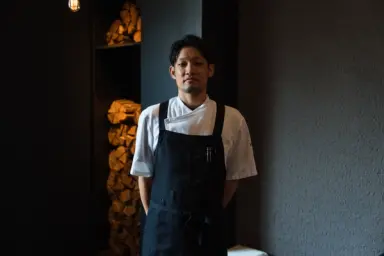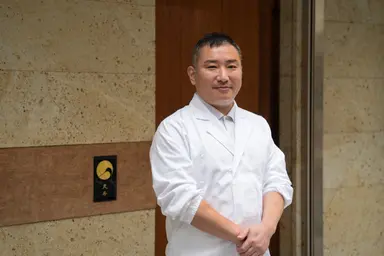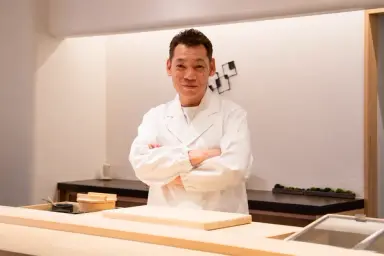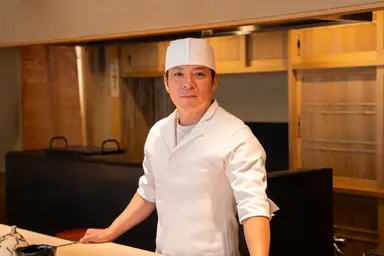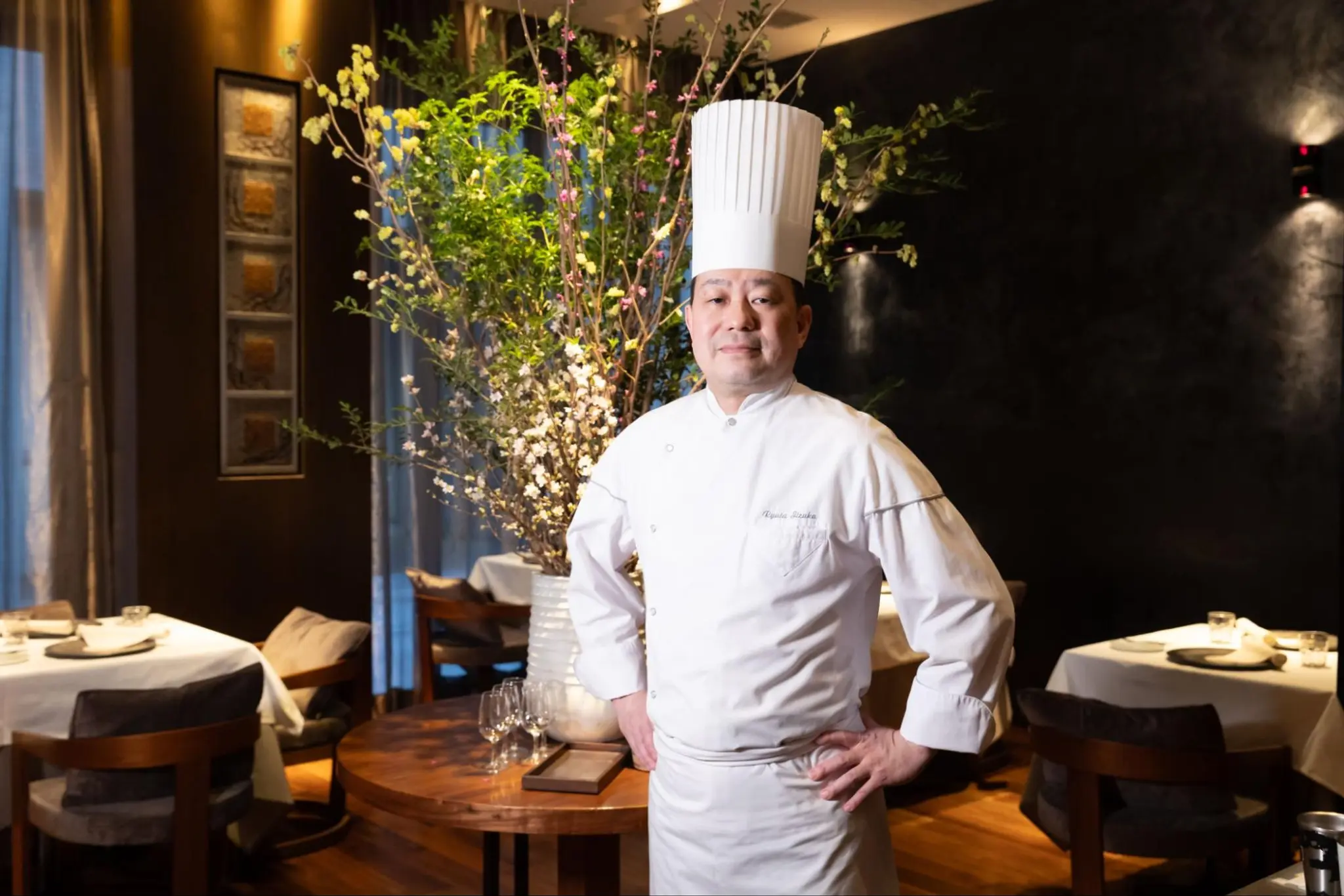
The value of a restaurant is not defined by food alone – The form of “deliciousness” created by Chef Ryuta Iizuka of 【Restaurant Ryuzu】
Believing in the Power of Ingredients — Delivering Cuisine Created Through Subtraction
ーーーCould you tell us about the concept behind your cuisine?
I always try to craft French cuisine that allows guests to feel the breath of Japan’s four seasons and the vitality of its ingredients. I'm constantly thinking about how best to bring out the natural power of the ingredients—this approach hasn’t changed since I first opened the restaurant. Personally, I like dishes where you can clearly identify what you’re eating. In spring, I use mountain vegetables; in summer, ayu sweetfish and hamo eel; in autumn, mushrooms; and in winter, game and root vegetables. I incorporate seasonal ingredients and aim to keep sauces as light as possible, minimizing the use of butter and cream. In that sense, my approach may differ from the rich image people often associate with French cuisine.
ーーーWhere did that way of thinking originate?
It all started with the meals at home. I grew up in Tokamachi, a mountain town in Niigata, and in spring, our table was filled with nothing but mountain vegetables. Looking back, it was a truly luxurious environment, though as a kid I used to think, “Ugh, mountain veggies again…” (laughs). Reflecting on it now, those early experiences shaped my palate. How do you draw out and refine the inherent power of an ingredient? Do you pursue flavor by adding elements, or do you strip things away and let the ingredient itself shine? The latter is harder, but for me, it holds more meaning. I want to continue crafting dishes that listen to the voice of the ingredient itself.
Listening to the Voice of Ingredients – The Creation of the “Shiitake Tart”
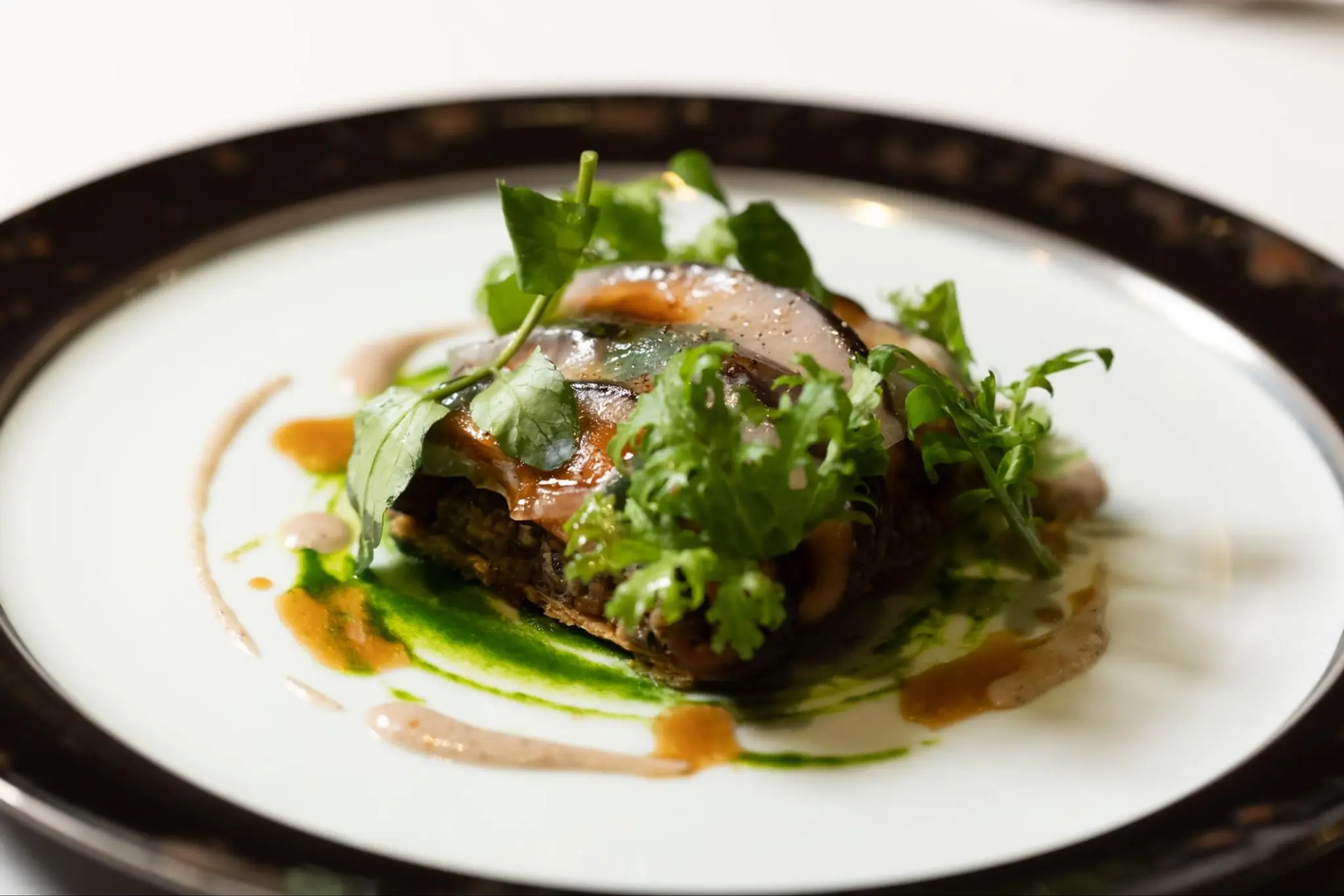
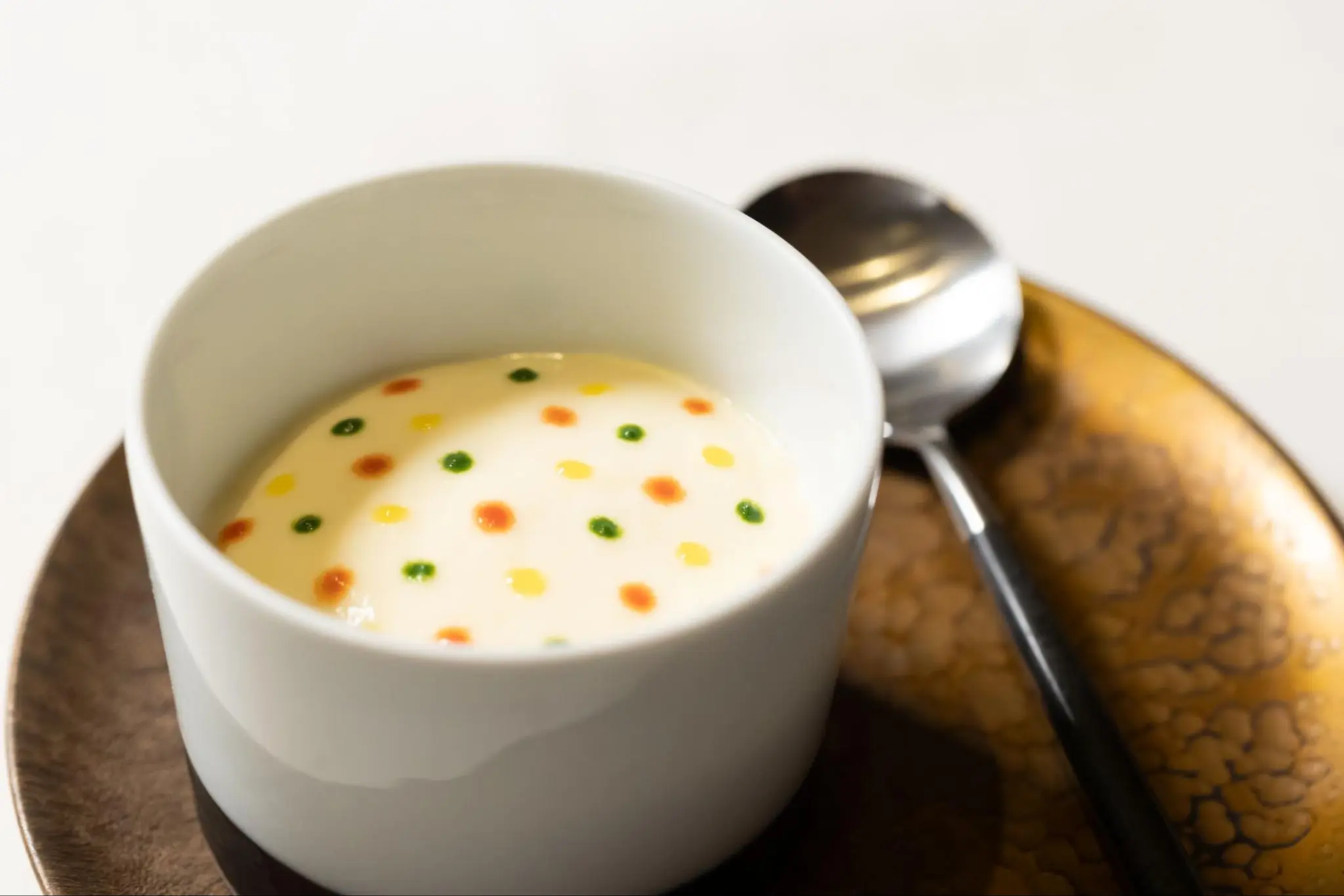
ーーーThe “Shiitake Tart,” one of Ryuzu’s specialties, is also a dish that highlights the ingredients themselves.
Actually, this dish was originally created as an experimental recipe made from “leftovers” when I was working at【 L’Atelier de Joël Robuchon】. I was thinking about how to make use of some scraps of prosciutto we had in the fridge, so I chopped them up with mushrooms to make a duxelles, and tried making a tart. To my surprise, the customers really loved it. I even had Chef Robuchon taste it, and he didn’t say a word. But through my 12 years of experience working under him at three different restaurants, I came to understand that when Chef Robuchon says nothing, it’s the best kind of approval (laughs). It’s a rare thing, but when it happens, you know you’ve done something right.
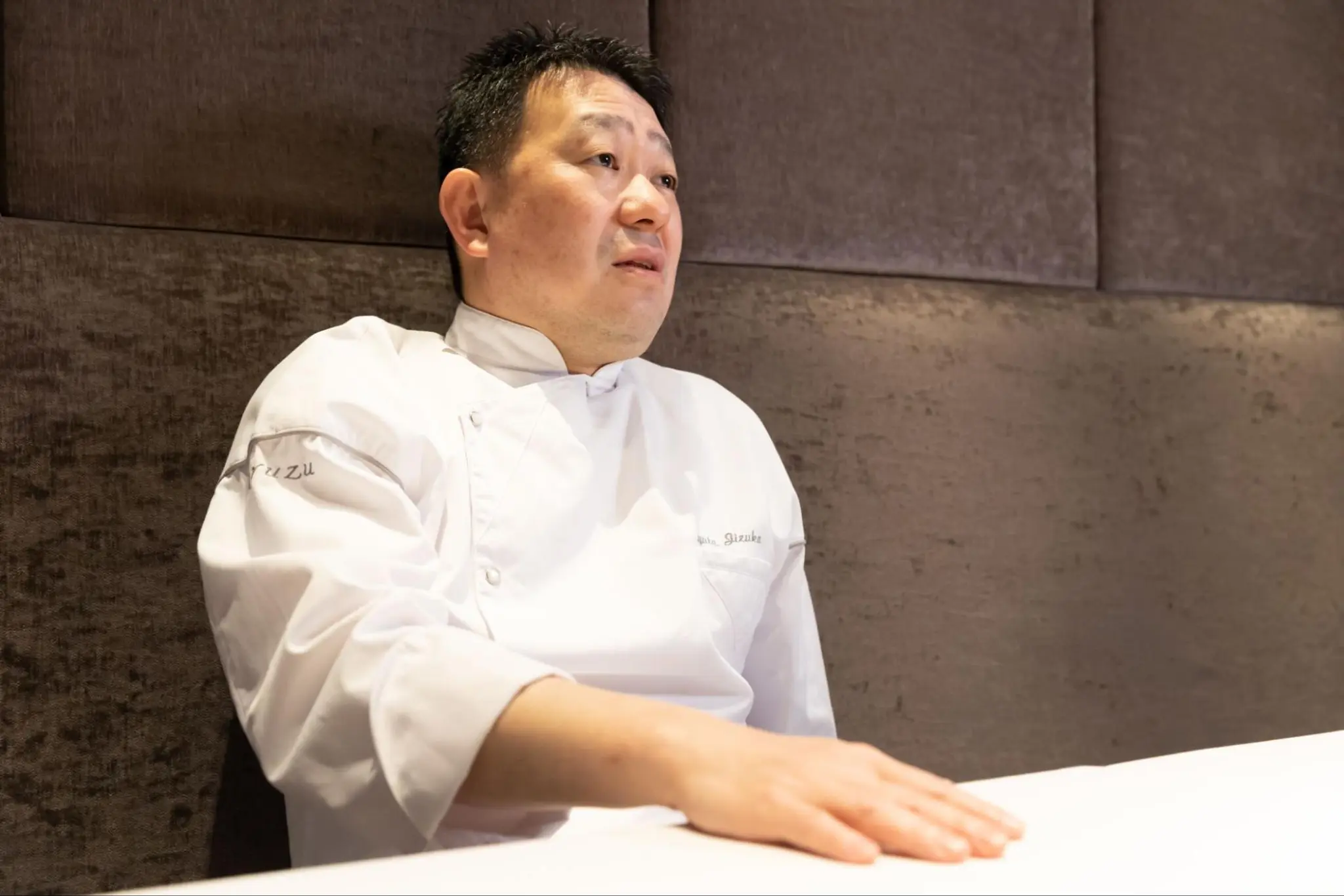
When I first put this dish on the menu, I was using ceps. However, since they are imported, they were expensive, and above all, the quality was inconsistent. That’s when I realized—Japan has amazing shiitake mushrooms. So I decided to switch. For me, shiitake is a deeply memorable ingredient from my childhood. Back then, my parents went out for wild vegetable foraging and happened to find a discarded log used for cultivating shiitake mushrooms. They brought it home, and when we tried the mushrooms growing on it, I was astonished by how fragrant and delicious they were. I still vividly remember the impact it had on me. Today, I use "Yairo Shiitake" grown in Uonuma, Niigata. Although they are cultivated using bed-logs, they are thick, aromatic, and flavorful—truly a shiitake mushroom in every sense. I’m happy to be able to use ingredients from my hometown of Niigata in my cooking. By not overworking them, I aim to bring out the full power of the ingredients themselves.
ーーーThis dish is also beloved by your regular customers, isn’t it?
I had intended to leave behind the recipes I created at my previous restaurant as part of the past, and when I opened my own place, I wanted to serve entirely new dishes—so I initially kept them off the menu. However, many regular guests who had supported me even before I became independent asked, “Don’t you have that shiitake tart?” Because of that, I eventually decided to serve it again here. Now, it has become one of the signature dishes of our restaurant. I believe a specialty dish isn’t defined by what the chef thinks it should be, but rather by what the guests truly desire—that’s what makes it the specialty of the restaurant.
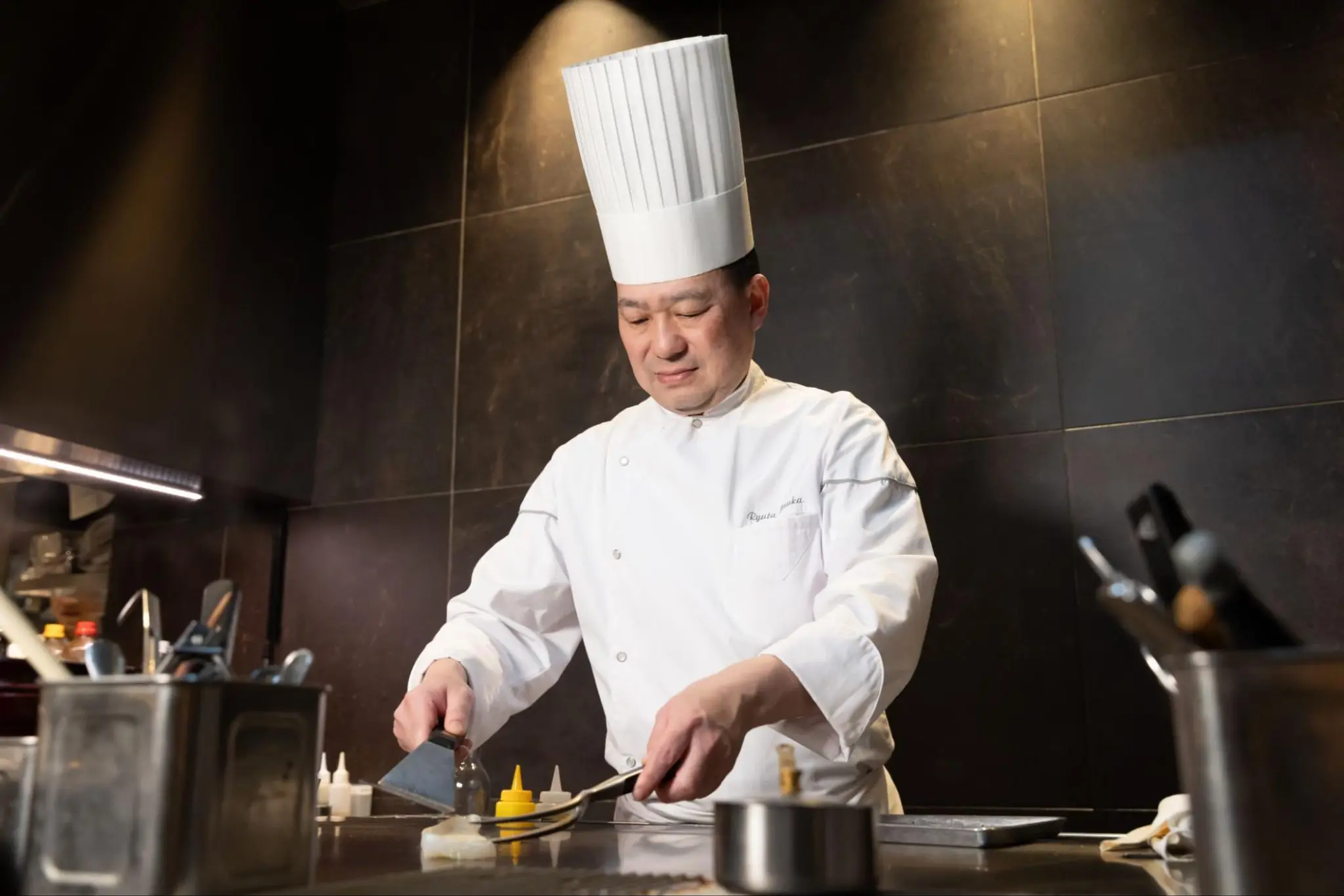
The First Year of Launching Restaurant Ryuzu—Facing the Challenge with “My Own Cuisine” After Years of Training
ーーーYou’ve wanted to become a chef since you were young?
My family ran a kimono shop, and my parents were always busy, so by the time I was in fourth grade, I could at least cook for myself. I even made sweets from time to time—cooking was just part of my daily life. I started seriously thinking about making it my profession in the summer of my first year of high school, and soon after, I decided to go to culinary school.
The reason I chose French cuisine was because of the classes I took during culinary school. At home, we mostly had Japanese food, but ever since I was little, I admired the gratins and stews my aunt used to make, so I naturally gravitated toward Western cuisine. Among them, I was especially captivated by how sauces were made and the wide variety of them. When I studied them in class, I became fascinated by the logic and complexity behind them, and that’s when I decided to pursue the path of French cuisine.
ーーーWhat was your training period like?
My first choice was 【Dai-ichi Hotel Tokyo Bay】. It was right before the hotel’s grand opening, and I was drawn to the idea of building something from the ground up in a brand-new environment. However, in reality, the cuisine was more Western-style than purely French, and my desire to study authentic French cuisine grew stronger over time. I left the hotel after about three and a half years. After that, I worked at several hotels and restaurants, but due to the economic downturn following the burst of the bubble economy, I wasn’t able to gain the kind of experience I had hoped for, which left me feeling frustrated.
At that time, I heard that two three-star restaurants from France—each representing the pinnacle of service and cuisine—were set to open in Tokyo. Without hesitation, I applied to one of them: 【Taillevent Robuchon】 (now known as 【Château Restaurant Joël Robuchon】). Fortunately, I was assigned to the main dining room, and it was there that I was finally able to immerse myself in the world of authentic French cuisine.
ーーーHow was your experience at Robuchon?
At the time, Chef Robuchon frequently came to Japan from the Paris flagship, so we worked under constant tension, knowing we were directly under his watchful eye. Chef Joël Robuchon was a figure who truly embodied modern French cuisine. He was strict, but every day was fulfilling and enjoyable. Over the course of two and a half years, I was allowed to work in every section—appetizers, fish, and meat.
ーーーAfter that, you went to France, correct?
As I was approaching my late twenties, I felt that if I wanted to level up, the only option left was to go to France. So in 1997, I made the move. I felt I had done everything I could in Japan at that point, and the timing felt right—like it was "now or never." I trained at Michelin-starred restaurants across various regions: Paris, Roanne, Arbois, and Luxembourg. One particularly memorable experience was at the three-star restaurant 【Troisgros】 in Roanne. At the time, French cuisine tended to be rich and heavy, but 【Troisgros】 skillfully used “acidity,” which made it possible to enjoy every dish right to the last bite without getting tired of it. That’s where I truly internalized the idea that "acidity is essential to cuisine." This realization has had a profound influence on the food I create today.
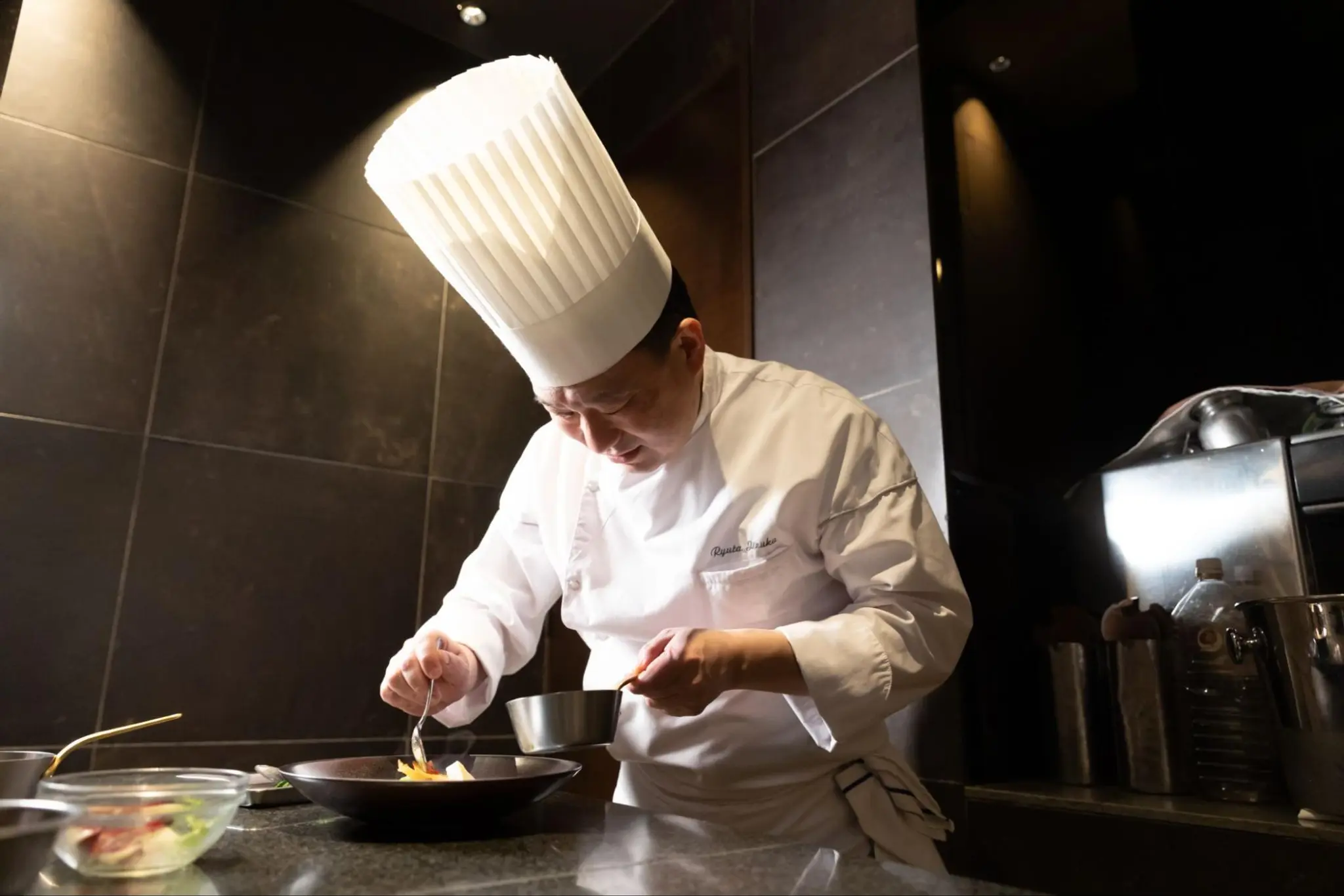
At the time, the political and social climate in France was quite tough for Japanese people, so I decided to return to Japan the year I turned 30, marking a natural turning point. After returning, I once again knocked on the doors of Robuchon and took on leadership roles as sous-chef and chef at affiliated establishments such as 【L’Atelier de Joël Robuchon】 and 【La Table de Joël Robuchon】.
ーーーYou had such a broad range of experience before going independent. Did you face any challenges when you opened your own restaurant?
To be honest, I spent the first year in the kitchen filled with doubt. We opened the restaurant on February 1, 2011, but shortly afterward, the Great East Japan Earthquake struck. Due to the drop in customer traffic, it became a struggle just to keep the restaurant going. Some customers did come, but quite a few of them said it was because they “wanted to eat Robuchon’s cuisine.” Of course, I was grateful—but inevitably, I was being compared to Robuchon, and at the time, I often felt that my own cooking wasn’t being evaluated on its own merit. That’s exactly why, in the early days of the restaurant, I refrained from serving dishes reminiscent of Robuchon and instead focused on presenting the kind of cuisine I truly wanted to create. Having gone independent, I felt a strong need to stake my claim with my own name and my own cuisine. At the same time, I was under significant pressure, wondering whether I could truly satisfy our guests. Even in the midst of all that, the one thing I consistently focused on was the “ingredients.”
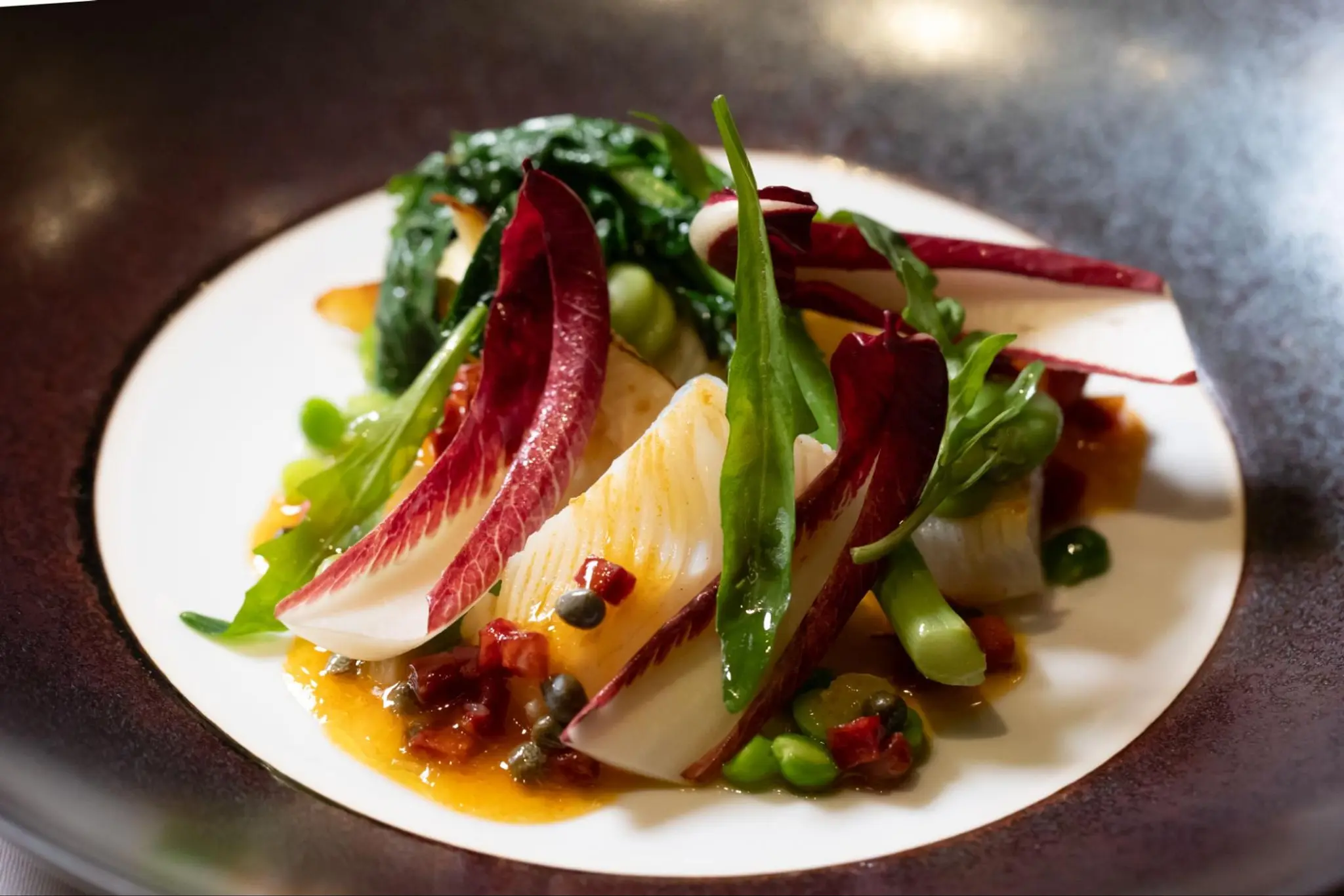
For example, in summer we serve sweetfish (ayu) as one of our seasonal specialties. At our restaurant, we prepare the ayu whole—including the bones—by cooking it thoroughly and turning it into a crusty-style dish. It's grilled until perfectly aromatic, with the bitterness of the innards delicately preserved. Ayu is almost like a symbol of Japanese summer, isn’t it? Each year, I approach it with full seriousness—thinking carefully about how to bring out the fragrance and bitterness of the ingredient in a French-style plate.
ーーーWhere does this perspective of “bringing out the best in the ingredients” come from?
It was during the time after I returned from training in France, when I was working as sous-chef on the first floor of 【Taillevent Robuchon】 at the café called 【Café Français】. One day, there was a three-day collaboration dinner between Chef Hirohisa Koyama of the Japanese restaurant 【Aoyagi】 and Chef Joël Robuchon. I supported the event as a liaison for the Aoyagi team on the first floor. The kitchen equipment and methods of heating were completely different, after all. On the final day of the event, the Aoyagi team kindly served us one of their dishes. It was a sashimi of bigfin reef squid (aori-ika), and from the very first bite, I was struck with shock. It was a simple preparation—just finely scored in a crosshatch pattern with a knife—but the moment it entered my mouth, the texture melted, and the aroma and sweetness were so vivid. I was overwhelmed by the realization that “just by cutting,” a dish could be brought to such completion. Rather than adding anything, they understood the ingredient deeply, and with knife work alone, the dish was perfected. I was captivated by the purity of that approach.
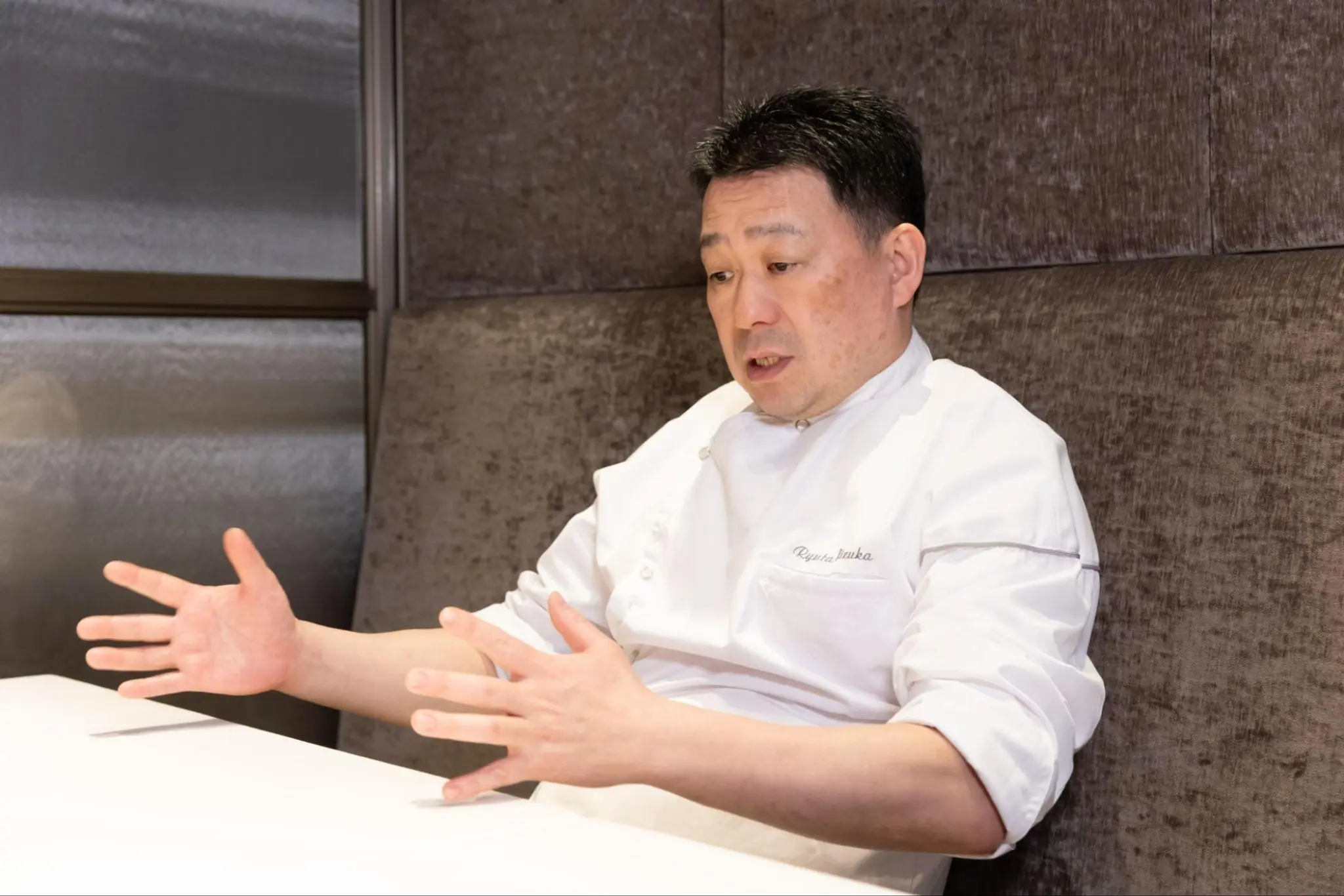
Afterward, Chef Koyama invited me to join him, and I served as the head instructor for French cuisine at his culinary school for about three years. There, I worked alongside instructors of Japanese cuisine and learned a great deal myself, such as the structure of Japanese knives and how to approach ingredients. That experience has greatly influenced the way I think about cooking today.
Beyond Cooking — As an Owner-Chef of a Restaurant That Continues to Be Chosen
ーーーWe’ve heard that you place great emphasis on staff development, not just cooking.
When it comes to developing someone, I believe the only way is to entrust them with responsibility. Of course, in the beginning, mistakes will happen, and there will be uncertainty. But without going through that, people don’t grow. I personally believe it’s okay to “just apologize later” (laughs). That said, what matters most is what they learn from their mistakes—why it didn’t go well, and what could be done differently next time. It’s the time spent learning and thinking through those experiences that helps people move forward. So what I value most is this: while I do get angry about mistakes, I don’t place blame—I watch over them. As long as the person recognizes the problem and corrects it, that’s enough. Naturally, we have a system in place where the rest of the team steps in to ensure the guest experience is never negatively impacted. I believe that this kind of mutual support is the foundation for developing people within a team.
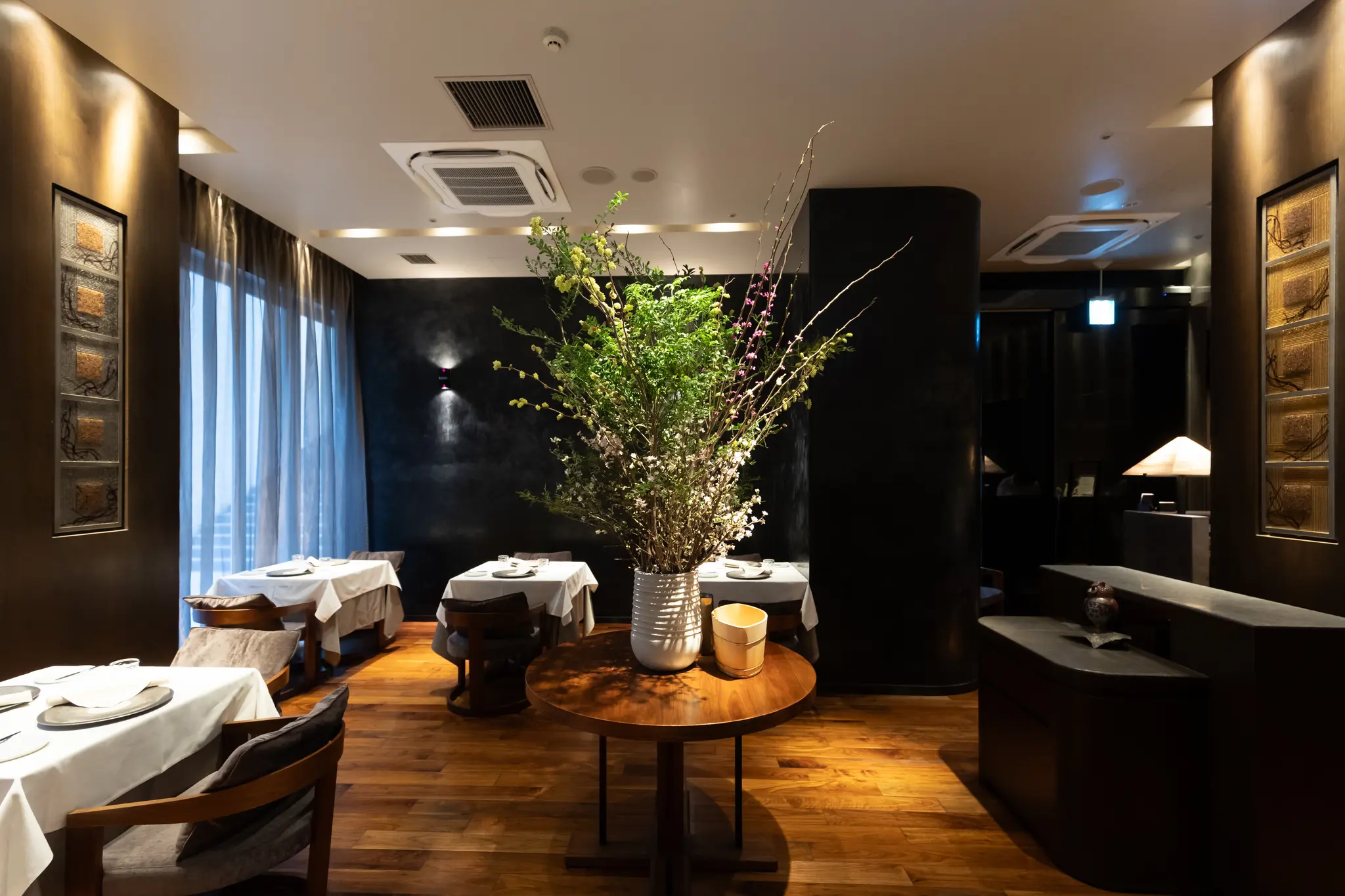
ーーーChef Iizuka, is that also how you were trained yourself?
Back in my day, it was much tougher! (laughs) Times have changed significantly, so I don’t think it’s right to bring that same style into today’s environment. I believe that for chefs to grow, a positive atmosphere is also necessary. These days, it’s not just about skills—creating a proper working environment is also crucial. At our restaurant, we offer over 100 days off per year, which I think is quite generous for the food and beverage industry. People need to take proper breaks, work diligently, and be fairly evaluated for it. Without that cycle, people won’t stay, and they won’t grow. That said, I do believe that for chefs to acquire skills and knowledge within a limited timeframe, self-discipline and personal effort are absolutely essential.
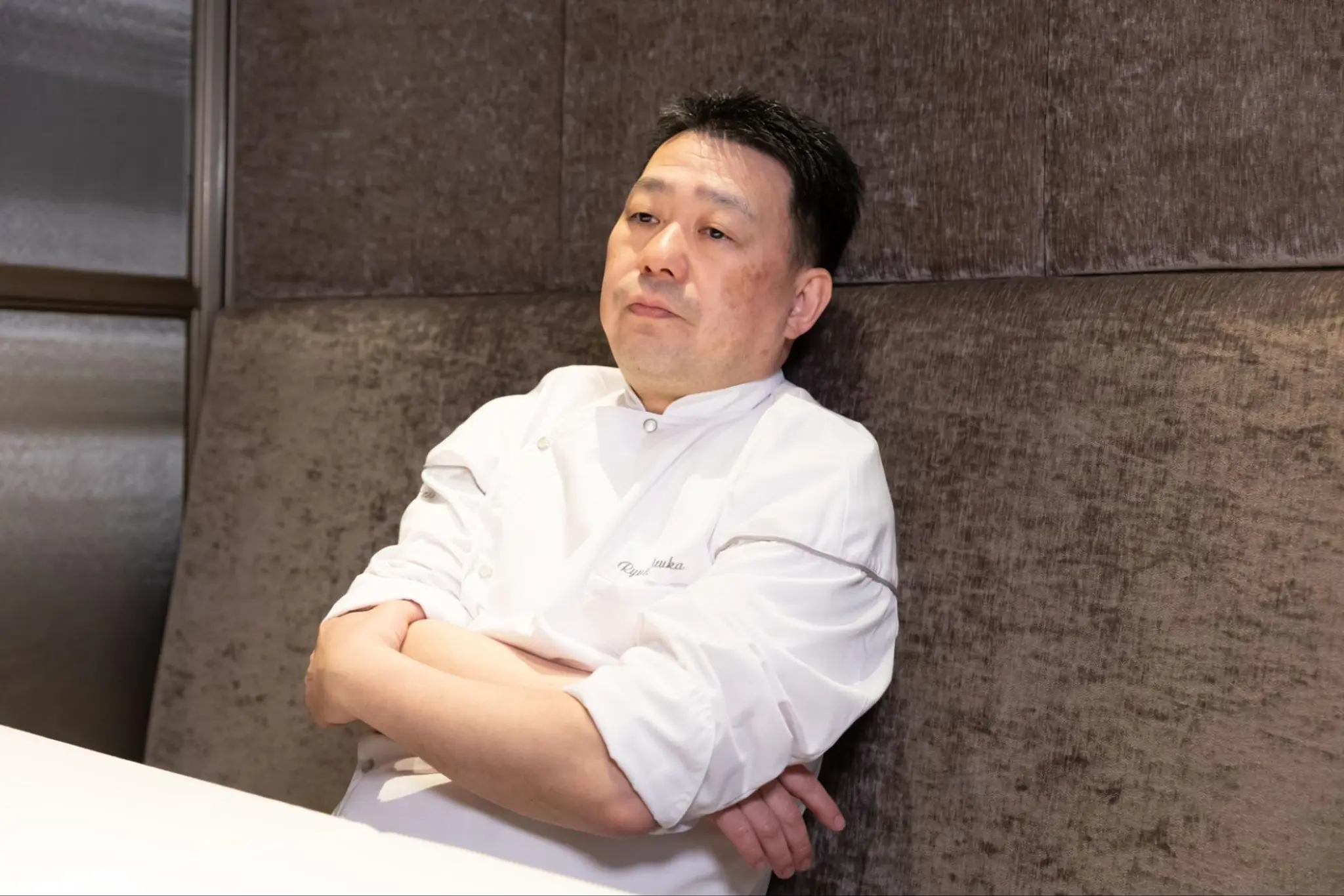
ーーーYou’re even thinking about the lives of your staff, aren’t you?
My staff have families and futures of their own. That’s exactly why I want to create a place where everyone can truly feel, “I’m happy here.” A workplace with proper salaries, bonuses, and time off, where they can clearly envision a future for themselves as chefs. That’s the kind of restaurant I aim to build. I don’t have expensive hobbies, nor do I crave luxury items. If I have any enjoyment, it’s going out to eat. So if the restaurant is doing well, I genuinely feel it’s far better to give back to the staff than to spend it on myself. I really mean that. Owning your own restaurant isn’t just about cooking—it also means being responsible for other people’s lives. I want this to be a workplace where every member of the team can look back and say, “I’m glad I worked here.
“Delicious” Is Not Created on the Plate Alone
ーーーChef Iizuka, what does “delicious” mean to you?
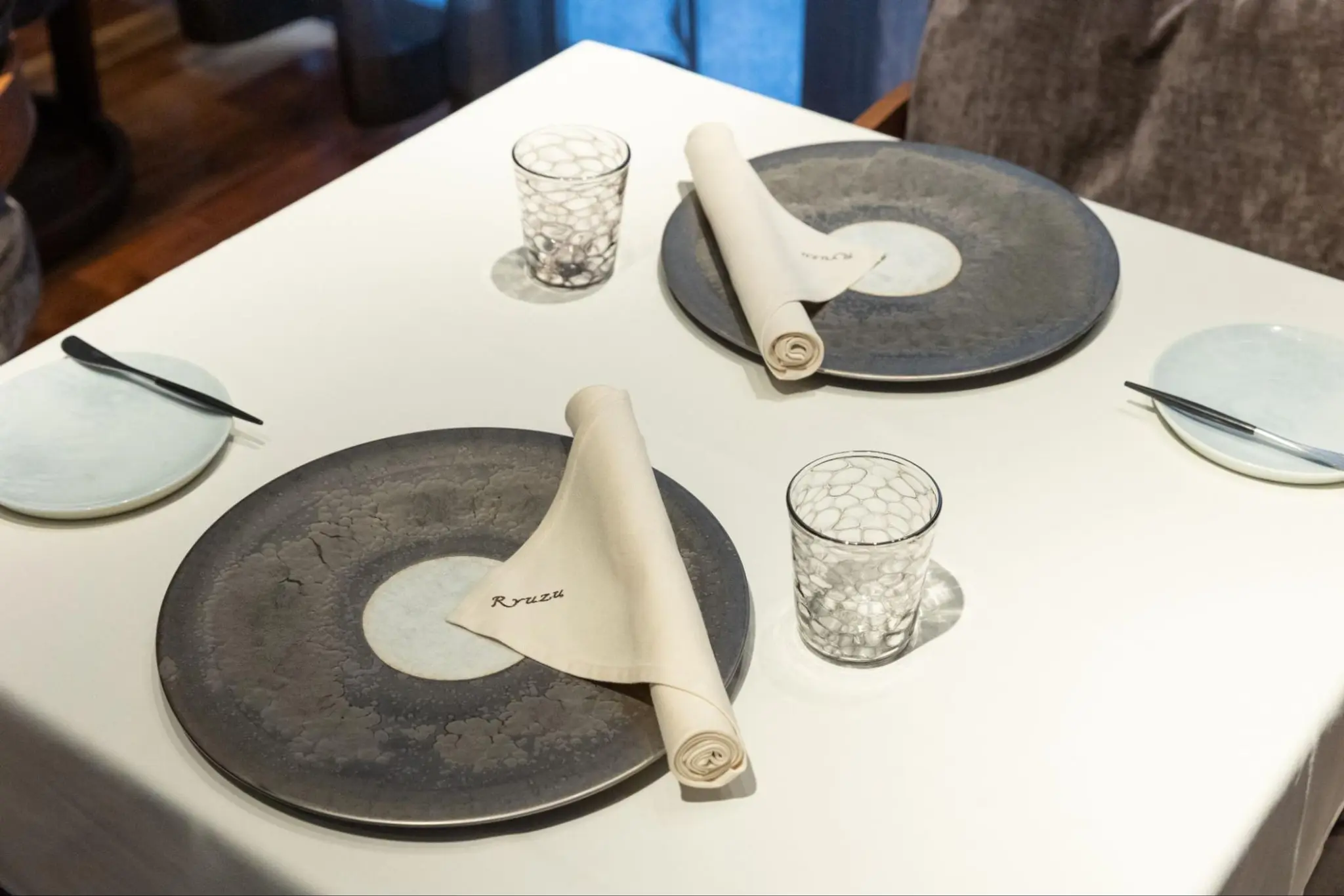
That’s a difficult question… But to me, “delicious” isn’t just about taste. It’s about who you shared the meal with, what kind of atmosphere you were in at the time. I believe those memories are what truly make something “delicious.” For example, enjoying a nice meal with good friends, or having a casual but joyful dinner with family—those are all “delicious” experiences, too. When you look at the world, there are so many people who don’t have enough to eat. There are wars, and there are people who, due to poverty, can’t eat even if they want to. When I think about that reality, I realize how fortunate we are—not only to be able to eat properly, but also to be able to create food that someone can find “delicious” and enjoy. That alone is such a blessing .That’s why I want to be someone who can genuinely feel something is “delicious.” No matter how tough or exhausting my work may be, I want to remain the kind of person who can eat a meal, think “this is delicious,” and feel grateful. Without that feeling, I don’t think I’d be able to serve truly delicious food to my guests.
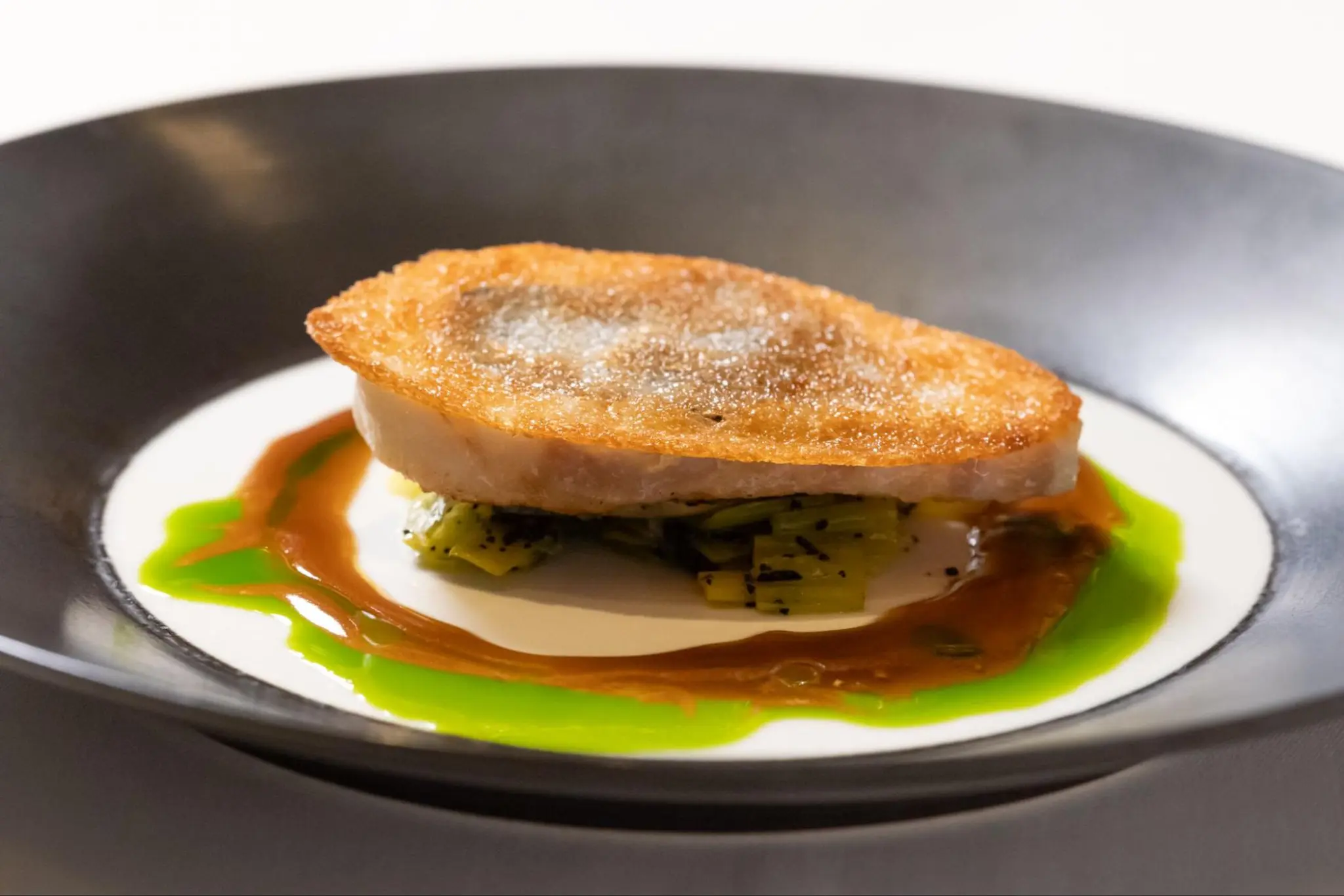
In the end, I believe that “it’s okay for the food to be ordinary.” That doesn’t mean cutting corners. What I mean is that the idea of “as long as the food is good, that’s enough” is not the right approach. A restaurant creates “deliciousness” through everything—service, atmosphere, and more. No matter how great the food may be, if the service is sloppy or the ambiance is poor, the customer will never walk away thinking it was “delicious.” That’s exactly why I ask for hospitality from my service staff. Everything matters: the timing of when the dish is served, the temperature of the plate, the way words are spoken to the guest. Even if the food is exquisite, it can all be ruined by a tense atmosphere. On the other hand, even if the food is simple, if the space is comfortable and the experience enjoyable, that becomes a memory of something “delicious.” That’s the kind of restaurant I’ve always wanted to create.
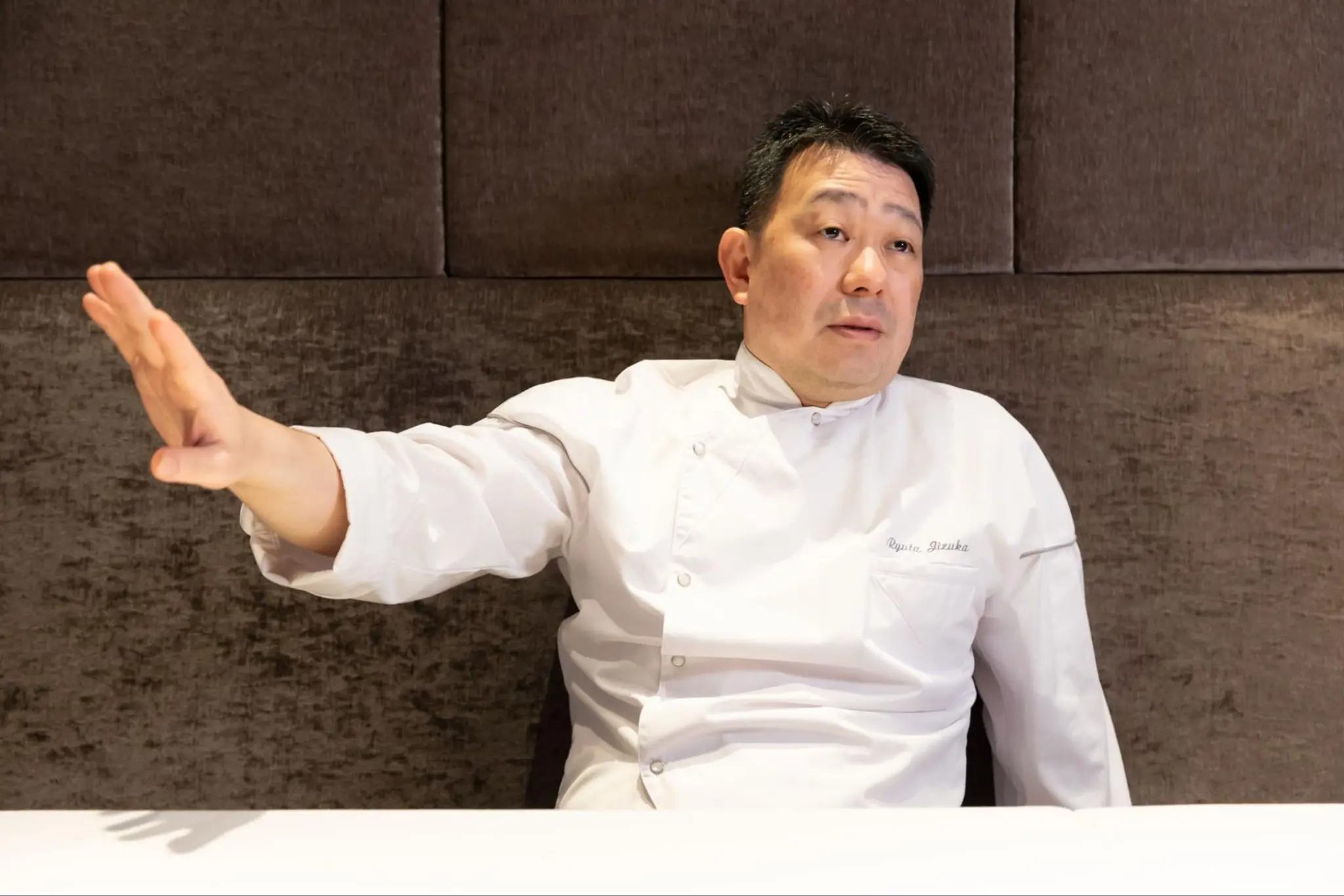
ーーーThe condition of your staff must also be an important factor.
I really believe that. I don't think any dish born from a negative mindset can ever truly be delicious. Food that's prepared while constantly complaining, or eaten in a tense atmosphere—there's no way that could taste good. That’s why I always tell my staff, “Making a mistake is understandable—but think about why you made it.” If they can reflect on a mistake and learn something from it, that’s enough for me. What’s important is not to forget the failure, but to remember it and seriously consider how to achieve a better result next time. I believe that through that kind of steady growth, both people and dishes can develop. That’s why I always say, “Let’s keep things positive!” And I try to live that way myself, too.
ーーーWe’ve heard that you, Chef Iizuka, have recently taken on a new challenge?
I obtained my fugu (pufferfish) handling license. I was introduced to a fugu restaurant called 【Maruyasu】 by Seiji Yamamoto of the Japanese restaurant 【RyuGin】, with whom I’m close. I was blown away by how delicious the fugu was, and after visiting many times, he said to me, “If you’re eating this much, why not just get the license?” That was what sparked the idea. To be honest, I only passed on my third attempt (laughs). Since I went through the effort of getting the license, I’m now planning to incorporate fugu into our menu. I hope you’ll look forward to a fugu dish that embodies the unique style of 【Restaurant Ryuzu】.
The value of a restaurant is not determined by the perfection of a single dish alone. It is only when the food, service, and atmosphere all come together that a place becomes one guests truly want to return to. For Chef Iizuka, this is simply a given—something he has steadily built upon. From the way he selects ingredients, to how he nurtures his staff, to how he creates the space of the restaurant itself—he has consistently approached it all with sincerity. 【Restaurant Ryuzu】 delivers unmistakable deliciousness through an uncompromising pursuit of excellence.
Interview & Text: Yuko Arakawa
Photography: Atsushi Sanada
Restaurant Information
- AutoReserve Magazine
- Japan’s world-renowned flagship restaurant
- The value of a restaurant is not defined by food alone – The form of “deliciousness” created by Chef Ryuta Iizuka of 【Restaurant Ryuzu】