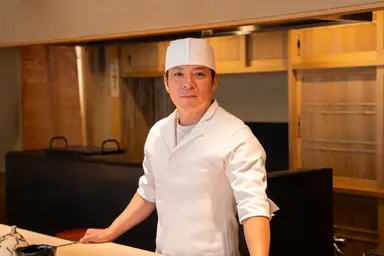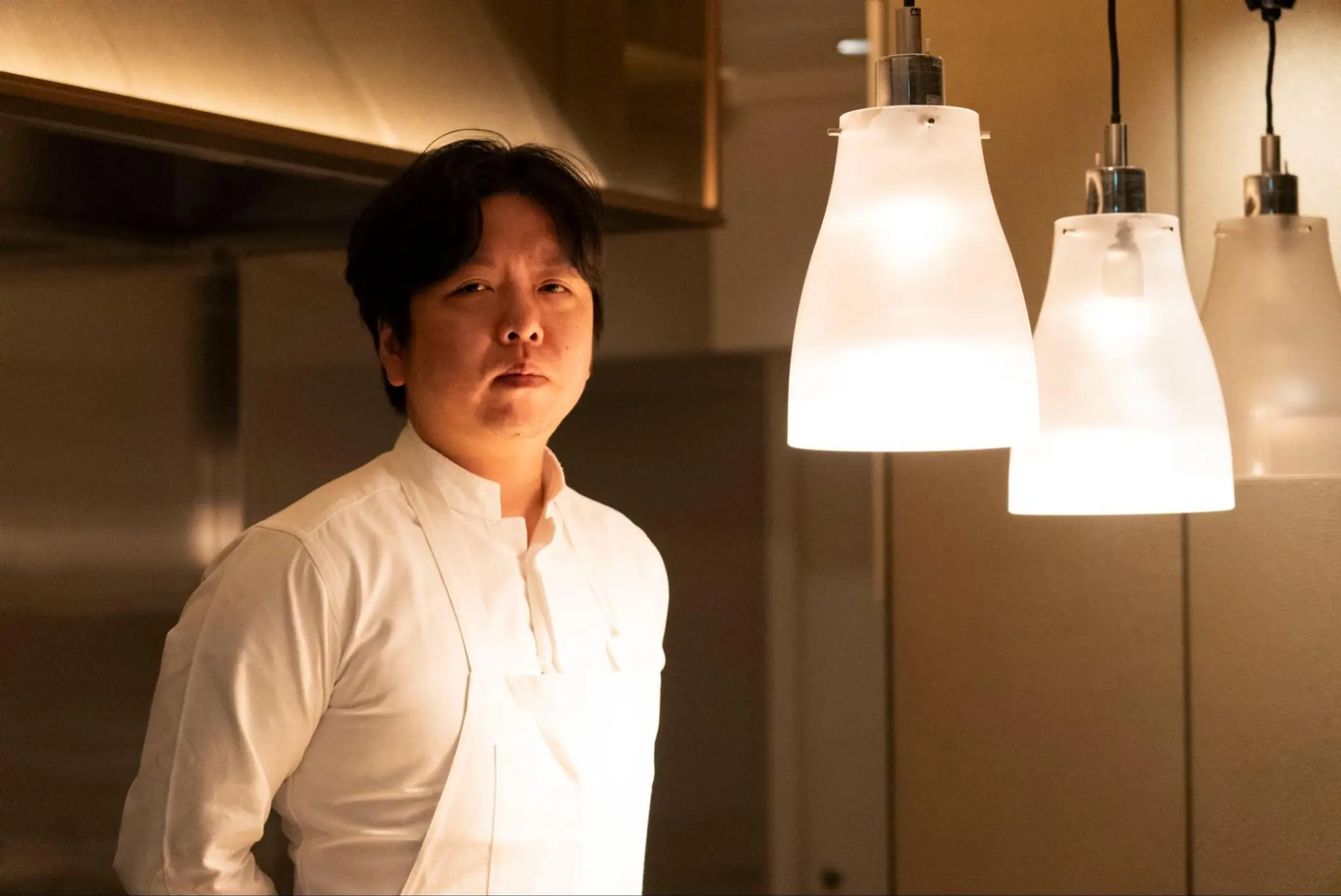
A chef who embodies their ideals through simple yet delicate dishes that eliminate unnecessary elements【TATSUMI】
Gaining experience at a prestigious Italian restaurant, honing skills, and developing the ability to bring creative ideas to life.
ーーーWhat inspired you to become a chef, and how did that journey lead to you opening your own restaurant?
After graduating high school, I began working at a casual Italian restaurant, which set me on the path to becoming a chef. I initially chose Italian cuisine because I liked lasagna and simply wanted to learn how to make a good meat sauce. Eventually, I moved to Tokyo to pursue a more serious culinary career, gaining experience at various establishments, including casual pizzerias, wine bars, and Japanese-style bistro pubs. Later, I refined my craft under the renowned Salone Group, working at 【Il Teatrino da Salone】 and 【K+ (Kagero Plus)】, before finally striking out on my own.
ーーーWhat was your experience like working at 【Il Teatrino da Salone】?
I joined 【Il Teatrino da Salone】 as a kitchen staff member, working in a highly disciplined environment where I was strictly trained in hierarchy and communication. Eventually, I took on the role of sous-chef. Since the menu changed every month, we held monthly tasting sessions to share ideas and refine each dish. By the end of each month, we were already preparing ingredients for the following month while planning menus for two months ahead. It was a busy time. Regardless of whether their ideas were chosen, every kitchen team member was required to submit menu proposals, so developing dishes based on seasonal ingredients was also quite challenging.
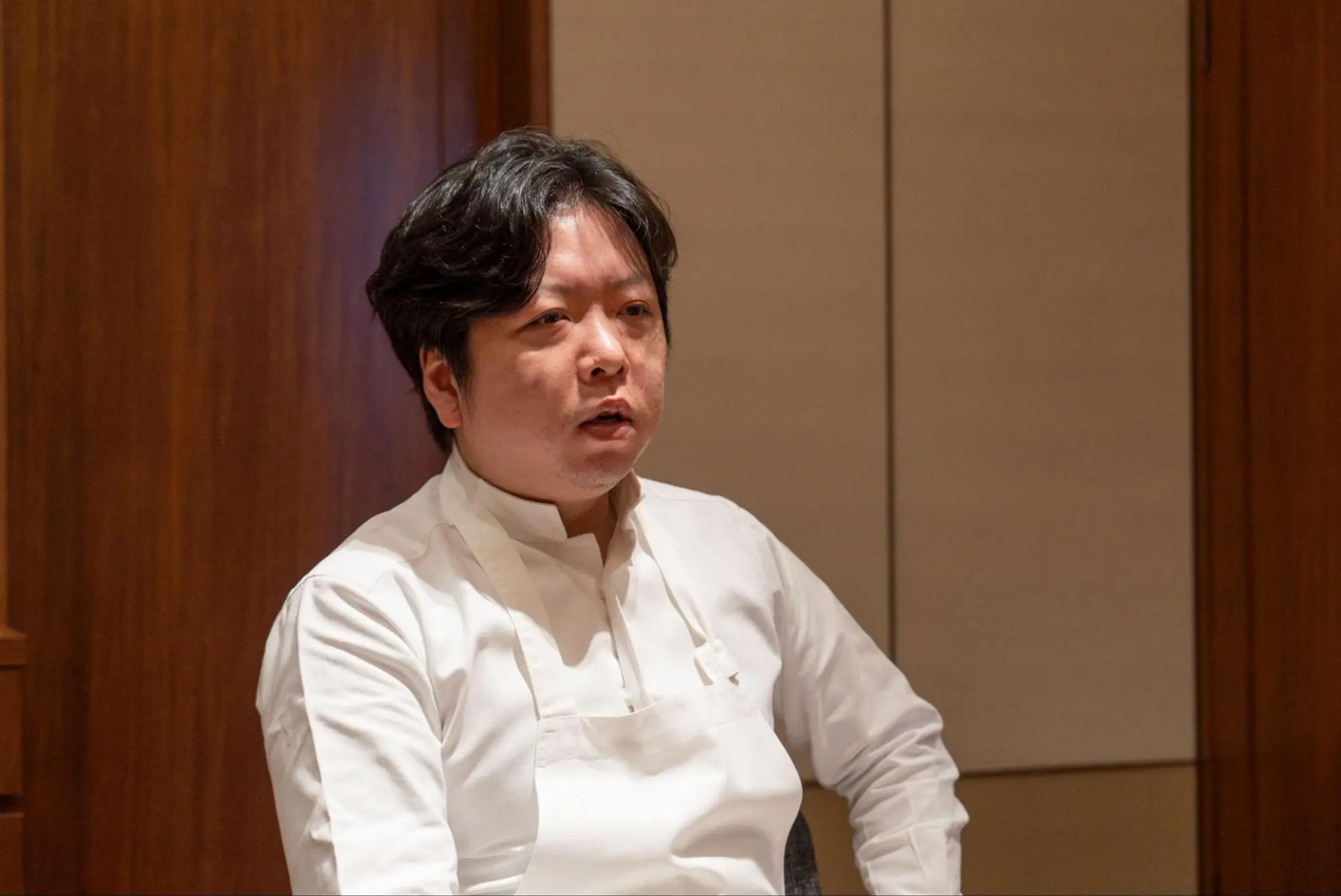
In my younger years, it was especially difficult to bring the images in my mind into reality, but once you’re able to do that, you start to feel more like a true chef. When a menu item was actually chosen, we had to calculate the food cost percentage and refine the dish into its final form. We were always strictly trained to track food costs, so we even recorded and submitted the cost of meals used for staff every week. Thanks to that experience, I’m now able to roughly estimate the food cost percentage of most dishes, and I’ve learned to think ahead—considering the seasonal ingredients that will be in their prime in the near future.
ーーーIt sounds like it was a very rewarding environment for personal growth.
In more traditional, craftsman-like environments, there’s often a “learn by watching” approach. But I think that phrase is less about its literal meaning and more about developing the ability to truly observe and absorb from what you see. That said, there are many things you won’t understand until you actually try them yourself. At 【Il Teatrino da Salone】, there wasn’t a lengthy apprenticeship phase before getting hands-on with cooking. If you had the initiative, you were given the chance to take on any challenge, which made it a great environment for growth.
However, the reality is that it’s the head chef who gets most of the recognition for the dishes. As the sous chef, you’re not really in the spotlight. My role was more about supporting the head chef and acting as a buffer between them and the younger kitchen staff. I think that made it harder to fully showcase my own personality at the time.
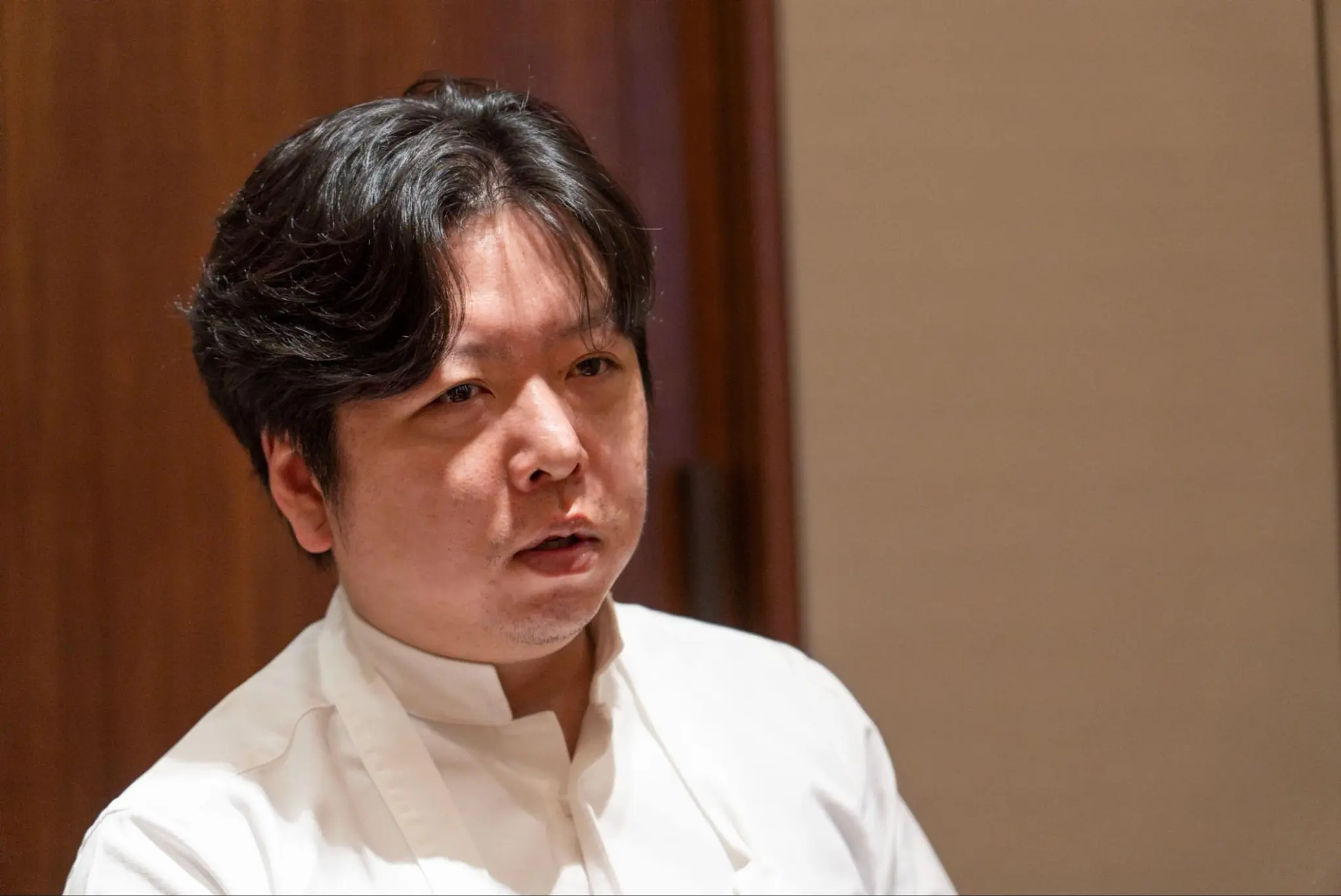
ーーーAfter that, I understand you also served as the head chef at a hotel restaurant?
After leaving 【Il Teatrino da Salone】, I worked as the head chef at a resort hotel restaurant in Shimoda, Izu. The general manager was very supportive of my ideas, and during the slow off-season, I had the opportunity to try different approaches and further hone my skills. For example, I experimented with making all the French sauces from scratch. I chose to focus on French sauces because they offer a greater variety and depth of flavor compared to Italian sauces, and I wanted to deepen my understanding in this area.
Italian cuisine, while known for staples like tomato sauce, doesn’t have as many sauce varieties and often lacks the same depth of flavor. This could be tied to Italy’s history as a young country, only unifying in 1861 after a long history of political division. Italian cuisine blends many regional influences and never developed a unified, refined approach to sauces.
In contrast, French cuisine originated from courtly traditions, resulting in sophisticated recipes and a wealth of sauces that are both delicious and diverse. Making French sauces involves meticulous reduction techniques and a delicate balance, as their flavor can shape the entire dish. The experience and knowledge I gained during this time have become a tremendous asset in my current culinary work.
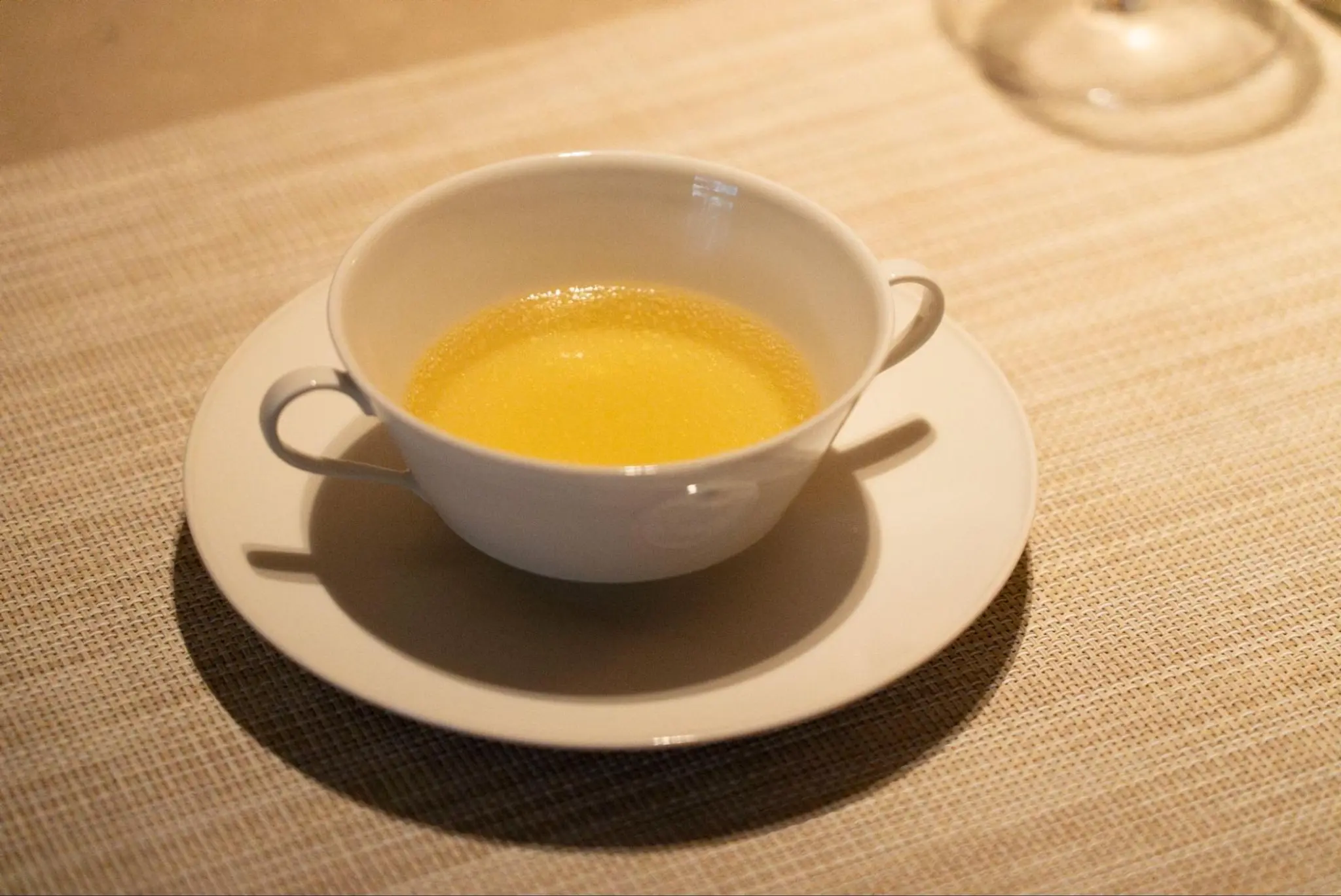
Striving to bring my vision to life, I took the leap into independence!
ーーーYou served as head chef at 【K+】, the sister restaurant of the renowned 【Restaurant Équateur】?
When I began helping out at the esteemed French restaurant 【Équateur】 in Moto-Azabu, I was asked to take on the role of head chef at its sister restaurant, 【K+ (Kagero Plus)】. At that time, the founding members of the restaurant had all departed, leaving no core staff on hand, so I was entrusted with overseeing the kitchen as the head chef. Initially, there were around 40 menu items, and guests were allowed to choose freely. However, the staff found this approach overwhelming, so I started by completely revamping the menu. That said, I didn’t immediately impose my own style. Instead, I gradually adjusted the menu, guided by a vision of what I ideally wanted it to become.
Despite being the sister restaurant of a renowned establishment, 【K+】 didn’t automatically attract a steady stream of customers, and we faced challenges at first. After about 8 to 10 months, I managed to refine the menu, focus on high-quality ingredients, and attract a larger clientele, leading to a very busy and fulfilling operation. The experience of rebuilding the restaurant from the ground up taught me just how much the right approach can positively impact business performance.
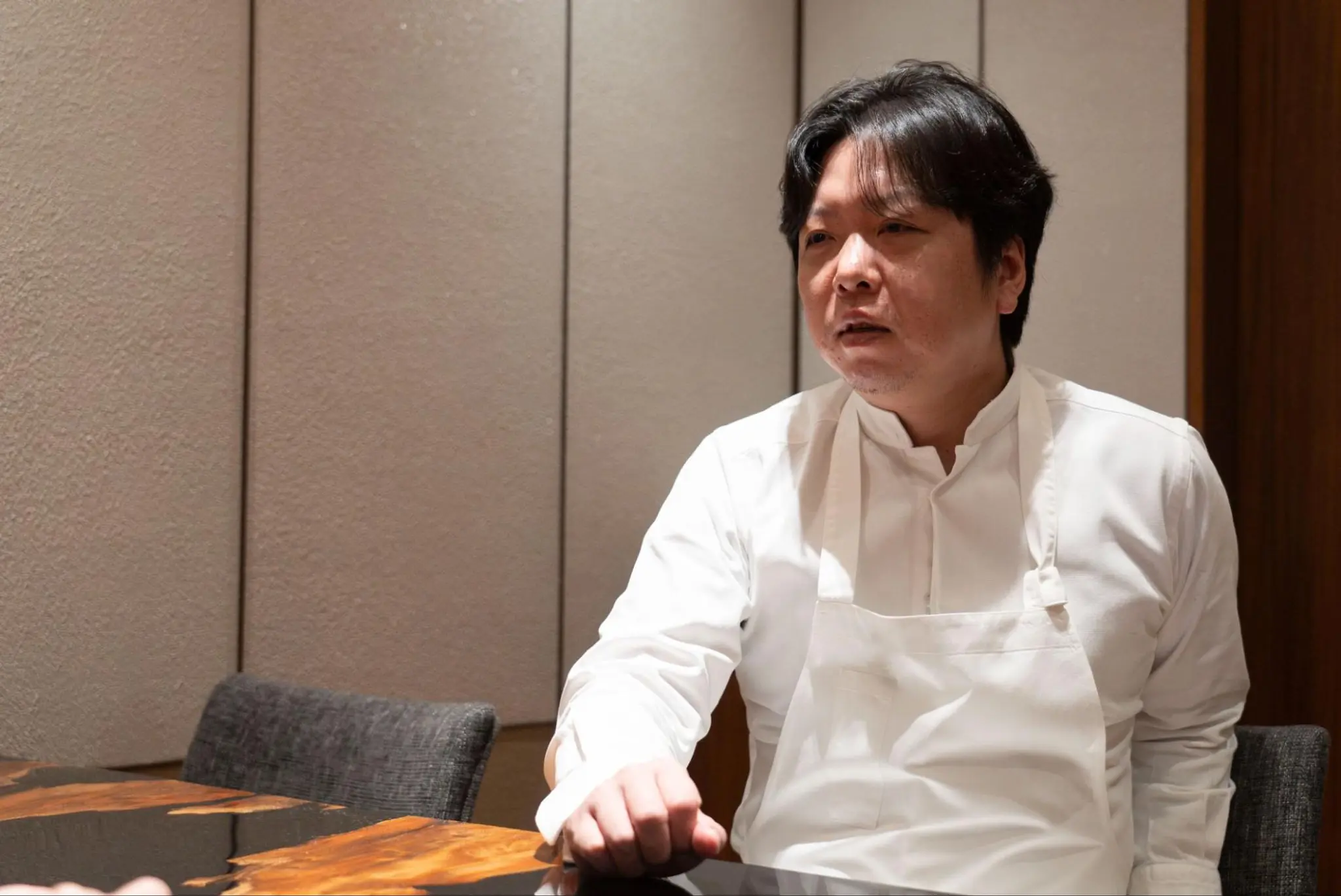
ーーーHow do you think your experience at 【K+】 has shaped your current approach?
At the time, I was only 29 years old, yet I was entrusted with the significant responsibility of leading the team. This gave me invaluable experience in running a restaurant as the person in charge. We had many wine enthusiasts among our customers, and building relationships with them helped me deepen my knowledge of wine. In fact, some of the guests I served back then are still loyal patrons today. After discovering the joy of wine, I wanted to understand it better and even started purchasing bottles on my own initiative.
Many of the guests who enjoyed my cooking would ask, “Aren’t you going to open your own place?” This planted the seed of a dream—I wanted to run a relaxed, intimate restaurant in my own style. Although I originally thought I might wait until I was around 40, fortunate timing and opportunity allowed me to open my own restaurant at the age of 33.
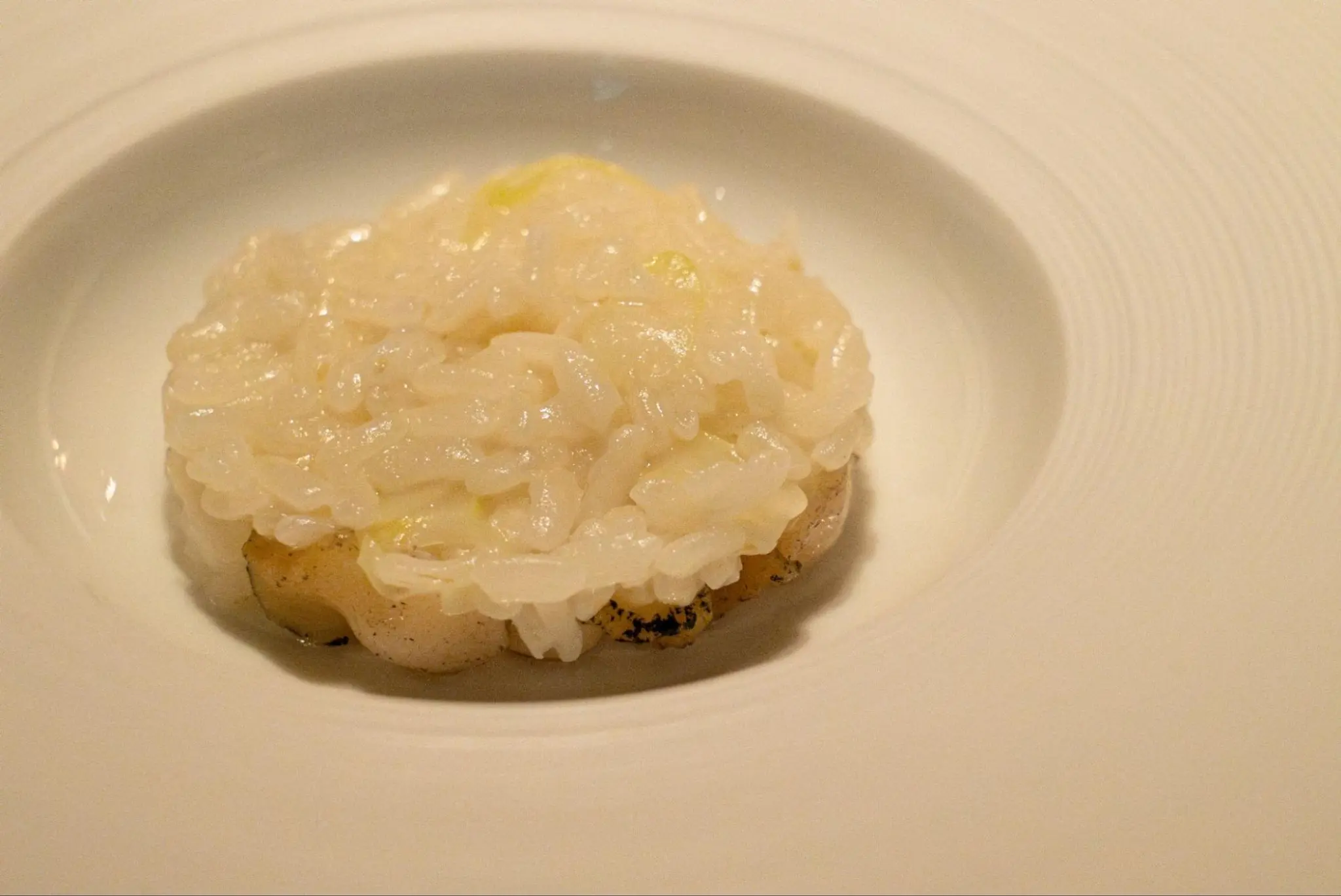
ーーーTell me more about the dishes at 【TATSUMI】
At our restaurant, we focus on selecting top-quality ingredients and preparing simple dishes that highlight their natural flavors. While the presentation may not have the flashy appeal seen on social media, the simplicity embodies the essence of authentic Italian cuisine. By carefully choosing excellent ingredients and preparing them with minimal fuss, we can create truly delicious dishes. For example, a well-sourced bonito needs nothing more than a straightforward grilling to taste wonderful. Of course, with lesser-quality fish, you might need to dress it up as a salad or find other ways to enhance the flavor. But when the ingredients are as good as they can be, I believe there’s no need for unnecessary additions.
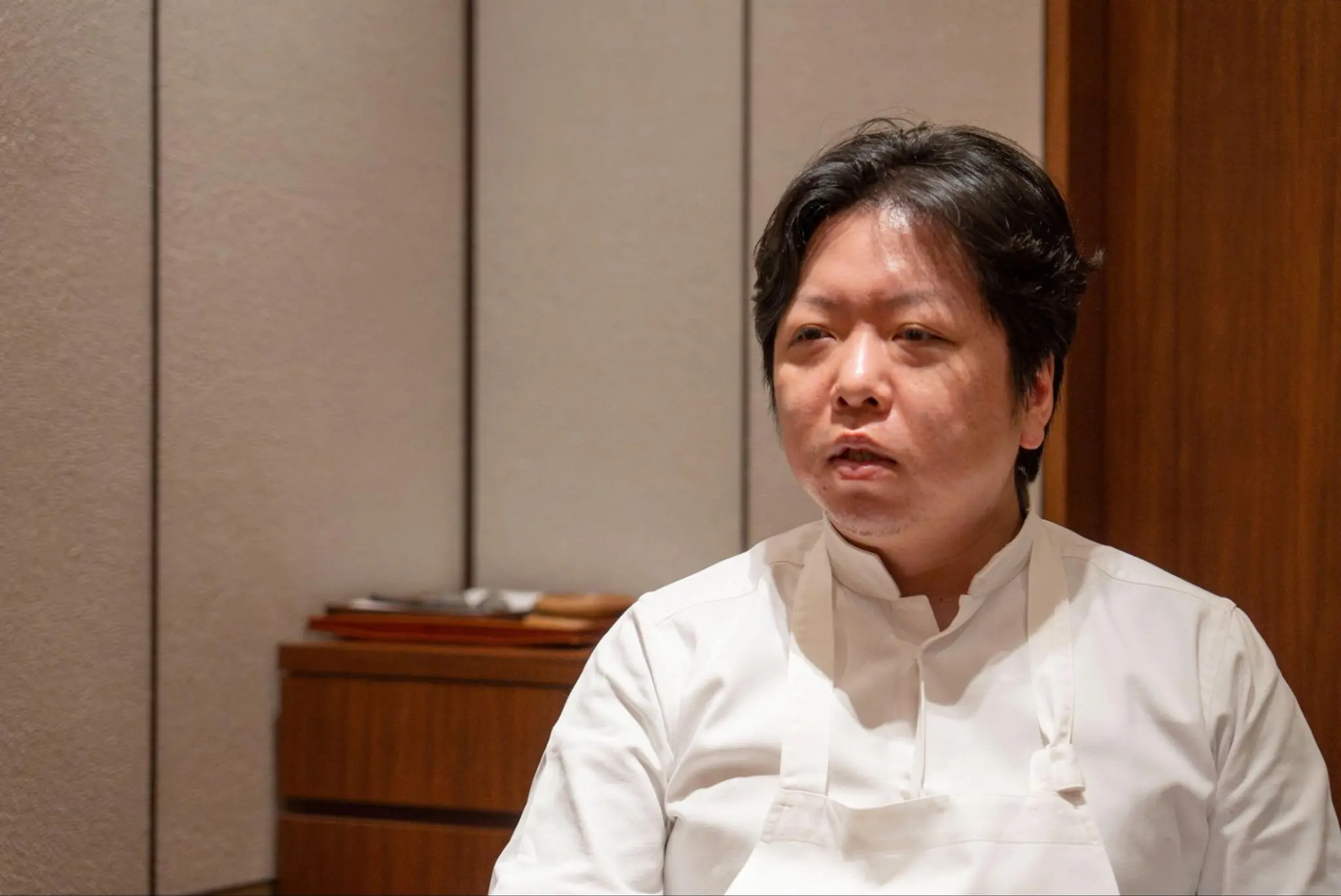
For instance, while micro herbs and edible flowers can make a dish look lovely, I always consider whether they’re truly necessary from a culinary standpoint. It’s important to think about whether these elements enhance the flavor or justify the extra effort and expense. If an addition doesn’t create a memorable impression for the guest, I prefer to only place essential components on the plate. At our restaurant, we don’t add decorative cheese to pasta, and we focus on serving dishes that I can fully explain and stand behind. I want each dish to be something guests can vividly recall when looking back on their dining experience.
We carefully select the flour for our pasta and use only high-quality ingredients to craft our dishes
ーーーWhen creating a dish, what do you focus on most?
During my training, I was once told, “Learn to taste your dishes in your mind,” and that’s the approach I’ve always taken. By sampling a variety of ingredients and remembering their flavors, I can mentally combine them and imagine the taste that will result. This helps me translate the flavors I envision into reality.
As I’ve gained more experience, I’ve had more opportunities to dine at Japanese restaurants. I find myself drawn to the way Japanese cuisine often enhances the natural flavors of ingredients without overloading a dish with too many elements. While Italian cuisine traditionally involves more components than something like sushi, my cooking has become increasingly simple over the years. My goal is to create dishes with deep umami—flavors that unfold gradually, similar to a Japanese soup, and linger subtly on the palate.
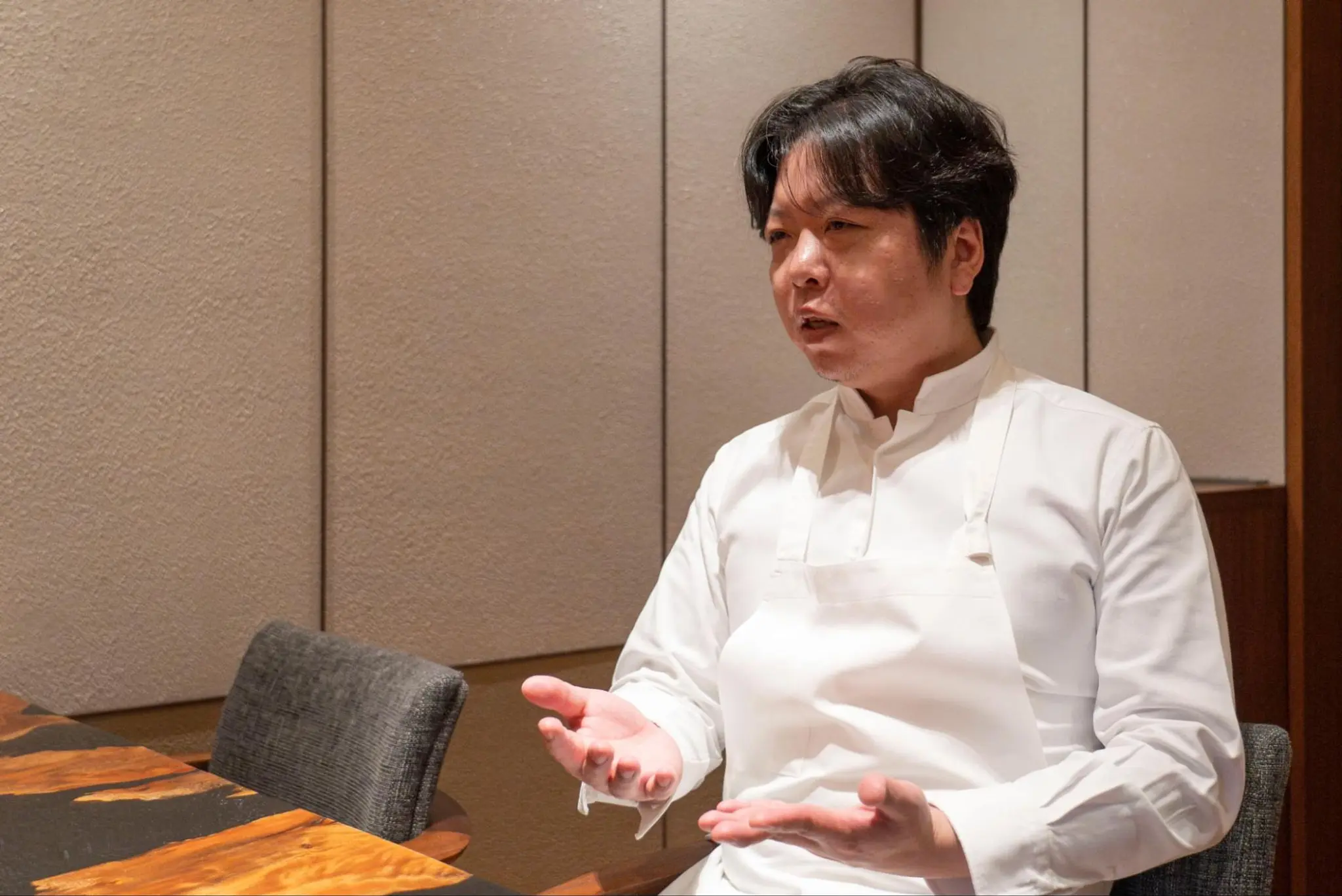
ーーーWhat makes your pasta unique, and how do you approach crafting it?
There are many varieties of flour used to make pasta, and recently I’ve found it fascinating to select the most suitable flour for each type of pasta. While I respect the traditional shapes and methods of Italian pasta-making, most of my guests are Japanese, so I believe sticking rigidly to traditional Italian styles won’t always produce the most delicious results. Instead, I focus on creating pasta that appeals to my own Japanese sense of taste.
Even among different types of flour—bread flour, all-purpose flour, or cake flour—each has unique characteristics. The choice of flour depends on the texture I want to achieve, whether it’s a pasta that breaks cleanly or one that has a soft, airy bite. Additionally, factors like the type of water used (hard or soft) and the protein content affect the final texture, so I carefully consider the producer and compare various aspects before making my selection. For semolina flour, which is less commonly produced domestically, I often source it from overseas. However, for other flours, I make a point of using carefully chosen Japanese varieties.
ーーーWhat kind of attention do you pay to your ingredients?
We carefully evaluate the products we source from suppliers, and many of our ingredients also come from trusted connections in the culinary industry. Lately, we’ve noticed an increasing number of farmers who use social media to share their stories and showcase their produce. These posts serve as a great resource for discovering high-quality ingredients. One example we’re particularly proud to use is Tajimaguro beef. It earned its name because the rich, flavorful red meat and top-grade marbling are reminiscent of tuna. The producers are meticulous about the feed and environment in which the cattle are raised, and this care really comes through in the quality of the meat. It’s a reminder of how much the conditions under which food is grown can influence its flavor and texture.
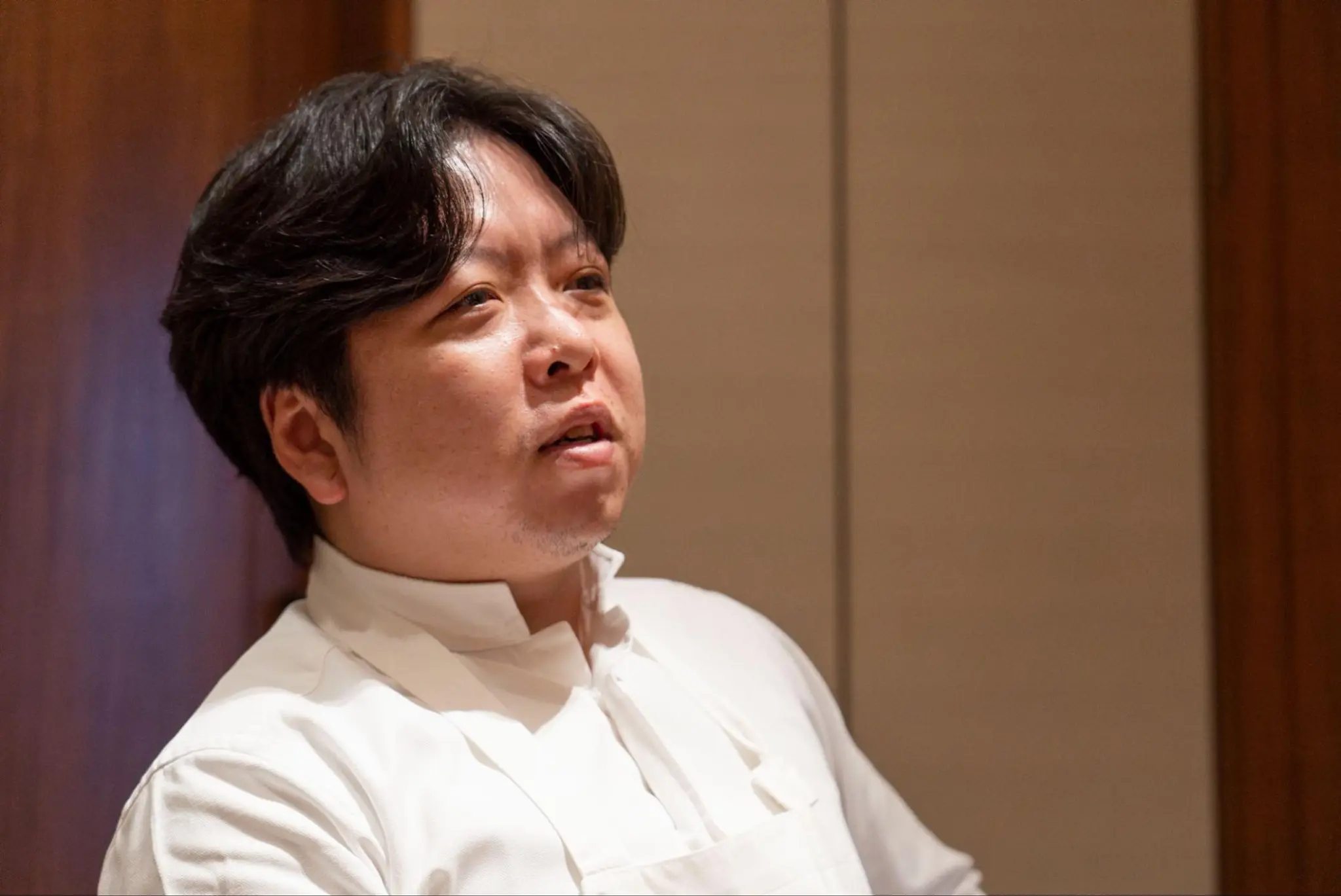
ーーーHow do you come up with your culinary ideas?
I’ve always had a bit of a contrarian streak (laughs), so even during my training, I constantly thought, “How would I do this differently?” while learning from various chefs. I believe all chefs are always thinking of how to create their own unique dishes. That said, coming up with menu ideas can be quite challenging—sometimes inspiration strikes immediately, while at other times it doesn’t come at all.
I tend to jot down my thoughts on paper, often scribbling out twenty or so sheets at once when a flood of ideas hits. When designing a course, I write down the elements of each dish, adjusting them bit by bit, and then consult with suppliers about seasonal ingredients. From there, I evaluate what’s feasible and turn those ideas into actual dishes.
I strive to deliver a “delicious” experience that not only satisfies in the moment, but leaves a lasting impression
ーーーWhat are your key considerations when designing the ambiance of your restaurant?
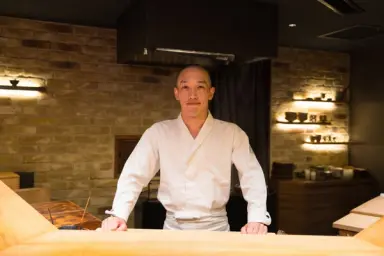
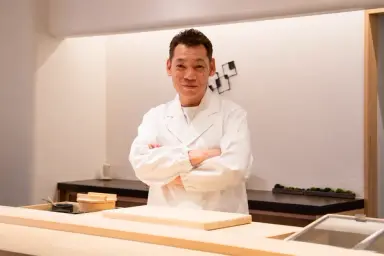
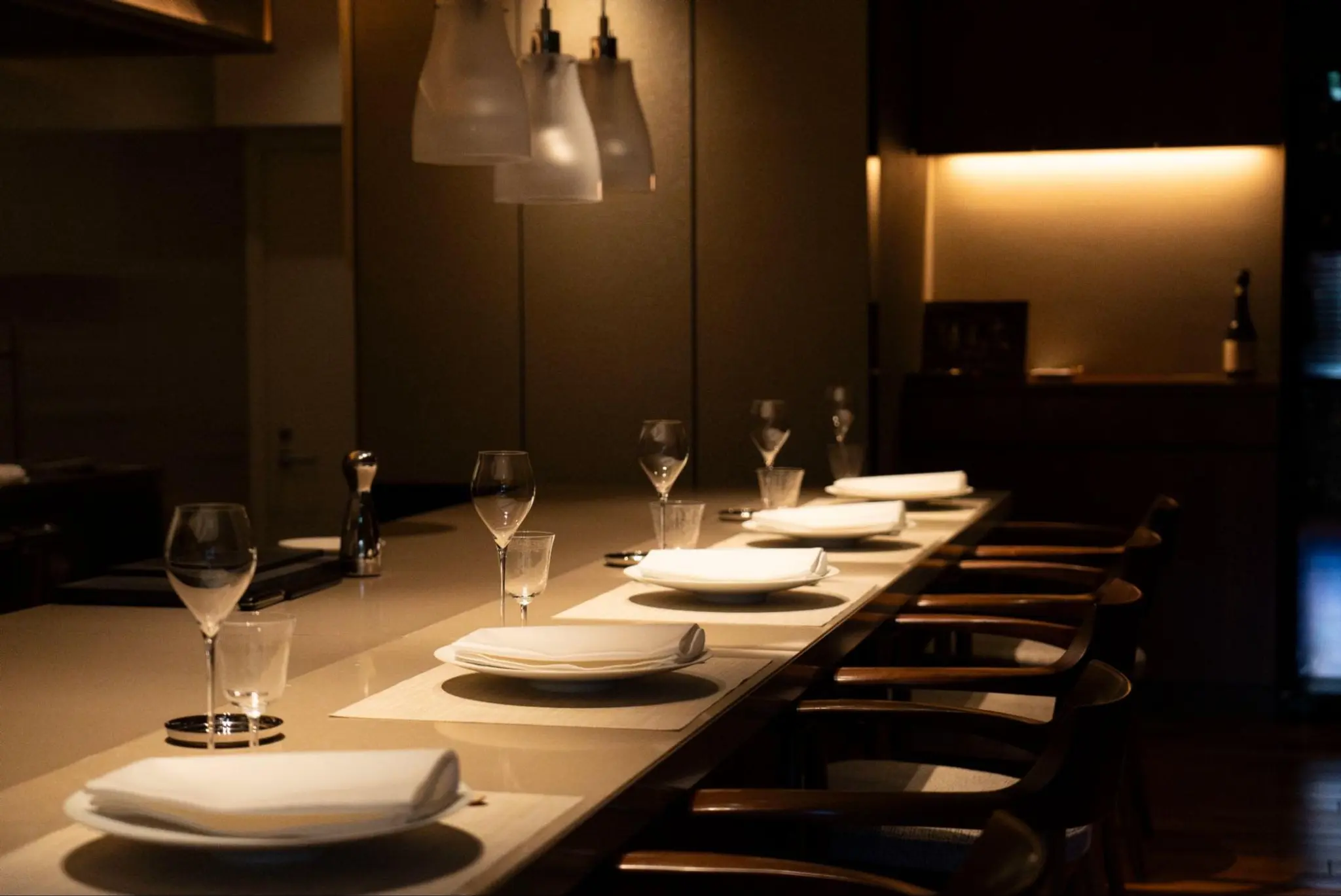
Our restaurant features an open kitchen, which I believe is essential for delivering quality work. When I worked in kitchens set apart from the dining area, it often felt disconnected—like I wasn’t sure who I was cooking for. With an open kitchen, I can clearly see guests’ reactions and enjoy the interaction that comes from preparing food right in front of them. I decided early on that if I ever opened my own restaurant, it would have an open kitchen. It allows me to directly sense the atmosphere of guests enjoying their meal and keeps the kitchen staff motivated to maintain a clean, tidy space since we’re always in view.
Additionally, I wanted to ensure a private and comfortable space for gatherings or meals with prominent figures. Our private room is entirely secluded and has a separate restroom, designed so that guests in the private room don’t cross paths with those at the counter. We’ve also been fortunate to welcome many international guests from Asia, Europe, America, and Australia. Some of these visitors have come through word-of-mouth from our time at 【K+】, and it’s wonderful to see that network expanding.
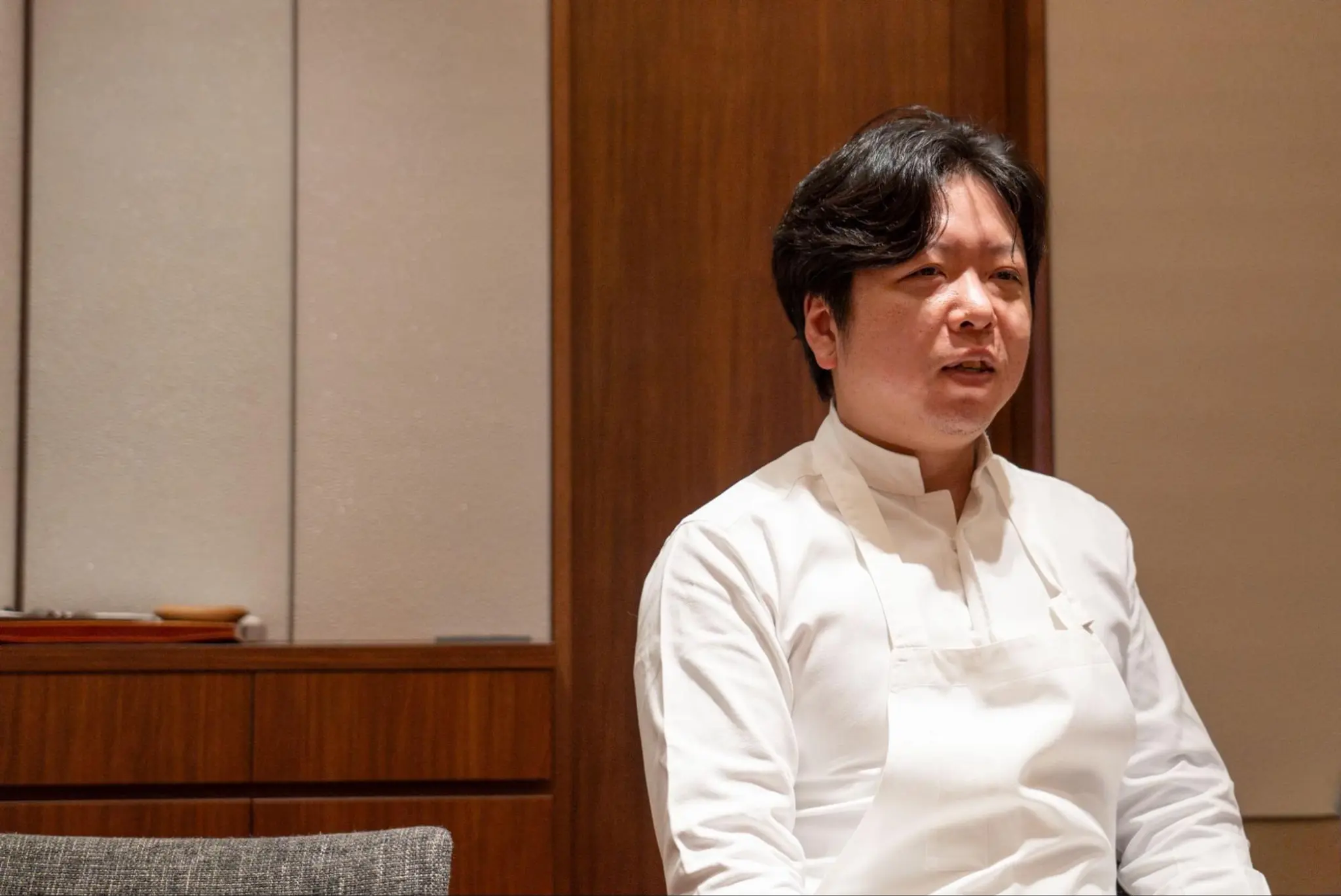
ーーーWhat approaches do you use to nurture and train the next generation?
As a business owner, I strive to create an environment where staff can earn a good living while maintaining their autonomy. Younger team members often bring me their experimental dishes and ask for feedback without needing to be prompted, and I offer them advice when needed. I want them to think for themselves and take initiative, so I keep their work hours flexible—if their tasks are on schedule, they’re free to start work at 2 p.m. or even step out for lunch at a restaurant they want to try. Despite this flexibility, the team always completes their responsibilities, which is a great reassurance.
In the long run, I’d love to see the staff I’ve worked with go on to become independent or lead as chefs. Encouraging autonomy is not only about their current development but also about preparing them for the future.
In terms of communication, I emphasize two key principles: don’t cut corners, and don’t lie. Honesty is not just about being a good chef; it’s about being a decent human being. Even a small lie can snowball into something larger, so I always encourage them to speak their minds openly and truthfully. I try to model this by communicating in a straightforward and genuine manner.
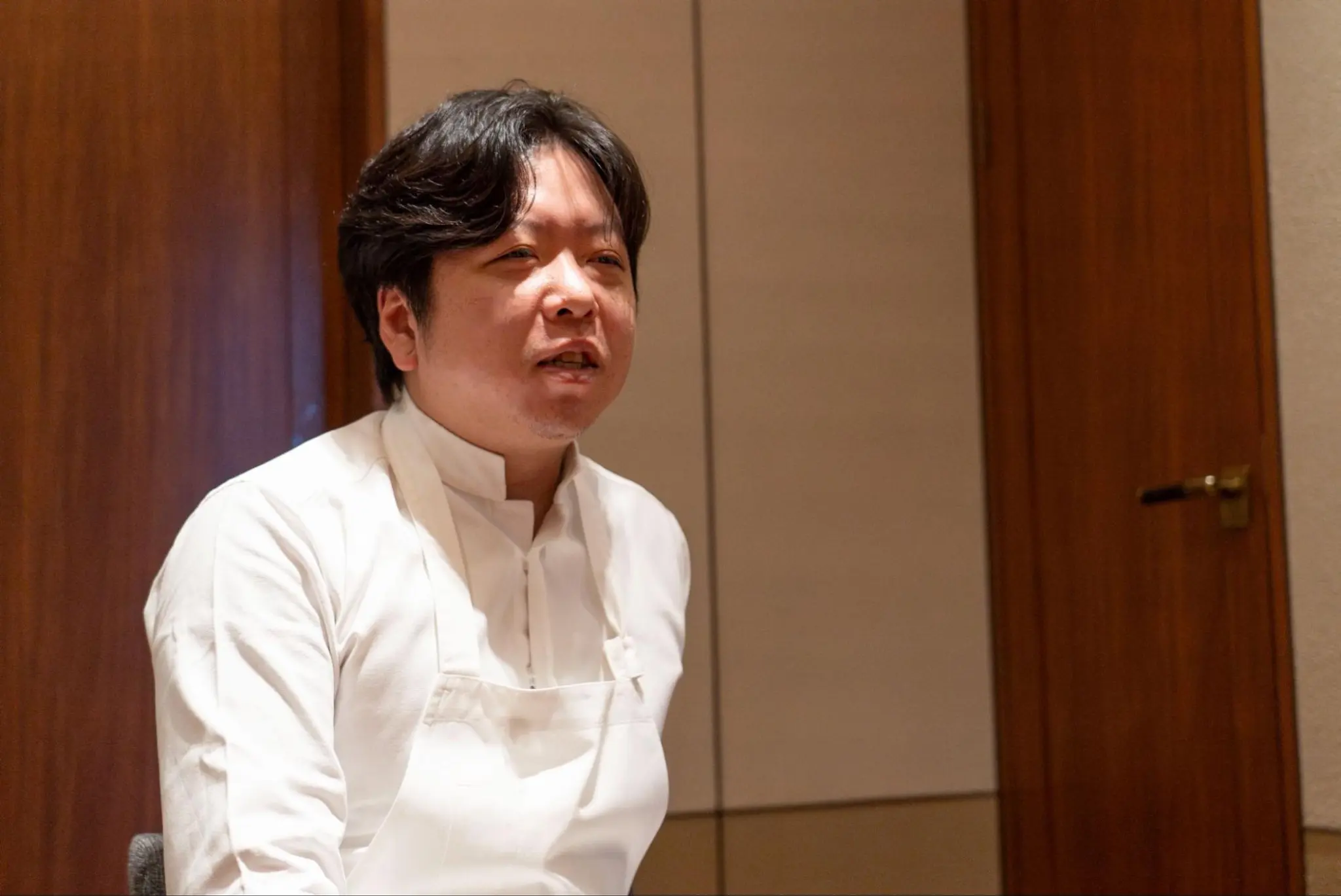
ーーーFinally, what does "delicious" mean to you, Mr. Watanabe?
To me, “delicious” isn’t just about the moment a guest enjoys a dish; it’s about creating something so memorable that they can look back and say, “That meal was truly wonderful.” When guests return again and again, it’s often because we’ve succeeded in crafting a “delicious” experience that lingers in their memory.
There’s also evidence suggesting that around 80% of our perception of taste comes from our other senses—sight, hearing, and smell. The open kitchen allows guests to fully engage their senses, making this space an essential element of the “delicious” experience. Moving forward, I want to continue bringing my vision to life and creating dishes that resonate with my guests.

In a space that feels both stylish and warm, guests can immerse themselves in the dynamic atmosphere of an open kitchen while enjoying conversations with the chef—one of the unique highlights of the experience. Watanabe’s vision is beautifully expressed through dishes served on glossy white ceramic plates, which accentuate the natural beauty of the cuisine. The simplicity of these dishes stirs the heart, while their rich depth and flavors awaken the senses. Visit 【TATSUMI】 to experience this blend of culinary artistry and sensory delight.
Interview, Text / Yuka Sata
Photography / Azusa Nakaoka
Restaurant Information
- AutoReserve Magazine
- Restaurants recommended by top chefs
- A chef who embodies their ideals through simple yet delicate dishes that eliminate unnecessary elements【TATSUMI】