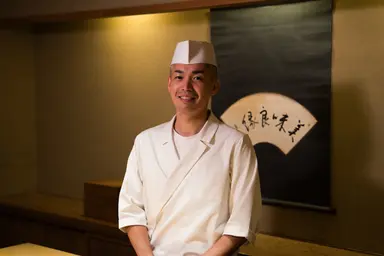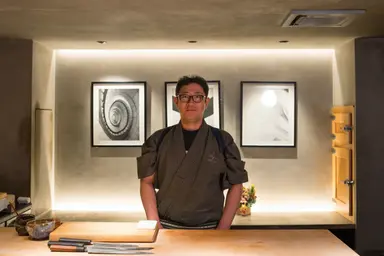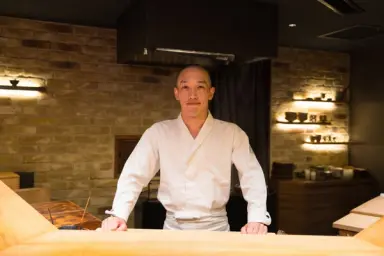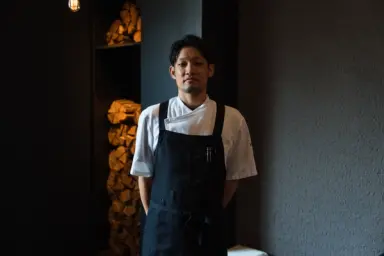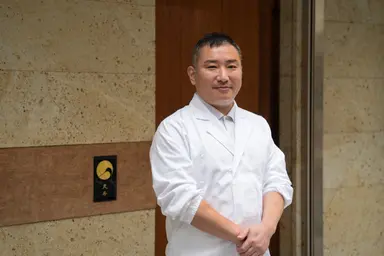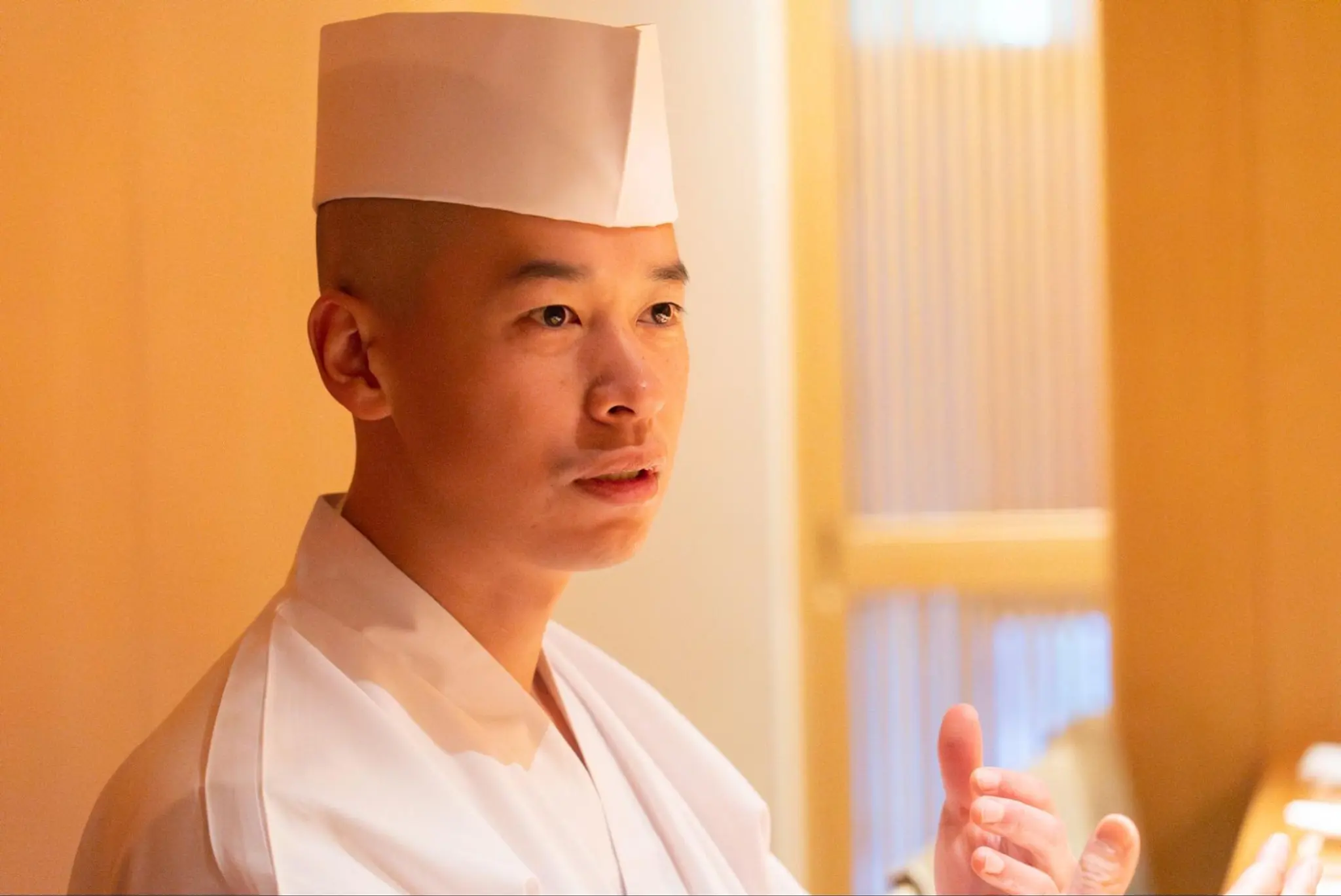
The path of a sushi chef that was grasped on his own, diligently working hard while preserving tradition, blossoming with individuality and charm at 【Sushi Tsubomi】
Expressing the uniqueness of 【Sushi Tsubomi】 through both preservation and innovation
ーーーCould you tell us about the characteristics of your restaurant and the dishes you offer?
The unique feature of our restaurant is that, as a sister restaurant of 【Sushi Saito】, Master Saito sees the young chefs as buds before they blossom, providing us with opportunities and chances to grow. It is a "platform where young talent can thrive." I am 32 years old, and the other staff members are between 21 and 27 years old, so we still have much more to achieve. We offer both lunch and dinner courses, featuring a selection of appetizers and sushi in an "omakase course." For lunch, we also provide a "short course" centered around sushi, which takes about an hour to enjoy.
ーーーDoes the course content overlap with that of 【Sushi Saito】?
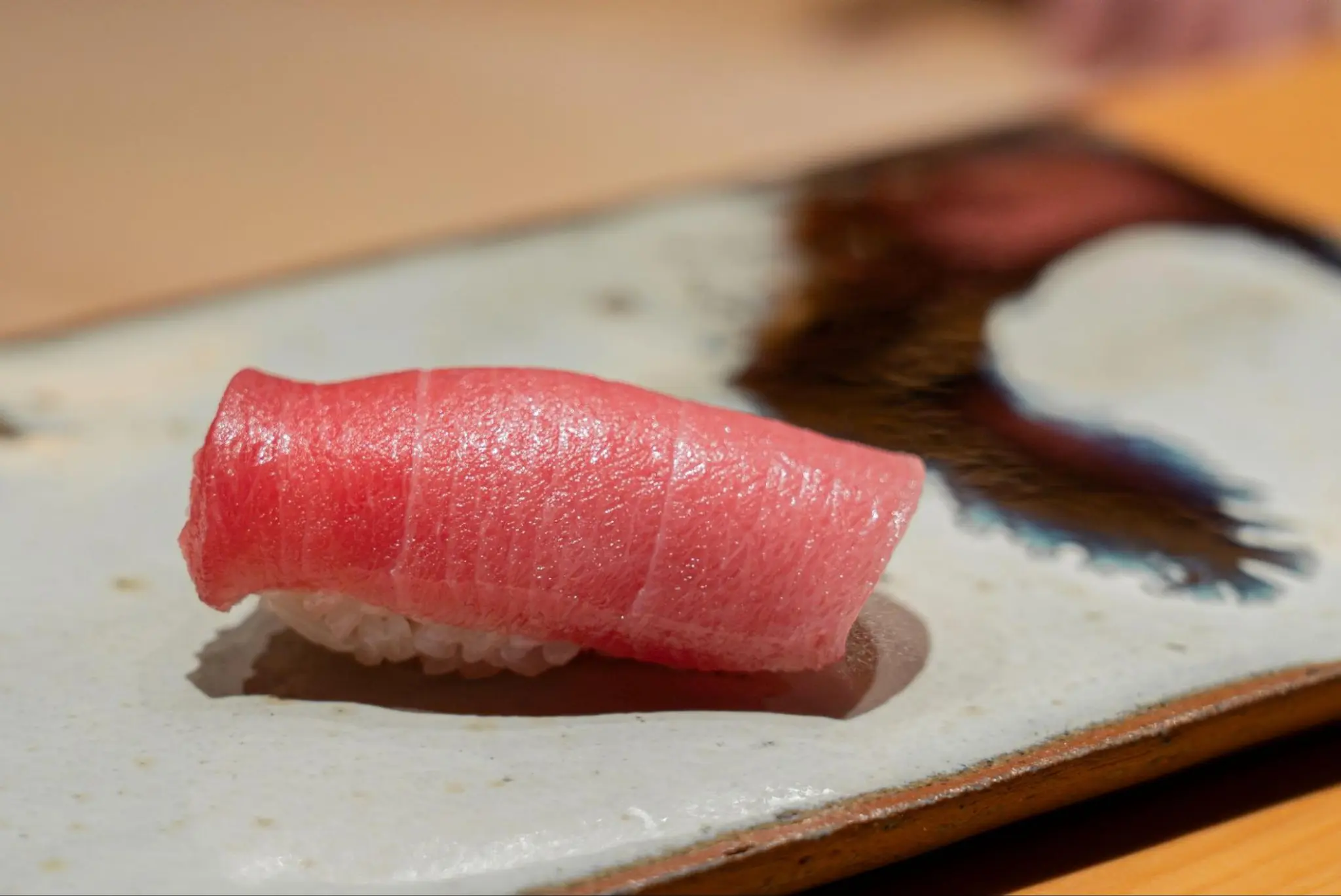
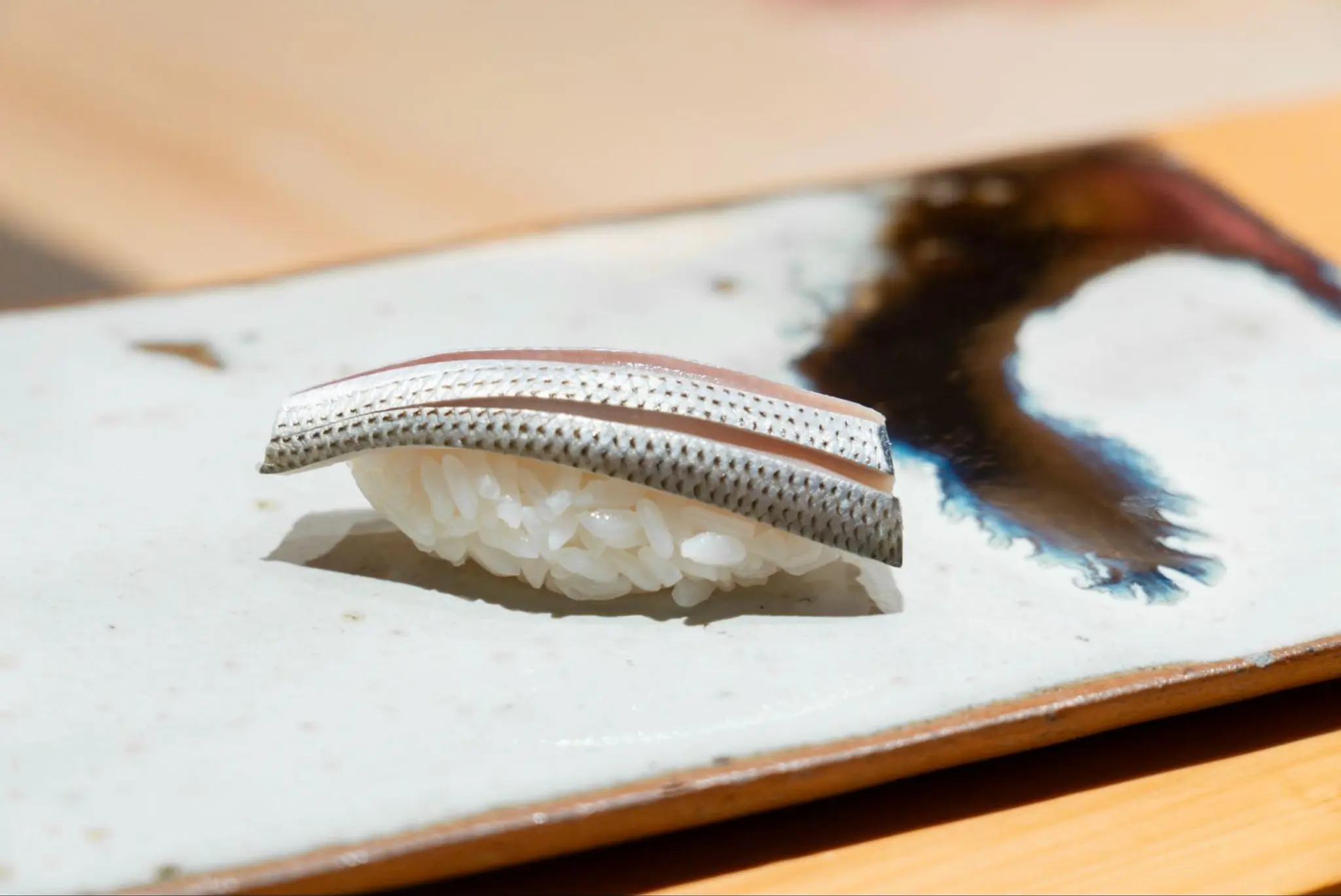
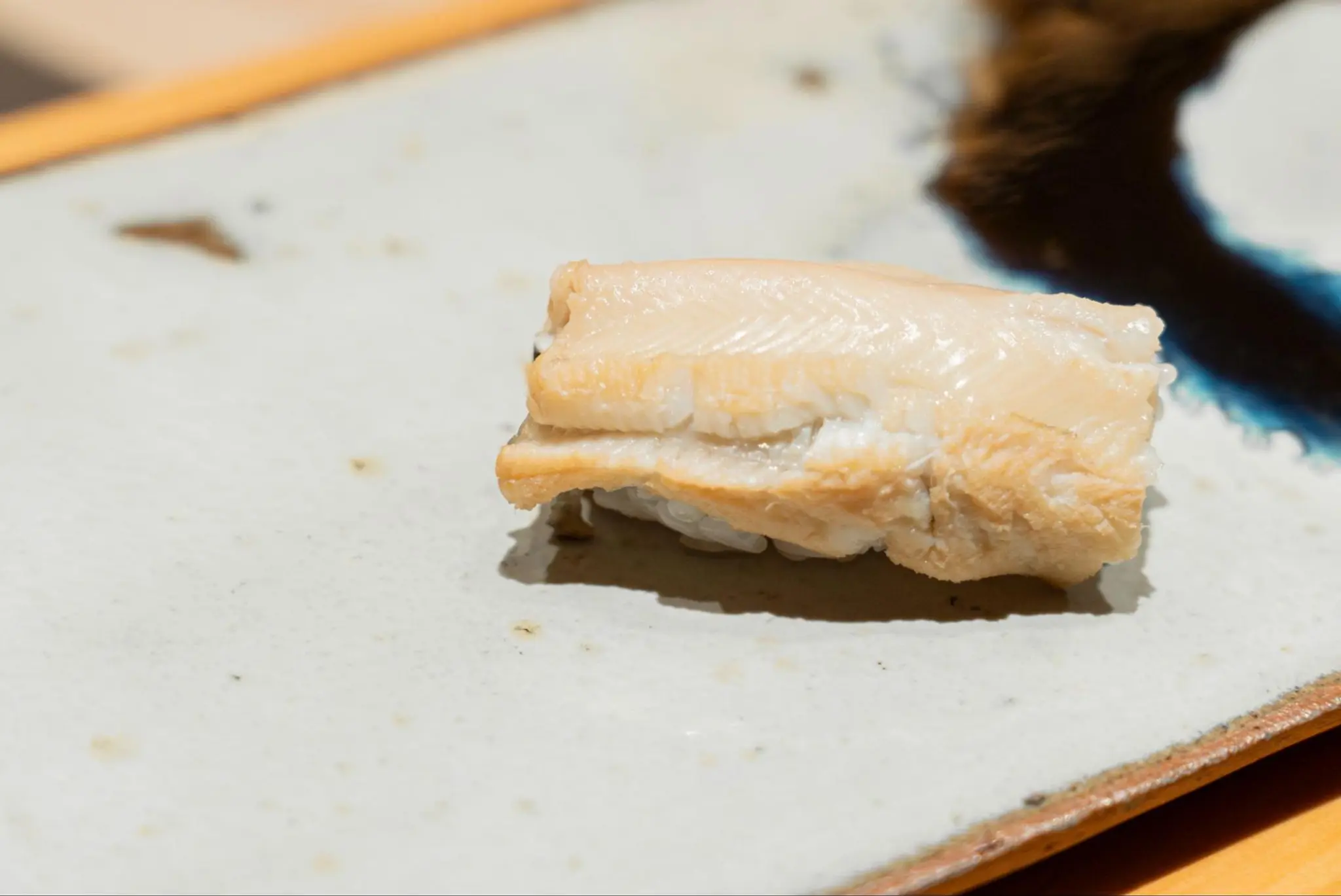
The sushi follows the tradition of Master Saito. The ingredients change with the seasons, but we always start with white fish, then proceed with kobujime (vinegar-cured fish), tuna, squid, shrimp, and so on. This consistent flow is one of the strengths of our group, so I continue to work alongside Master Saito in this regard. However, the appetizers are completely different. I make it a point to change the menu every month.
When the weather gets colder, we begin the course with something warm, and in the summer, we start with something cold to bring out the seasonal feeling. For example, I have made a warm sea urchin soup, which I’m also serving this year, and regular customers appreciate that “this season has come again.” I also serve kelp with roe to evoke the end of the year. Throughout the course, I always aim to present a balanced flow so that the flavors, temperatures, and textures don’t become monotonous.
ーーーIs there a specific reason or thought behind changing the appetizers every month?
Our restaurant is now in its sixth year since opening. The previous head chef, Maruyama, valued the idea of creating a "platform where young talent can thrive" and started the initiative to offer "young chef appetizers," providing a space for us to create dishes different from those of Master Saito. This initiative allowed us to broaden our creative range, and it has been a valuable experience that continues to this day. Initially, many customers thought of us as the second branch of 【Sushi Saito】, but now we have customers who regularly return to 【Sushi Tsubomi】 every month. Our goal is always to delight our customers by offering seasonal flavors and fresh ideas through the appetizers. While the principle is to change the menu monthly, recently we have been changing it more frequently, about every 2 to 3 weeks.
ーーーDoes 【Sushi Tsubomi】 have any particular commitment to sourcing ingredients?
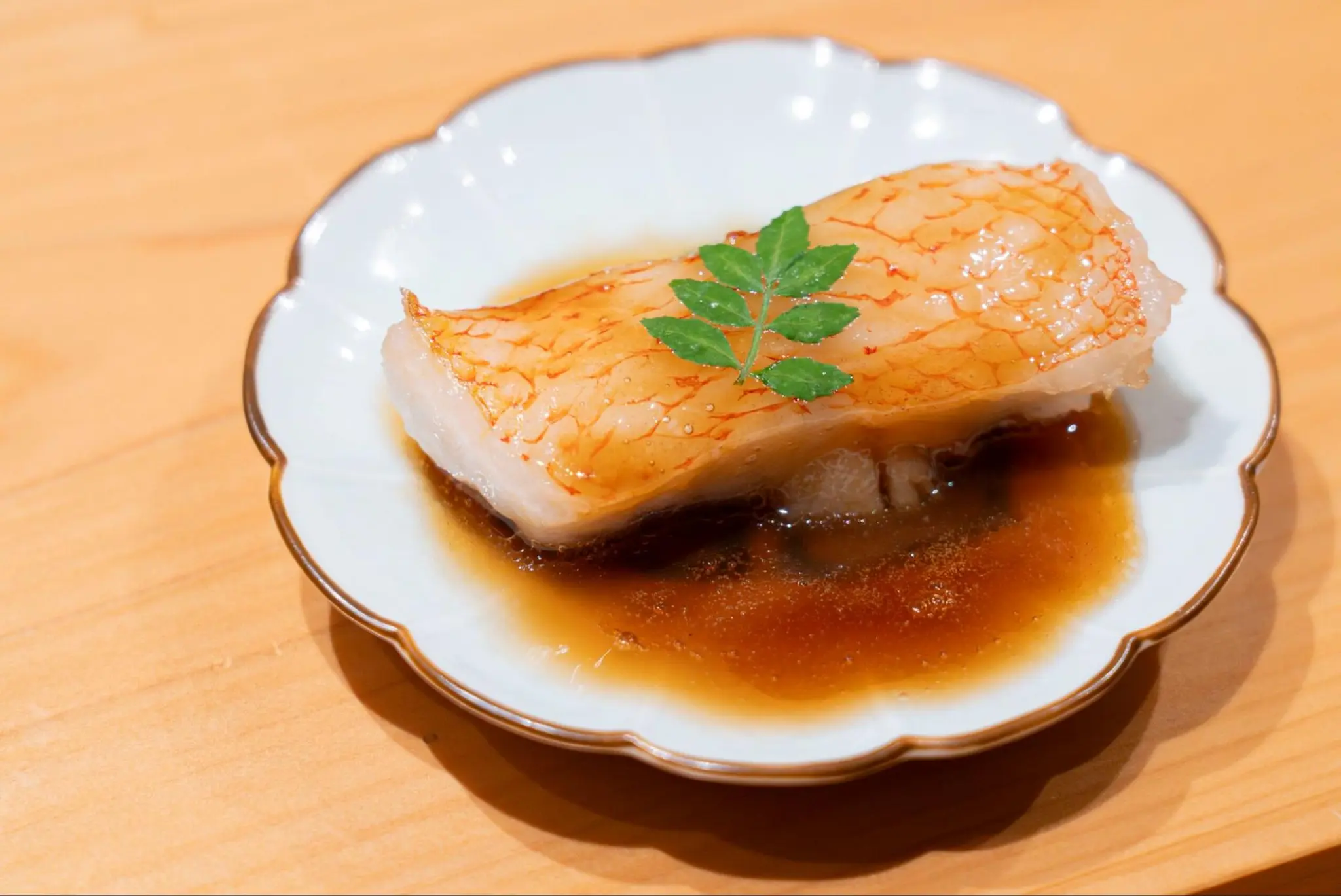
When it comes to sourcing, we mainly rely on Toyosu, and the relationships that Master Saito has built with various suppliers over the years form the foundation of our sourcing. Since I am responsible for sourcing now, I have started to gradually add my personal touch. For example, I might think, “I usually buy shrimp from this supplier, but today, let’s try something else!” I am originally from Ehime Prefecture, so I have started buying sea urchin directly from sea urchin fishermen in Ehime, and with Master Saito’s support, I’ve also started sourcing tilefish from the Goto Islands. Over the past few years, I’ve been expanding my focus to other regions as well.
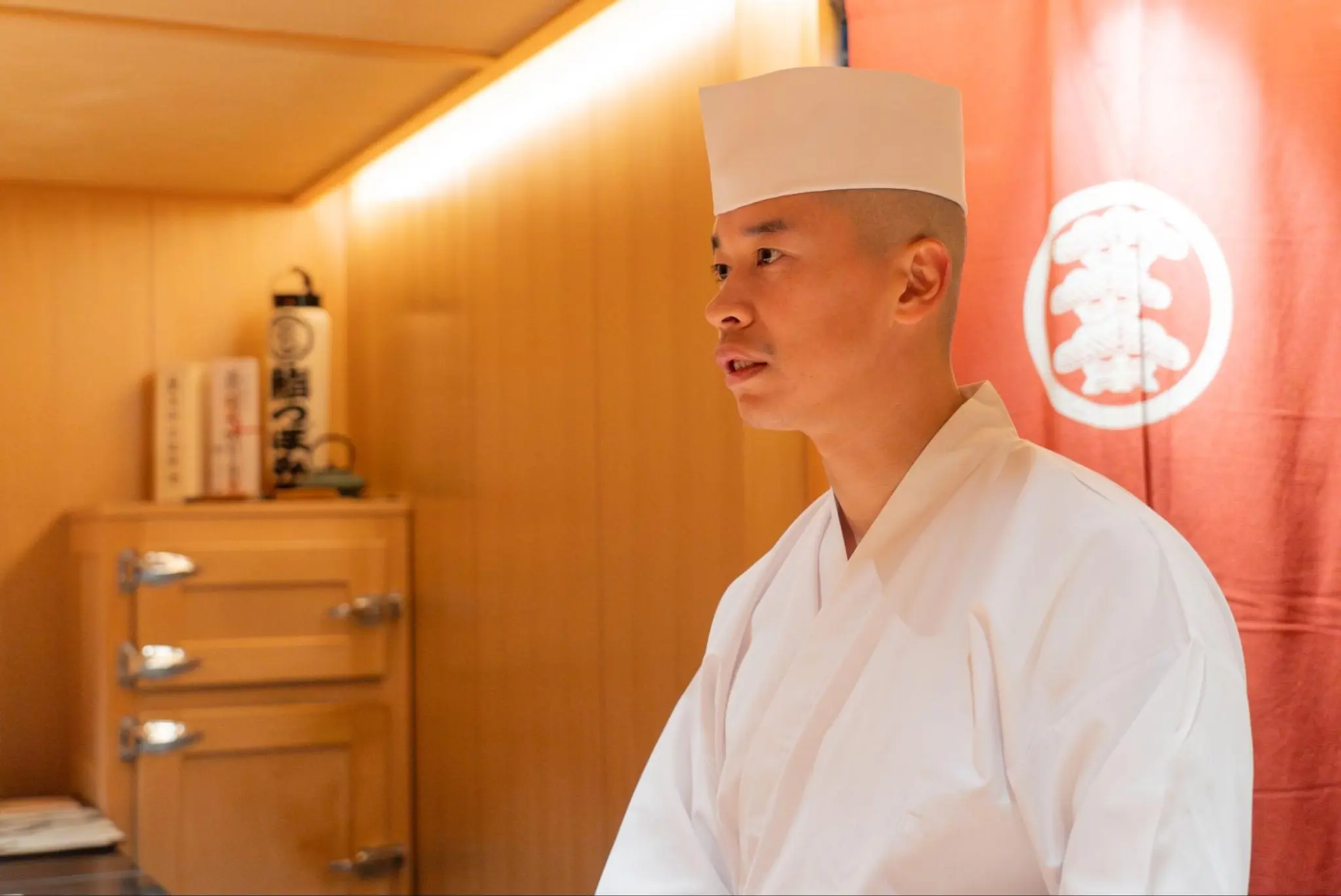
Enhancing skills and intuition and pursuing even greater "deliciousness" together with young talent
ーーーWhat are the techniques you use in preparation to maximize the quality of the ingredients?
To bring out the best in the ingredients, preparation is key, so I am constantly experimenting and refining my methods. I believe that once the fish arrives in Toyosu, the process of decay begins, so what we can do is ensure that the room temperature and the fish's temperature do not rise when they arrive at the restaurant. However, for white fish and similar types, if the temperature is too low, the fish becomes watery (flabby), so it’s not just about cooling it down—it's about managing it at the optimal temperature for each type of fish. The main priority is to prepare the fish as quickly as possible. If the preparation takes too long, the decay progresses, so I always aim to minimize the time between preparation and serving to the customer.
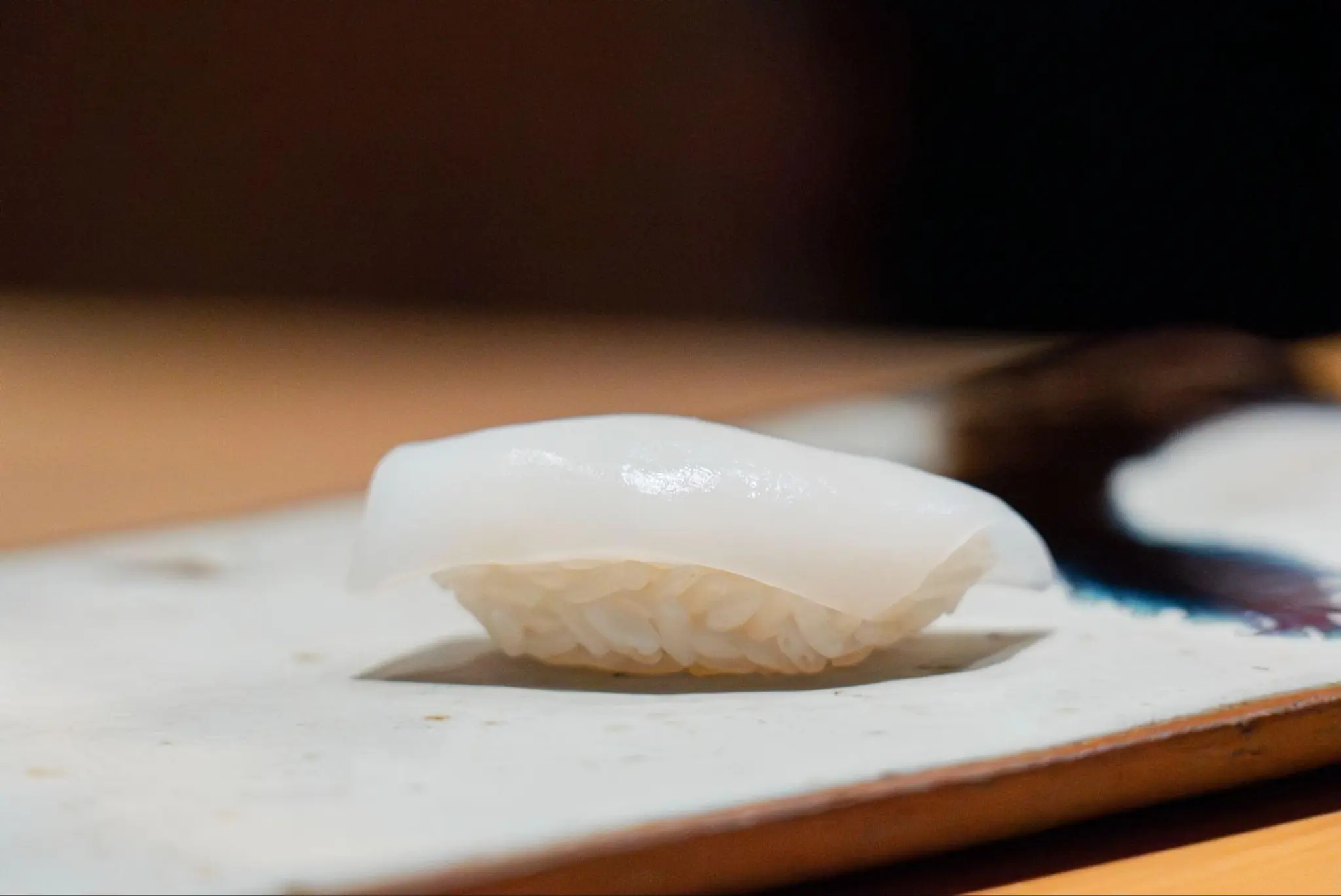
There is also the expression "letting the fish rest," but it’s not about deciding in advance how many days to rest the fish before purchasing. It’s a process of repeatedly tasting and determining when the fish is at its most delicious. If that happens to be two days later, then it means the fish has rested for two days. This is something that cannot be taught; it’s about feeling it out. It’s not only about bringing out the best flavor of the fish, but also about "understanding the fish." There is no set approach; what’s important is the ability to assess the potential of each fish and the sensibility to recognize it.
ーーーDo you have any particular commitment or techniques regarding the rice (shari)?
Just like Master Saito, we use a variety of rice called "Emi no Kizuna" from 【Soma-ya】 in Fukushima, which is considered ideal for sushi. When it comes to temperature, there is a general theory that fish with more fat should be paired with warmer rice, while leaner fish should be paired with cooler rice. Additionally, pairing warm rice with oily fish like mackerel can cause the aroma to become too strong and produce an unpleasant smell, and warm rice tends to fall apart easily, which doesn’t match well with delicate-textured fish like flounder or sole when chewing. However, if we become too fixed on these traditional concepts, we may miss new discoveries, so at times, I intentionally experiment with different approaches and always strive to assess the optimal temperature based on the condition of the fish.
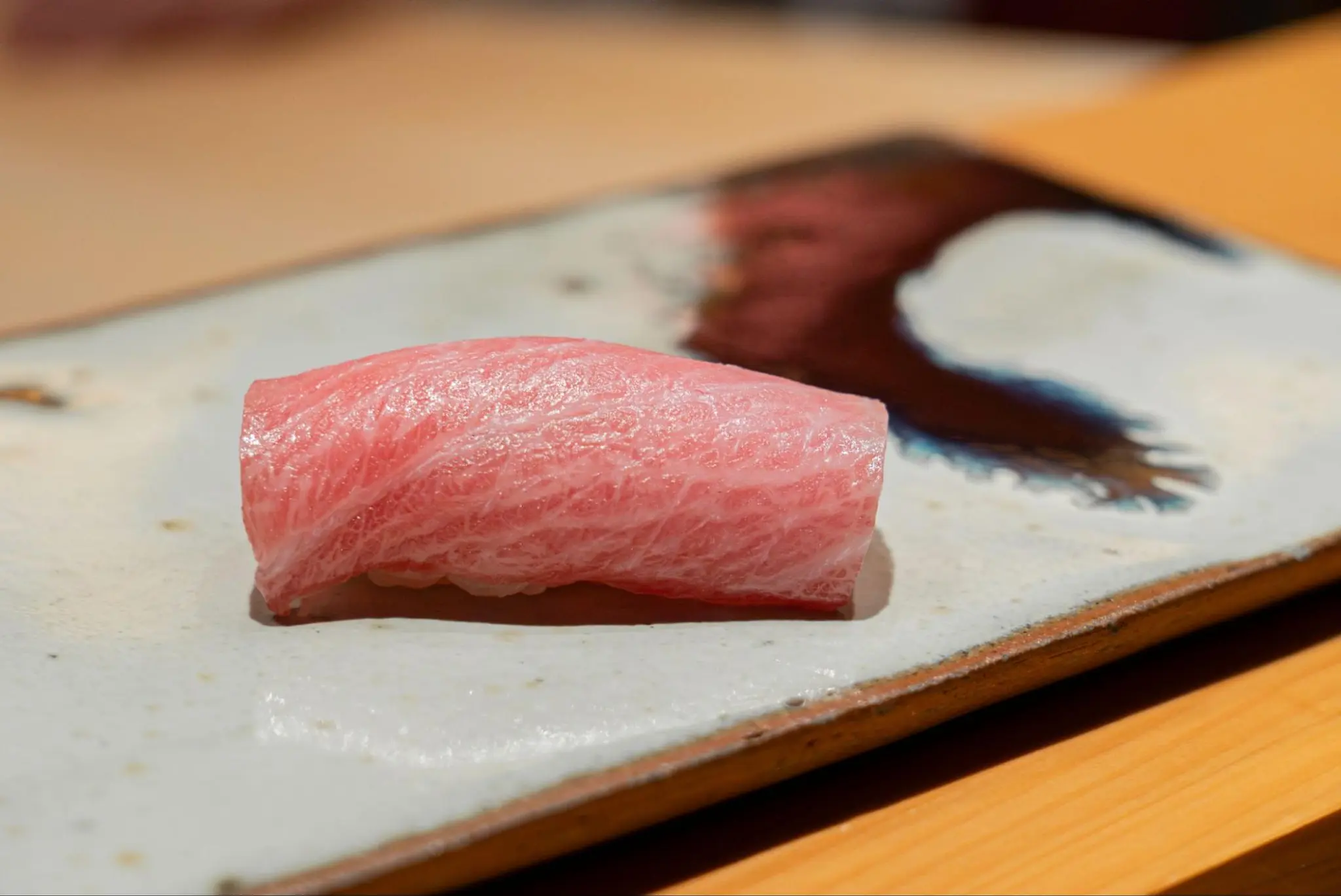
ーーーWhat do you prioritize when preparing sushi?
While the actions involved in making sushi should be beautiful, I don’t think that’s the most important aspect. What I focus on is understanding the fish. The best way for me to express my thoughts is through sushi, so I pay close attention to the preparation and cutting while imagining how the fish will turn out once it’s made into sushi.
ーーーDo you communicate with your staff?
Recently, as I’m preparing, some of the younger chefs will openly share their thoughts, such as "Today's kobujime is a bit tough." The word "tough" can refer to the skin, flesh, or bones, but through this kind of communication, I’m able to respond with something like, "How about we try using a stronger salt?" I’m really happy about that. For example, when they say, "Does the ankimo (monkfish liver) taste different today than yesterday?" I feel proud when the younger chefs are noticing differences, regardless of the ingredient. It’s a real joy for me to see them developing that sense of awareness.
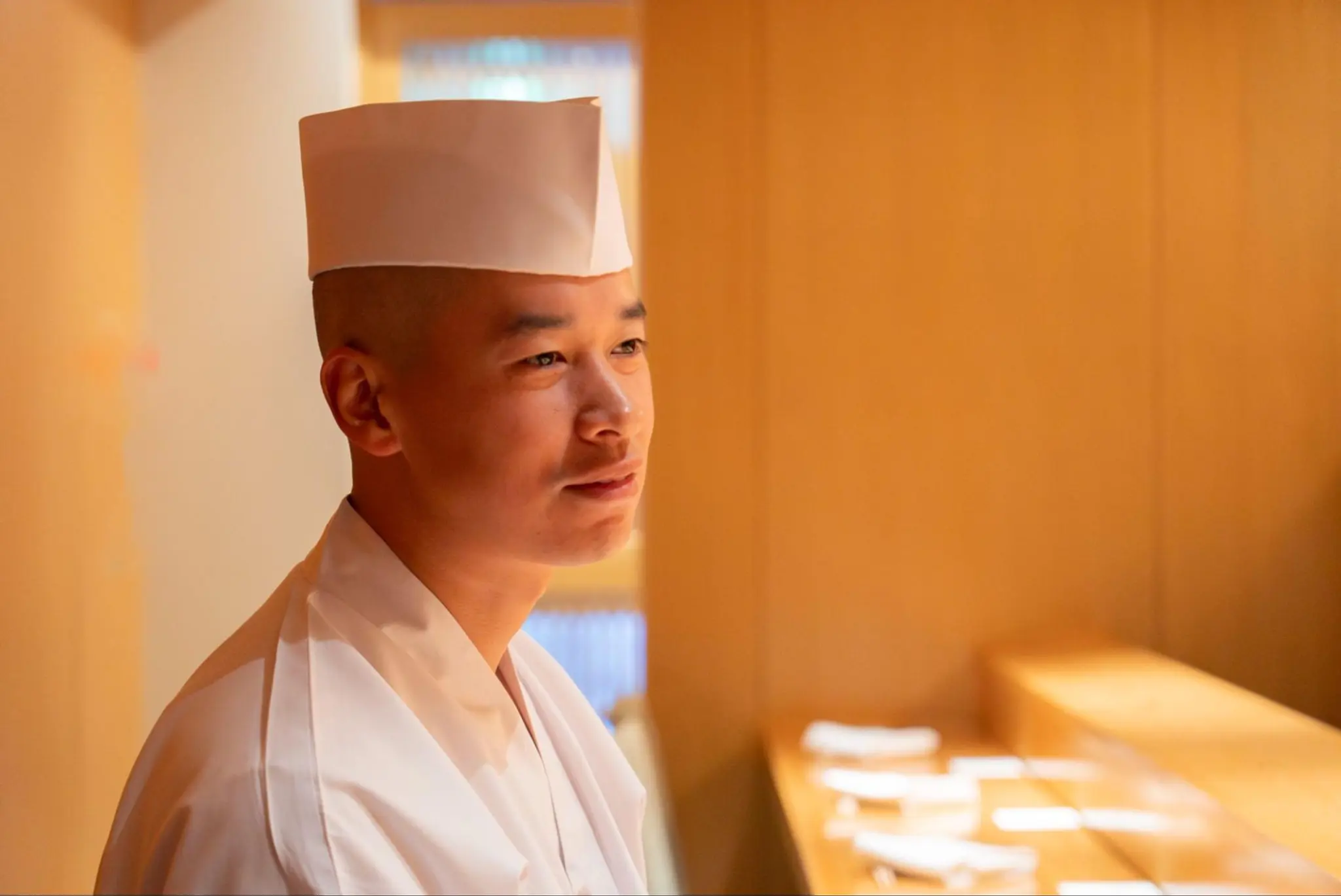
ーーーIs there an atmosphere where it's hard to speak up, given the hierarchical structure?
I don’t really worry about that at all (laughs). If someone says, "Is this seasoning okay, Kawaguchi-san?" or "Isn’t the salt a bit strong?" I find it more credible than just hearing "I think it’s delicious," and honestly, it gives me a sense of reassurance. When the younger chefs take responsibility for their work, it allows me to focus on other tasks, and I find that very reliable. The fact that the second-in-command has his own customers and takes his responsibilities seriously might also be a big factor. There are many things that you can’t notice just through preparation, and seeing how customers react when they eat allows us to notice those things. I never complain about the private counter that the second-in-command oversees. Regardless of experience, when it comes to satisfying customers and earning money, we are in the same position. I am very grateful to Master Saito for creating an environment where young chefs are able to take the initiative in their work.
ーーーDoes the open atmosphere at your restaurant stem from your personal experiences and thoughts?
When I first joined 【Sushi Saito】, I was self-conscious about not knowing much about fish. I graduated from university, and this is only my 10th year working in sushi, but if I had started right after high school, I’d be in my 14th year by now. That four-year gap felt like a huge barrier at the time, though it doesn't matter to me now. However, I still don’t feel in a position to "teach" others or say "do it this way" when it comes to fish. I want to avoid any misunderstanding about that. But I do believe in "thinking together," and that’s my stance. By having two-way communication, we both expand our knowledge and ideas. As the head chef, I’m responsible for running the restaurant, but that doesn’t mean I know everything. I still feel very much in the "learning process," and that mindset may be a big part of why our atmosphere is so open.
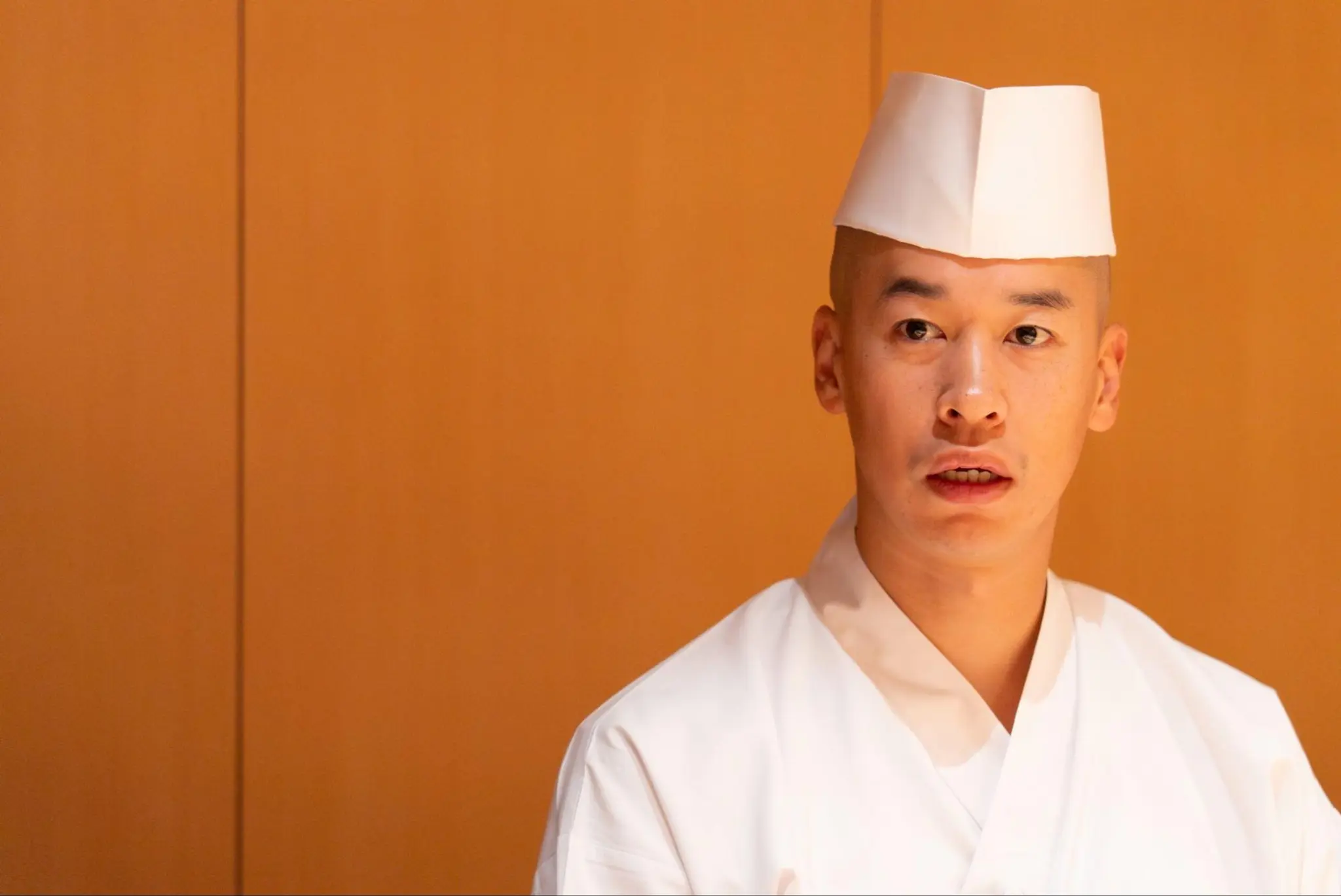
With curiosity and initiative, I embarked on the path to becoming a sushi chef...
ーーーWhat inspired you to pursue a career in cooking?
Originally, I was aiming to obtain a teaching license, but before the exams, the manager of the ramen shop where I was working part-time offered me the opportunity to go into business together. I graduated from Ehime University’s Faculty of Agriculture, so I was always surrounded by ingredients, but right after graduation, I didn’t consider the option of working at a ramen shop. Instead, my first job was at a fruit and vegetable market. The reason was that I wanted to learn more about ingredients and distribution.
After leaving the fruit and vegetable market, I started a Chinese noodle shop with the manager of the ramen shop. We used seafood for our broths, but at the time, there weren’t many places in Ehime using fresh fish for broth. I felt the urge to learn more about fish. Near the shop, there was a company called 【Tsuchiya Suisan】, and I casually went there saying, "I don’t need a salary, just teach me about fish." That’s how my study of fish began. The president of the company explained that fishmongers supply the same type of sea bream to various places like inexpensive izakayas and inns, but that same sea bream could become a high-value product in high-end sushi restaurants. He also taught me that in order to receive that kind of reward, I needed to improve my charm as a "person," and that the high-end sushi industry is a fascinating field.
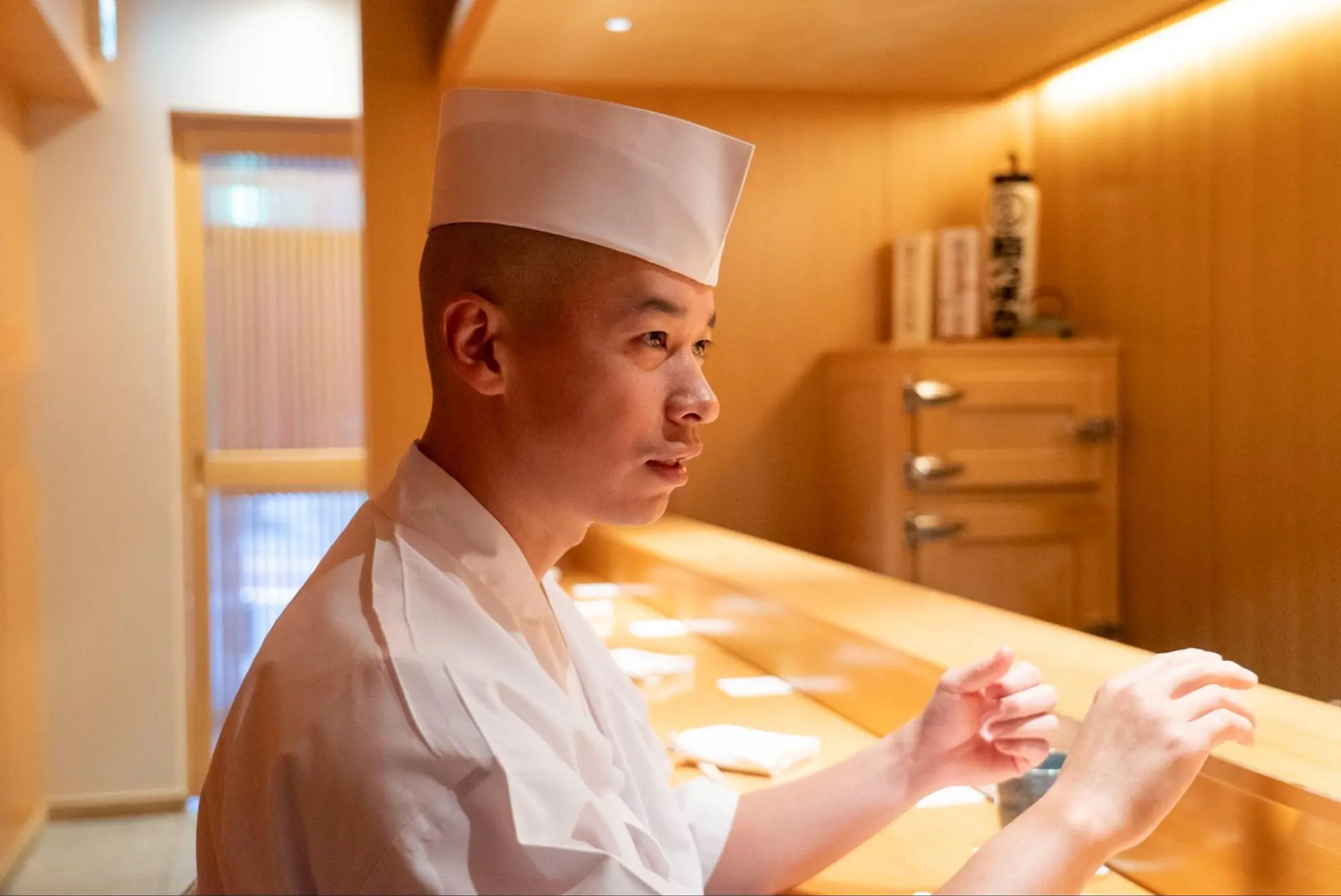
I went to a famous sushi restaurant in Matsuyama, and it really struck me!
I quit the Chinese noodle shop and initially worked at a sushi restaurant in Matsuyama. The head chef had trained in Tokyo and taught me about the beauty of Edomae sushi. I thought to myself, "If that’s the case, I should go to Tokyo." So, I did some research and found that 【Sushi Saito】 had the highest ratings on gourmet websites, and I thought, "This is the place!" However, I had no connections, and I couldn’t get through on the phone. I asked a recruitment agency to help me, and thanks to the senior chef who was second-in-command at the time, I was able to get an interview and was eventually hired. This was when I was around 23 or 24, and before I knew it, I was in Nakameguro (laughs). I’m shortening the story a lot, but that’s how it happened.
ーーーSo your dream has come true! How was your training at 【Sushi Saito】?
It was so busy that I don’t really remember much, but I felt like I lacked both the technical skills and the time spent working, and that was a inferiority complex I couldn’t overcome. I thought, "If there’s no time, then I just have to do it," which may have been a foolish thought, but after hours, from 1 am to 4 am, I would go to the market without sleeping, learning how to peel shellfish and fillet fish, then take a nap before going to work. I was doing everything I could to make up for the lack of days of experience. I even bought a motorcycle so that I wouldn’t be told by Master Saito or the seniors that I was doing it wrong (laughs).
At the time, I thought, "As long as I show up to the shop at the same time as everyone else, there’s no problem!" I probably seemed like I wasn’t putting in enough effort to the senior chefs, who might have thought, "You should come earlier and clean the shop." The people at the market would tell Master Saito, "That guy was there again," but Master Saito recognized that about me. Even though I didn’t think I had completely made up for my lack of experience, I was doing what I could in my own way. I’m the type who pushes through with energy, and back then, I could only compete with my physical stamina and enthusiasm for the customers. That was the foundation of my life’s journey. It wasn’t something I was taught by anyone—I decided it on my own and did it. I’m glad I did it, and I believe that Master Saito and the senior chefs evaluated that, which is why I now have the opportunity to interact with customers in my current position.
"Awareness" becomes learning and leads to customer satisfaction
ーーーIt’s your third year as the head chef at 【Sushi Tsubomi】. Have there been any changes in how you approach and what you want to convey to the younger staff?
There are times when I have to be strict in teaching. This is about aspects of being a person, such as the right mindset towards customers and as a sushi chef. Since a sushi restaurant is a counter-based business, it’s all about how much you can express "your own style." In this regard, I have a bit more life experience than the younger chefs, and since I have more opportunities to talk with various people as the representative of 【Sushi Tsubomi】, I try to pass on my knowledge and experience based on that.
For example, I remind the younger chefs not to ask the same questions of regular customers each time, to be mindful of when to refill tea, and to pay attention to the little details in customer service, not just during prep time but throughout the whole workday. I would be happy if they could develop a sense of awareness that allows them to have "insights" during their work.
Regarding how I approach them, when I think about what I can do, I believe the most important thing is to show them "the example of working hard through my actions." Part of that is thinking together with them every day, but one of the things I’m doing personally is attending graduate school at Ehime University. I specialize in fisheries management and research sushi restaurants. It’s not about researching sushi restaurants or showing the young chefs how to learn, but the primary goal is "for the satisfaction of our customers." I believe that by constantly growing and never stopping, I can have a positive influence on the younger chefs.
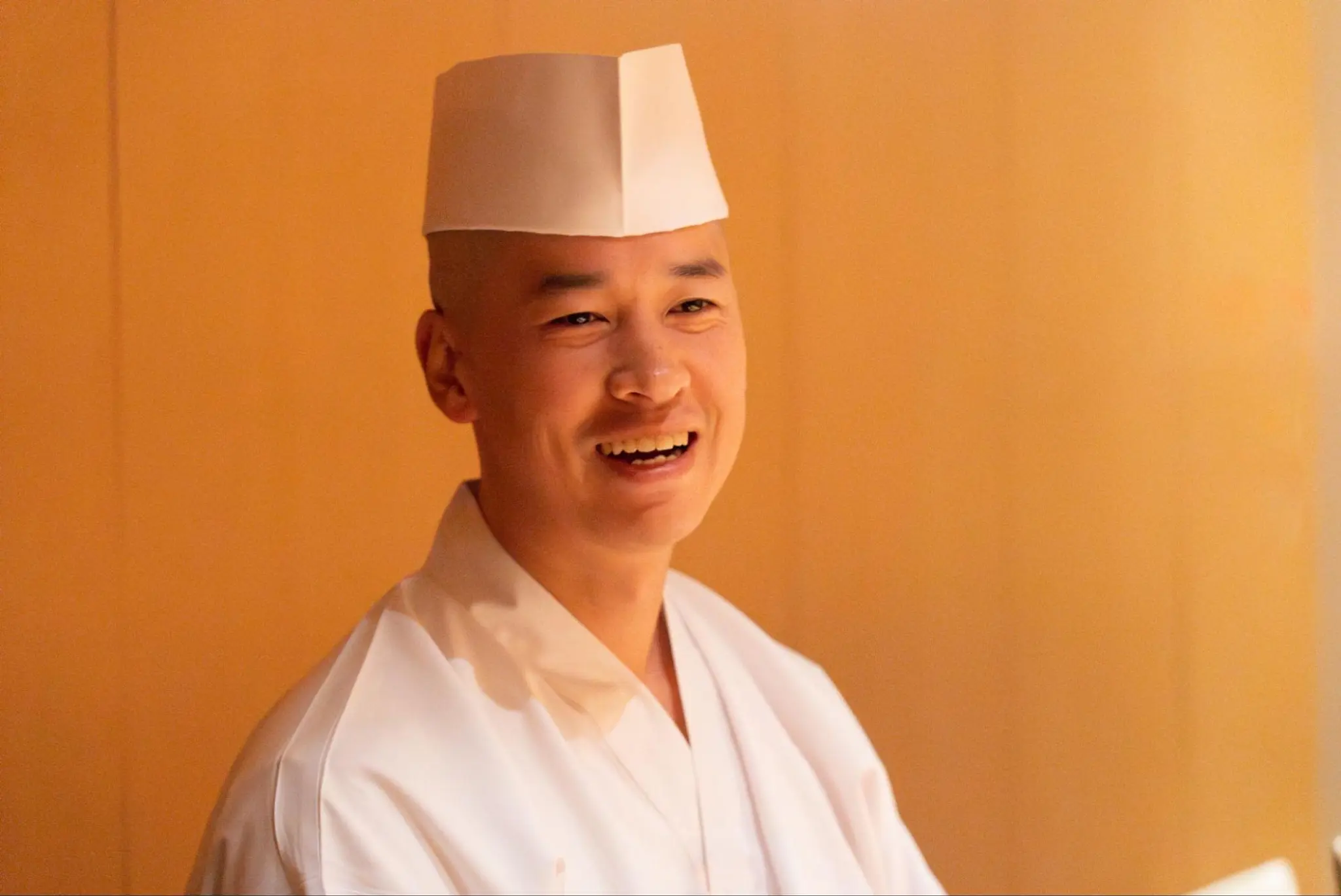
Recently, one young chef joined us at 【Sushi Tsubomi】, and I’m really happy about it.
At our restaurant, as a place where young talent is still budding, I believe that the lively voices and the ever-growing presence of young chefs are key to showing our customers the concept of our restaurant. This also connects to changing the menu every month. Just because I’m a disciple of Master Saito doesn’t mean I should replicate what 【Sushi Saito】 does—it would never work. I believe that because we are still in the development stage, we have a unique charm to offer. By challenging myself and working hard, I hope that the younger chefs can learn at least one thing from me, and I aspire to be a catalyst that sparks their motivation.
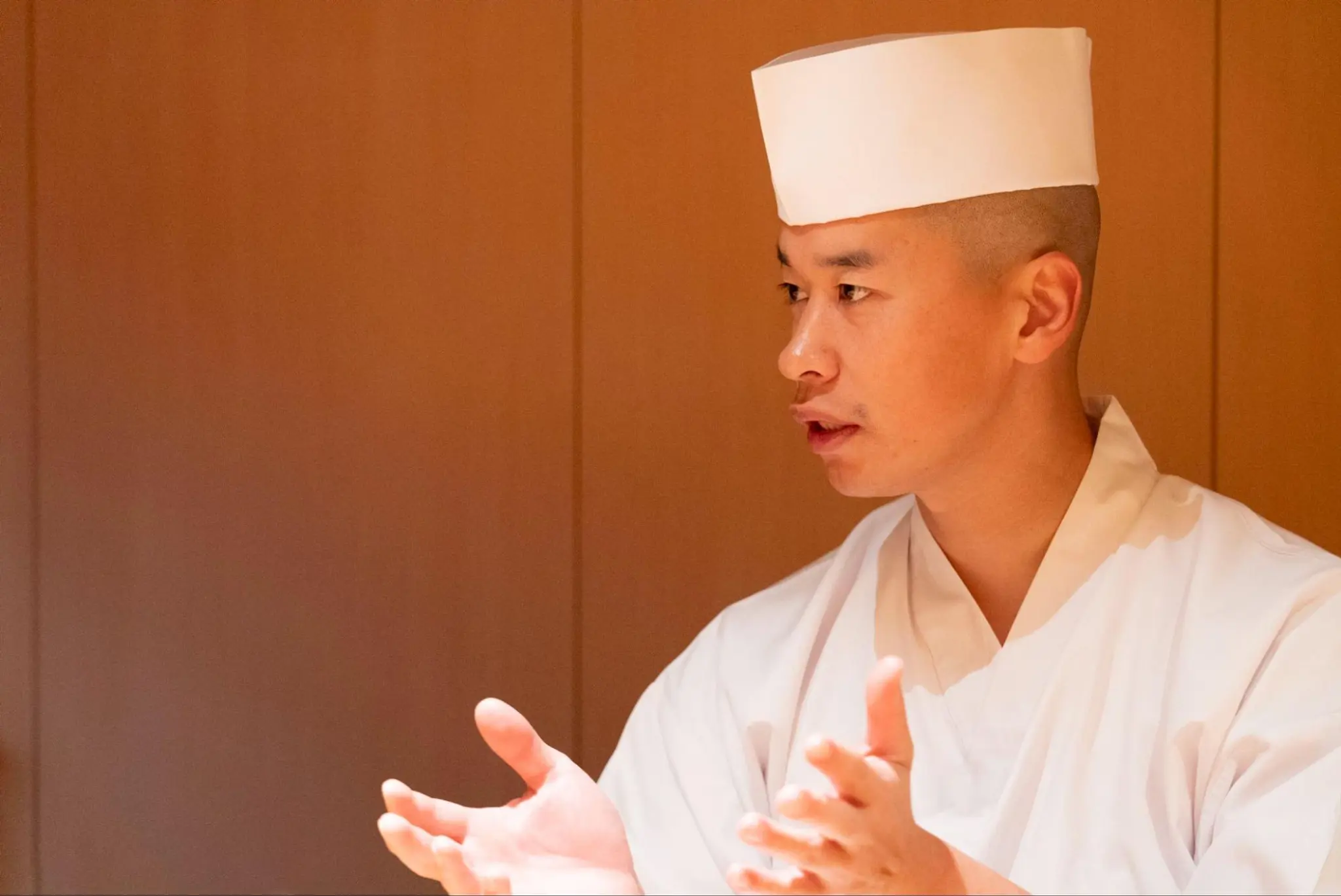
The evolution doesn't stop here!
ーーーWhat is your research on sushi restaurants in graduate school, and isn't it difficult to balance it with running the restaurant?
Right now, I’m working on my thesis. The common understanding in society is that "fish numbers are declining and prices are rising," but I’m challenging this assumption. I’ve just finished my market research and am now diving into my analysis, focusing on farmed fish based on my hypothesis. Ehime Prefecture and Ehime University have been active in researching aquaculture, such as the “Kinki University tuna”(farm-raised bluefin tuna by Kinki University). I’m exploring how sushi chefs should address the reality of farmed fish and what the future outlook might be, writing my paper with both a student’s perspective and a sushi chef’s viewpoint. I’m studying this "grand" topic with the hope of contributing to the development of fish distribution, pricing, and the fishing industry in Ehime, especially in the context of aquaculture (laughs).
Balancing this with running the restaurant is definitely challenging, but I’m doing my best with the support of my graduate school professors, as I want to contribute to both the Tokyo restaurant and my hometown of Ehime. I’m currently working toward a master’s degree, but I aim to pursue a doctorate in the future.
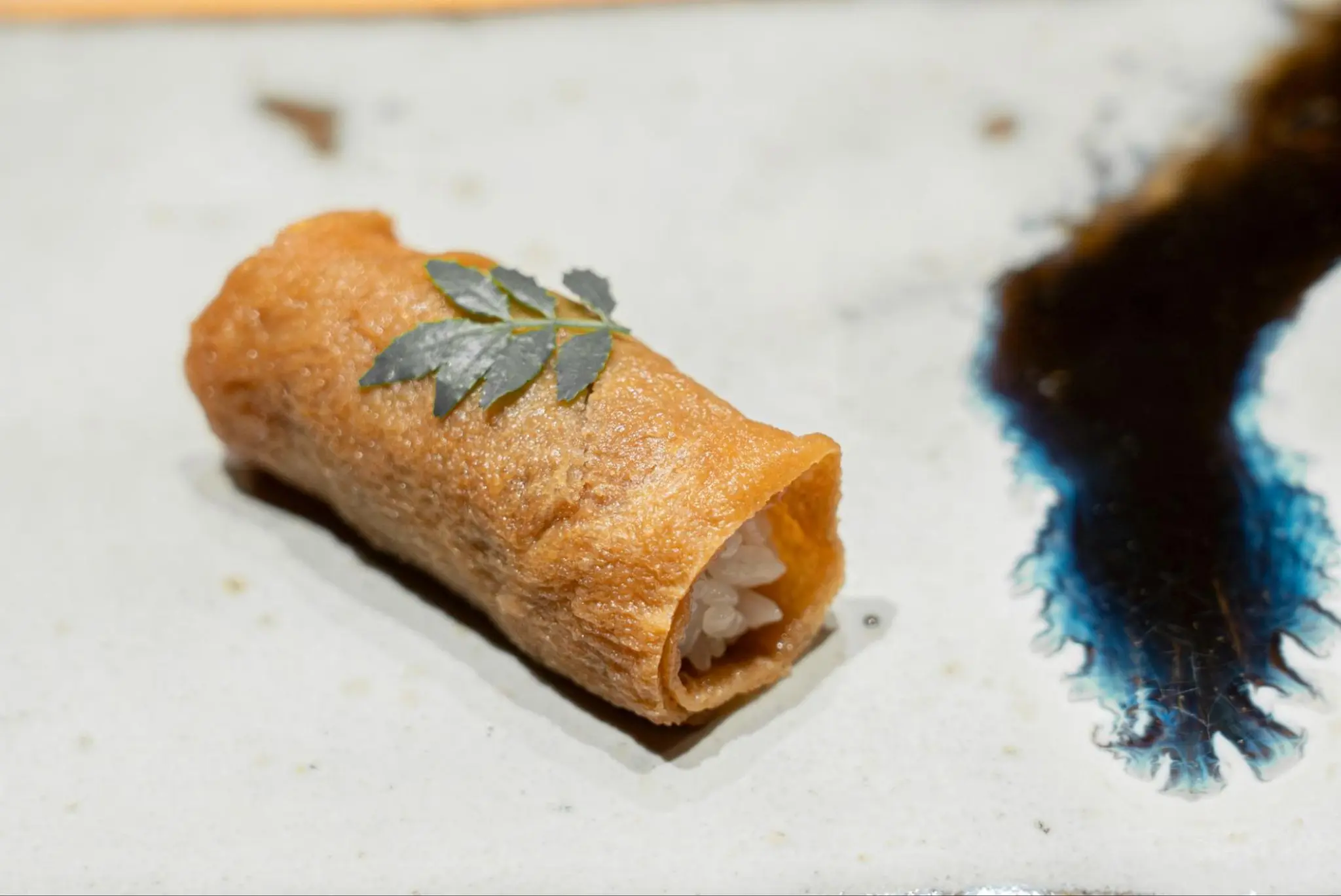
ーーーLastly, what does "delicious" mean to you personally?
The difference between home-cooked meals and restaurant meals is that when customers come, we are the ones offering them hospitality. In other words, they are entering "our arena." While continuous effort to improve my skills as a sushi chef is a given, I believe that it’s not just about confidently presenting the dishes I’ve made, but also about adding that extra element—something like "fun and delicious"—to enhance the experience and provide added value that helps customers truly feel the deliciousness. Moving forward, I will continue to pursue "deliciousness" by not only honing my skills as a sushi chef but also by enhancing my appeal as a person. I will keep striving to improve in both areas.
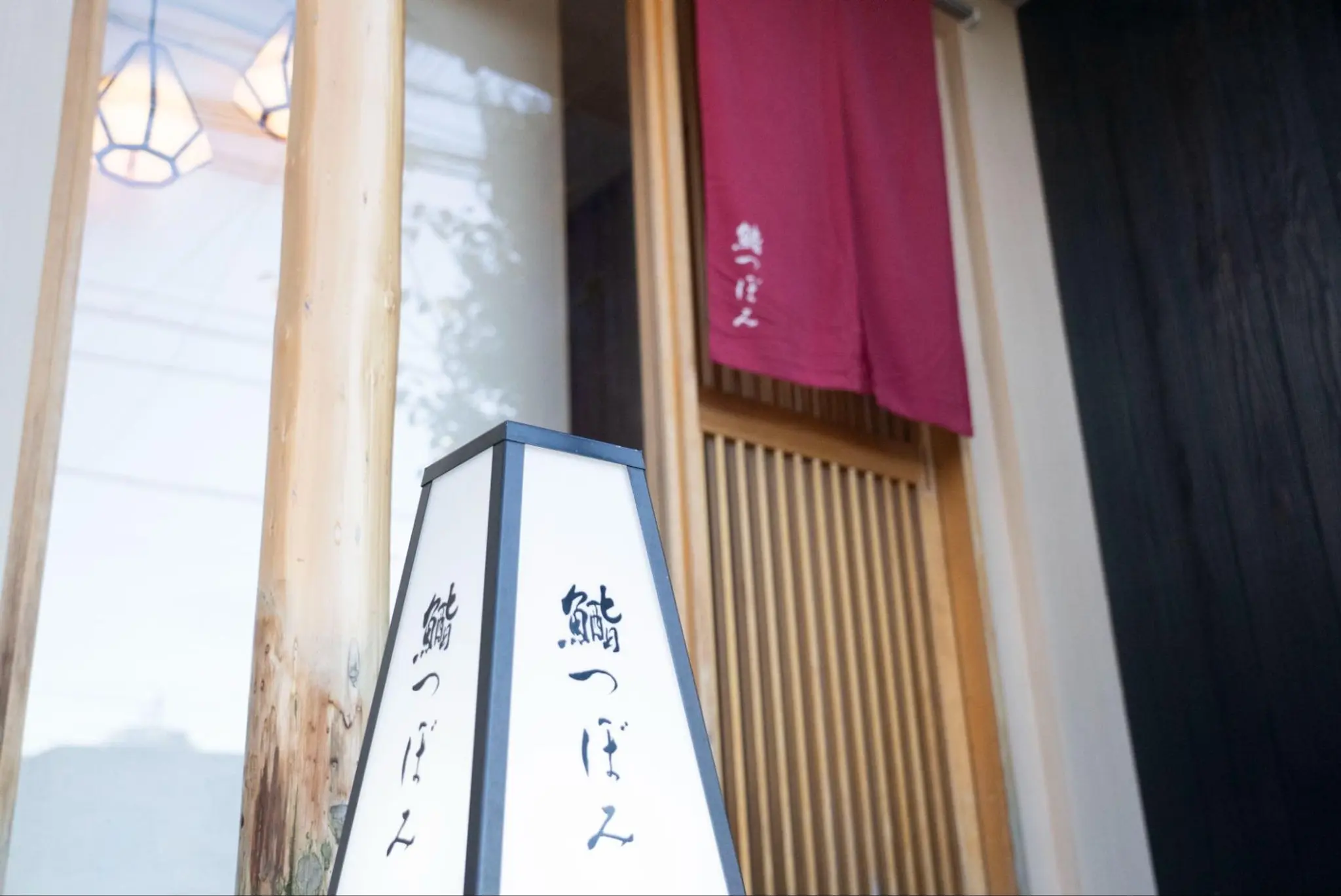
While thoroughly drawing from the roots of 【Sushi Saito】, the owner of 【Sushi Tsubomi】 has blossomed with grace in his own place. His drive, intellectual curiosity, and love for his hometown have paved the way for him, and I believe his example embodies one possible answer to the question of how the food industry can incorporate social significance, such as environmental considerations and coexistence with local communities. Without raising lofty ideals, his straightforward passion and effort open up new paths, and within his refreshing approach lies the power to seize the spirit of the times. As a talent bringing a fresh breeze to the industry, I can’t wait to see his continued success.
Interview / Yuri Yanagiya
Text / AutoReserve Magazine Editorial Team
Photography / Azusa Nakaoka
Restaurant Information
- AutoReserve Magazine
- Restaurants recommended by top chefs
- The path of a sushi chef that was grasped on his own, diligently working hard while preserving tradition, blossoming with individuality and charm at 【Sushi Tsubomi】