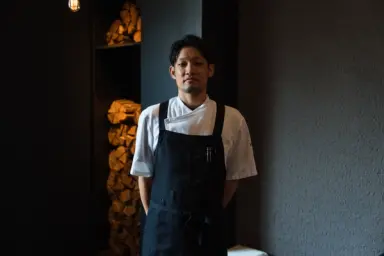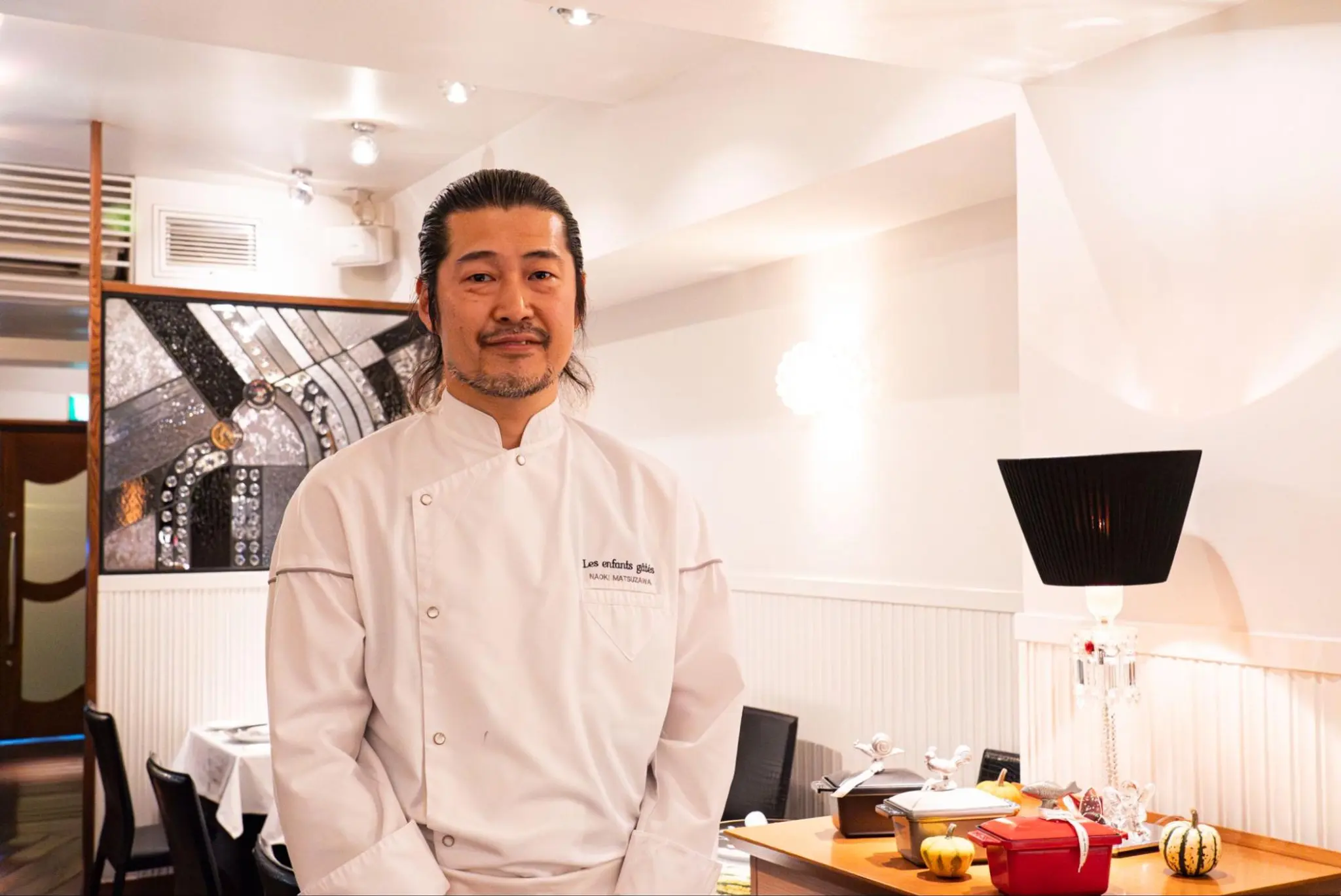
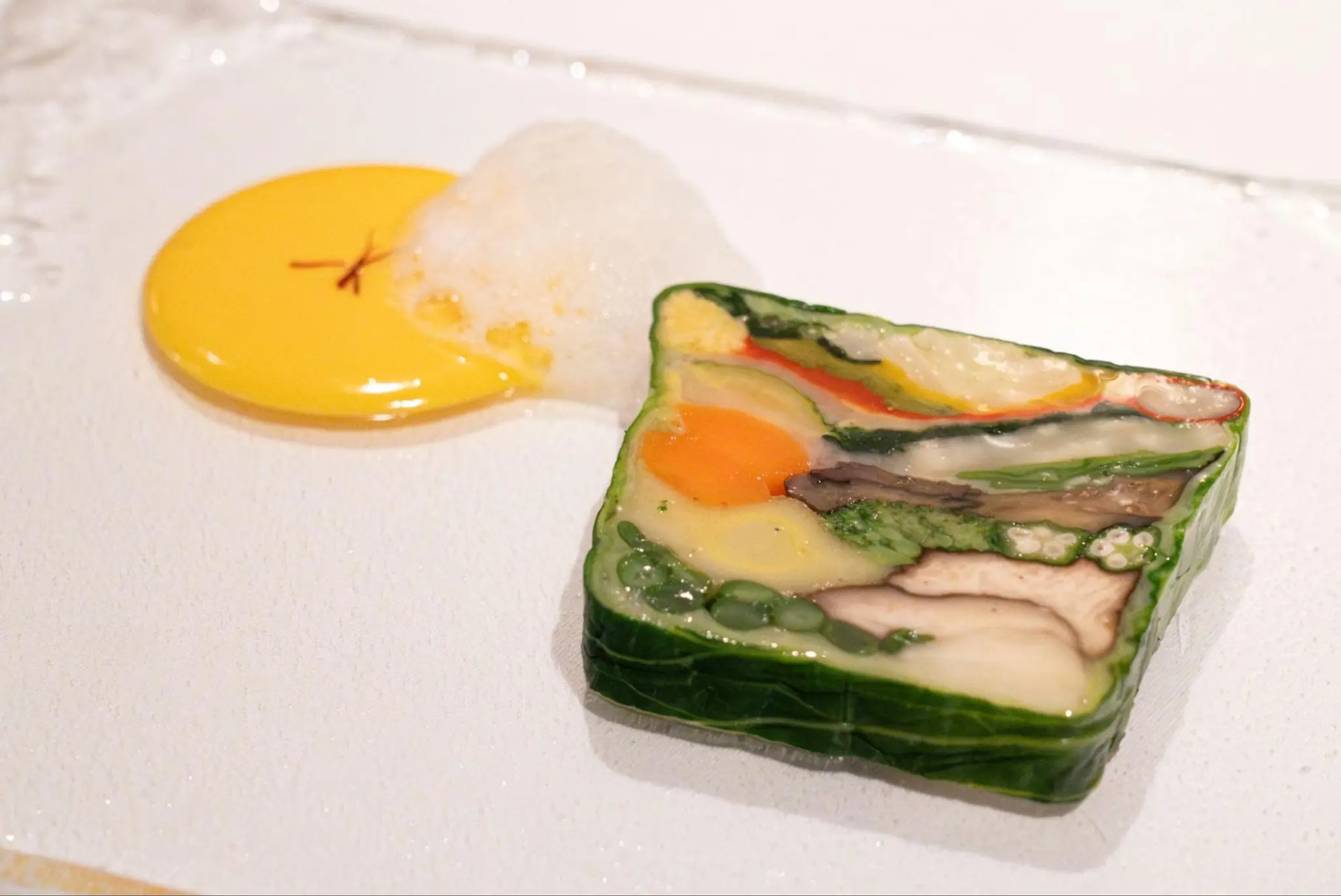
A beauty of a trapezoid with a diameter of 10 cm. Elevating unique and distinctive terrines to the spotlight at 【Les enfants gâtés】.
From Preserved Food to the Star of the Table!
ーーーCould you tell us about the unique features of your restaurant?
For both lunch and dinner, we offer a course menu called the "Terrine Collection," where guests can choose from a selection of 7 to 8 different terrines at any given time. There are two reasons why we have made terrines our signature dish.
First, to differentiate ourselves from other restaurants. Second, because of the incredible versatility and variety that terrines offer. Even within Tokyo’s Daikanyama, a neighborhood filled with numerous dining establishments, we wanted to define what makes 【Les enfants gâtés】 unique. By exploring the endless combinations of ingredients and cooking techniques, we decided to create a French dining experience that elevates terrines to the spotlight.
ーーーHow is terrine positioned within French cuisine?
The term "terrine" originally referred to a lidded ceramic container used in French cuisine. One theory suggests that terrines were created as a preserved food, where meats and other ingredients, known as "farce," were packed into this container, baked, and then covered with fat to prevent oxidation—a testament to the ingenuity of traditional food preservation methods.
As a classic French dish, terrines are typically served as an appetizer and come in two main types: one where raw ingredients are packed into a mold and cooked, and another where pre-cooked ingredients are set with consommé jelly and chilled. Personally, I am not particularly fond of terrines with a jelly-like texture, so I prefer to pack them densely with ingredients, creating a more structured and flavorful composition.
ーーーThere are so many ingredients packed into a 10-cm diameter! How do you keep it together without using any binding agents?
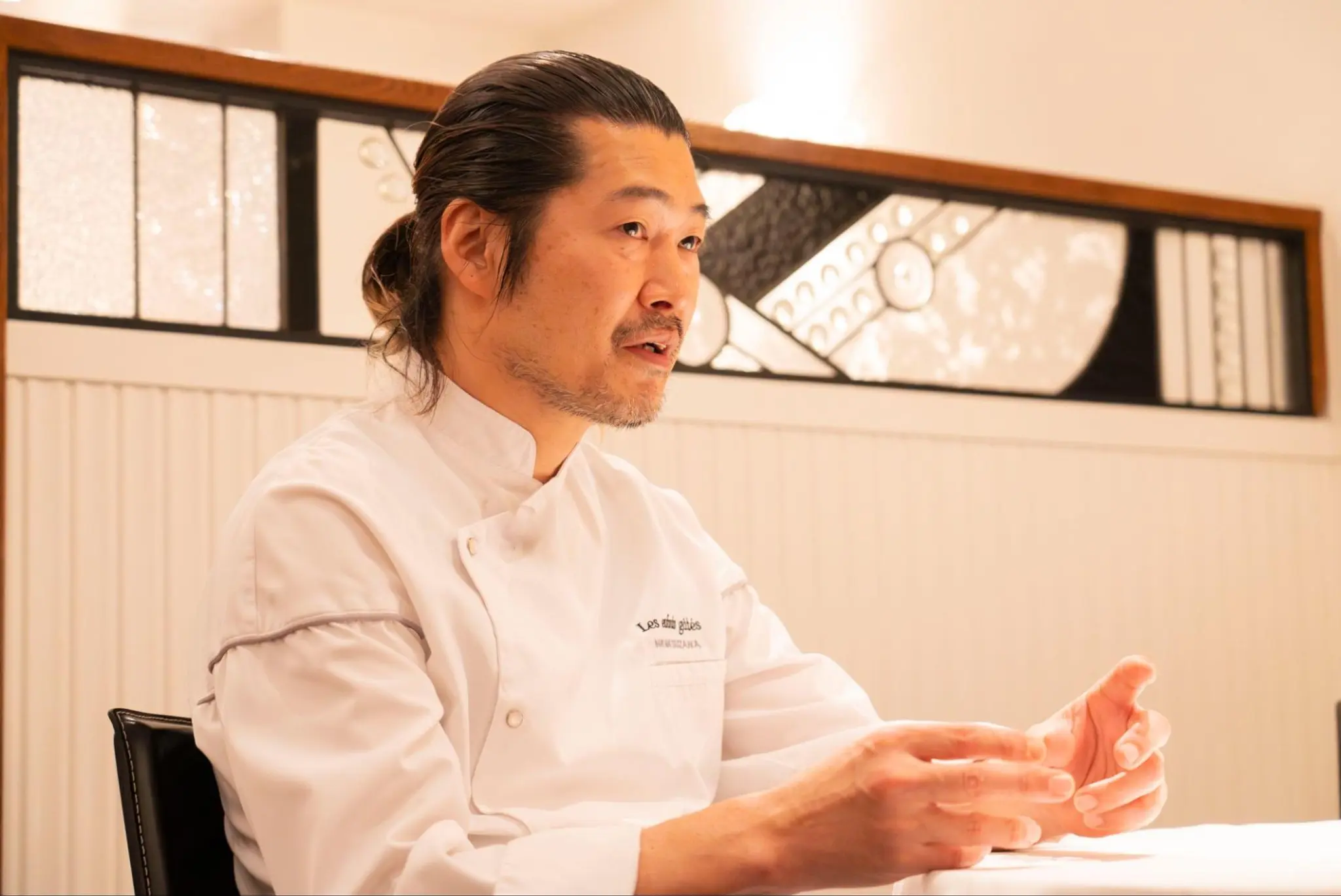
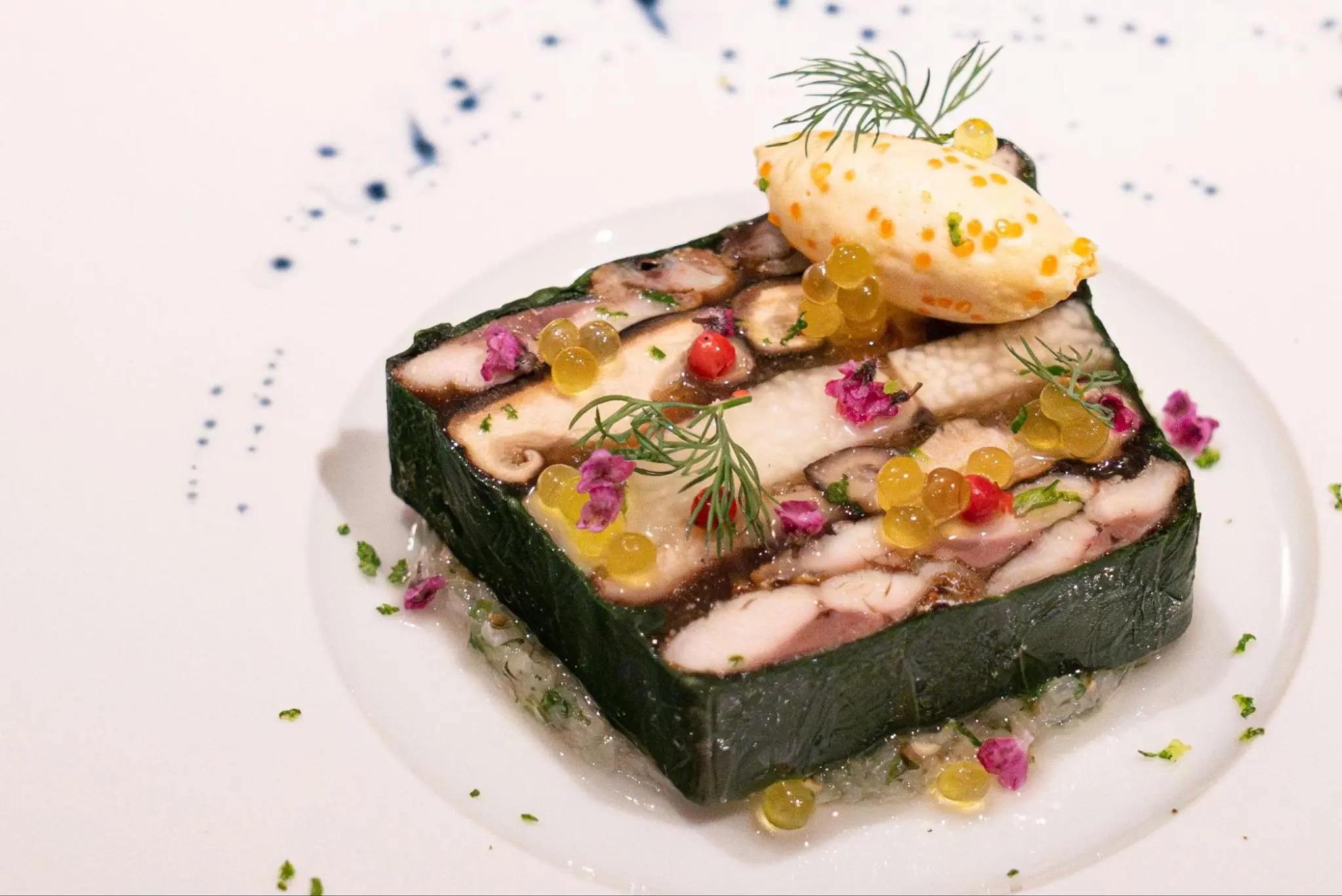
For the "Terrine of 20 Seasonal Vegetables", each vegetable is individually pre-boiled or steamed, then carefully arranged in the mold and lightly salted. The ingredients are then compressed using a special press. From preparation to completely filling one mold, the process takes nearly two hours.After that, the terrine is slowly pressed over the course of about a day, allowing excess moisture to be released and eliminating any gaps between the vegetables. By the end of the process, the terrine is reduced to less than half its original size. For meat-based terrines, raw meat is first marinated thoroughly to develop its flavor before being packed into the mold. It is then cooked slowly at varying temperatures to achieve the perfect texture. Once cooked, the terrine is aged in the refrigerator for at least two weeks before it is ready to be served.
Terrines Full of Character, Crafted with Technique and Unique Creativity
ーーーWhat are the most important aspects you focus on when making terrines?
The beauty of terrines lies in their versatility—by carefully selecting ingredient combinations and cooking techniques, endless variations can be created.
Whether it’s a vegetable or meat-based terrine, if someone were to say, "Wouldn’t these ingredients taste better separately?", then the dish has failed its purpose. That’s why I always focus on finding ingredient pairings that truly shine as a terrine.
The right combinations allow me to enhance flavor, texture, and visual impact, ensuring that each terrine is more than just a collection of ingredients—it becomes a cohesive and exceptional dish.
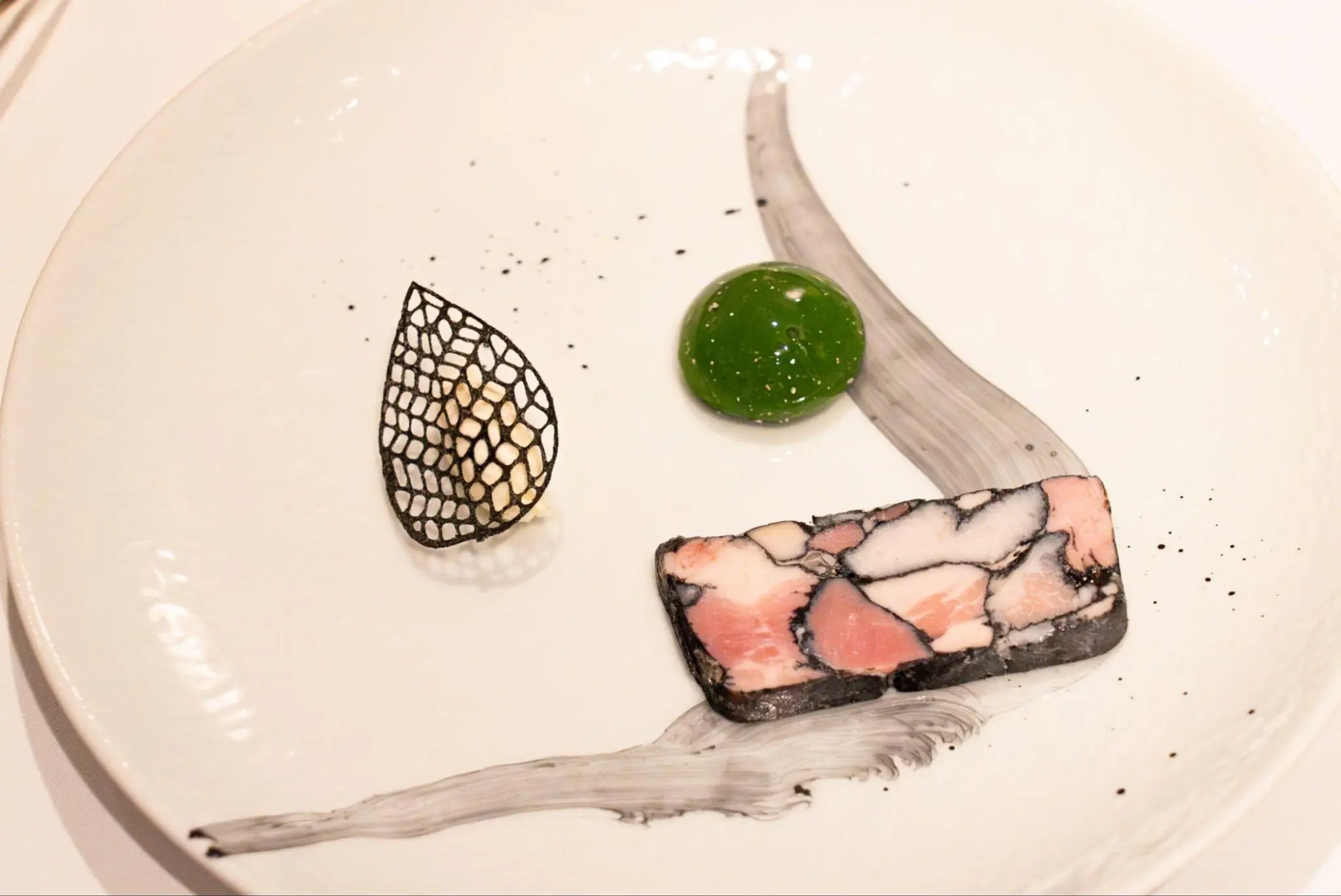
The first key element is flavor.
For vegetable terrines, if each ingredient’s taste or aroma is too dominant, the final dish can become unbalanced. Instead of selecting bold, overpowering vegetables, I focus on combining fresh ingredients that harmonize well together. When arranging them in the mold, I season only with salt to fine-tune the balance of saltiness and moisture. If I feel that the dish needs an extra layer of flavor or fragrance, I complement with herbs, nuts, garnishes, or an additional sauce to create a well-rounded dish. For meat-based terrines, I use veal, duck, and chicken sourced from Europe, while pork and beef are primarily domestic. I carefully season the meat during preparation, cook it at varying temperatures to achieve the perfect texture, and press it overnight to ensure a firm and flavorful result.
The second key element is texture.
When arranging the ingredients in the mold, I make sure that different textures are placed next to each other so that diners can enjoy a variety of sensations in every bite. This variation in texture and mouthfeel keeps the dish interesting and prevents it from becoming monotonous.
From a culinary perspective, this technique also has a practical advantage—by placing firmer and softer ingredients side by side, the pressure from the press is distributed more evenly. This allows the ingredients to settle properly, minimizing gaps and creating a beautifully compact terrine.
The third key element is visual impact.
I place great importance on color balance, dimensionality, and the beauty of the cross-section. However, assembling a vegetable terrine is a meticulous and repetitive process—each ingredient is carefully stacked layer by layer, and the lower layers eventually get buried, making them invisible from the top.
To ensure a stunning cross-section when sliced, I rely entirely on intuition and memory while arranging the ingredients. Since I have to keep track of where everything is placed without being able to see the final result until it’s cut, it can be quite a challenge. If someone interrupts me while I’m working, I might forget where I left off—which can be a bit of a problem! (laughs)
The moment I cut into a finished terrine and reveal its cross-section still makes my heart race every time. Sometimes, it turns out exactly as I envisioned, and other times, it surprises me in unexpected ways.
When a terrine exceeds even my own imagination, it’s truly a thrilling and rewarding experience.
ーーーWhere do you find inspiration for continuously creating such unique and distinctive terrines?
I place just as much importance on visual beauty as I do on flavor. However, I don’t actively seek out inspiration in my daily life or try to reference specific things. If I consciously look for ideas, there’s a risk that they become imprinted in my mind, leading me to unintentionally mimic someone else’s work.
Instead, I try to live naturally, without overthinking it. My inspiration comes from the moment I see and touch ingredients—I focus on the sensations and flashes of ideas that arise in those instances. From there, I envision how to transform them into a complete and unique dish.
In a Changing Era – The Real Learning Begins After Becoming a Chef
ーーーWhat inspired you to pursue a career as a chef, Chef Matsuzawa?
I didn’t have a deep passion for cooking from the start. When I graduated from high school, I simply knew I wanted to create something with my own hands rather than work as a salaryman. I chose cooking with a rather casual mindset, thinking, "Yeah, this could work." That’s how I ended up enrolling in culinary school. As for why I chose French cuisine, it was mainly because it seemed intricate and refined, and I thought, "It would be great if I could learn to make dishes like that."
After graduating, I started in the service section at a restaurant in Tokyo before moving into the kitchen to train as a chef. Back then, both culinary school and apprenticeships were much stricter compared to today, with tougher working conditions and communication styles—a very different environment from what we see now.
I wasn’t particularly talented or naturally gifted, so I was determined to learn as quickly as possible. I worked long hours, made mistakes, got scolded, and learned through sheer perseverance and hands-on experience. There were many times when I thought about quitting because it was tough. But whenever I saw the skilled senior chefs at work, no matter how harshly I was reprimanded, I couldn’t help but think, "They’re so impressive," or "I’d regret quitting like this." That sense of admiration and frustration kept me going, pushing me to stick with it.
ーーーNow that you are in a leadership position, has your perspective on cooking changed?
The values and perspectives have changed significantly since my younger days. Back then, there wasn’t much societal discussion about the need for regulating working hours, and it wasn’t uncommon for senior chefs to discipline apprentices physically. It wasn’t just the culinary industry—society as a whole had a much more direct and unfiltered approach to communication.
It’s not about whether that was good or bad, but rather that the world has changed. Now, we have labor regulations in place, and we live in a time where we need to be mindful of communication to ensure it doesn’t cross into harassment. With this shift, the way young chefs refine their craft may also evolve in ways that are different from the past.
When I was younger, I was driven by the desire to catch up to my senior chefs and focused on studying relentlessly. However, after becoming a chef myself, I’ve come to realize that learning is even more essential now. The more experience I gain, the fewer people there are to rely on. If I don’t actively seek out new knowledge and refine my techniques, there’s no room for growth.
I believe that modern French cuisine is built upon the foundation of traditional French cooking. That’s why I still feel the need to deepen my understanding of the fundamentals and classical techniques—only then can I incorporate my own interpretations and create truly modern dishes.
―――Do you have any messages for young chefs?
For the past four years, I’ve been teaching at a culinary school once or twice a month on the restaurant’s closed days. My main role is to demonstrate cooking techniques in front of students and assess their skills. I initially took on this role because I wanted to get more comfortable speaking in front of people, as public speaking isn’t my strong suit. However, I’ve realized that it has also become an opportunity for me to relearn and refine my own knowledge.
For example, when teaching the basics of sauce-making, I may feel like I already understand it, but since I’m responsible for instructing others, I take the time to review the fundamentals again. I also find myself researching the history and origins of sauce names to provide deeper context.
Additionally, I pay close attention to how I explain and demonstrate—I observe the students' reactions to ensure they are grasping the concepts and can clearly visualize what I’m teaching.
A chef’s job is to create dishes and serve them to customers. When teaching students, I emphasize that before they even think about whether their food is “delicious,” the most important thing is hygiene and respecting ingredients without waste. No matter how good a dish may taste, if it’s prepared in an unsanitary environment or if ingredients are handled carelessly, it cannot truly be considered good food—nor can it bring joy to the customer. That’s why I always remind them to value the fundamentals above all else.
How much sense of tension and attention to detail is present in that one dish?
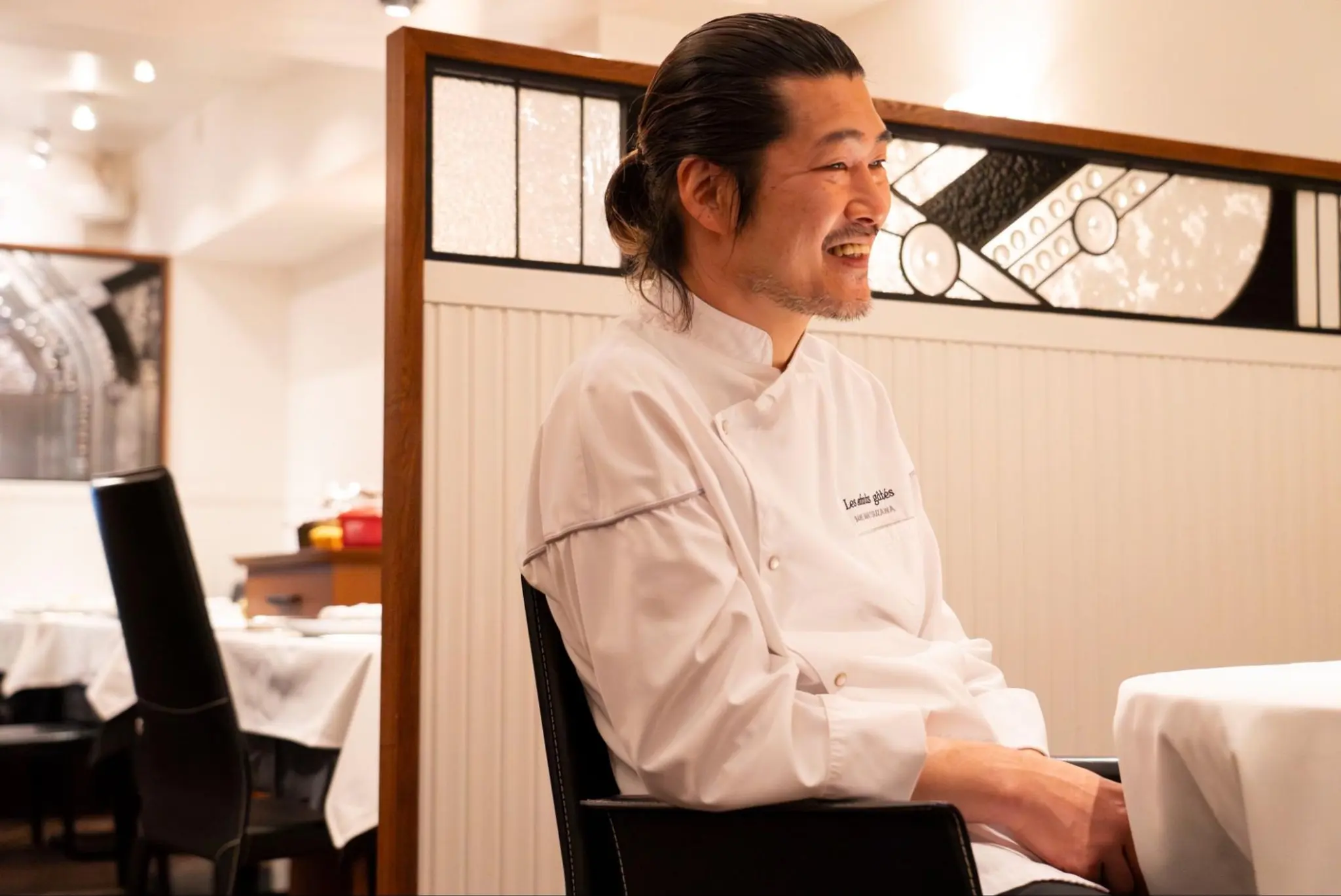
ーーーCould you share your future plans and goals with us?
It’s not a grand ambition, but my goal is to continue creating dishes that delight our guests and keep them coming back without ever growing tired of our offerings.
For example, with long-time regular customers, I try to incorporate their preferences while adding subtle variations to keep things fresh and interesting. When I craft a dish tailored specifically for them, I naturally put even more heart into it—and seeing how much they appreciate it is truly rewarding.
For new guests, I want to expand our menu options so they can find something that truly suits their tastes. After all, a restaurant is part of the hospitality industry, and I believe it cannot succeed without a genuine sense of care and a constant effort to think, "How can I make this experience more enjoyable for them?"
Every detail—from cooking techniques, seasoning, and temperature control—is an extension of this hospitality. The meticulous attention to these elements is, in itself, an act of thoughtfulness and care.
At 【Les enfants gâtés】, we also offer online sales in addition to our restaurant service. It all started when we introduced takeout as a way for more people to discover our food, which eventually led to expanding our service to nationwide shipping.
Over time, we began receiving more orders for gift-giving, such as year-end presents, and now we have even established a dedicated workshop specializing in mail-order production.
Particularly during the COVID-19 pandemic, many new customers discovered 【Les enfants gâtés】 through our online offerings. This has become an important part of our business, and we intend to continue nurturing it.
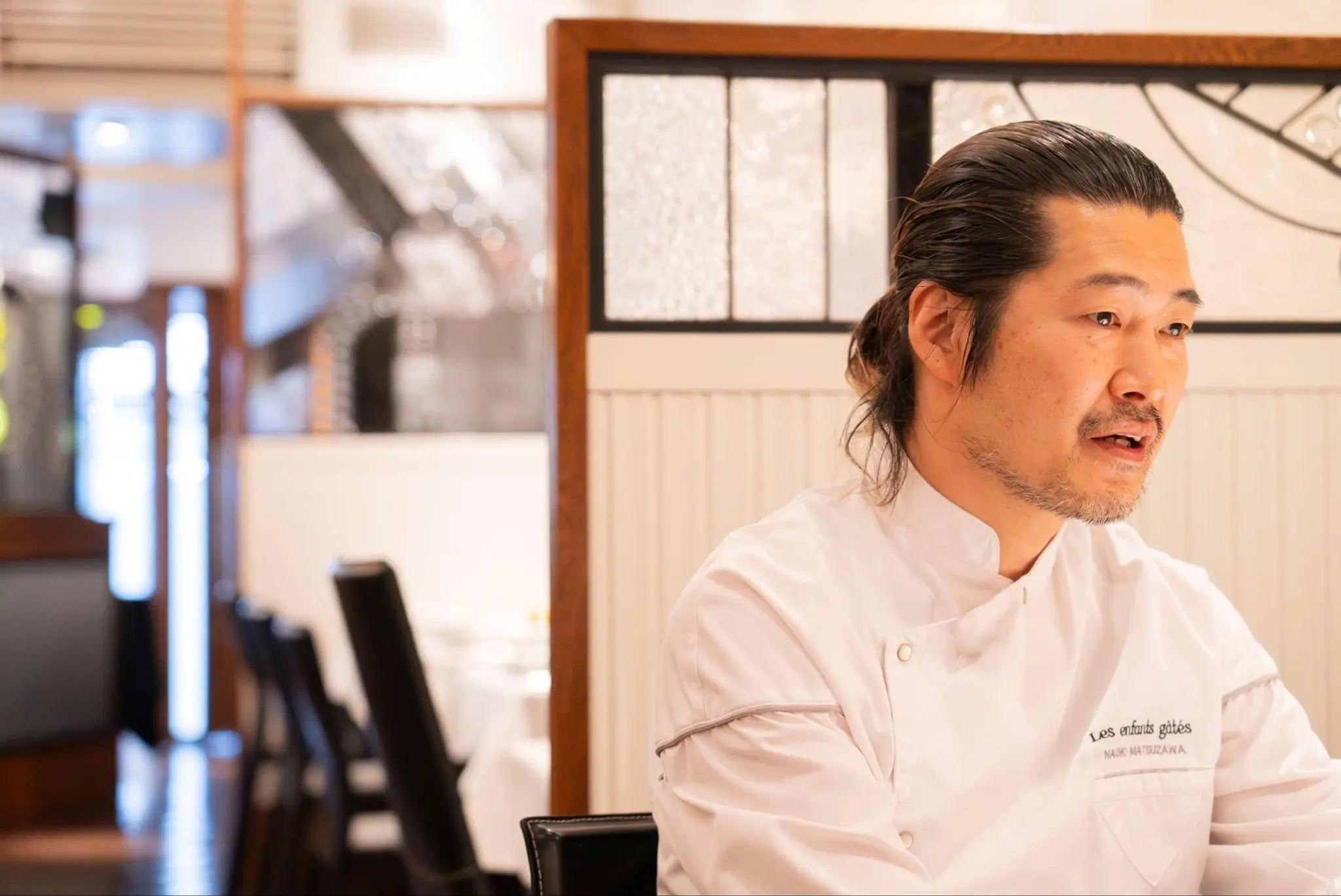
ーーーFinally, what does "delicious" mean to you, Chef Matsuzawa?
To me, "delicious" is defined by the sense of precision and tension present on the plate.
It means that every element—seasoning, cooking, aroma, texture, temperature, and plating—is in perfect harmony, with no gaps or inconsistencies. When I ask myself, "Is this dish truly worthy of being served to our guests?" or "Will this creation bring them joy?", a natural sense of focus and responsibility emerges. That feeling is what makes a dish truly exceptional.
I believe that the sense of focus and precision a chef puts into a dish is something that naturally comes through when the customer takes their first bite. On the other hand, if a chef approaches their work with a careless attitude, thinking, "This is good enough," or treating the dish with a lack of respect, the result will be just as mediocre—and the customer will sense that as well.
Ingredients are living things, meaning no two are ever exactly the same. Even within the same piece of meat, moisture content and texture can vary depending on the cut. That’s why I always strive to adapt to the ingredients in their current state, crafting each dish in a way that brings out the best in them. Instead of simply following a set formula—"This ingredient always pairs with this" or "This season calls for this specific terrine"—I want to continue listening to the ingredients, considering the guests, and trusting my own instincts as I move forward.
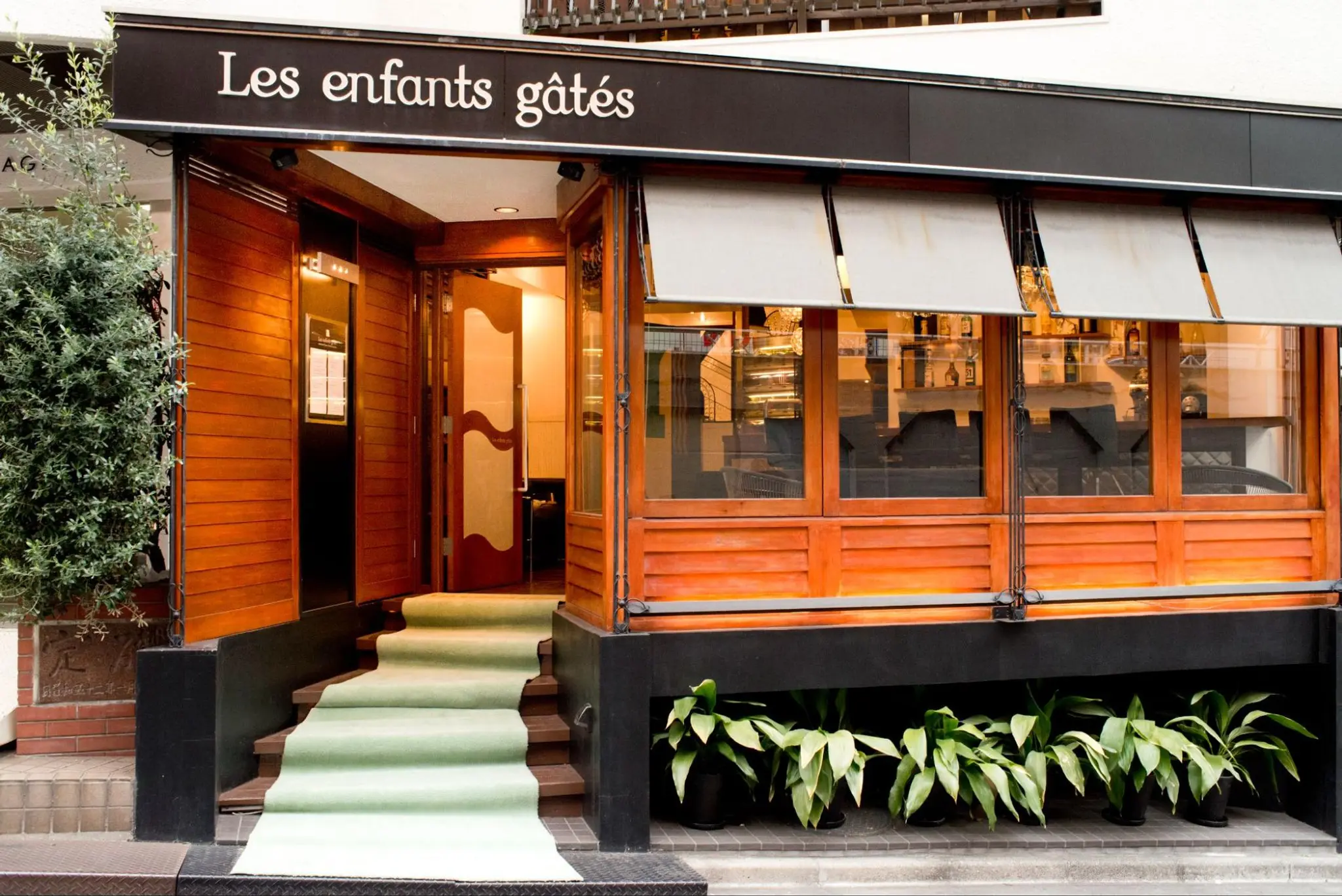
Chef Matsuzawa continues to reflect on whether his expressions and techniques are truly reaching the culinary students he teaches. Despite modestly admitting that "I'm not good at speaking," he carefully chooses his words, taking thoughtful pauses as he shares his insights with precision and sincerity. The meticulous and elegant terrines he creates—born from a deep sense of focus and tension—are perhaps a reflection of his delicate attentiveness and humility. His approach to both his guests and his craft reveals a kind of unpretentious earnestness, which ultimately manifests in the exquisite precision of his dishes.
Holding himself to the same high sense of focus and precision, Chef Matsuzawa continues to evolve, never settling. Reflected in the window are the smiling faces of guests, savoring the very essence of his ever-evolving cuisine.
Interview & Text/Yuri Yanagiya
Photography/Azusa Nakaoka
Restaurant Information
- AutoReserve Magazine
- Restaurants recommended by top chefs
- A beauty of a trapezoid with a diameter of 10 cm. Elevating unique and distinctive terrines to the spotlight at 【Les enfants gâtés】.