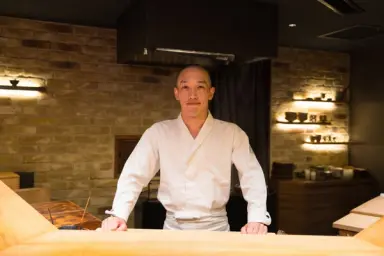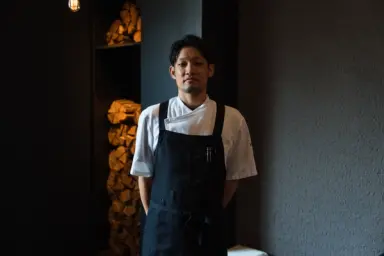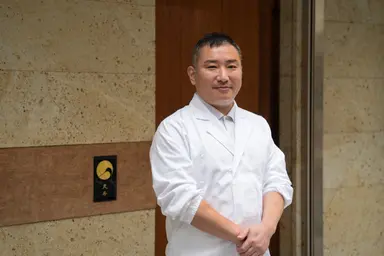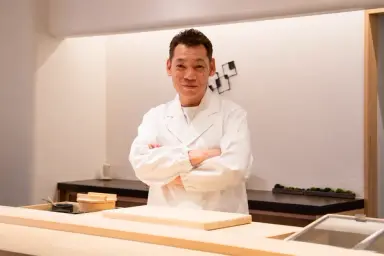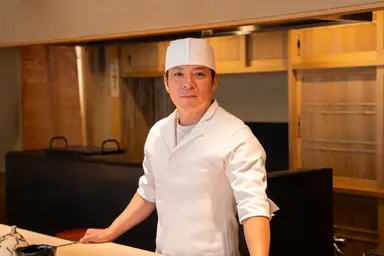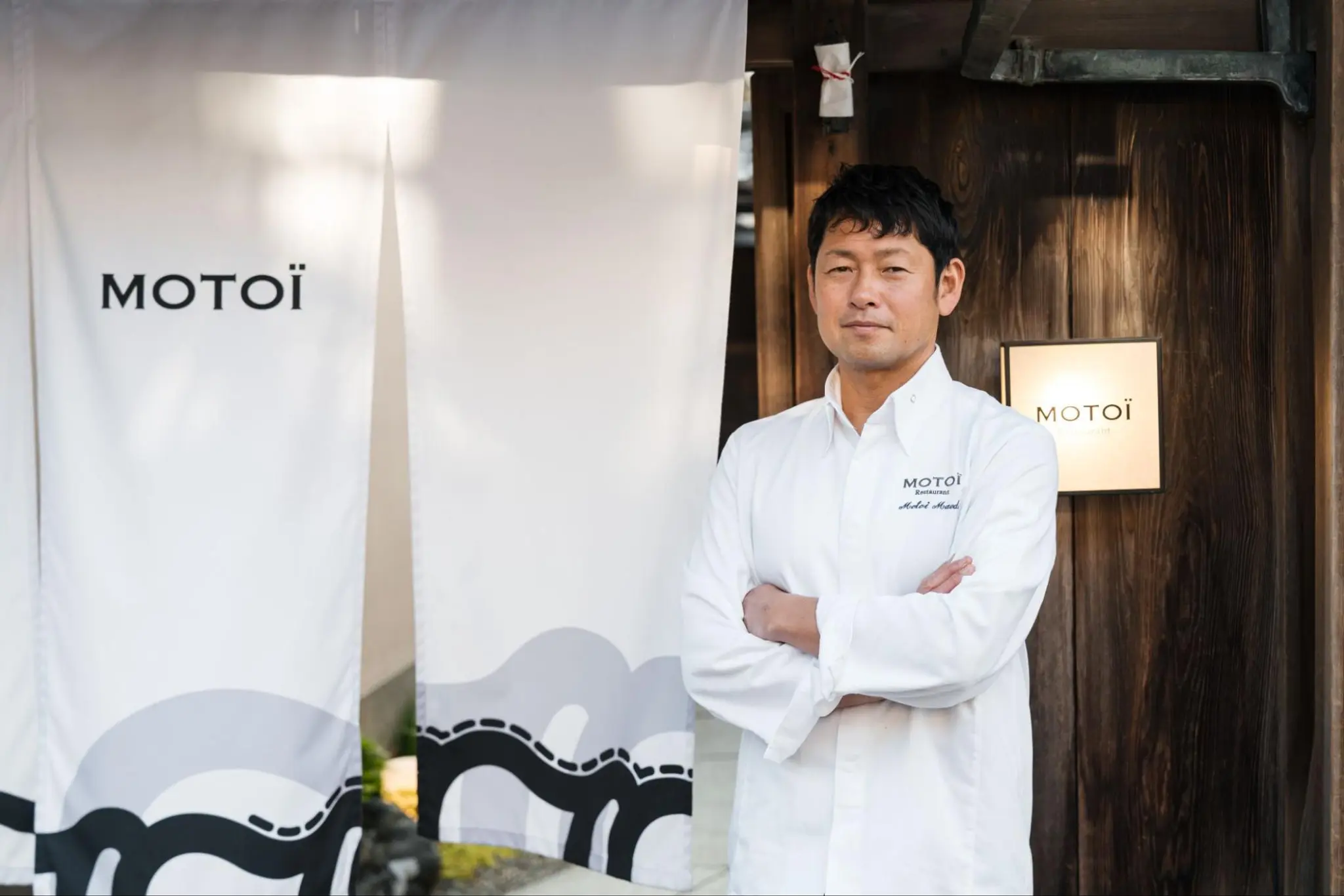
The Unstoppable Challenge of Chef Motoi Maeda, the Owner-Chef of 【MOTOÏ】, Guided by His Passion for French Cuisine and His Pride as a Kyoto Native
The Origin of French Chef Motoi Maeda: A Cookbook Used as a Picture Book in His Father’s Shop
ーーーWhat inspired you to become a chef?
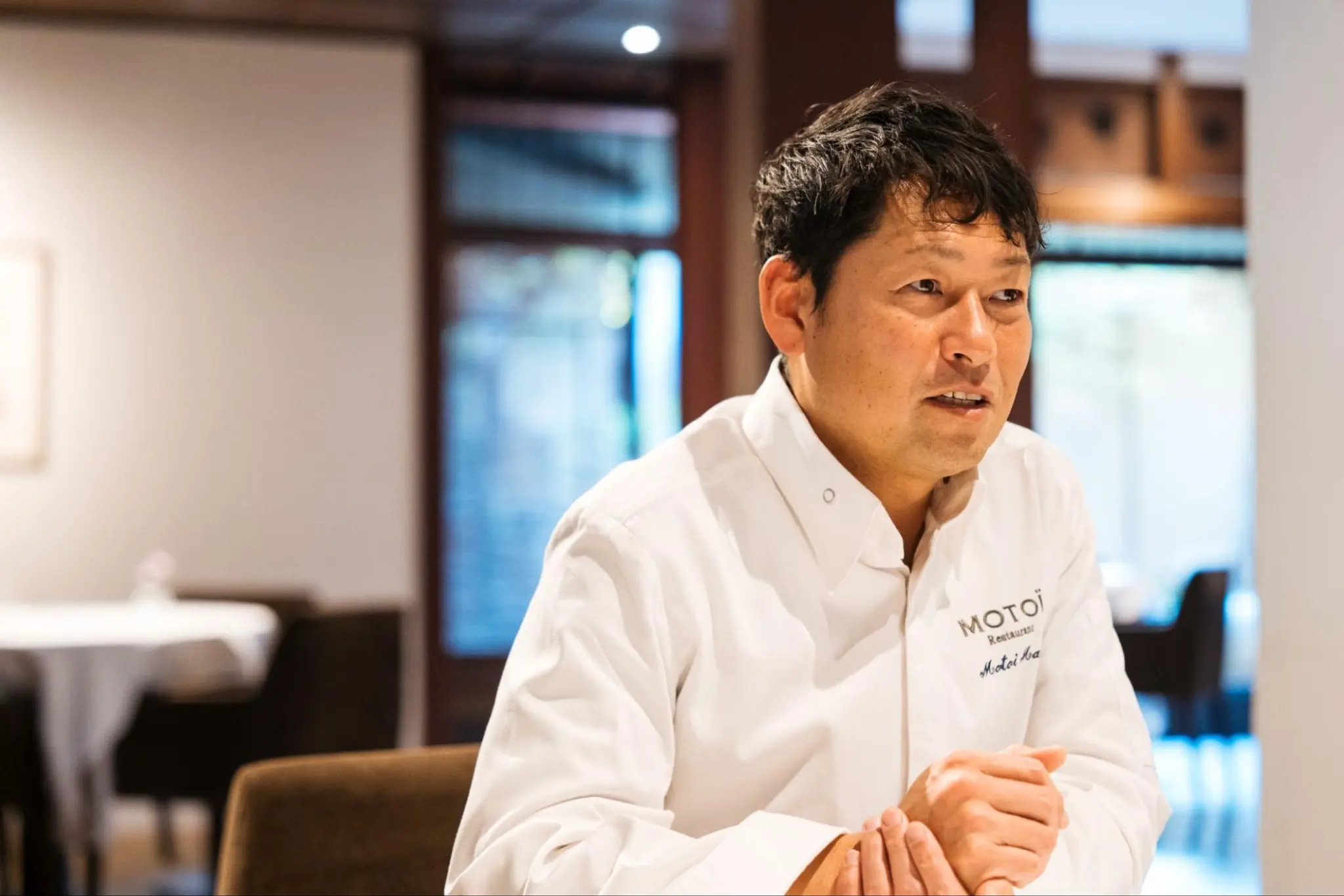
I’d like to start by talking about my first encounter with cooking. My family ran an old bookstore near this restaurant, on the corner of Kawaramachi and Sanjo in Kyoto. The store specialized in academic books, so there were no picture books or comics for children to enjoy. However, the one thing that caught my interest as a child was a cookbook filled with many photographs. It featured top chefs of the time, such as Chef Nobuo Murakami, the first executive chef of the Imperial Hotel, wearing long chef hats and presenting dishes with vibrant colors that I had never seen before. The glamorous world of Western cuisine depicted in the book was incredibly fascinating to my young eyes.
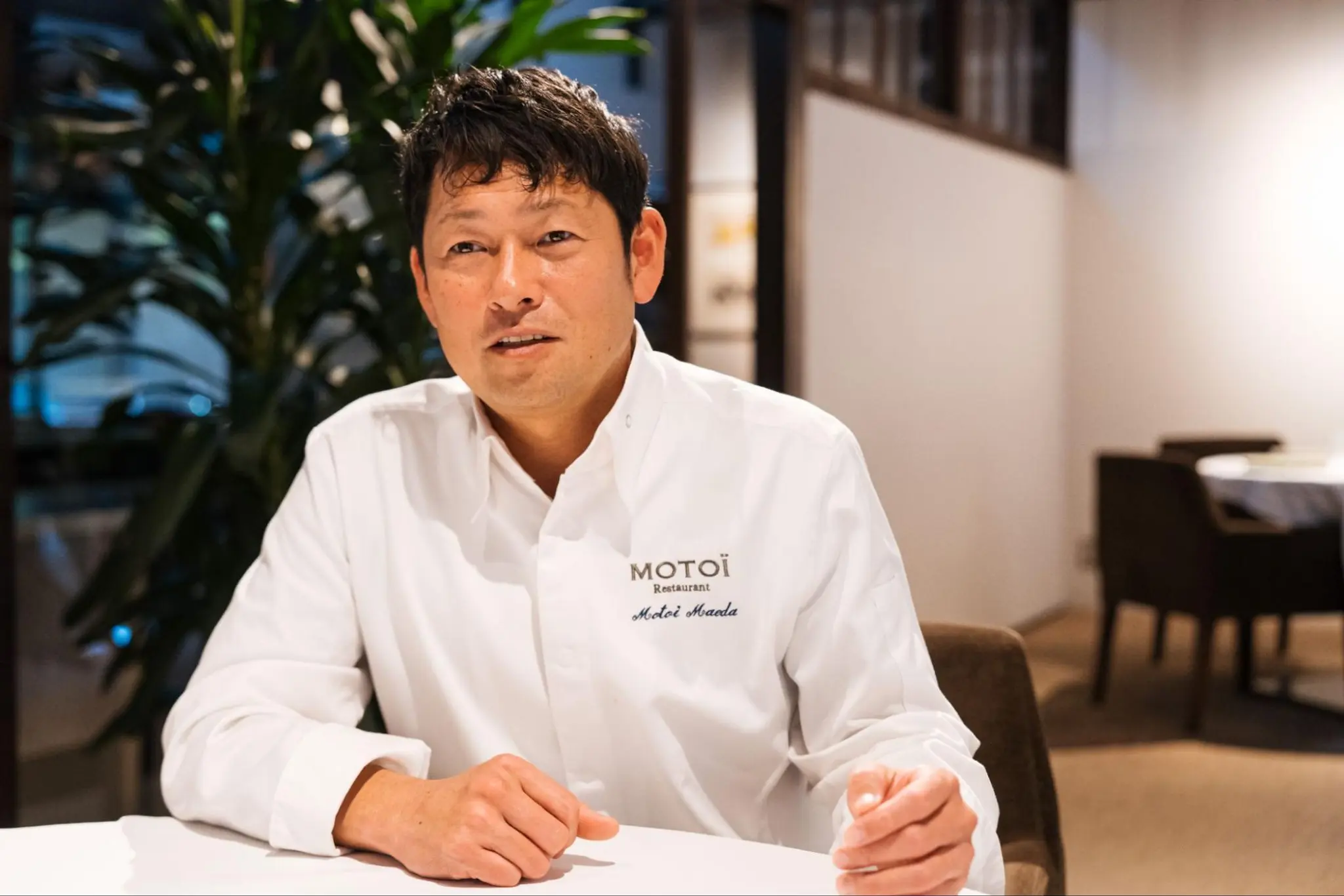
My father frequently traveled to Europe and the United States to purchase books. Along with the books, he would bring back European and American culture, so I felt that the Western world was always close at hand within our home. When I look at old family photos, I can see that the dining table was properly set with knives, forks, and even wine glasses for each person. I must have been in the lower grades of elementary school, and my younger sister was still in kindergarten at the time (laughs). One of my earliest clear memories of cooking is from second grade. I promised my teacher, who had replaced my regular teacher on maternity leave, that I would make something special for the school picnic. On the day of the picnic, I made tamagoyaki (Japanese omelette) with my mother’s guidance. My teacher ate the omelette with a big smile and said, "It's so delicious!" That made me incredibly happy. That was when I realized the joy of cooking and making others happy through food. From then on, I often found myself in the kitchen on Sunday mornings, making fried eggs for my family.
ーーーWhen did you first encounter French cuisine?
It was when my older brother passed his high school entrance exams. To celebrate, a friend of my father, who was a chef, invited us to dine at the long-established restaurant of the Kyoto Hotel (now Hotel Okura Kyoto). It was there that I had my first taste of authentic French cuisine. I was in the fifth grade of elementary school at the time. I will never forget it—the main dish was a "filet of beef Rossini," with poached beef, foie gras, and a truffle sauce. It was so incredibly delicious that I made up my mind then and there that the path I should follow was French cuisine. From that moment on, I became even more passionate about cooking.
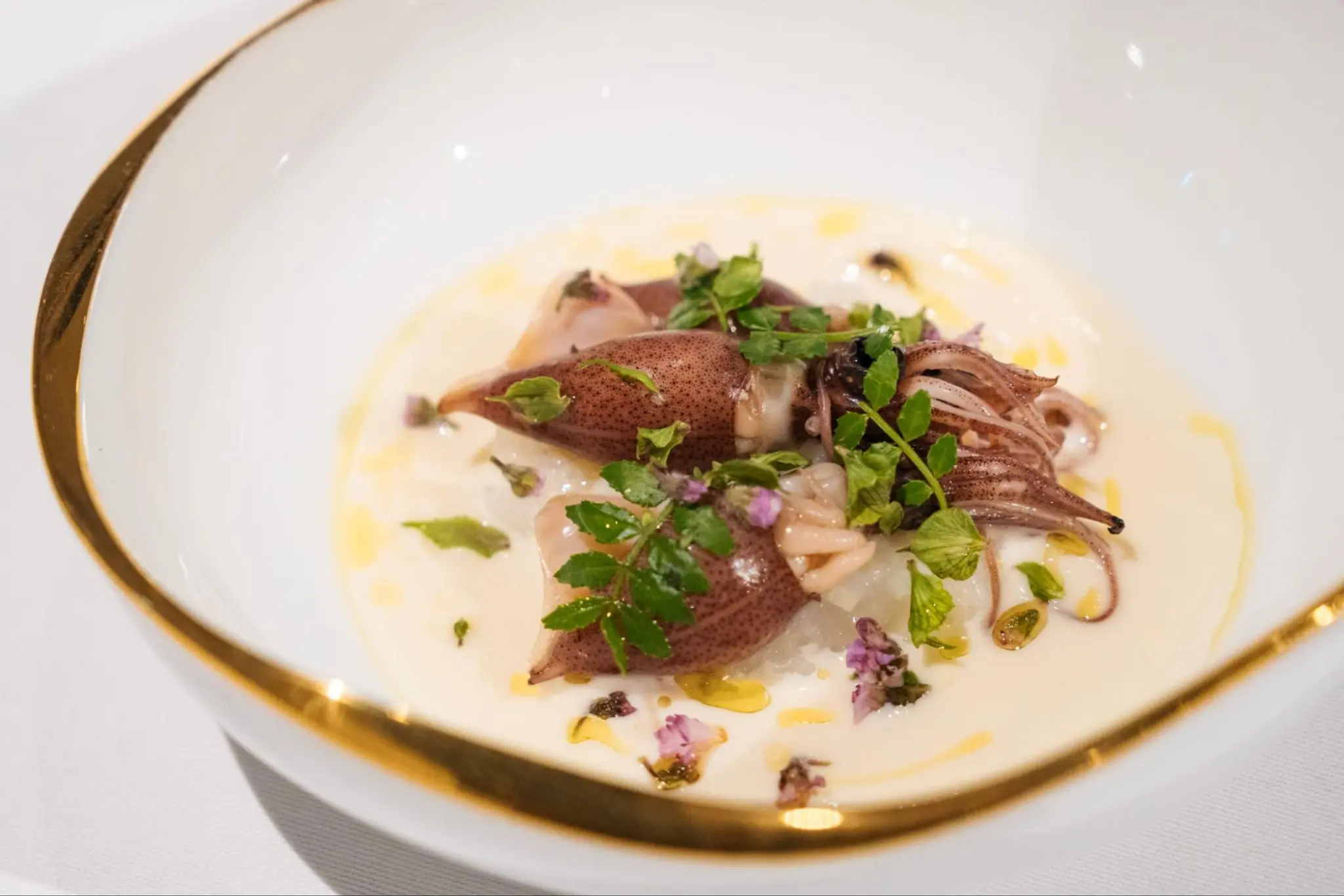
When I entered junior high school, my passion for French cuisine intensified even further. In the third year, one day, I packed a full French course meal into a lunch jar (a thermos-style lunch box) and brought it to school as my lunch. I set up my plates, knives, and forks on my desk and started eating with a clatter, which quickly drew a crowd of curious classmates. Soon, even teachers from the staff room came over to peek at what I was doing. Surrounded by about 50 people, I ate the entire meal, from appetizers to dessert, all by myself. Looking back now, I must have been quite an eccentric junior high student (laughs).
I was determined to work at a restaurant immediately after graduating, but my father advised me that it would be better to finish high school, so I went on to high school. While continuing to cook at home, I joined the handball team, known for being a strong contender, and in my third year, I was appointed captain. It was a fulfilling school life where I was rigorously trained both mentally and physically.
Unexpectedly Entering the World of Chinese Cuisine! The Turbulent Beginning of My Culinary Career
ーーーSo, you entered the culinary world right after graduating high school?
After graduating, I joined the "Kyoto Grand Hotel" (now the Rihga Royal Hotel Kyoto), fully prepared to work at a restaurant. However, my first assignment was to work in the dining area, as I was told to focus on studying service. I didn’t agree with this directive because my peers, who had graduated from culinary schools, were already working in the kitchen. I persistently asked my supervisor to let me work in the kitchen, saying "I want to get into the kitchen and hold a knife." Eventually, the supervisor relented and assigned me to a Chinese restaurant.
The kitchen at the Chinese restaurant was very lively, and the people working there had a strong, almost sports-team-like atmosphere. There were chefs who, when they got angry, would throw ladles (laughs). To me, it felt like an extension of club activities, so I didn’t have much trouble getting along with people, and I was quite well liked by the senior chefs early on. Even though I was a newcomer, I was able to handle a knife like a professional, so I may have been appreciated as an immediate asset to the team. After about three years, the head chef said to me, "It’s a waste for you to stay in Kyoto," and introduced me to a Chinese restaurant at the Hotel Nikko Tokyo (now the Hilton Tokyo Odaiba). That’s when I moved my professional base to Tokyo.
ーーーHow was the new work environment?
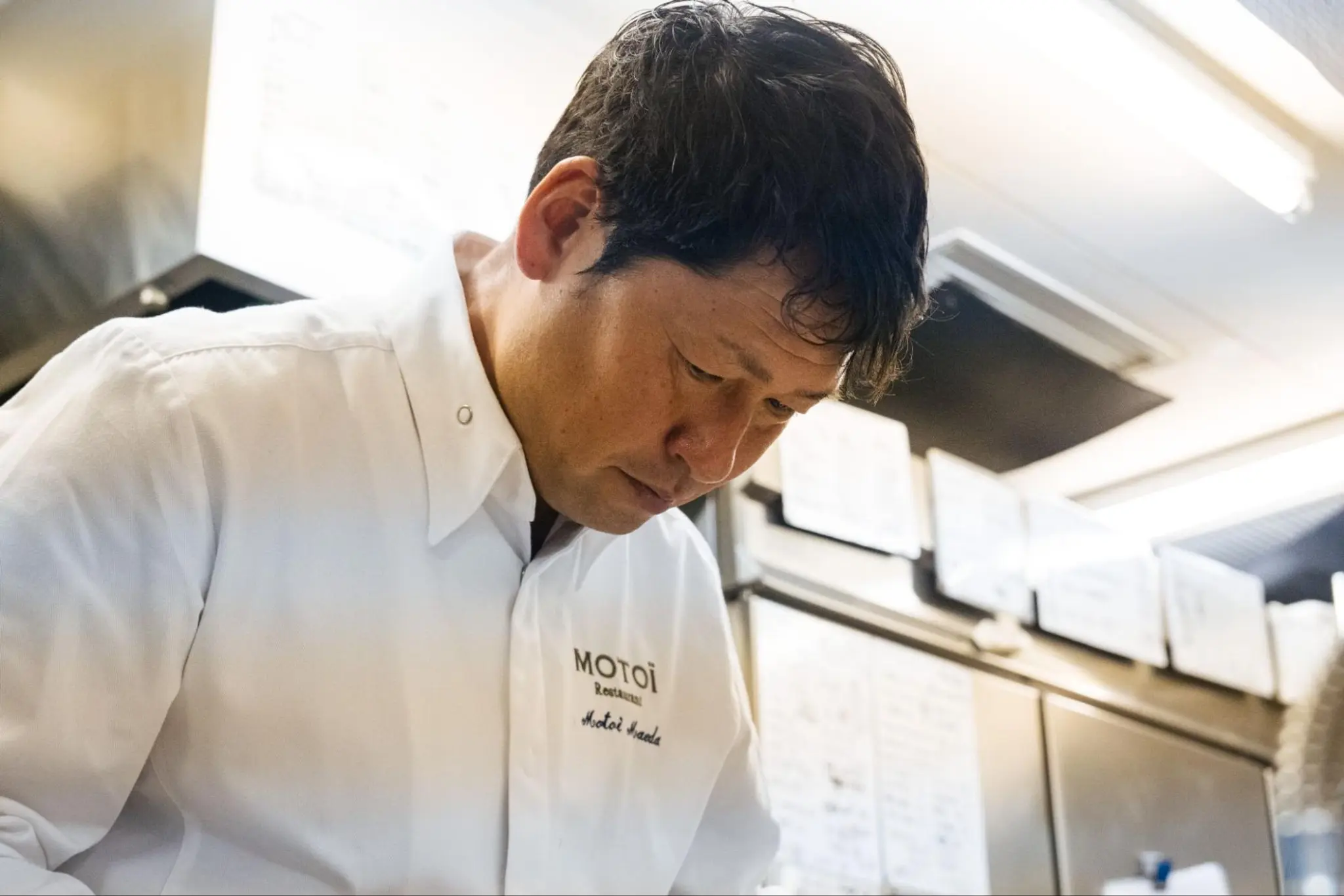
What really surprised me was the sheer number of staff working in the kitchen. While in Kyoto, we ran the restaurant with a team of eight, but in Tokyo, there were nearly 30 chefs working in the Chinese kitchen, and about five of them were responsible for stir-frying in the wok. I realized that in order to move up in this environment, I would have to work twice as hard as everyone else, and it really made me tighten up and focus. As I worked relentlessly, I gradually established myself as a key player, and before I knew it, seven years had passed.
Living in Shonan, Kanagawa at the time was very comfortable, and I never felt any discomfort. Work was going well, and in my free time, I enjoyed surfing at the nearby beach all day, so my personal life was fulfilling too. However, gradually, I began to feel a sense of crisis about living this easy, comfortable life. After accumulating 10 years of experience as a Chinese chef, I couldn’t imagine myself continuing as just one chef in a hotel forever. But I wasn’t ready to start my own restaurant just yet. Moreover, the truth was that what I had always wanted to do was French cuisine. I became a chef in order to open a French restaurant. I felt an urgency to take action before it was too late, and I decided, "Now or never!" and made the shift from Chinese to French cuisine.
I approached the French chef at the hotel’s main dining restaurant and asked if I could receive training in French cuisine whenever I had a day off or finished work early. I also started attending French language classes, and after about a year of preparation, I finally set off for France, determined to succeed in the birthplace of French cuisine.
Returning Home Halfway Through My Dream: The Encounter with a Completely New Modern French Cuisine
ーーーHow was your experience working in France?
Upon arriving in France, I immediately started working at a one-star restaurant in Beaune, Burgundy, which was introduced to me by a French chef. However, I quickly realized the naivety of my thinking. Although I had mastered French to a level where it didn’t interfere with my work, the native French speakers spoke much faster than I had expected, and I couldn’t properly catch the orders in the kitchen. I was assigned to the appetizer station, but due to repeated misunderstandings, I made mistake after mistake. After work, I would go home and spend my time studying French, which continued for a while.
After about six months, I moved to another one-star restaurant, and after training at a two-star restaurant, I applied for a work visa again. While waiting for approval, I temporarily returned to Japan, but ultimately, I couldn’t go back to France. The reason was that President Sarkozy, who had recently taken office at the time, reduced the number of foreign workers as a measure to tackle the high unemployment rate among French citizens.
ーーーWhat kind of life did you lead after returning to Japan?
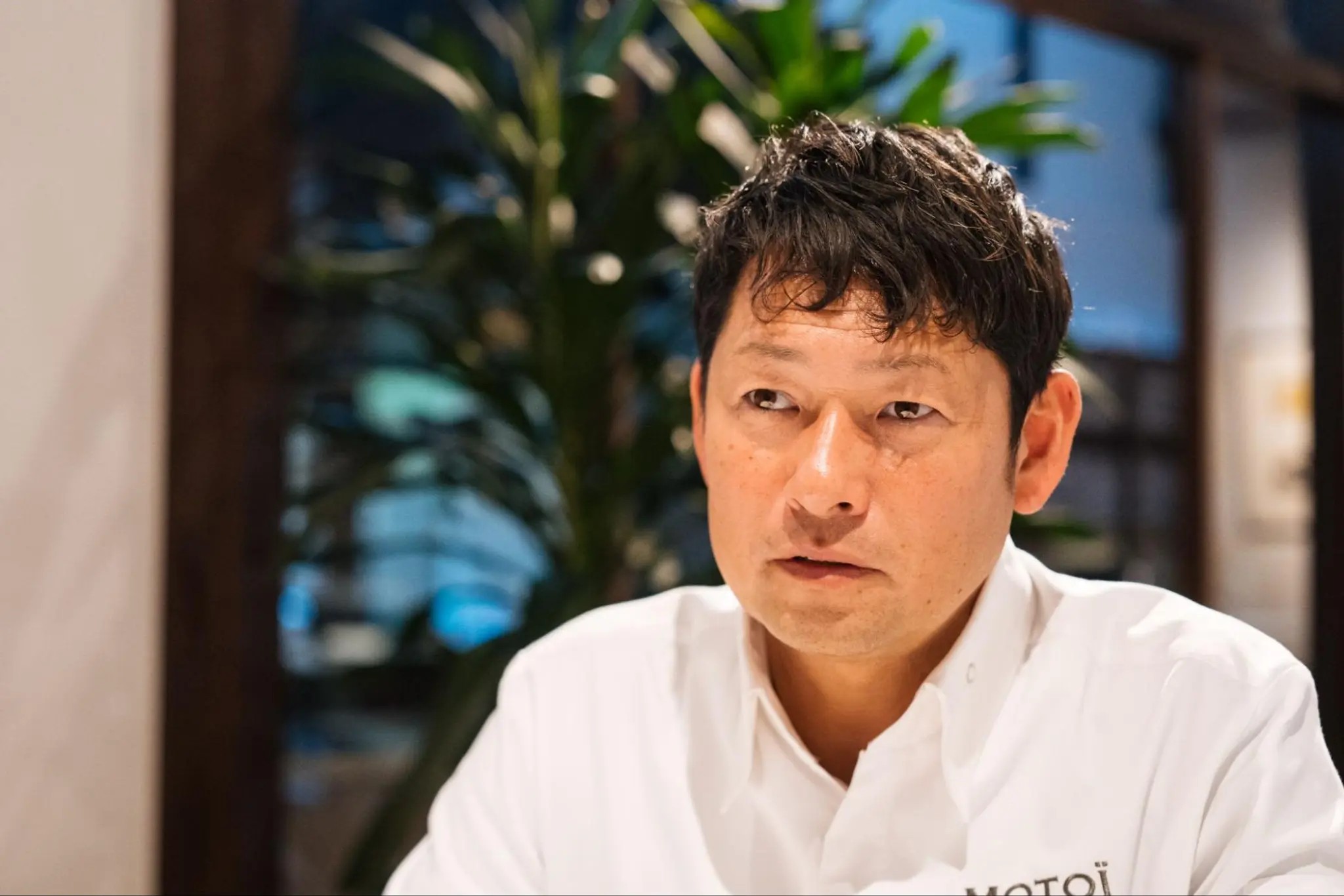
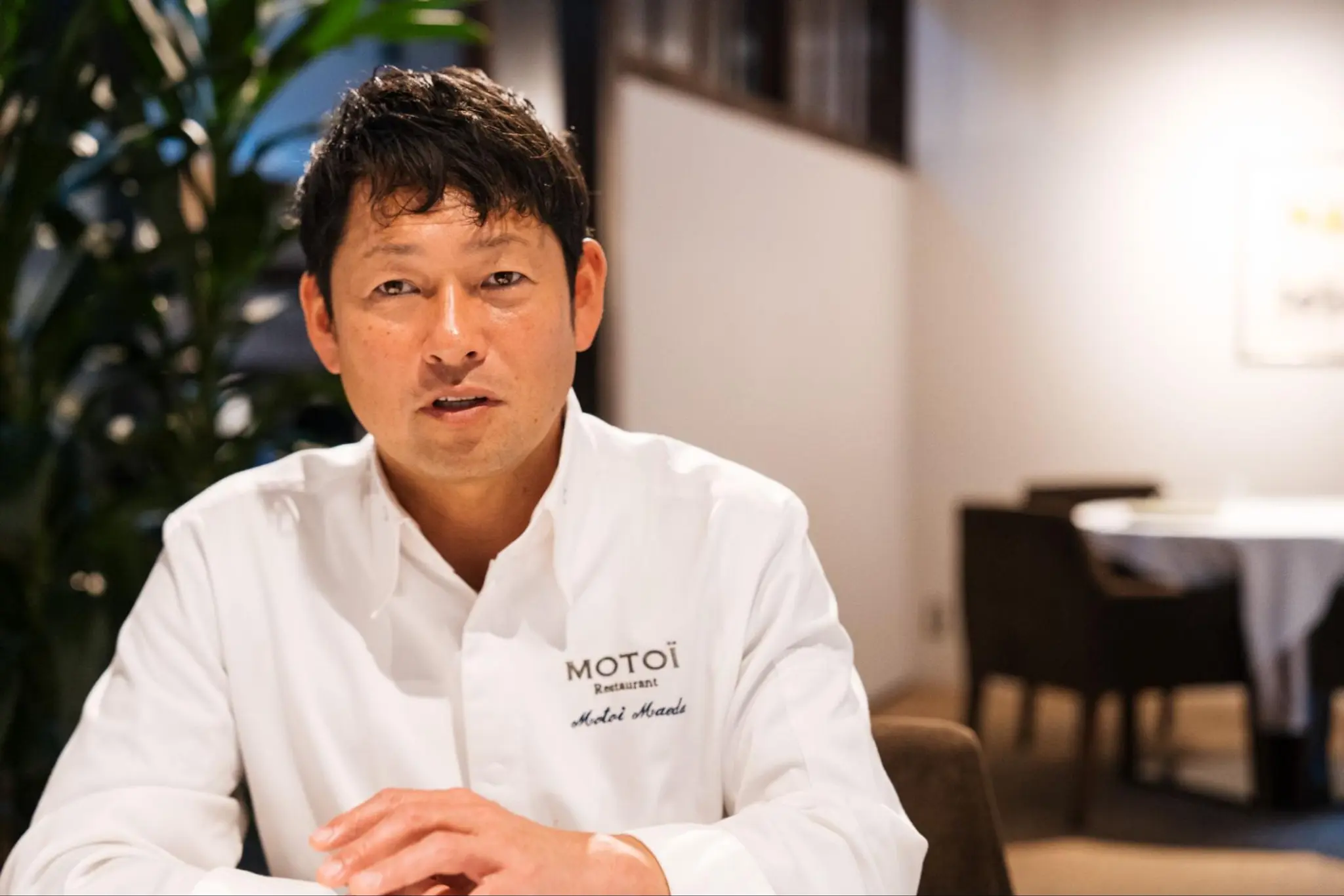
While waiting for my visa application to be approved, I worked almost nonstop at the main dining restaurant 【Pitresque】 at the Kyoto Hotel (now Hotel Okura Kyoto). I was working as a part-timer since I planned to return to France soon, but in the kitchen, I was entrusted with making the sauces that defined the restaurant’s flavors. However, after a year of waiting, the path to France was finally closed to me. In the midst of feeling lost, I heard the news that Chef Hajime Yoneda, who had been working at the renowned 【Michel Bras Toya Japon】 in Lake Toya, Hokkaido, had become independent and opened a restaurant in Osaka. Chef Yoneda’s cuisine, which had been honed at the forefront of the global culinary scene for many years, presented new and innovative flavors that I had never tasted before. The world of modern French cuisine on the plate was entirely new to me. I immediately asked to work there, and was welcomed as part of the staff at the newly opened 【HAJIME】.
Chef Yoneda has a scientific and mathematical mind, having transitioned into the culinary world from a career as a system engineer. He built each recipe using detailed calculations, and he was a completely unique type of chef. There was so much in 【HAJIME】’s cuisine that I didn’t know and didn’t have, and working alongside him was extremely enjoyable. I also had the opportunity to learn about how to develop a restaurant, which was a valuable experience.
Realizing Kyoto's Potential, My Vision for the Cuisine I Want to Create Became Even Clearer
ーーーAfterward, you became independent and opened 【MOTOÏ】, didn’t you?
In 2012, I opened 【MOTOÏ】 in a joint venture with Chef Yoshio Ihara, who had previously run a dining bar in Kyoto. Chef Ihara was one of my surfing buddies from when I lived in Shonan. Since we were both from Kyoto, we would often talk about our dream of eventually opening a restaurant together in Kyoto.
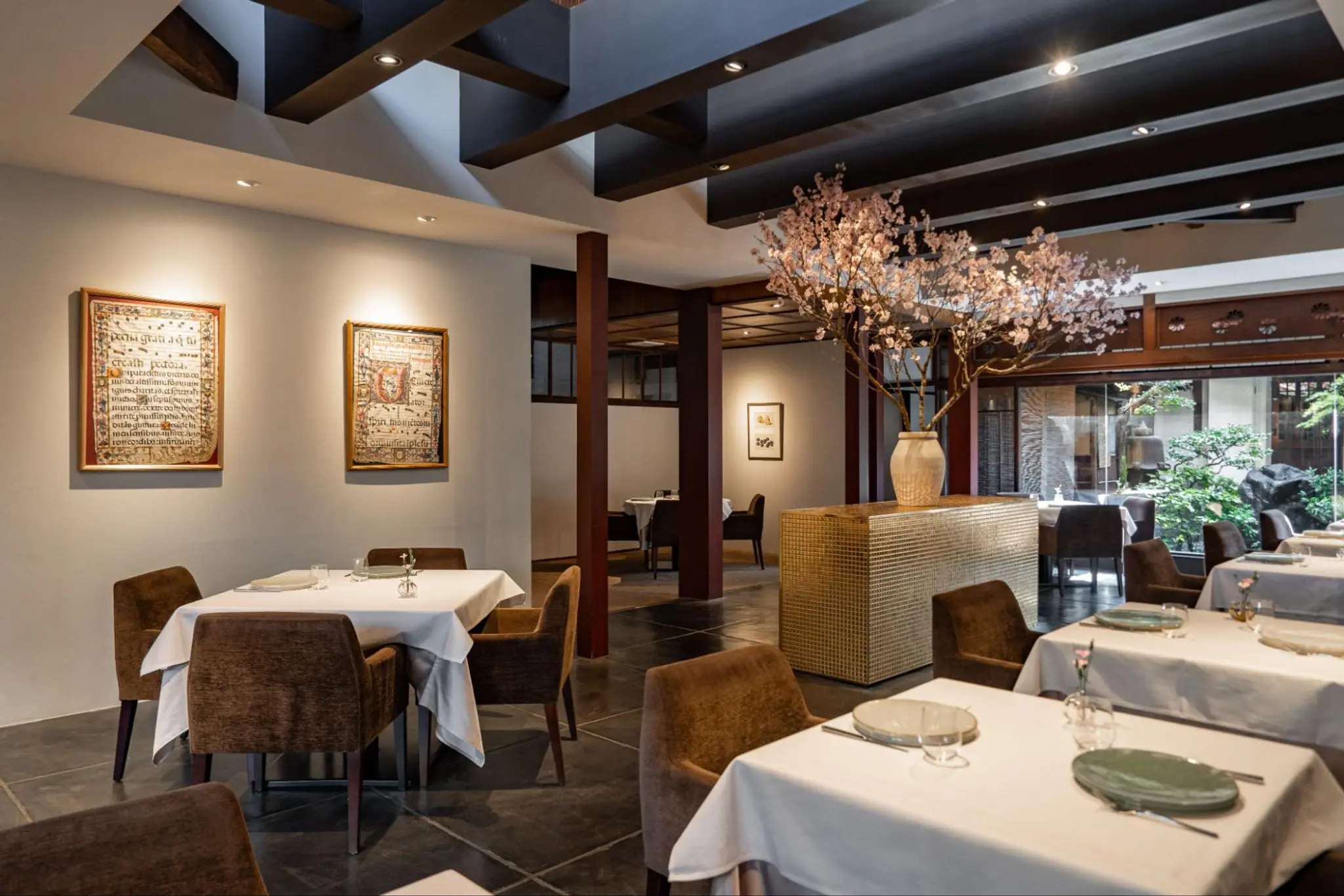
This area is located just south of the Kyoto Imperial Palace, which was once home to many mansions. In recent years, the number of traditional townhouses (machiya) has decreased, replaced by an increasing number of apartment buildings. As a result, the local people have felt a sense of loss. I wanted to preserve the atmosphere of the old, beautiful streets, so I decided to leave the exterior of the 110-year-old building completely untouched and preserved the style of a Taisho-era residence.
ーーーIs there a particular reason you chose to open your restaurant in your hometown?
The reason I chose Kyoto wasn’t just because it’s a familiar place. It’s because I was reminded of how rich Kyoto is in terms of local ingredients. Even though it’s my birthplace, I came to realize this anew. After returning from France, I worked part-time at 【Pitresque】, where Chef Yuichiro Tamagaki (the current head chef) emphasized the importance of using local Kyoto ingredients. On Sundays, I would drive to the Ohara morning market to shop, or we would visit the farms of local producers together. Kyoto is a place that is both moderately rural and moderately urban. A short distance from the city center, you can find expansive fields. Moreover, because of its long history of food culture, Kyoto is home to many top-tier Japanese restaurants, and the quality of vegetables grown in the surrounding areas is very high.
When I worked in Tokyo and at 【HAJIME】 in Osaka, I ordered ingredients from suppliers, but in Kyoto, I can go directly to the markets and production areas to carefully select fresh ingredients with my own eyes. In spring, there are bamboo shoots; in summer, there’s eel; in autumn, matsutake mushrooms; and in winter, turnip stew graces the table. Since my family has always cherished Kyoto’s food and traditions, I believed I could bring the local food culture to life in the world of French cuisine.
ーーーCan you tell us about the characteristics of the dishes at 【MOTOÏ】?
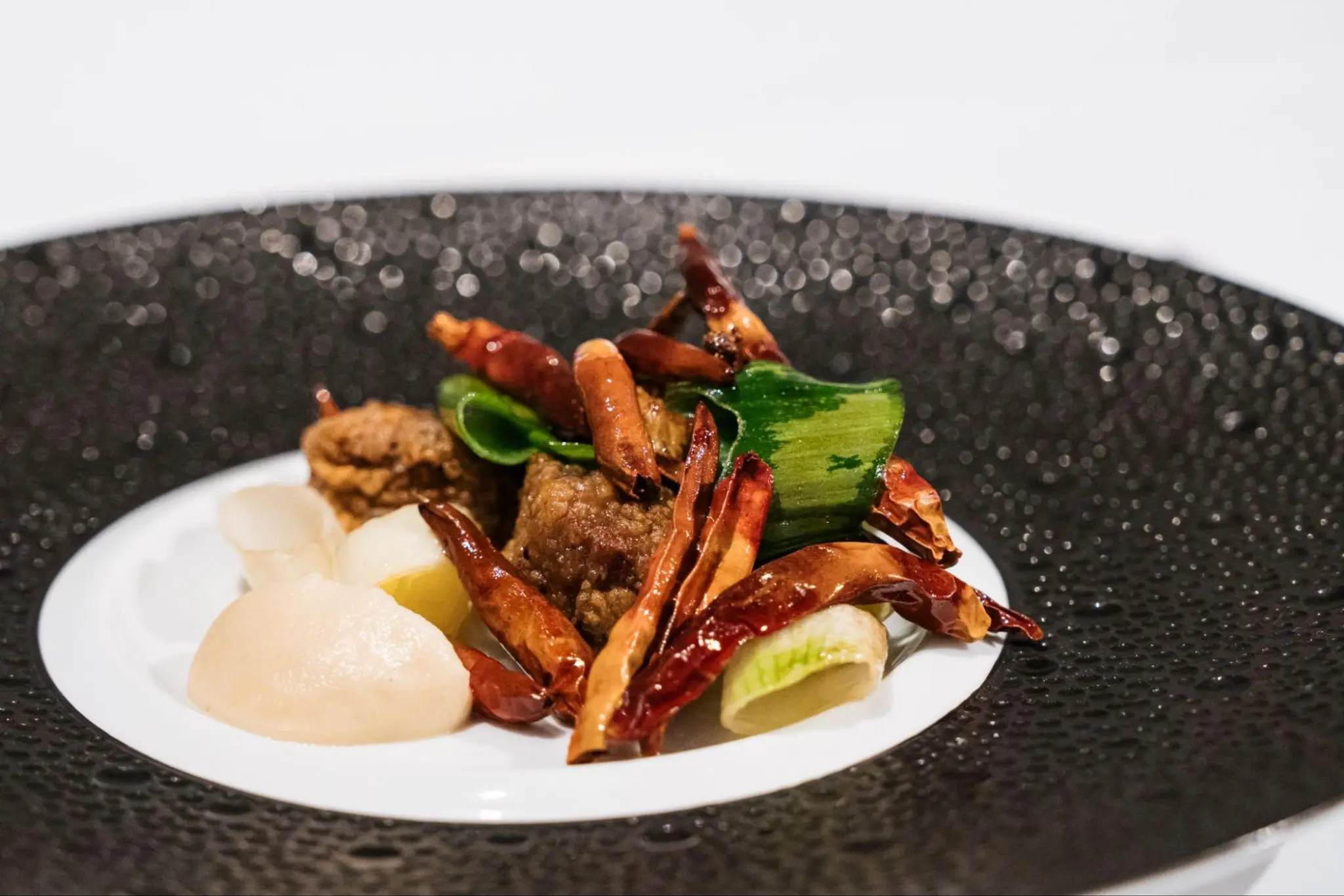
When I decided to open my restaurant, Kyoto already had many places that inherited traditional French cuisine, and French kaiseki (a traditional Japanese meal served with Western-style food) restaurants, where you eat Western food with chopsticks, were slowly starting to appear. On the other hand, what I wanted to do was create French cuisine that reflected the old, beautiful food culture of Kyoto. Additionally, while modern French cuisine like that at 【HAJIME】 was starting to gain traction in Tokyo, no one was doing it in Kyoto at the time. A true Kyoto native creating genuine modern French cuisine steeped in Kyoto culture... This concept gradually came together for our restaurant.
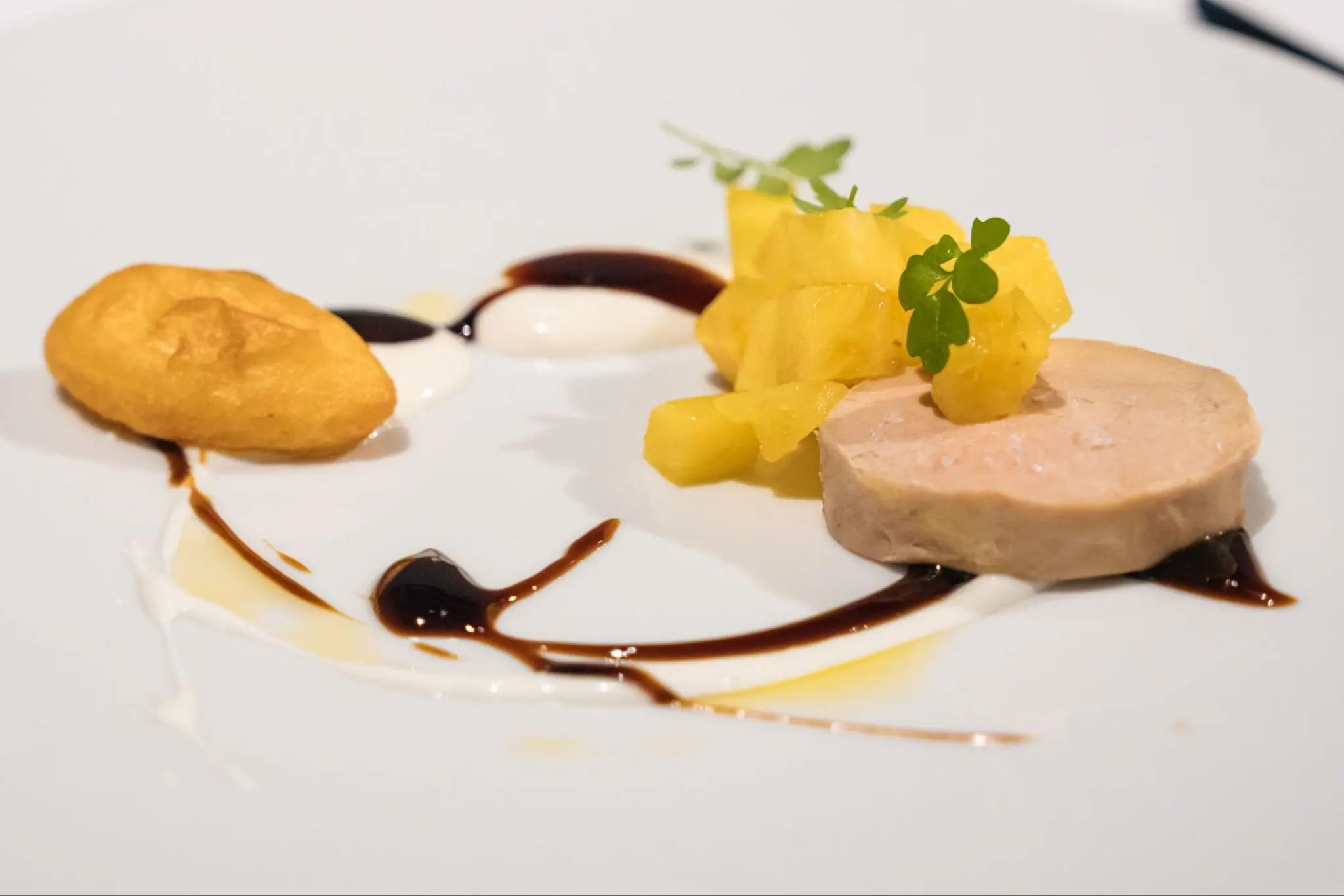
If we look back at history, French cuisine is one of the most continuously evolving culinary traditions in the world. However, that evolution has always been from a French perspective, and I believe the Japanese only grasp French cuisine "somehow" without fully understanding it. So, what is French cuisine to me? For me, it aligns with the world of cookbooks that my father had in his restaurant. The ideal French cuisine I envision is based on that. The taste that moved me when I was a child, the one that left an impression on me, is the deliciousness of French cuisine, and I still believe that the essence of French cuisine lies in its sauces. Sauces contain the umami that only French cuisine can offer. There was a time when the trend in modern French cuisine was moving toward "removing the sauce," but I have always believed that the most important part of French cuisine is its sauce. I have consistently followed my belief in carefully crafting sauces, lightening their flavors, and expressing my own style with modern plating.
The True Meaning of "Host and Guest as One" at 【MOTOÏ】, Where We Give Our All to Serve and Are Served in Return
ーーーWhat is the most important thing for you when cooking?
It’s making our customers happy. I believe that within this concept of "making them happy," there are two different stances for a chef. One is a chef who prioritizes their own "expression," allowing the customer to adjust to the chef's world and enjoy the meal. On the other hand, I focus primarily on doing everything I can to make our customers happy. There is no right or wrong here; both are valid approaches. What matters is how much the customer feels joy and how much they resonate with what is offered. I think they should choose the approach that suits them.
ーーーFor you, Mr. Maeda, this aligns with the spirit of "Host and Guest as One," which is rooted in the Japanese tea tradition.
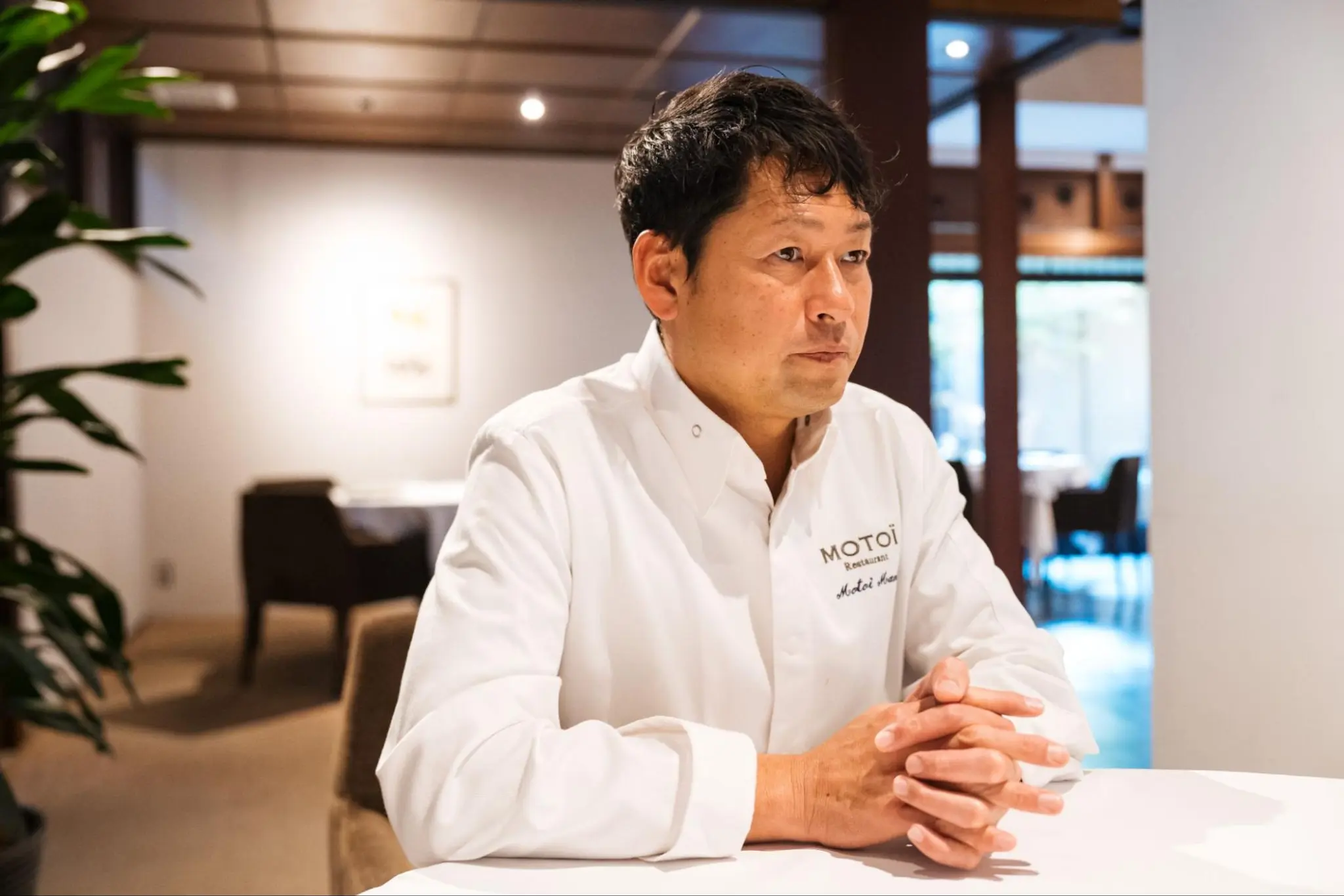
The host should serve the customer with all their might, and the guest should enjoy the host’s service to the fullest. When these two elements come together, I want to create that sense of "wa" (harmony) at 【MOTOÏ】 as well. However, I do not actively communicate this concept within the restaurant.
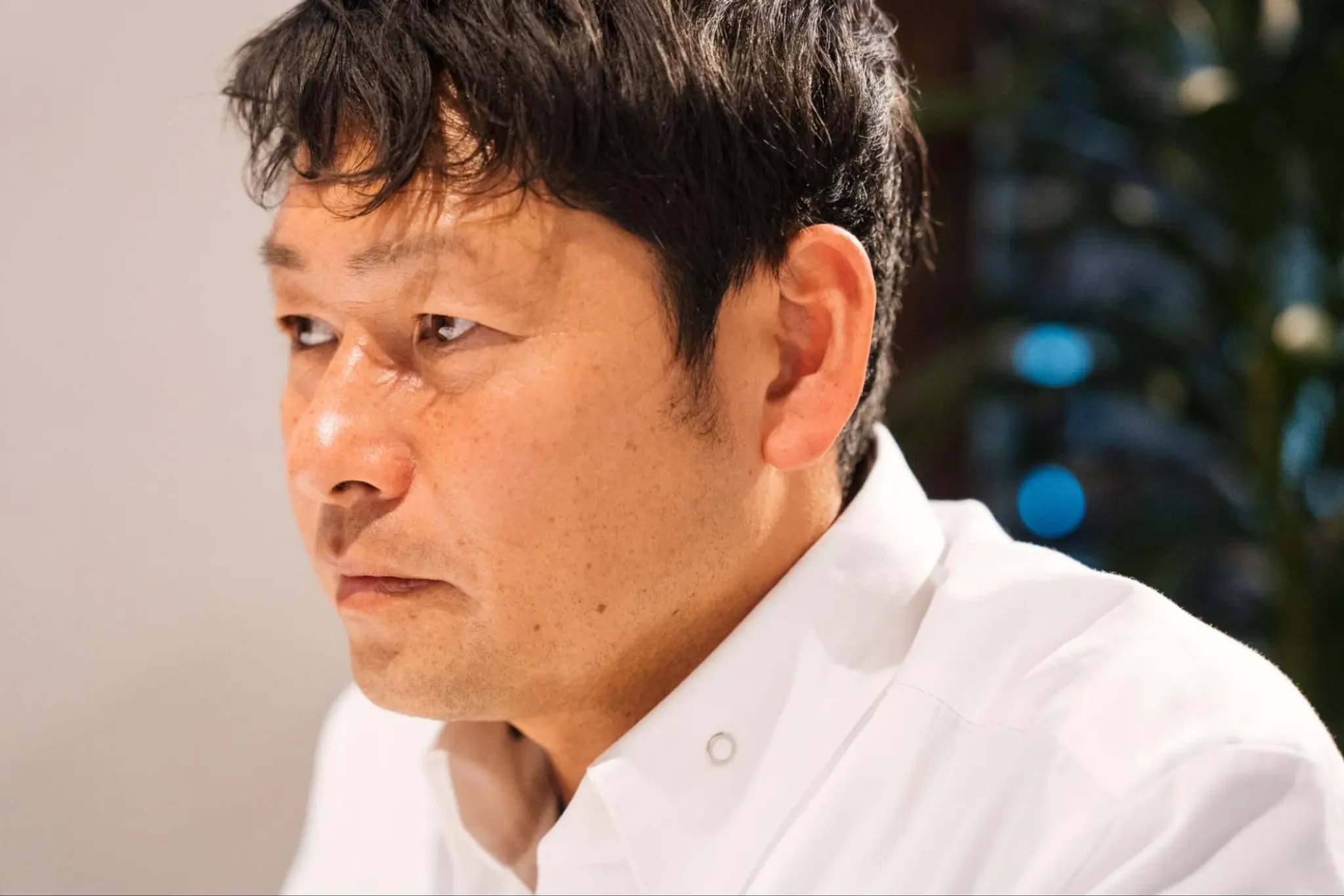
Speaking about Kyoto’s way of thinking, in Kyoto, we don’t try to explain "everything." For example, when it comes to the scrolls, flower vases, and the tools used for tea ceremonies, the host does not go into great detail about who made them. As long as those who understand can appreciate it, fine items are placed in a subtle manner. The guest, by deepening their own knowledge, can enjoy the experience even more. Both the host and the guest remain silent. That is the epitome of elegance. The same applies to travel. Even if you visit a place you’ve been to before, when you study the meaning behind the architecture, the design of the garden, and the intentions of the creators through literature, your perception will change completely when you visit again. The more knowledge you have, the more you can enjoy. That is the depth of Kyoto. Each time you visit, the charm of Kyoto increases.
Following this Kyoto philosophy when it comes to cooking, excessive explanations are considered crude. I want our guests to understand what the chef is thinking through their own palate, through the dishes themselves. I was once asked in an NHK TV interview, "Are customers gods?" I replied, "Customers are customers, not gods." The relationship between the customer and the chef is one of equality; the person paying money is not superior. Because both are in the same position, we, as chefs, give our all to provide the best experience for the customer who is here to enjoy themselves. It’s the same as in a tea ceremony. It’s the concept of "Host and Guest as One" that underlies our approach to giving our best in hospitality.
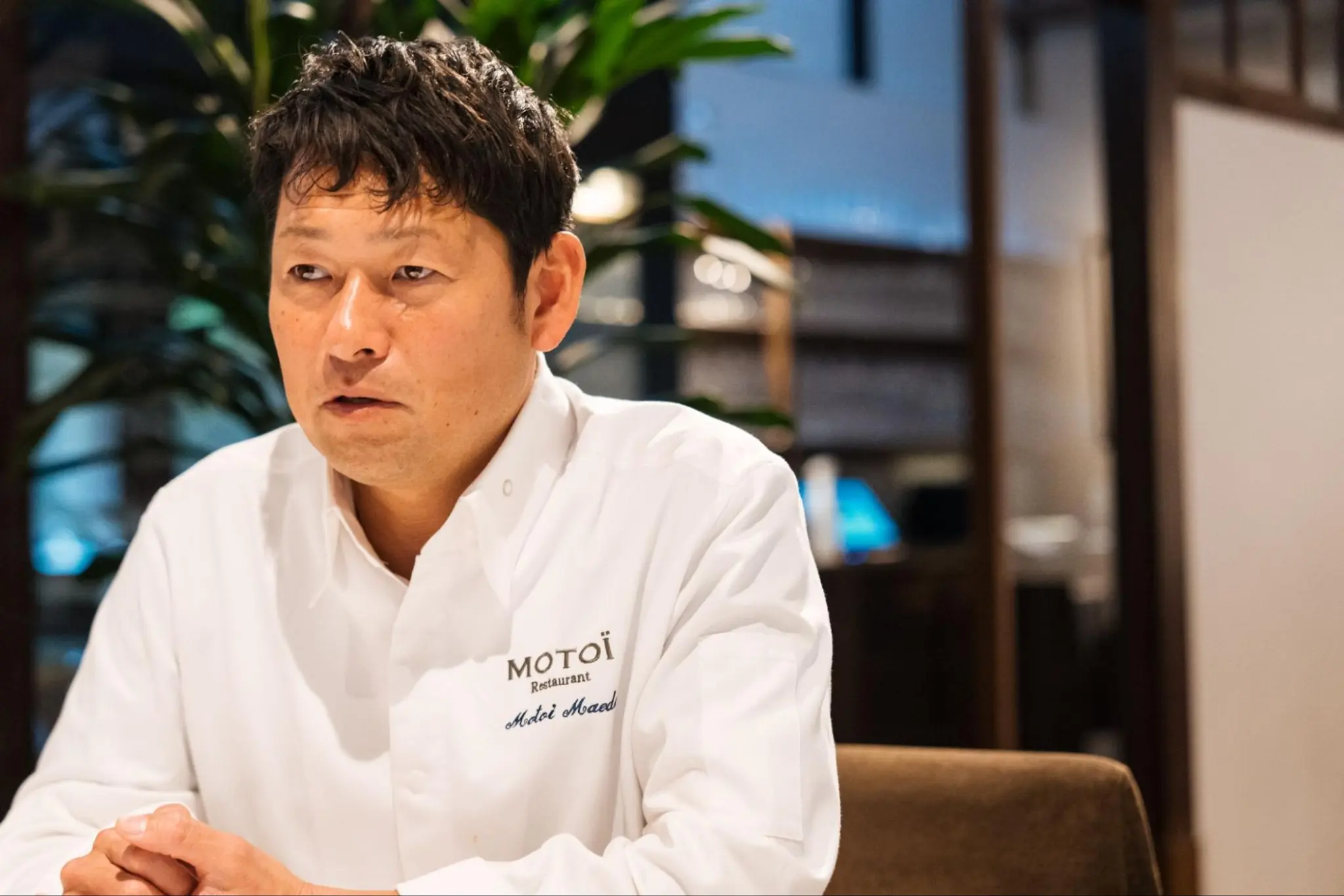
ーーーWhy have you expanded into various businesses such as mail-order and overseas locations?
When I think about whether restaurant culture is sustainable, I honestly believe it will be difficult. There is the issue of labor shortages due to the declining birthrate, and Japan has been in a prolonged deflationary mindset. With the rising costs of ingredients and labor, it is difficult to pass these costs onto prices. This led me to the idea of starting other businesses to secure a certain level of revenue while preserving restaurant culture.
Nowadays, there are more and more open-kitchen restaurants where chefs handle everything, including service. But for me, preserving restaurant culture is the only thing I focus on. Unlike the past, it has become a challenge to carry on this tradition, but I still believe in maintaining a closed kitchen where the floor is managed by dedicated service staff. I want 【MOTOÏ】 to continue being a "grande maison" while preserving the restaurant culture that has been passed down through generations.
I decided to open overseas locations with the idea that they would serve as a platform for staff aiming for independence, allowing them to showcase their skills and eventually stand on their own. In Japan, where there is a shortage of labor, opening new restaurants will only become more difficult in the future. Therefore, the stage for success will naturally be the global stage. If the young chefs who will carry the culinary world forward become independent overseas, it will also contribute to "preserving restaurant culture."
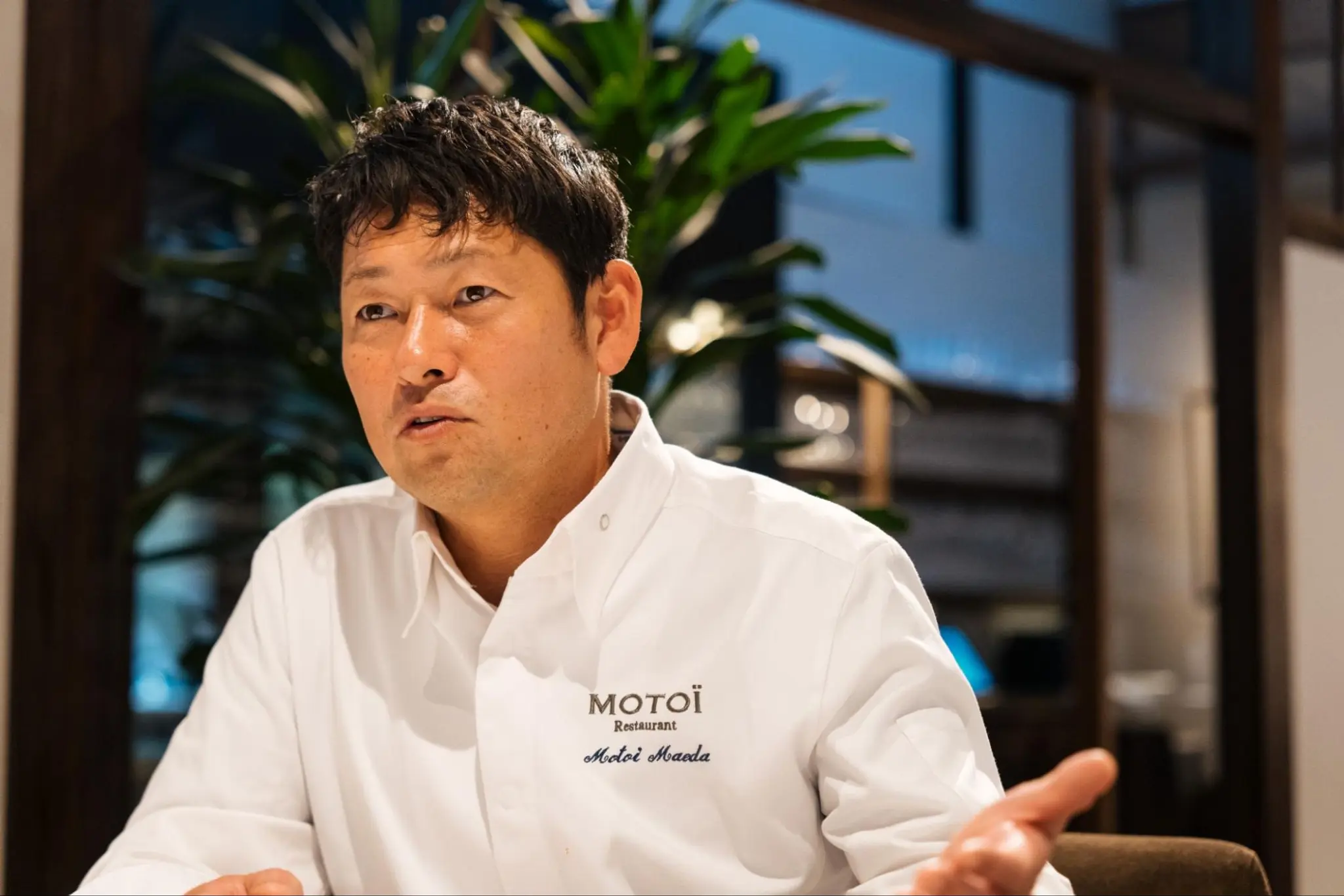
ーーーFinally, Mr. Maeda, what does "delicious" mean to you?
I believe what defines "delicious" is whether the dish carries "thoughts" behind it. A dish made with the chef’s thoughts has an incredible power that evokes emotions beyond just being "delicious." There are many dishes in the world that are considered "delicious," but I dislike dishes that lack intention. I don't appreciate food that’s made mechanically, like a chef’s meal prepared just out of necessity. Whether it's a dish for customers or a simple staff meal, if there is no visible intention behind it, I do not value it.
When I encounter a dish that only that particular chef could have made, and I feel the chef’s dedication, their pursuit of a unique world, and the care they’ve poured into it, my emotions can no longer be contained, and I can’t help but cry. Moving forward, I want to continue facing cooking with sincerity, pouring my thoughts into every dish, so that when people eat it, their souls are stirred, and tears naturally fall. This is the kind of food I want to keep creating and offering to my customers.
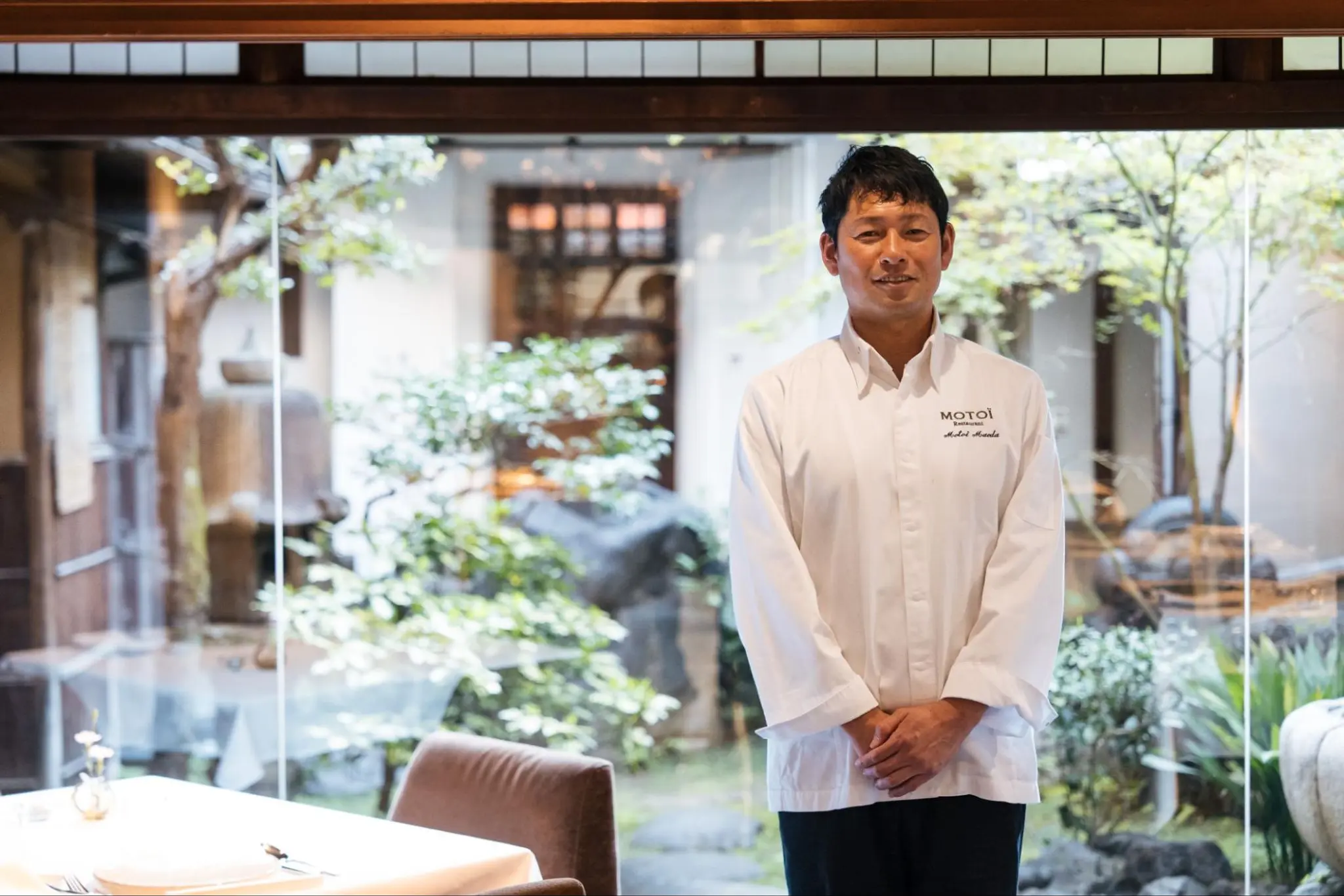
Both in the past and the future, Chef Motoi Maeda lives a rich and intense daily life. A middle school student savoring his homemade full-course meal at school. A young Japanese man wrestling with unfamiliar French while training in France. And a top chef who, while worrying about the decline of restaurant culture, continues to challenge himself for the next generation of chefs. Despite the differences in age and position, in each phase of Maeda’s life, one can see a boyish love for cooking that shines through. Before visiting 【MOTOÏ】, I highly recommend reading this interview again. Though he doesn’t say much in the restaurant, behind the deep flavors of the carefully chosen ingredients, you will surely find the heart of a chef who gives his all to hospitality.
Interview / AutoReserve Magazine Editorial Team
Text / Reiko Aoki
Photography / Masato Suzuki
Restaurant Information
- AutoReserve Magazine
- Japan’s world-renowned flagship restaurant
- The Unstoppable Challenge of Chef Motoi Maeda, the Owner-Chef of 【MOTOÏ】, Guided by His Passion for French Cuisine and His Pride as a Kyoto Native