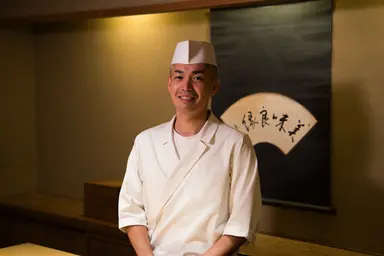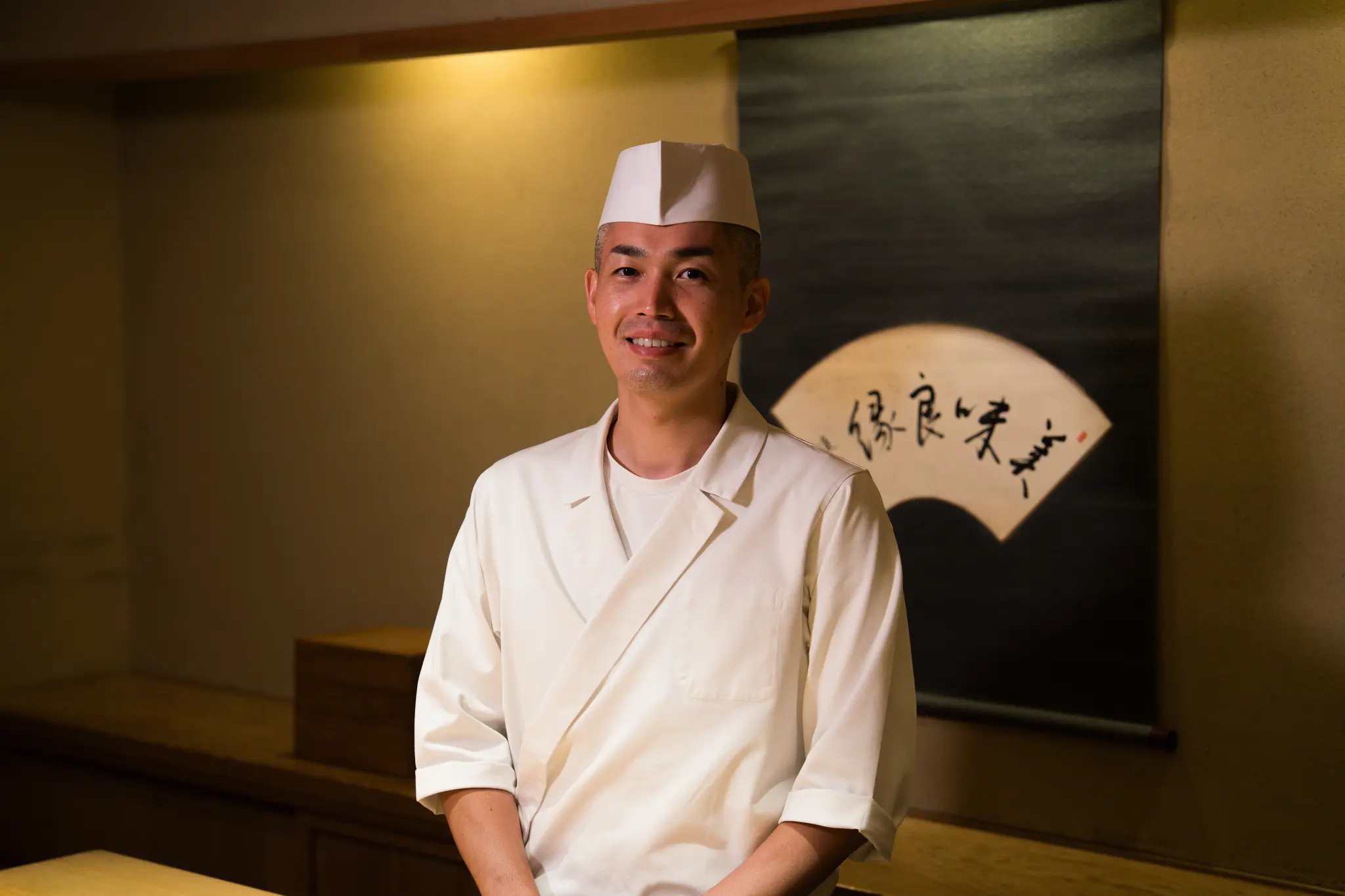
Turning Encounters into Cuisine: The Tableware and the Space Are All Part of the Dish—Chef Tomohiro Oyama of Godan Miyazawa on Japanese Cuisine
As if guided by fate, I found my way into the culinary world
What inspired you to become a chef?
My parents ran an izakaya in my hometown of Nakatsugawa, Gifu Prefecture, so food was a big part of my life from an early age. Still, it wasn't as though I had always consciously set out to become a chef. As high school graduation approached and I had to choose between continuing my education and finding a job locally, I realized that, rather than studying something at university or joining a company, what I really wanted was to become a chef.
I naturally associated becoming a chef with Japanese cuisine, so I decided that if I was going to study it seriously, I should go to Kyoto.
Could you tell us about your years of training?
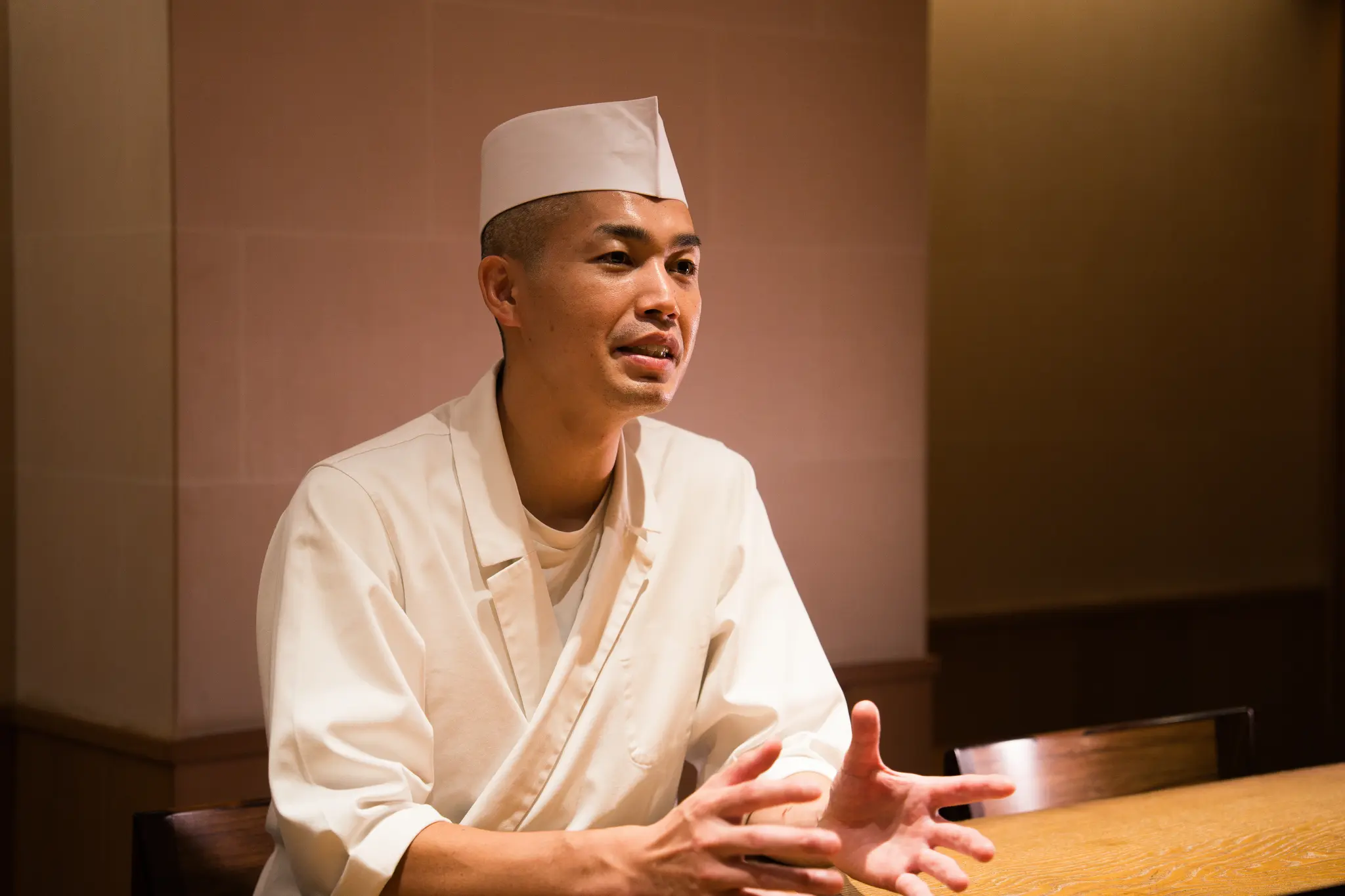
After graduating from high school, I studied at a culinary school in Kyoto for two years and then got a job at a Japanese restaurant, but I ended up quitting. I went back to my hometown and spent about a year just taking it easy. But I could never shake the feeling that I wasn't truly enjoying myself, so I decided to give being a chef another try.
Right around that time, a former senior colleague contacted me and said, “Would you like to work for Miyazawa? He wants you to start tomorrow.” I said yes, returned to Kyoto the next day, and I’ve been here ever since.
I found myself working at [Godan Miyazawa], almost as if I had been guided there. I was 27 at the time.
I trained under Chef Miyazawa, and when the COVID-19 pandemic struck partway through, I also helped launch online sales. Once that had settled down, our third restaurant, Doppo, opened and a new head chef took over. A year later, I became sous-chef. That was eight years after I began my training.
Discover the beauty that lies beyond cuisine
—Were there any ways in which studying under General Miyazawa changed your perspective or influenced you?
It's a bit too abstract, but everything.
In particular, I was deeply influenced by the way you value beauty and emotion that can be conveyed without putting everything into words—or even without words at all.
Until then, I had thought that all that mattered was for the food to taste good, but that belief was completely overturned. I learned about things like graceful conduct, the setting, and the tableware. I realized that focusing solely on the food was not enough.
At first, I couldn't even understand what people were saying to me, and I felt discouraged every day. But now I realize how important it was to keep going.
I am who I am today because I kept going.
Even if you think you won’t understand it, experiencing it firsthand can spark your interest and lead you to do things like buy some pottery yourself. Taking that kind of positive action can bring new insights and encounters. I think that is an important and fascinating part of learning.
Chef Miyazawa delights his guests with the things he himself truly loves. I have learned so much from that approach as well.
Now that Mr. Oyama has taken over as head chef, is there anything you are particularly mindful of under the new leadership?
I hope to convey the idea of “beauty in its many forms” through my own unique expression. This includes not only beauty that can be seen, but also things we perceive beyond the visual, such as atmosphere. I express what I have experienced and felt, and I would be delighted if it brings joy to our guests. To me, a dish is only truly complete when it encompasses the entire dining experience.
Turning every encounter into a dish
Could you tell us about your cuisine and what you consider important when designing a course menu?
I cherish every encounter.
Not long ago, a farmer came to visit and told us about the vegetables they grow. We asked them to send us a selection of everything.
We look at what actually arrives and use our own instincts to try out those vegetables. Even if they don’t make it onto the menu right away, they may inspire a future dish—or we may simply enjoy eating them ourselves. That’s how they lead to all kinds of uses and new ideas.
In that sense, I also value what I perceive through the five senses. When it's hot, I crave something cold, and sometimes the autumn breeze and scents inspire me to think, “I could make something delicious with chestnuts.”
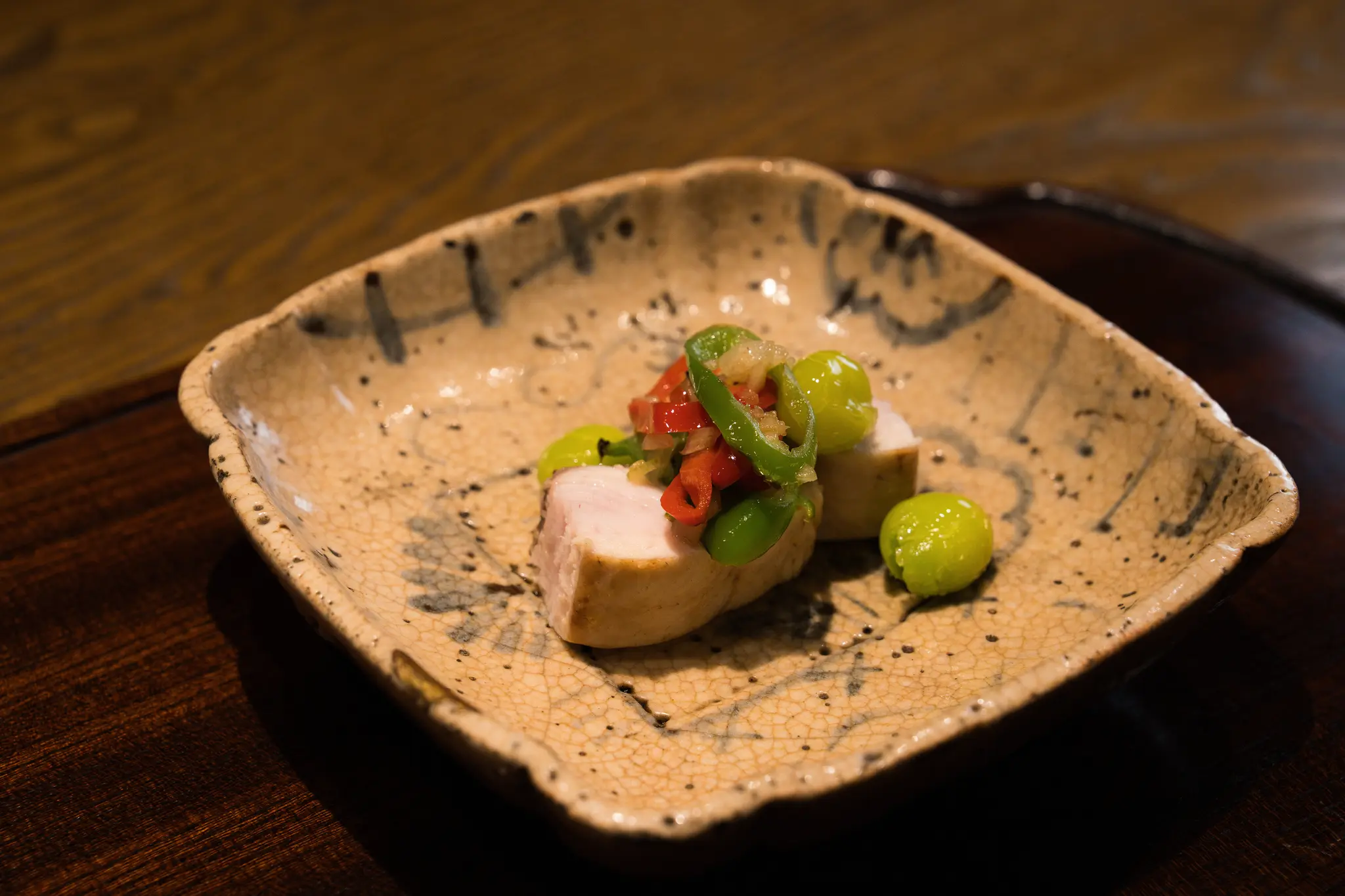
There’s a greengrocer nearby called Midorinasu. I go there and look at the vegetables right in front of me. As I browse what’s in season, I might think, “These two would taste great together,” or remember what kinds of fish are available at this time of year and give the fishmonger a call. They might then say, “This is what came in today,” or suggest, “We’ve got something interesting.”
I think about what I can create in the moment, cherishing the ingredients at hand, the season, and the connections that bring people together.
—Are you particular about where you source your ingredients?
As for fish, we mainly source ours from Mie and Oita Prefectures.
There is a fishmonger in Mie Prefecture called Marufune Suisan, and we have been doing business with them for over 20 years. Our relationship with them goes back to before I joined, and they mainly deliver fish to us twice a week.
In addition, we also source fish from Kimura Sengyo (Kimura Masatoshi Shoten) in Oita. They airfreight us fish that are hard to come by in Mie, such as longtooth grouper and white tilefish.
We use vegetables from Kira Farm in Hyogo Prefecture.
Of course, greengrocers also stock vegetables from Kyoto. We do use them, and if they have anything good, we buy it.
I'm excited to think about all the new people I'll meet in the future.
The tableware and the setting are all part of the cuisine.
Please tell us if there is anything you are mindful of when handling the equipment.
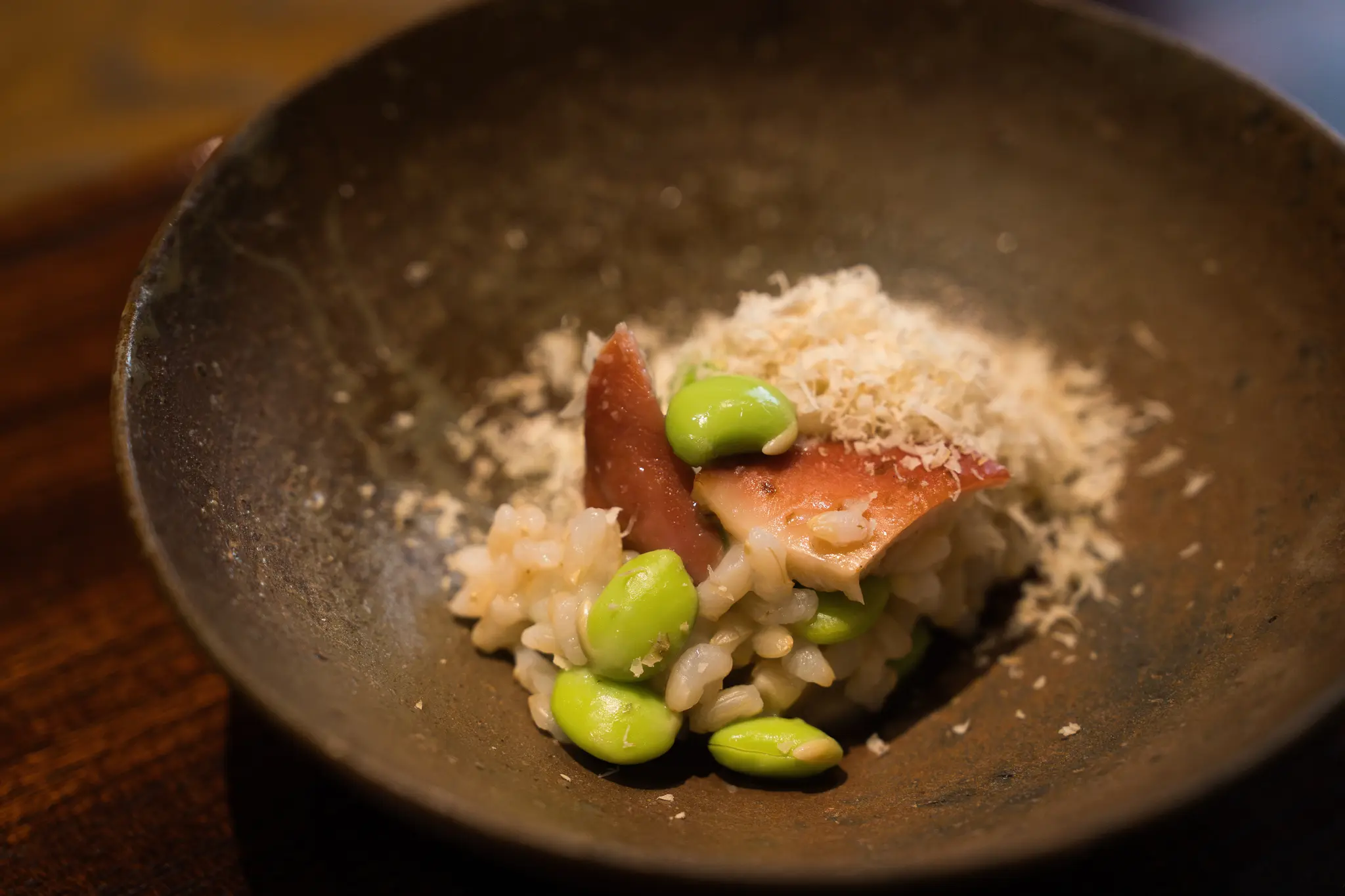
What I pay attention to is the balance between the food and the dishware.
We consider the portion size as well. For example, if someone wants to grill a particular fish and serve a certain amount, we think about what kind of dish would be best suited to it.
I think Japanese cuisine looks especially beautiful when the empty space and margins within the dish are carefully defined. So I begin by visualizing the dimensions.
When planning the course as a whole, for example, I try not to use two blue-and-white dishes of the same size. Even if I do, I serve them at different points in the meal, or in summer I might use glassware. Conversely, I might start with a lacquered dish. Those are the kinds of things I consider. Sometimes, the moment I see a particular dish, I think, “Food would look delicious served in this.”
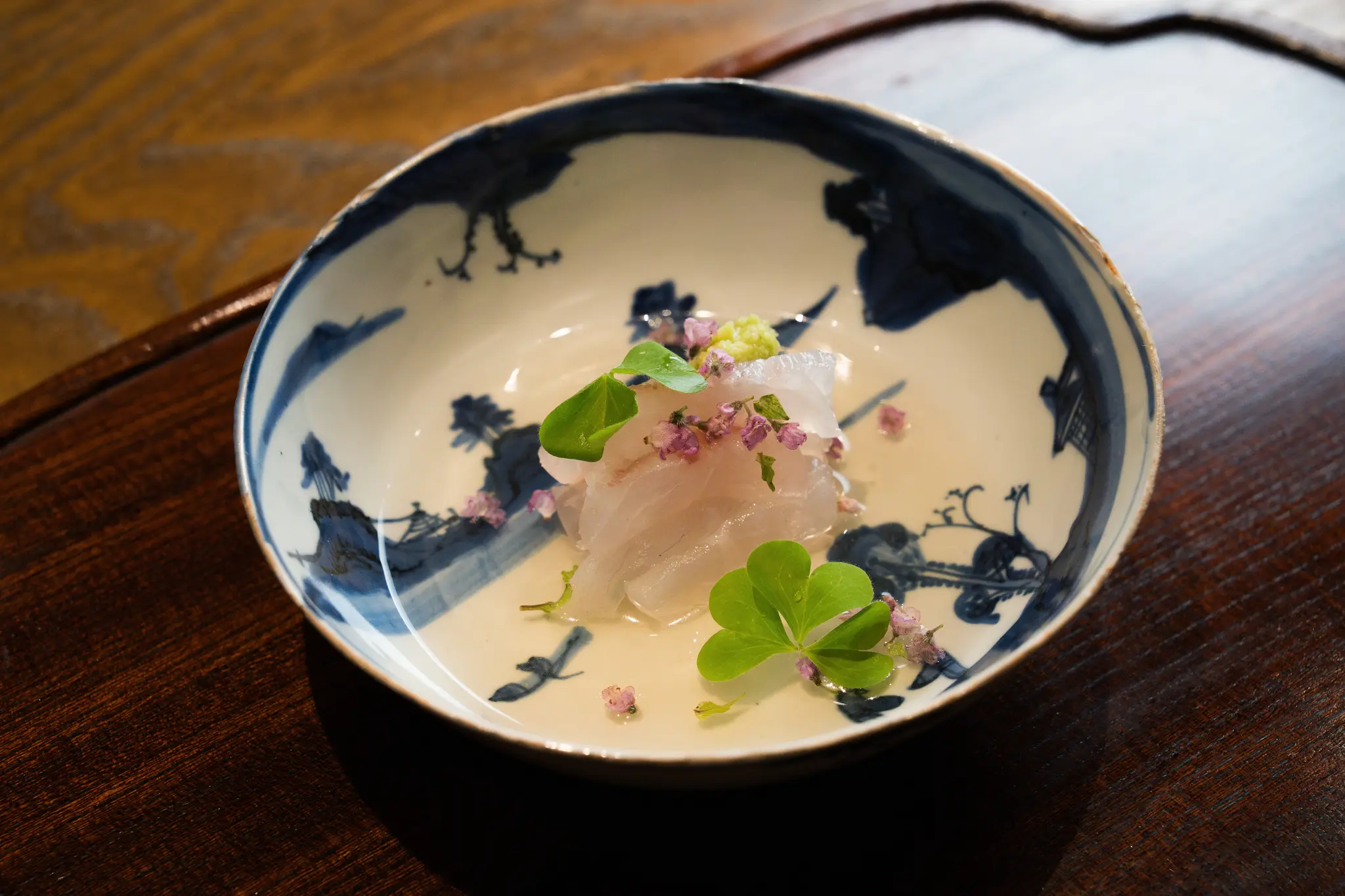
When I visit an antique shop, even if I leave without buying anything that day, looking at the dishes can inspire ideas for cooking—like, “It would be delicious to spread some white miso on the bottom, grill butterfish on top, and serve it covered with a lid.”
We don't go so far as to replace all the tableware with each season, but we do switch out a few pieces here and there. For example, we sometimes exchange certain pieces with Jiki Miyazawa or Doppo. That's one way we adapt our tableware to the season.
Could you also tell us about any particular preferences you have regarding the space?
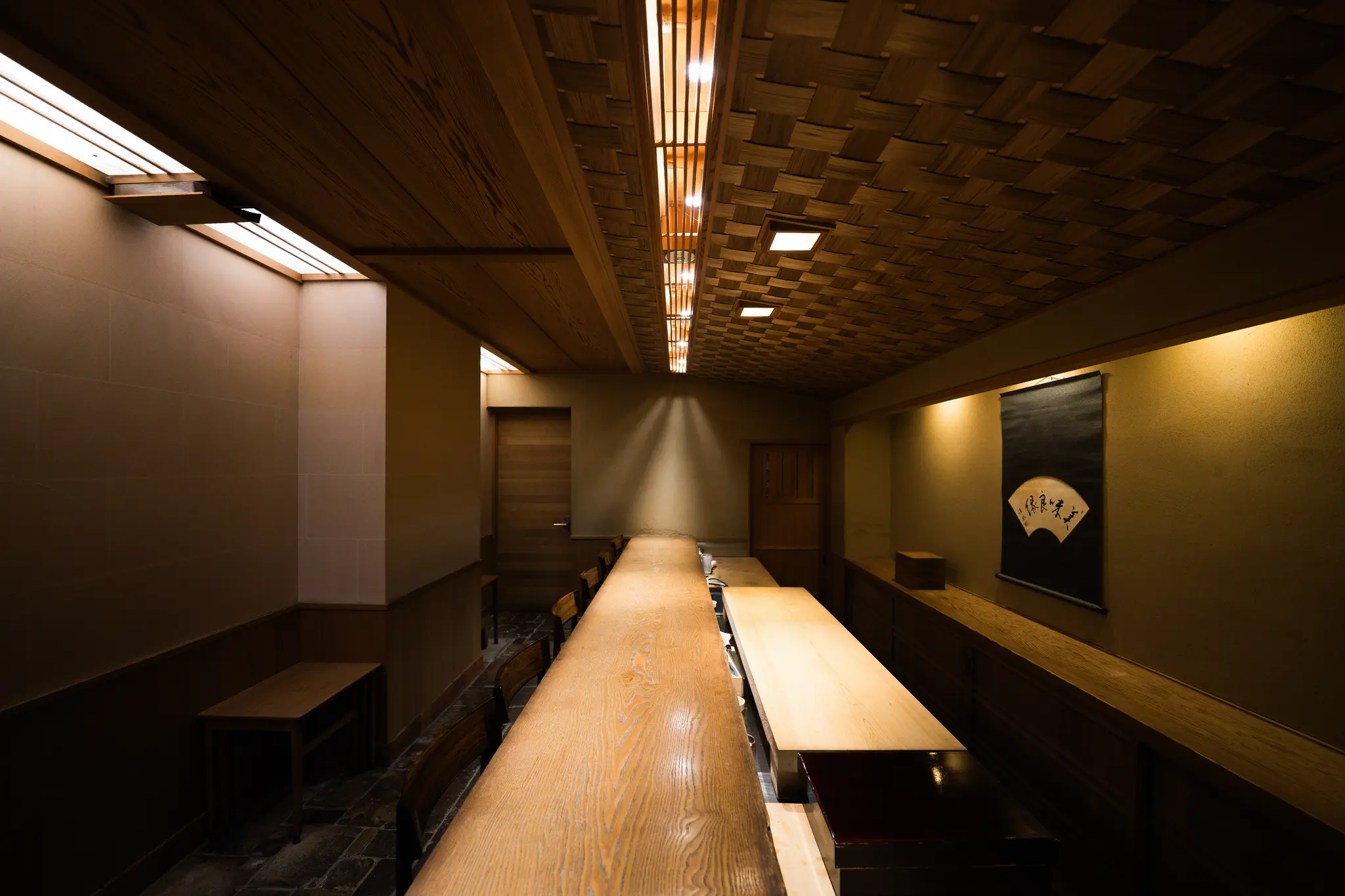
The interior features earthen walls and Mino washi paper, while the counter is made from a single slab of chestnut wood. The ceiling is woven from Kurobe cedar and has a slight slope, creating a cohesive sense of space.
Apparently, General Miyazawa had always wanted to create a ceiling like this.
There are very few craftspeople left who can assemble this. The Kurobe cedar hegi-ita—thin, hand-split wooden shingles—are also extremely rare. We brought in a craftsperson from Kyushu, who completed the work over the course of a week.
Please share any message you may have for guests regarding their stay.
The earthen walls create a calm and relaxing atmosphere inside.
We hope that, in this space, we chefs and our guests can come together as one and enjoy the food. It is about sharing the dining experience—we believe that this, too, is an integral part of the cuisine.
If I may say so myself, I think it's a wonderful space, and I'd love for everyone to experience it.
Not just carrying on the legacy, but shaping the future
—What are your plans for the future?
I want to keep striving to go above and beyond what our customers expect.
First and foremost, I want to explore even more deeply what I can offer our customers and how I can make them happy, until I can take greater pride in it than anyone else.
It might be food, flowers, tableware, or tea. I don't know if there's one definitive right answer.
I want to live without putting on airs. Rather than embracing anything contrived or artificial, I want to stay true to myself and value what comes naturally from within.
Could you share your thoughts on the potential of Japanese cuisine and the preservation of its cultural traditions?
I hope we can create an environment where more young people have opportunities to experience Japanese cuisine. In fact, I’ve found that even among young people aspiring to become chefs, quite a few have never actually gone out to eat Japanese food. Hearing stories like that makes me feel that they should have the opportunity to experience Japanese cuisine at least once.
I hope those who are about to become chefs have experiences that make them realize just how wonderful the work they are embarking on truly is. If they do, perhaps more people will aspire to become chefs in the future, and they may each go on to support Japanese cuisine in different places.
I think the experiences we have when we're young can sometimes stay with us forever. I still remember the very first restaurant I ever visited.
Of course, this may not resonate with everyone, but I hope it can serve as a starting point and give more young people the opportunity to appreciate the appeal of Japanese cuisine.
I think that, not just with Japanese cuisine, if younger generations had more accessible opportunities to experience and learn about a wide range of things, those accumulated experiences would help lay the groundwork for the future.
For example, last year there was a period when rice prices soared and it became difficult to obtain. Even so, Japanese people still sought it out. That shows just how deeply rice culture has been rooted in Japan for generations. We want to give people an opportunity to discover just how delicious rice can be.
Japanese cuisine can be expensive and intimidating, which I think can limit opportunities for younger generations to experience it. With that in mind, please tell us what you personally can do to help.
We originally charged 13,500 yen for lunch, but we revised the price to 8,000 yen. When we thought about what we could do, as I mentioned earlier, we decided that we wanted to create an opportunity for more people from all walks of life to experience Japanese cuisine.
The shop has a wonderful space, so I believe there is a lot we can do—it all depends on our own creativity and ingenuity.
We hope that people, especially those in their teens, twenties, and thirties, will have the opportunity to experience Japanese cuisine.
Lastly, Mr. Oyama, what does “delicious” mean to you?
“Things That Enrich the Heart”
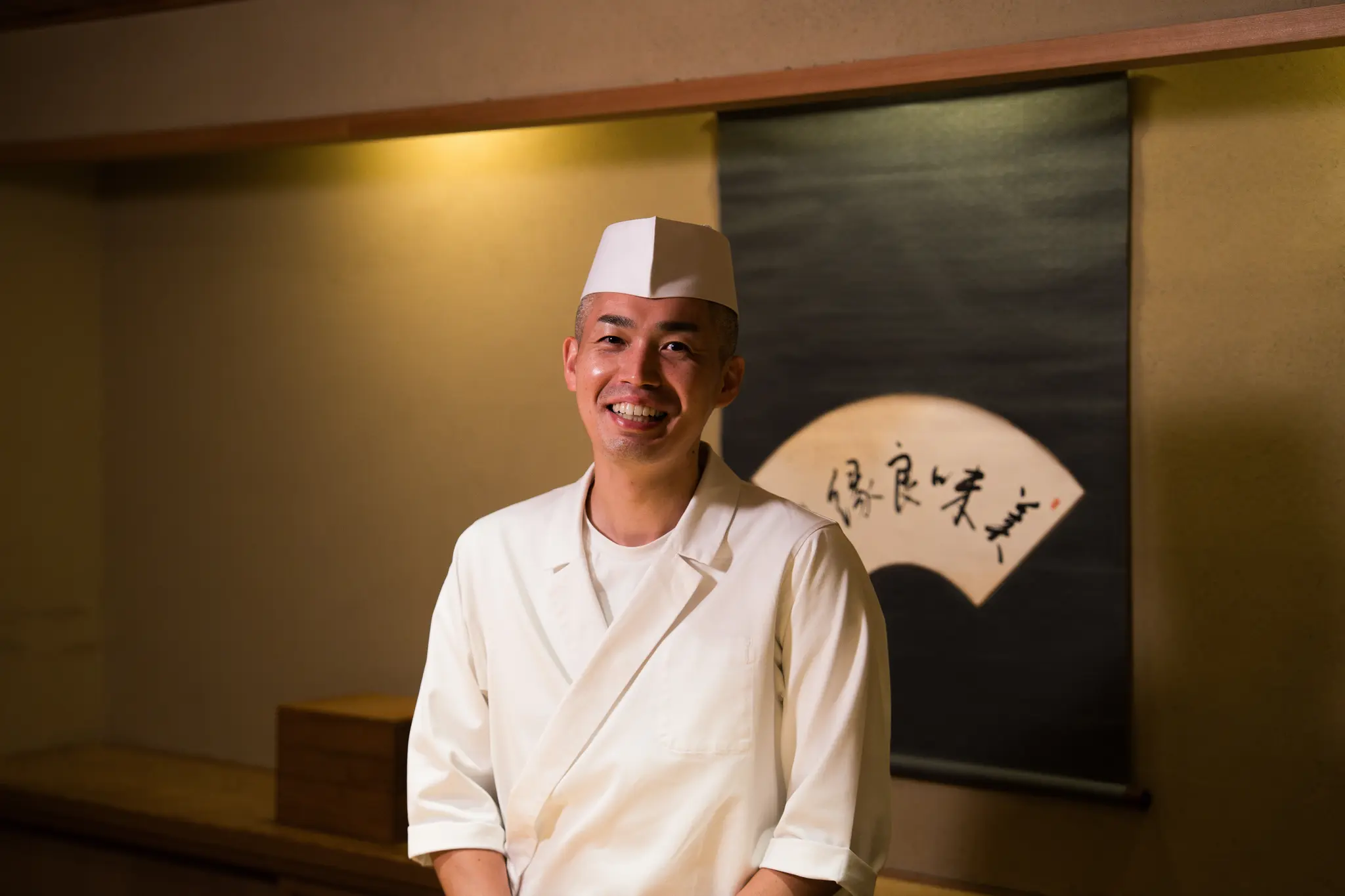
Mr. Oyama sees the dining experience as more than simply pursuing great flavor; it encompasses the tableware, gestures, setting, space, and even the connections between people. At the heart of his approach is a desire to cherish the ingredients, seasons, and encounters before him, and to express something that could only come into being at that particular moment. His words—“Live without putting on airs” and “I want to remain true to myself and value what comes naturally from within”—also reveal his attitude toward cooking. With a desire to share the appeal of Japanese cuisine with younger generations, what kinds of dishes will he create next? Mr. Oyama’s journey invites us to reflect not only on the food itself, but also on the richness of the time and experiences that surround it.
Reporting and Writing / AutoReserve Magazine Editorial Team
Photography / Shoichi Baba
Store Information
- AutoReserve Magazine
- Restaurants recommended by top chefs
- Turning Encounters into Cuisine: The Tableware and the Space Are All Part of the Dish—Chef Tomohiro Oyama of Godan Miyazawa on Japanese Cuisine