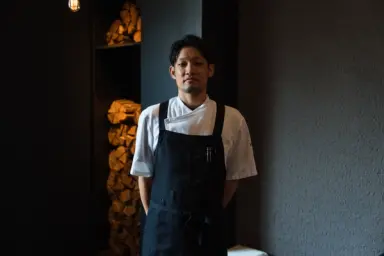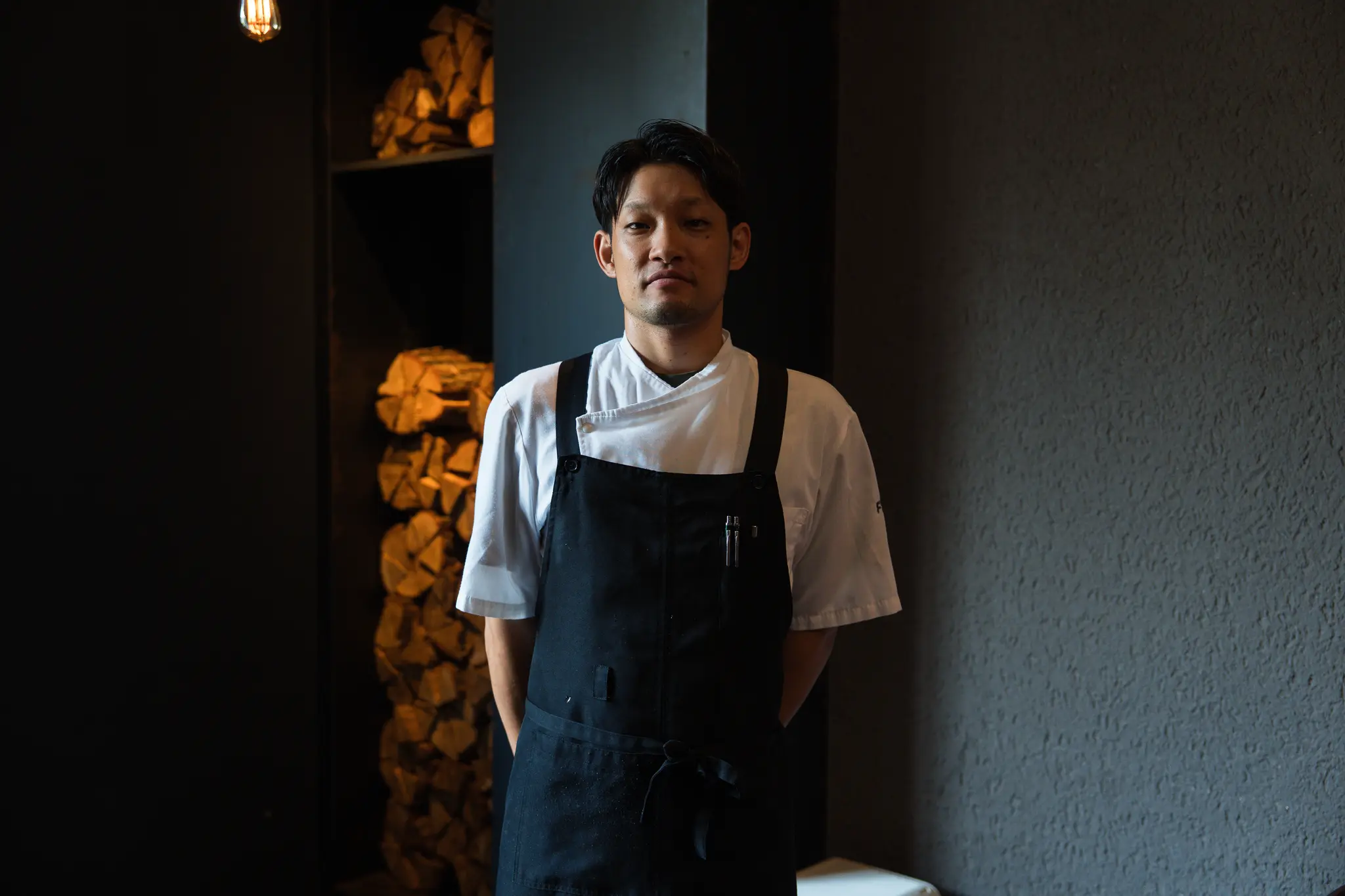
Wood-Fired Cuisine at FORNO, Where Carefully Selected Tottori Ingredients Meet Glowing Embers: Kensaku Mineo on Creating Memorable Deliciousness
My Mother's Cooking Inspired My Love of Food
— What inspired you to become a chef?
I suppose it all started with my mother, who often cooked and baked at home. Everything she made was delicious, and I think that naturally sparked my interest in cooking. Before long, I found myself wanting to help her with the baking. I had wanted to pursue a career in cooking since I was in junior high and high school.
I loved sweets, so I decided to attend culinary school to learn how to make them. I chose a school where I could study everything from pastry-making and Western cuisine to Chinese and Japanese cooking, and went ahead and submitted the application on my own.
As I learned more and more at school, I gradually developed a love for Italian cuisine, and that was really the beginning of my career as a chef.
— Could you tell us about your years of training?
After graduating, my first job was at a pizzeria in Kichijoji, where I gained the foundational experience that shaped me as a chef. I was also fortunate with the timing, and in just two or three years, I gained experience that would normally take several years to acquire.
After leaving that restaurant, I was looking for my next place to work when I went to dine at 【TACUBO】. The food conveyed a simple, unmistakable sense of deliciousness, and it blew me away. Right then and there, I told Chef Takubo (Daisuke Takubo, owner of 【TACUBO】), "I came here looking for a place to work." I think meeting Mr. Takubo has had the greatest influence on who I am today.
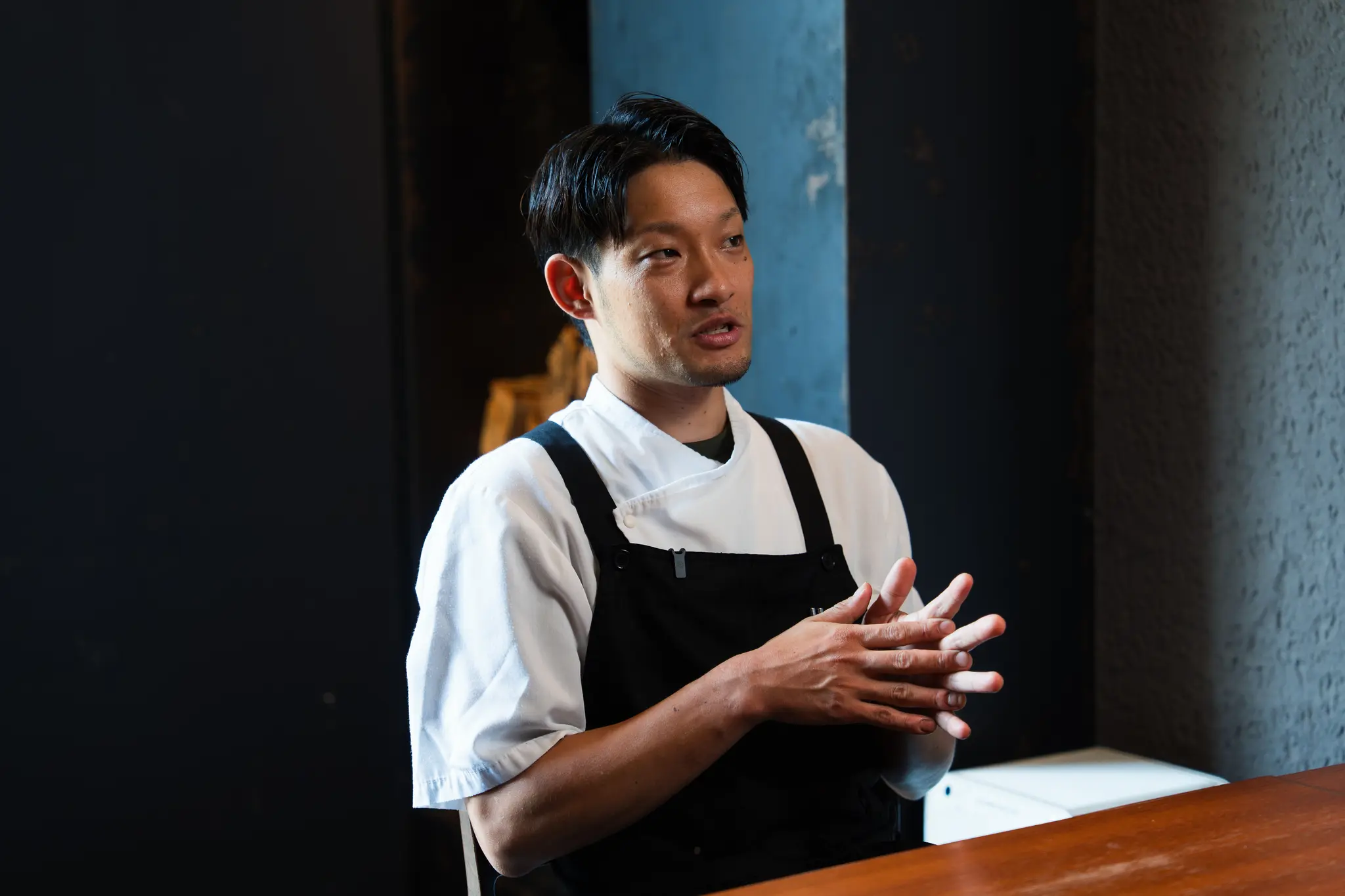
The Flexibility to Adapt to Change, Honed Under Chef Takubo
— Do you have any stories from your time at TACUBO?
TACUBO is now located in Daikanyama, but at the time it was still in Ebisu, before the move. Back then, there were two restaurants in the same building—a ristorante and a trattoria—and I had the opportunity to gain about a year of experience at the trattoria.
At first, it was a simple trattoria, but along the way, he was always thinking ahead—considering ideas like staying open late and changing the name—and I felt that Mr. Takubo was a very quick thinker.
Even during service, he'd say, "Do this," and then move straight on to the next thing. He made decisions and switched gears incredibly fast, and back then, I'll admit, I was pretty much just trying to keep up.
There were some difficult moments during my training, but looking back now, I'm impressed not only by the speed of the decision-making, but also by the drive to put those decisions into action. In retrospect, I realize once again that the experience has become a source of strength for who I am today.
The same applies to management. That experience strengthened my flexibility—or rather, my ability to respond when unexpected events occur or things take an unforeseen turn—and I think it also made me less easily intimidated. I learned to prepare for anything that might happen at any time, while keeping the worst-case scenario in mind, so that I can perform at my best.
Unexpected situations are inevitable in both cooking and customer service. What matters is how you respond when something happens and whether you can adapt. I think that experience helped me develop that kind of mindset.
— How did you come to train at your other restaurants?
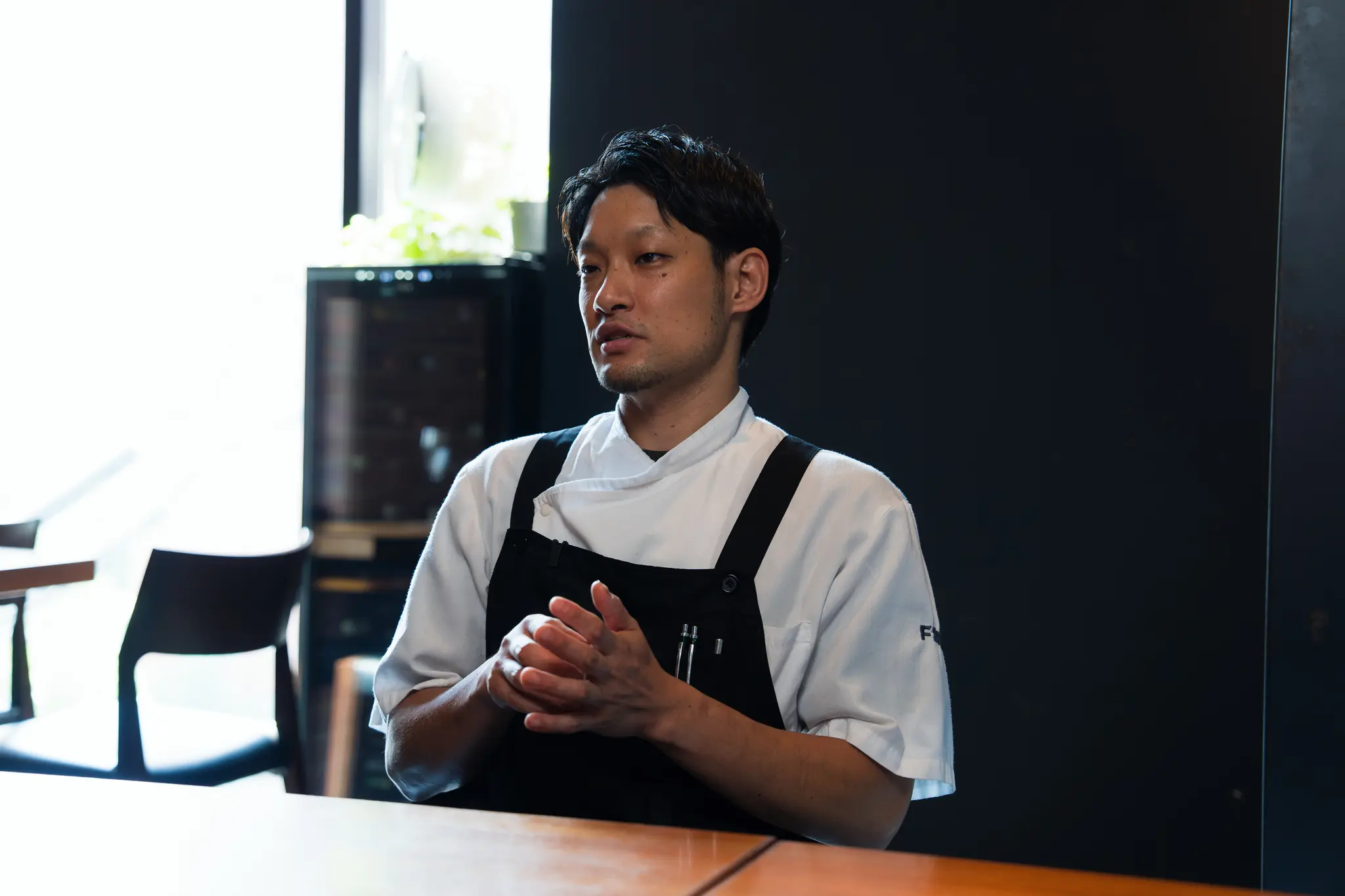
When I had been working at TACUBO in Ebisu for just under two years, the trattoria was set to close temporarily. I was asked if I wanted to stay on at the ristorante, but I was the kind of person who wanted to gain a wide range of experience.
Around that time, I had become interested in a bistro, also in Ebisu, that prepared and butchered a whole pig every week and used every last part of it in its cooking. I think there are only a handful of places that truly resonate with my interests, and it also comes down to connections and timing. I’m the type of person who acts immediately when something just clicks, so I moved on to a new place to continue my training.
I worked there for about a year and was even asked if I wanted to become the chef. But then a senior chef who had looked after me during my time at the trattoria invited me to help him open a new restaurant. I thought it would be a great opportunity to experience launching a restaurant from the ground up, so I left the bistro and joined him for the opening of his new place in Yoyogi-Uehara, where I worked for about three and a half years.
Later, a senior colleague from the first pizzeria I worked at invited me to become the chef at a new restaurant in Daikanyama built around the concept of using Italian and Okinawan ingredients. With the support of the team in Yoyogi-Uehara, I moved on and worked there for about two and a half years.
— After working at various establishments, did you reconnect with Mr. Takubo?
That's right. While I was working at a restaurant in Daikanyama, Mr. Takubo approached me about 【FORNO】. Even after I left 【TACUBO】, he continued to look out for me and would get in touch from time to time.
The Origins of FORNO
— Could you tell us about the early days, such as how you chose wood-fire cooking as your technique and decided on the concept?
FORNO was born from the idea of bringing ingredients from Tottori to Tokyo and, eventually, sharing them with the world. Executives from various companies, each working with different products from Tottori, came together and decided to create a restaurant as a team.
At first, we envisioned a teppanyaki-style concept. At the time, Ikinari Steak was booming, and as we continued our discussions, the idea of grilling steaks over a wood fire came up.
Since the president ran a company involved in meat wholesaling and related businesses, we decided on a concept where guests could enjoy a hearty steak cooked over firewood.
No Two Days Are the Same—The Profound World of Firewood and Flame
— What are the unique appeals and challenges of wood-fire cooking, and how do you feel it compares with other cooking methods?
A question we often get from customers is, "How is it different from charcoal?"
The easiest way to understand it is that firewood is essentially just wood, so it differs from charcoal in how it is processed, the characteristics of the fire it produces when burned, and its density.
Once lit, charcoal can easily maintain a consistent temperature and heat output, and it burns for a long time.
In contrast, the way the fire's characteristics change dramatically depending on how dry the firewood is makes it both fascinating and challenging.
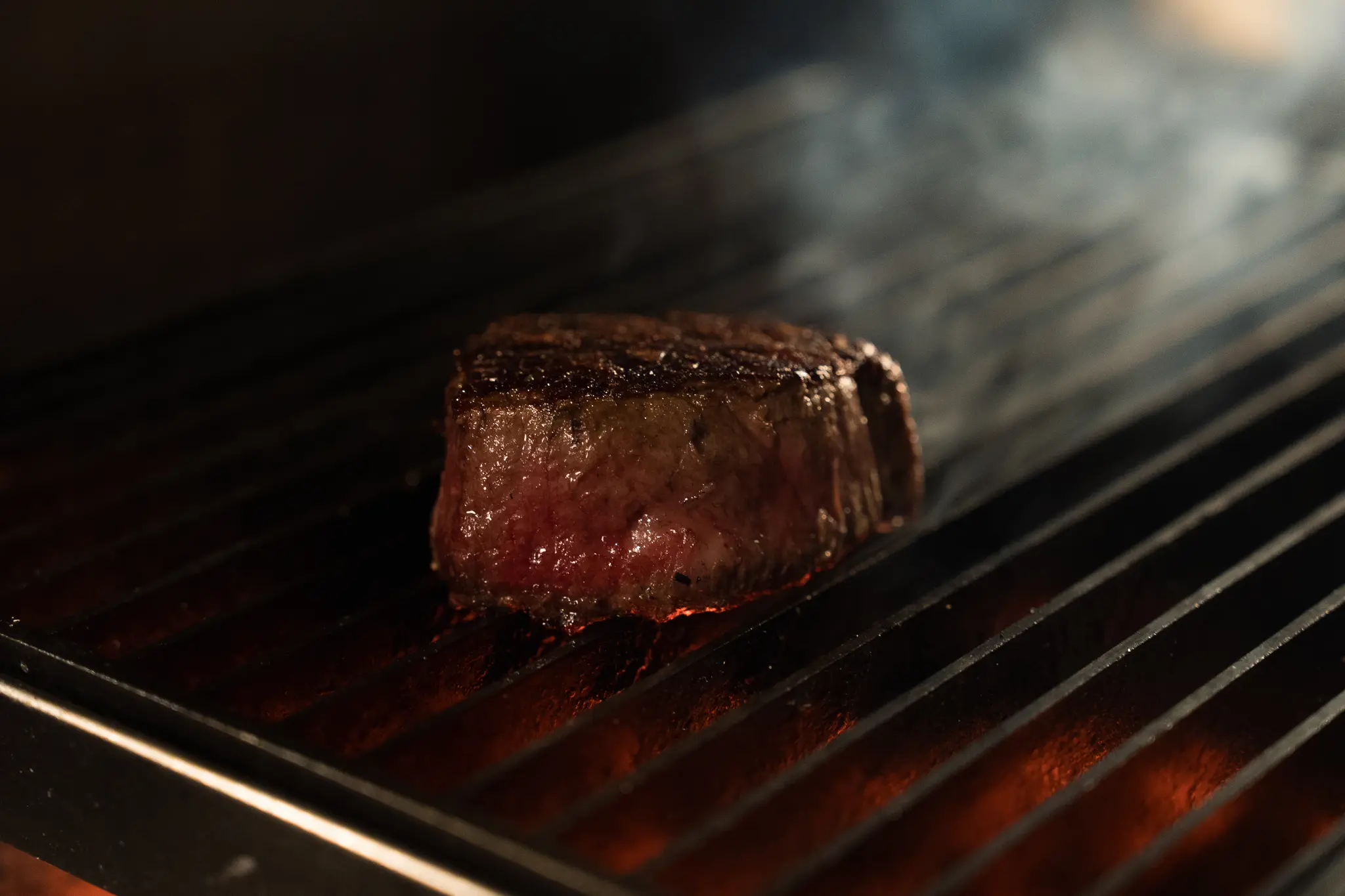
We specifically use what is known as "okibi"—the glowing red embers left as firewood finishes burning—as our heat source. Since we grill our steaks over these embers, we can't cook steak here without first creating okibi.
The process of preparing those embers also varies depending on the season, humidity, and condition of the wood.
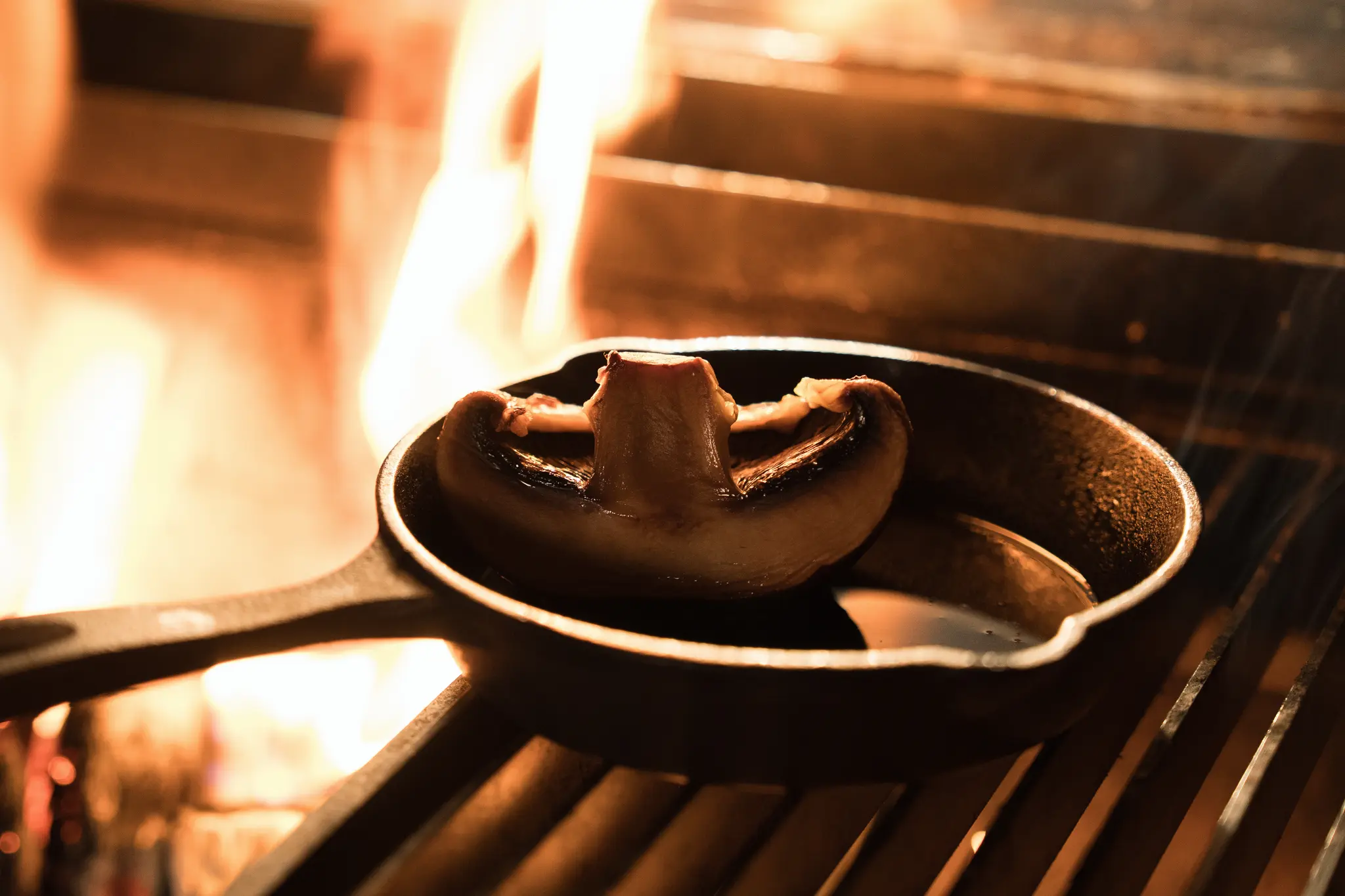
Besides steak, we also cook vegetables, mushrooms, and other ingredients, using different cooking surfaces and heat sources depending on what we're preparing. No two days are ever exactly the same. That's part of what makes it interesting, but knowing how to adapt can be challenging.
— Are there any key tips for assessing the firewood and the flames?
We generally use hardwoods, which are dense and heavy. At the moment, we use Japanese oak.
Other hardwoods commonly used for wood-fired cooking include sawtooth oak, cherry, and evergreen oak. Because their wood is dense and burns for a long time, they provide strong, steady heat.
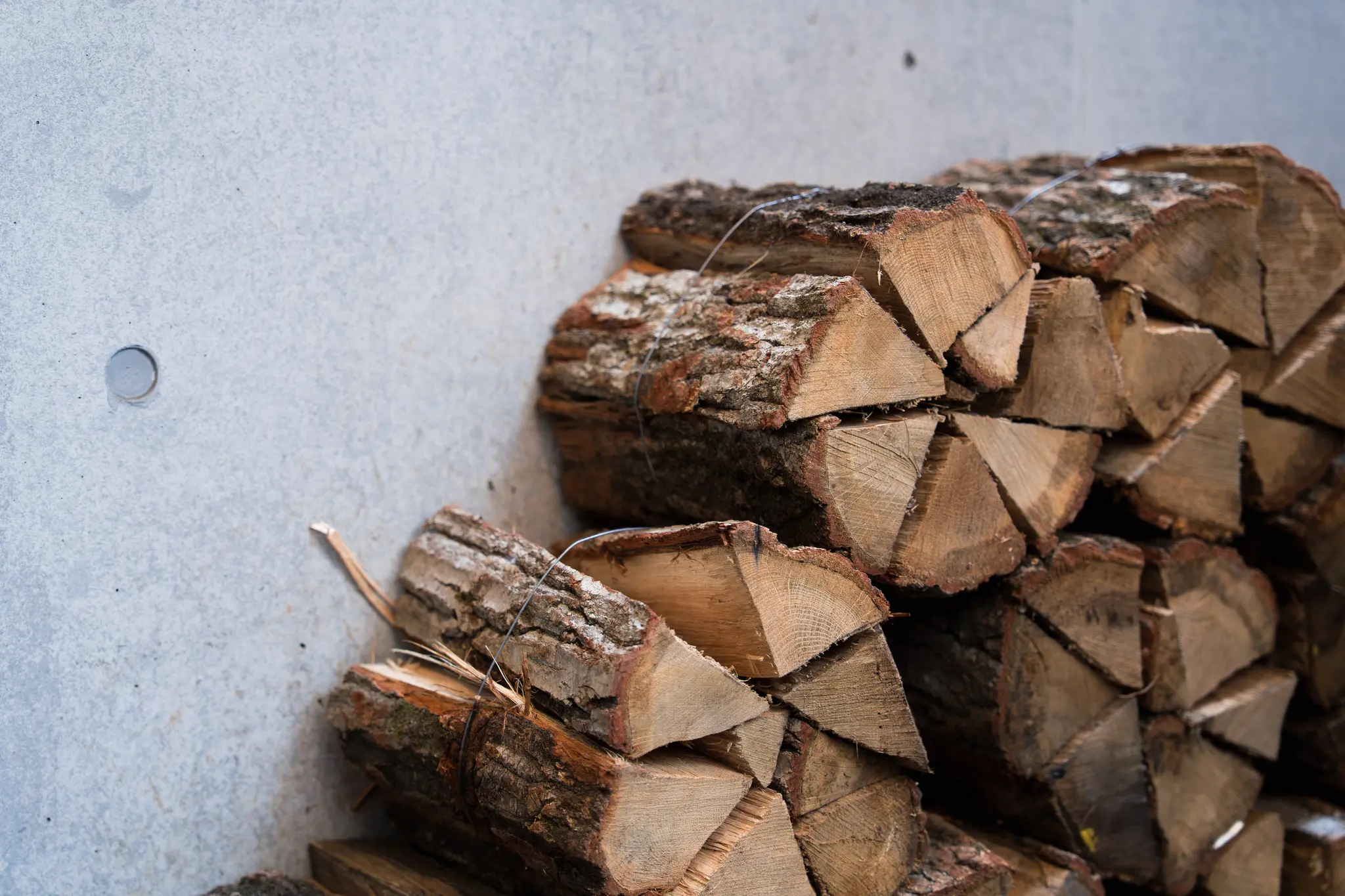
Conifers such as cedar are often used in places like pizzerias. Because the wood is low-density and lightweight, it produces intense heat for a short time.
There used to be very few restaurants with wood-fired ovens, but over the past five or six years, it feels like their numbers have grown rapidly. That said, every restaurant uses firewood in its own way, and I think part of the appeal of wood-fired cooking is being able to enjoy those differences.
The shape and size of the wood-fired oven can vary, as can where the meat is cooked, and some restaurants use a conventional oven instead of a wood-fired one. Since the way heat is transferred affects how the meat and vegetables cook, each chef and restaurant takes a different approach, and that's part of the appeal.
A Challenge Born from a Passion to Share Tottori's Ingredients with the World
— Could you tell us about when you first opened your business?
At first, we were really hanging on by a thread. Things were chaotic from the moment we opened, and to begin with, we were understaffed.
We lost one of our staff members just before opening. We knew we couldn't manage with only two people, so we scrambled to bring in extra staff at the last minute. We were also starting out with absolutely no name recognition, of course, so it was tough.
And then, almost immediately, the COVID-19 pandemic hit. Shortly before that, I had been given the opportunity to appear on the cover of Tokyo Calendar. That raised my profile, and just as I was finally starting to gain momentum, businesses were asked to close, and I was forgotten in an instant.
Of course, I’m sure industries other than food and beverage were also going through a difficult time, but we somehow managed to keep the restaurant going with help from people we knew and the connections they introduced us to. We’ve truly been blessed with good timing and fortunate encounters, and I feel that we’ve been supported by so many people.
At first, we stayed open late at night as well, but since hardly anyone knew about us, we were lucky to get one group a month—or maybe one a week. Having opened the place, I couldn't just quit right away, and of course I knew that results wouldn't come overnight. Still, I was constantly wondering, “What should I do? How should I go about this?”
— How was the location chosen?
The main reason we opened in Nishi-Azabu was that we were able to install the necessary facilities for using firewood inside the restaurant. This location became available as a property that could accommodate wood-fired cooking.
— Please tell us about any particular care you take when selecting ingredients.
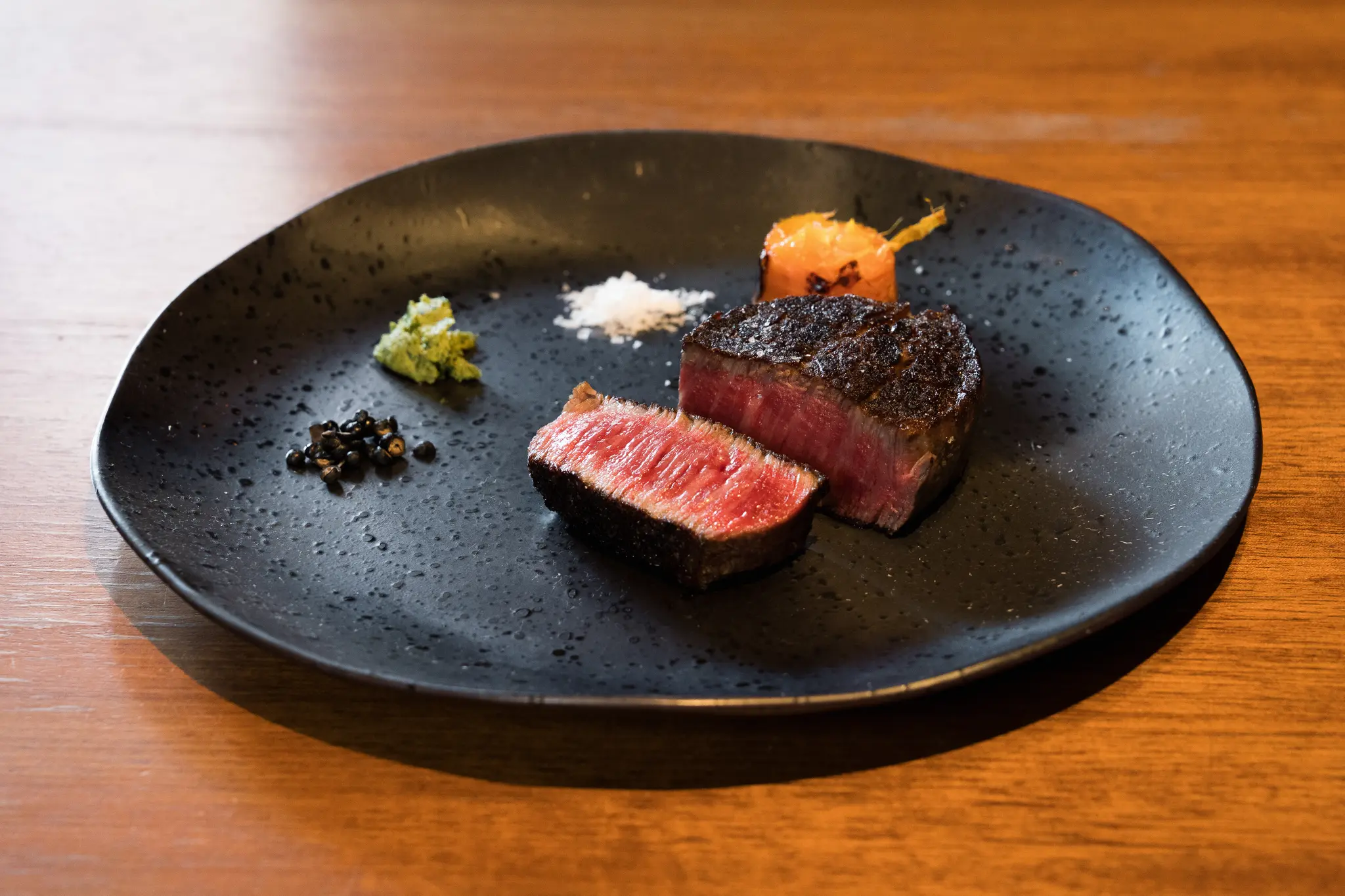
Our company's mission is to bring the best of Tottori to Tokyo and the world, so naturally, when it comes to meat, we primarily use Tottori wagyu beef.
It is based on beef from cattle branded as "Tottori Wagyu Olein 55." As the name "Olein 55" suggests, it must meet a standard for oleic acid content, similar to olive oil, and is certified as beef containing at least 55% oleic acid as its primary fatty acid.
Regular fats solidify when chilled in the refrigerator. The fat in Olein 55, however, has a low melting point—much like olive oil—so it doesn't solidify as easily, melts smoothly in the mouth, and is less likely to feel heavy on the stomach or linger into the next day. This light, smooth fat is what makes Olein 55 so delicious—and is its key selling point.
These cattle originally share the same roots as breeds such as Matsusaka beef and Kobe beef, although they are raised using a different approach.
Other ingredients, including vegetables and seafood, are also primarily sourced from Tottori, though we procure certain items from outside the prefecture as needed.
Eat What You Want, When You Want It
— Do you have any particular approach to the food, such as how you design the menu?
Initially, the idea was to simply enjoy a hearty meat-focused meal with some wine and stay for about an hour and a half.
However, many of the people who come to this area tend to have plenty of time to spare, so we thought we might as well expand our selection of appetizers. Now we offer around six cold and six hot appetizers, as well as dishes to finish the meal. Too many choices can make it hard to decide, so I think the current selection strikes just the right balance.
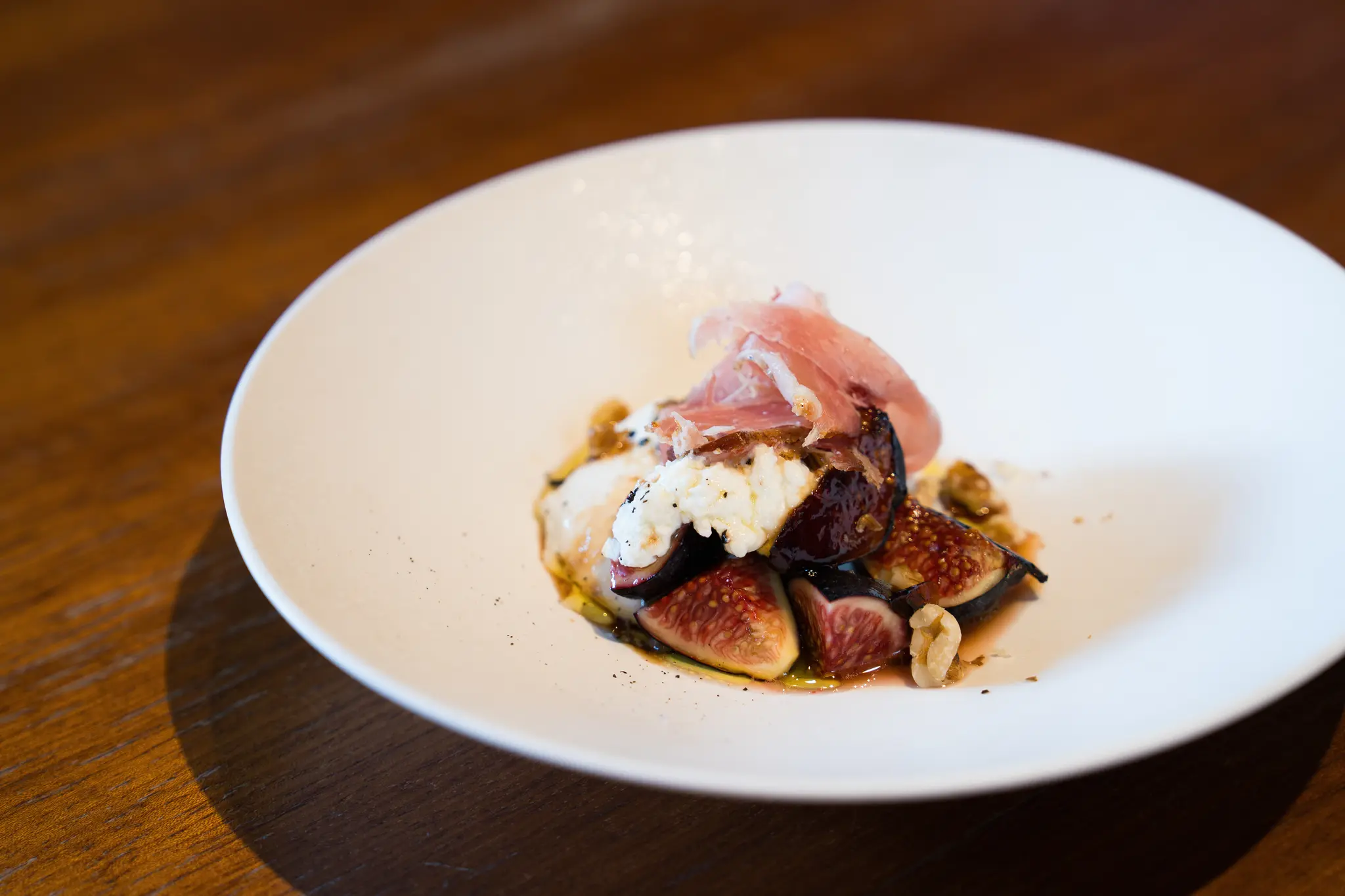
These days, there are so many restaurants where it's extremely difficult to get a reservation. As others have also pointed out, even if you manage to reserve a table six months in advance, you have to wonder whether you'll still feel like eating that particular cuisine when the time comes.
Of course, having that many reservations filled is a sign of success for a restaurant. But from a diner's perspective, I wanted to create a place you could go whenever you thought, "I want to eat there right now."
I wanted this to be the kind of place people think of whenever they say, "I'm craving meat right now." But a meal of just meat can feel a little lacking, so I'd be delighted if guests came with the idea of taking their time over a few appetizers and drinks before saying, "All right, let's have the main course—the meat."
The other thing is to make food that people find delicious the moment they taste it. Hot dishes should be served hot, and cold ones properly chilled. Beer and similar drinks definitely taste better ice-cold, so I think that kind of first impression is important too.
— Could you tell us what you keep in mind when creating your wine pairings?
First, I consider the season and the dish.
When it comes to pairings, I think about what wine would taste good with a dish, but I also place great importance on other people's opinions. So I always suggest ideas by asking, “How about this?” and then hold a tasting session together so we can exchange feedback.
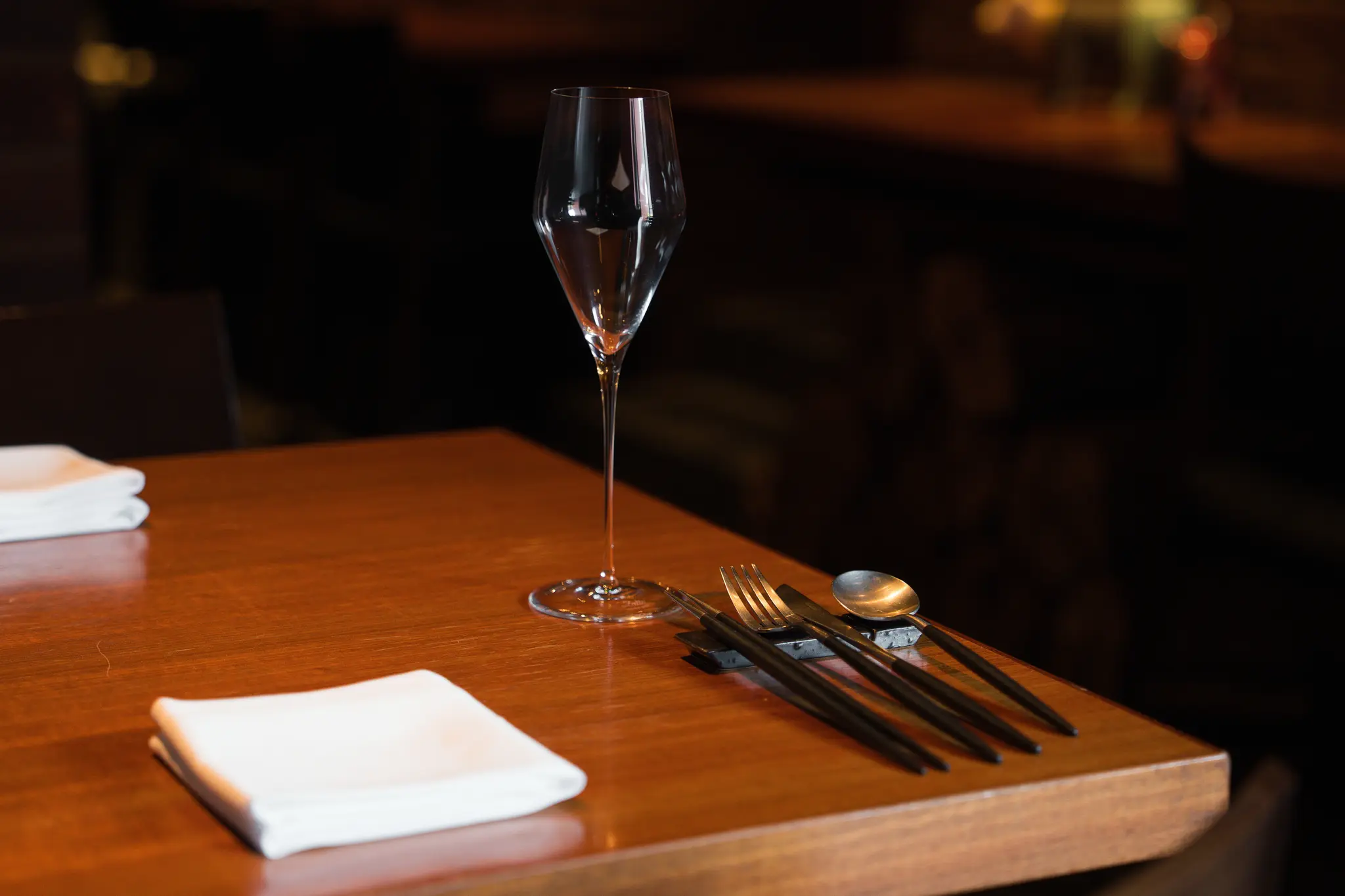
I believe a dish can only truly be appreciated once you've eaten the whole thing. We vary the intensity and flavors throughout each dish, so rather than deciding based on just a small taste, we make sure to eat and drink everything ourselves. Then the staff discuss it together—saying things like, “That pairing worked really well”—before making a decision.
If you would like a pairing, we can suggest something to complement your meal, but fundamentally, we want to serve whatever you feel like drinking. If there is a combination that simply does not work at all, we may mention it. But we believe the best thing is for guests to drink what they want to drink and eat what they want to eat.
— Could you tell us about any particular attention you pay to creating the atmosphere of your establishment and providing hospitality?
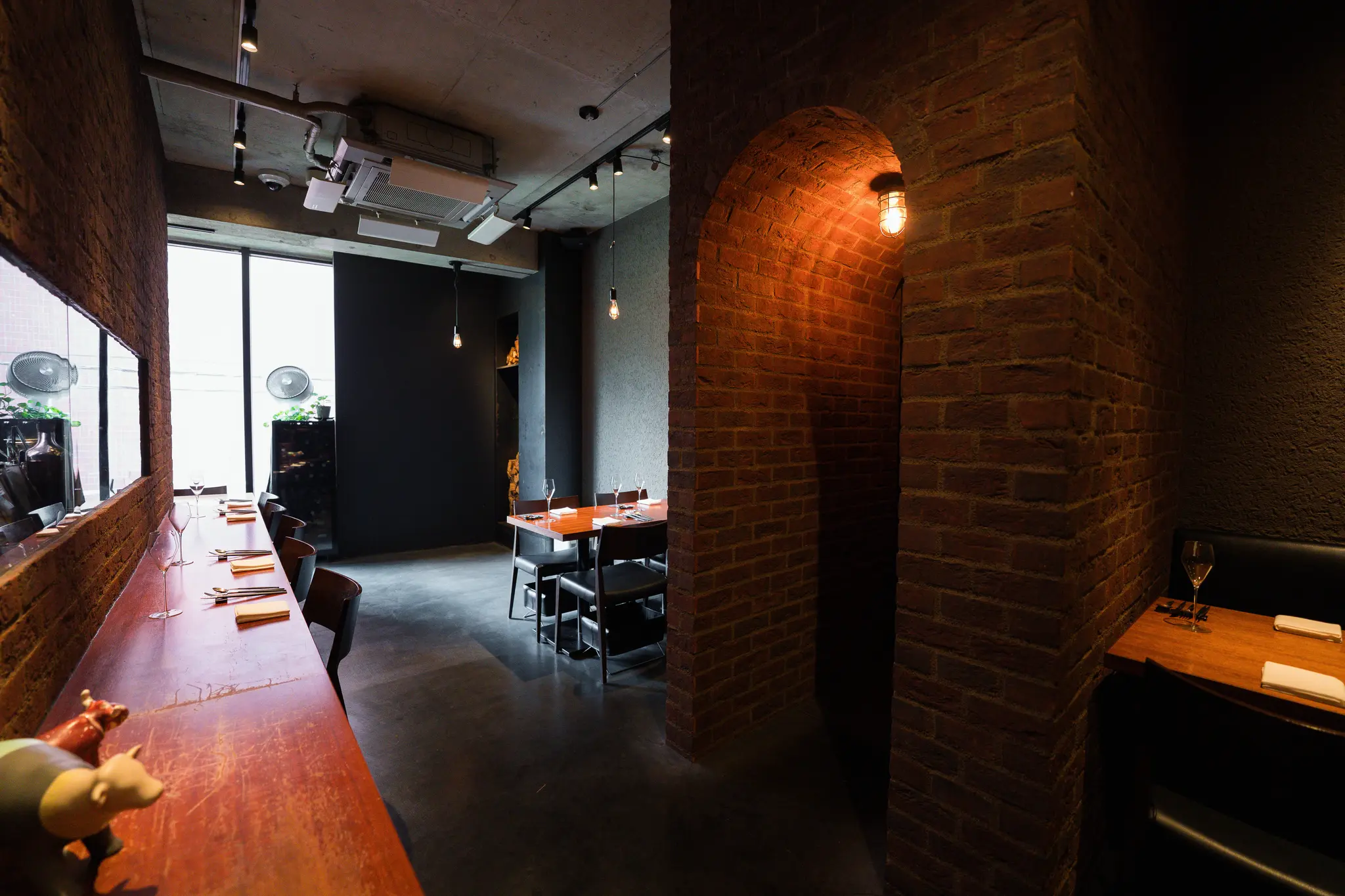
Here, too, I value not only my own perspective but also those of others. There are many things you only notice when you look at them from different angles, so I make a point of sitting down as if I were a customer and taking a fresh look at the restaurant.
Above all, I want this to be a warm and welcoming place, so the most important thing is for the staff to look like they're enjoying themselves—not only when serving customers, but also when interacting with one another. From a diner's perspective, it's much nicer to see chefs smiling and enjoying their work than cooking with a scowl on their faces, right? I believe that kind of attitude has a real impact on the food as well, so I try to value it as much as possible.
I want to create a restaurant where people think, "They look like they're having fun," or "They work so efficiently and seamlessly together—it looks like an exciting place." Nothing makes me happier than hearing a customer say, "The food was delicious, and it was so comfortable that I completely lost track of time."
With so many great restaurants out there, delicious food is a basic prerequisite.
When designing the space, I strive to create a place where people feel comfortable and at ease whenever they visit.
The Name That Comes to Mind When You're Craving Meat
— What are your plans for the future?
I'd like to take on the challenge of expanding overseas as well. We've been seeing more and more customers from abroad, and many of them have such wonderful reactions when they try our food. Seeing that makes me want to expand internationally.
Our original concept is to bring Tottori's ingredients to the world, and since the company also operates restaurants overseas, I feel that it's not an unrealistic goal.
At the same time, I want to preserve this restaurant, so I hope to create an environment where people can grow, stabilize the business, and gradually move into more of a producer role where I can oversee the bigger picture and feel confident saying, "I can leave this in their hands."
For now, I want to become the first name that comes to mind when people think, "I want some meat" or "When it comes to steak, it has to be FORNO."
— Lastly, Chef Mineo, what does "delicious" mean to you?
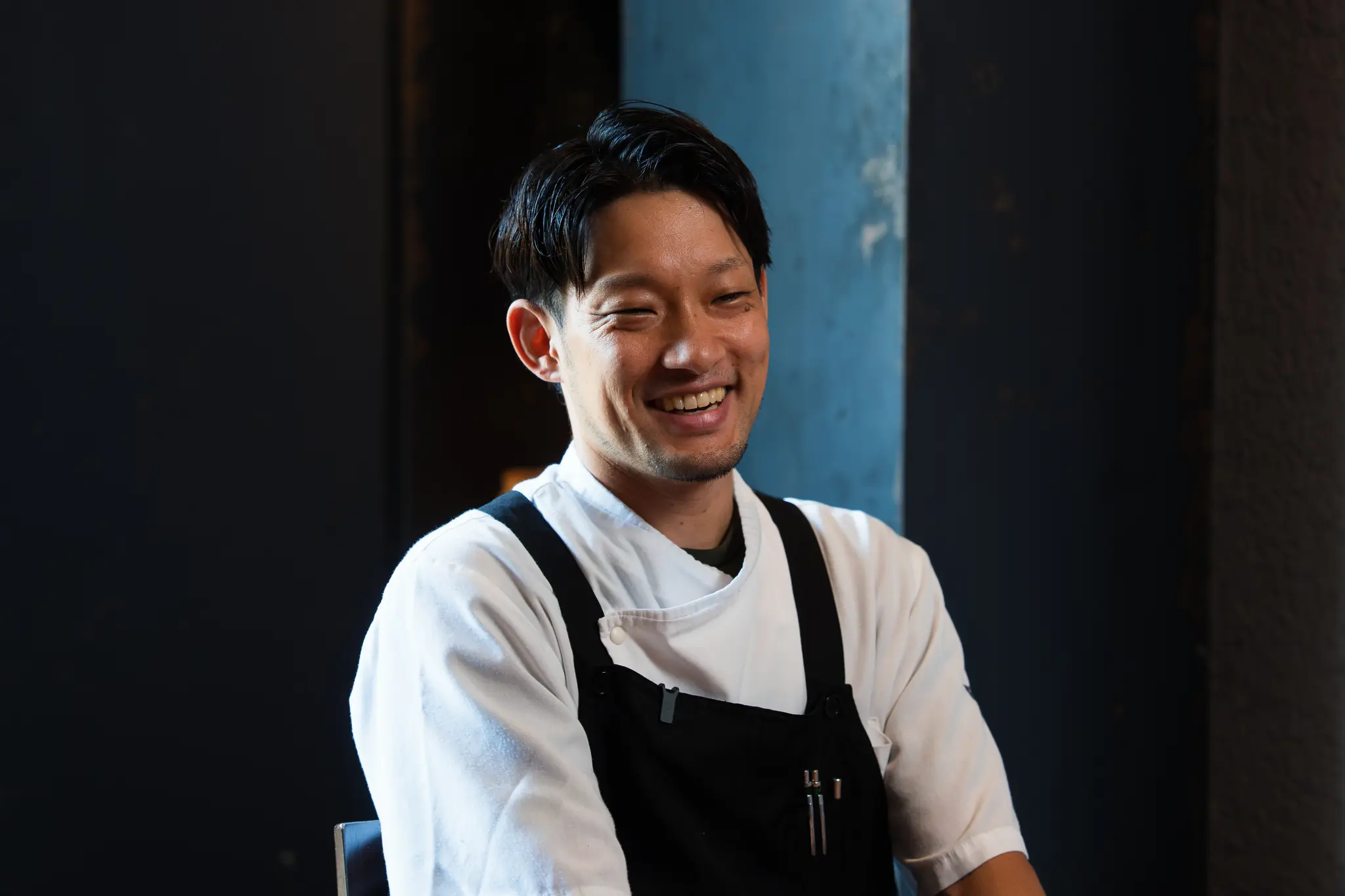
I believe that a person's state of mind affects both those who cook and those who eat.
When you eat a freshly made, piping-hot dish, you exclaim, “Hot!” as you keep eating. It’s that sensation the instant it enters your mouth—one that seems to engage all five senses.
I believe the best food is the kind that makes you think, “This is delicious,” even before you start eating—while you're still bringing it to your mouth, or rather, the kind whose deliciousness you can already sense just by looking at it.
Sometimes it is something you instinctively sense even before tasting it, and sometimes it approaches you from an unexpected angle. To me, “delicious” is a memorable dining experience whose lingering impression comes back to you in quiet moments.
The goal is to become the kind of restaurant that naturally comes to mind whenever someone thinks, “I want to eat meat right now.” Beyond that lies a desire to bring Tottori’s ingredients to the world and take on the challenge of expanding overseas.
Firewood changes the character of its flame depending on the season, humidity, and condition of the wood. As he carefully observes these changes each day and approaches both fire and people with sincerity, the dishes and experiences Mineo creates will no doubt continue to evolve, little by little.
Interviews & Text / AutoReserve Magazine Editorial Team
Photography / Shoichi Baba
Restaurant Information
- AutoReserve Magazine
- Restaurants recommended by top chefs
- Wood-Fired Cuisine at FORNO, Where Carefully Selected Tottori Ingredients Meet Glowing Embers: Kensaku Mineo on Creating Memorable Deliciousness