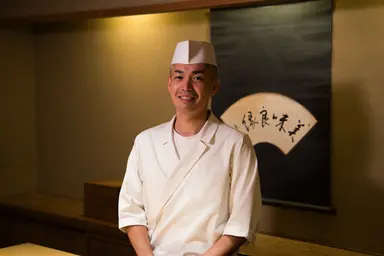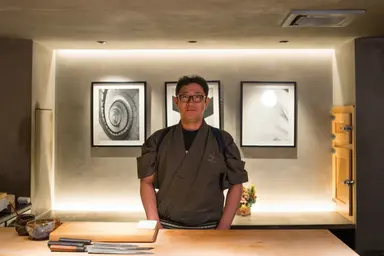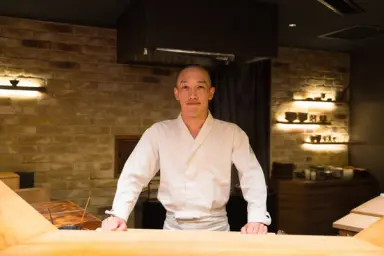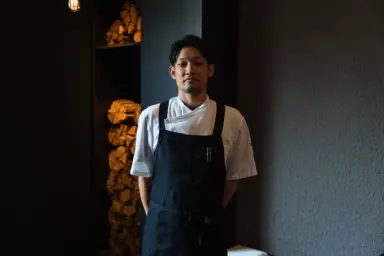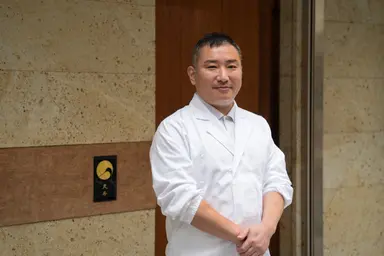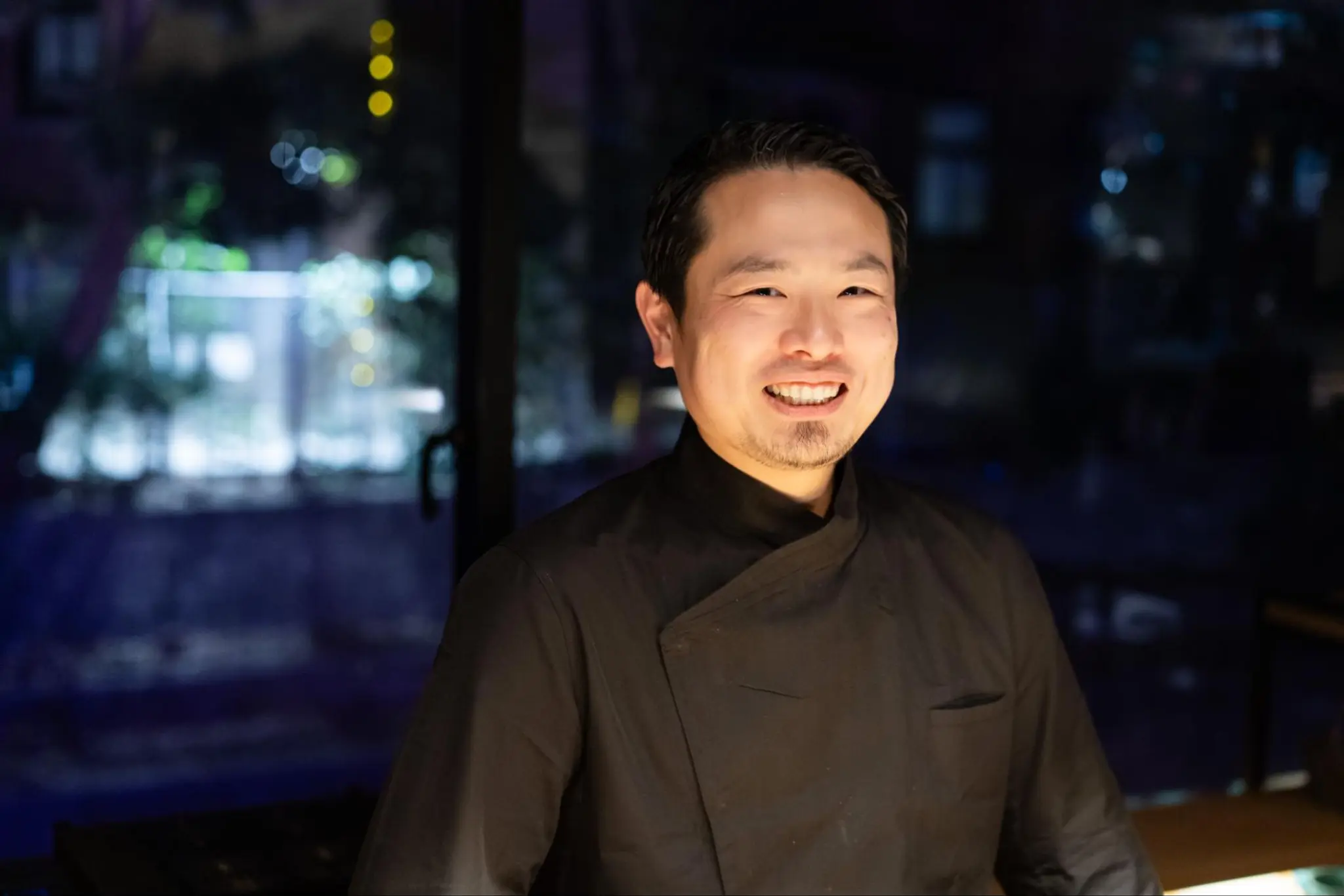
【τρεῖς (Trace)】 Chef Hideaki Kawashima Invites You to an Encounter with "Deliciousness" Beyond Imagination
A Signature Dish Crafted with Just Salt and Water
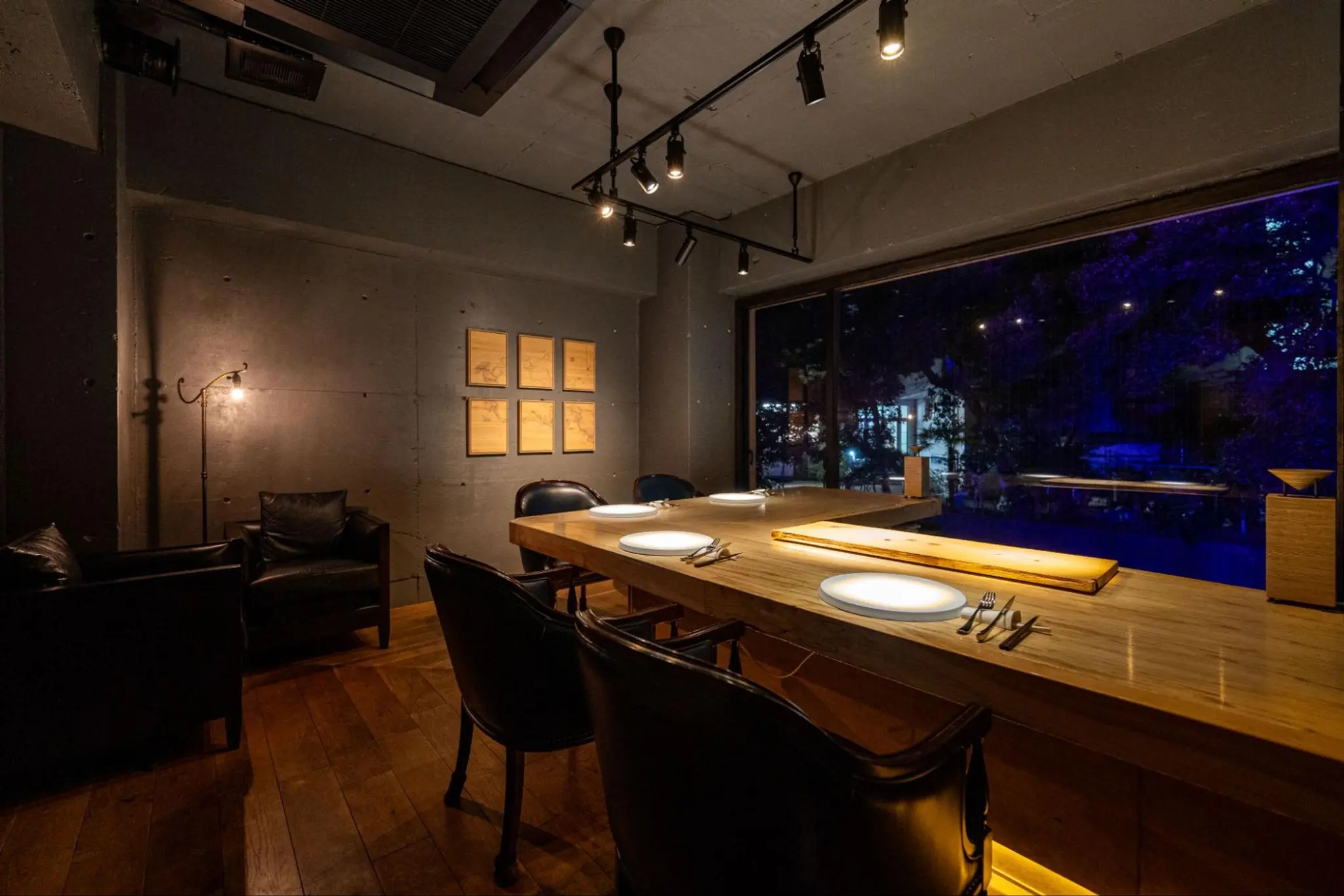
ーーーThis place feels like a sophisticated hideaway, enhanced by the contrast of light and shadow.
I chose this location on the spot because I loved the floor-to-ceiling windows. When I first visited, it was an empty space, but the finished image of the restaurant instantly came to mind—it was exactly as I had envisioned, absolutely perfect. During my training at 【RESTAURANT SANT PAU】, the kitchen faced the main street with glass walls, making it visible from the outside. Even while cooking, there was a sense of openness. When I decided to open my own restaurant, I knew I wanted a similarly open space. Until then, I had always cooked in enclosed kitchens surrounded by stainless steel, which was the norm. But preparing food in an open environment is incredibly exciting!
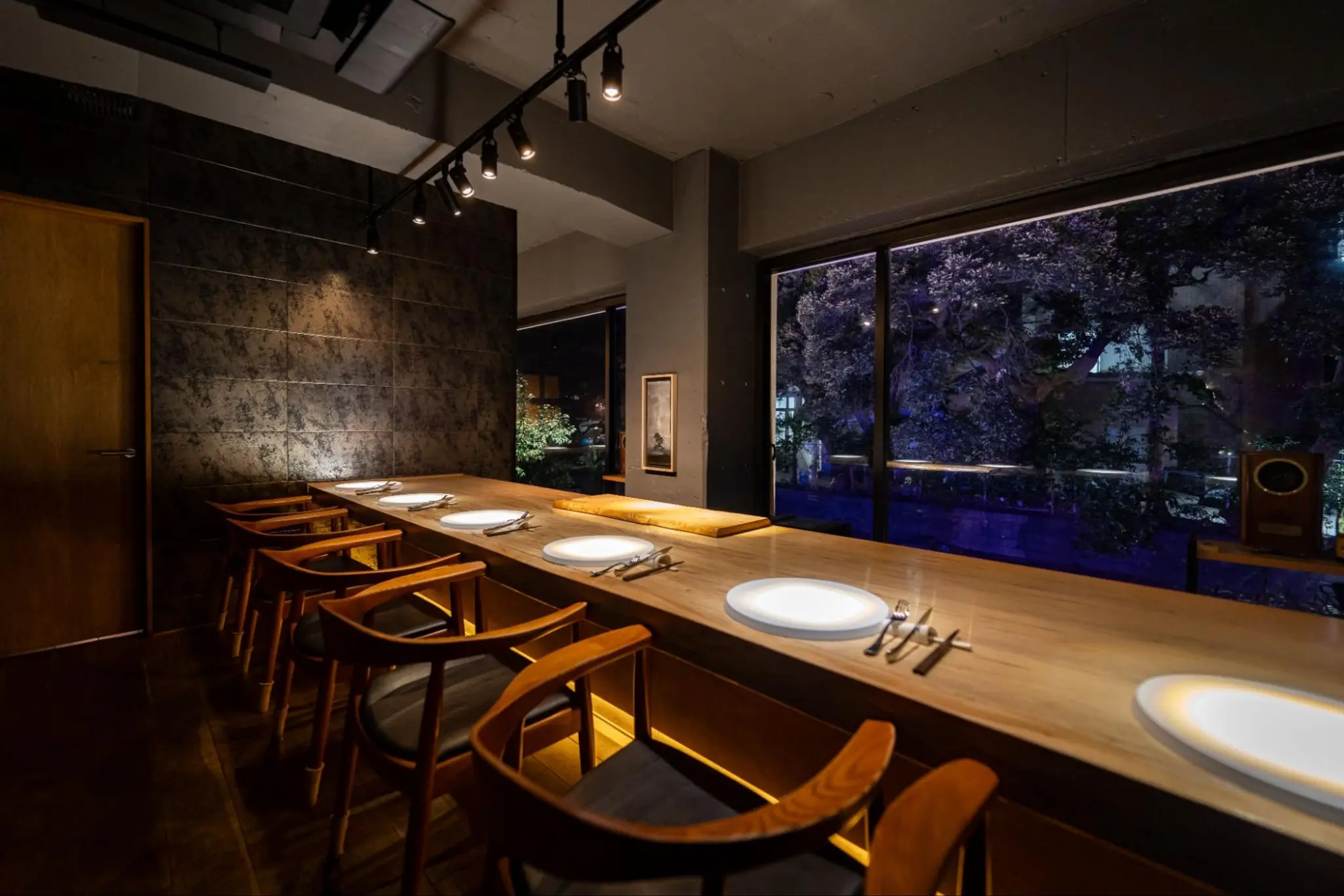
ーーーThe interior feels like a stage, making us excited as well! What dishes will you be serving today?
First, please enjoy this "New Onion Soup." It was the very first dish I created when I opened 【τρεῖς】. Many of our regular guests are familiar with it, and it holds a special place in my heart as well. Since it is served at the beginning of the course, it is meant to gently warm the body.
The ingredients are simply new onions, salt, and water—nothing sourced from a particular region or a specific producer. Instead, I request from my supplier by saying, "Since I’m making soup with just salt and water, I need new onions that suit this method."New onions have a high water content, so I adjust the cooking time and the amount of salt and water depending on the individual characteristics of each batch. The salt I use is Maldon Salt from the UK, and the water is commercially available mineral water. When I reveal the ingredients, most people are surprised. But my goal is not to have my guests taste salt and water—the true protagonist is the new onion. The salt and water serve to highlight its delicate sweetness and juiciness. The salt isn’t there to add saltiness, which is why I prefer them to be "delicious supporting actors in everyday life."
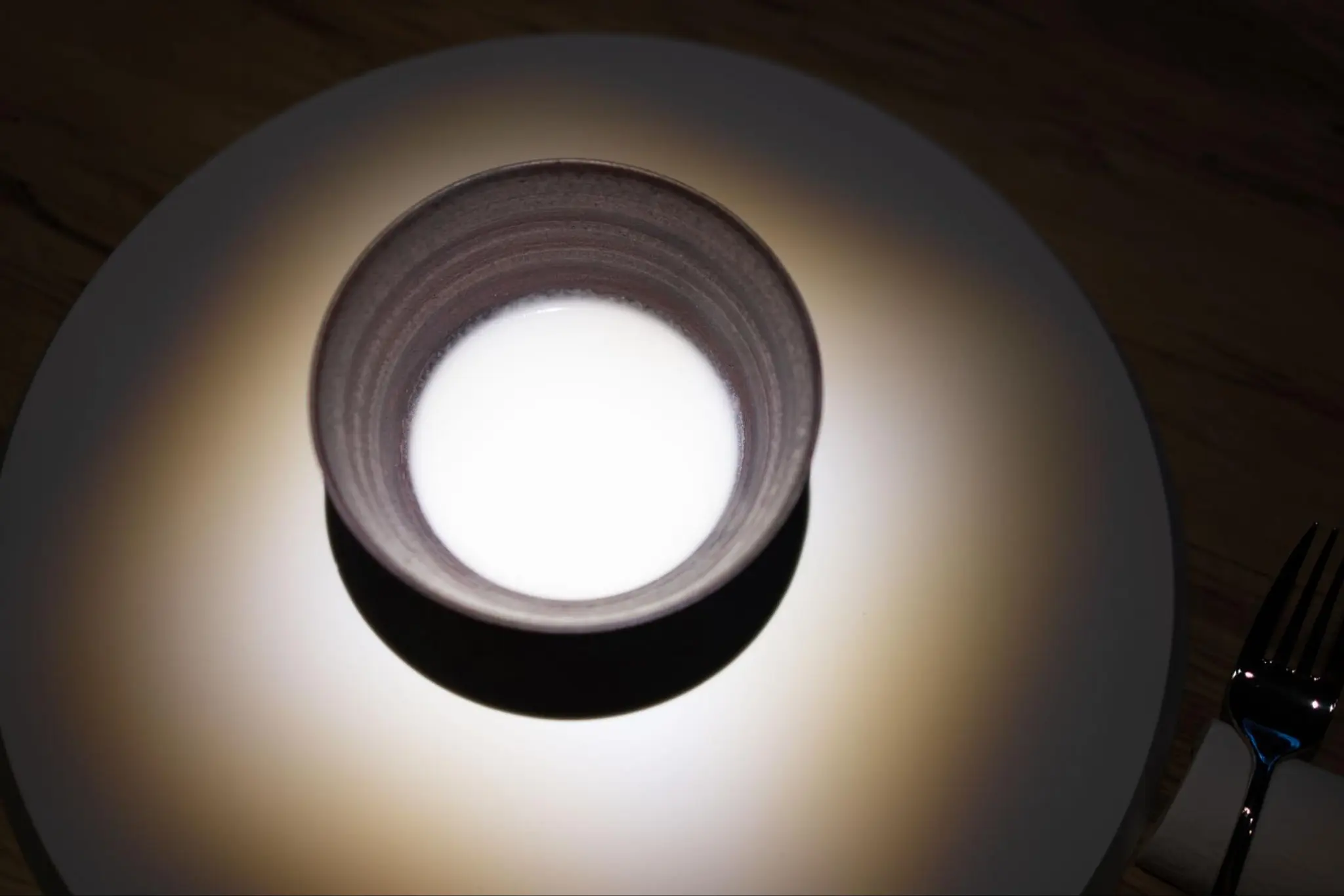
ーーーSo, salt and water are added as essential elements to bring out the best in the ingredient?
I believe that if something is necessary for an ingredient or a dish, it should be used. Many guests often say, "You haven't added anything, have you?" But the reason I cook with just salt and water is simply that I believe it’s the best approach. If a certain seasoning or process enhances an ingredient, then I think it should be incorporated. To take an extreme example, if adding artificial seasonings made an ingredient come to life, I wouldn't hesitate to use them—I’d actually think it should be added. That, to me, is what cooking is all about.
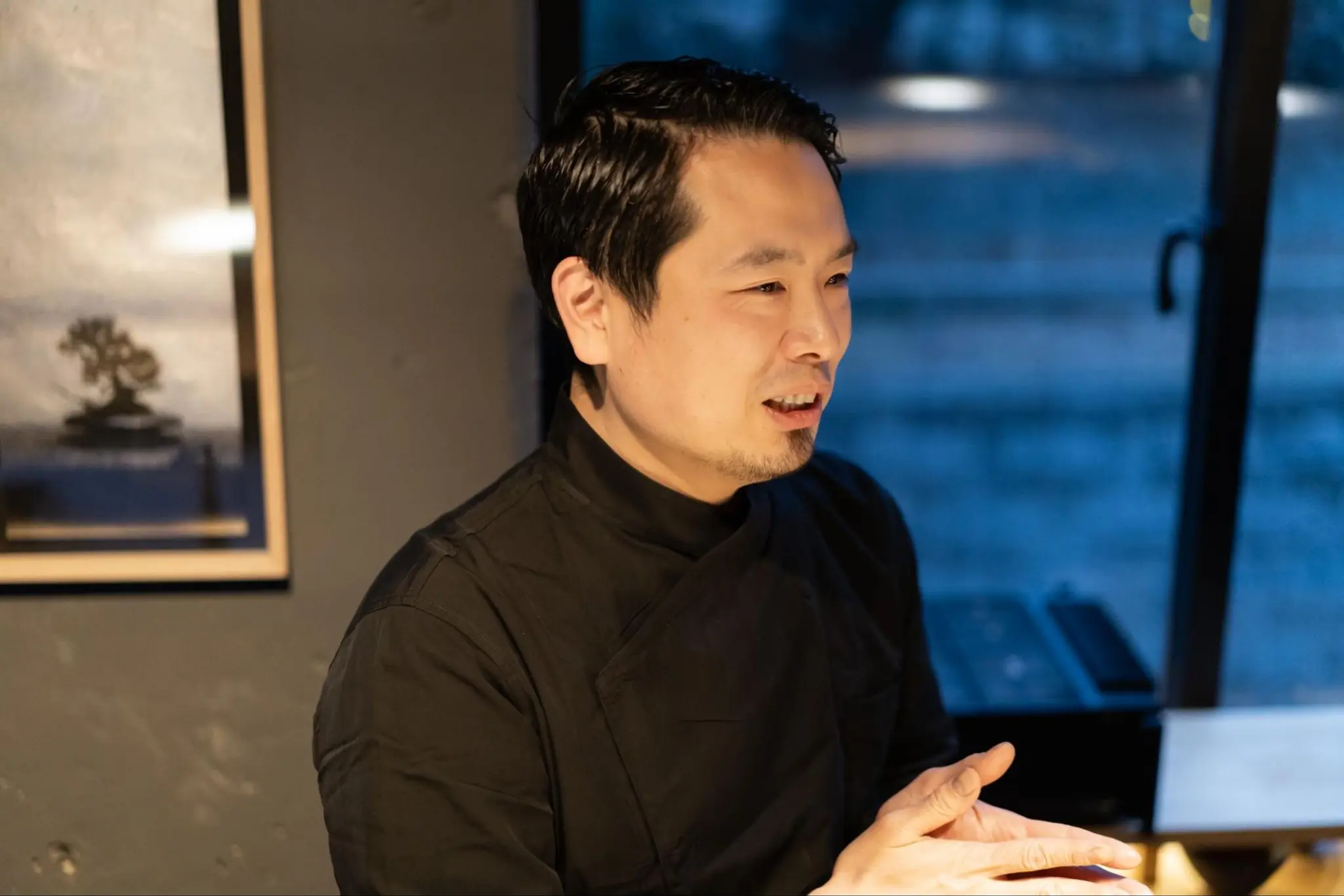
The "New Onion Soup" was crafted with the intention of allowing guests to experience the essence of new onions in their purest form—preserving their delicate sweetness and juiciness while making them taste even more like new onions. To achieve this, I chose to create the soup using only salt and water.
I’ve made this soup countless times, but because the seasoning, heat application, and temperature must not interfere with the natural character of the ingredient, there is no fixed recipe. Each time, the balance is slightly different, and I make sure not to miss that fleeting, perfect harmony in the moment.
Masterful Presentation: Recognizing an Ingredient’s Character and Unveiling Its New Expression
ーーーThe next dish is quite unique in appearance! The aroma alone is already tempting.
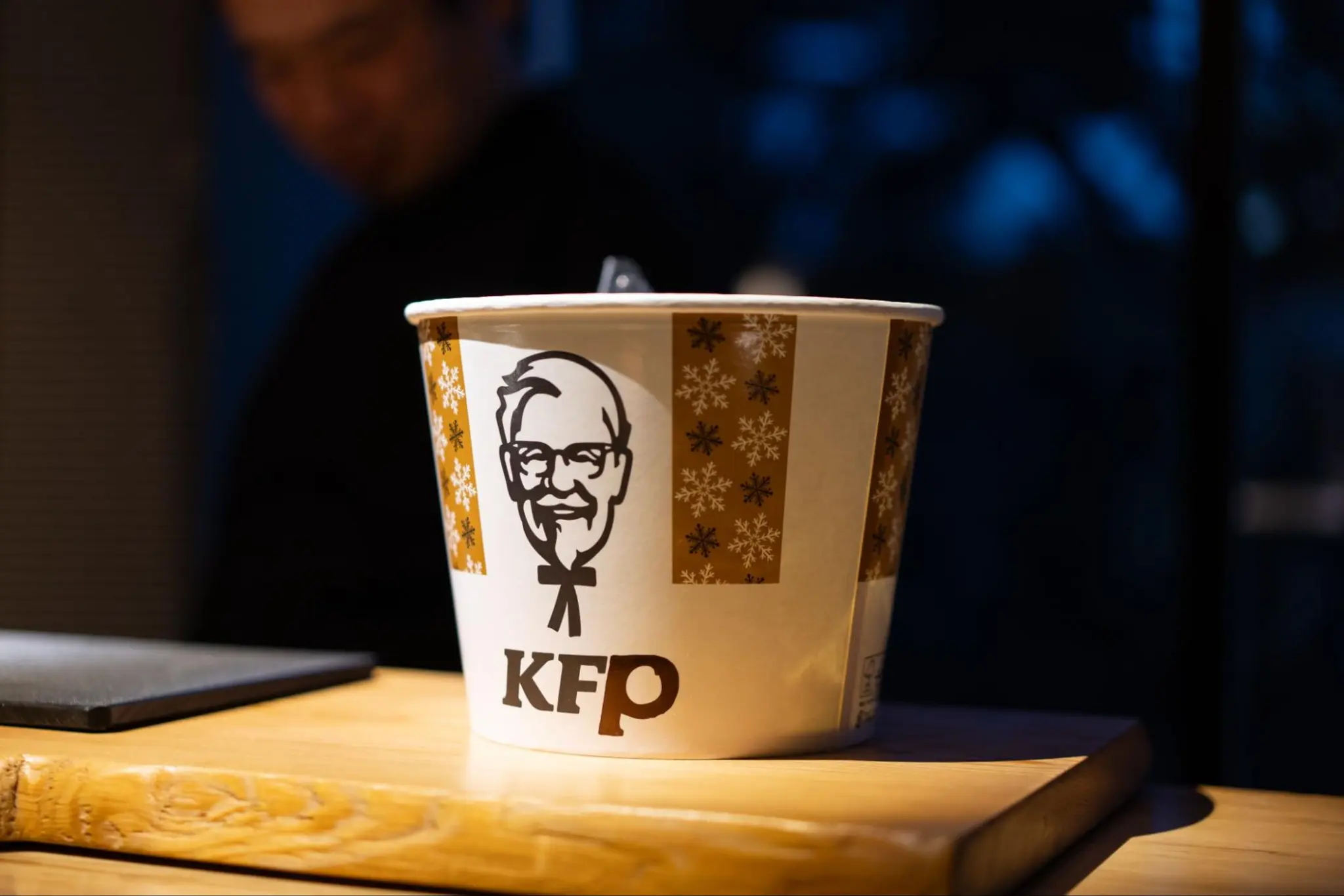
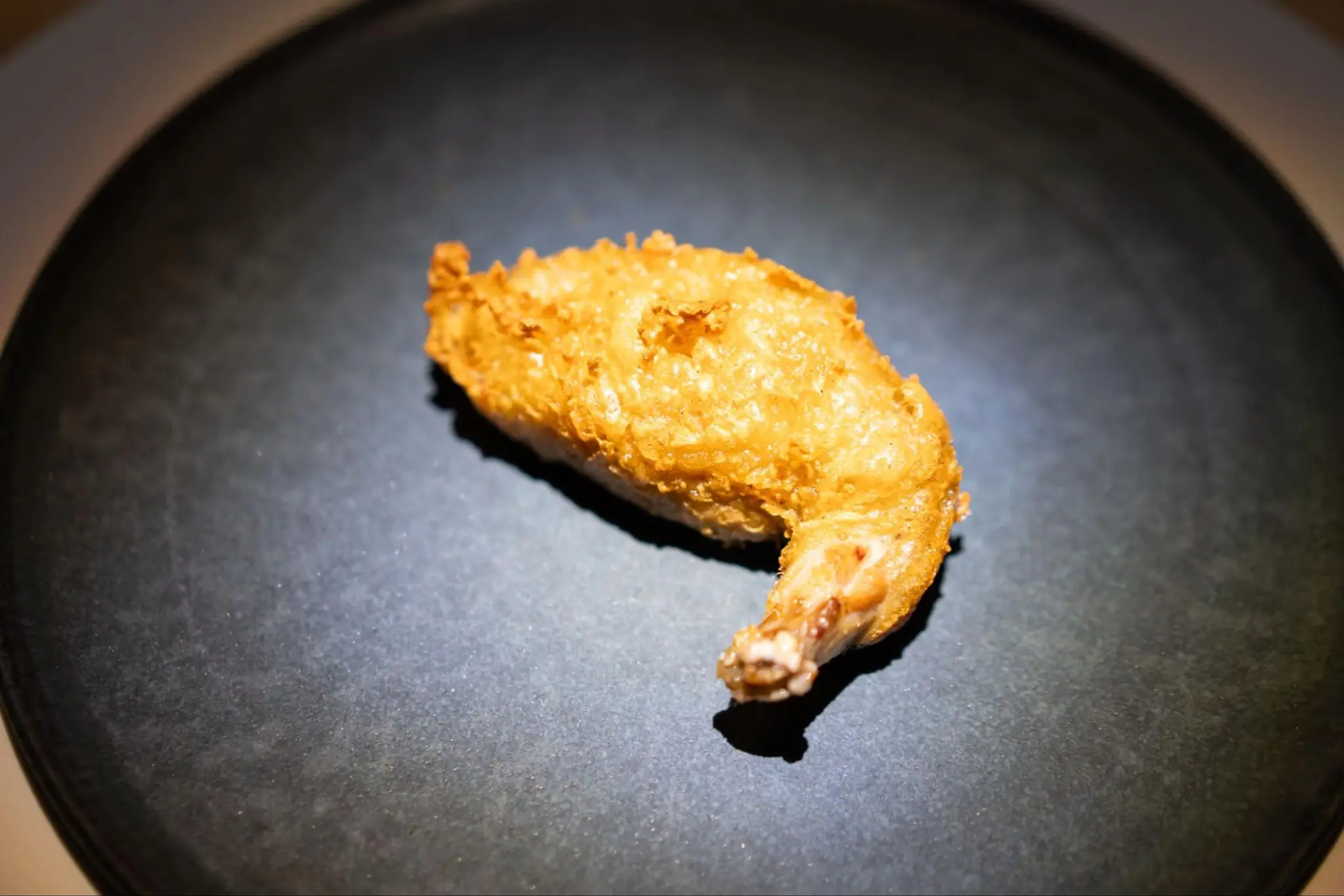
It looks a lot like those oversized baskets you see at a certain fast-food chain, doesn’t it? This is our specialty: "KFP – Kentucky Fried Pigeon" (laughs). I usually have guests take their first bite while it’s freshly made. The basket itself adds to the experience, often creating a lively party-like atmosphere. Some guests are shocked when they realize the meat is pigeon, while others fall in love with its rich umami and the blend of spices. Among our regulars, there’s even one guest who once ate four pieces in the restaurant and then asked to take some home!
ーーーThe pigeon meat is incredibly juicy! Do you use any seasonings besides salt?
I’d like to keep the details a secret, but yes, I use a mix of multiple spices in addition to salt. In French cuisine, roasted pigeon is often served as a main dish, and the standard cooking method involves searing the skin well, then letting it rest for about an hour to allow the heat to settle. During this resting process, the meat gradually releases its juices, and those juices are unbelievably delicious!
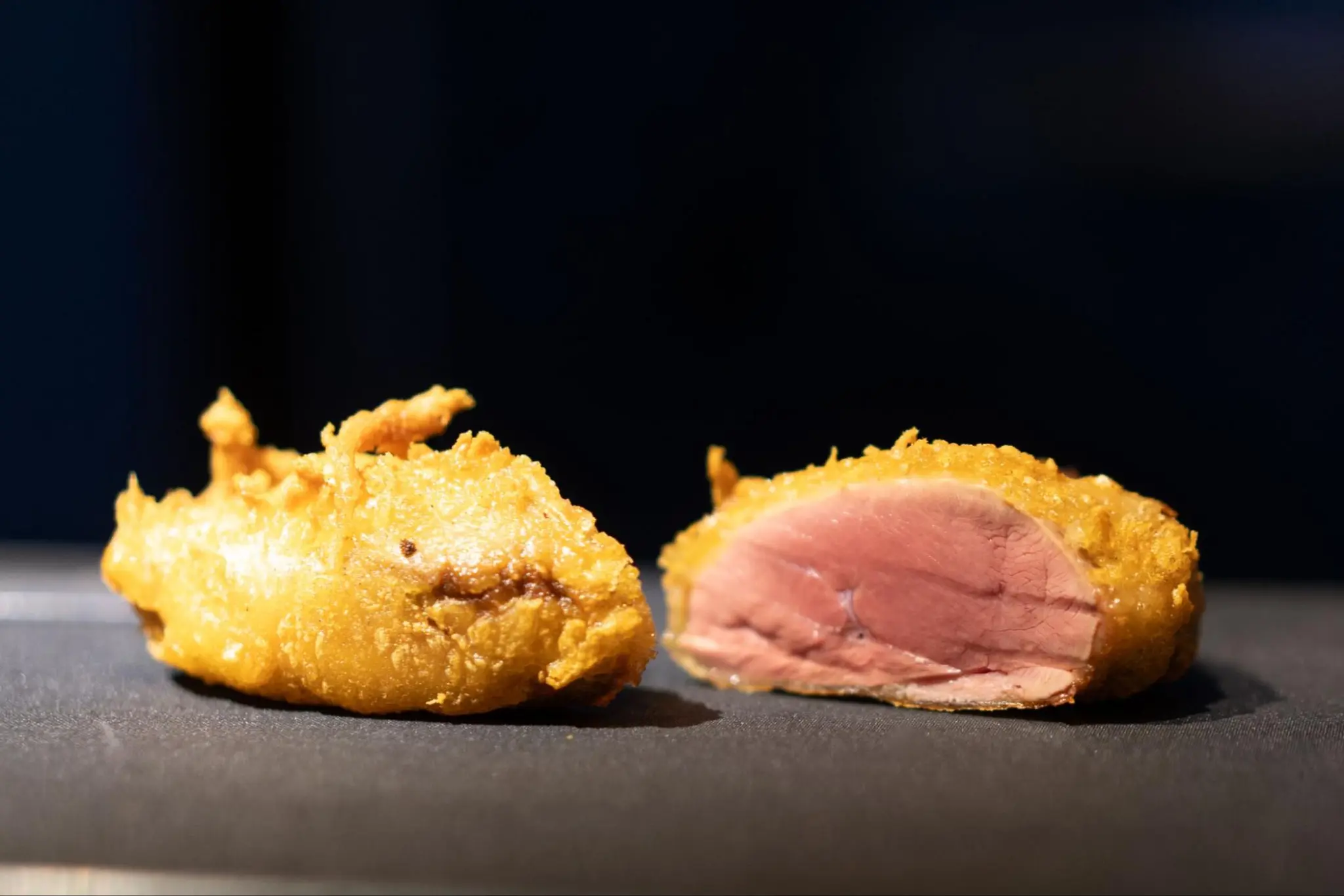
I had a hypothesis: perhaps the juices that escape from the meat during roasting shouldn’t be leaking out at all. If that were the case, then maybe the traditional roasting method itself was flawed. So, I experimented with a different approach—deep-frying the pigeon breast in oil for about five minutes from its raw state, achieving the same medium-rare doneness as roasting. By frying instead of roasting, the juices that would normally escape stay locked inside the meat, only releasing when you bite into it. Looking at the results, I believe this is the most efficient and delicious way to prepare pigeon that I have discovered so far.
ーーーWhere do these playful and creative ideas come from?
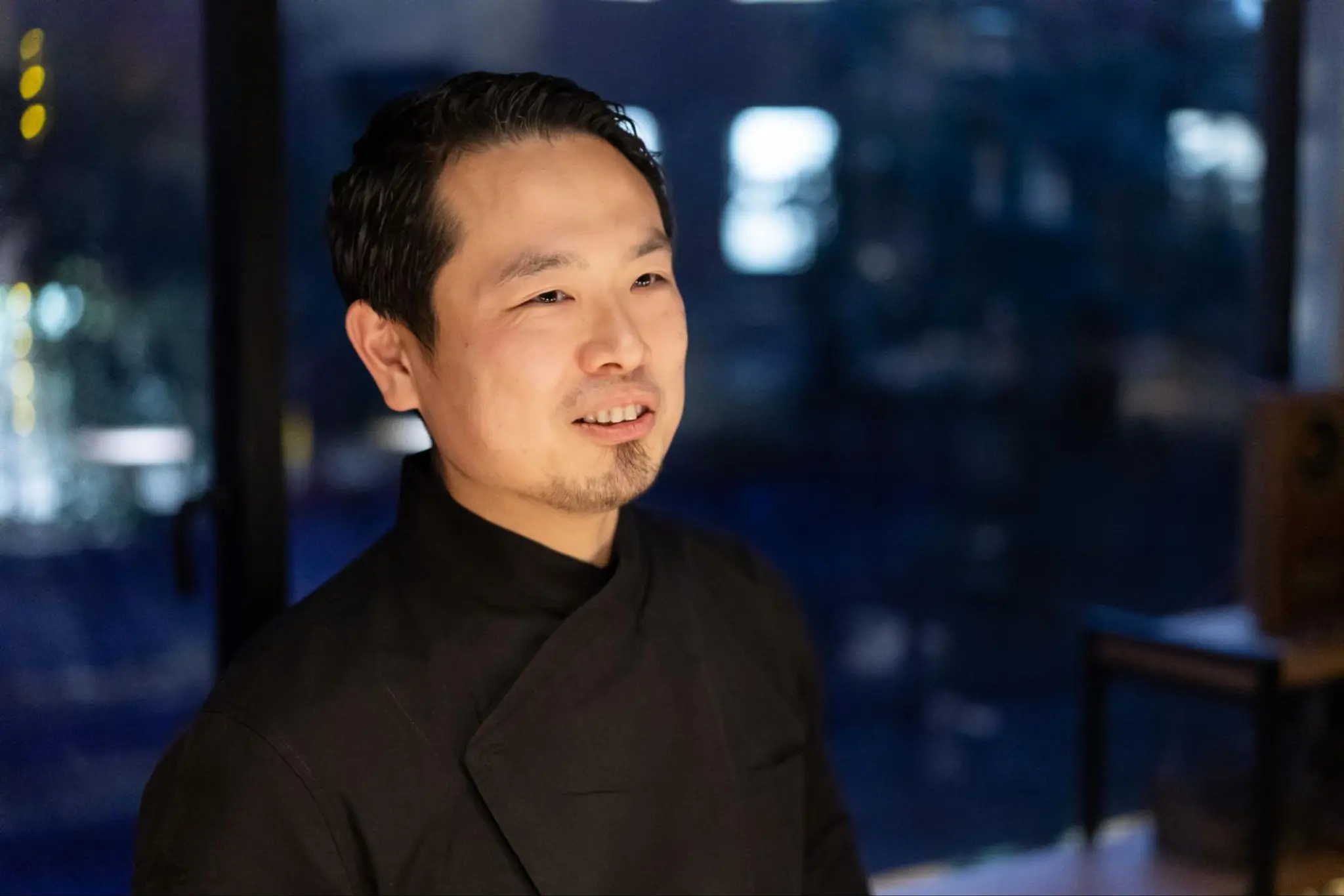
When I opened the restaurant in 2020, it was during the pandemic, and there were strict limits on the number of guests allowed. At the time, the social atmosphere around dining out was quite negative, and I couldn’t even fill all six counter seats.
I wanted to create a space where people could genuinely enjoy their meals, so initially, I thought about roasting a whole duck for guests to share. But given the restrictions, that would have resulted in a tremendous amount of waste. That’s when I had a lightbulb moment—what if I paired pigeon with a specialized basket? I thought it would be fun! I even went to an actual fast-food chain, bought one of their large takeout baskets, and modified it to fit my concept. The guests loved it. As for the name "KFP", the "K" stands for Kawashima, and all I had to do was use a marker to turn the "C" into a "P" (laughs).
Interestingly, one of our sommelier friends, who happens to be a huge fan of fast-food snacks, once met an executive from Kentucky Fried Chicken Japan at a bar. We ended up discussing this whole concept with him, and, believe it or not, we got official permission to do it! (laughs)What started as a desperate measure during a difficult time has now become an irreplaceable signature dish at 【τρεῖς】.
ーーーWhat is most important to you when creating a dish?
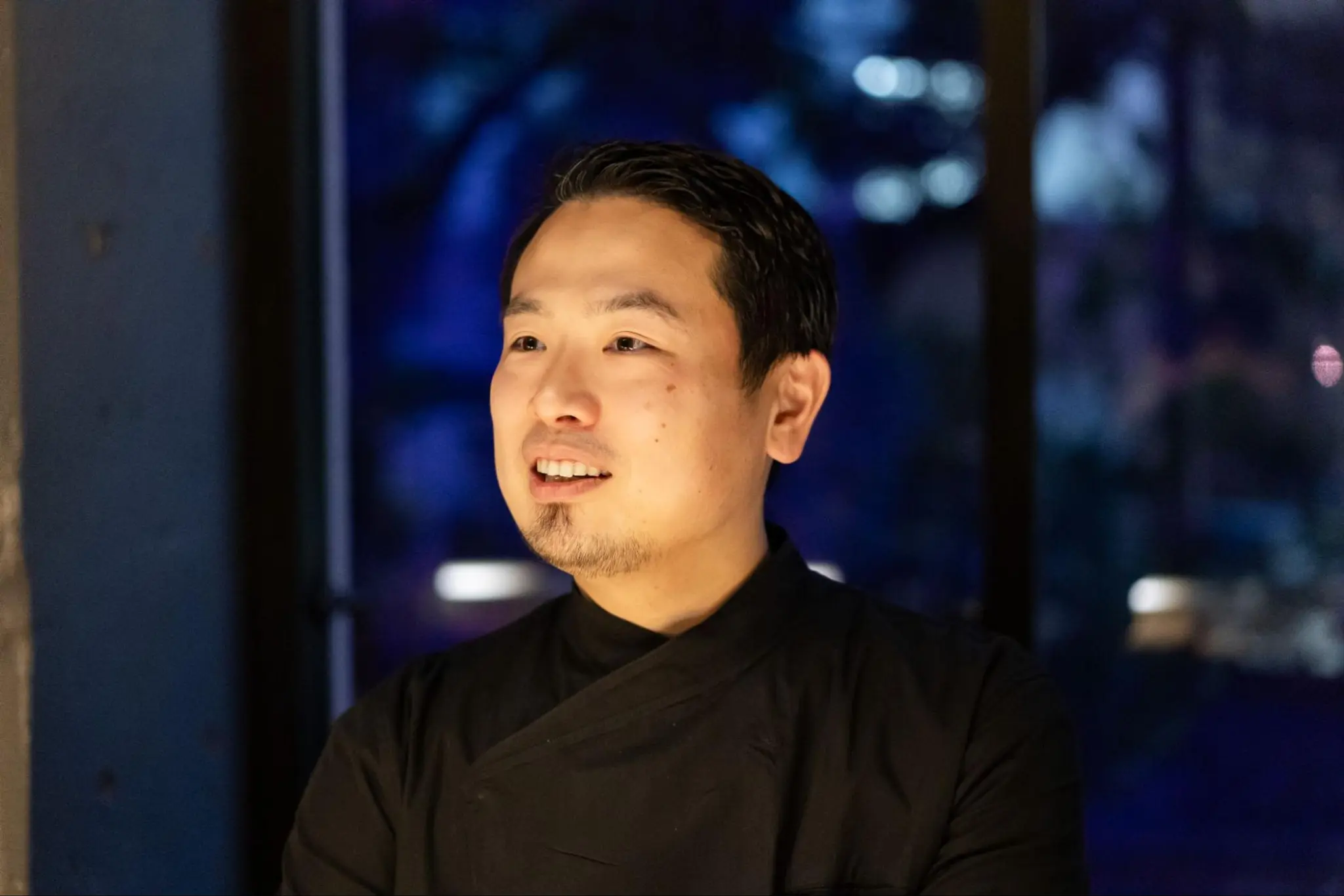
Not overthinking it. At my previous restaurant, there was a time when I would cover the entire stainless-steel kitchen wall with notes of ideas that came to mind, connecting them with lines to form concept maps. But now, I’m no longer in a position where I need to train juniors, so I deliberately avoid thinking too much about food. To me, "thinking" is essentially just opening the drawers of past experiences and knowledge and organizing what comes out. But as a chef living in modern Japan, constantly exposed to similar sources of information, I feel that no matter how much I try to dig deep into those drawers, I’ll just end up with the same kind of ideas as everyone else. Even if I turn them into a dish, the difference would be minimal, and honestly, that’s boring.
I still use my smartphone’s notes app to jot down and organize ideas, but the best inspirations usually come when I’m not thinking about food at all—when I’m playing games with my kids, cycling through the city, or just going about daily life. That’s when the truly interesting ideas are born.
ーーーSo you value inspiration that comes naturally. Is there anything else you do to maintain peak performance in your work?
I make sure to stick to a routine—eating and bathing at set times every day—so that I don’t disrupt my daily rhythm. This job is physically demanding, and if I don’t take care of myself, it affects my sense of taste, which in turn affects my cooking. Actually, ever since opening this restaurant, I’ve developed a unique pre-shift ritual—I drink a highball with a dose of Kakkonto (a traditional Japanese herbal remedy) before starting work. There’s a reason for this: I’m naturally a bit shy and tend to focus too much on small details. But with just the right amount of alcohol, I can match the energy of my guests, engage in conversation more smoothly, and keep my mind free from unnecessary distractions. It turns out this method works perfectly for me—it helps me get into the right mindset, and as a bonus, it’s great for preventing colds (laughs).
ーーーDo you have any memorable episodes from your training days?
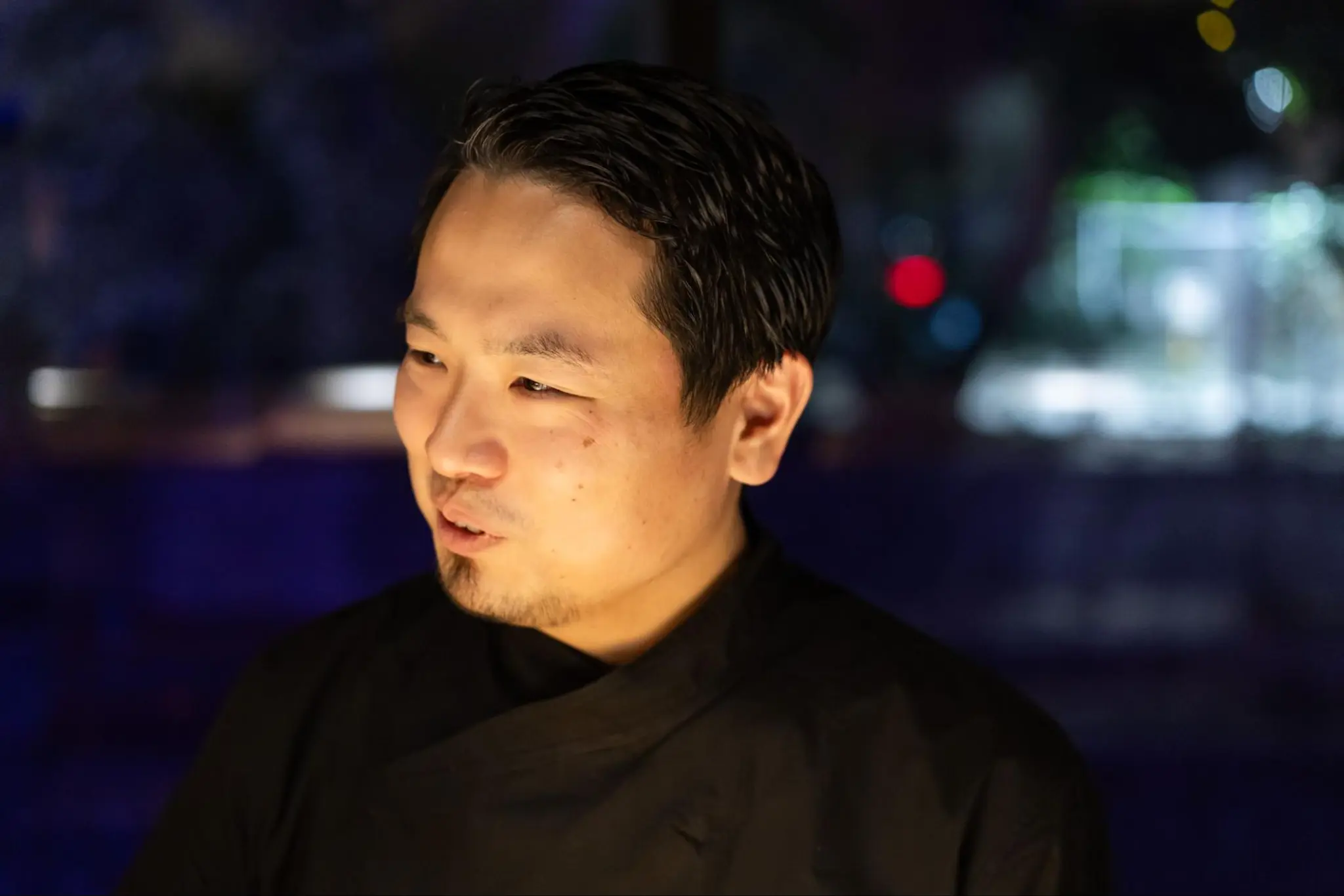
When I was 24 years old, training at 【RISTORANTE KIORA】, there was a pasta competition where chefs from affiliated restaurants gathered to showcase their skills. One of my seniors was supposed to participate, but at the last minute, he asked me to take his place. Without overthinking it, I immediately said, "Sure, I'll do it!"—and ended up winning the whole competition. Initially, my plan was to make a cold pasta dish, topped with fried octopus suction cups seasoned with spices, and served with a warm tomato sauce. However, when I arrived at the venue, I noticed a plate-chilling device that I had never seen before. Out of curiosity, I placed my cold pasta on it, and in an instant, the pasta froze solid. I realized that if I poured warm tomato sauce over it as originally planned, the sauce would cool down immediately, ruining the dish. At that moment, I decided to turn it into a dipping-style dish, like tsukemen ramen, with the tomato sauce served separately as a dipping broth. That last-minute improvisation worked in my favor—the judges praised the dish, saying, "The contrast in texture and temperature was completely unexpected and absolutely brilliant." Winning that competition was completely unexpected for me, but looking back, I think that experience shaped my approach to cooking today. Avoiding rigid thinking and allowing spontaneous inspiration to guide me have both become core principles in my culinary philosophy.
Adding Value to a Limited Audience
ーーーSince opening, you've operated on a membership-only basis. How has that been working out for you?
When I opened 【τρεῖς】 in 2020, I started a crowdfunding campaign to raise the necessary capital. As a way to thank those who supported me, I offered them membership access to the restaurant.
At first, I thought I might discontinue the membership system later on, but thanks to the overwhelming support I received, I decided to keep it. I entrust the financial management to someone with strong business expertise, allowing me to focus entirely on the restaurant and run it with complete creative freedom. I’ve found that this style of operation feels natural to me, and now, in our fifth year, I can confidently say that this choice was not a mistake.
Currently, we periodically accept new members based on the fluctuation of our existing membership. To become a member, one must be referred by a current member and pay an annual membership fee.
Memberships are renewable, but if a member dines with us at least once a year, we waive the renewal fee. At present, we have approximately 240 members, which feels like the optimal size. If the membership grows too large, it may compromise the guest experience, so we’ve limited each member’s referral privilege to just one person. The restaurant’s interior, with its striking contrast of light and shadow, features a six-seat counter as well as a four-seat private counter. We also have a renowned wine pairing program curated by our sommelier, which has received high praise.
ーーーAs a chef, what do you find "comfortable" or advantageous about operating a membership-based restaurant?
One of the biggest advantages is that we can accommodate reservations at a guest’s preferred timing, without making them wait too long. Nowadays, some restaurants are fully booked years in advance, but personally, I can’t even imagine what I’ll be doing years from now. I might not even be living in Japan—or who knows, I might not even be alive (laughs). Even if a guest wants to eat my food now, their tastes and preferences may change in a few years.I wanted 【τρεῖς】 to be a place where guests who appreciate our cuisine can enjoy it whenever they wish, as part of their daily lives, with a sense of ease and reassurance. Additionally, being a membership-based restaurant allows us to accumulate guest preferences and dining histories, making it easier to personalize the experience based on their tastes and the purpose of their visit.
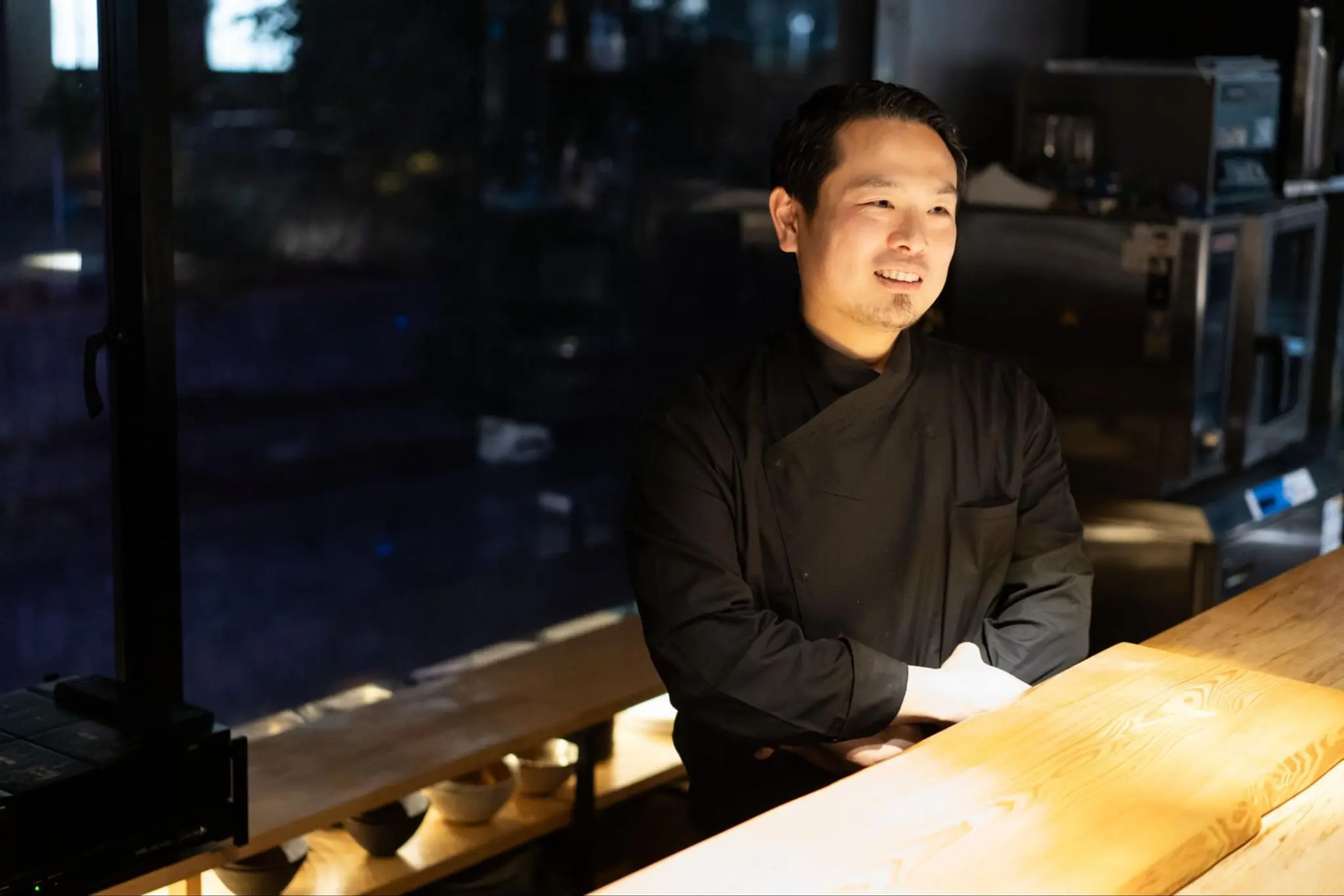
ーーーWithin the framework of a membership system, guests are assured a sense of security and exclusivity.
The sense of security is essential not only for the guests enjoying the meal but also for the chefs preparing it. To be completely honest, while choosing the right ingredients is, of course, a fundamental aspect of being a chef, I believe that choosing the right guests is just as important. Even if I create a dish with perfectly selected ingredients and flavors, if something disrupts the atmosphere, it prevents the experience from truly feeling "delicious."Dining is not just about the food itself—it’s about the entire space, the energy, and the harmony within it.
Our restaurant operates in a limited counter-only space, where all guests begin their dining experience at the same time. To ensure that everyone can fully enjoy the shared space, we maintain a membership system as a way to welcome guests who share a certain level of etiquette and values .Personally, no matter how delicious a restaurant’s food may be, if the atmosphere feels too stiff or formal, I find it uncomfortable and just want to leave. That’s why I want to create a restaurant where both my guests and I feel at ease—a space where I can serve dishes that truly meet expectations, in an environment that feels just right.
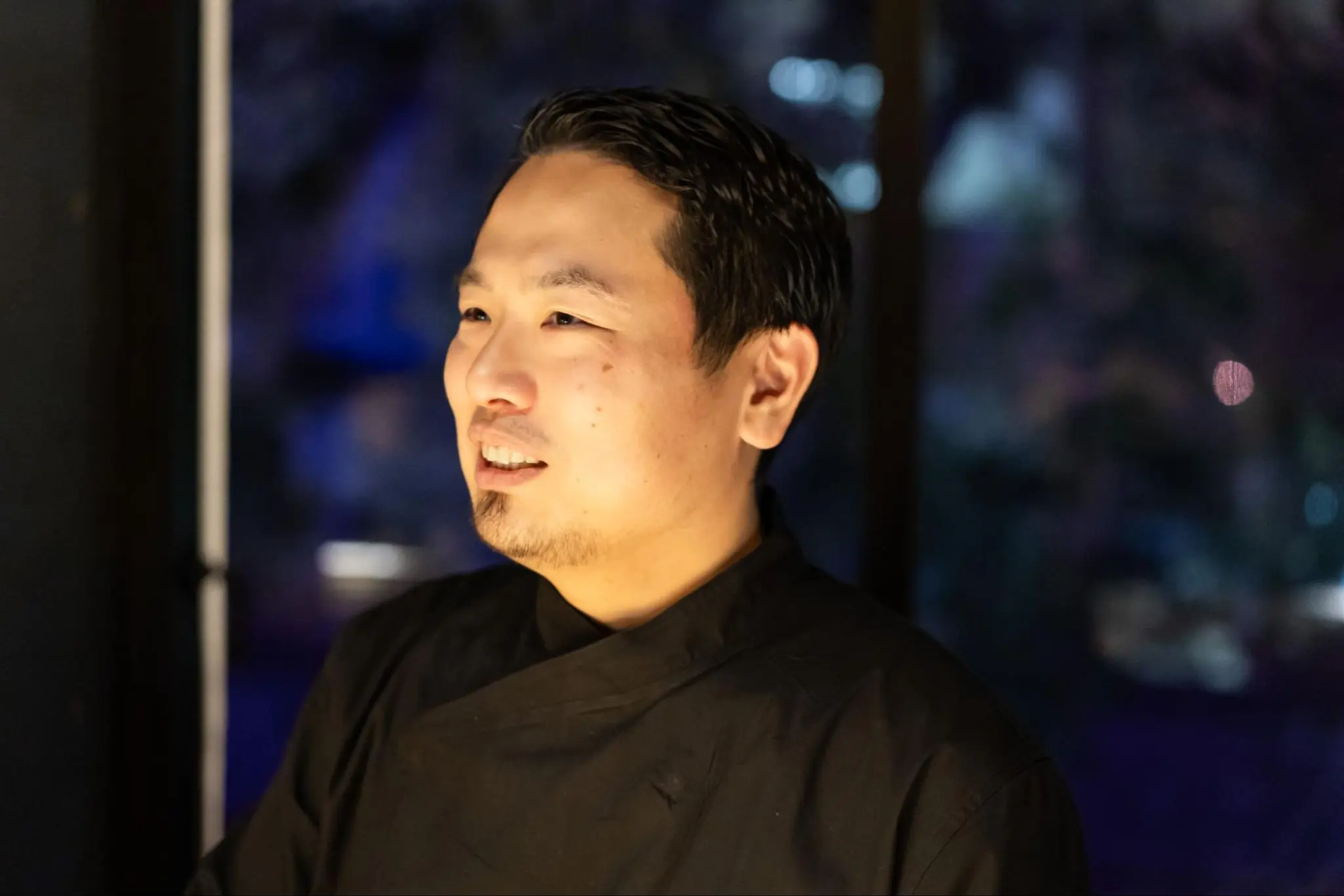
True "Deliciousness" Lies Beyond Expectations and Predictions
ーーーWhy do you deliberately focus on "ordinary ingredients" rather than using luxury ingredients?
There are countless delicious ingredients and meticulously cultivated premium produce in the world, and many of these ingredients are already exceptional on their own. In other words, high-end ingredients are inherently complete, requiring little intervention to be enjoyable. As a chef, my craft involves preparing, cutting, cooking, and seasoning ingredients to bring out their best qualities. However, if my cooking cannot surpass the raw ingredient itself, then as a chef, I find that uninspiring and unsatisfying. I believe that even with "ordinary ingredients," if approached correctly and with the right techniques, it is possible to bring out their true, inherent deliciousness and showcase their unique character.
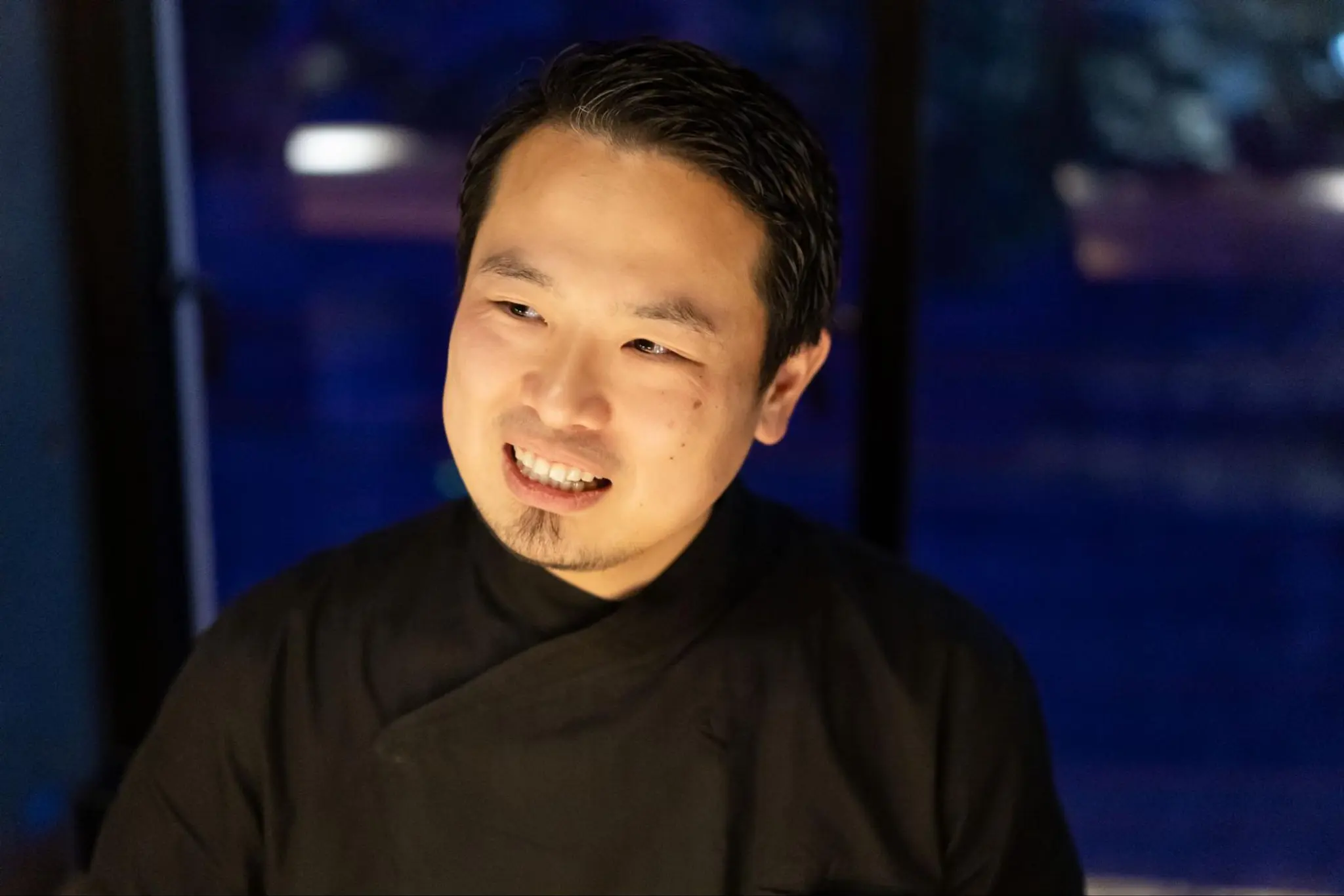
ーーーFinally, what does "deliciousness" mean to you?
To me, "deliciousness" is not just about flavor—it’s about exceeding the diner’s expectations through the ingredients, the way they are presented, and the atmosphere in which they are enjoyed. I believe that "deliciousness" is born at the moment when a dish surprises and excites the person eating it—when it goes beyond what they imagined. As a chef, I naturally create dishes that I find delicious, but in the end, it is the guest who decides whether something is truly delicious or not. If I were simply cooking the dishes that I personally want to make or that I alone think are delicious, that would be nothing more than self-indulgence—an ego-driven pursuit. A dish is only truly complete when the person eating it experiences it as delicious. Cooking, to me, is a continuous process of discovering the best combinations and approaches to bring out the full potential of an ingredient .Moving forward, I want to continue striving for “deliciousness” in its truest sense—the kind that embodies the beauty of flavor.
With its striking contrast of light and shadow, 【τρεῖς (Trace)】 sets the stage for a dining experience like no other. At the counter, Chef Hideaki Kawashima presents the raw ingredients to his guests before retreating into the kitchen. Moments later, the air fills with aromatic scents, and the sounds of cooking resonate throughout the space. When Kawashima reappears, he carries a dish that holds unexpected surprises, far beyond what the guests had anticipated—sparking lively conversation and excitement.
Driven by an unwavering passion for cuisine, he dedicates himself to maximizing the unique potential of each ingredient. And in this very space, he will continue to create dishes that evoke inspiration and delight, guided by the flashes of creativity that define his craft.
Interview & Writing / Yuri Yanagiya
Photography / Masato Suzuki
Restaurant Information
- AutoReserve Magazine
- Japan’s world-renowned flagship restaurant
- 【τρεῖς (Trace)】 Chef Hideaki Kawashima Invites You to an Encounter with "Deliciousness" Beyond Imagination