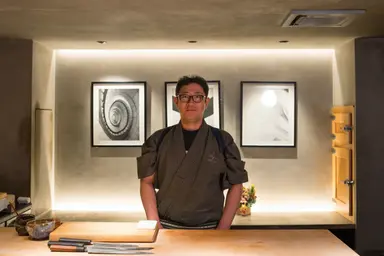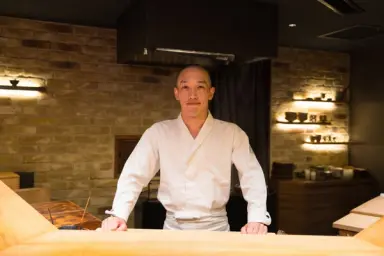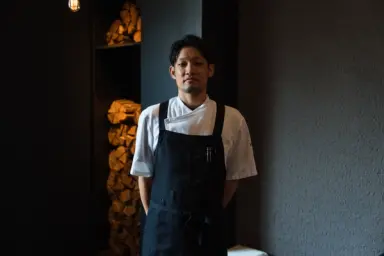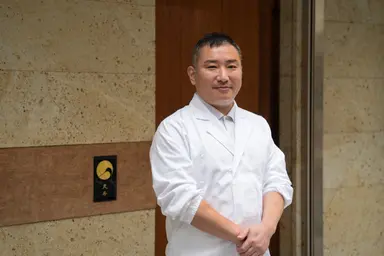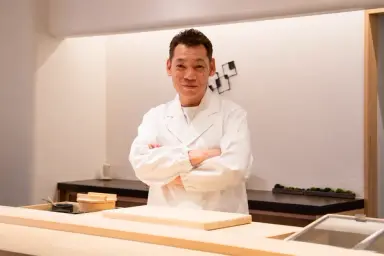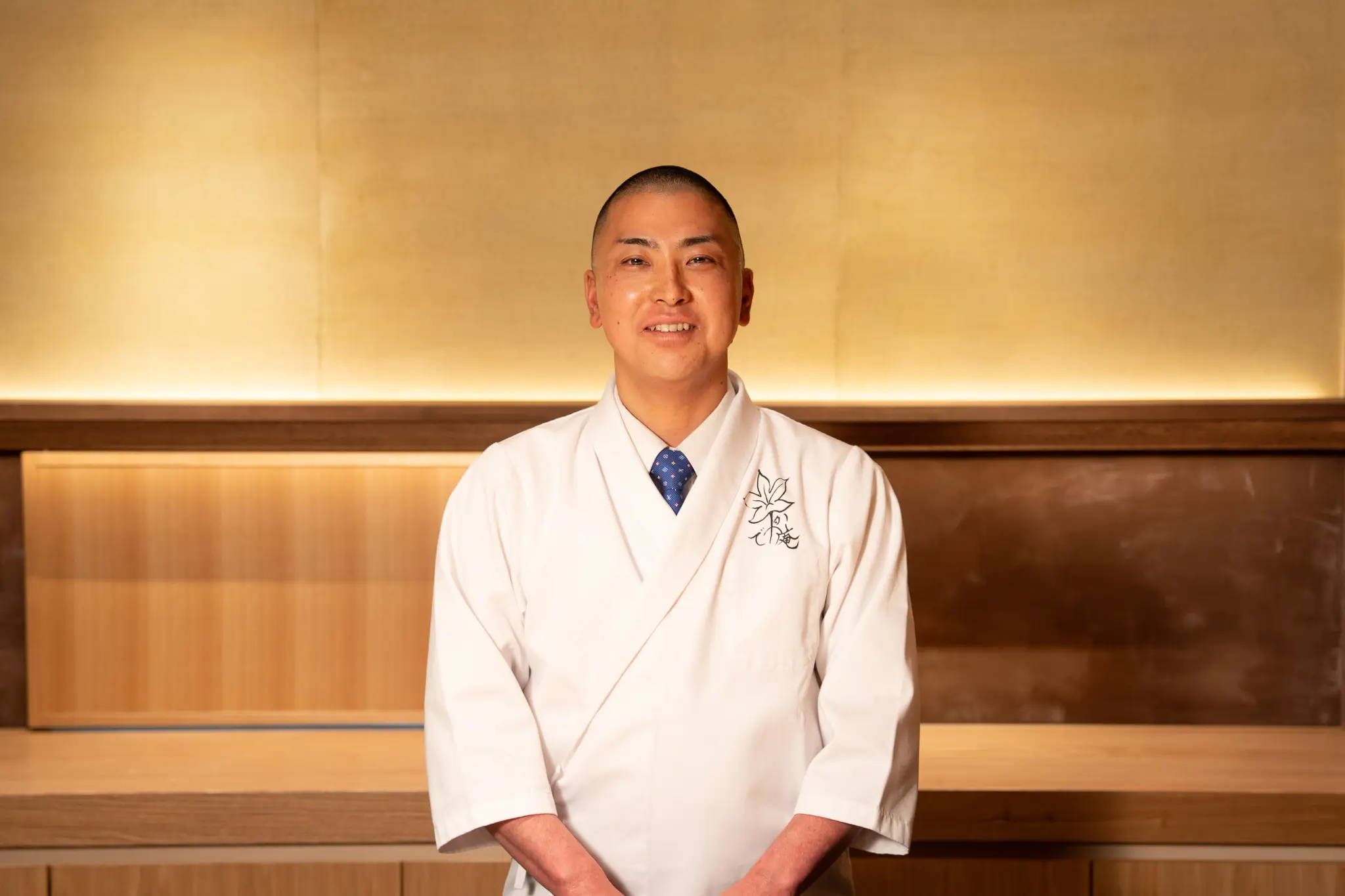
Yotsuya Kaede-an: Keisuke Yamada, the 5th-generation Owner, Carrying Forward the Timeless Taste and Culinary Tradition.
Born into a traditional soba restaurant, I grew up watching my father’s example.
— What inspired you to become a chef?
I think a big influence was growing up watching my father. When I was little, I would sit at a table in the corner of the restaurant and watch customers enjoying the dishes my father had prepared. Some had just finished work, while others were relaxing with a drink. Seeing how happy they looked, I remember thinking how wonderful that scene was.
Later, when I became a university student, I began thinking about what I wanted to do in the future and what I could do. Naturally, I felt drawn to the culinary world. However, when I heard stories from chefs, many of them had entered the profession quite early, right after graduating from junior high or high school. Compared to them, I felt a sense of urgency. So, while keeping graduation in mind, I completed as many credits as possible by my second year of university and began my culinary training in the latter half of my second year, balancing it alongside my studies.
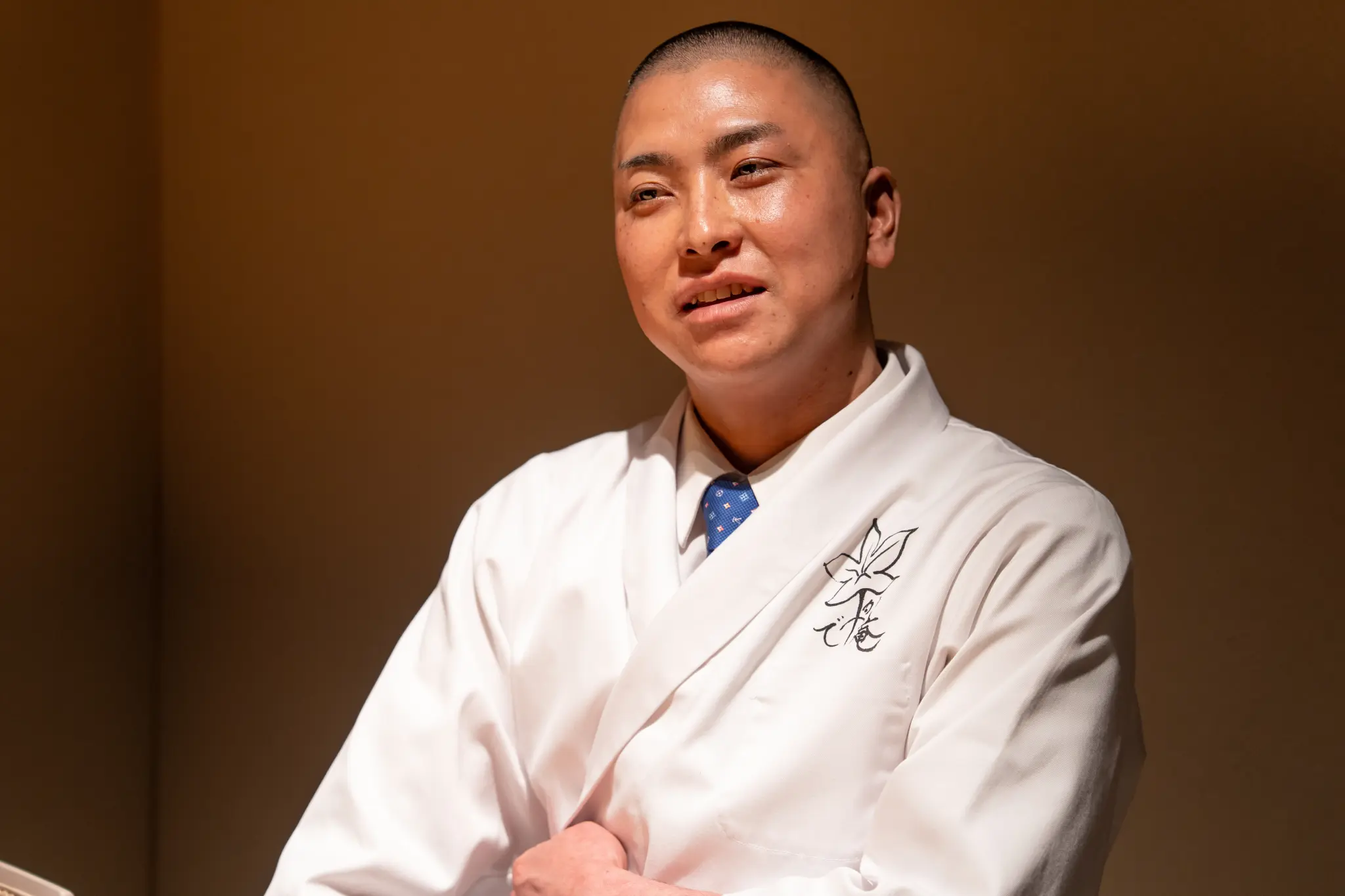
Another reason is that I grew up watching my father work so seriously, which made me want to protect and carry on what has been passed down through generations. I do love cooking itself, but more than anything, I love seeing customers happy. It’s similar to people who enjoy giving gifts — I enjoy the entire process leading up to that moment, and especially seeing the smiles that follow. That’s probably why I continue working as a chef today. The preparation work can be quite demanding at times, but I always look forward to the smiles of the customers that await beyond it.
ーAt the core of it all, there is a desire to "make people happy," isn't there?
Yes! I create the menu while thinking about the customers, go out to source the ingredients, and plan the order in which the dishes will be served. I also put effort into preparing the setting to welcome our guests. Through this accumulation of effort, the joy of seeing our customers happy grows even greater. I think it’s because I truly enjoy this entire process that I’ve been able to continue working as a chef.
Following my heart, I dove into my training destination.
— Could you tell us about how you chose where to train?
I had discussed my future with my parents, and my father told me to follow my own path. What sparked the turning point was a comment from my mother: “You’ve never had a kaiseki-style Japanese course meal, have you?” She took me to a restaurant called【Shifuku in Kagurazaka】, which has since closed. The restaurant was set in a traditional house, with a tatami tea room on the second floor and a counter on the first floor.The food was incredibly delicious and deeply moving, and I immediately felt, “I want to learn here.” The very next day, I went back and bowed my head, saying, “I don’t need a salary—please let me train here.” That was the beginning of my journey as a chef. I was truly reckless in a way, or maybe just bold enough to dive in without hesitation.
ーSo, you jumped straight into culinary training, didn't you?
That's funny. Even my master (Mr. Akito Ito, owner of Kagurazaka Shifuku) reacted with 'You're the one who came to eat here just yesterday, aren't you?', and was quite surprised. I had never even touched a knife before, and had absolutely no knowledge of tableware or ingredient names, so I caused him a great deal of trouble. Looking back now, I really do wonder how he was willing to take me on when I was, as a chef, starting from absolute zero.
— What led you to your next training destination?
It was around four years in that I encountered Master Yoshizawa (Mr. Sadahisa Yoshizawa) at 【Ginza Ibuki】 and the newly opened 【Yoshizawa】, and I was deeply impressed by his culinary technique. After that, I was fortunate enough to be taken under the wing of Master Yoshizawa, whom I had long admired, at 【Yoshizawa】.
Learning the Perspective of a Responsible Leader
— I understand you served as a head chef during your training. Could you tell us about that experience?
Master Yoshizawa entrusts me with full responsibility across a wide range of positions. Taking on the role of head chef — a position that carries real weight — taught me a great deal that I could only truly understand once I was in it. I came to feel a deep sense of responsibility that comes with a title, a genuine appreciation for the support of my staff, and a real understanding that a restaurant truly functions as a team.
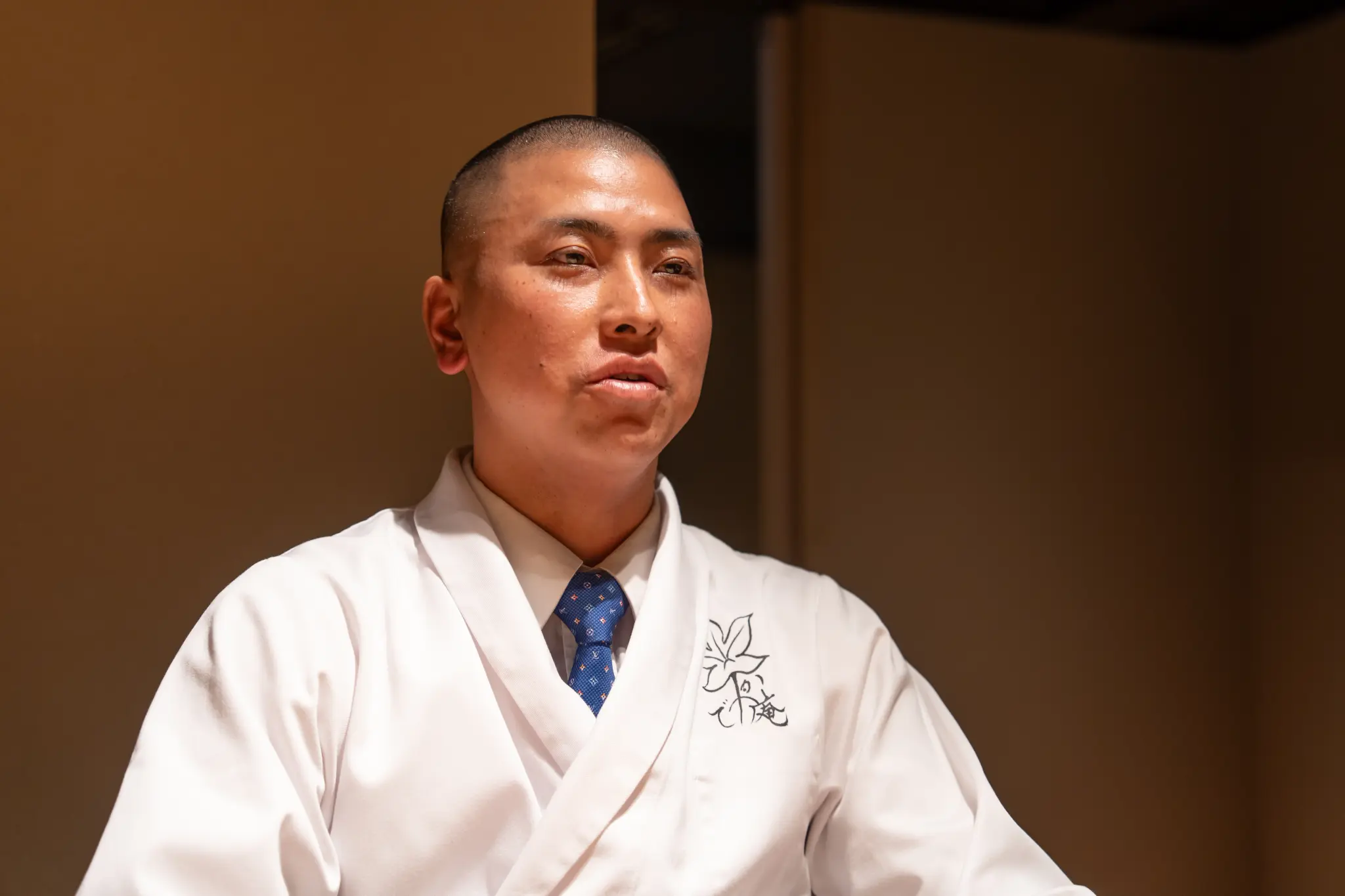
I was given the role of head chef in my early thirties, but I was still very much inexperienced. There was even a period when I thought that as long as customers were drinking plenty, the revenue would take care of itself — and I learned the hard way when customer numbers dropped the following month.
It was during that time that Master Yoshizawa gave me guidance that has stayed with me ever since: 'As head chef, your role is not simply to think about the food — you must think about your staff, your customers, and keep an eye on the entire space as a whole.' He taught me everything, from how to engage with customers to the fundamental philosophy of running a restaurant. Knowing that I would one day be in a position to carry on 【Yotsuya Kaede-an】, he kept that future in mind as well, and it became an opportunity for me to reflect deeply on what my own responsibilities truly are.
—You have also inherited culinary techniques from Master Yoshizawa, haven't you?
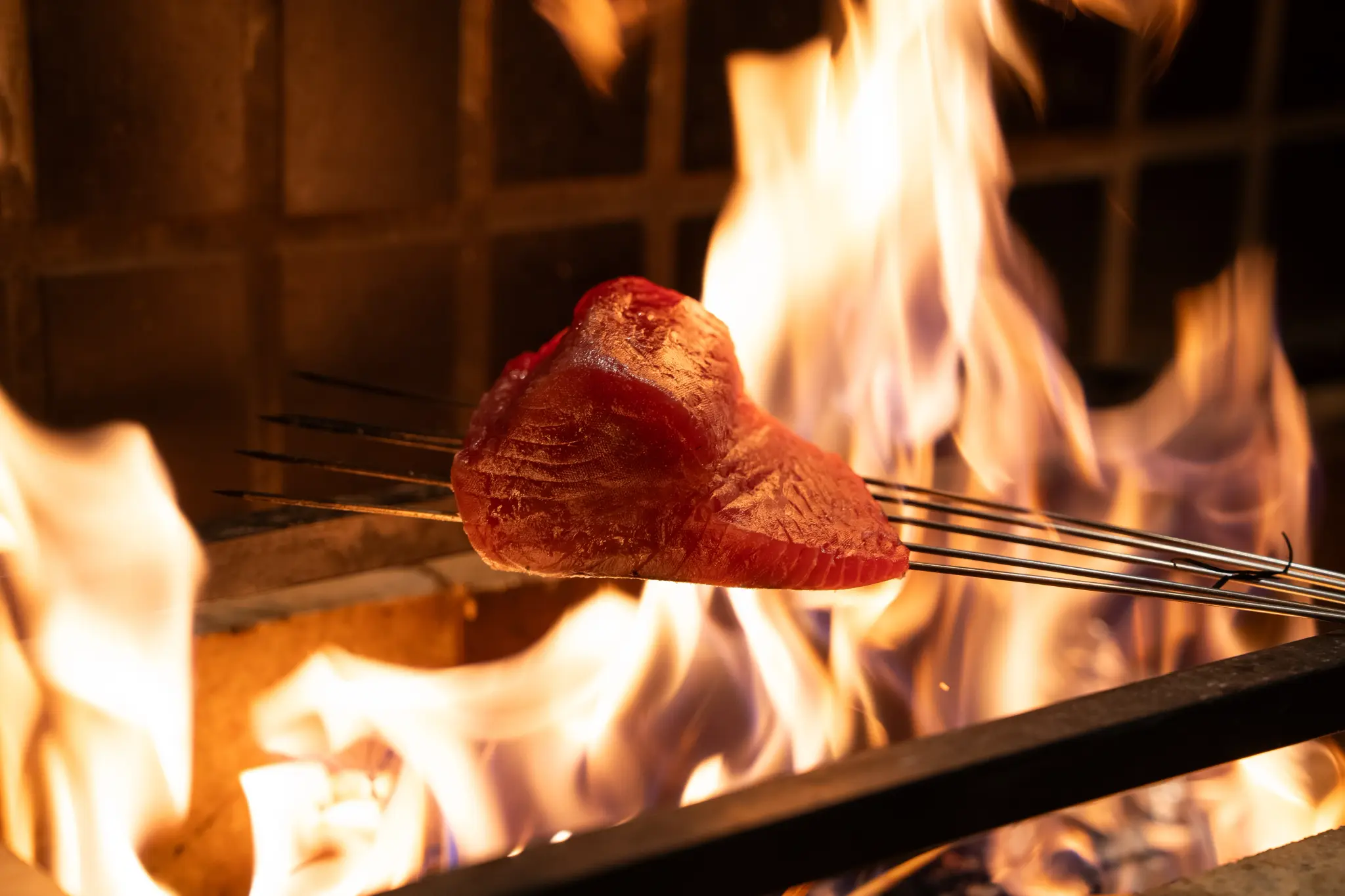
Yes, indeed. In particular, the 'Straw-grilled bonito
' — seared bonito over straw — which we currently serve as our signature dish, is one that I inherited directly from Master Yoshizawa. The first time I tasted it, I was truly struck by it, and in fact, it was that very dish that inspired me to seek out an apprenticeship under Master Yoshizawa in the first place.
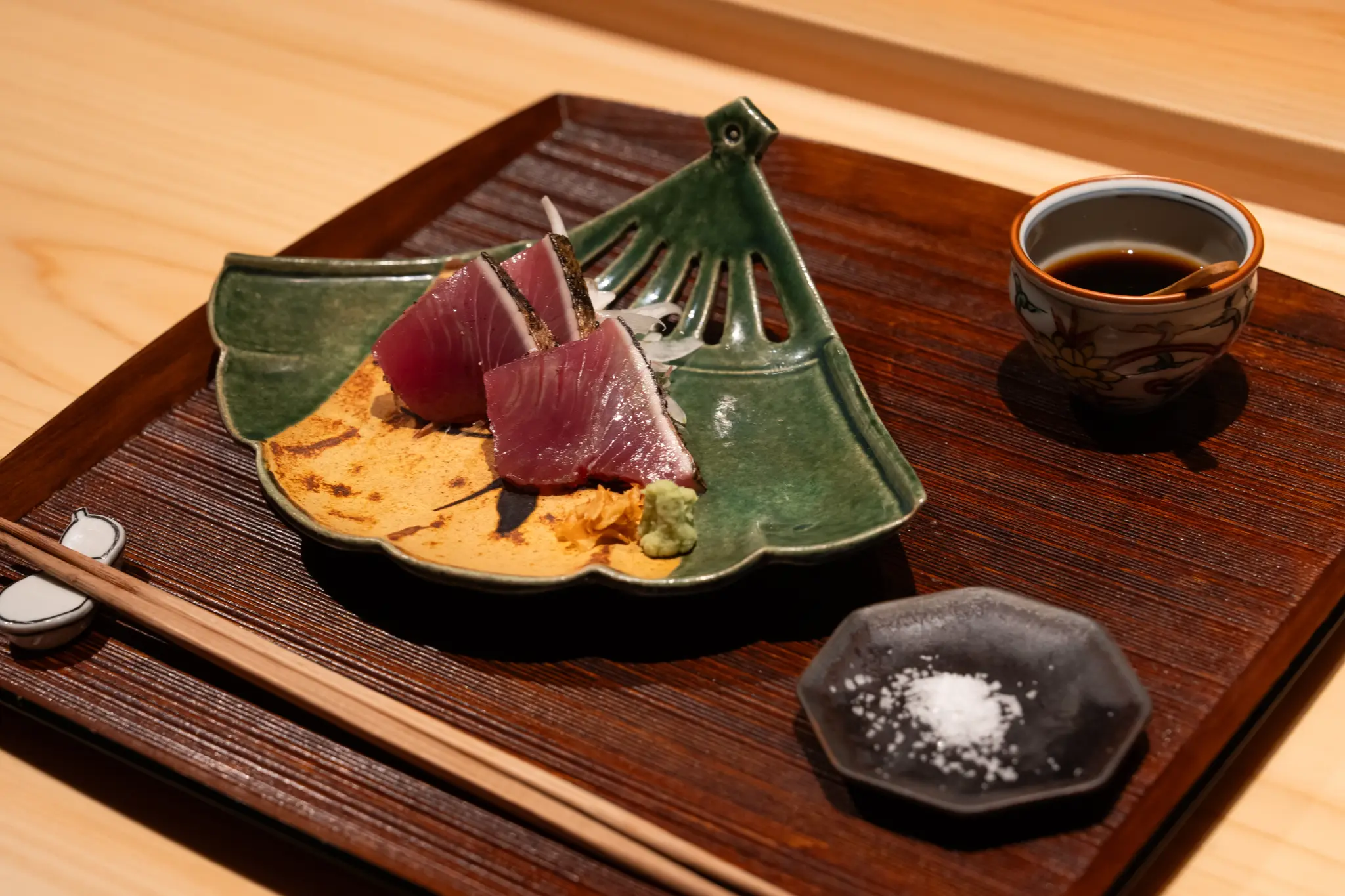
Master Yoshizawa always scolds me when I say this, but he has guided me not only as a chef but in my personal life as well, and we have now known each other for some thirteen or fourteen years. For me, Master Yoshizawa is very much a 'second father' figure — both professionally and personally.
ーYou also helped out at Akasaka Ogino, correct?
My time at 【Akasaka Ogino】 was a short one — about a month — and it was less of a formal apprenticeship and more of an assistantship or training placement. Mr. Satoshi Ogino, the owner of Akasaka Ogino, is also a senior from my hometown, two years above me in middle school, and is very much a chef who carries the presence of an actor.
What I learned most from him was attentiveness — the kind of careful, considerate eye you keep on your guests. For instance, during service I noticed a customer's glass was empty and was about to offer a refill, only to find that Mr. Ogino had already caught the customer's eye and said, 'You'll be having sake next, won't you?' His culinary skills are, of course, exceptional, but what truly stayed with me was the way he kept a close watch on each and every guest, always thinking about how to make their experience as enjoyable as possible — and acting on it.
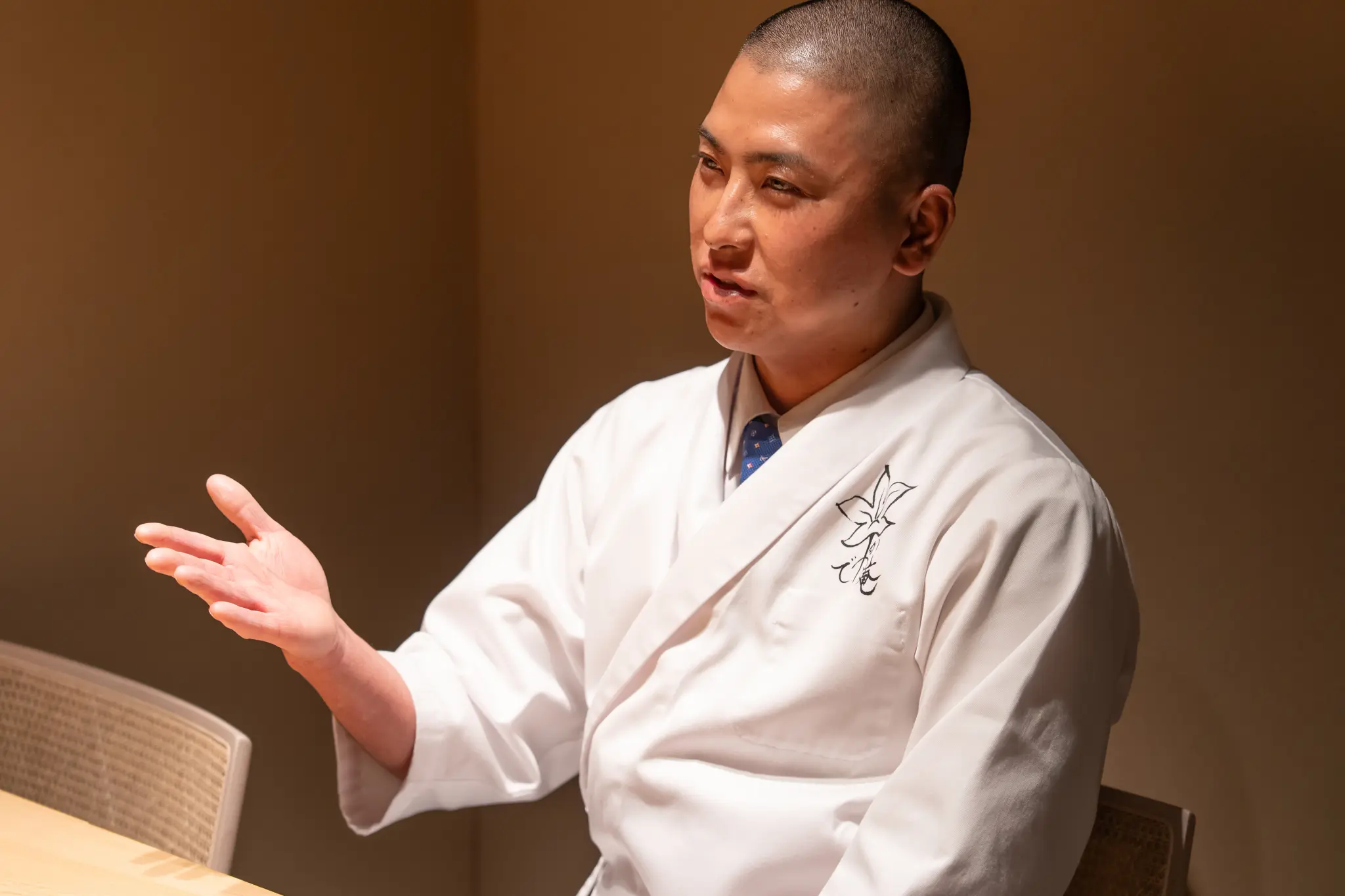
Something Mr. Ogino always emphasised was that, much like an actor, a smile is everything. These days, it's quite common for guests to post photos of the chef on social media, isn't it? So even while cooking, he is always conscious of making eye contact with his guests. He gave me a real push forward with these words: 'If you look your guests properly in the eye, I don't think anything can go wrong — after that, it's simply a matter of serving your food with confidence and seeing whether they take to it.'
To Inherit and Preserve as the 5th-Generation Owner
ーCould you tell us about the background behind your decision to transition from a traditional soba restaurant to Japanese cuisine?
Recently, traditional neighborhood soba restaurants have been disappearing. With the rise of convenience stores, chain restaurants, and food delivery services, people now have many more options, and the demand for local soba shops has declined. I felt that we would not be able to survive unless we continued to adapt and innovate.
Another reason is that, based on what I personally learned while training in Japanese cuisine, I began to think about how I could make the best use of my abilities to satisfy our guests. At the same time, I wanted to preserve the foundation of 【Kaede-an】 as a traditional soba restaurant, which is why we kept the name. By adding what I have learned through my own training, I hope to elevate the restaurant and create an experience that brings even greater enjoyment to our guests. Thinking about how the restaurant should evolve led us to the renewal of 【Kaede-an】.
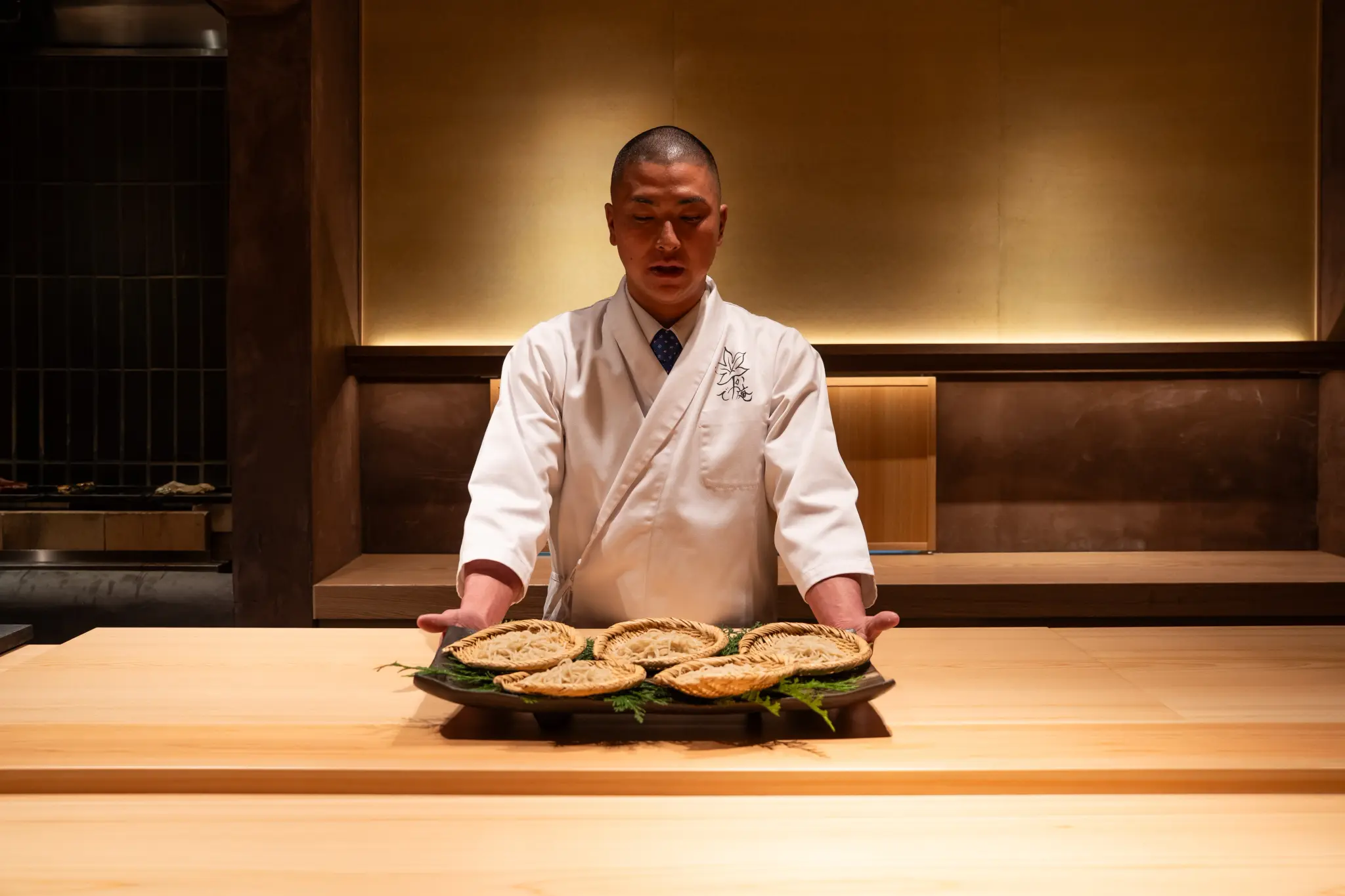
ーAs the fifth-generation owner, what do you hope to change, and what do you want to preserve?
Of course, I want to preserve the restaurant’s name, as well as our dishes and the soba dipping broth that has been passed down for generations. To allow guests to enjoy the same broth that has remained unchanged since the restaurant’s founding, I am particular about the course structure—beginning with chilled soba and finishing with warm soba.
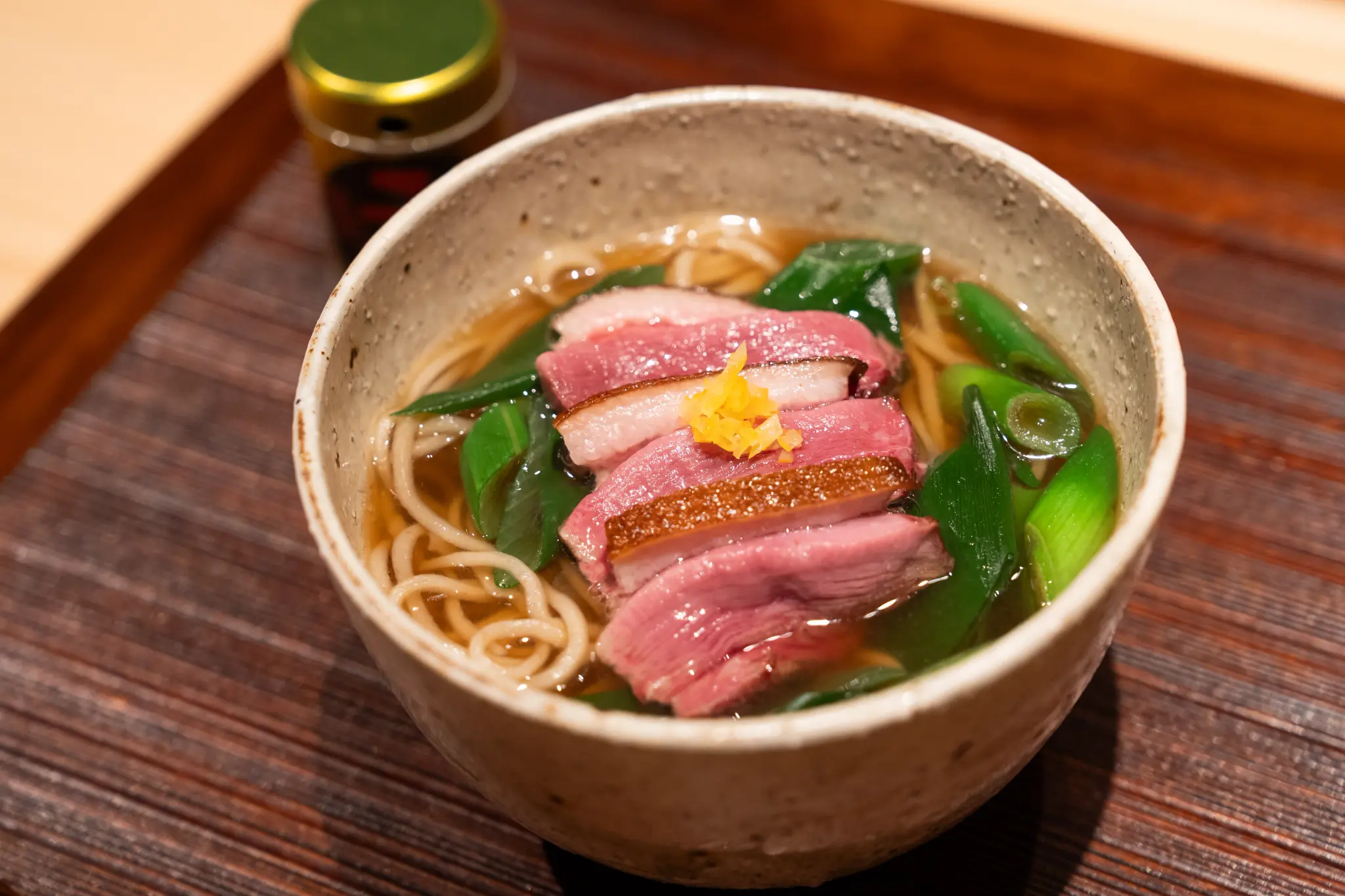
One of the reasons my desire to preserve the restaurant’s name grew stronger was when my child was born. My wife chose the name “Kaede,” and my parents were overjoyed by it. Seeing how happy they were made the name feel even more meaningful to me.Also, 【Kaede-an】 has a long history in the area of Yotsuya. With that in mind, I wanted to carry the name of Yotsuya proudly and achieve something worthy of it. That’s why I decided on the new name 【Yotsuya Kaede-an】.
ーIs there anything in particular that you value when it comes to your cooking?
I never allow myself to settle for “this is good enough.” I always push my cooking until it reaches a level that truly satisfies me. At the same time, I carefully prepare while thinking about the guests we are welcoming. For example, I might remember that a certain guest loves crab and think about how I can make them happy. I build each experience while imagining what would best suit each individual guest.
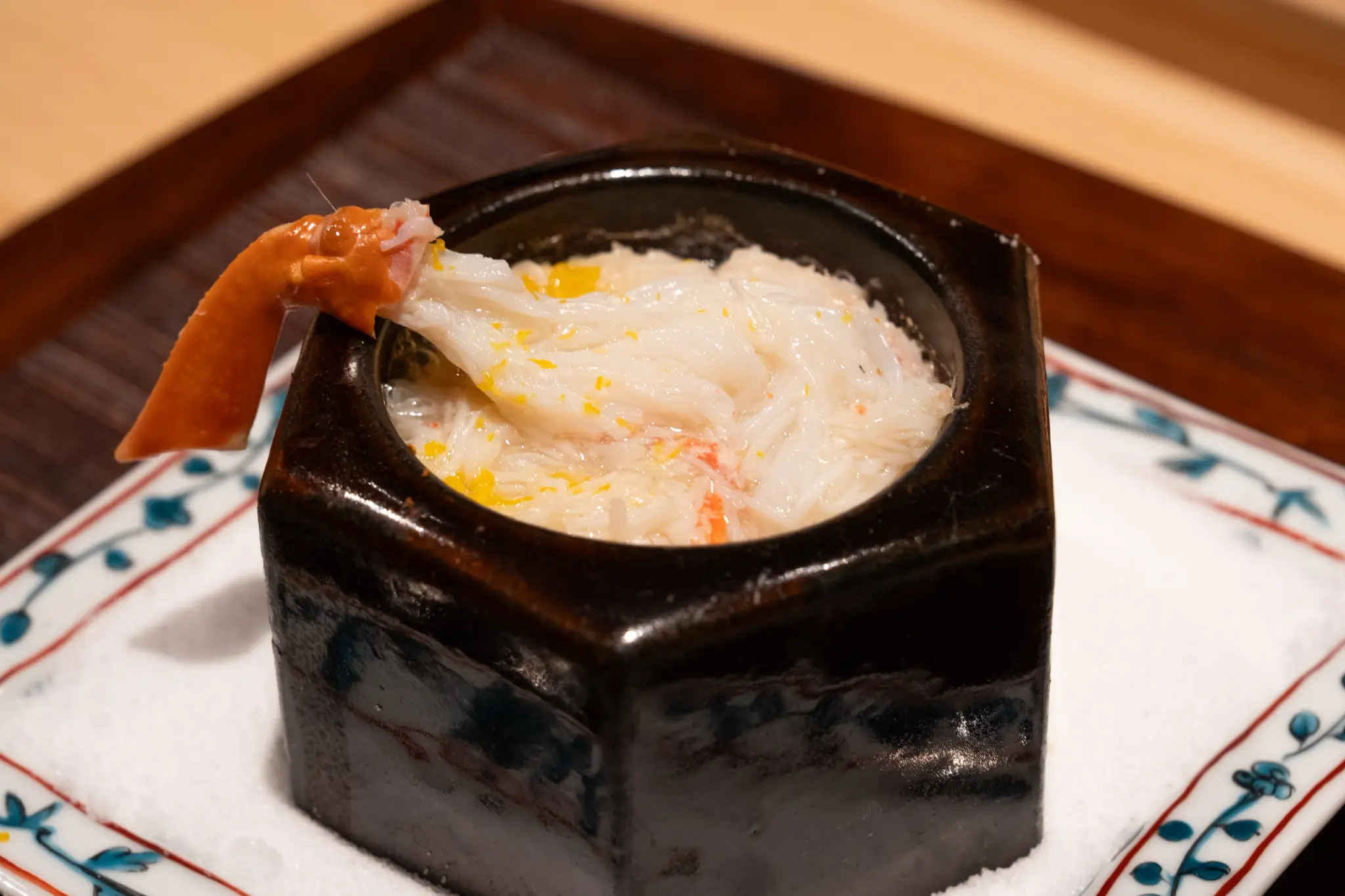
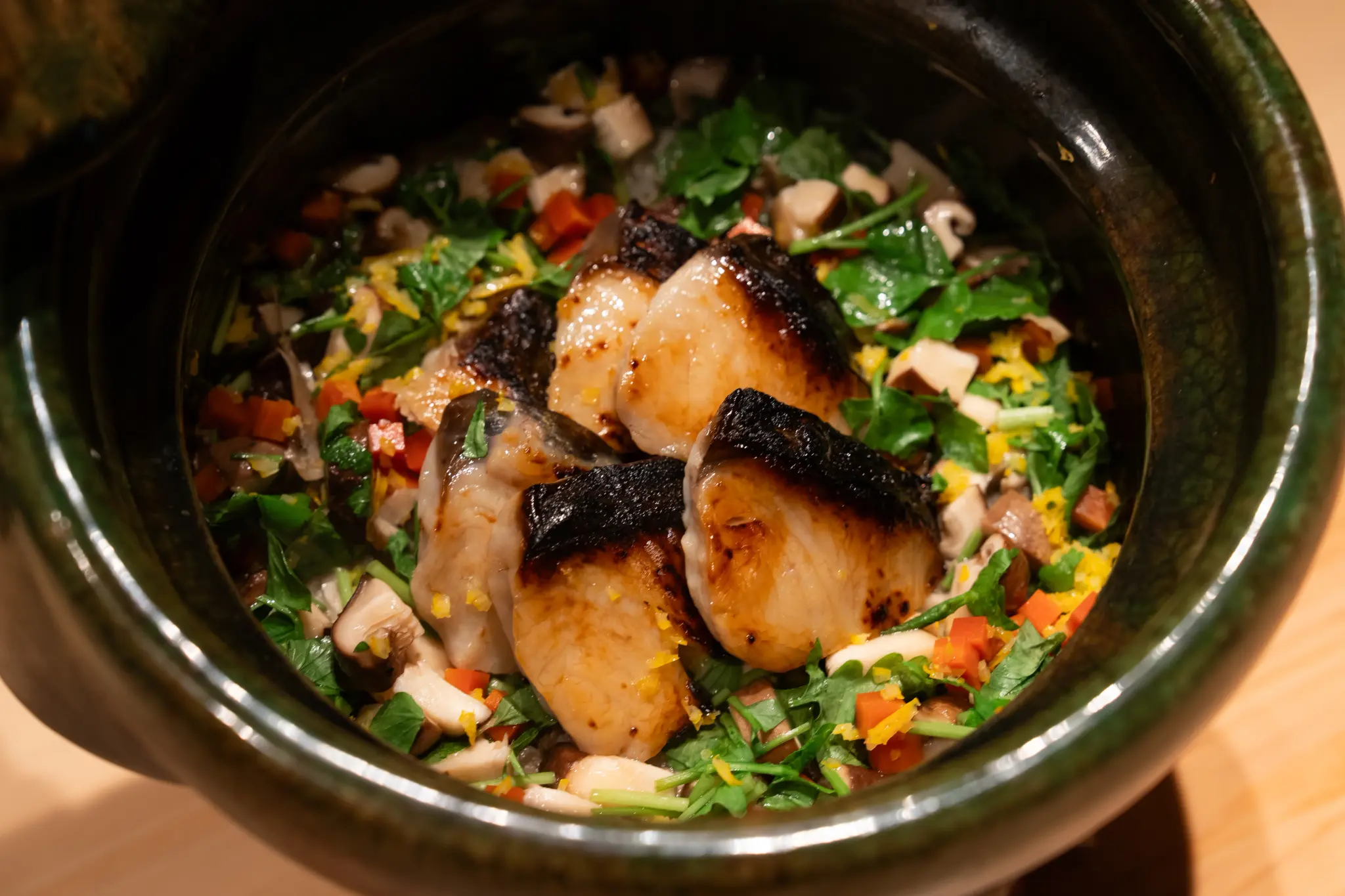
I’m sometimes asked, “What is the main dish?” But rather than building the course around a single main dish, I focus on the overall flow, like the structure of a story with a beginning, development, turn, and conclusion.If there is a vibrant, visually striking dish, I follow it with something more subdued — a simpler dish. I place great importance on that balance. This is something I learned from my mentor. Just like with clothing, where the overall balance matters, serving only elaborate dishes would become tiring. So in between, I include vegetables or lightly seasoned dishes such as ohitashi, or after a crab dish, I might serve a refreshing vinegared dish as a palate cleanser. After that, guests may reset their palate with a drink before moving on to the next course.This sense of balance comes from the range of experiences and techniques I developed during my training, and from there it becomes a matter of how everything is combined.When I encounter a challenge, instead of immediately focusing on whether a specific dish was not good enough, I make a conscious effort to step back and review the entire flow of the course.Looking back, I feel that my training period was an incredibly valuable time in which I was able to expand my repertoire and sharpen my instincts as a chef.
ーDo you have any particular commitments when it comes to ingredients?
I ask trusted suppliers to provide ingredients that I personally find delicious when I taste them myself. For example, the bonito we served today comes from the same fish supplier I have worked with since my training days. We’ve now had a relationship for about 15 years. Even if their products are more expensive than others, I prefer to work with someone I trust who will always provide high-quality ingredients.For vegetables, I work with a greengrocer I’ve known since my apprenticeship, as well as the one my father used for sourcing. When I begin working with a supplier, I always say, “If we’re satisfied, I hope we can build a long-term relationship.” I truly value these connections and encounters, and I prefer to entrust our ingredients to people I can trust.
To Continue Being a Beloved Restaurant Through the Strength of a Team Built on Trust
ーCould you tell us about your thoughts regarding your staff?
All of the staff members worked with me during our training days. Many of them had actually left our mentor earlier to continue their training elsewhere, but with our mentor’s encouragement, they chose to join me when I opened my own restaurant.
Just as our mentor trusted and entrusted work to us, I want to do the same for them, so I try to create opportunities where they can take responsibility. For example, one staff member who loves sake visits breweries and helps select the sake we serve. Another had studied traditional Japanese sweets, so I often consult with them about what dessert we should offer each month. One autumn, a customer even requested a Mont Blanc dessert, and I entrusted it entirely to that staff member.There is also another staff member who is extremely reliable and never does anything careless, so I entrust all of the behind-the-scenes work to them.I remember how happy I felt when I was trusted with important responsibilities during my own training. Because of that, I want our staff to continue growing as well. I hope that by entrusting them with meaningful work, it becomes a source of motivation and fulfillment for them.
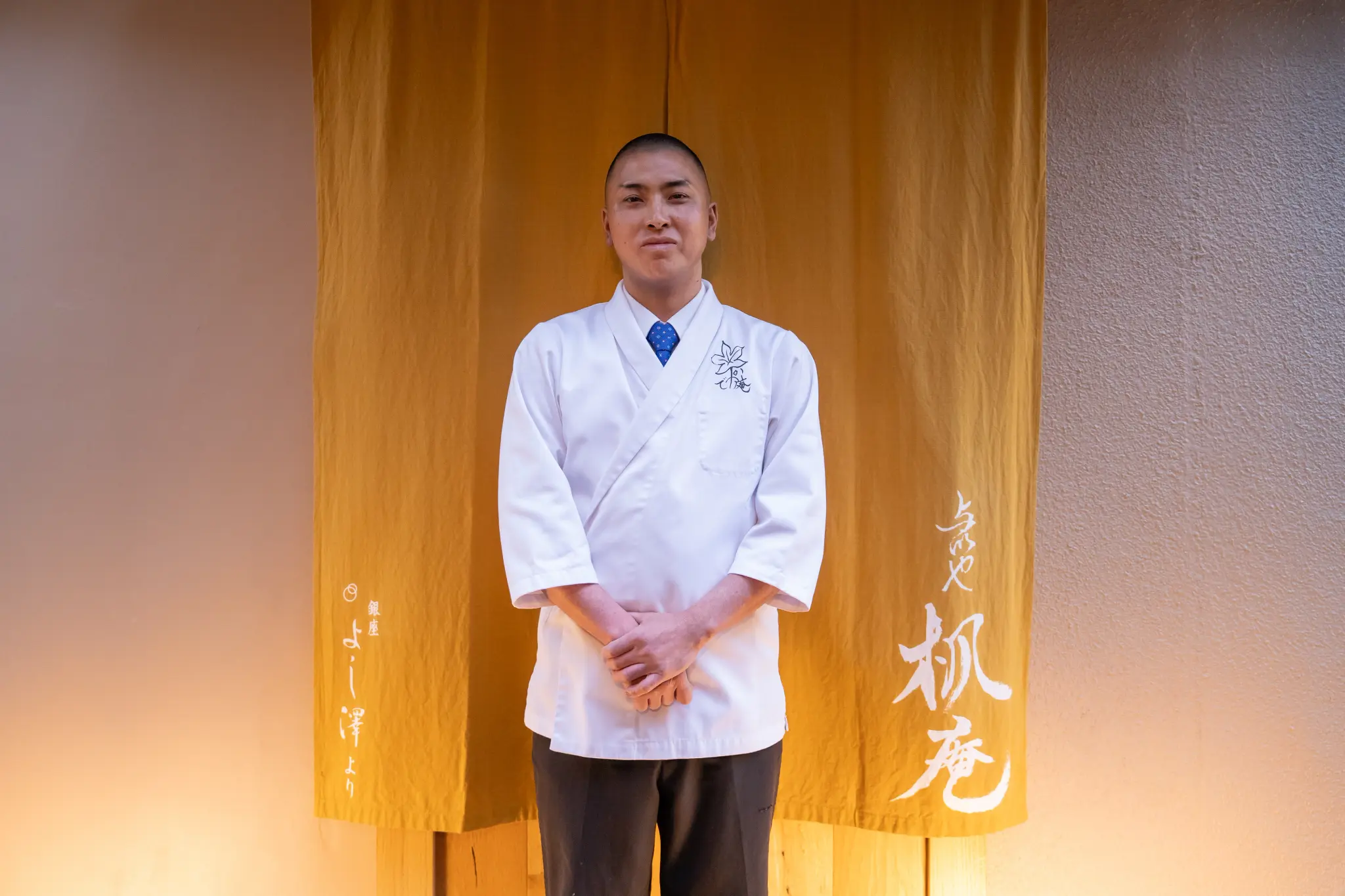
If they aim to become independent one day, I intend to support them in that as well. For that reason, I hope they will think and act together with me to help make 【Yotsuya Kaede-an】 thrive. By doing so, they can develop their own abilities, and I believe that will become the shortest path toward their own independence.
ーLastly, could you tell us about your vision for the future?
I often tell my staff that I cannot achieve this alone. As a team, I want us to protect and carry forward the culture of 【Yotsuya Kaede-an】. To do that, we must aim to become a restaurant that people want to visit again.
From my perspective, a great restaurant is not only about delicious food and kind people. It also has additional value. That value can be anything — for example, being conveniently close to home, having a comfortable sense of space between tables, enjoying a pleasant conversation with the owner, the thoughtful way a coat is returned, or the perfect timing of the bill.
The more these small elements come together, the more likely guests are to feel that they want to return. I always tell my team that we should continue refining these details together as the team of 【Yotsuya Kaede-an】.
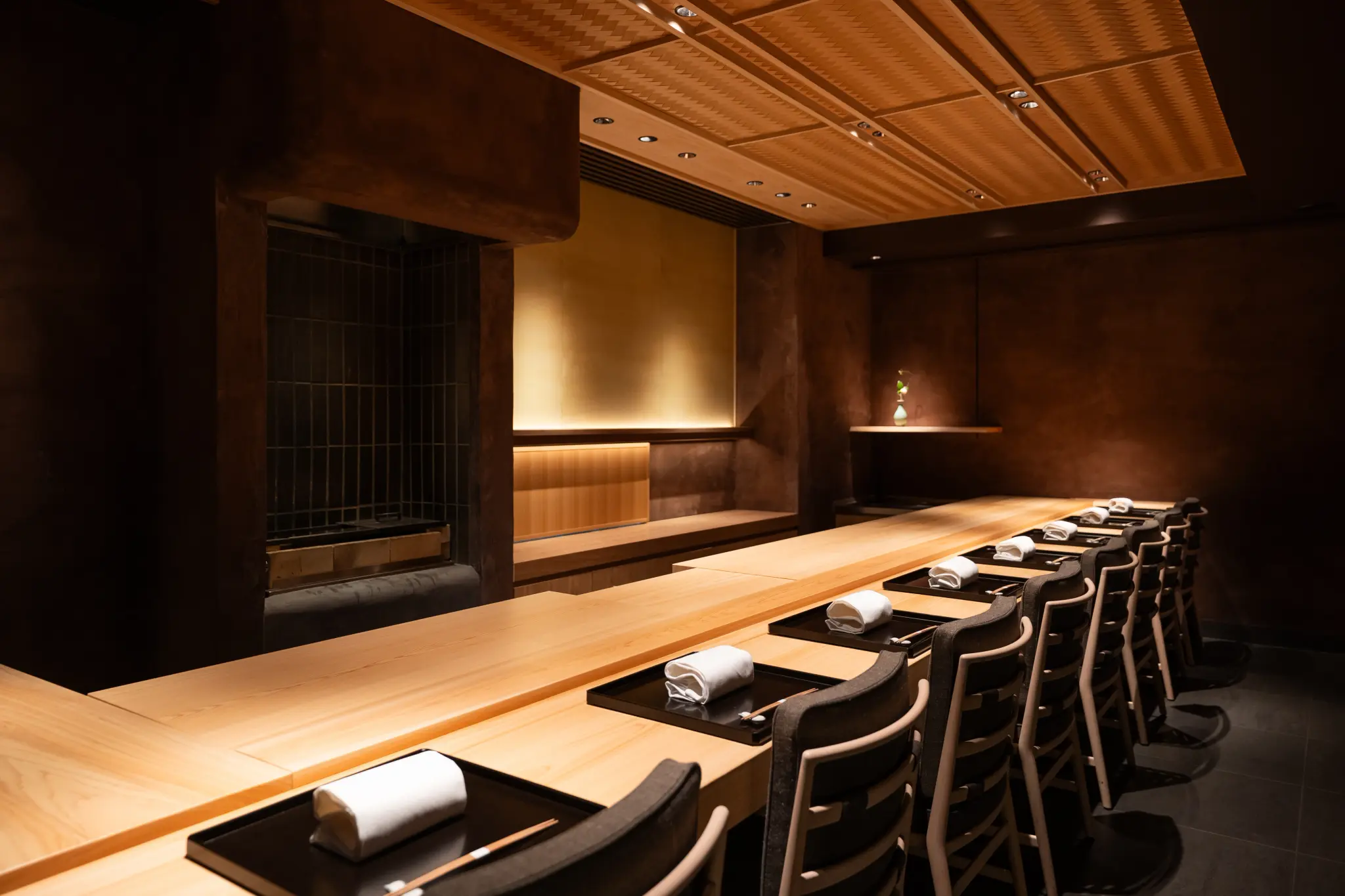
“I never compromise when it comes to cooking, and I want to protect this restaurant together with my team.” In those words, one can sense both the dedication he has carried since his apprenticeship and the years he has spent facing the responsibilities of being a leader. What left the strongest impression was Yamada’s gentle expression as he spoke enthusiastically about creating menus while imagining each guest’s preferences, guided by his desire to make people happy. The flavors and spirit that have been passed down in Yotsuya will continue to be cherished—carrying forward the timeless taste while opening a new chapter in the story of 【Yotsuya Kaede-an】.
Reporting & Text / AutoReserve Magazine Editorial Team
Photography / Shoichi Baba
Store Information
- AutoReserve Magazine
- The hottest new shop right now
- Yotsuya Kaede-an: Keisuke Yamada, the 5th-generation Owner, Carrying Forward the Timeless Taste and Culinary Tradition.