Seeking the Ultimate Skewer, Engaging All Five Senses
―――What are the distinctive features of yakitori at 【Torishiki】?
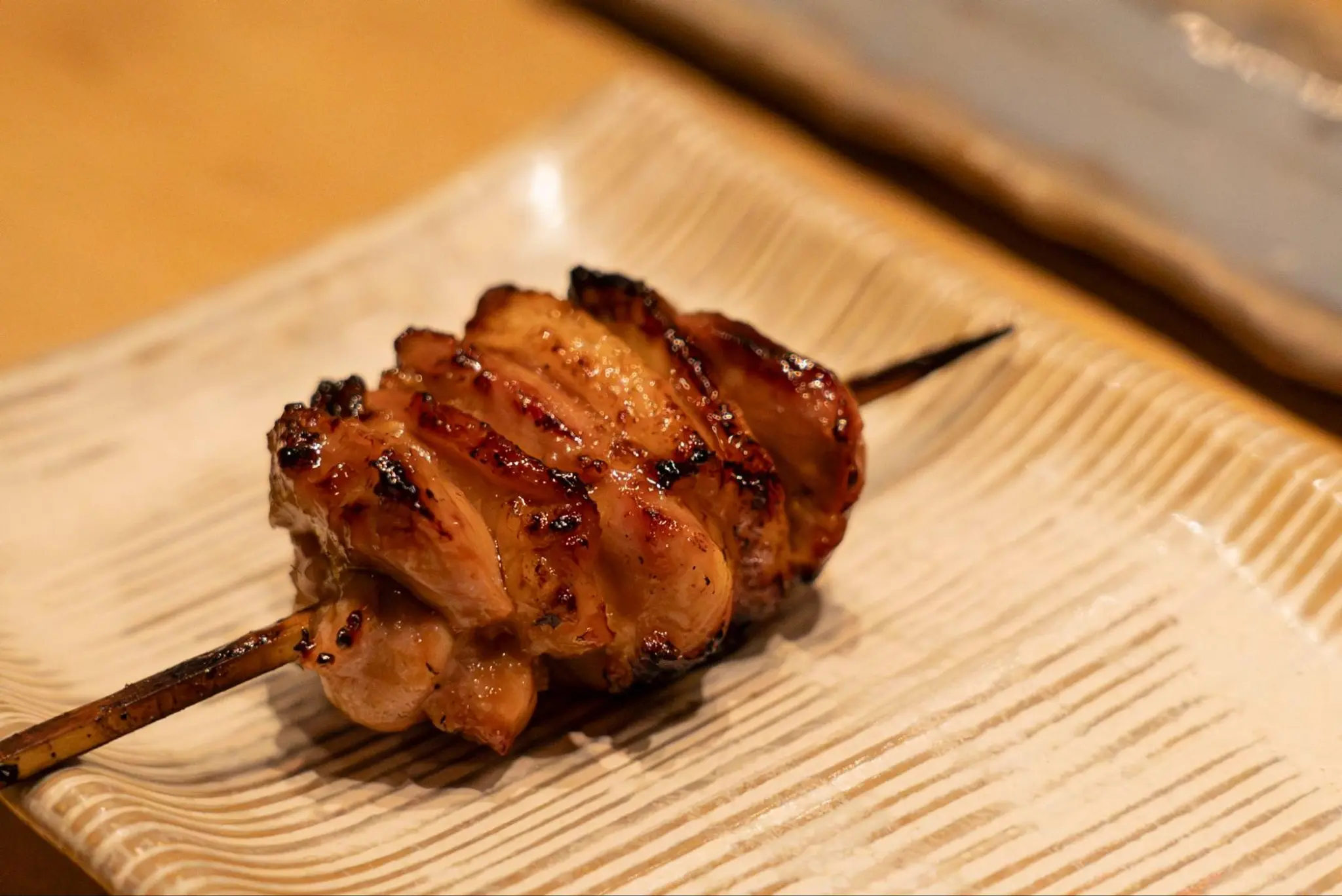
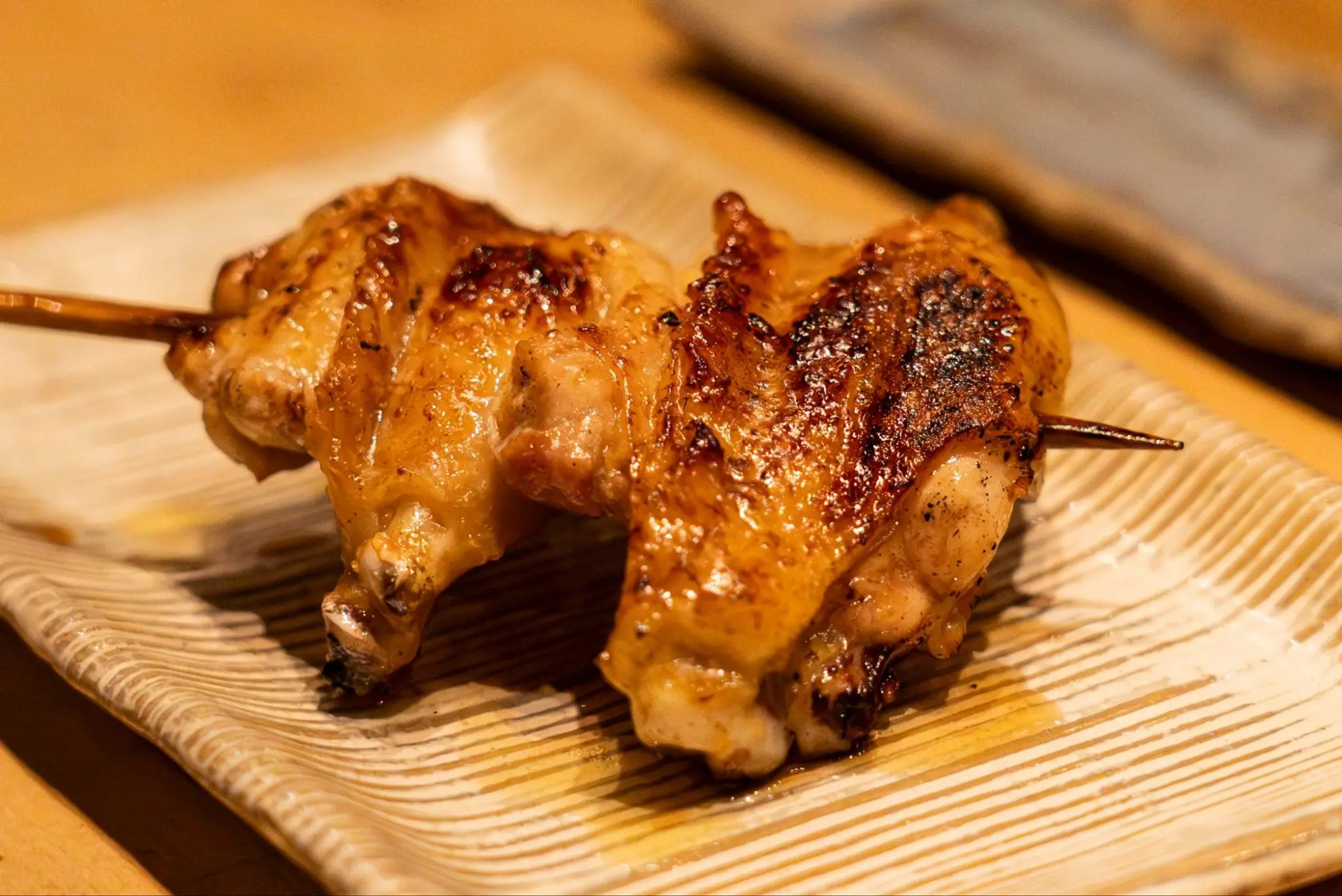
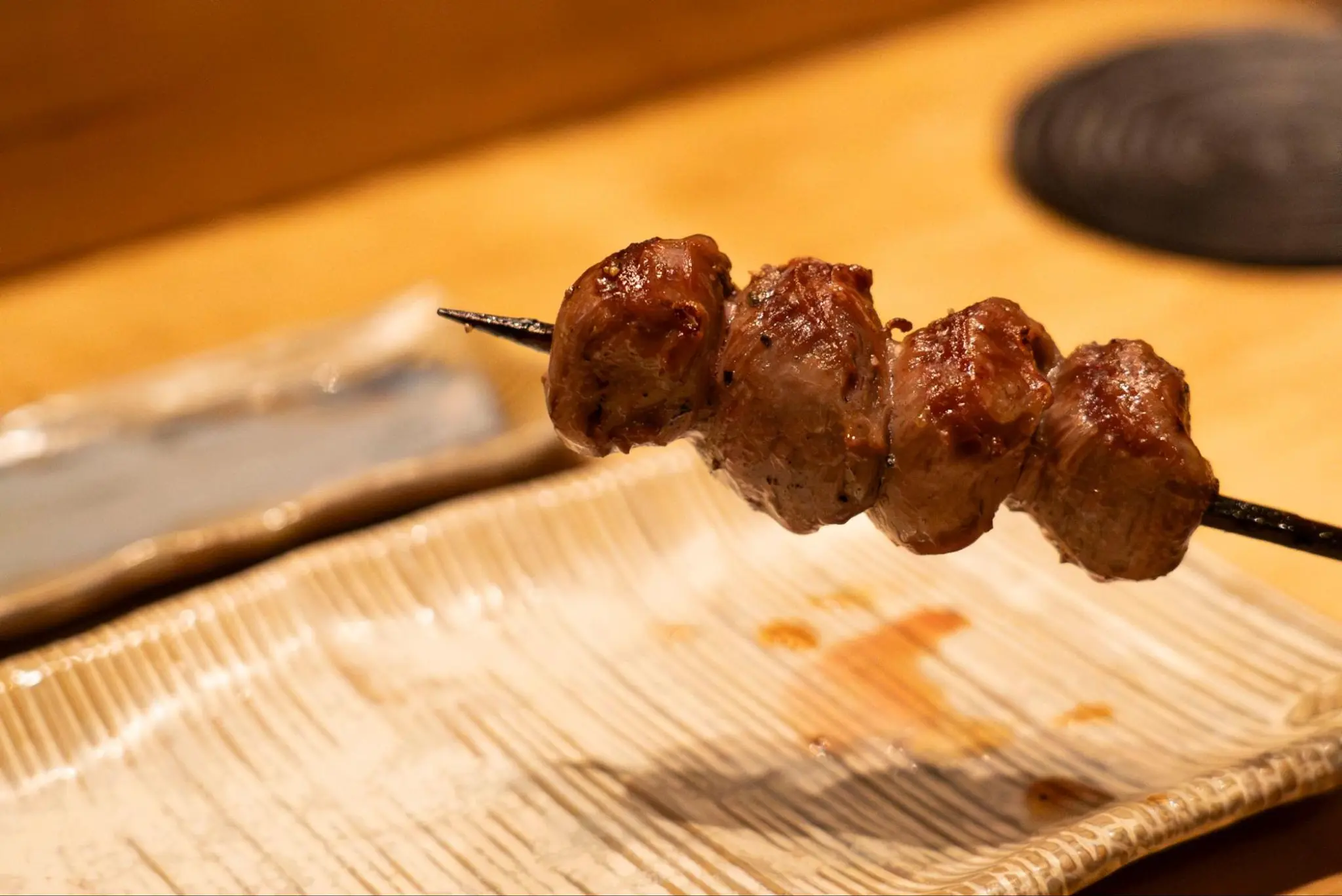
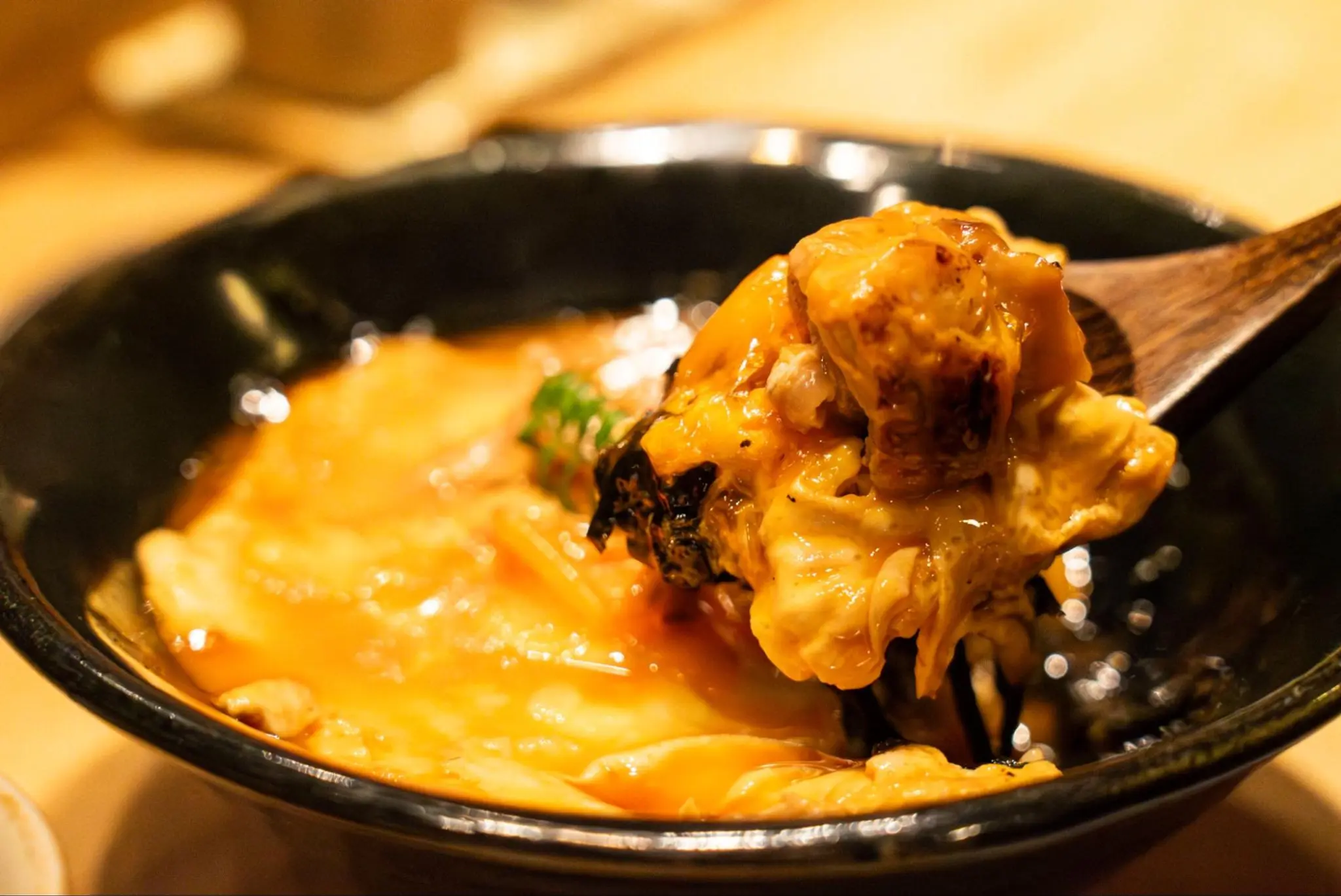
We use the whole chicken from "Date Chicken" from Fukushima Prefecture, and our style is to serve a selection of skewers until the customer says "stop," as long as the ingredients and time allow. The "Date Chicken" is grilled by each cut, and we always have around 25 different items available, including seasonal vegetables. For the finale, we offer rice dishes or other meals, depending on the guest's appetite.
We've tried various types of chicken, but "Date Chicken" has a unique texture that lies between young chicken and free-range chicken. It retains its tenderness when grilled, and its mild umami flavor makes it a perfect match with 【Torishiki】's style of charcoal grilling. Even when switching between different cuts, the taste doesn't become too heavy, making it an ideal choice for our grilling method.
―――What do you focus on during the preparation process?
First and foremost, it's important to "understand the ingredients." Even with the same chicken, there are differences in texture, fat distribution, and muscle structure depending on the season. Vegetables also have variations in skin texture, umami, and water content. By carefully understanding the unique characteristics of each chicken, I make sure to cut the whole chicken into parts with a clear vision of how each piece will cook evenly and how it will feel when the customer bites into it.
Next, when skewering the meat, I focus on inserting the skewer precisely through the center of each piece. If it’s even slightly off-center, it could cause uneven cooking, or the skewer might cause the meat to shift, allowing the juices to escape. I make sure to imagine how the heat will be transferred and adjust the placement of the skewer with sensitivity, paying attention to the feel in my hands, and ensuring that each skewer is perfectly balanced.
―――It seems like your approach is based on carefully selecting the ingredients. How about when it comes to grilling?
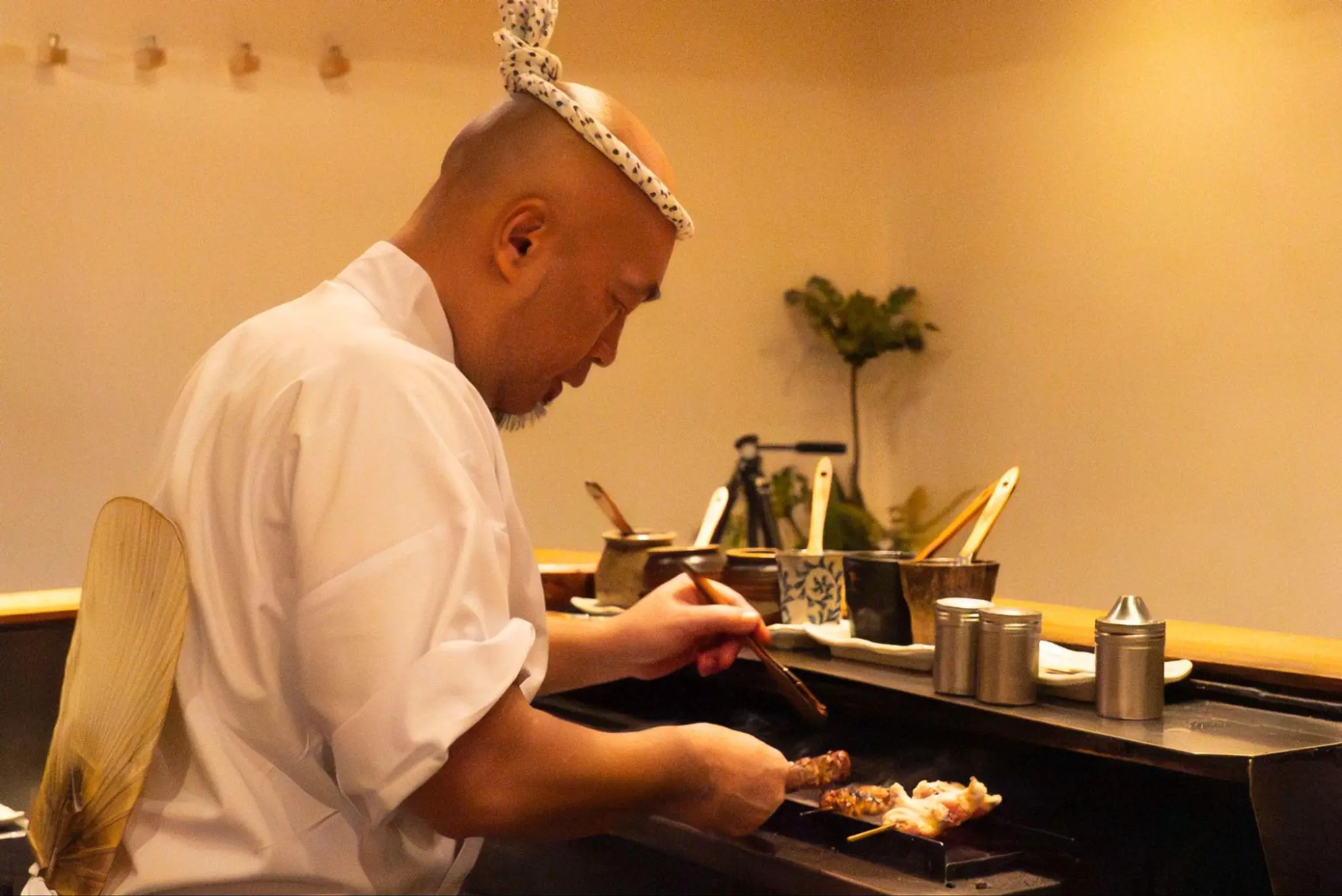
The defining characteristics of charcoal grilling are the heat and aroma. By grilling quickly, the heat is trapped inside the meat, transforming it into umami, while the nostalgic, savory fragrance tickles the nose, offering a lingering aftertaste that is uniquely possible with charcoal.
Charcoal is a natural product created by artisans in kilns, so no two pieces are the same in size or shape. The moisture content of the charcoal changes depending on the season, so I tap it lightly to assess its condition based on the sound. By predicting the heat output of the charcoal, I arrange it to ensure even heat distribution across the grill. This step is critical in determining how well the yakitori turns out.
On the other hand, looking at it from another perspective, the individuality of the charcoal can sometimes introduce an element of instability in the cooking process. "Knowing the ingredients" begins with accepting the inherent instability that comes from something created by nature, where no two pieces are identical.
The challenge and excitement lie in how well I can concentrate on each skewer and sense its uniqueness, sharpening my five senses to engage with each moment. I constantly focus on assessing changes in the ingredients during grilling—such as how they expand or how their color develops—and consider how to bring out their individuality without interfering, always striving to cook them to perfection.
I've been in the culinary world for over 20 years, but I still cannot claim to have found the "perfect skewer." Yakitori is an incredibly profound field that constantly challenges me to think about how to make it even more delicious each day.
―――When did you first realize the charm of yakitori?
It was about 40 years ago when I was a young elementary school student. The shopping street in the downtown area of Tokyo where I grew up would come alive with residents in the evening. On my way home from playing with friends, hungry and ready to head back, the enticing smell of yakitori would waft through the air. Back then, yakitori was affordable even on a child's allowance, so I would often grab a skewer with my friends, holding small change in hand. Sometimes, my mother would bring home yakitori, or my father would occasionally take me to an izakaya where yakitori was served. Even now, the vivid memories of the sweet and savory sauce, the smell of charcoal, and the uplifting feeling I had at the time are deeply etched in my mind. For me, yakitori represents the origin of "delicious food".
This connects to the name of 【Torishiki】, as when I was thinking about what I wanted to convey to customers through yakitori when starting the restaurant, I had two thoughts. The first was the excitement I felt as a child when eating yakitori. I wanted to create a place where people could enjoy the yakitori I grilled, see smiles, and leave feeling uplifted, with a renewed sense of motivation for the next day. The second was that, compared to other dishes, yakitori doesn’t have many elements that reflect the changing seasons. So, I wanted the restaurant to allow guests to feel the beauty of Japan's "four seasons" through food. With this idea in mind, I chose the name 【Torishiki】, a play on the word "shiki," which means both "season" and "style".
The Apprentice Years: Realizing My Inexperience. What Does "Heart, Technique, and Body" Mean as a Craftsman?
―――What led you to pursue a career in cooking?
It wasn’t until I was 20 years old that I started to seriously think about it as a career. A friend’s family owned a yakitori shop, and I found working there really interesting. The memories of eating yakitori when I was young resurfaced, and I thought to myself, "Life is short, and if I could make a career out of something I love, like yakitori, I wouldn't regret it". That was when I decided I wanted to eventually own my own restaurant.
However, I wasn’t yet fully aware of the world, so after graduating from university, I chose to first experience working in society. I wanted to understand how the economy works, the role of the restaurant industry in society, and customers' needs before starting my apprenticeship. I got a job at a staffing agency, where I worked as a sales representative during the week and spent my days off eating yakitori, expanding my vision for the type of restaurant I wanted to run. At that time, there were no social media or gourmet websites like today, so I relied on magazines and visited around 100 yakitori restaurants, from casual to high-end places, during my three years as a salaryman.
―――100 restaurants!? What did you think as you visited yakitori shops all around Tokyo?
Looking back, it’s a bit embarrassing, but I thought, "I could do this too." After all, it’s just putting skewers in chicken and grilling them. I thought that after about two years of training, I could learn everything and open my own restaurant. I definitely underestimated yakitori. The most impactful experience during my food tours was visiting 【Toriyoshi】 in Nakameguro, which later became my training destination.
Unlike the casual yakitori I knew from izakayas, the yakitori at Toriyoshi was served like sushi, with a refined approach. The craftsmen’s precise work, the atmosphere of customers enjoying their meals with wine, and the overall vibe completely shocked me. I knew right away that if I were to run my own restaurant, I wanted it to be like that, and I felt that if I was going to apprentice anywhere, it had to be this restaurant.
Though I thought I had learned about Tokyo’s yakitori scene after visiting around 100 restaurants, at that time, I hadn’t yet grasped the unique characteristics of each place’s yakitori. I was focused more on superficial aspects like the decor and the appearance of the craftsmen. It wasn’t until I began my apprenticeship that I realized I had been blind to the true essence of the craft.
―――What left a lasting impression during your apprenticeship?
My apprenticeship was a continuous struggle. At the time, there were about 7 or 8 other apprentices like me, but for the first year, I was in a position called "oi-mawashi" (literally "chasing around"), where my work consisted of menial tasks like washing dishes and cleaning the restaurant. I wasn’t allowed to touch the chicken at all.
In my second year, I finally started handling chicken, but it was mostly preparing ingredients and performing repetitive tasks like chopping. I had hardly ever used a knife before joining the restaurant, so it took me a long time to pick up the necessary skills. My younger colleagues were surpassing me quickly. I found myself in a dilemma, feeling anxious about how long it would take before I could stand at the grill, while also confronting the harsh reality that I wasn’t good at the work. Even when I was assigned to customer service, I couldn’t find the right words to say, and I probably felt nothing but frustration with myself at the time.
―――When did you start to feel a shift in your perspective during your apprenticeship?
I think it was around the fourth year when I was finally allowed to work at the grill. I realized that the experiences I had during the first year, such as the menial "oi-mawashi" tasks and the repetitive preparation work, had developed a certain sensitivity in me.
For example, I started noticing small changes in the restaurant, like when a dish was slightly out of place, or the thickness of different parts of the chicken when handling them, how the skewer was inserted, how the charcoal was arranged, and how the heat spread or retained. Yakitori is a simple dish where the ingredients are cut, grilled, and served, so being able to feel these subtle differences with my body became an important part of my craft. I realized that none of the experiences were wasted.
Interestingly, when I first started, I didn’t notice anything. But after spending so much time with my master, eating the same food every day, it was like "a perfect harmony", and at some point, I began to understand exactly what my master was thinking and what he was seeing with just a glance. During my seven years of training at 【Toriyoshi】, I learned so much.
―――What lessons from your previous master have been passed down to 【Torishiki】?
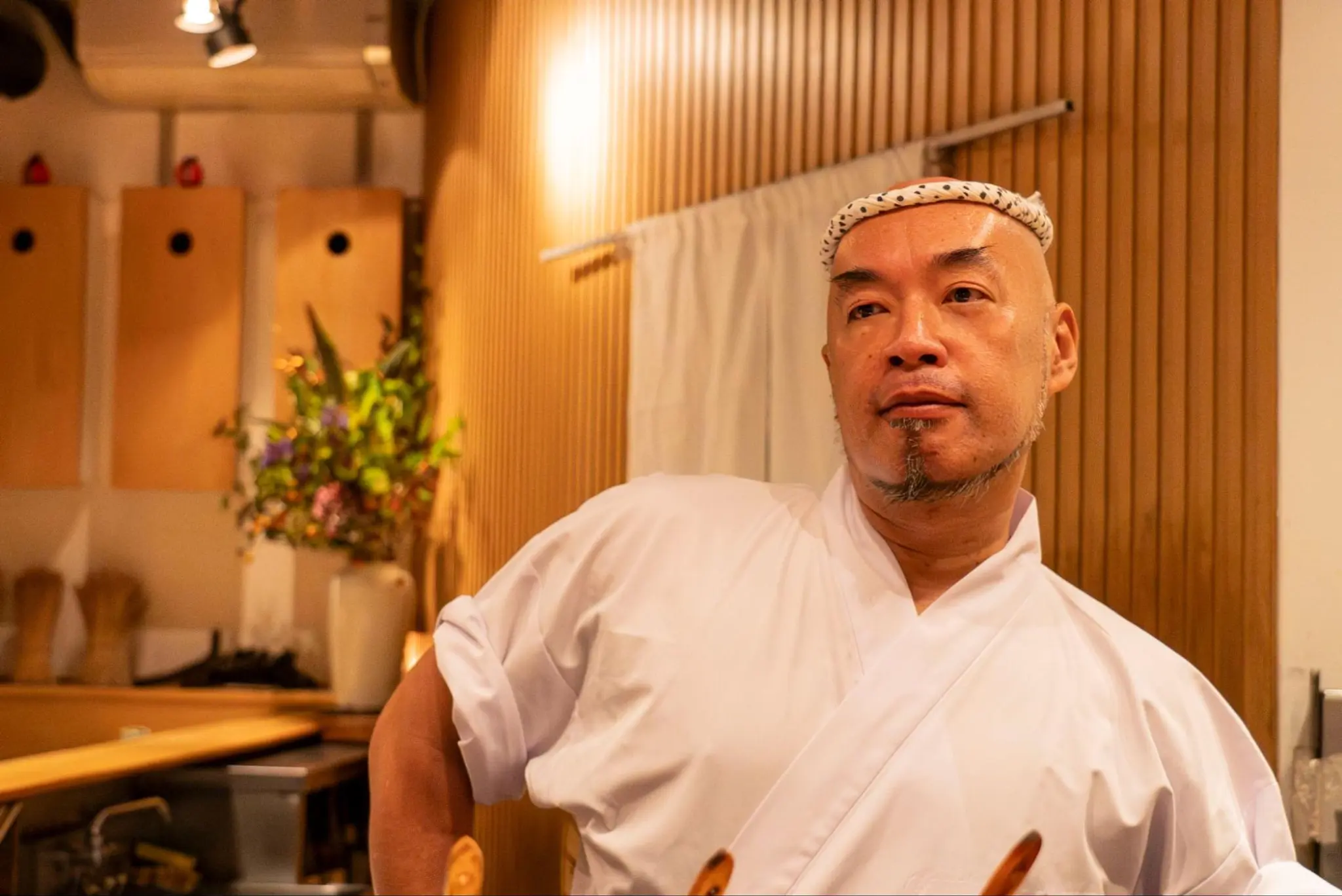
What made my master's yakitori so exceptional wasn’t just the precision of the technique. It was also the "heart, technique, and body", which I believe is an important part of the craft. My master valued deeply understanding the customer's feelings, knowing the ingredients in front of you, showing gratitude toward customers, producers, and the ingredients themselves, and embodying kindness as a person. These were the fundamental principles that were always prioritized. Even now, my master is still active and striving for greater heights with his stoic approach. Watching him, I always felt that I was still missing something until I earned his recognition, which has kept me going this far.
This year marks the 18th year since I became independent, but every day still feels fresh. If customers stop coming, there’s no choice but to close the restaurant. That’s why every day we give our all to each skewer. If we don’t approach it with sincerity, we can’t bring joy or inspiration to our customers. It’s a very basic truth, but one of the important lessons I’ve learned is that it’s crucial to continue doing those basic things well.
Expanding Multiple Locations as a System to Foster the Social and Economic Independence of Young Talent
―――What are your goals and dreams?
The first goal is to remain "active for life".
As long as I am alive, I want to continue working at the restaurant. I’m not perfect and am far from being an ideal role model for young people, but I hope to be a guiding example, showing that even someone who is awkward can attract customers if they are dedicated to their work.
The second goal is to contribute to the development of young talent who will carry on the charm and culinary culture of Japanese yakitori. One of the unique aspects of yakitori is that, in a world where everything is becoming digital and mechanized, we still start a fire from charcoal, grill meat, and serve it. It is a primal and one-of-a-kind dish. I want to emphasize the value in this analog aspect and expand Japan’s food culture. My dream is to create an environment where, in the future, young people from abroad will want to learn "Japanese yakitori".
Currently, there are about 30 young people, including 9 who have already completed their apprenticeship and become independent, working both in Japan and abroad. In the future, I want to support them from behind the scenes so they can expand the "Japanese yakitori" culture to both domestic and international audiences, giving many customers joy.
―――What prompted you to take on your first apprentice?
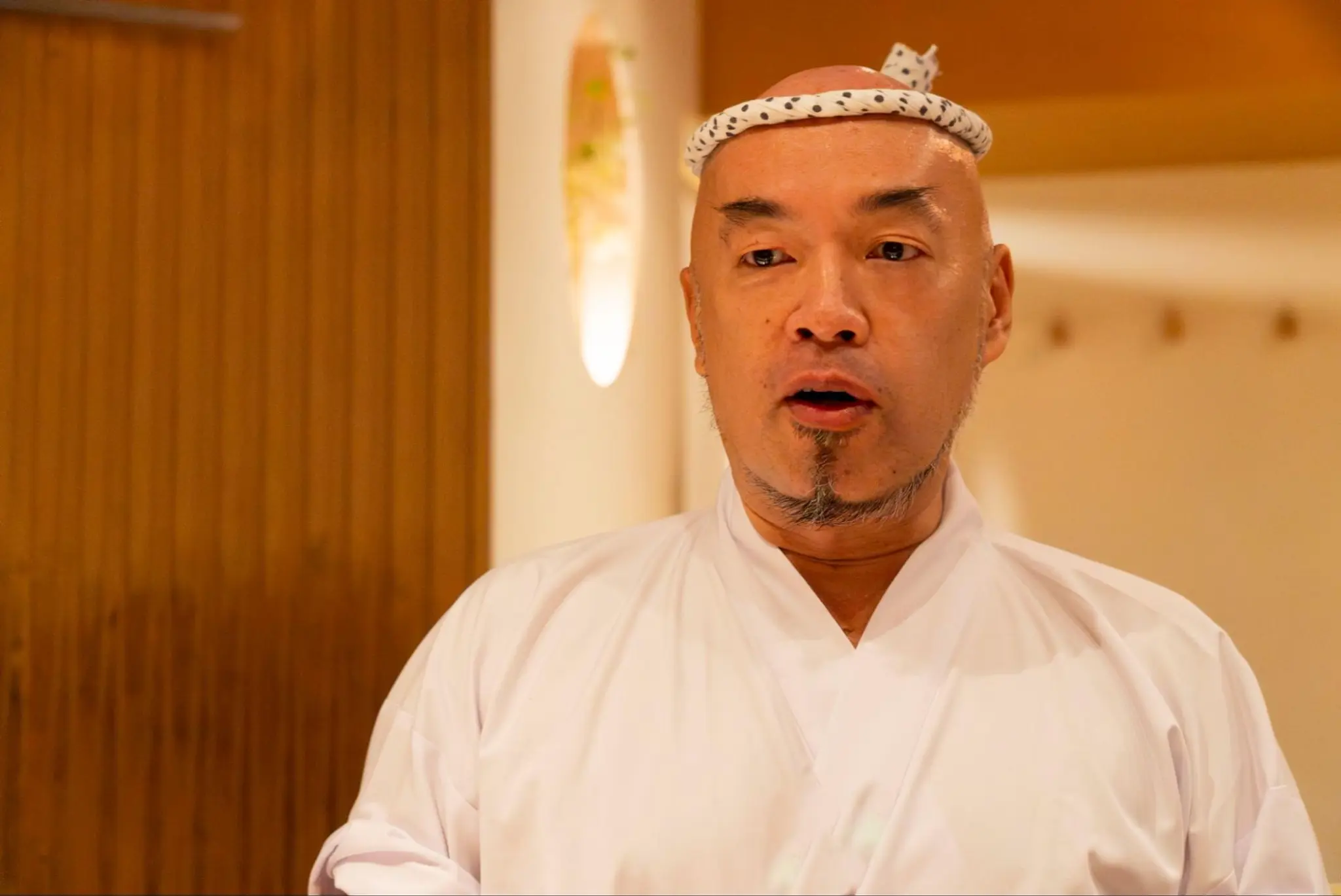
When I first opened the restaurant, my wife and I planned to run a small, intimate shop by ourselves. About three years after opening, I received a phone call asking, "Are you accepting apprentices?" The caller mentioned that they had been fascinated by yakitori since their student days when they worked part-time, and they wanted to make it their lifelong career.
Taking on an apprentice made me think about what I could teach and how to structure their learning in the limited time available. This marked the beginning of the process of developing a system to train apprentices. Over time, more young people approached me with similar intentions, and I gradually started improving the environment for training.
―――You now have locations both domestically and internationally. What is the purpose behind this expansion?
Rather than expanding for the sake of increasing revenue, the decision to gradually open more locations after 10 years in business was based on social considerations.
There are two main reasons.
The first reason is to create an environment where young talent can have a place to challenge themselves and gain practical experience. In our restaurant, the only time they could practice on the grill was either after hours or before the prep work began. When I was an apprentice, I would practice on the grill late at night after closing, but I felt the need to create a system that would allow for more focused work. So, I opened additional locations where those with a certain level of skill could gain experience.
The second reason is to help the next generation of chefs achieve economic independence and improve their social standing as professionals. From my own experience, when I left my office job to start my apprenticeship, my salary was cut in half. I had to take a part-time job in the transportation industry on my days off just to make ends meet, and being married at the time, my father-in-law was quite concerned. Additionally, when I tried to secure a loan to start my own business, it was a difficult process. To foster the next generation of talent, it’s crucial to improve the social and economic status of chefs, or else it will be hard for people to see this profession as a viable career.
The Counter is a "Private Room with an Invisible Wall" — Being Attentive to Our Customers
―――Finally, what does "delicious" mean to you?
For me, "delicious" is not just about the taste alone—it’s a combination of many factors. The time and space in which you’re dining, the people you’re with, and all the elements that make up the meal need to fit together harmoniously for the experience to be truly "delicious." Of course, there’s no compromise when it comes to ingredients and cooking techniques, but we also take great care in ensuring that our customers feel comfortable and at ease in our restaurant, as we’re entrusted with their precious time. I want to continue prioritizing that aspect of our restaurant.
For me personally, I often use the term "kuroko" (a behind-the-scenes role) to describe my approach. It's about being a "kuroko" that blends into the atmosphere and never forgetting to show gratitude toward our customers. I believe that through yakitori, we, as craftsmen, can help each customer experience "delicious" during their valuable time spent with us at 【Torishiki】.
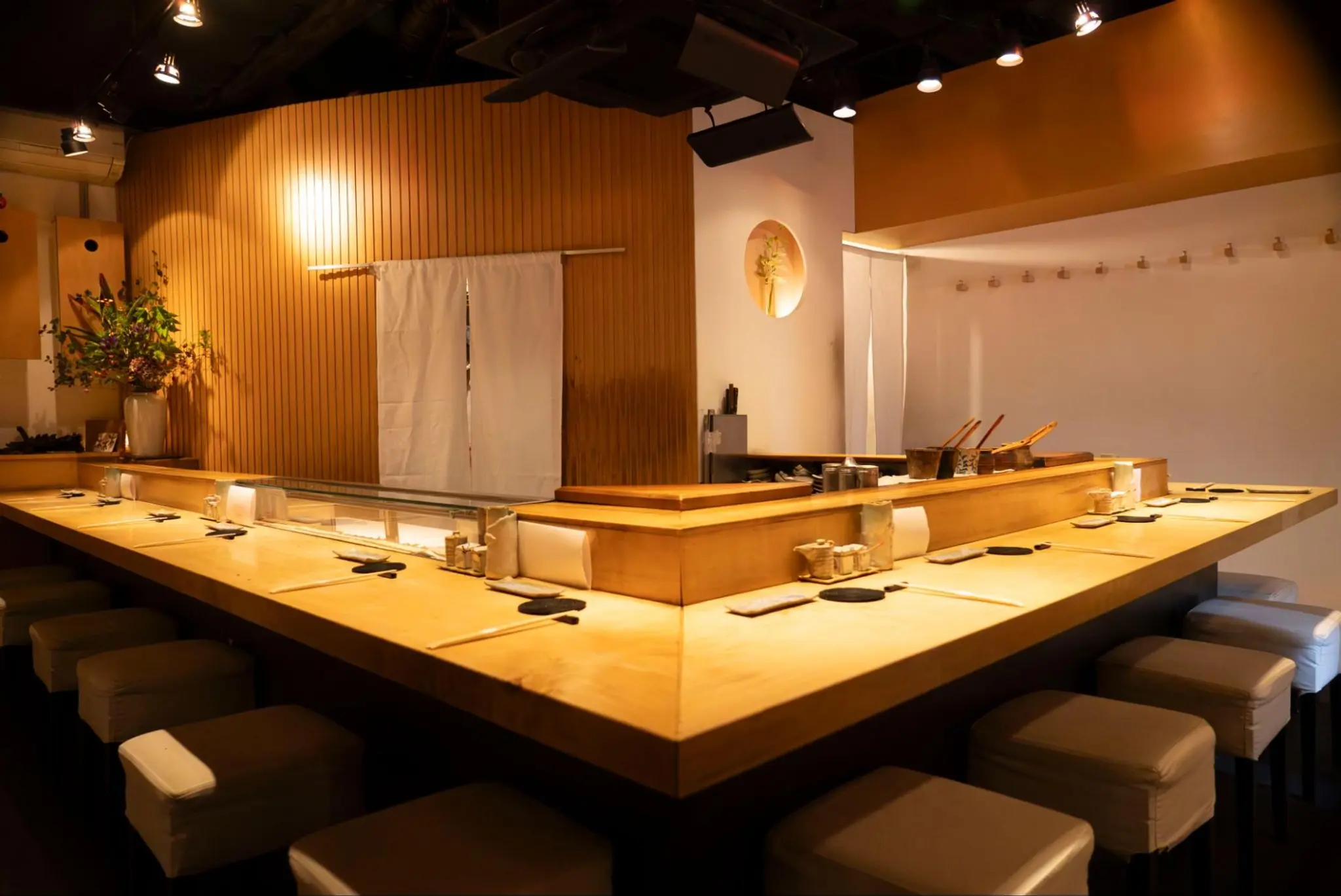
Our restaurant has a counter seating arrangement, and I view each seat as a "private room with an invisible wall". Just like knocking on the door of an invisible room, our staff will continue to strive to ensure that we’re always in tune with our customers’ conversations and dining rhythms, allowing them to fully enjoy their meals.
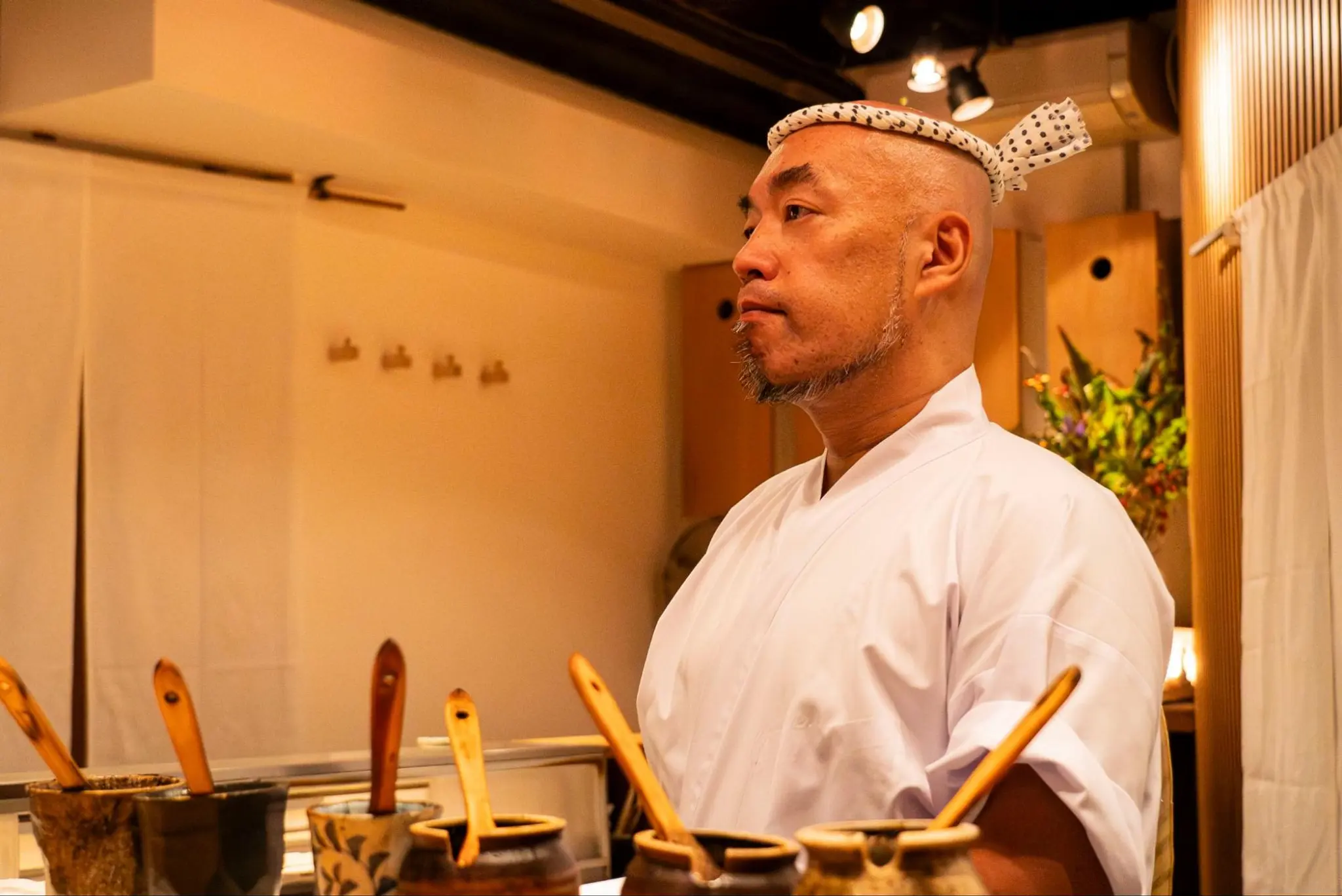
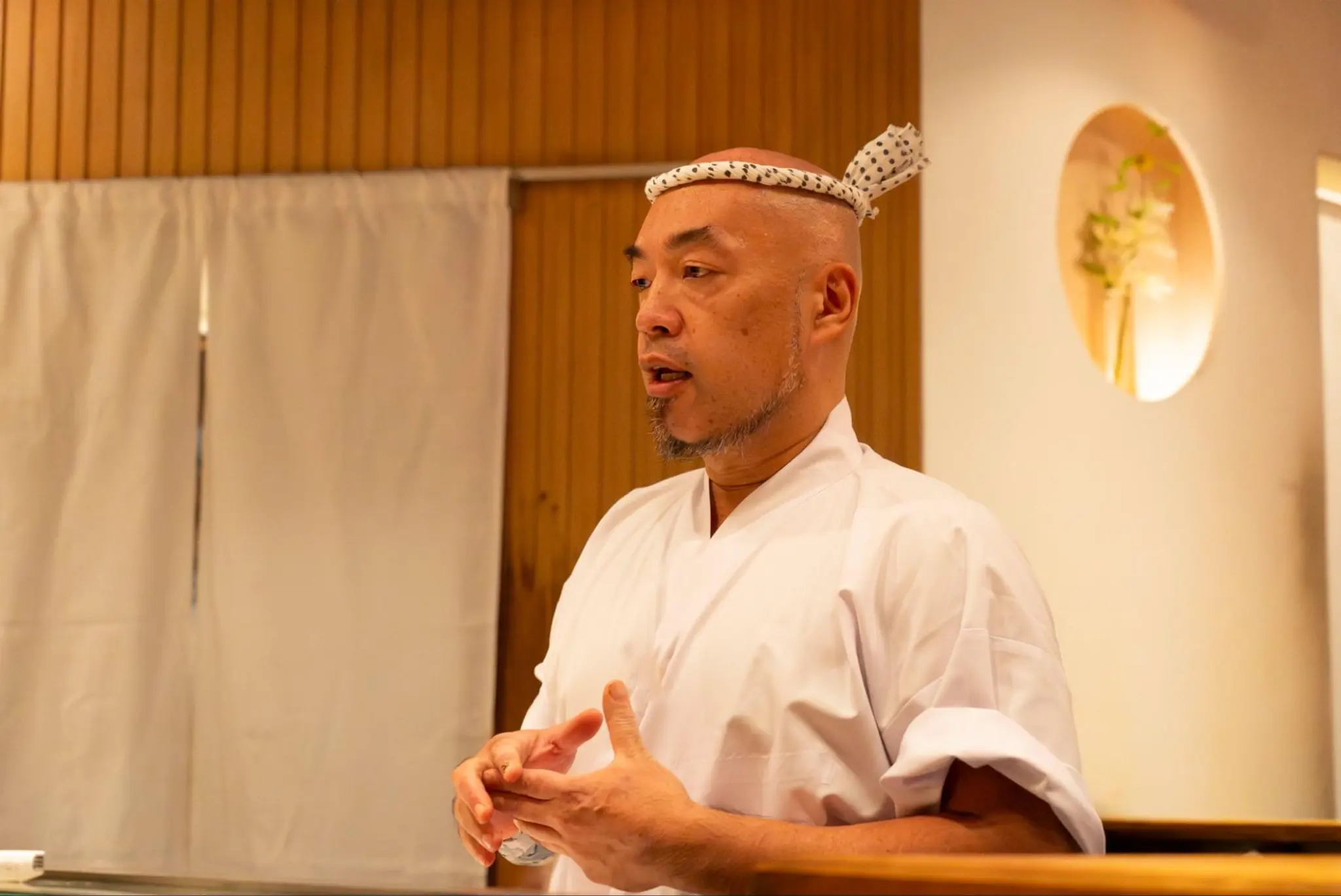
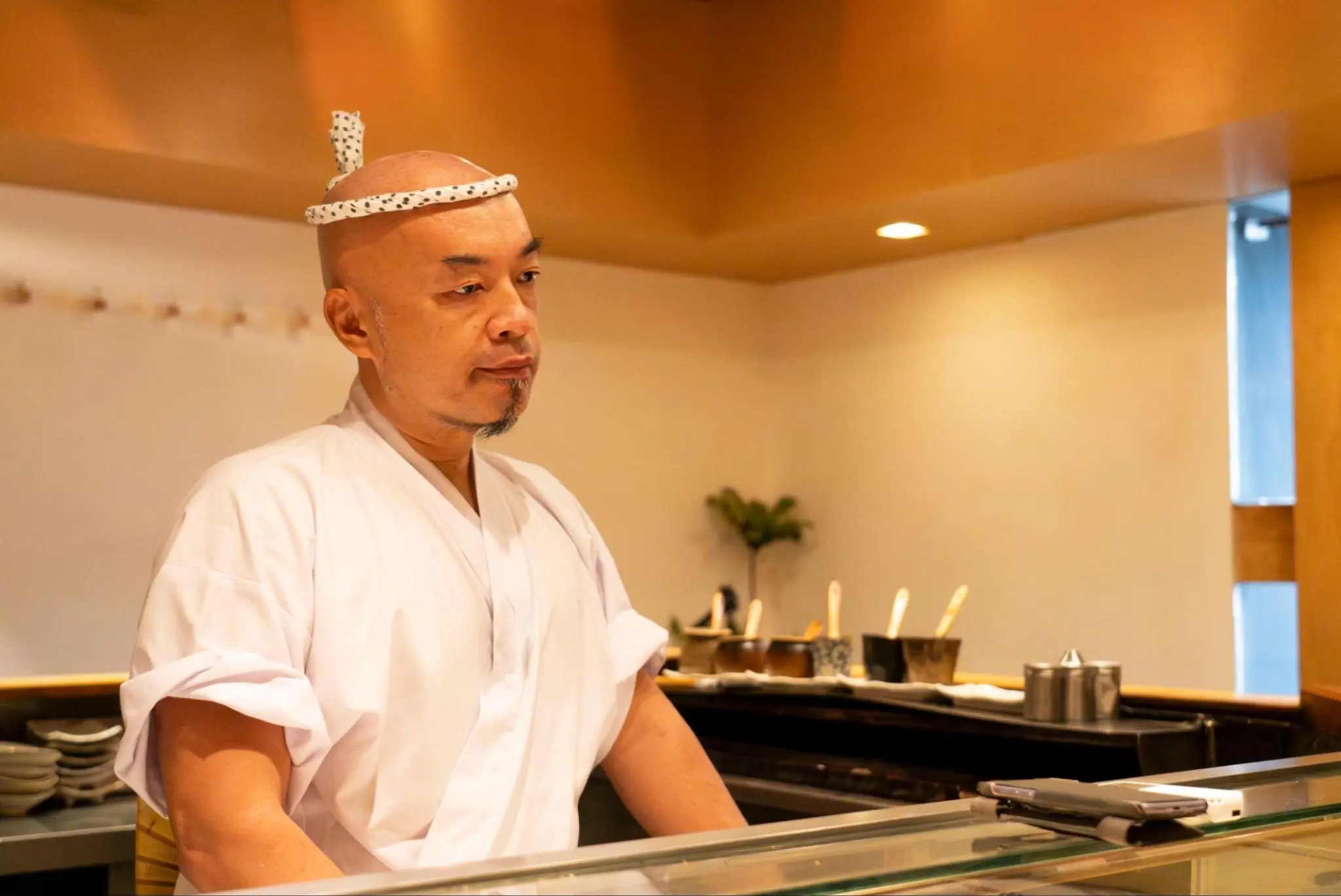
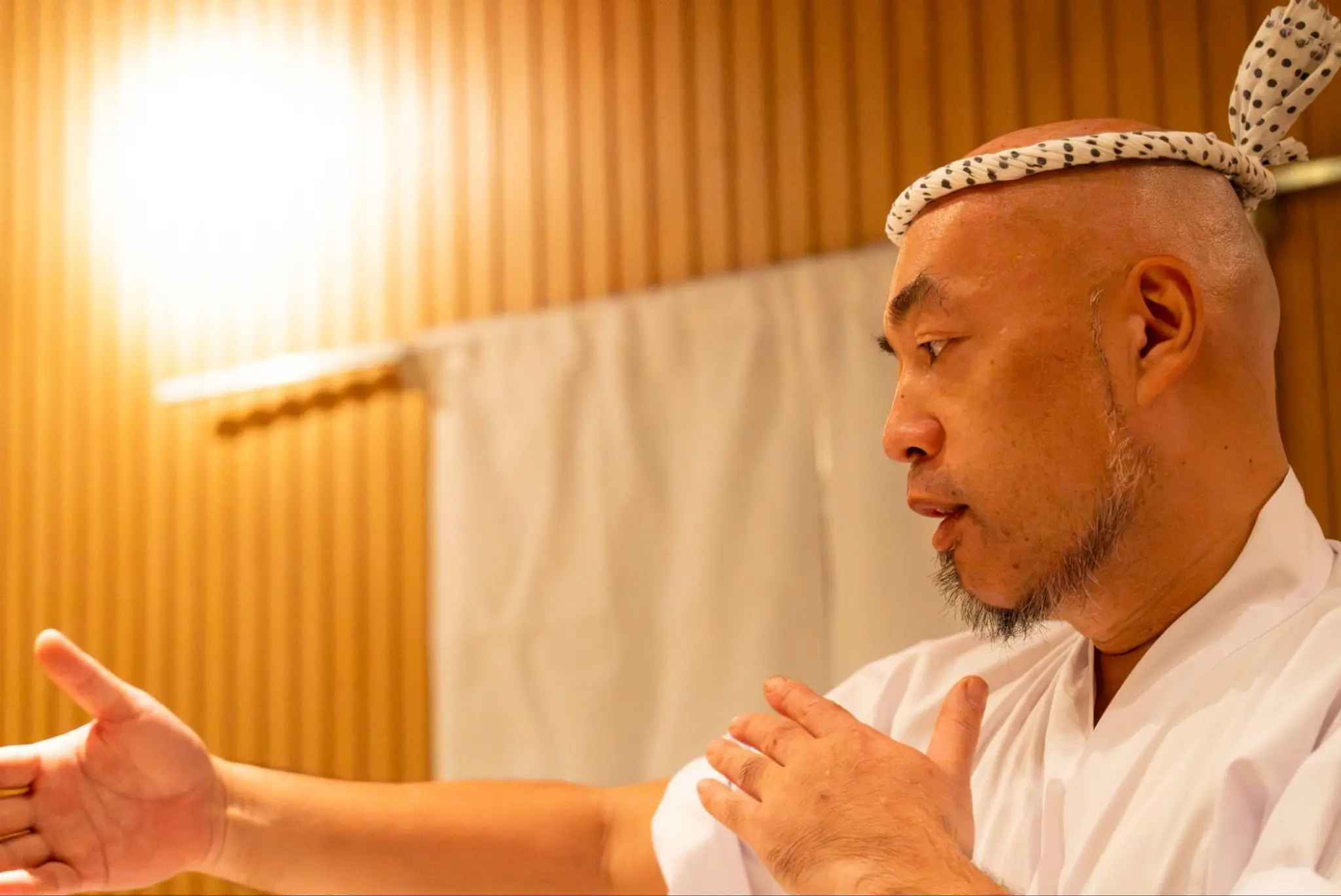
As Ikegawa-san expressed it, the word "confront" captures his approach perfectly. His intense focus on the changes in the meat and charcoal, not missing a single moment, is evident in his unwavering expression. The atmosphere is charged with tension, resembling the precision of a samurai in a sword-drawing stance. The large fan tucked at his waist resembles a samurai’s sword, further emphasizing this disciplined, warrior-like presence.
Ikegawa reflects with a smile on his face, admitting that when he first started, he "completely underestimated yakitori." It’s precisely because he’s aware of his own past inexperience that he continues to discipline himself and refine his craft, still "confronting" the art of yakitori with respect and commitment. The reason why so many customers and apprentices visit his restaurant, seeking the ultimate skewer, lies in this relentless pursuit of perfection.
Interview & Text by: Yuri Yanagiya
Photography by: Azusa Nakaoka
Restaurant Infomation
- AutoReserve Magazine
- Japan’s world-renowned flagship restaurant
- Pioneering the Future of "Japanese Yakitori" at 【Torishiki】